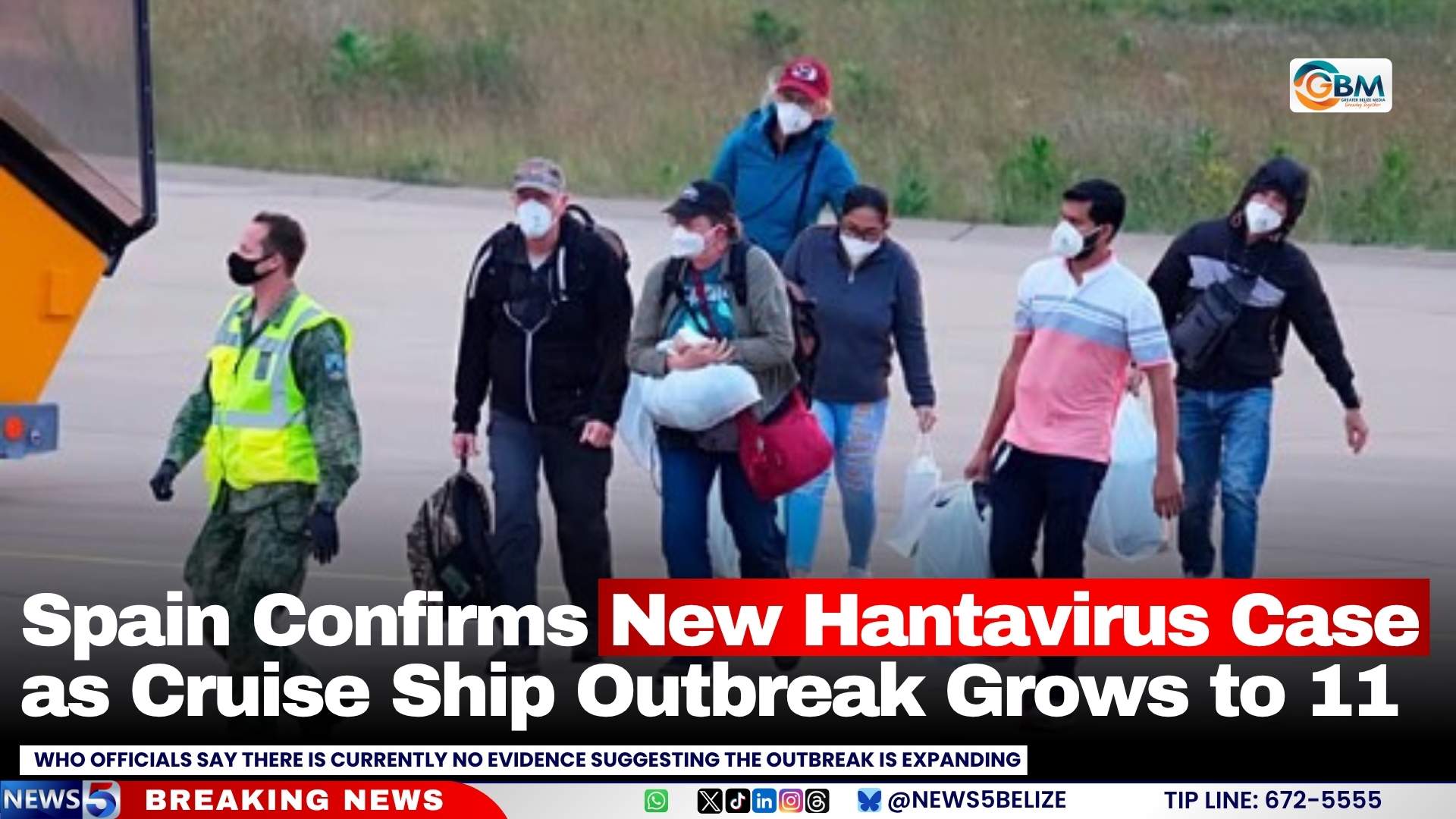
On May 12, 2026, Spanish health authorities officially confirmed an additional case of hantavirus linked to the outbreak aboard the Dutch-operated expedition cruise vessel MV Hondius, pushing the total number of confirmed infections connected to the ship to 11, three of which have resulted in death.
The newly confirmed patient is a Spanish citizen who had been placed under medical observation at Madrid’s Gómez Ulla Hospital. According to an official statement from Spain’s Ministry of Health, the patient recorded an initial preliminary positive result before the diagnosis was formally finalized on Tuesday. Contrary to earlier reports that indicated the patient’s symptoms were worsening, authorities confirmed that the individual is currently in stable condition. The ministry also added that 13 other passengers who were undergoing monitoring at the same Madrid facility have returned negative hantavirus test results.
Passengers holding Spanish nationality who were aboard the MV Hondius were among the first group to disembark the vessel at the Canary Island port of Tenerife on Sunday. After disembarkation, they were immediately transferred to a military hospital to undergo mandatory isolation and comprehensive public health evaluations.
The outbreak on the expedition cruise ship has sparked international public health concern, after the World Health Organization (WHO) verified the full 11-case count linked to the vessel. Nine of the confirmed infections have been identified as the Andes hantavirus strain, a particularly pathogenic variant of the virus. All documented cases to date are either passengers or crew members who were aboard the MV Hondius.
In a public health update, WHO officials noted that as of the latest assessment, there is no evidence indicating that the outbreak is spreading beyond individuals who had direct exposure to the cruise ship. Public health teams across Spain and international health bodies continue to monitor all monitored individuals closely to prevent any potential secondary spread of the virus.