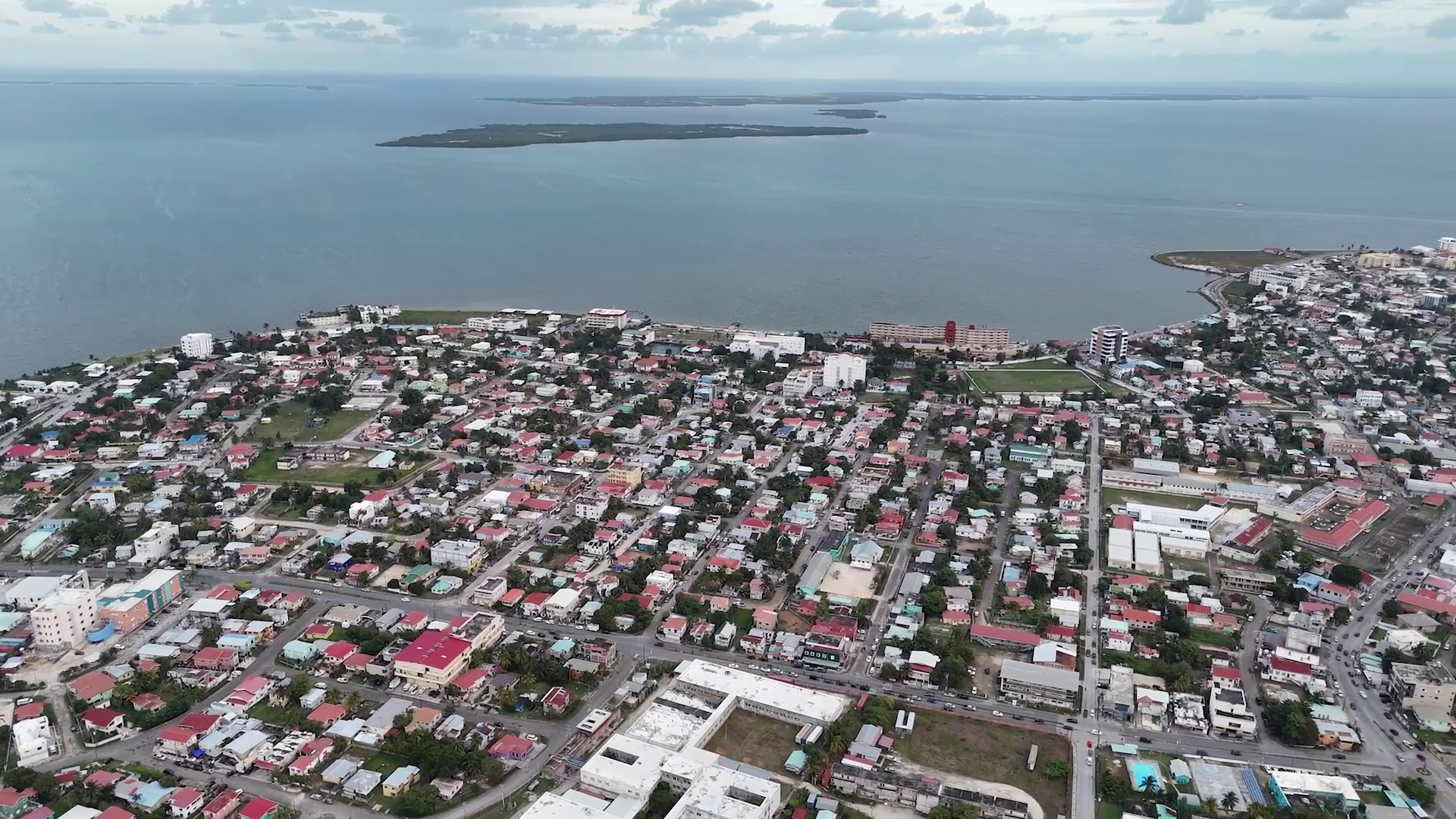
In a major law enforcement operation launched earlier this month, authorities in Belize have taken nine suspected crime figures into custody under a newly declared State of Emergency (SOE), with top police officials warning that additional detentions may follow as the crackdown on violent organized crime intensifies.
The declaration of the SOE, which went into effect on May 8, 2026, followed weeks of intelligence gathering and on-the-ground security assessments that pointed to an imminent threat to public safety across targeted zones in Belize City and the rural Belize District. During a formal press briefing on May 11, Commissioner of Police Dr. Richard Rosado emphasized that the extraordinary measure was not implemented lightly, but was deemed unavoidable after analysts confirmed that rising violence had reached a level that traditional policing tactics could not address.
“The decision was not made lightly for the state of emergency, but we believe it was absolutely necessary based on the intelligence we have gathered and on the ground assessment that indicated an imminent danger to life and property,” Rosado told reporters. He added that the operation has been crafted to avoid disruption for ordinary residents: law-abiding citizens have nothing to fear, he stressed, because the entire initiative is targeted exclusively at high-risk individuals tied to criminal activity.
Under the framework of Statutory Instrument 50, the legal document that governs enforcement of the SOE, police are following a structured playbook that prioritizes intelligence-led targeting rather than widespread, random detentions. Deputy Commissioner of Police Bart Jones explained that all current detainees are not swept up in broad sweeps, but are specifically linked to ongoing investigations into recent shootings, murders and gang-related offenses. Unlike broad, unrestricted detainment policies that have been associated with some past SOEs, this iteration relies on pre-existing intelligence, active case work and structured interviews to guide detentions. Even the provision banning groups of three or more people from gathering in declared zones will be enforced sparingly, only when intelligence justifies action, Jones noted.
Jones also addressed public questions over why parts of rural Belize District were included in the SOE declaration despite recent high-profile shootings being concentrated in Belize City. He confirmed that the expansion aligns with intelligence showing that criminal operatives based in the city frequently travel to and operate from these rural areas, making their inclusion critical to the success of the operation.
The move has reignited longstanding debate over the legality and appropriateness of SOEs as a crime-fighting tool in Belize, with critics arguing that the measures overstep constitutional boundaries on government authority. Police leadership has pushed back against these claims, pointing to recent court rulings that affirm the constitutionality of properly justified SOE declarations.
Assistant Superintendent Stacy Smith, a staff officer with the department, noted that three recent court judgments have clarified the parameters of SOE use. The most recent ruling confirmed that when a situation rises to the level of immediate threat to public safety, declaring a state of emergency is fully consistent with Belize’s constitution. “The SOE is a creature of the constitution so the constitution cannot be inconsistent within itself,” Smith explained. “I wish to disabuse persons minds that SOEs in itself is unconstitutional.”
For Rosado, the decision to activate the SOE is not a sign of overreach, but of proactive, strategic policing. “The State of Emergency activation is an extraordinary legal tool to combat extraordinary circumstances that traditional policing alone cannot neutralize, and I believe that it is an indication of strategic strength, proactive leadership, rather than sitting down and having business as usual,” he said. “It shows that as a department we are committed to doing whatever it takes to return normalcy to the streets.”
The current SOE is scheduled to remain in effect for 30 days, with provision for extension by a vote of the National Assembly if law enforcement determines that additional time is needed to complete the operation and neutralize the ongoing threat to public safety.