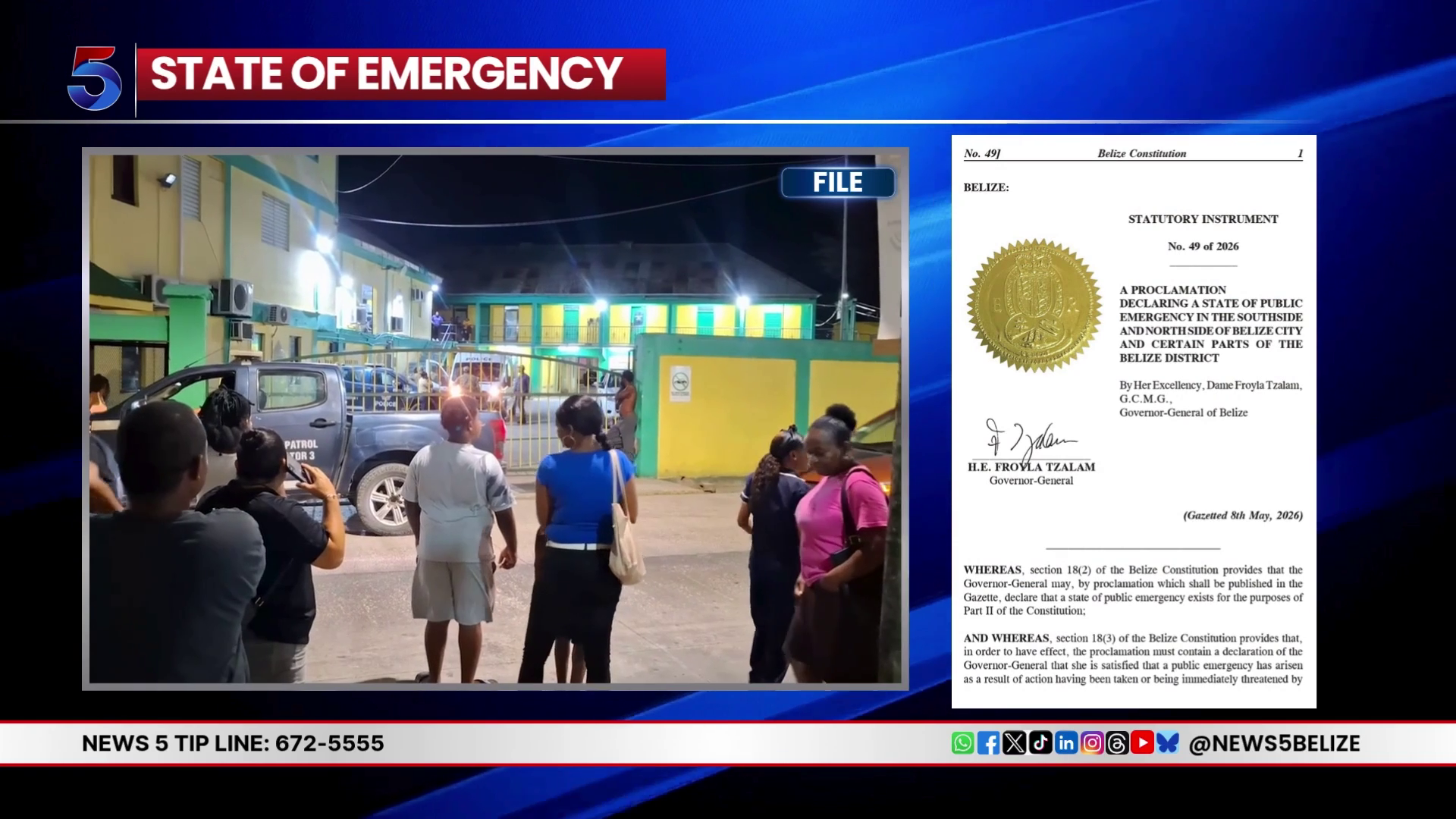
Residents of Belize City entered an altered way of life on Saturday, May 11, 2026, after the Belizean government implemented a sweeping State of Emergency across high-violence zones on the city’s north and south sides, as well as select areas of the broader Belize District. The drastic public safety measure comes after weeks of steadily escalating gun violence that has left multiple people dead and terrified local communities, even drawing minors into deadly crossfire.
The crisis did not erupt spontaneously. A rapid chain of targeted attacks and retaliatory bloodshed over the first week of May pushed authorities to take immediate action. On May 5, two prominent local figures, Hubert Baptist and Eric Frazer, survived a brutal ambush shooting along the busy Philip Goldson Highway. Within days, 29-year-old Jamal Samuels was gunned down in what investigators confirm was a retaliatory killing. That same evening, a 16-year-old opened fire inside a bar along the same highway, killing a 34-year-old mother of three. These high-profile incidents are only the most severe in a months-long pattern of rising shootings and homicides that has destabilized Belize City, prompting officials to conclude that incremental law enforcement changes were no longer sufficient.
Enshrined in Statutory Instrument 50 of 2026, the State of Emergency grants dramatically expanded authority to local police and officers from the Belize Defence Force (BDF) to restore order. The new rules ban a series of common public activities within the emergency zones: loitering, public alcohol consumption, and any public gathering of three or more people are all prohibited. Minors living in affected areas are required to be indoors at their residences by 8 p.m. and may not leave before 6 a.m. All members of the public are legally required to respond fully to any questions posed by law enforcement during stops in the zone.
Beyond these new behavioral restrictions, the legislation removes longstanding search and arrest protections for people within the emergency zones. Police are now authorized to search any private home, property, vehicle, boat, or individual without a judicially issued warrant if they reasonably suspect criminal activity is present. Officers may seize any item they deem a threat to public order, and can arrest any person without a warrant if they suspect the individual has violated emergency rules, committed a crime, or plans to commit a criminal act. Even non-residents who regularly visit the emergency zones face the same no-warrant arrest authority, and anyone taken into custody can be held for up to 30 days without formal charges. Law enforcement also has the power to close any business or public location deemed a risk to public safety, and the Minister of Home Affairs holds additional authority to order individual home confinement, restrict a person’s social contacts, and require regular movement reporting to local police. If any individual interferes with an officer’s duties or uses threatening or abusive language toward law enforcement during the State of Emergency, that action constitutes a separate criminal offense. Officials have also confirmed that protocol requires any search of a female resident to be conducted by a female officer to protect personal dignity.
As security forces deploy checkpoints, increased patrols, and begin enforcing the new rules, local residents are adjusting to major disruptions to daily life. Uncertainty remains two key questions hanging over the affected communities: how long the State of Emergency will remain in effect, and whether the drastic measure will successfully curb the cycle of violence that has plagued Belize City for months. Authorities are urging all residents to comply with the new restrictions to help restore safety to the embattled regions.