标签: Belize

伯利兹

  • Gunmen Kill 25, Including 6 Officers, in Wave of Attacks Across Honduras

    Gunmen Kill 25, Including 6 Officers, in Wave of Attacks Across Honduras

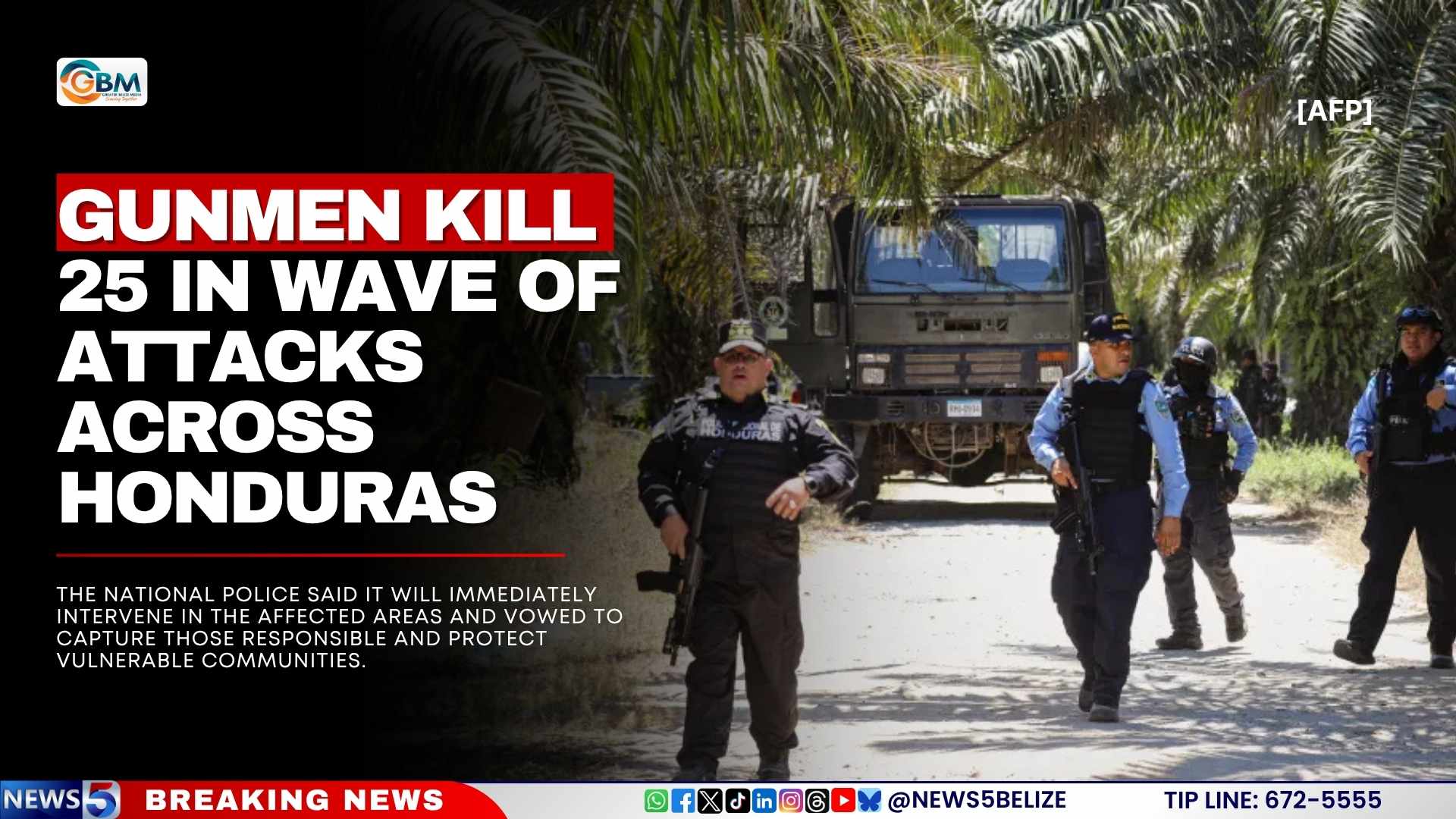
    On Thursday, a shocking wave of coordinated gun assaults spread across Honduras, leaving at least 25 people dead—six of them active police officers—making it one of the deadliest single days of violence the Central American nation has recorded in recent memory.

    The single deadliest incident unfolded on a commercial African palm plantation in the northern city of Trujillo, where 19 lives were cut down by multiple armed gunmen who stormed the property. Local accounts of the attack remain divided: a rural community leader speaking to Agence France-Presse claimed all of the victims had ties to a rival armed faction that controls the plantation, while local Honduran media outlets reported that the attackers opened fire indiscriminately on all workers present at the site. The oldest victim identified was 61 years old, according to early reports.

    This brutal attack occurred in the vicinity of the contested Aguán River Valley, a region that has served as a persistent hotspot for violent conflict for decades. Control over land and natural resources for palm oil production has long pitted armed groups, large agribusiness firms, and local communities against one another, and the area is now widely recognized as one of the most dangerous places on Earth for land rights and environmental defenders.

    A second targeted attack took place hundreds of kilometers away in the western Honduran town of Omoa, located just kilometers from the country’s border with Guatemala. Six police officers were conducting a targeted operation against local gang activity when they were ambushed by a squad of armed attackers, who killed all six officers at the scene.

    The wave of killings comes at a moment when Honduran authorities have ramped up a national crackdown on organized criminal activity. In recent months, the government has implemented sweeping new anti-gang legislation, including a provision that allows the state to formally classify major gangs and drug trafficking cartels as terrorist organizations. The administration also launched a new dedicated anti-organized crime unit to lead counter-gang operations across the country.

    In the immediate aftermath of the attacks, Honduras’ National Police announced that it would deploy additional forces to the affected regions immediately. Law enforcement leadership has vowed to track down and apprehend all perpetrators responsible for the killings, and pledged to bolster security protections for at-risk communities in conflict-prone regions.

    The dual attacks not only highlight the persistent threat organized criminal groups pose to state security and civilian life in Honduras, but also underscore how long-running unresolved land disputes continue to fuel cycles of deadly violence across the country’s rural regions.

  • Two Charged in Unitedville Murder

    Two Charged in Unitedville Murder

    A rapid police investigation in Belize’s Cayo District has ended with formal murder charges filed against two people, including a juvenile, following the fatal shooting of a local man at his home earlier this week.

    On the evening of May 19, 2026, neighbors living in the small community of Unitedville called emergency services just after 9:00 p.m. to report multiple gunshots ringing out near the home of 45-year-old Allen Geovanni Gongora. Witnesses told responding officers they saw an unidentified male running from the property and jumping into a waiting black SUV, which immediately fled toward nearby Belmopan. That call launched an intensive manhunt led by local law enforcement, which ultimately detained seven people for questioning earlier this week: six adult men and one adult woman.

    After two days of evidence gathering and witness interviews, authorities formally charged 27-year-old Jevon Ramclam and a 15-year-old male minor with murder on Thursday, May 21. In an official statement on the case, Assistant Superintendent of Police Stacy Smith confirmed that investigators have categorized the killing as drug-related, noting that Gongora’s residential property had long been identified by area residents as an illicit drug distribution and storage hub.

    As of the latest official update, law enforcement has not released any details on the legal status of the five remaining detainees who were brought in for questioning. The investigation remains active as officers continue to piece together the full sequence of events leading up to the shooting.

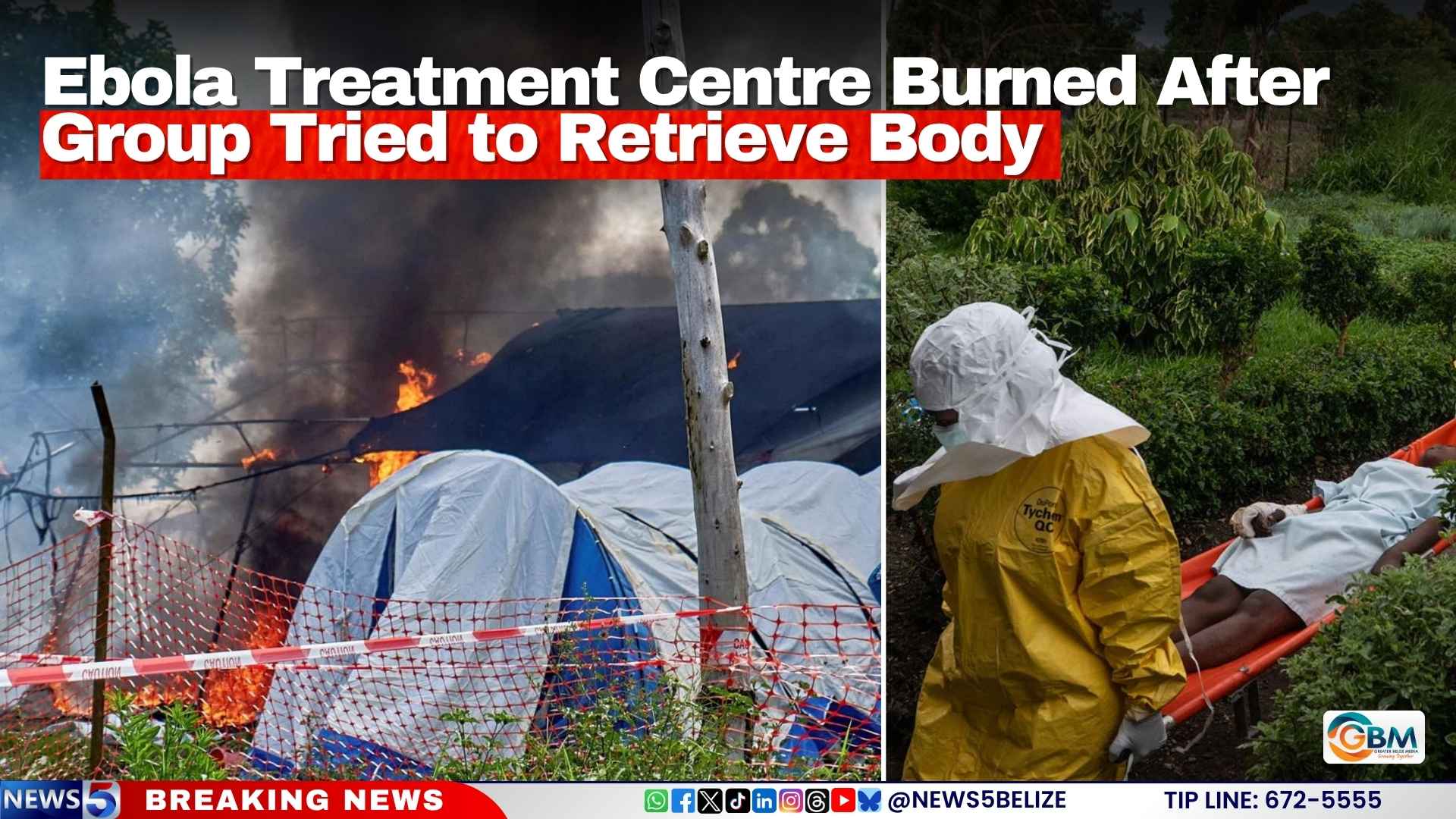
  • Ebola Treatment Centre Burned After Group Tried to Retrieve Body

    Ebola Treatment Centre Burned After Group Tried to Retrieve Body

    In a disruptive development that has deepened concerns over the worsening Ebola outbreak in central Africa, an Ebola treatment and body storage facility in the Democratic Republic of the Congo (DRC) was burned to the ground earlier this week. The arson attack followed an attempt by a local group to forcibly retrieve the body of an individual who had succumbed to the virus, according to initial on-ground reports.

    The facility served a critical public health function: it held the bodies of Ebola victims before they could be carried out through safe, controlled burials, a process widely recognized as one of the most essential steps to stop the virus from spreading to new communities. Ebola, which transmits via direct contact with infected bodily fluids, is already capable of spreading rapidly from deceased individuals if proper burial protocols are not followed.

    Even in the wake of the violence, local residents who showed suspected Ebola symptoms continued to arrive at remaining health facilities seeking care, demonstrating the ongoing unmet demand for treatment in the affected region. In response to the unrest, national security forces including soldiers and police have been deployed to the area to restore order and prevent additional attacks on health infrastructure.

    While the immediate risk of Ebola reaching Belize and other Caribbean nations remains low, regional health bodies are not lowering their guard. The Caribbean Public Health Agency (CARPHA) has issued an official call for all member states to maintain high levels of preparedness and alertness, a move that comes after the World Health Organization (WHO) formally declared the ongoing DRC outbreak a Public Health Emergency of International Concern (PHEIC), the global body’s highest level of alert.

    Official data from the WHO confirms that the outbreak has already claimed more than 170 lives, with close to 750 suspected cases recorded across affected areas of the DRC. International aid organizations have identified multiple interconnected factors that have allowed the outbreak to escalate at an alarming rate. These include chronically weak health infrastructure in rural parts of the DRC, ongoing ethnic conflict that blocks access for testing and treatment teams, and recent cuts to United States funding for global public health initiatives.

    The funding cuts have triggered cascading challenges for response teams: thousands of local health workers have been laid off, critical medical supplies are in acute shortage, and overall operational support for both WHO and United States Agency for International Development (USAID) programs has been drastically reduced. Even though U.S. government officials have stated that core response systems remain operational and that emergency funding has been redirected to the outbreak, public health experts warn that years of sustained underinvestment in global health preparedness have left response teams playing catch-up. Today, responders are forced to airlift even basic protective equipment like medical gloves and surgical masks into remote clinic sites, a logistical hurdle that slows their ability to contain the spread of the virus.

    With a high average fatality rate, Ebola outbreaks require rapid, well-resourced response to avoid large-scale community transmission, making the current gaps in funding and access a growing source of global concern.

  • Fuel Prices Creep Up; Drivers Feel the Weekly Squeeze

    Fuel Prices Creep Up; Drivers Feel the Weekly Squeeze

    As of May 21, 2026, Belize is grappling with two interconnected crises shaking its fuel sector: consecutive weekly price hikes have placed unprecedented financial pressure on ordinary motorists across the country, while fuel dealers are locked in a high-stakes dispute with the national government over a sudden rollback of a decades-old pricing framework.

    Across Belize’s largest urban center, Belize City, the strain of rising fuel costs is visible at every gas pump. What was once a routine, predictable expense to keep vehicles on the road has ballooned into a major monthly budget burden, forcing thousands of drivers to rearrange their daily routines, cut back on non-essential travel, and rethink personal finances. In an on-the-ground, non-scientific survey of local motorists, reporter Paul Lopez from News Five documents how the steady climb in prices has upended household budgeting for commuters that rely on their vehicles for work and daily life.

    Interviews with more than a dozen local residents reveal consistent stories of growing financial strain. One long-time commuter who travels daily from Orange Walk to Belize City for work explained that a $50 weekly fuel budget that once covered all his trips now only lasts 48 hours. “It really hurts me,” he shared, calling on national leaders to cut fuel taxes to ease the burden. Another mobile worker, who operates as a locksmith and must respond to emergency calls across the city, noted that what once cost $50 every two to three days now must be purchased every 36 hours on average. Even motorcyclists, who typically enjoy lower fuel costs, have seen their weekly expenses jump by $10 on average.

    The scale of the increases varies by usage, but all drivers report double-digit weekly jumps in fuel spending. One vehicle owner who previously spent $80 per week on fuel for his car and $20 for his motorcycle now pays $110 for the car and $30 for the motorcycle, a 25% total increase. For a mother who makes daily trips to transport her children from the Belama neighborhood to schools across Belize City, weekly fuel costs have surged from $80 to $150 – a $70 jump that puts massive strain on her household budget. A commercial pickup driver who travels for work reports even starker growth, with his weekly bill climbing from $300 to more than $400. Across the board, drivers are frustrated: many note that even a $10 fill-up now barely moves the needle on their gas tank, leaving them constantly budgeting for refuels.

    A quirk of the current pricing landscape has seen a surprising shift in consumer behavior: for the first time in many years, premium fuel now costs less than regular fuel at Belize’s pumps, leading most motorists to opt for the higher-grade option even as overall costs rise. Regardless of the grade they choose, the end result is the same: eroded purchasing power that leaves less money for other essential household expenses.

    Beyond the strain on drivers, a separate conflict is brewing between fuel retailers and the Briceño administration. The Belize Service Dealers Association is demanding that the government address its concerns within seven days, after policymakers unilaterally scrapped a pricing formula that had governed dealer margins for more than 20 years.

    Under the 2004 pricing agreement, service stations were guaranteed a 10% margin on fuel based on its landed import cost. This framework was replaced abruptly by a flat-rate margin system, a change that dealers argue threatens the financial viability of their businesses. Dealers note that they raised formal objections to the proposed change during initial public consultations, but claim the government moved forward with the new system anyway, ignoring their input.

    Dealers warn that the new flat-rate structure will squeeze their already thin profits, making it far harder to cover fixed operating costs including commercial rent for station properties and employee wages. They also emphasize that the original 2004 agreement requires mutual consent from both the government and dealer association to make changes to the pricing framework, a requirement they say the government has violated. As tensions escalate, the association has confirmed it has already retained legal counsel and is weighing formal legal action to reverse the policy change.

  • “No Fight,” Says Eluide Miller; Calls Reports Political Fiction

    “No Fight,” Says Eluide Miller; Calls Reports Political Fiction

    As the 2026 Belize municipal election cycle enters its pre-nomination phase, two unsubstantiated opposition-driven allegations have rocked the Belize City Council, prompting Deputy Mayor Eluide Miller to publicly reject the claims as politically motivated fiction designed to undermine the governing body’s work.

    First to circulate across social media and opposition-aligned media outlets this week was a rumor of a violent physical altercation between Miller and long-serving sitting councilor Allan Pollard, framed as evidence of deep internal division within the council. Miller pushed back on the claim forcefully in a public address on May 21, 2026, labeling the story a baseless piece of political noise from the annual pre-election “silly season”.

    “There was absolutely no fist fight. So I want to debunk that statement off the top,” Miller stated. He emphasized that he and Pollard maintain a professional, mutually respectful working relationship, and pushed back on attempts to paint the council as fractured. Miller noted that the current body is widely recognized, both among members and external observers, as the most cohesive Belize City Council to serve over the past ten years. “We remain extremely united. I have the support of my colleagues, and we are completely focused on delivering on the policy and infrastructure commitments we set out at the start of this term,” he added.

    A second, more serious allegation that emerged in days prior claimed $70,000 in municipal funds had gone missing, with the council supposedly covering up the discrepancy to avoid accountability. Miller dismissed this narrative as outright defamation, emphasizing that strict multi-layered financial oversight protocols have confirmed the council’s books are fully balanced with no missing funds.

    Miller outlined the full set of checks and balances the council adheres to, including a recently completed annual Board of Survey held in April 2026, a mandatory annual financial review conducted by the Ministry of Local Government following the close of the 2024-2025 fiscal year, a full-time internal audit team embedded within the municipal government, and ongoing external audits required for the council’s municipal securities program. “If there was any misallocation or missing funds, one of these oversight mechanisms would have flagged it immediately,” Miller explained. “These claims are nothing more than intentional distraction meant to bring the Belize City Council into disrepute at a time when we are focused on delivering for residents.”

    The deputy mayor confirmed that the council has already begun consulting legal counsel to address the false missing funds rumor, and did not rule out formal legal action against those spreading the claims. He directly tied the two allegations to the heightened pre-election political environment, noting that opposition groups often resort to unfounded attacks as nomination periods approach. “They tend to get extremely creative this time of year, right?” he noted.

    Beyond addressing the opposition claims, Miller also commented on growing speculation surrounding the upcoming People’s United Party (PUP) mayoral nomination race, where City Administrator Dr. Candice Pitts has emerged as a potential contender. Unlike other rumored candidates including Miller and Pollard, who are unsalaried elected council members, Pitts is a full-time salaried municipal employee. Under existing municipal regulations, if Pitts formally enters the race, she will be required to resign from her current post before launching her campaign.

    Miller noted that Pitts has not yet confirmed her candidacy to council members, but reaffirmed that she, like any other PUP member and Belize City resident, has the full right to participate in the nomination process if she chooses. “If she makes the decision to run, the council will deliberate on the employment matter in line with our existing regulations and governing act,” Miller said. “We will cross that bridge when we get there.”

    When contacted for comment Wednesday evening, Pitts declined to confirm or deny her candidacy, saying her full attention remains on her current duties as City Administrator. “Any future political decisions will be considered carefully and announced at the appropriate time,” she said. The nomination window for PUP municipal election candidates opens June 1 and closes June 19, 2026. Notably, Belize City has only ever had one female mayor in its history, so a formal entry by Pitts would shift the dynamic of the already competitive mayoral race.

  • Penner Fires Back Over Explosives Allegations in Baldy Beacon

    Penner Fires Back Over Explosives Allegations in Baldy Beacon

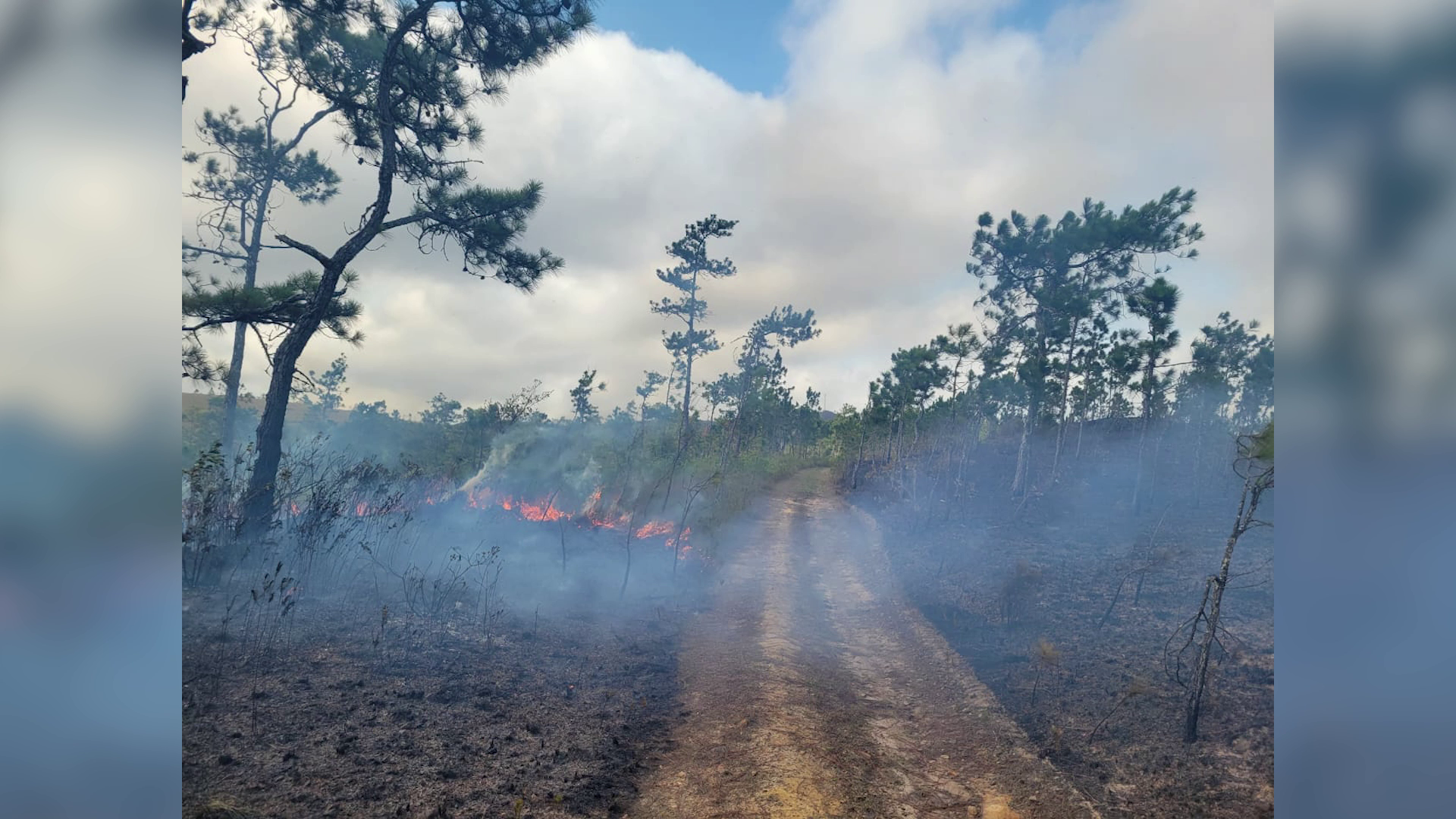
    A brewing controversy at the restricted Baldy Beacon military ordnance destruction site has placed former government minister Elvin Penner at the center of a public dispute, as he pushes back against serious allegations that he attempted to remove explosive materials from the controlled cleanup zone. The confrontation unfolded amid a rapidly spreading wildfire that authorities say interrupted a major demining and ordnance disposal operation on May 21, 2026, bringing competing narratives about what transpired at the site.

    Penner, who holds property ownership in the area, has publicly refuted the claims of wrongdoing, offering a starkly different account of his presence and actions on the day in question. He told reporters he traveled to the site specifically to monitor the out-of-control blaze, which he claims was ignited by the ongoing military demolition operation itself. What drew his intervention, Penner argues, was the combination of unchecked fire spread and what he describes as inadequate security at the site, where he asserts explosive materials had been left unsecured.

    In his on-the-record comments, Penner emphasized that his actions were driven by public safety concerns, not illegal intent. He explained that he feared the approaching wildfire would reach the unguarded explosives, triggering a catastrophic detonation that would put emergency responders and nearby communities at risk. Penner noted that unsecured leftover ordnance at the site is not an unprecedented issue, pointing to a similar unaddressed fire incident that occurred at the same location two years prior, when military personnel abandoned the site and never returned to secure leftover materials.

    “What may look on the surface like a controversial figure mixed up in suspicious activity is actually a response to gaps in site security,” Penner explained in his interview. “I have full respect for our security forces, who work with the limited resources they are given, but there has been a repeated failure to consult with private landowners when these military operations are held on our property. This isn’t the first time a fire has burned everything to the ground here, and the last one was left unaddressed after troops pulled out.”

    Penner went on to clarify that he only moved the materials to protect them from the approaching blaze, not to steal them. “It looked to me like they had abandoned the ordnance again, just like they did two years ago. I never would have touched anything if the fire wasn’t seconds away from destroying what the operation left behind. In fact, authorities should be grateful I moved those charging wires: if I hadn’t acted, the fire would have reached them before troops could return to secure the site. My intervention let them put the fire out and resume their operation without incident.”

    Authorities have offered a contradictory version of events, saying the situation escalated after Penner was intercepted removing explosive materials from the restricted zone. Francis Usher, CEO of the overseeing authority, explained that a joint team from the Organization of American States (OAS) and the Belize Defence Force (BDF) was nearly 90% finished with a major cleanup of unexploded ordnance leftover from last year’s Dave Burgos incident when the wildfire broke out. The operation was paused as the BDF and Forestry Department launched a joint fire suppression response to contain the blaze.

    Usher confirmed that BDF soldiers caught Penner at the site and discovered charging wires, white phosphorus, and fuel in his vehicle following a search. The entire case has now been turned over to national police for formal investigation, and Penner could face criminal charges depending on the outcome of the probe. Despite the controversy, officials say they remain committed to completing the final phase of the explosives cleanup operation as soon as conditions allow.

    This report is adapted from a transcript of an evening television newscast originally published online.

  • Petition Drive Targets Mining Threat in Belize’s Prime Coastal Zones

    Petition Drive Targets Mining Threat in Belize’s Prime Coastal Zones

    In a urgent push to protect two of Belize’s most valuable coastal regions, the Belize Tourism Industry Association (BTIA) has launched a public petition calling for an immediate suspension of mining and dredging operations in Placencia Lagoon and Ambergris Caye. The action comes as public backlash against the controversial development projects grows, with leaders warning that the activity is inflicting irreversible harm on the coastal environment that underpins Belize’s most critical economic sector.

    Speaking on behalf of the association, BTIA President Efren Perez emphasized that the industry group is not opposed to all development, but demands that any progress in the coastal zones be rooted in scientific evidence, full public transparency, and rigorous regulatory oversight. This approach, he argues, is the only way to safeguard both the fragile coastal ecosystems and the hundreds of thousands of livelihoods that depend on them.

    Perez noted that concerns over the ongoing mining, dredging, and large-scale coastal alterations in both Placencia and the San Pedro area on Ambergris Caye have already been raised by a broad coalition of local communities and environmental advocacy groups. For the tourism sector, which forms the backbone of Belize’s national economy, these activities pose an existential threat.

    Tourism’s long-term viability in the region is entirely dependent on the health of Belize’s irreplaceable natural assets: the biologically diverse lagoons, the extensive mangrove forests that buffer coastlines and support marine life, and the interconnected ecosystems that draw millions of visitors to the country each year. To protect this foundation, Perez says existing policies governing coastal development must be clarified, updated, and enforced with strict penalties for violations. Without meaningful accountability, he warns, unsustainable harmful practices will continue to be repeated, putting the entire sector at risk.

    BTIA is also calling for a full formal review of the existing permitting processes for coastal development projects, to ensure all activities align fully with national environmental and conservation laws. Perez reaffirmed the association’s commitment to collaborative work with all government, industry, and community stakeholders to strike a fair, sustainable balance between economic growth and environmental protection. The core priority, he says, is to lock in effective enforcement of existing rules to guarantee that future development supports, rather than destroys, the natural resources that make Belize a world-class tourism destination.

  • Ambergris Hospital Delayed, Costs Soar Beyond Budget

    Ambergris Hospital Delayed, Costs Soar Beyond Budget

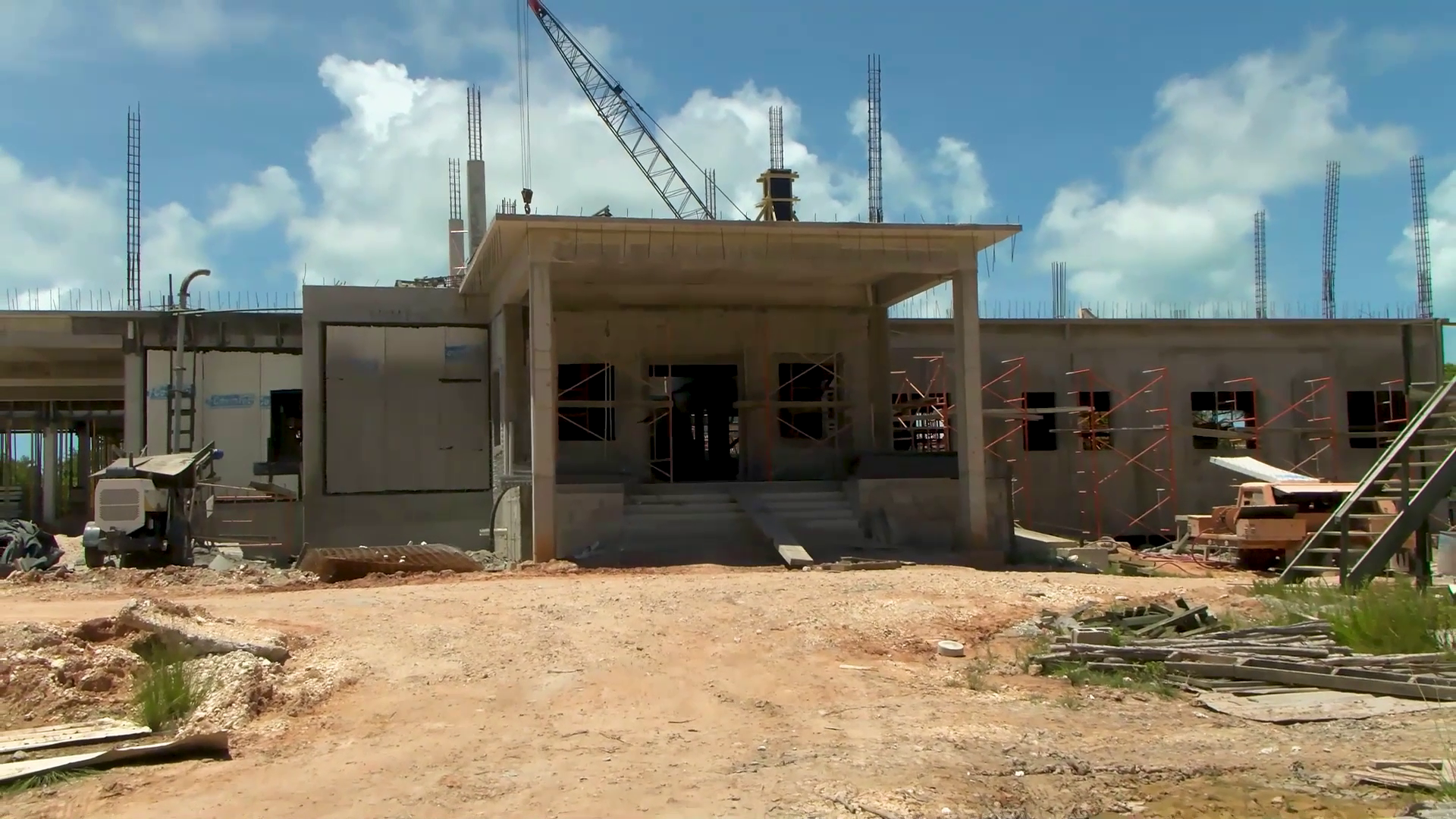
    A signature public infrastructure initiative on Belize’s Ambergris Caye has run into significant hurdles, with construction delays and unexpected budget overruns plaguing the development three years after funding was first committed.

    In 2023, Taiwan pledged $33 million Belize dollars to finance the construction of the new Ambergris Hospital, a much-needed healthcare facility designed to serve residents and visitors of the popular island. As of the May 2026 reporting date, the project remains unfinished, and emerging indications show that total spending on the hospital could end up millions of dollars above the original allocated budget.

    Belize’s Prime Minister John Briceño has openly acknowledged the cost overruns, attributing the massive unplanned increase to a broader, industry-wide surge in global construction material costs that has impacted infrastructure projects worldwide. In public comments, Briceño illustrated the severity of price hikes with a concrete example: bulk yellow construction sand that previously cost $850 Belize dollars just a few months earlier now carries a price tag of $1,700 Belize dollars.

    “You don’t need to be a genius to know that the cost of construction has gone up considerably,” Briceño told reporters. When pressed on who would cover the unexpected additional expenses, the prime minister outlined a path forward: government officials will meet with Taiwanese stakeholders to negotiate additional support, and any remaining funding gap will be covered by the Belizean national government.

    Andre Perez, the area representative for the region, offered a more optimistic timeline for the troubled project. In an interview with local outlet News Five, Perez stated that construction work is currently advancing at a rapid pace, with an official completion target set for December 2026.

    This report is a transcribed version of an evening television broadcast from the local outlet, with all creole speech transcribed using a standardized spelling system for accuracy.

  • Ebola, Hantavirus Take Center Stage in WHA Geneva Talks

    Ebola, Hantavirus Take Center Stage in WHA Geneva Talks

    The 79th World Health Assembly (WHA) officially opened this week in Geneva, bringing together delegates from 190+ nations to advance a sweeping agenda focused on reshaping the future of global public health. Against a backdrop of rising emerging infectious disease threats, the summit has placed two urgent outbreaks — Ebola and hantavirus — at the top of its priority list, even as a procedural vote to include Taiwan as an observer failed to pass.

    Belize’s Health Minister Kevin Bernard, leading the push for Taiwan’s observer status, used his official address at the assembly to reaffirm his country’s longstanding support for Taipei’s inclusion in global health governance. Bernand’s initiative, co-sponsored by 10 other like-minded countries, sought to add the issue of Taiwan’s participation to the assembly’s official agenda, but the proposal fell short of the support needed to advance.

    On the public health front, WHO Director-General Dr. Tedros Adhanom Ghebreyesus opened proceedings with a landmark announcement: he had already declared the ongoing Ebola epidemic spreading across the Republic of Congo and Uganda a Public Health Emergency of International Concern (PHEIC), the highest global alert level for infectious disease outbreaks. This move marks a break from precedent, as it marks the first time a WHO Director-General has issued a PHEIC before convening the organization’s independent emergency committee to review the outbreak.

    Dr. Tedros emphasized that the decision was not made lightly, noting it aligns with Article 12 of the International Health Regulations. He consulted with top health officials from both affected nations prior to issuing the alert, and acted out of deep concern over the rapid spread and growing scale of the outbreak. The WHO’s emergency committee was convened on the first day of the assembly to deliver further guidance on coordinated global response measures.

    Reflecting on the growing risk of cross-border infectious disease spread, Dr. Tedros pointed to the twin outbreaks of Ebola and hantavirus reported in the fortnight leading up to the assembly as clear evidence that transnational health threats demand coordinated international action. These events, he argued, underscore the critical importance of the International Health Regulations framework and the central role of the World Health Organization in leading global health security.

    Despite the urgent challenges facing global health, Dr. Tedros highlighted that the WHO has delivered meaningful progress across a range of priorities over the past term. The organization’s newly released results report features an interactive, comprehensive overview of these achievements, including granular scorecards and on-the-ground country case studies that demonstrate the impact of WHO programming around the world. Dr. Tedros encouraged delegates to engage deeply with the report to assess the organization’s work.

    Beyond outbreak response, the WHA’s three-day summit will wrap up on May 23, with delegates also set to deliberate on core priorities including strengthening national health systems, expanding access to universal health coverage, addressing the public health impacts of climate change, and improving global preparedness for future pandemics.

  • Orange Walk Turns Daily Kitchen Waste into Climate Action

    Orange Walk Turns Daily Kitchen Waste into Climate Action

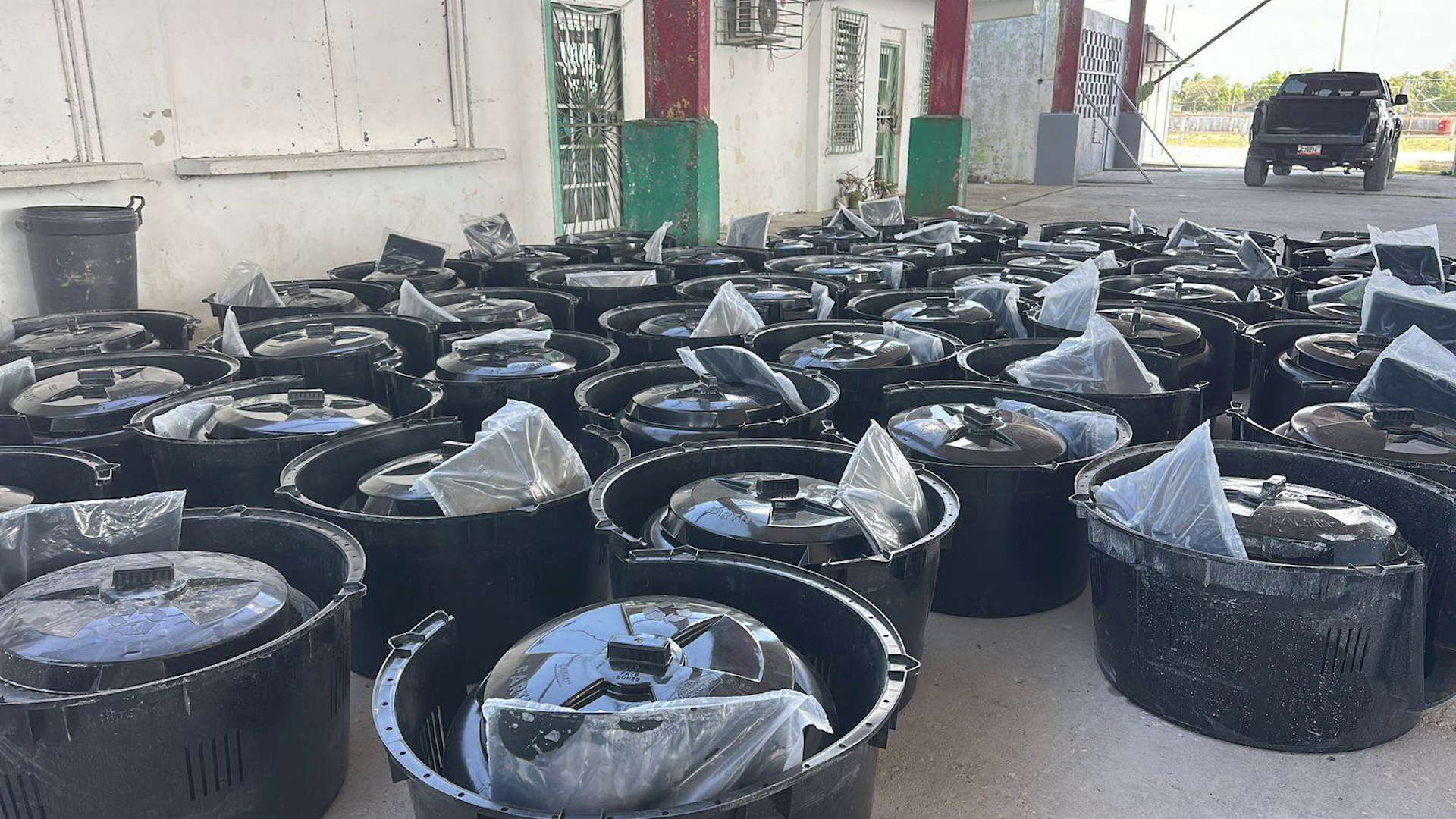
    As climate change accelerates and methane emerges as a critical contributor to global warming, the small town of Orange Walk is stepping up to the challenge with a ground-up sustainability initiative that starts in the most unexpected place: local residents’ kitchens. Scheduled for official launch in May 2026, the town’s first-ever Home Composting Program turns the everyday problem of household food waste into a tangible climate solution, diverting organic scraps from overflowing landfills and turning them into nutrient-rich compost. So far, 50 local households have already joined the program, receiving hands-on training and specialized tools to help them convert kitchen leftovers into a valuable soil amendment, marking a small but meaningful shift in how the community approaches waste management. The initiative is rooted in hard local data: according to Orange Walk Town Councilor Joyce Castillo, 32% of all municipal waste generated in the town is organic material that currently gets dumped at the town’s open landfill, where it decomposes without oxygen and releases methane — a greenhouse gas 80 times more heat-trapping than carbon dioxide. Without a fully operational waste transfer station to handle organic waste properly, landfill methane emissions have remained a persistent problem for the town, motivating local leaders to seek out community-focused solutions. The Home Composting Program is part of Orange Walk’s broader participation in the global Recycle Organics Program, an international initiative designed to cut global methane emissions by redirecting food and green waste from landfills to compost production. Local leaders drew insights and best practices from peer municipalities in other countries to shape the program’s design, adapting proven strategies to fit Orange Walk’s unique community needs. Complementing the residential composting push, the town also recently took delivery of a new industrial woodchipper, shared jointly with Benque Municipality through the Recycle Organics Program. This new equipment will allow the town to process yard waste and tree branches that were previously dumped in landfills, shredding the green waste into a material suitable for composting. Because Orange Walk does not yet operate a municipal composting facility, the town council has signed a formal memorandum of understanding with BSI Factory, a local facility that already runs its own composting operation. Under the agreement, BSI will accept all processed shredded yard waste from the town to integrate into its existing compost production workflow. Once the town’s new waste transfer station comes online — which local leaders hope will happen by the end of 2026 — the facility will no longer accept yard waste or organic material, making the new pre-processing and diversion systems even more critical to keeping organic material out of landfills. For Orange Walk, the initiative represents more than just a waste management upgrade: it’s a model for how small communities can take local action to address a global climate crisis, turning individual daily habits into collective impact. By engaging residents directly in waste reduction and pairing community participation with strategic municipal partnerships, the town is building a more sustainable, low-emission waste system that can serve as a blueprint for other small municipalities grappling with similar challenges.