标签: Belize

伯利兹

  • No Fades, No Dye, No Loose Hair at Mopan Tech

    No Fades, No Dye, No Loose Hair at Mopan Tech

    As the 2026 academic year approaches, a small technical high school in western Belize has thrown a long-simmering national conversation about school grooming standards back into the spotlight, drawing sharply divided responses from parents, educators and community members across the country.

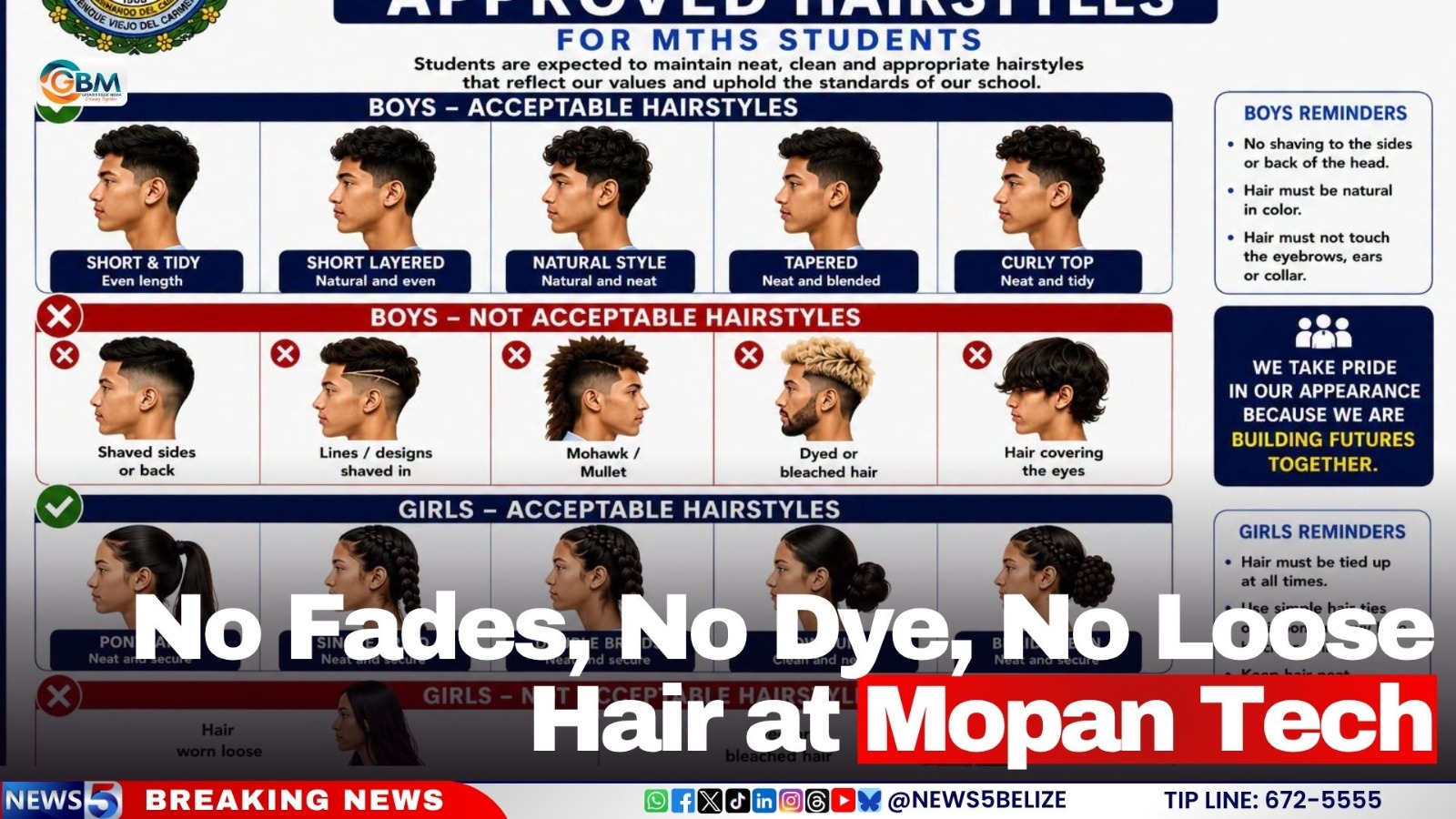
    Five days before Mopan Technical High School’s August 24 reopening in Benque Viejo del Carmen, Cayo District, school administrators published a detailed “Approved Hairstyles” guide to the institution’s official Facebook page. The visual guide, which features AI-generated images of student models demonstrating both permitted and prohibited styles, pairs clear illustrations with gender-specific grooming rules that leave little room for interpretation.

    For male students, the policy permits only short, neatly trimmed cuts including tapered fades and natural curly tops. All hair must remain its natural color, and cannot extend to touch the eyebrows, ears or collar. Shaving the sides or back of the head is explicitly forbidden. Styles ranging from mohawks and mullets to dyed or bleached hair and shaved decorative designs are marked as unacceptable. For female students, approved looks are limited to neat, secured ponytails, braids, and buns, with a requirement that all hair be tied up at all times using only simple navy blue, black, or white fasteners. Unbound loose hair and artificially colored hair are both prohibited.

    In the post’s accompanying note to parents, school leadership framed the policy as far more than a superficial focus on appearance. Addressing the common question of what hair has to do with academic learning, administrators argued that grooming standards are a core part of preparing young people for long-term success beyond the classroom. Learning to adhere to shared appearance expectations, practice self-discipline, respect institutional rules, and present oneself professionally, the school noted, are foundational skills for becoming responsible, successful adults.

    Principal Katie Jones doubled down on this reasoning in an interview with local outlet News Five, emphasizing that the policy is rooted in building student discipline rather than restricting personal expression. “While some people say that hair has nothing to do with learning, we do believe that it sets discipline and standards for our school,” Jones explained. She added that clear grooming boundaries help acclimate students to professional workplaces, where strict uniform and appearance expectations are standard practice. “It is our fault if we don’t really have these things that are going to guide them throughout their life,” she added.

    This latest policy update comes more than a year after a national debate over school hair policies first erupted in Belize, triggered by similar controversies at multiple institutions including Anglican Cathedral College in August 2025. At that time, the Belize National Teachers’ Union (BNTU) issued an official statement opposing policies it labeled as discriminatory, aligning itself with the UBAD Educational Foundation. “The BNTU stands in solidarity with UBAD Educational Foundation against discriminatory hair policies in schools. We are deeply concerned by reports of students being reprimanded, suspended, or otherwise penalized for wearing hairstyles that reflect their heritage or religious beliefs,” the union said at the time.

    When reached for comment by News Five, Chief Education Officer Yolanda Gongora confirmed that the Ministry of Education is currently reviewing the matter but declined to release an official statement ahead of the review’s completion.

    Online, the school’s Facebook post has sparked a flood of public comments that highlight the deep divide in Belizean public opinion on the issue. Supporters of the policy have praised it as a necessary step to prepare students for the workforce. “Great initiative,” one commenter wrote. “When they go into the real world, it’s not if you want or like… you have to follow the rules of your job or no job at all.” Another supporter echoed that view, writing “I concur; it’s called discipline and self-care.”

    Critics, however, have pushed back against the restrictions, questioning their relevance to academic outcomes and raising concerns about cultural exclusion. Multiple commenters argued that schools should abandon what they described as an outdated “colonialist mindset” that prioritizes arbitrary appearance rules over actual learning. “Imagine thinking hair length dictates IQ. Focus on the curriculum, not the barber shop,” one critic wrote. Other parents pointed out that the list of approved styles fails to account for diverse cultural hair traditions. One parent of a Creole descent student asked, “What about the females of Creole descent? Braids and cornrows have become very popular among schoolgirls,” noting that the narrow approved options leave little room for culturally significant hairstyles.
  • S&P: PUP’s Supermajority Hasn’t Translated Into Fiscal Reform

    S&P: PUP’s Supermajority Hasn’t Translated Into Fiscal Reform

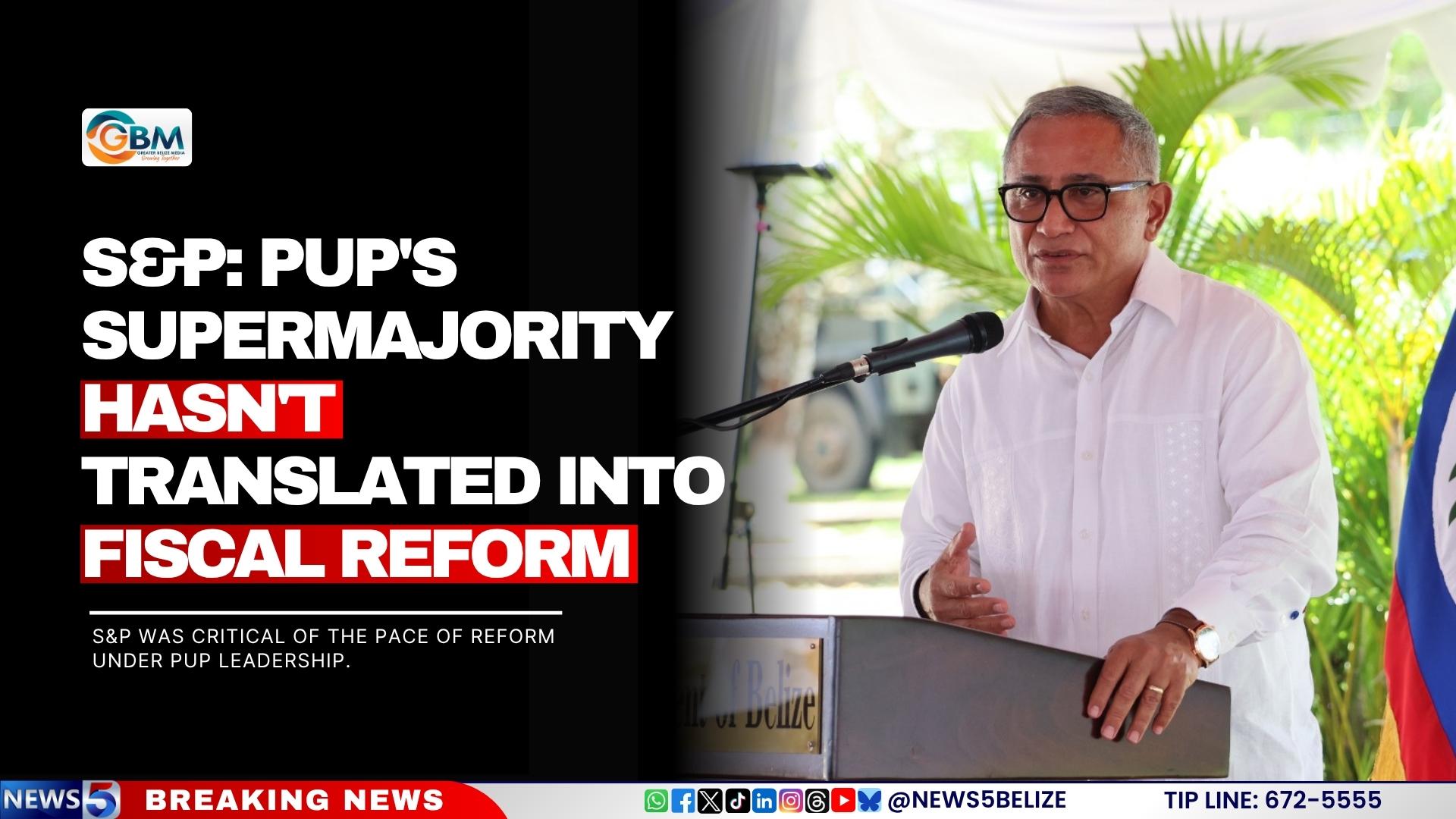
    In its latest sovereign credit evaluation published on August 19, 2026, S&P Global Ratings has reaffirmed Belize’s long- and short-term sovereign credit ratings at B-/B while delivering a pointed assessment of the country’s political and fiscal trajectory. The ratings agency projects that the ruling People’s United Party (PUP), which has held national office since 2020 and secured a legislative supermajority in 2025’s general election, will retain power through the next scheduled national vote in 2030. S&P analysts note that the PUP’s dominant political position was built against a backdrop of a deeply fragmented opposition, and the upcoming 2027 municipal polls could even strengthen the party’s hold on governance across the country.

    Despite the clear popular mandate and unchallenged political control the PUP holds, S&P has raised significant concerns over the slow pace of critical fiscal reforms that the agency says are necessary to shore up Belize’s long-term financial stability. Among the highest-priority unimplemented policy changes is the long-planned overhaul of the Pension Plan for Public Officials, a reform designed to reduce unsustainable long-term strain on the country’s national budget. S&P reports that the initiative has not moved forward in any meaningful way to date.

    Two other core fiscal measures also remain stalled, per the ratings report: the establishment of a dedicated sinking fund to cover future amortization payments for Belize’s Blue Bonds, and the enactment of a formal fiscal responsibility law to provide a stable framework for long-term public financial management.

    S&P stresses that repeated policy delays across successive Belizean administrations — not only the current PUP government — have created persistent headwinds for the country’s ability to maintain sustainable debt servicing. Belize has faced five sovereign debt defaults over the last 20 years, a historical pattern that continues to limit the country’s access to affordable external commercial financing, the agency added.

    The report does acknowledge that the current administration has taken limited positive steps to improve its fiscal standing. These include expanding and improving tax collection through the rollout of mandatory electronic invoicing, and a plan to launch a Semi-Autonomous Revenue Authority by 2027 — a reform that was first approved by legislators back in 2022.

  • S&P Keeps Belize at B-, Warns of Widening Deficits

    S&P Keeps Belize at B-, Warns of Widening Deficits

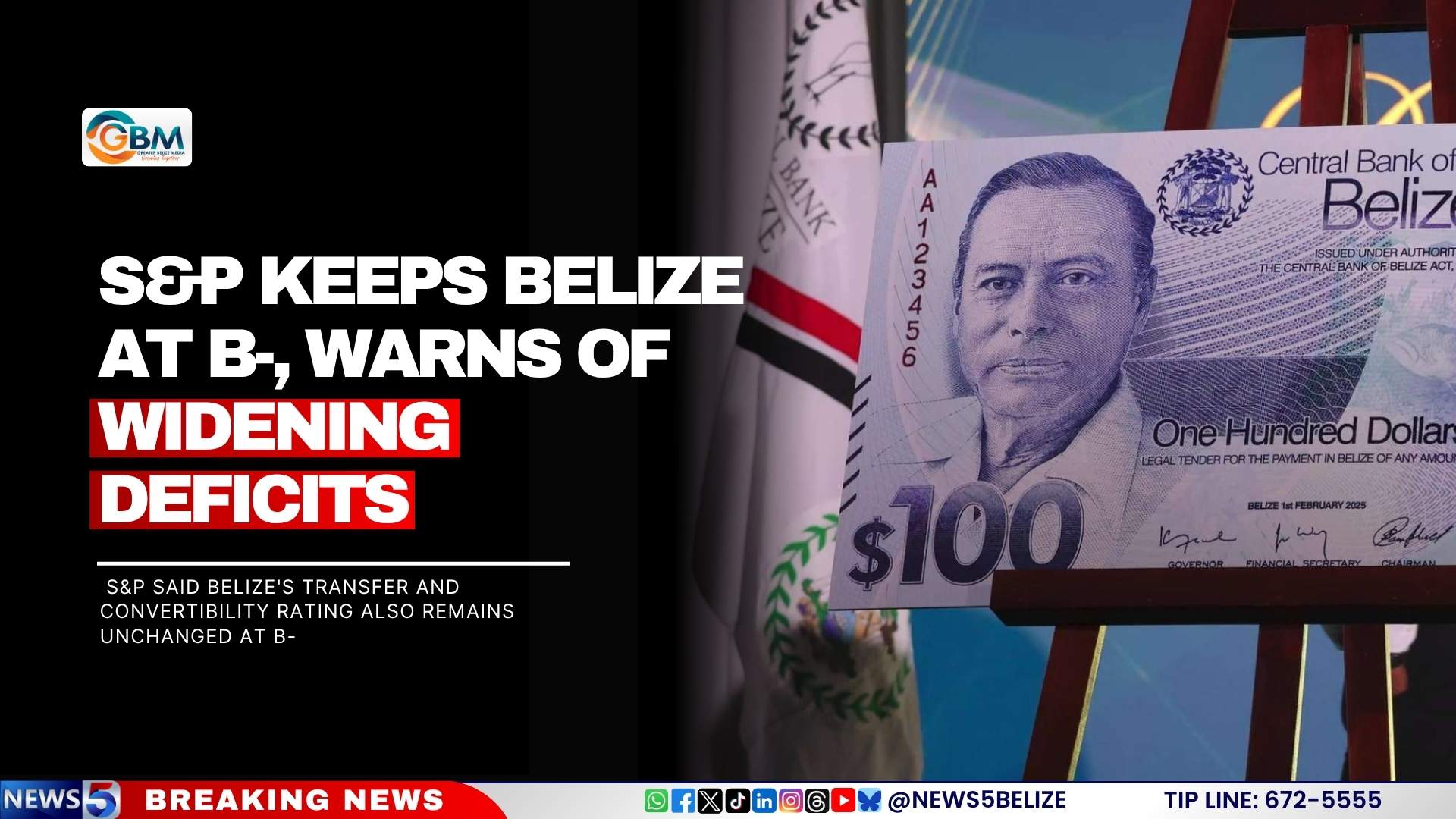
    On August 19, 2026, S&P Global Ratings announced it would retain Belize’s B-/B sovereign credit rating with a stable outlook, while issuing warnings about expanding fiscal and current account deficits over the coming two years. The rating agency linked the expected deficit expansion to ongoing volatility in global crude oil markets, which has pushed up the Central American nation’s import costs.

    Alongside the main sovereign rating, S&P confirmed that Belize’s transfer and convertibility assessment will also hold steady at B-. The stable outlook is rooted in the agency’s projection that Belize will see moderate economic growth aligned with its long-term potential, and that even with mounting pressure from elevated oil prices, the country’s twin deficits will remain manageable.

    For 2026, S&P forecasts real GDP growth of 2.0 percent, a slowdown compared to previous years driven primarily by cooling expansion in two key sectors: business process outsourcing (BPO) and tourism. The tourism sector, a cornerstone of Belize’s economy, is expected to soften in 2026 as higher oil prices drive up travel costs and reduce the number of overnight tourist stays. Even so, S&P notes potential upside on the horizon: new air routes launched by BermudAir and Air Canada are expected to improve Belize’s connectivity to North American and European markets, which could boost visitor numbers in coming years.

    The BPO sector, which employs roughly 9 percent of Belize’s total workforce, faces a separate long-term challenge. S&P warns that the rapid global adoption of artificial intelligence is likely to automate many routine business functions that are currently handled by Belizean outsourcing providers, reducing global demand for these services over time.

    On the fiscal front, Belize delivered a nearly balanced budget in 2025, posting a tiny surplus equal to 0.03 percent of GDP. That positive result came from moderate revenue growth and cuts to capital spending. But S&P projects that trend will reverse sharply in 2026, with the general government posting a deficit equal to 2.5 percent of GDP. The shift is driven by multiple factors: rising imported energy costs, a recent cut to gasoline excise taxes, government-mandated electricity rate caps, and growing public sector payroll expenses. Already, payroll and pension costs make up 41 percent of total government spending, and an additional 4.0 percent wage increase is scheduled to take effect in October 2026.

    Net general government debt rose to 66 percent of GDP in 2025, up from 64.5 percent in 2024. S&P attributes the increase largely to domestic borrowing taken on after the nationalization of the country’s energy assets. Over the period through 2029, the rating agency expects net government debt to average roughly 67 percent of GDP. S&P also highlighted growing debt servicing costs, noting that the stepped-up coupon structure on Belize’s $364 million Blue Bond will reach its maximum rate of 6.04 percent in 2026. This change will push total debt servicing costs above 10 percent of total government revenue for the entire forecast period.

    Belize’s current account deficit expanded to 2.8 percent of GDP in 2025, and S&P projects it will widen further to 4.6 percent of GDP in 2026. The widening deficit is driven by a growing trade gap caused by more expensive fuel imports, continued reliance on electricity imports, and softening tourism revenue. Through 2029, the current account deficit is expected to average 2.8 percent of GDP, and S&P projects it will be primarily financed by foreign direct investment targeted at tourism, real estate, and infrastructure projects.

    Looking ahead, S&P outlined two potential paths for Belize’s rating over the next 12 to 18 months. The agency could downgrade the rating if external or domestic economic shocks weaken fiscal performance or restrict Belize’s access to official financing. On the other hand, an upgrade would be possible if the government delivers concrete policy commitments to strengthen fiscal results and sustain steady economic growth, or if external vulnerabilities moderate alongside clear evidence of policy progress.

  • PSU President Challenges AG: “How Many Complaints Have You Made?”

    PSU President Challenges AG: “How Many Complaints Have You Made?”

    A public confrontation over government accountability has emerged in Belize, where the leader of the nation’s largest public sector union is pressing the country’s top auditor to answer for unexplored enforcement action against officials responsible for widespread mismanagement of official government records.

    Dean Flowers, president of the Public Service Union (PSU), laid out the challenge during a press conference hosted Tuesday by the National Trade Union Congress of Belize. His comments came in direct response to recent public remarks from Auditor General Maria Rodriguez, who last Thursday appeared on the local current affairs program *Open Your Eyes* to detail the deep, systemic barriers her office faces in completing routine government audits.

    During that interview, Rodriguez painted a stark picture of record-keeping failure across Belize’s government ministries. She explained that decades of accumulated physical documents have left agencies critically short on storage space, forcing years of official records to be packed away in unventilated, unconditioned storerooms that lack basic utilities like electricity. Without climate control, documents quickly develop mold, decay, and become permanently damaged or illegible long before auditors can access them for financial reviews. Rodriguez labeled the ongoing crisis a “systemic” failure that has contributed to a crippling backlog of uncompleted annual audit reports. As of August 2026, the most recent finalized audit report released by her office covers the 2017-2018 fiscal year, leaving nearly a decade of government spending unvetted.

    Beyond storage-related damage, Rodriguez also noted that public officials have at times withheld original documents to obstruct audit work. Because photocopied records can easily be altered to misrepresent official transactions, her auditors require access to original primary documentation to verify spending. She confirmed that her team has encountered multiple cases where altered copies contradicted the content of original documents, creating further delays and uncertainty in the audit process.

    In his response, Flowers questioned why Rodriguez has not exercised the full enforcement authority granted to her office under Belize’s Finance and Audit Reform Act (FARA) to hold errant public officials accountable for obstructing audits and destroying records. He specifically cited Section 13(4) of the legislation, which explicitly grants the Auditor General the power to file formal disciplinary and criminal complaints against public officers who violate record-keeping rules.

    Under that provision, Rodriguez can file disciplinary complaints directly with the Public Service Commission, which has the authority to terminate employment for officers found guilty of misconduct. She also has the power to refer criminal cases to the Director of Public Prosecutions for formal charges under Belize’s Criminal Code.

    Flowers is now demanding public transparency around how often the Auditor General has used this power. “How many complaints have Maria Rodriguez laid before the Public Service Commission for those public officers to be sent home?” Flowers asked reporters Tuesday. “How many complaints have Maria Rodriguez made to the Director of Public Prosecution under the Criminal Code or any other law, as the FARA says, for people to be charged and prosecuted?”

    The exchange has reignited longstanding questions about institutional accountability in Belize, focusing attention on a core gap between identifying public sector wrongdoing and taking actionable enforcement against the officials responsible. For Flowers and the PSU, the crisis of missing and damaged records is not just an administrative oversight—it is a failure of enforcement that demands clear answers from the nation’s top auditor.

  • Belize Calls for Action Over Attacks on Palestinian Communities

    Belize Calls for Action Over Attacks on Palestinian Communities

    In a strongly worded official statement released on August 19, 2026, the Government of Belize has condemned the sharp escalation of violence targeting Palestinian civilians across the West Bank and East Jerusalem, calling for urgent coordinated global intervention to address the worsening humanitarian crisis.

    The Central American nation voiced profound alarm over the rapidly deteriorating security situation, warning that ongoing unaddressed hostilities are creating a cycle of further aggression against Palestinian communities. According to latest data compiled by United Nations monitors, violence in the region has reached unprecedented levels in 2026, surpassing all recorded totals since systematic monitoring of the conflict began. This year alone, violent incursions, home demolitions, and forced evictions have displaced thousands of Palestinian people from their ancestral lands and residences.

    Extending sincere condolences to the families of all victims of the ongoing violence, Belize reaffirmed its unwavering opposition to the systematic destruction of Palestinian communities. The government explicitly placed responsibility for upholding civilian safety on Israel, noting that binding international humanitarian law mandates the occupying power to protect all civilians within the territories under its control.

    Belize called on Israeli authorities to intervene immediately to halt attacks, launch full and transparent investigations into reported abuses, and hold all perpetrators of violence against Palestinian civilians accountable under law. The country’s Ministry of Foreign Affairs also issued an explicit demand for an immediate end to all policies that constitute collective punishment against Palestinian families, a practice widely condemned under international law.

    Beyond addressing the Israeli government, Belize issued a formal call to the broader international community to take concrete meaningful action to protect civilian lives and uphold universally recognized legal standards in the region. Reaffirming its longstanding support for a negotiated two-state solution as the only sustainable path to lasting peace between Israelis and Palestinians, the Belizean government pledged to continue elevating these pressing concerns at United Nations forums and other multilateral bodies.

    The statement from the Government of Belize was aligned with comments made by Prime Minister Johnny Briceño, who separately called for immediate justice for Palestinian people, alongside addressing ongoing humanitarian and security crises in Haiti.

  • CXC Sounds Alarm After 35,000+ Candidates Skip Exams

    CXC Sounds Alarm After 35,000+ Candidates Skip Exams

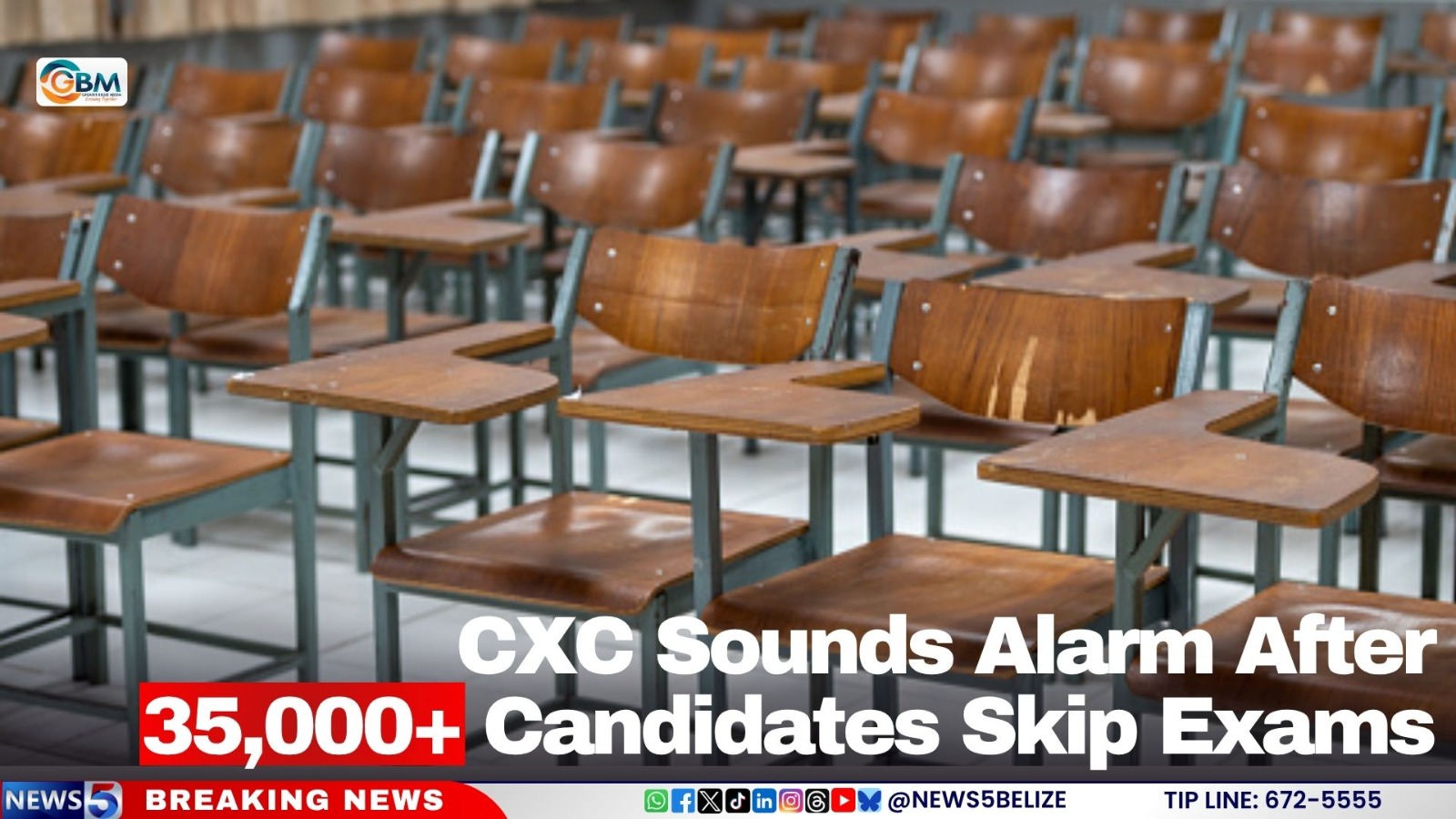
    The Caribbean Examinations Council (CXC) has issued a public warning over a worrying trend of widespread candidate absenteeism during the 2026 May-June examination cycle, with official data confirming more than 35,000 registered candidates failed to show up for their scheduled assessments. The alarming figures were publicly released during an official results presentation held in Anguilla, prompting urgent concern from senior regional education officials.

    Breaking down the absenteeism data, the council reported that 3,534 candidates registered for the Caribbean Advanced Proficiency Examination (CAPE) – the region’s advanced post-secondary entrance assessment – did not attend their tests. Absenteeism rates were nearly 10 times higher for the Caribbean Secondary Education Certificate (CSEC), the core secondary school leaving examination, where 32,403 registered candidates were marked absent.

    Nicole Manning, CXC’s Director of Operations, highlighted the gravity of the issue during the official results unveiling. “This is a big concern of the Caribbean Examinations Council and continues to be a concern for us,” Manning stated, noting that candidates who skip their exams automatically forfeit the opportunity to earn a final qualifying grade, a critical credential for further education and employment across the Caribbean.

    Internal surveys conducted by the CXC have identified the primary driver of this trend: most absent candidates made a deliberate choice to skip exams due to feelings of insufficient preparation for the assessments. Manning pushed back against this decision, urging all future registered candidates to attend their scheduled exams and attempt all questions regardless of their perceived level of readiness.

    Widespread absenteeism is not the only challenge the regional examination body is facing this cycle. The CXC also noted a sharp uptick in candidate misconduct and examination irregularities, with 128 confirmed cases of rule-breaking recorded in 2026, a significant jump from 80 documented incidents in the previous year’s examination cycle. The dual challenges of growing absenteeism and rising misconduct have put new pressure on the CXC to address systemic issues impacting regional secondary and post-secondary assessments.

  • ‘I am Ready to Debate the Whistleblower’s Bill’ Says Union Senator

    ‘I am Ready to Debate the Whistleblower’s Bill’ Says Union Senator

    A long-delayed piece of anti-corruption legislation in Belize is back at the center of political tensions, as a senior trade union senator has issued an open challenge to the ruling Briceño administration to end the gridlock around the long-awaited Protected Disclosure Bill, better known as the Whistleblower’s Bill.

    Glenfield Dennison, the union-appointed Senate member, made the call during a Tuesday press briefing hosted by the National Trade Union Congress of Belize (NTUCB), where he slammed the government for allowing the critical anti-corruption legislation to languish in the House of Representatives for five full years. First drafted in 2021, the bill was developed after a decade of sustained advocacy from labor groups and anti-corruption activists who have pushed for formal legal protections for people who expose official misconduct and graft.

    “This legislation exists to protect the people who do what we desperately need more of in this country: speak up about corruption,” Dennison told reporters. He connected the urgent need for the bill to ongoing public scrutiny of the Ministry of Defence, where leaked documents have revealed that multiple high-value contracts were split into payments valued under the $10,000 threshold to avoid stricter oversight. He pointed specifically to the harassment targeting the sources who leaked evidence related to the ongoing Mira Millions corruption scandal, noting that the law would shield exactly these types of whistleblowers from retaliation.

    The issue gained new clarity after Nadia Caliz, president of the Belize National Teachers Union, confirmed that the government recently placed the bill on an indefinite pause during a House committee meeting. Out of 19 policy proposals labor groups brought forward for legislative consideration, Caliz said, only the whistleblower legislation was marked as “on pause” rather than formally rejected, leaving its future uncertain.

    Dennison has issued a clear ultimatum to the administration: move the bill forward for a full vote and debate within 90 days. “Let us get that out in the next 90 days. I am ready to debate that in the Senate. Senator Channona, are you ready to debate that in the Senate? I am ready,” he said.

    The path to the bill has been decades in the making. Unions first formally demanded a whistleblower protection law back in 2012, when the previous Barrow administration held power, meaning the advocacy effort has now stretched 14 years. A full legal review of the 2021 draft completed earlier this year found that the current text still falls short of global best practices, with critical gaps including no provisions for financial incentives for whistleblowers, no guarantees for personal physical safety, and no mandate for an independent oversight body to receive and investigate disclosures.

    For its part, Prime Minister John Briceño, leader of the ruling People’s United Party (PUP), addressed the Mira Millions scandal during a July national party council meeting in Dangriga, where he sought to reassure the public that his administration would not cover up wrongdoing. “When we see these mistakes, we don’t hide it. We don’t put it under the rug. We fix it. Because you put us to work for you. You are our bosses,” Briceño said. That commitment is now being tested by labor leaders who say the continued pause on the whistleblower bill contradicts that public pledge of transparency.

  • MUB Points Finger At Belize Team over Tikal Backlash

    MUB Points Finger At Belize Team over Tikal Backlash

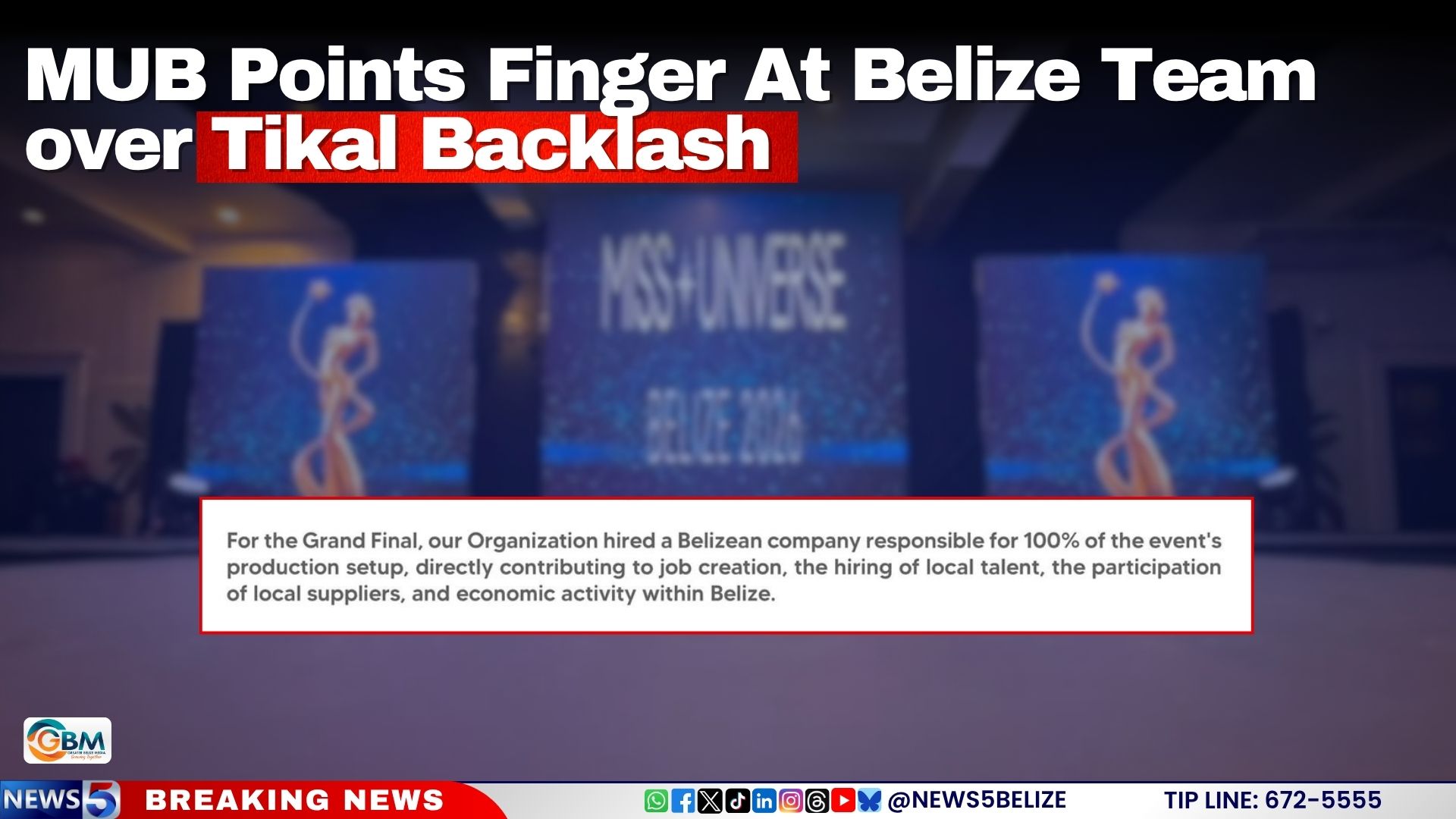
    The 2026 Miss Universe Belize pageant has found itself at the center of widespread public outrage after a major cultural misstep during a segment dedicated to celebrating Belizean national heritage. What was meant to be a moment to highlight the Central American nation’s unique cultural legacy instead drew intense criticism when an image of Tikal, Guatemala’s most famous pre-Columbian archaeological site, was featured prominently on broadcast screens.

    In an official statement released on Tuesday, the Miss Universe Belize (MUB) organization broke its silence on the controversy, placing full responsibility for the error on the local Belizean production team contracted to handle all visual elements for the event. “We were equally surprised to see Tikal appear on screen during that heritage segment,” the organization noted, confirming that every graphic, design and piece of artwork used throughout the competition was curated and selected exclusively by the local Belizean production professionals. MUB has declined to release the name of the specific team or private agency tasked with the visual production work, leaving questions about accountability still unanswered for many viewers.

    The Tikal blunder is not the only misstep to plague this year’s pageant, which marks the first edition under new ownership by an El Salvador-based company. National Director Destiny Wagner, who was appointed to her role just seven weeks before the August 15 grand finale, previously addressed a separate error in a Monday Facebook post. During the final elimination round, hosts incorrectly announced a Top Six semifinalist group instead of the planned Top Five, creating widespread confusion among both contestants and audiences. Wagner issued a formal apology for that mistake, saying “It should not have happened, and I sincerely apologize to the delegates and everyone watching who was understandably confused.”

    Wagner explained that the string of production errors – which also included a disruptions during the competition’s question-and-answer round – stem directly from the extremely compressed seven-week timeline the organizing team was forced to work within. From her appointment on June 26 to the live grand finale, the team had to rush to put every element of the event together, leaving little room for error checking or revisions. “Was everything perfect? No! We are learning. We are growing. We are adapting,” Wagner said in her statement, framing the mistakes as growing pains for the newly restructured organization.

    Moving forward, MUB has pledged to implement stricter international standards for both production quality and competition scoring in future pageants to prevent similar missteps. The organization emphasized that the missteps from this year’s event will serve as important lessons to strengthen the pageant program long-term. Now, MUB is calling on the Belizean public to set aside the controversy and rally behind the newly crowned titleholder, Caleigh-Rose West, who will go on to represent Belize at the upcoming international Miss Universe competition. “It is in your hands, and in the hands of all Belizeans, to speak positively about Belize and about what we want to project to the world through our worthy representative,” the organization’s statement concluded.

  • Electricity Bills Just Went Up, Again

    Electricity Bills Just Went Up, Again

    Starting from August 2026, most electricity customers across Belize will face another increase in their monthly utility bills, after the nation’s Public Utilities Commission (PUC) gave final approval for a 1.5 cent per kilowatt-hour Cost of Power Adjustment (COPA) proposed by Belize Electricity Limited (BEL).

    This latest rate adjustment is not a random one-off increase, but the first formal change rolled out under a groundbreaking new regulatory sandbox program designed by PUC. This experimental framework shifts the industry toward a more transparent, monthly-based system that tracks BEL’s real-time power generation and procurement costs, replacing the older static pricing model that often lagged behind actual market fluctuations.

    According to statements from BEL, over the previous six months, the utility’s actual power costs have run 4.3 cents per kWh higher than the baseline reference cost that PUC previously approved. Under the new regulatory sandbox rules, however, monthly COPA adjustments — whether upward or downward — are capped at 1.5 cents per kWh. This cap prevents consumers from being hit with the full cumulative cost increase in a single billing cycle, spreading the extra cost out over multiple months to soften the financial blow.

    The new surcharge will not apply to all customers: low-income households enrolled in the Social Rate program remain fully exempt from the COPA adjustment. Additionally, the extra charge is not subject to the country’s Goods and Services Tax, and will be listed as a separate line item on customer bills rather than being hidden in the base electricity rate, to improve billing transparency for consumers.

    Unlike permanent base rate increases, future monthly COPA adjustments are not locked in as ongoing growth. Every month, BEL is required to submit fully verified financial and operational data to PUC, which will then re-evaluate the upcoming month’s adjustment based on the utility’s actual power costs. Depending on market conditions and procurement outcomes, future adjustments could range from additional small increases to decreases, a neutral zero adjustment, or even customer rebates if power costs drop below the reference baseline.

    BEL has emphasized that the new monthly adjustment mechanism is designed to balance two key priorities: helping the utility recover the actual costs it incurs to purchase and supply power to customers across the country, while also shielding consumers from sudden, dramatic spikes in electricity prices that could disrupt household budgets. For August 2026, though, the immediate impact for non-Social Rate customers will be a clear extra cost of 1.5 cents added to every kilowatt-hour they consumed during the billing period.

  • Caribbean Media Freedom Award Goes to Belizean Journalist Jules Vasquez

    Caribbean Media Freedom Award Goes to Belizean Journalist Jules Vasquez

    On Tuesday, the global conversation around independent journalism shifted its focus to the Caribbean, as a landmark new regional award was launched to honor the individuals and institutions that stand guard over the public’s fundamental right to accurate, uncensored information. The inaugural Caribbean Defender of Media Freedom Award was jointly presented by the Center for Media Integrity of the Americas and the Caribbean Broadcasting Union (CBU) during the opening ceremony of the CBU’s 57th Annual General Assembly, hosted this year in Georgetown, Guyana.

    Three standout nominees were shortlisted for the first iteration of the award, each representing a distinct, critical front in the ongoing fight for independent journalism across the region: Jules Vasquez, an investigative journalist from Belize; Wesley Gibbings, a veteran journalist and media freedom advocate from Trinidad and Tobago; and the Media Institute of the Caribbean, a regional non-profit supporting journalistic work.

    After deliberation, judges selected Vasquez, news director of 7News Belize, as the first recipient of the honor. Vasquez has built his decades-long career on high-stakes investigations into systemic corruption and demands for public sector accountability, work that has repeatedly pushed for transparency in governance across Belize. In his emotional acceptance speech, Vasquez emphasized that the award was not a solo achievement. “When we stand here solitary, there is a suffering family behind us that you don’t see, a family who misses their father or mother… And then it’s on to the next one, back on the rollercoaster that we are all on. I’m always aware that I don’t stand here alone. Behind me is a committed team of professionals, past and present,” he said.

    The two other nominees, while not selected for the top honor, have each left indelible marks on Caribbean press freedom. Gibbings, a veteran broadcaster and journalist, was recognized for more than 40 years of work building institutional infrastructure for press freedom across the Caribbean. He is the founder of the Association of Caribbean Media Workers, serves as Vice President of the Media Institute of the Caribbean, and holds the distinction of being the Caribbean region’s only representative on the Council of the International Freedom of Expression Exchange. In his role as an Acting Independent Senator in Trinidad and Tobago, Gibbings has led legislative efforts to enshrine legal protections for journalists’ confidential sources, a key safeguard against government overreach.

    The Media Institute of the Caribbean, meanwhile, earned its nomination for more than a decade of regional outreach supporting working journalists. Founded in 2012, the institute has delivered training to more than 800 journalists across over 25 Caribbean and Latin American countries through more than 525 targeted workshops. It has also led a coordinated regional campaign to adopt national Freedom of Information legislation in partnership with the UK Foreign, Commonwealth and Development Office, and runs critical support programs focused on digital safety for journalists targeted by harassment, as well as mental health resources for reporters working under high pressure.

    Organizers of the award note that the three nominees together highlight a core truth about the fight for media freedom across the Caribbean: this battle cannot be won by a single newsroom, a lone journalist or one isolated organization. Instead, it relies on a collective of dedicated actors who remain committed to holding power to account in the face of mounting challenges, including growing political pressure, widespread financial instability for local news outlets, the rapid spread of disinformation, and the disruptive impact of new digital technologies.

    Following the presentation of the inaugural award, the CBU will host its 37th Media Awards Gala on the evening of August 19, with a live broadcast set to begin at 7:00 pm local time. The event will be streamed globally on News 5 Live’s official Facebook and YouTube channels for audiences unable to attend in person.