标签: Belize

伯利兹

  • $200 in Customs Fees for a Birthday Card?

    $200 in Customs Fees for a Birthday Card?

    A Belizean man has sparked public outcry after facing a chaotic sequence of bureaucratic hurdles and wildly inflated customs charges to retrieve a simple birthday card mailed from his 82-year-old mother in the United States. The incident, which unfolded in late May 2026, has cast a spotlight on inconsistent and seemingly arbitrary customs procedures in the Central American nation.

    After previous greeting cards sent via standard postal service were either lost or severely delayed, the mother opted to pay nearly $300 in advance for FedEx courier service, hoping to guarantee the handwritten birthday card would reach her son ahead of his birthday on Thursday. What was supposed to be a heartfelt gesture quickly turned into a frustrating saga of conflicting notifications and confusing fee demands.

    When the small envelope marked as a greeting card arrived at the Belizean border, the recipient was shocked to learn he would need to pay an extra $103.19 in customs clearance fees — equal to just over BZ$210 — before the package could be released to him. Speaking to local outlet News 5, the man emphasized that the envelope held nothing more than a simple paper greeting card, calling the massive charge completely unreasonable. Compounding his frustration, he was also warned that unclaimed packages would accrue a daily storage fee of BZ$7, adding a ticking financial penalty to the already baffling situation.

    “I’ve had cards go missing or turn up months late through regular post, that’s why mom paid for a courier. Now they want hundreds of dollars just to hand over a birthday card. It’s becoming kind of ridiculous,” he told reporters.

    When News 5 reached out to the Belize Customs Warehouse for comment on the case, officials declined to share any specific details about why the envelope had been flagged for fees, only confirming that the issue had been “resolved.” The department did not respond to questions about whether the initial fee demand aligned with official customs pricing policies, and independent verification of the cause for the hold has not been possible.

    The sequence of events that followed only added to the chaos. Shortly after the outlet’s inquiry, the man received a notification that his package had been cleared for pickup starting Tuesday. But less than two hours after that good news, he was told customs had pulled the package back again for an internal investigation. “I think I’m in some weird dream or something. This just seems ridiculous,” he said of the back-and-forth.

    By the end of the afternoon on the same day, the man received a third notification that the envelope would finally be released for a drastically reduced fee of just $10. It remains unclear what prompted the multiple shifts in the customs department’s decision and the massive cut to the original fee demand, leaving the recipient and local observers with lingering questions about the consistency and transparency of the country’s customs processing system.
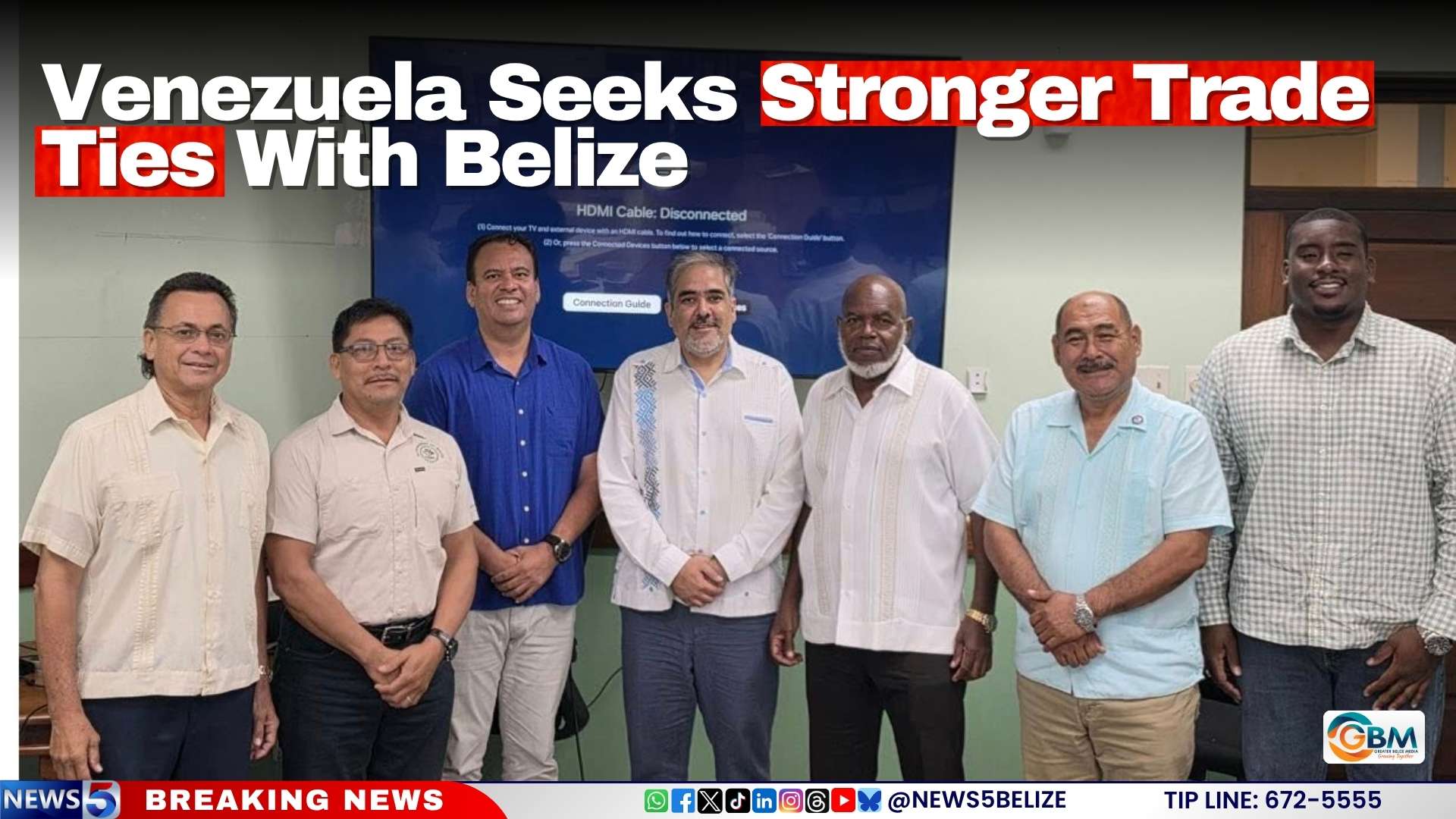

  • Venezuela Seeks Stronger Trade Ties With Belize

    Venezuela Seeks Stronger Trade Ties With Belize

    Months after a seismic leadership shift in Caracas that saw acting President Delcy Rodríguez take the reins of government, Venezuelan and Belizean senior officials have gathered for high-level talks aimed at expanding economic and diplomatic collaboration between the two Latin American nations.

    The May 2026 meeting brought together Venezuela’s Ambassador to Belize Gerardo Argote and cabinet ministers from Belize’s key portfolios including Agriculture, Education, Energy and Economic Development. During the closed-door discussions, Argote delivered an on-the-ground briefing for the Belizean delegation, updating them on the current political and economic landscape in Venezuela following the January leadership transition.

    Embassy sources confirmed that talks centered heavily on Venezuela’s recent economic gains, most of which are tied to expansion plans in its critical oil and gas sector. Argote also walked attendees through existing foreign investment agreements that Venezuela has already closed with international partners, extending an open invitation for Belizean stakeholders to explore new cross-border trade opportunities that could benefit both nations.

    In a post-meeting statement, the Venezuelan Embassy characterized the dialogue as overwhelmingly productive, noting that the session had cleared up long-held misperceptions about Venezuela’s current situation among Belizean leadership. Beyond economic gains, officials added that the talks have also laid the groundwork for deeper political cooperation between the two governments in the coming months.

    The diplomatic outreach comes against a dramatic backdrop in Venezuelan politics: in a January 3, 2026 military operation carried out by U.S. forces, former president Nicolás Maduro was captured in Caracas, ending his years-long tenure and opening a period of ongoing political transition. Since that leadership shakeup, Rodríguez has stepped into the role of acting president, steering the country through a period of unresolved political uncertainty while prioritizing a policy agenda focused on attracting international capital and strengthening partnerships with neighboring and regional nations.

  • NEBL Responds to Disputed Game Letter and Scheduling Confusion

    NEBL Responds to Disputed Game Letter and Scheduling Confusion

    As the National Elite Basketball League (NEBL) enters its final stretch of regular season play, with a $100,000 grand prize awaiting the eventual champion, a growing web of controversy has thrown the league’s credibility into question, centered on a disputed matchup, a counterfeit official letter, and conflicting scheduling announcements from league leadership.

    The root of the conflict stretches back to an April 25 matchup between the San Pedro Tiger Sharks and EZ Investments Giga Dream Ballers, a game that ended in unresolved dispute. In the weeks that followed, team representatives have received contradictory guidance from the NEBL office over how the league would resolve the contested result, leaving multiple squads uncertain of their playoff positioning.

    The outcome of a rematch for the disputed game is far from trivial: it has the potential to shift the final playoff seeding for multiple teams, including the Cayo Western Ballaz, a side that has publicly pushed back against the league’s plan to replay the matchup. Earlier in May, the Cayo Western Ballaz issued a formal threat: if the league moved forward with the rematch, the team would refuse to take the court for their scheduled May 16 game against the Belize City Defenders.

    Just days before that scheduled game, a letter bearing the NEBL’s official letterhead dated May 15 spread widely across social media. The document laid out a clear ruling: both squads from the disputed April 25 game would forfeit the contest, receive zero points, and no rematch would be scheduled. It added that this ruling aligned with a prior May 4 league communication, noting that both teams had refused to complete the originally scheduled contest, and confirmed that all remaining regular season and playoff schedules would remain unchanged. Relying on the assurance that no rematch would take place, the Cayo Western Ballaz moved forward with their May 16 game as planned.

    That calm was shattered just three days later, on May 19, when the NEBL sent a WhatsApp message to all team owners and general managers that directly contradicted the May 15 letter. In the message, the league announced the disputed game would in fact be rematched on May 27 in Dangriga.

    In a recent interview with local outlet News Five, NEBL Commissioner Leroy Banner clarified the league’s official position: the May 15 letter that circulated online was never produced or authorized by the NEBL office, despite bearing official letterhead. Banner called the document a work of “mischief makers,” and confirmed that the league has always intended to order a rematch of the disputed April 25 contest. Notably, neither the May 4 league communication referenced in the fake letter nor the counterfeit May 15 letter have been posted to the NEBL’s official public Facebook page, leaving fans and teams reliant on secondhand leaks for information.

    The chaotic sequence of events, from the initial disputed game to the fake letter, boycott threat and last-minute policy reversal via informal messaging app, has sparked sharp criticism from basketball fans across the region. A viral screenshot circulating on social media sums up widespread fan frustration: “The lack of consistency in NEBL’s governance continues to undermine confidence in the league. The bylaws exist for a reason, and their proper enforcement is essential to maintaining credibility and fairness. The NEBL has become a circus. How disappointing.”

    As the league prepares for the scheduled May 27 rematch, the controversy has left many questioning whether the NEBL can restore trust among teams and fans ahead of the playoffs and the $100,000 championship title.

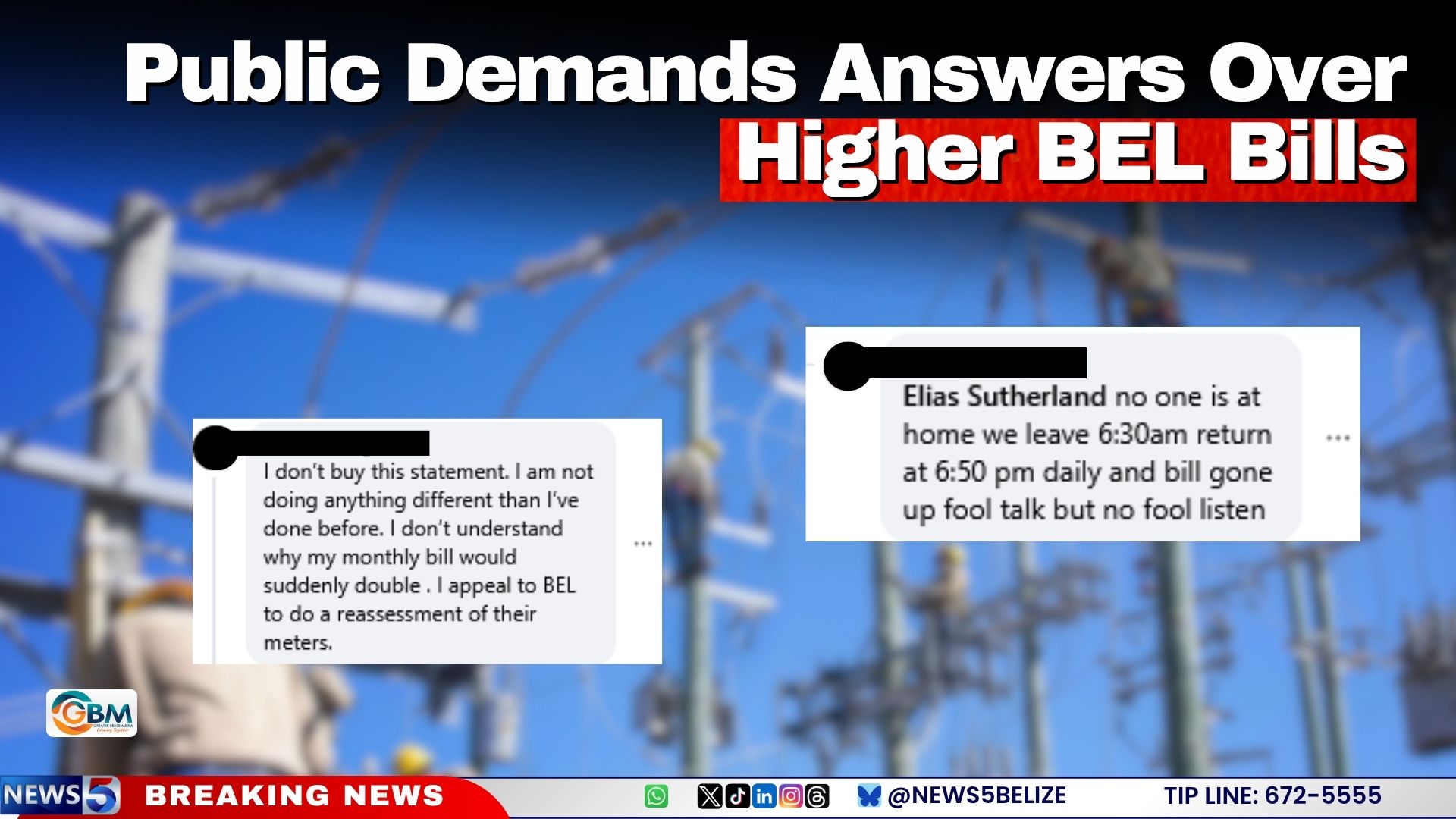
  • Public Demands Answers Over Higher BEL Bills

    Public Demands Answers Over Higher BEL Bills

    As Belize grapples with a sustained cost-of-living crisis that has sent grocery and fuel prices soaring to new highs, residents are now facing another crippling financial burden: sharply inflated electricity bills from Belize Electricity Limited (BEL). With the latest round of billing arriving in mailboxes and online accounts, thousands of customers across the country have taken to social media to share shocking reports of their monthly charges doubling, and in some extreme cases, tripling from their typical levels.

    The widespread public backlash prompted local outlet News 5 to reach out to BEL for additional clarification, following a brief initial statement the utility provider released last Friday. In that initial public comment, BEL attributed the higher bills to seasonal temperature trends, arguing that warmer summer months force air conditioning and other cooling systems to run far more frequently to keep indoor spaces comfortable, directly driving up total household energy consumption. The company also advised customers to adjust their energy use during peak midday heat hours to keep their costs manageable.

    But for frustrated consumers, this seasonal explanation has fallen completely flat, failing to ease growing anxiety over the unexplained price jumps. Many residents say their daily energy usage habits have not changed at all from previous years, leaving them confused by the sudden and dramatic increase in charges. One customer who spoke out about the issue called on BEL to launch immediate reassessments of customer meters, saying they reject the company’s official explanation for the doubled bill. Another resident noted that their household is empty for more than 12 hours a day as all members work outside the home, yet their bill still spiked dramatically – a trend they called nonsensical that has gone unaddressed by company officials. Additional customers have also reported frequent, short-notice power outages over recent weeks that have damaged home appliances, adding another layer of frustration with the utility provider.

    The sudden spike in bills comes just four months after BEL implemented a base rate increase in January, raising prices to $0.4427 per kilowatt-hour to offset nearly $108 million in rising energy supply costs. That rate hike already put extra financial strain on household budgets, and the unexplained further increase has pushed public frustration to a breaking point.

    As of Tuesday, BEL has confirmed that it is still reviewing the large volume of customer complaints and concerns, with a more detailed formal response planned for release in the coming days.

  • Is the SOE Enough to Stop Violence in Belize City?

    Is the SOE Enough to Stop Violence in Belize City?

    Less than three weeks after Belize City authorities declared a State of Emergency (SOE) to curb a surge in violent crime, two separate shooting incidents in under 24 hours have reignited public debate over whether the controversial security measure is delivering on its promises.

    The most recent attack unfolded early on the morning of May 25, 2026, along Freetown Road. Initial reports confirm one person was urgently transferred to Karl Heusner Memorial Hospital for emergency care, with law enforcement officials set to release official details on the victim’s condition and case progress later that afternoon.

    This shooting came just hours after a targeted attack late Friday night on Jane Usher Boulevard, where two armed suspects ambushed 38-year-old Alonzo Myers in the front yard of his home. Surveillance camera footage captured by a nearby resident shows the sequence of the attack: Myers had just stepped into his yard shortly before 11 p.m. when the first gunman rushed to the property gate and opened fire. The footage shows Myers falling to the ground in an attempt to avoid the volley of bullets, before a second suspect is spotted looking over the gate to confirm the attack. Both suspects then fled the area on foot before police arrived. Investigators have since taken possession of the footage to process it as key evidence in the case.

    Tragically, this string of violence is not an isolated pattern in the neighborhood. Just 10 days before the Friday night attack, 19-year-old Lamar Garnett was shot and killed outside his home in the same district, marking one of the high-profile homicides that prompted the SOE declaration in the first place.

    The State of Emergency was officially enacted on May 8, after a rapid succession of violent incidents left the city reeling and put intense pressure on local law enforcement to intervene. Under the extraordinary security measure, members of the Belize Police Department and Belize Defence Force (BDF) have been granted expanded law enforcement powers, including the ability to conduct searches without a warrant and detain suspected individuals for up to 30 days without formal charges. The measure was framed as a temporary crackdown to disrupt local criminal gangs and gun trafficking networks responsible for most of the city’s violent crime.

    But now, with two confirmed shooting incidents occurring while the SOE is already in effect, community members and policymakers are increasingly questioning whether the heavy-handed security approach is actually reducing violence, or if more targeted, long-term interventions are needed to address the root causes of Belize City’s persistent gun crime.

  • Price of ‘Dollar Van’ To Increase

    Price of ‘Dollar Van’ To Increase

    Belize’s local public transportation sector is facing immediate change, as two major taxi associations have moved to raise shared van fares within a single week, with growing operational costs driven by dramatic swings in regional fuel prices cited as the core trigger for the adjustment.

    The first change is set to take effect on June 1, 2026, after the Belize Dollar Van Taxi Association made its official public announcement last Friday. Under the new pricing structure, standard adult fares will climb by 50% from the existing rate of BZ$2 to BZ$3. To reduce the financial burden on family passengers, the association confirmed that discounted children’s fares will stay unchanged at BZ$1.

    A second association, the Bullet Tree Taxi Association, has already rolled out its updated pricing faster, implementing the new rate schedule just this week on May 23. The new rates bring specific changes to inter-community routes: shared rides from Bullet Tree to San Ignacio now cost BZ$4 per passenger, while travel to Santa Elena has increased to BZ$7 per person. Children aged four and above, who previously qualified for discounted pricing, will now pay BZ$3 per trip. Additional services also come with extra charges: passengers who request unscheduled stops along the main route will pay BZ$1 extra per stop, and direct drop-offs at residential homes are now priced at BZ$5, with supplementary fees applied for more remote or out-of-the-way locations.

    These industry-wide fare adjustments come directly on the heels of major, volatile fuel price corrections announced by fuel regulators in Belize just one week prior. The past week has seen unusual and sharp swings in fuel prices across the country: regular grade gasoline jumped by more than BZ$1 per gallon, a dramatic single-week increase that caught both transportation operators and consumers off guard. At one point, temporary price dips for premium gasoline and diesel actually made premium cheaper than regular gasoline, an unusual market anomaly. However, by the end of the working week, premium prices rebounded sharply with a 93-cent per gallon increase, returning to its traditional position as the most expensive fuel grade for consumers. Currently, premium gasoline sits BZ$0.63 per gallon higher than regular gasoline, erasing the brief price inversion.

    Local transportation operators have long noted that fuel costs make up the single largest operating expense for shared van services, which serve as a primary affordable public transit option for working-class residents and low-income families across Belize District. The latest round of price hikes reflects how sustained fuel market volatility is forcing providers to pass increased costs on to consumers, with impacts expected to ripple through local household budgets in the coming months.

  • Pope Leo XIV Apologises for Church’s Historic Role in Slavery

    Pope Leo XIV Apologises for Church’s Historic Role in Slavery

    In a groundbreaking step that marks the clearest acknowledgment of institutional wrongdoing to date, Pope Leo XIV, the global leader of the Roman Catholic Church, has delivered the strongest papal apology in history for the Church’s centuries-long entanglement with the transatlantic slave trade and systems of human enslavement.

    The unprecedented apology was included as a core passage in the pope’s first-ever encyclical, *Magnifica Humanitas* (translated as “Magnificent Humanity”), a major teaching document released publicly on May 25, 2026. In the text, Leo XIV openly admits the Vatican and global Church leadership failed morally on the issue of slavery, acknowledging that for hundreds of years, Church authorities did not just remain silent but often actively legitimized systems of subjugation that targeted and enslaved non-Christian populations across the globe.

    “For this moral failure, and for the centuries of unspeakable suffering that this practice inflicted on millions of people, I sincerely ask for pardon in the name of the entire Church,” the pope wrote, adding that the legacy of enslavement remains “an open wound in Christian memory that we can no longer ignore or minimize.”

    The encyclical also lays out a detailed historical accounting of the Church’s complicated relationship with slavery, confirming that medieval ecclesiastical institutions themselves owned enslaved people, and noting that the Church only issued a “formal, absolute, and universal condemnation” of the practice in the 19th century under Pope Leo XIII.

    While previous popes including John Paul II and Francis had publicly condemned slavery and offered apologies for historical complicity in injustice, analysts and religious scholars note that Pope Leo XIV’s statement is unprecedented in its explicit acceptance of institutional responsibility by the Vatican as a governing body. Many observers view the apology as a landmark step toward reckoning with one of the darkest chapters in Christian history.

    Beyond its address of historical injustice, *Magnifica Humanitas* also turns to contemporary ethical challenges, including the unregulated growth of artificial intelligence and emerging forms of economic exploitation embedded in today’s global supply chains. The pope issued a warning that these modern systems risk repeating the dehumanizing harms of historical slavery if global leaders and institutions do not put human dignity at the center of policy and innovation.

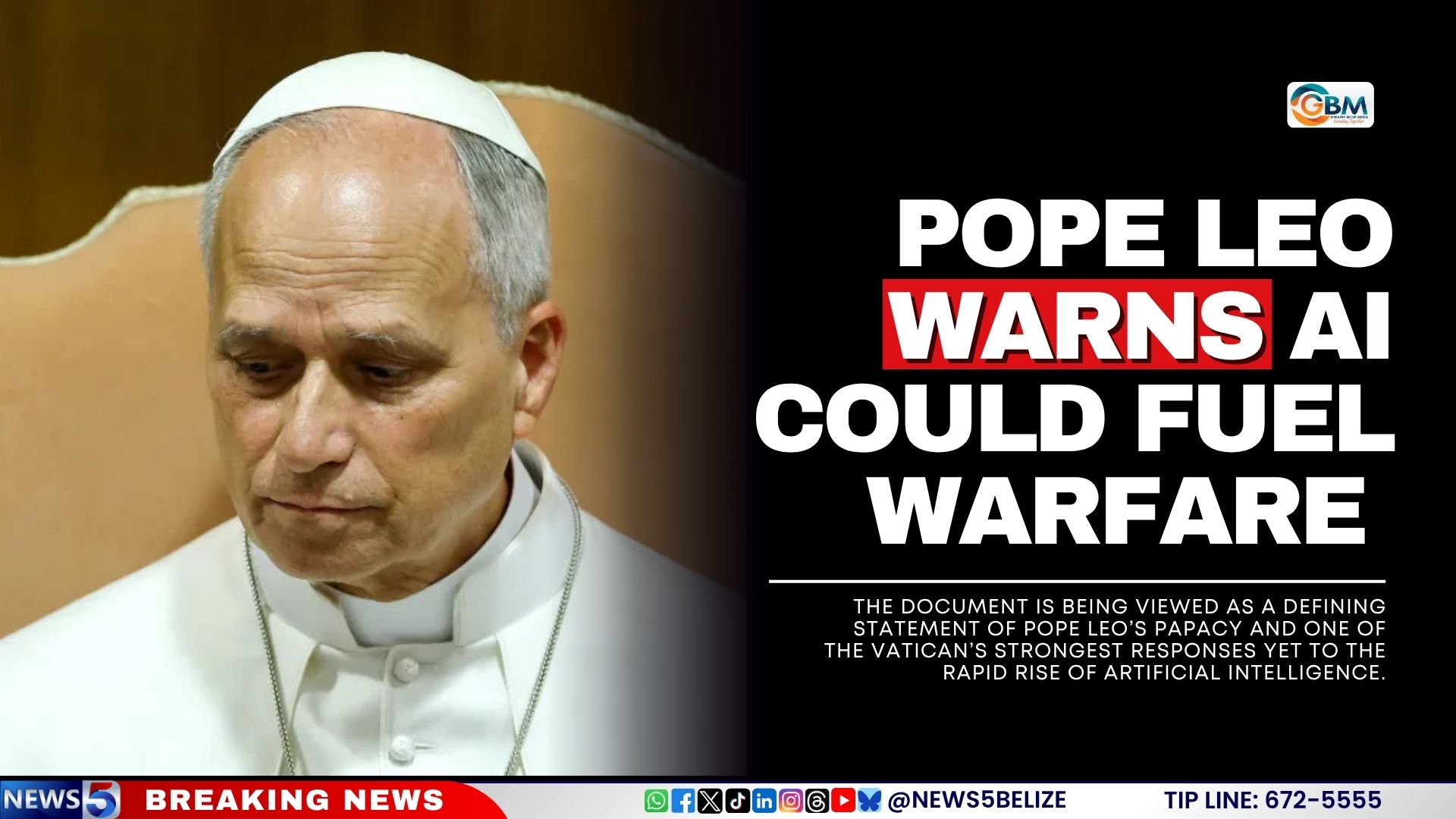
  • Pope Leo Warns AI Could Fuel Warfare

    Pope Leo Warns AI Could Fuel Warfare

    In a landmark first major theological address that marks one of the Vatican’s most forceful engagements with emerging technology to date, Pope Leo XIV has sounded an urgent alarm over the unregulated expansion of artificial intelligence, warning that ungoverned AI development could dramatically escalate global conflict if left to operate without strict ethical oversight.

    Released on May 25, 2026, the 235-page encyclical — titled *Magnifica Humanitas*, or “Magnificent Humanity” — lays out a comprehensive framework for governing AI, pushing back against concentrated control of the transformative technology and demanding the strictest possible ethical limits on its use in military applications. The pontiff argues that AI should not remain concentrated in the hands of a small circle of powerful corporate or geopolitical actors, a structure that he says risks exacerbating inequality and raising the stakes of international confrontation.

    Beyond AI policy, the encyclical upends long-held religious teaching on armed conflict, declaring that the traditional Christian concept of “just war” is no longer fit for the modern era. Pope Leo stresses that military force may only be justified when used in the strictest definition of self-defense, pointing to the persistent, catastrophic harm that unregulated violence and weapons inflicts on innocent civilian communities worldwide.

    The pontiff emphasizes that AI’s influence already extends deep into the fabric of global society, reshaping how individuals make choices and how communities function. Rejecting the common argument that AI is a morally neutral tool, he writes that the technology inherently carries the values, priorities, and biases of the developers and groups that build and control it. To counterbalance these risks, the encyclical calls for a sweeping set of reforms: robust legal oversight of AI development, proactive protections for workers whose jobs are displaced by automation, more equitable distribution of the economic benefits generated by AI, and binding safeguards to protect core human dignity.

    Pope Leo also takes direct aim at transhumanist and posthumanist ideologies, which advocate for merging human biology with machine technology or overcoming inherent human limitations through technological innovation. He argues that these movements erode the core value of human life as it exists naturally, a position that aligns with longstanding Vatican teachings on the integrity of the human person.

    Political and religious analysts have widely framed the encyclical as a defining statement for Pope Leo’s papacy, cementing the Vatican’s role as a leading moral voice in the global conversation about AI governance amid rapid, often unregulated advances in the technology. The document arrives as policymakers around the world grapple with how to balance AI’s transformative potential for public good against its growing risks to security, equality, and human autonomy.

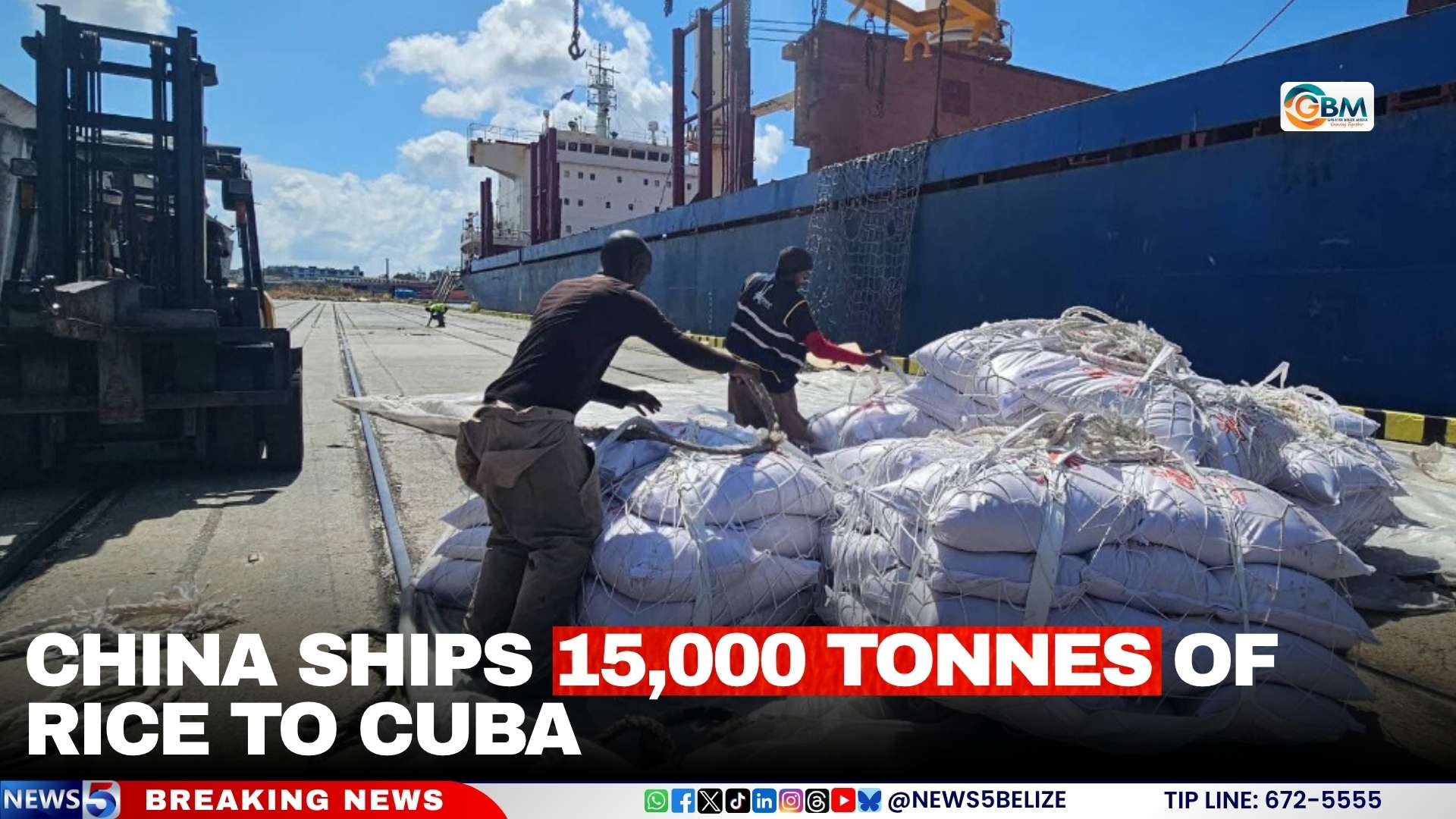
  • China Ships 15,000 Tonnes of Rice to Cuba

    China Ships 15,000 Tonnes of Rice to Cuba

    As Cuba grapples with deepening food scarcity and a catastrophic energy crisis worsened by decades of tightened U.S. economic restrictions, the first shipment of a major Chinese food aid package has arrived in the capital Havana. The 15,000 tonnes of rice delivered this week marks the opening installment of a 60,000-tonne total food assistance commitment from China, the largest single food aid package China has extended to Cuba in recent years.

    Chinese Ambassador to Cuba Hua Xin emphasized during the arrival that the delivery is far more than a material assistance gesture: it embodies the long-standing solidarity and reciprocal support that have defined bilateral relations between Beijing and Havana for decades.

    Cuba’s current crisis stems largely from the stringent U.S. economic blockade that has cut off the island nation from most global trade and critical supply chains for decades. The situation has deteriorated sharply in recent months, pushing the country’s already fragile energy infrastructure to a breaking point. According to reporting from Spanish newspaper El País, Cuba’s national power grid has suffered total collapses seven times over the past 18 months, with two major outages recorded in March 2026 alone. Some communities have been left without power for up to 24 hours at a time, crippling food production, distribution, and basic public services.

    A brief reprieve came in late March, when a Russian oil tanker delivered more than 700,000 barrels of crude to the island with rare U.S. approval, cutting the country’s energy deficit by nearly half. But the relief was short-lived: the supplementary supplies were exhausted within weeks, and by May 2026, the crisis had worsened again, leaving fuel for power generation and transportation in critically short supply.

    Betsy Díaz, Cuba’s Minister of Domestic Trade, confirmed that despite ongoing fuel shortages that complicate ground transportation, national authorities are prioritizing the rapid distribution of the newly arrived Chinese rice to vulnerable populations across the island.

    The food and energy crises have unfolded alongside a new wave of political tensions between Cuba and the United States. This week, thousands of Cuban demonstrators gathered outside the U.S. Embassy in Havana to express support for former Cuban president Raúl Castro, after U.S. authorities announced criminal charges against him linked to the 1996 downing of two civilian planes operated by a U.S.-based Cuban exile group.

  • New School Building Opens in Toledo Serving 16 Communities

    New School Building Opens in Toledo Serving 16 Communities

    After decades of inadequate learning infrastructure that left thousands of rural secondary students underserved, a brand-new two-story academic facility officially opened this week at Corazon Creek Technical High School in Toledo, marking a long-awaited milestone for education access across 16 surrounding communities.

    Funded through a financing partnership between the Caribbean Development Bank and implemented via the national Social Investment Fund, the robust eight-classroom concrete building is far more than a basic learning space. It also includes dedicated administrative offices, gender-separated restrooms for both students and staff, secured storage areas, and accessibility ramps designed to accommodate learners with disabilities, making the campus fully inclusive for the first time in the school’s history.

    The draw of this improved campus reaches across a wide swathe of rural Toledo, with students traveling from scattered small communities to attend classes. Among these is the remote village of Machakilha, where until very recently, residents faced the constant risk of being cut off from secondary education due to the lack of a reliable access road. The only bridge connecting the village to the main highway was on the brink of structural collapse until the Ministry of Infrastructure completed a $250,000 rehabilitation project to shore up the crossing and restore consistent access.

    At the official inauguration ceremony, Dr. Osmond Martinez, Area Representative for Toledo East and national Minister of Economic Transformation, did not shy away from acknowledging the long history of systemic neglect that left rural Toledo communities behind for generations. He pointed to the remote community of Otoxha, founded back in 1923, as a stark example of the disparities the region has faced for decades.
    “Otoxha was established in 1923, and still, its residents lack access to consistent clean drinking water,” Martinez said. “That is outright neglect of a population that should never have been left behind. No matter a person’s cultural background, we have a moral obligation to leave no one behind. I hold firm to the belief that one day I will be called to account for what I did with the privilege of public service that I have been given.”
    In addition to the opening of the new building, Martinez made a surprise announcement that has been welcomed by graduating students and their families: all mandatory graduation fees for completing students at Corazon Creek Technical High School have been fully covered by the government, eliminating a final financial barrier for students finishing their secondary education.

    The project represents the first major investment in regional education infrastructure for Toledo in recent years, with officials signaling that more targeted investments to address long-standing disparities in rural access to basic services are planned for the coming months.