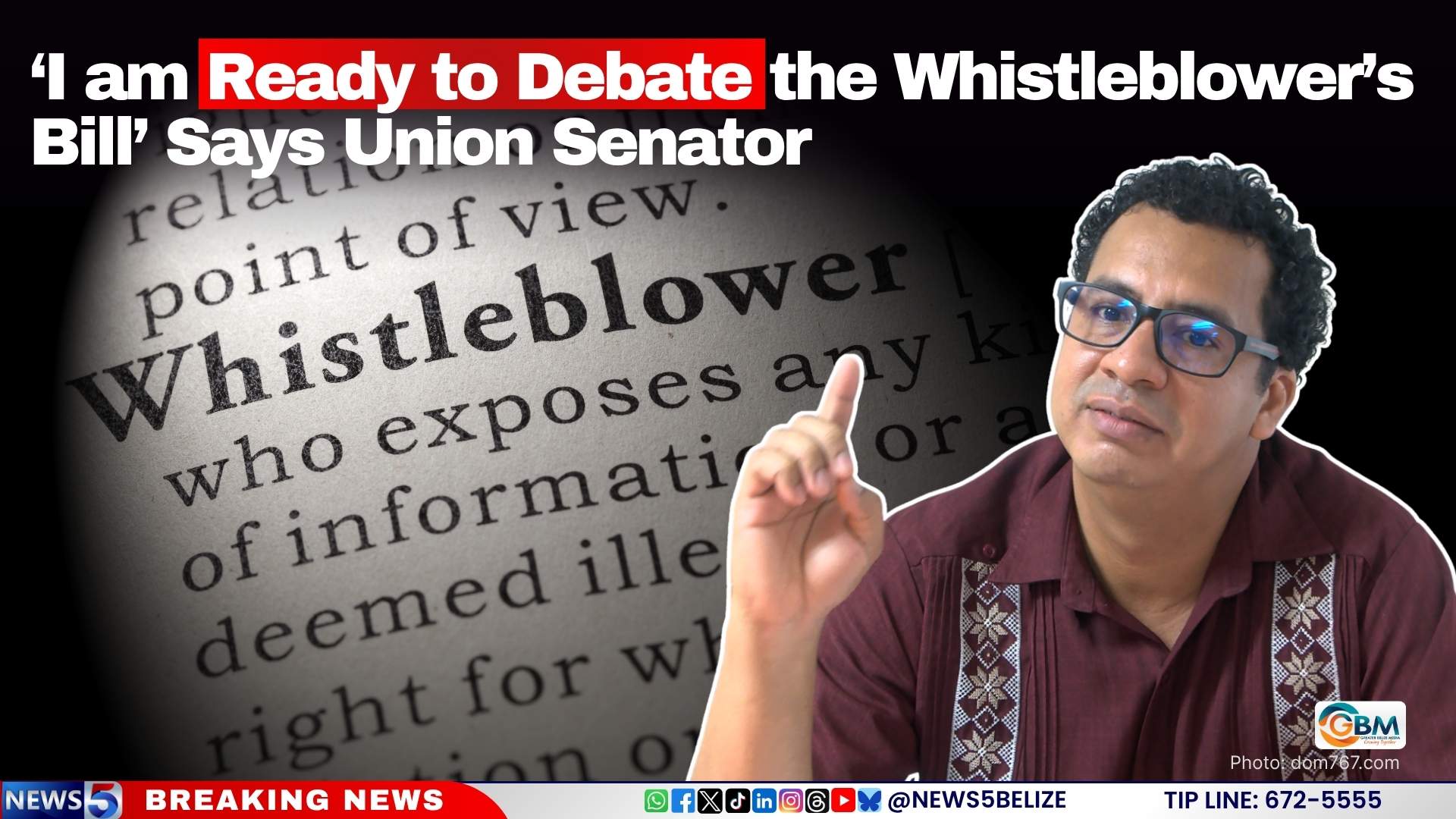
A long-delayed piece of anti-corruption legislation in Belize is back at the center of political tensions, as a senior trade union senator has issued an open challenge to the ruling Briceño administration to end the gridlock around the long-awaited Protected Disclosure Bill, better known as the Whistleblower’s Bill.
Glenfield Dennison, the union-appointed Senate member, made the call during a Tuesday press briefing hosted by the National Trade Union Congress of Belize (NTUCB), where he slammed the government for allowing the critical anti-corruption legislation to languish in the House of Representatives for five full years. First drafted in 2021, the bill was developed after a decade of sustained advocacy from labor groups and anti-corruption activists who have pushed for formal legal protections for people who expose official misconduct and graft.
“This legislation exists to protect the people who do what we desperately need more of in this country: speak up about corruption,” Dennison told reporters. He connected the urgent need for the bill to ongoing public scrutiny of the Ministry of Defence, where leaked documents have revealed that multiple high-value contracts were split into payments valued under the $10,000 threshold to avoid stricter oversight. He pointed specifically to the harassment targeting the sources who leaked evidence related to the ongoing Mira Millions corruption scandal, noting that the law would shield exactly these types of whistleblowers from retaliation.
The issue gained new clarity after Nadia Caliz, president of the Belize National Teachers Union, confirmed that the government recently placed the bill on an indefinite pause during a House committee meeting. Out of 19 policy proposals labor groups brought forward for legislative consideration, Caliz said, only the whistleblower legislation was marked as “on pause” rather than formally rejected, leaving its future uncertain.
Dennison has issued a clear ultimatum to the administration: move the bill forward for a full vote and debate within 90 days. “Let us get that out in the next 90 days. I am ready to debate that in the Senate. Senator Channona, are you ready to debate that in the Senate? I am ready,” he said.
The path to the bill has been decades in the making. Unions first formally demanded a whistleblower protection law back in 2012, when the previous Barrow administration held power, meaning the advocacy effort has now stretched 14 years. A full legal review of the 2021 draft completed earlier this year found that the current text still falls short of global best practices, with critical gaps including no provisions for financial incentives for whistleblowers, no guarantees for personal physical safety, and no mandate for an independent oversight body to receive and investigate disclosures.
For its part, Prime Minister John Briceño, leader of the ruling People’s United Party (PUP), addressed the Mira Millions scandal during a July national party council meeting in Dangriga, where he sought to reassure the public that his administration would not cover up wrongdoing. “When we see these mistakes, we don’t hide it. We don’t put it under the rug. We fix it. Because you put us to work for you. You are our bosses,” Briceño said. That commitment is now being tested by labor leaders who say the continued pause on the whistleblower bill contradicts that public pledge of transparency.