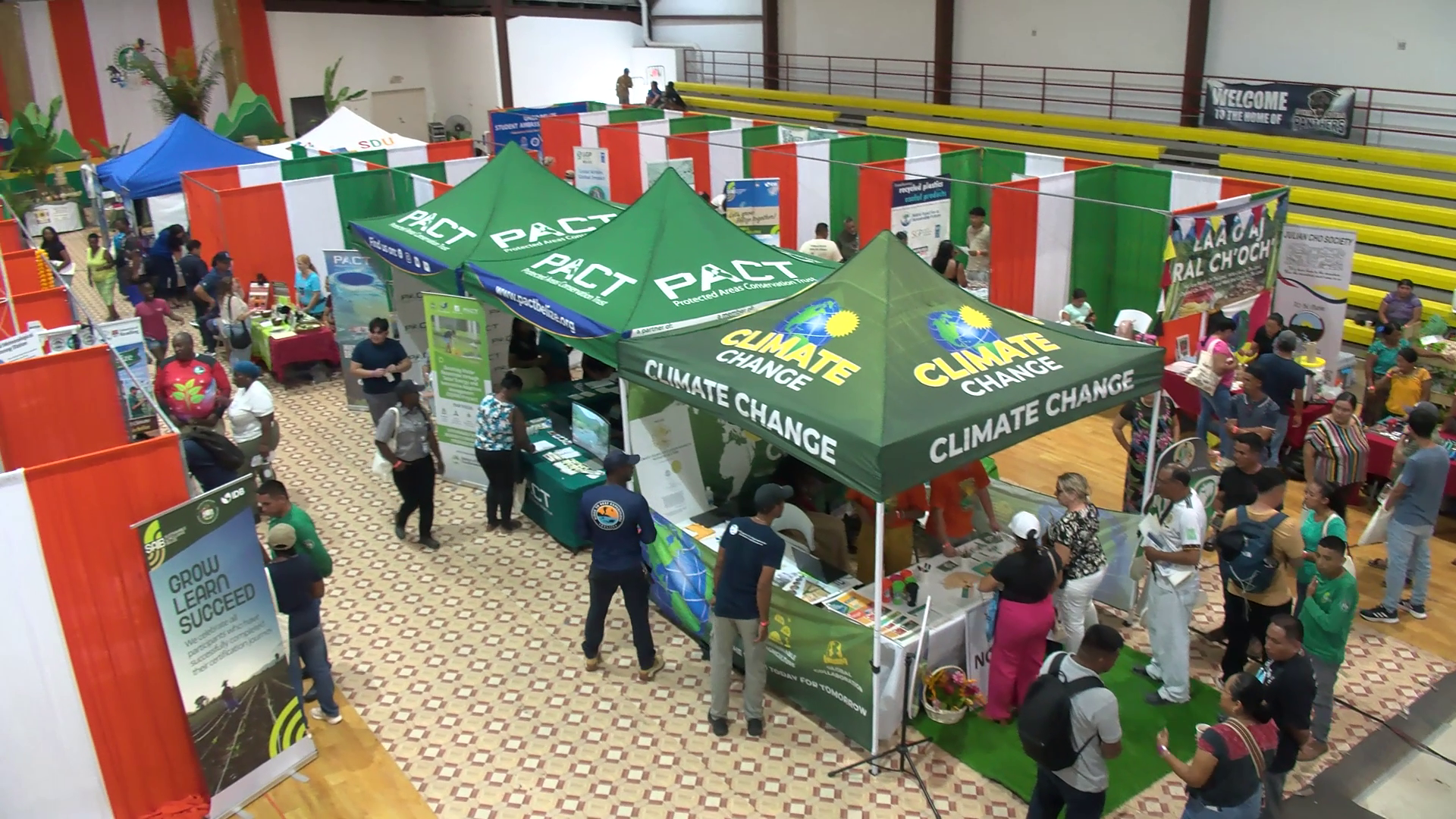
As National Climate Week kicked off on August 24, 2026 in Punta Gorda, the southern district of Toledo, Belize, the global conversation about climate change shifted from aspirational policy promises to urgent calls for on-the-ground change for the Indigenous Maya communities that have bore the brunt of rising global temperatures for years.
For Maya communities across southern Belize, climate change is not an abstract future risk—it is an immediate crisis reshaping daily life and threatening centuries of cultural heritage. Erratic rainfall patterns, record-breaking extreme heat events, worsening annual flooding and accelerating coastal erosion have already destroyed staple crops, disrupted food systems, and pushed intergenerational traditional knowledge to the edge of disappearance. While the Belizean government has drafted dozens of national climate plans, signed on to major international emissions reduction commitments, and held endless rounds of policy discussions, frontline communities say they are still waiting for the tangible change these pledges promised.
The four-day gathering, held at the Punta Gorda Sporting Complex, brought together a cross-section of stakeholders: national government climate officials, local and international environmental nonprofits, private sector actors, and Indigenous community residents. Organized under the theme “Where Innovation Meets Impact: Driving Resilience, Scaling Technology, and Expanding Inclusion in Climate Action,” the event aimed to center frontline voices that have often been sidelined in national climate planning.
Edalmi Pinelo, Belize’s Chief Climate Change Officer, emphasized that centering community and youth engagement is the only way to build long-term climate resilience. “We need to reach down to the communities. We need to educate the communities, the individuals, and especially our youths because they are leading us now to the future. So, we need to equip them, and the right place to do it is during Climate Week,” Pinelo said, noting that holding the event in southern Belize, the country’s most impacted region with a majority Indigenous population, was an intentional choice to center frontline needs. “Climate change is real, it’s here, we are feeling the effects. For us, rainy season is always a blessing, but too much rain is not good for them, for the farmers, and that’s why we also have that segment. We need to also highlight our indigenous communities and that’s why this year, we came deep south.”
The United Nations Development Programme (UNDP), a key partner for the 2026 National Climate Week, highlighted the critical role Indigenous knowledge plays in building effective climate adaptation. “Climate change is real and action is needed, we know that, but we want to do more than just survive climate change. We want to thrive and in thriving, culture is everything because culture is everything, what we do, who we are and Belize has the richest cultural tapestry I can think of,” said Michael Lund, UNDP Deputy Resident Representative. “And we need to both learn from each other and tap into that because that’s a way how we can also adapt to the things that we are experiencing with climate change. We’ve heard some amazing leaders who have taken action, climate action, using their cultural background.”
For Maya leaders, that cultural knowledge is inextricably tied to land stewardship—practices that have sustained the region for millennia and offer proven models for climate resilience. “Our participation here is to highlight the importance of land stewardship from an indigenous reality. In Maya communities, we are predominant here in Toledo. We use land and we’re very, very connected to the land. Everything that we do comes from the land. So, our stewardship of the land, our relationship with it. Our relationship with each other is important because we know that we are at the forefront of climate impacts,” explained Cristina Coc, spokesperson for the Maya Leaders Alliance.
Unlike Western climate models that often separate people from the natural world, Maya land management systems—including the traditional milpa rotating farming method—are designed to support long-term biodiversity, sustainable food production, and resilience to shifting weather patterns. Generations of close observation of local weather, hydrology and ecosystems have produced a body of knowledge that modern climate science is only beginning to leverage, but that knowledge is now at risk as changing conditions disrupt long-held patterns.
“One of the things that we’re looking at here in Toledo, particularly where it concerns Maya farmers is erratic rainfall. Never before have we seen this kind of weather pattern that is really impacting crops, but also wild foods because we depend a lot on forest foods for our subsistence, but also for our surplus, for our exchange with each other, and, of course, for the transmission of our knowledge. This is where we learn everything that we know,” Coc added.
Beyond eroding food systems and knowledge, climate change threatens the very survival of Maya cultural identity. For Indigenous peoples, land is the foundation of language, spiritual practices, ceremonial traditions, and ancestral connection. When coastlines erode, old-growth forests are lost, or communities are displaced by climate disasters, sacred sites and cultural practices disappear with them.
Many community residents traveled to Punta Gorda to share their firsthand experiences of the climate crisis, and to sell traditional handmade and natural goods to support their households, where rising climate impacts have driven increased economic instability. “We are here because, you know, in our village it’s hard to find any money for our children and for us, too. Right now, everything is expensive. That’s why we try our best to come and sell our products right here. We sell the copal. This is what we always use in Otoxha. We also use the copal [because] we plant crops and we also use it for harvest crops. We also use it for animals,” said Filiberta Coc, a resident of Otoxha Village.
Climate action globally encompasses two core goals: cutting greenhouse gas emissions to slow further warming, and building community resilience to cope with the unavoidable climate impacts already locked in by historical emissions. For frontline Indigenous communities in Belize, the 2026 National Climate Week marks a critical turning point: after years of policy talks and international commitments, the time for tangible, community-centered action is now.