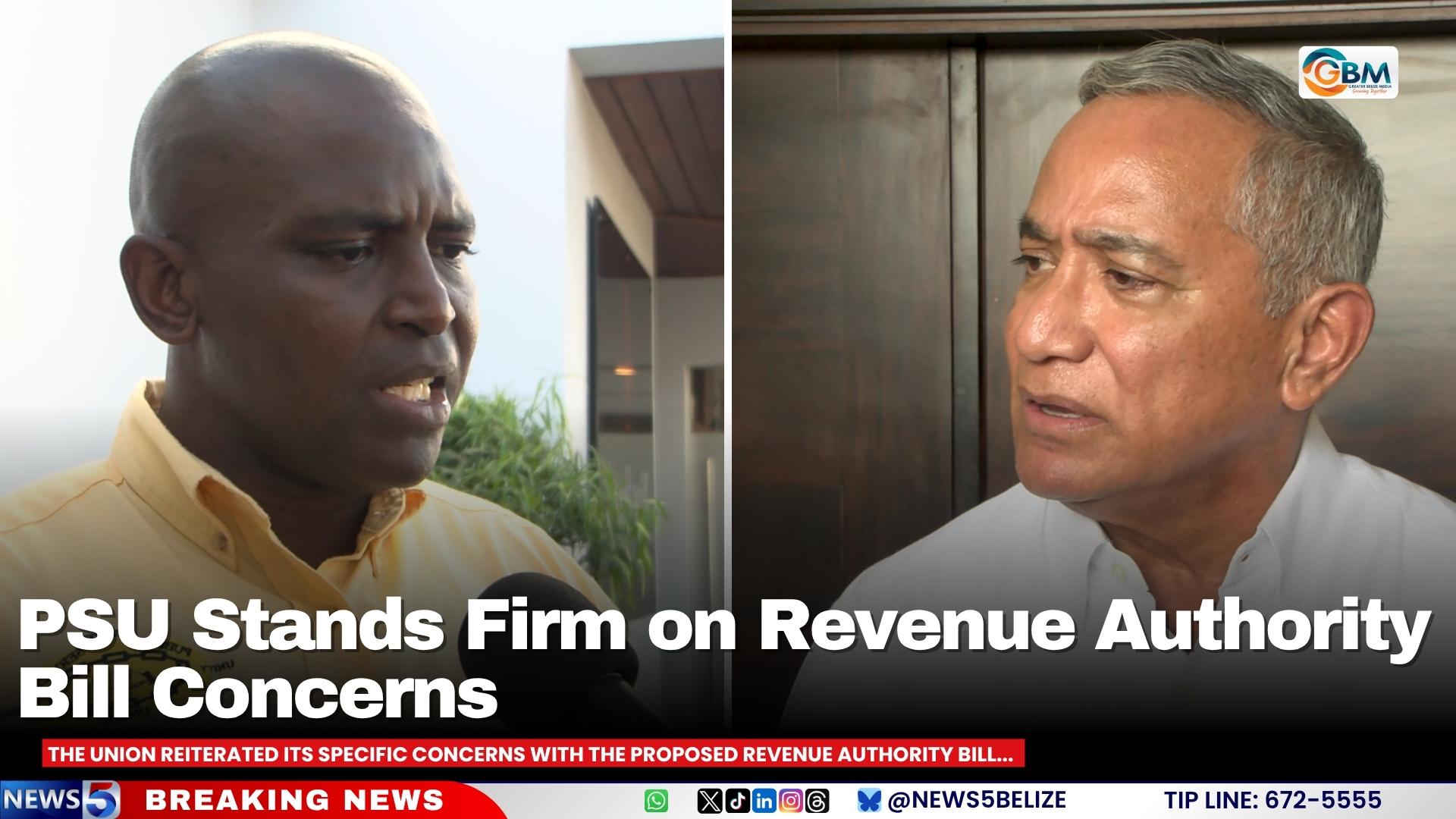
A growing public dispute has emerged between Belize’s national government and the Public Service Union (PSU) over the proposed Revenue Authority Bill, after Prime Minister John Briceño drew a clear line between the policy-making role of the state and the advocacy mandate of organized labor. In comments to reporters last Friday, Briceño emphasized that while his administration holds deep respect for the PSU as a representative of public sector workers, the division of responsibility is unambiguous: elected government sets national policy, and unions exist solely to advocate for the specific interests of their membership. Briceño added that he would outline the full details of the government’s efforts to accommodate organized labor when he addresses the House of Representatives in the coming days.
The PSU has pushed back firmly against the Prime Minister’s framing, rejecting any suggestion that the union is overstepping its mandate by raising public concerns about the draft legislation. Union leaders confirm they accept that the elected government holds the constitutional authority to develop and implement national policy, but argue this responsibility does not eliminate the union’s critical duty to highlight flaws in proposed laws that could harm public workers, private sector employees, and the general public.
At the core of the dispute are specific objections to key provisions of the Revenue Authority Bill, laid out by PSU President Dean Flowers. Flowers argues the proposed legislation would concentrate extraordinary power in the office of the Minister of Finance, granting the minister unilateral authority to appoint and remove the chief executive officer of the new Revenue Authority. In contrast, the draft bill leaves the newly created advisory board with severely limited oversight and decision-making power, a structure the union says undermines institutional accountability.
The PSU has stressed that for any independent revenue authority to function effectively and fairly, it must be built on foundational principles of checks and balances, full transparency, and institutional independence from political interference. Concentrating the power to hire and fire the authority’s top executive in the hands of a single political office, the union argues, creates unacceptable risks of political influence over revenue operations and requires far more rigorous public examination before the bill can move forward.
Union representatives clarified that their public campaign is not an attempt to usurp the government’s policy-making role. Instead, the PSU says it is exercising its legitimate right and responsibility to ensure that all policy proposals are weighed against the real-world impacts they will have on working people and ordinary citizens. The exchange has left the two sides trading blame over the preparedness of the new revenue authority framework, with no immediate sign of a resolution to the standoff as the legislation awaits debate in the national legislature.