标签: Belize

伯利兹

  • Belize’s Youth Are Being Handed the Mic to Fight Big Tobacco

    Belize’s Youth Are Being Handed the Mic to Fight Big Tobacco

    Across Central America, Belize has emerged as the site of a groundbreaking public health effort that flips the script on traditional tobacco control advocacy. Partnering together, the Belize Cancer Society and the Campaign for Tobacco-Free Kids have unveiled a new project that places young Belizeans at the center of the fight against big tobacco, with the core goal of stopping youth nicotine use before it becomes a lifelong habit.

    Named “Youth Leading Change for a Tobacco-Free Belize”, the initiative unites high school and college students with local community organizers to tackle tobacco use at its root. Unlike top-down public health campaigns, this model empowers the demographic most at risk of tobacco industry targeting to design and lead advocacy efforts across the country.

    Patricia Sosa, associate vice president of the Campaign for Tobacco-Free Kids, explained that the effort aligns with the World Health Organization’s Framework Convention on Tobacco Control, a landmark global public health treaty that has been ratified by 183 nations around the world. One of the coalition’s top local policy priorities is the adoption of a comprehensive ban on smoking in all indoor public spaces. Sosa emphasized that the proposal does not seek to outlaw tobacco products entirely or ban personal use in private residences; rather, it aims to reduce involuntary exposure to dangerous secondhand smoke for all Belizeans.

    The intentional focus on youth leadership comes as public health experts document a deliberate shift in tobacco industry strategy. As the number of long-term older adult smokers declines globally, major tobacco companies have redirected their marketing efforts to recruit a new generation of young users, particularly through newer nicotine products such as e-cigarettes and vapes. Sosa noted that public health data confirms a stark trend: any person who begins smoking regularly before the age of 18 is far more likely to develop a lifelong nicotine addiction.

    Compounding this risk, Sosa added, is the industry’s exploitation of digital platforms to reach young audiences. Tobacco and vape companies now use social media algorithms, micro-influencers, and hyper-targeted ad campaigns to connect with teens and young adults, flying under the radar of many traditional regulatory frameworks. This is precisely why young people must have a leading voice in anti-tobacco work, Sosa argued: external advocates cannot fully understand the tactics tobacco companies use to persuade youth unless they listen directly to the communities being targeted.

    Kim Simplis Barrow, president of the Belize Cancer Society, added that the youth-centered initiative fits seamlessly into the organization’s core mission of cancer prevention. As the global public health community has repeatedly confirmed, tobacco use remains one of the leading preventable causes of cancer worldwide. “Tobacco is one of the main causes of cancer in the world, so this aligns squarely with the work that we do,” Simplis Barrow said.

    Right now, the campaign’s long-term priorities and strategies are still being shaped by the young participants leading the movement. Through ongoing strategic planning workshops, young contributors are outlining what a tobacco-free Belize should look like, and what steps the advocacy movement should take to get there. “We have a number of young people in the room who will be guiding this campaign,” Simplis Barrow explained. “It’s youth engagement, for them to give us the direction in which they want to see a smoke-free Belize.”
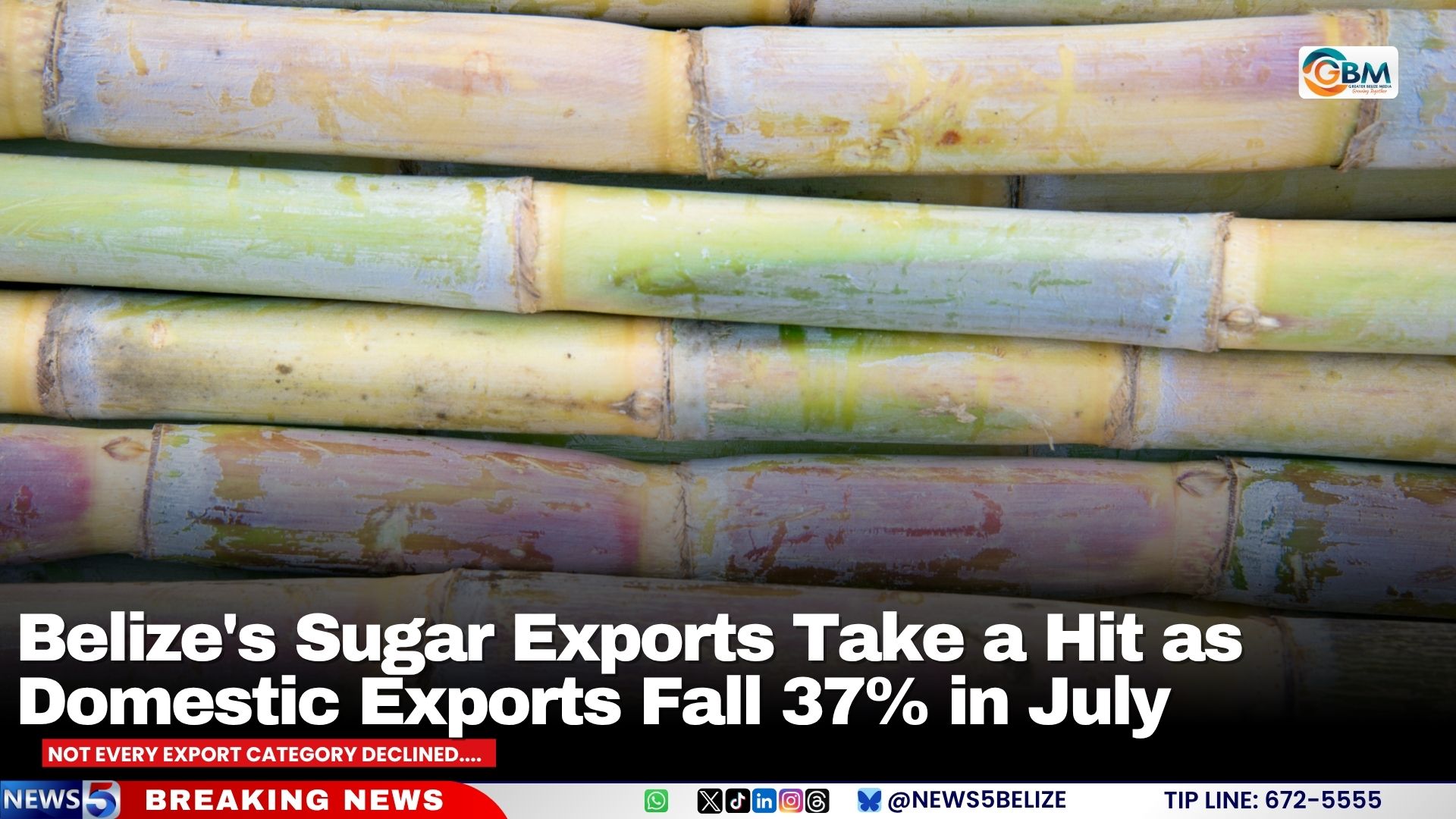

  • Belize’s Sugar Exports Take a Hit as Domestic Exports Fall 37% in July

    Belize’s Sugar Exports Take a Hit as Domestic Exports Fall 37% in July

    New data released by the Statistical Institute of Belize (SIB) on August 27, 2026, confirms a sharp downturn in the Central American nation’s domestic export sector, with overall shipments dropping 37.2% year-over-year in July to land at $38.5 million, down from $61.3 million in July 2025. The slump is overwhelmingly driven by a catastrophic decline in sugar exports, Belize’s flagship agricultural commodity, which has pulled down overall trade performance even as a handful of niche categories and a small number of trading partners buck the negative trend.

    According to the SIB’s breakdown, sugar export earnings fell by $18.8 million compared to July 2025, sliding from $35.8 million to just $17.0 million, as total exported volumes dropped by more than 50%. The downturn extended beyond sugar to other key agricultural exports: citrus export revenues fell by $2.4 million amid weakening global demand for orange concentrate, while molasses earnings almost entirely vanished, plummeting from $2.0 million last July to less than $0.1 million this year. Marine product exports also contracted by $1.3 million, driven by lower lobster tail shipments and a complete halt to shrimp exports that were recorded in the same month a year prior.

    Not all export segments recorded losses, however. Banana export inched up slightly to hit $6.3 million in July, while improved global market prices pushed animal feed revenues up to $0.7 million. The most substantial growth came from formal cattle exports, which jumped $1.6 million year-over-year to reach $2.4 million.

    When broken down by trading partner, the slump hit Belize’s traditional export markets hardest. Earnings from shipments to the United Kingdom collapsed by $18.0 million, falling to just $3.2 million, a decline almost entirely attributed to reduced sugar sales to the European nation. Revenue from exports to the United States also dropped $4.4 million, linked to weaker sugar shipments and a complete lack of molasses exports in July. Earnings from CARICOM trading partners fell $2.1 million amid lower sales of orange concentrate. Mexico was the only major trading partner to record growth, with Belizean export earnings to the country more than doubling to $2.9 million, driven by increased sales of cattle and crude soybean oil.

    On the import side, Belize’s total import value for July came in at $261.3 million, a modest 1.9% decline from $266.3 million in July 2025. The small overall drop was led by a $16.3 million reduction in imports entering Belize’s Commercial Free Zone, caused by lower purchases of cigarettes, athletic footwear, and apparel. There was also a $10.5 million decline in imports of food and live animals, tied to reduced purchases of wheat, instant noodles, and coffee.

    Two key import categories moved against the downward trend: fuel imports rose $11.2 million to $44.8 million, driven by higher global diesel prices and increased domestic purchases of propane and butane. Imports of machinery and transport equipment also climbed $9.0 million, led by incoming shipments of power generators, four-cylinder passenger vehicles, and a heavy-duty all-terrain mobile crane.

    Looking at the cumulative trade data for the first seven months of 2026, the broader trade imbalance remains pronounced. Total merchandise imports hit $1.912 billion over the period, a 15.7% increase year-over-year, with a $104.0 million surge in fuel imports driven by elevated global prices accounting for much of the growth. By contrast, total merchandise exports for the seven-month period totaled just $205.2 million, an 18.6% year-over-year decline. Sugar alone accounts for much of this cumulative drop, with earnings falling by $26.8 million as total export volumes for the year to date have dropped nearly 30%.

    Alongside the trade data, the SIB also noted an unexpected bright spot: recent consumer sentiment surveys show that Belizean citizens are reporting improving outlooks on the national economy despite the ongoing export slump.

  • Glacial Collapse Triggered Deadly Nepal-Tibet Floods

    Glacial Collapse Triggered Deadly Nepal-Tibet Floods

    On August 27, 2026, a catastrophic natural disaster unfolded across the Nepal-Tibet border region, after a sudden glacial collapse triggered devastating flash floods that have left hundreds of people from across the globe unaccounted for, new findings from the United States Geological Survey (USGS) confirm. Contrary to initial official assessments that pointed to an earthquake as the root cause, the USGS has verified that a large section of a Himalayan glacier broke apart near the shared border on Wednesday, releasing a massive surge of water that rushed down steep mountain gorges before inundating Nepal’s Trishuli River valley. The concurrent initial landslide also sparked a destructive mudslide that hit Gyirong Port, a critical major land crossing on the Chinese side of the border.

    While researchers have not yet pinned down the exact trigger for this specific glacial collapse, the disaster aligns with long-standing warnings from climate scientists who have documented the accelerating melt of Himalayan glaciers driven by global temperature increases tied to anthropogenic climate change. For decades, experts have sounded the alarm that this warming trend is sharply elevating the risk of sudden, catastrophic glacial outburst events across the high mountain region, which is often called the “Third Pole” for its massive store of freshwater.

    The floodwaters have wiped out communities across three Nepali districts: Rasuwa, Nuwakot, and Dhading. More than 500,000 people, including members of the Tamang, Gurung, and Newar ethnic groups, call these river valley areas home. Most local residents depend on small-scale agriculture for their livelihoods, but in recent years the region has also grown into a popular destination for international trekkers, white-water rafters, and religious pilgrims. Each summer, hundreds of pilgrims from Hindu, Buddhist, Jain, and Bonpo traditions traverse the district on their way to Tibet’s sacred Mount Kailash.

    These communities were already among Nepal’s most vulnerable to climate shocks before this week’s disaster. The region has long grappled with high poverty rates and repeated climate-driven disasters, including annual landslides and seasonal forest fires. Many residents had only recently finished rebuilding their homes and lives after the devastating 2015 Gorkha earthquake, which killed more than 8,000 people across Nepal, and resettled on the fertile low-lying riverbanks that have now been completely destroyed by the floodwaters.

    As of Thursday, official casualty data remains incomplete, but confirmed deaths have reached at least 157, and the number of missing people has climbed into the hundreds. The Nepal Tourism Board reports that at least 517 foreign nationals are unaccounted for in Nepali territory alone, including 178 from India, 53 from Ukraine, 51 from Malaysia, 35 from Australia, 33 from the United Kingdom, 25 from Canada, and smaller groups from more than 25 other countries. The U.S. State Department has confirmed that 90 American citizens are also missing. On the Chinese side of the border, Chinese state media reports that 558 people remain unaccounted for, including 260 foreign nationals. Large-scale cross-border rescue operations were active as of Thursday, but officials have not yet released full lists of the deceased or missing.

  • Why Everything From Ground Beef to Gas Costs More Right Now

    Why Everything From Ground Beef to Gas Costs More Right Now

    New official data published by the Statistical Institute of Belize (SIB) confirms that the country’s overall consumer inflation hit 4.1% year-over-year in July 2026, with steep increases in fuel, housing and food costs accounting for the vast majority of the upward price pressure.

    The national Consumer Price Index (CPI), a key benchmark for tracking broad price changes across the economy, reached 125.3 in July this year, up from 120.4 in the same month of 2025. A breakdown of price shifts across sectors shows that three core categories – transport, housing, water, electricity, gas and other fuels, and food and non-alcoholic beverages – combined to contribute more than 75% of July’s total inflation. Notably, insurance and financial services were the only segments of the consumer basket that recorded no price increase over the 12-month period.

    Of all measured categories, transport saw the sharpest annual acceleration, climbing 12.4% year-over-year, with the entire increase almost exclusively traced to spiking fuel costs. Per-gallon prices for all major fuel grades jumped dramatically: diesel rose the most, adding $2.98 to reach $14.32 per gallon, while premium gasoline increased by $2.33 to hit $15.54 per gallon, and regular gasoline added $1.91 to settle at $13.77 per gallon. Beyond fuel, passenger transport services – including local bus and taxi fares as well as international air travel – also saw a double-digit increase of 15.5% over the year.

    The housing, water, electricity, gas and other fuels category recorded a 3.9% annual increase, driven primarily by higher residential rental rates and new utility tariffs that took effect earlier in 2026. Average monthly bills for households have risen in line with these changes: a typical home using 225 kilowatt-hours of electricity per month now pays $91.50, up from $84.25 a year earlier, while a household consuming 4,500 gallons of water monthly now pays $91.13, compared to $86.38 12 months prior. A 100-pound cylinder of liquefied petroleum gas (LPG), commonly used for residential cooking, has also increased by $7.44 to reach $137.54.

    Food and non-alcoholic beverages recorded a more modest 1.9% annual increase, though key staple products saw much steeper jumps. The overall meat and poultry segment rose 4.6%, with ground beef alone climbing 11.8% to $8.49 per pound. Sugar recorded a 16.4% price increase, rising from $1.02 to $1.26 per pound, while bread and bakery products went up 1.8%, and grapes increased 10.3% to $11.11 per pound. Despite these broad increases, a handful of fresh produce items saw price declines: tomatoes dropped 19.9%, grapefruits fell 24.7%, and limes decreased 9.6% year-over-year.

    Other consumer segments also recorded moderate price gains: health care costs rose 7% amid higher hospital admission and surgical fees, clothing and footwear went up 3.3%, and restaurants and accommodation services increased 3.4% annually.

    Inflation rates also varied significantly across Belize’s municipalities. The San Ignacio/Santa Elena municipal area recorded the country’s highest July inflation rate at 5.3%, with above-average price increases across transport, rent, food, medical services and clothing. In contrast, San Pedro Town recorded the lowest national inflation rate at 3.0%, supported by smaller-than-average increases in taxi and sea transport fares, restaurant services, LPG and medical costs.

    Between June and July 2026, national consumer prices remained largely unchanged, with a marginal overall decrease of 0.02% that signals short-term price stability after months of steady increases. A 0.3% month-over-month rise in food costs, driven by higher prices for fresh vegetables and meat, was fully offset by a 0.5% drop in transport costs, which followed a $1.01 per gallon reduction in diesel prices during July.

    Looking at the full-year trend through the first seven months of 2026, Belize’s cumulative year-to-date inflation stands at 2.7% compared to the same period in 2025. As with the July data, the same three core categories of transport, food and non-alcoholic beverages, and housing-related utilities contribute nearly three-quarters of the total cumulative price increase so far this year.

  • SIB: Belizeans Are Feeling Better About the Economy

    SIB: Belizeans Are Feeling Better About the Economy

    In a surprising shift after months of stagnation, Belize’s consumer sentiment has recorded its first monthly uptick of 2026, new official data shows. The Statistical Institute of Belize (SIB) announced on August 27 that the national Consumer Confidence Index (CCI) rose 3.6 percentage points from June’s reading of 41.1 to hit 42.6 in July.

    The modest overall improvement masks broad-based gains across all three core metrics that make up the benchmark index. The largest jump was seen in the Present Conditions component, which measures public perception of current economic circumstances relative to 12 months prior. This metric climbed 7.1 points to reach 40.2, up from June’s 37.6. Sentiment around big-ticket durable goods purchases, the second index component, rose 3.3 points to settle at 35.5 from 34.4. The Expectations component, which tracks consumer outlooks for future economic performance, posted the smallest gain, inching up 1.2 points from 51.4 to 52.0.

    While the national trend is positive, the uptick in confidence is far from uniform across the country’s districts, demographic groups, and regions. Orange Walk District notched the most dramatic increase, with overall consumer confidence surging 12.6 percentage points. That gain was fueled by an extraordinary 45.6 percent jump in consumer willingness to commit to major household purchases. By contrast, Stann Creek District recorded the nation’s sharpest decline, with overall confidence falling 10.7 percent. The drop there was driven by a 19.2 percent plummet in future expectations, as local residents grew markedly more pessimistic about long-term economic trajectories.

    A similar divide separates urban and rural consumer sentiment across Belize. Urban consumers saw their overall confidence climb 6.5 percent, led by a 16.9 percent surge in durable goods sentiment. More urban residents reported growing openness to purchasing big-ticket items including consumer electronics, home furniture, and personal vehicles. Rural confidence saw only a modest 1.4 percent uptick, driven entirely by improved views of current economic conditions rather than future spending plans. Notably, rural sentiment toward durable goods purchases actually fell 6.1 percent over the month.

    Demographic breakdowns by age also reveal sharp divergences in sentiment. Adults between the ages of 25 and 34 recorded the largest confidence gain of any age group, with an overall 10 percent increase that included improvements across all three index components. On the opposite end of the spectrum, younger consumers aged 18 to 24 posted the steepest overall confidence decline of any cohort. That drop stemmed from a 21.6 percent fall in durable goods sentiment, paired with weakening views of both current economic conditions and future job and income prospects.

    Ethnic breakdowns also show conflicting trends: Creole respondents recorded a 10.8 percent overall improvement in confidence, powered by a 22.6 percent jump in willingness to make major purchases. Garifuna respondents reported the opposite trend, with overall confidence falling 10.7 percent amid growing pessimism about both current economic circumstances and future big-ticket spending.

    Even by gender, gaps in confidence growth are visible. Overall confidence among male consumers rose 2.4 percent, while female consumers saw a stronger 4.8 percent increase. Women’s gains were driven primarily by improving perceptions of current domestic economic conditions.

    For context, the SIB’s CCI is a monthly benchmark that ranges from 0 to 100, with readings above 50 generally indicating that consumers hold overall optimistic views about the economy. The institute notes that the index serves as an important leading indicator for broader national economic performance, since consumer spending accounts for a large share of Belize’s total economic output. Changes in consumer confidence typically signal upcoming shifts in household spending, saving, and investment patterns that shape overall economic growth in subsequent quarters.

  • Tropical Storm Dolly Forms in the Atlantic, Leeward Islands on Watch

    Tropical Storm Dolly Forms in the Atlantic, Leeward Islands on Watch

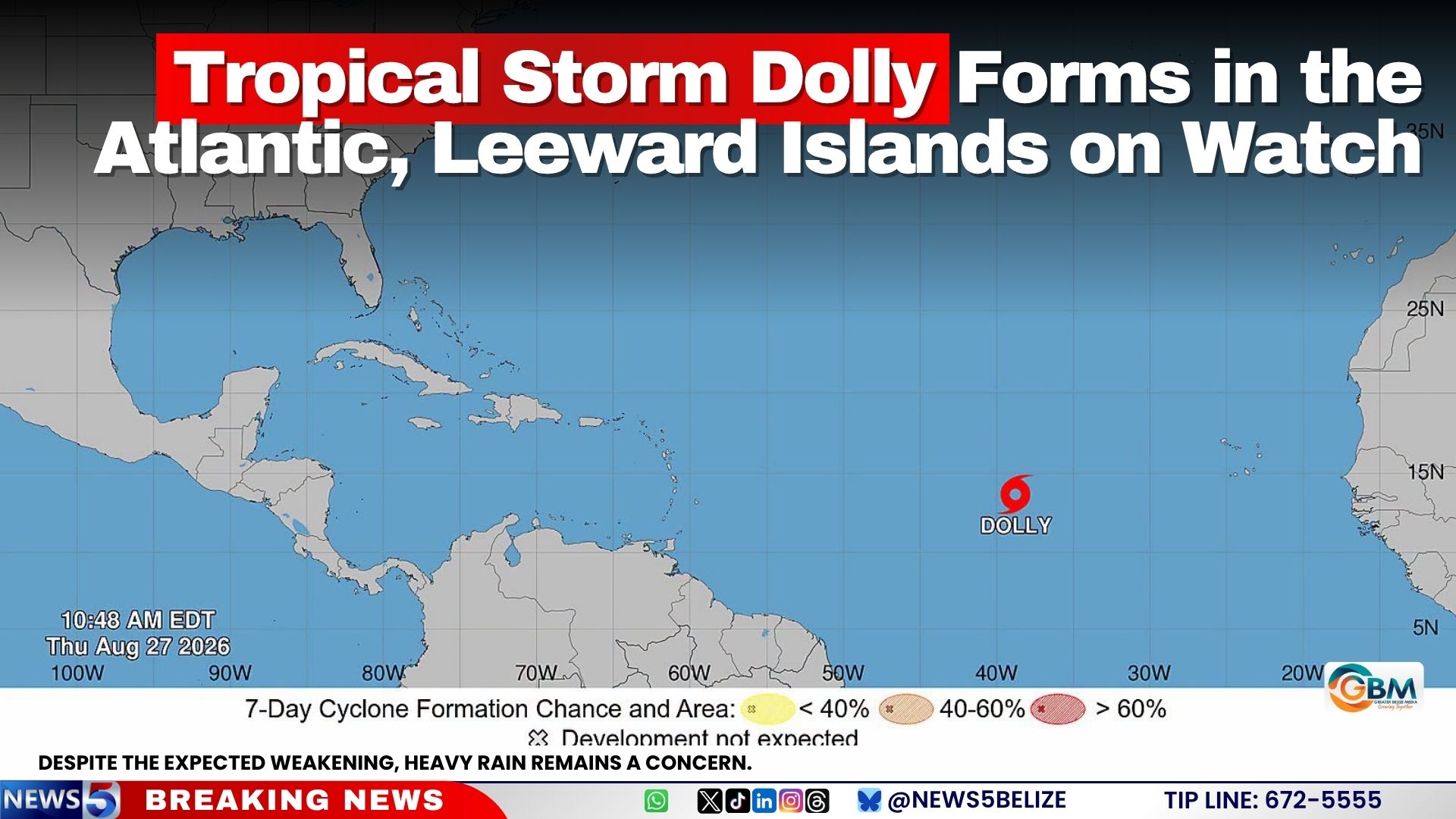
    A new tropical cyclone, named Dolly, has officially developed in the central basin of the tropical Atlantic Ocean, triggering official weather watches for populations and authorities across the Leeward Islands. Regional meteorological services have urged local stakeholders to keep close track of the storm’s trajectory as it moves across the open ocean toward the Caribbean island chain.

    As of 11:00 a.m. Atlantic Standard Time on August 27, 2026, the center of Tropical Storm Dolly was positioned approximately 1,555 miles east of the Leeward Islands. The system is currently progressing westward at a forward speed of nearly 24 miles per hour, a steady movement that forecasters project will persist for the next 48 to 72 hours. On its current path, the remnants of Dolly are expected to approach the Leeward Islands by the end of this weekend.

    At present, the storm’s maximum sustained winds measure around 40 miles per hour, with occasional gusts reaching higher speeds. Meteorological analysis suggests only minimal intensification is likely over the next two days. In fact, the National Hurricane Center’s forecast indicates that Dolly will most likely degrade into an open tropical wave before it reaches the Leeward Islands.

    Even though significant weakening is anticipated before the system reaches populated Caribbean territories, weather officials still warn that heavy precipitation poses a major hazard. Rainfall associated with the decaying system is forecast to begin impacting the Leeward Islands between late Saturday and early Sunday. By Sunday and Monday, the wet weather will extend to the nearby Virgin Islands, Puerto Rico, and Hispaniola. Forecasters note that the heavy downpours could trigger dangerous flash flooding, especially in hilly and mountainous areas with higher elevation, where runoff accumulates rapidly.

  • Nationwide Blackout Exposes Belize’s Energy Dependence

    Nationwide Blackout Exposes Belize’s Energy Dependence

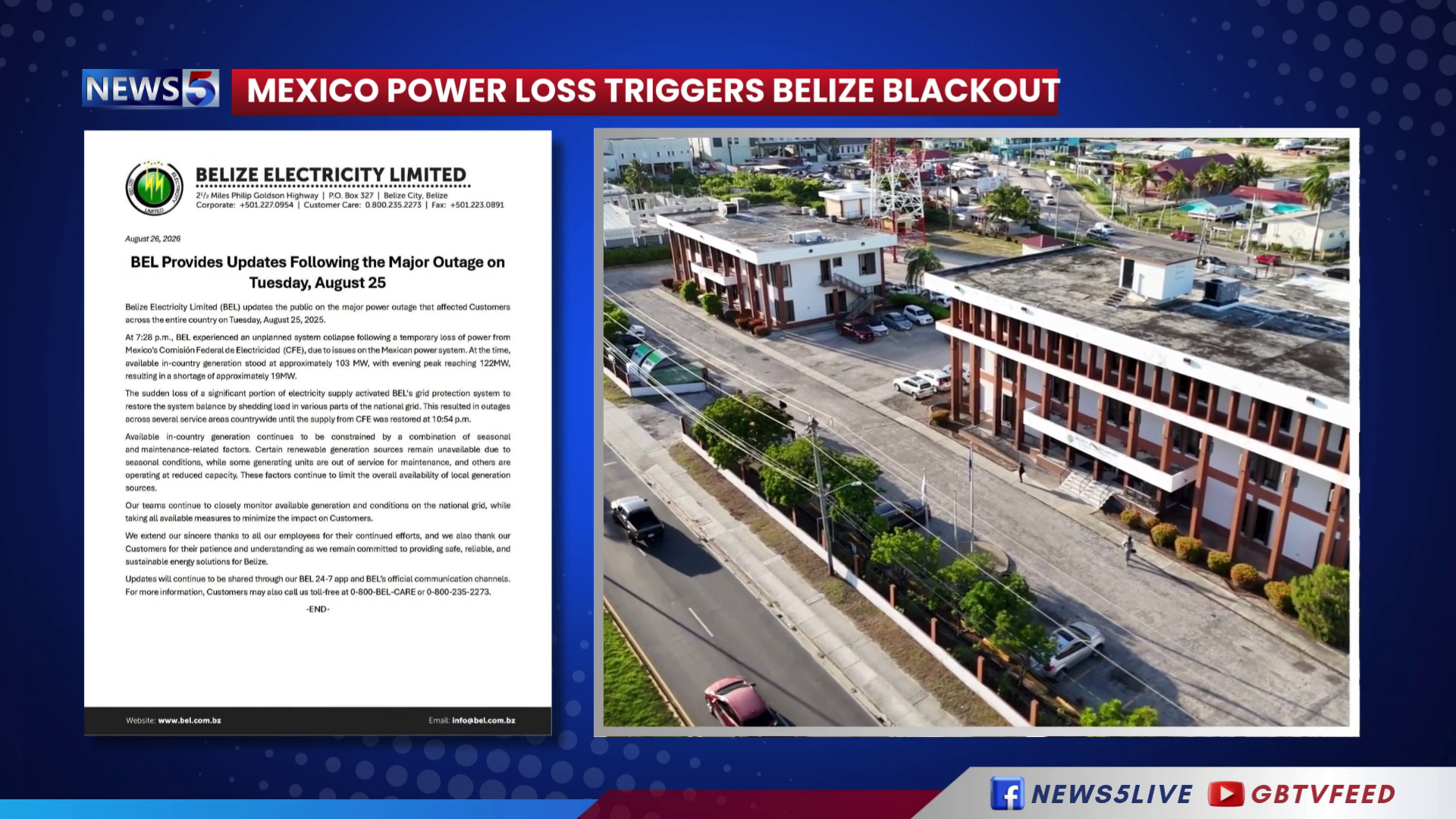
    On the evening of August 26, 2026, a sudden disruption to cross-border electricity supply from Mexico triggered a complete nationwide blackout across Belize, throwing a harsh spotlight on the Central American nation’s critical overreliance on imported energy. According to Belize Electricity Limited (BEL), the sudden drop in power provided by Mexico’s state-run utility Comisión Federal de Electricidad (CFE) began at approximately 7:30 p.m. To stop the entire national grid from experiencing catastrophic, wider instability, the company was forced to enact emergency rolling outages that cut power to most regions of the country.

    What makes the incident more concerning is that the external supply disruption was exacerbated by multiple domestic energy challenges. At the time of the blackout, local power generation capacity could only produce around 103 megawatts, while peak evening energy demand across the country had already reached 122 megawatts. This left a gap of 19 megawatts that domestic infrastructure could not fill quickly enough. BEL officials explained that seasonal environmental conditions have dragged down output from the country’s key renewable energy facilities, while multiple domestic generating units are currently offline for scheduled maintenance or running at reduced efficiency.

    It took more than three hours for cross-border power supply to be fully restored, with Mexican electricity flow returning around 11 p.m. This is not the first time Belize has faced this type of energy crisis. Just weeks before this total blackout, BEL issued a public warning that rolling load shedding would be required across multiple districts after CFE notified the country it may need to cut power exports to meet surging domestic demand in Mexico. That warning put thousands of residential and commercial facilities from Orange Walk in the north to Punta Gorda in the south at immediate risk of extended outages.

    For years, Belizean policymakers have publicly promoted plans to diversify the country’s domestic power generation mix and strengthen energy independence. Yet Wednesday’s outage demonstrates that the fundamental vulnerability remains unchanged: any strain on Mexico’s power grid translates directly to energy shortages for Belize, with the country’s energy security ultimately subject to decisions made outside its own borders. While BEL has confirmed that its technical teams are continuing to monitor grid stability and implement measures to reduce the risk of future disruptions, the 2026 blackout has reignited urgent public debate over whether Belize has the infrastructure and planning in place to reliably meet peak energy demand when imported power supplies are suddenly cut off.

  • Is Your AC Driving Up Your Light Bill?

    Is Your AC Driving Up Your Light Bill?

    As record-breaking heat becomes more common across Belize, air conditioning has shifted from a luxury for wealthy households to a near-necessity for families across all income brackets. But this growing accessibility comes with a hidden cost: thousands of Belizeans are seeing their monthly electricity bills skyrocket, driven in part by common missteps in AC use that force units to work far harder than necessary.

    Energy experts explain that dropping market prices have democratized access to cooling technology over the past decade. “It is across the board, as soon as somebody can afford it, and they are getting much cheaper nowadays, so you start seeing a lot more people from different tax brackets started purchasing ACs,” explained Jordanny Williams, an engineer with FT Williams & Associates. With average summer temperatures climbing year over year, the strain on these units and the power grid has grown accordingly.

    Lynn Young, Executive Chairman of Belize Electricity Limited (BEL), notes that the energy demand of AC units rises sharply as outdoor temperatures increase. “An AC for that kind of temperature difference might burn fifty or sixty percent more energy that it normally would burn for the same period of time, for the same indoor temperature,” Young said. This means on the hottest days, cooling can eat through a household’s energy budget far faster than most residents anticipate.

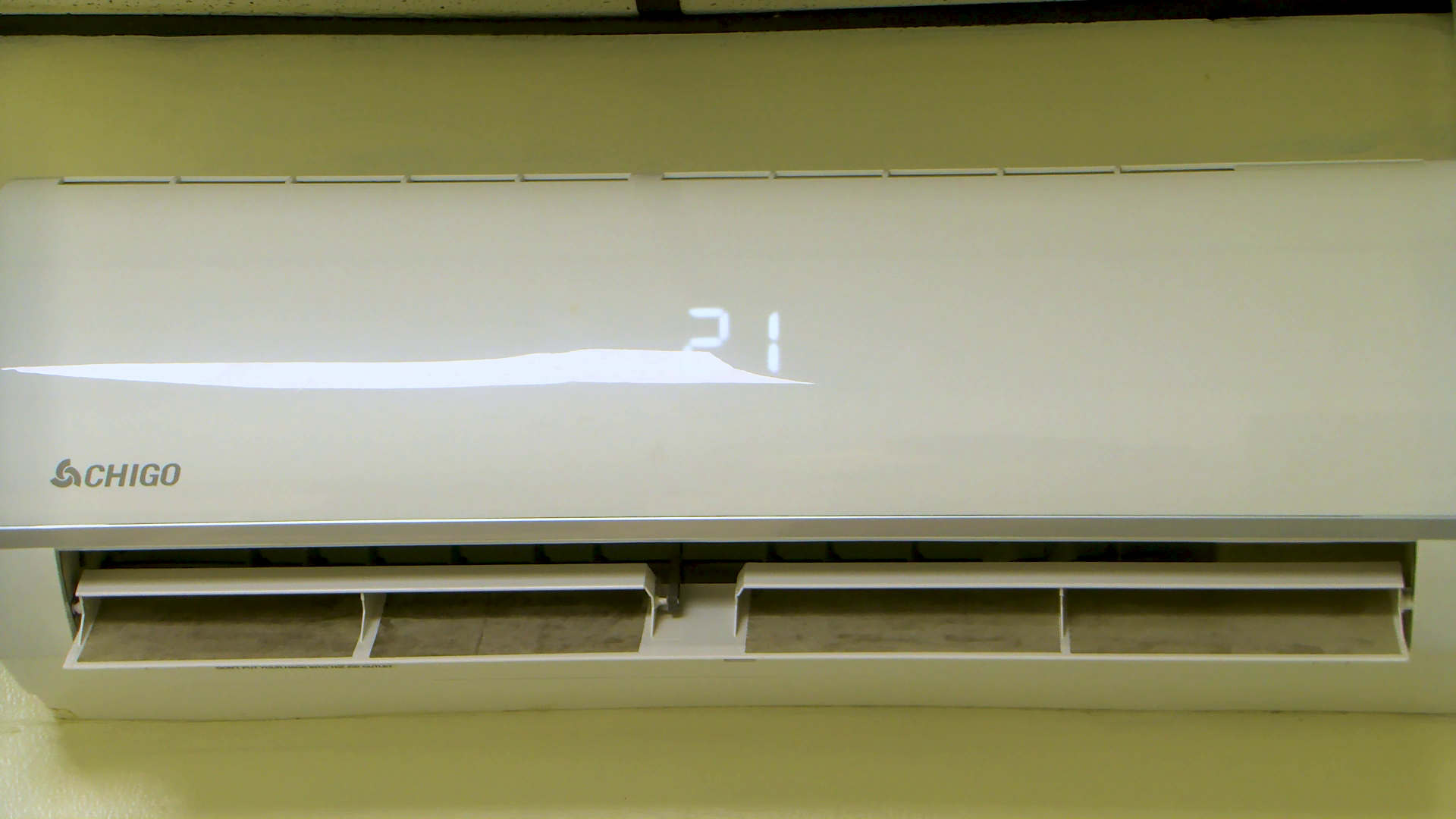
    The good news, Williams says, is that most households can cut their cooling-related energy use with simple, low-effort adjustments. One of the most common mistakes he has observed is users setting thermostats to unnecessarily low temperatures. In many residential and commercial spaces across Belize, he has found high-wall mini-split units set to as low as 16 degrees Celsius (60 degrees Fahrenheit), a target that is functionally impossible to reach given most local building construction that lacks heavy insulation in walls, roofs and ceilings. “It doesn’t make the AC cool better or anything like that,” Williams explained. “It just makes it work a lot harder.”

    Instead of extreme low temperatures, Williams recommends setting thermostats between 23 and 24 degrees Celsius (73 to 75 degrees Fahrenheit), only dropping the temperature one or two degrees during the most extreme heat waves. He also advises keeping the AC fan set to medium to optimize moisture removal, and scheduling regular professional maintenance to keep units running efficiently. Even small changes to these settings can produce noticeable reductions in monthly energy use, he added.

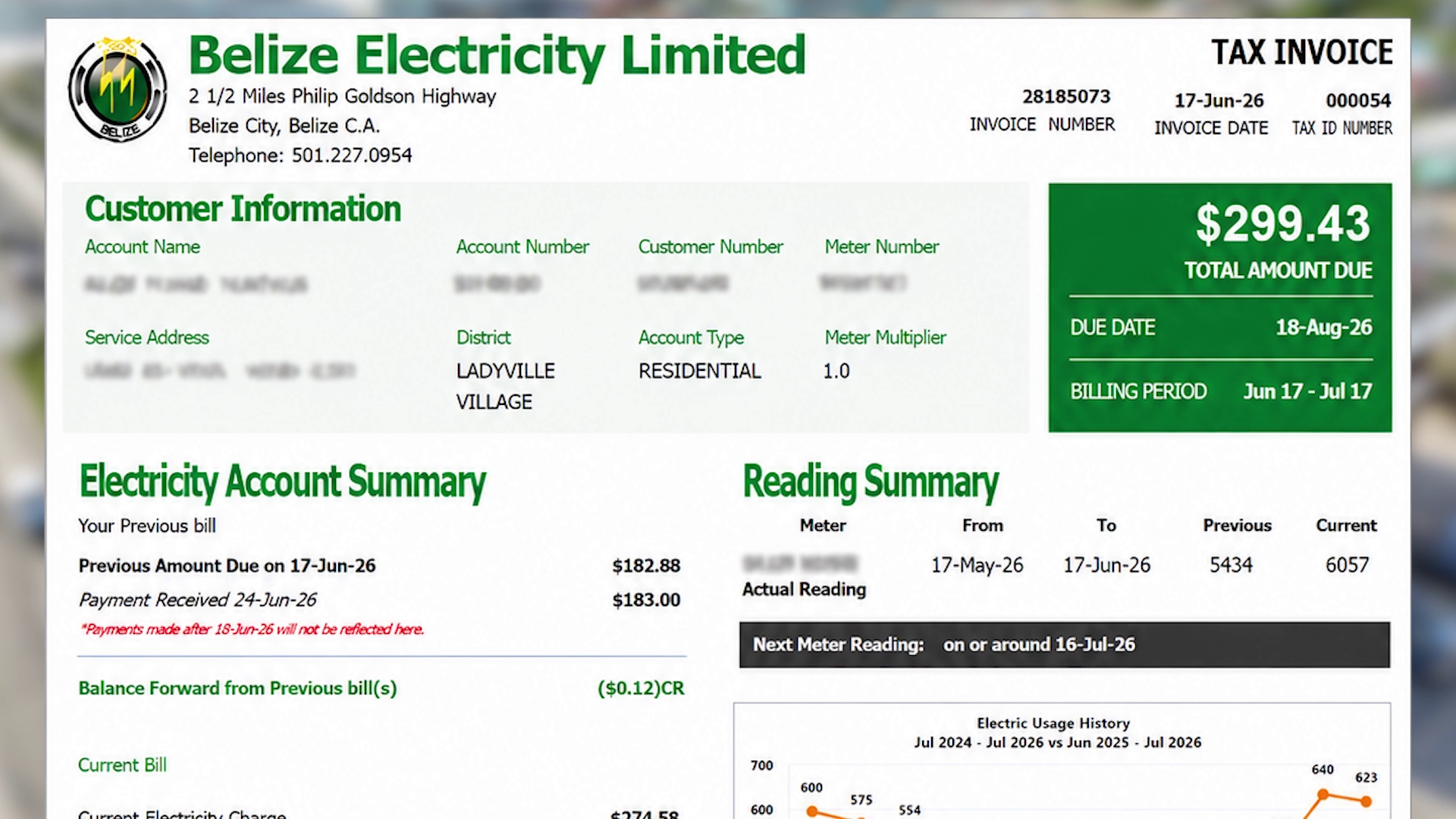
    But while these habits can curb overconsumption, they do not fully explain the steep increases many Belizean households are seeing in their electricity bills. Williams, who follows all of his own guidance, says his own monthly bill jumped by 33% in the last month alone, even though he keeps his thermostat set to 78 degrees Fahrenheit (25.5 degrees Celsius) overnight and never drops it below 75 degrees Fahrenheit (24 degrees Celsius).

    “If you did not implement some of these same advices, your bill could have been much higher?” asked investigative reporter Paul Lopez of News Five, who reported on the issue.

    “I don’t want to imagine what that bill would be,” Williams responded.

    While improved AC habits can slow rising energy costs, the reporter notes that even correct usage does not eliminate steep bill increases, leaving open the question of whether other factors — including BEL’s new smart metering infrastructure — may also be contributing to the higher monthly charges many residents are facing.

  • UDP Demands Forty-Million-Dollar Power Relief

    UDP Demands Forty-Million-Dollar Power Relief

    On August 26, 2026, a sudden, unplanned nationwide power outage plunged all of Belize into darkness overnight, adding another layer of crisis to households already reeling from steadily climbing electricity bills. The outage came just after the first 1.5-cent rate hike took effect under the government’s new Cost of Power Adjustment (COPA) framework, and the country’s main opposition party has wasted no time demanding accountability and urgent financial support for struggling families.

    At a hastily called press conference, United Democratic Party (UDP) leader Tracy Taegar-Panton issued sharp criticism of the ruling People’s United Party (PUP) Briceño administration and national utility provider Belize Electricity Limited (BEL), calling for far greater transparency around the country’s deepening energy challenges and the growing financial strain falling on consumers.

    Taegar-Panton outlined the UDP’s core proposal: immediate, time-limited relief worth 40 million Belize dollars, funded from a recent $100 million general financing loan the government secured from Taiwan. The opposition is calling for the complete removal of Goods and Services Tax (GST) on all electricity charges for an initial 12-month emergency period, a policy change the party estimates will cost exactly the 40 million Belize dollars it wants earmarked. Currently, GST is only exempted from the 1.5-cent COPA rate component.

    In addition to the tax relief, the UDP is demanding the government suspend late penalties on all disputed customer accounts while an independent audit of billing practices is completed, arguing that flexible payment plans are no substitute for verifying whether charges are accurate in the first place. Taegar-Panton also questioned the government’s lack of public clarity around how the $100 million Taiwan loan will be allocated, noting that $40 million of the funds are scheduled to be disbursed before the end of 2026 with no public accounting of their planned use.

    Beyond the immediate relief push, the opposition leader launched a broad attack on the government’s track record of energy sector investment, pointing out that hundreds of millions of dollars in public and borrowed funding have flowed into major energy projects and acquisitions over recent years, yet consumers have seen none of the promised cost reductions.

    Taegar-Panton ticked through a list of major government energy commitments to back her claim: a $332 million purchase of hydroelectric dams from international firm Fortis, a $28 million smart meter rollout program, $77 million in renewable energy financing from the Saudi Fund, $40 million for energy sustainability through the MCC Grant Facility, a $73 million Belize dollar investment into BEL, and the $100 million Taiwan general budget loan. She argued that while the government has celebrated these high-profile investments, ordinary families and business owners who are on the hook for repaying these loans are now unable to afford monthly power bills or keep their operations running at full capacity.

    The UDP leader emphasized that the party is not calling for permanent public subsidies to cover sector inefficiencies, but rather urgent, temporary relief while a full review of billing and sector governance is completed quickly. The opposition is also demanding BEL verify all customer bills, publish full cost calculation methodologies, and release all previously undisclosed evaluations and contracts related to the Fortis dam acquisition.

    Taegar-Panton also raised alarms about another ongoing government proposal: importing electricity from Guatemala to address supply shortages, a plan being considered in the wake of Mexico’s ongoing energy crisis. She warned that the move could carry serious, unexamined risks for Belize that the government has not disclosed to the public.

    This news comes after weeks of growing public frustration over rising energy costs, with the overnight nationwide outage amplifying calls for urgent action to address the sector’s ongoing instability and protect consumers from further financial hardship.

  • Public Service Union Challenges SARA’s Concentration of Power

    Public Service Union Challenges SARA’s Concentration of Power

    On August 26, 2026, a nationwide work stoppage shut down all Belize Tax Service (BTS) operations across Belize, organized by the Public Service Union (PSU) in opposition to the proposed Revenue Authority Bill — widely referred to as the SARA Bill — a flagship tax system overhaul that union leaders argue dangerously concentrates power in the executive branch and threatens public employees’ livelihoods.

    The protest, which began shortly before midday, saw public tax officers abandon their posts en masse, bringing routine tax administration services across the country to a complete standstill. In remarks to local outlet News Five, PSU President Dean Flowers praised the widespread participation from tax department staff, while issuing sharp criticism of BTS senior management for echoing the government’s unconvincing reassurances that no jobs will be lost under the reform. “When your employees face crippling anxiety and uncertainty about their job security, true leaders step in to ease those fears,” Flowers said. “Instead, BTS management has become nothing more than parrots repeating the government’s empty nonsense. Shame on every last one of them — you are a disgrace.”

    Union organizers and participating workers have stressed that their opposition is not rooted in resistance to tax reform or improved revenue collection as a whole; multiple union representatives emphasized that the movement is focused solely on protecting the rights and job security of public service employees. At the core of their objections is the bill’s provision that would grant the Minister of Finance sweeping, unchecked authority over senior appointments and major contracting within the newly created revenue authority, drastically reducing independent oversight and checks on executive power. Beyond the concentration of state power, workers have raised urgent alarms over the loss of critical public service protections: existing BTS employees would forfeit hard-won safeguards including pension security, oversight from the independent Public Service Commission, and binding guarantees of continued employment. The lack of clear, written commitments from the government and BTS management on these issues has left workers in deep uncertainty over their future under the proposed restructuring.

    Outside BTS offices across the country, protesters chanted “Kill the bill” in unified demonstration of their demands. PSU First Vice President Anissa Perdomo confirmed that Wednesday’s walkout is only the opening act of sustained opposition if the government moves forward with the current version of the legislation. “Our message today is kill the bill. Even if the bill is not scrapped entirely, it needs fundamental, sweeping revision,” Perdomo stated. “Our staff has made it abundantly clear: this will not be the last time you see us out here protesting.”

    The controversial legislation is already scheduled for consideration by the Belizean Senate, and union leaders have launched a targeted lobbying campaign to convince independent social partner senators to vote down the proposal. The government has already signaled it could push the bill through by framing it as a necessary money bill tied to core fiscal governance, but Flowers warned that such a move would only spark broader public pushback. “If the government tries to ram this through despite widespread worker opposition, that is when the broader Belizean public will have to stand up and make their voices heard,” Flowers said. As the Senate prepares to take up the measure, union leaders are calling on all Belizeans to closely monitor lawmakers’ upcoming votes and actions, making clear that their campaign to block or revise the bill is just getting underway.