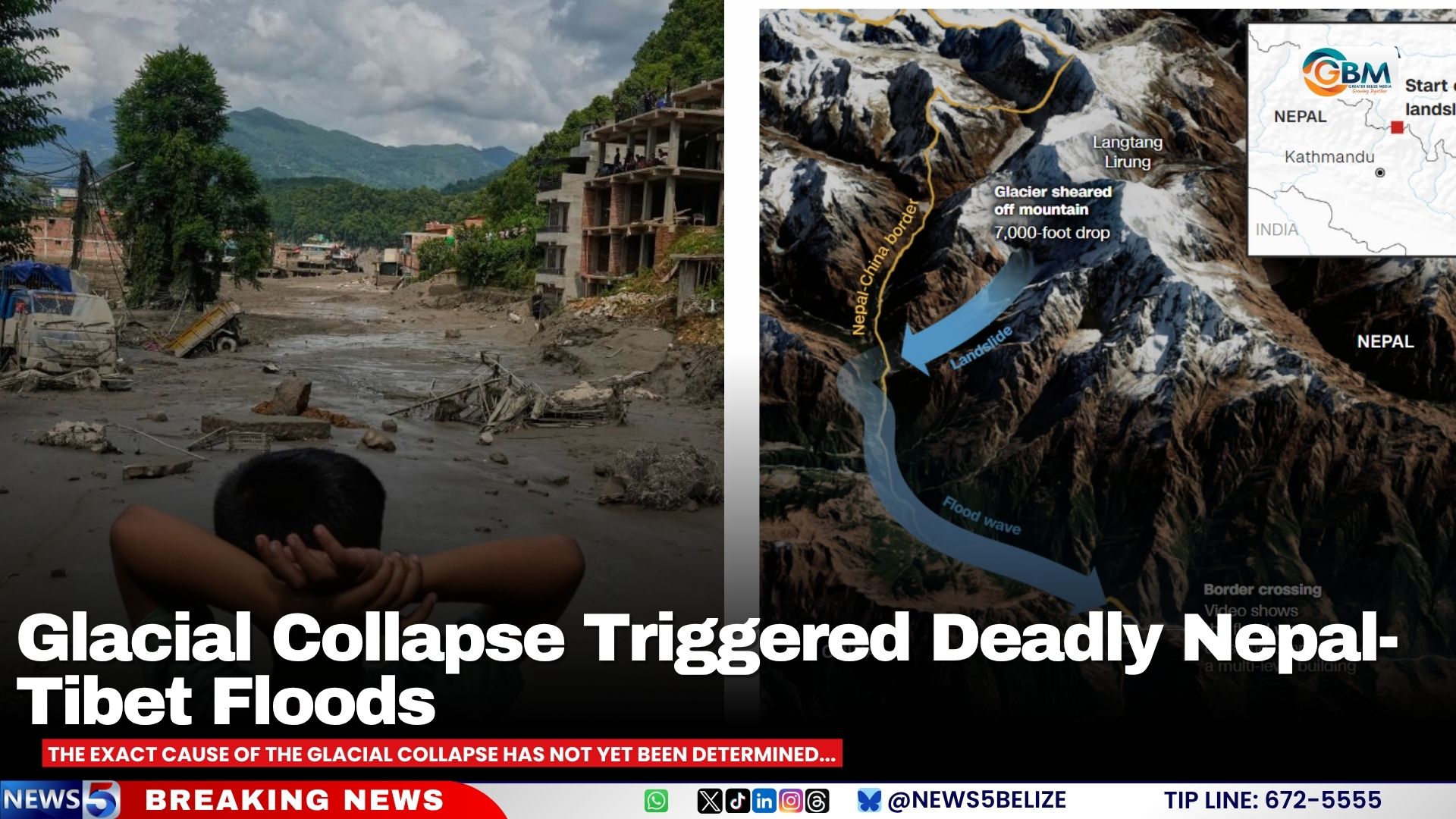
On August 27, 2026, a catastrophic natural disaster unfolded across the Nepal-Tibet border region, after a sudden glacial collapse triggered devastating flash floods that have left hundreds of people from across the globe unaccounted for, new findings from the United States Geological Survey (USGS) confirm. Contrary to initial official assessments that pointed to an earthquake as the root cause, the USGS has verified that a large section of a Himalayan glacier broke apart near the shared border on Wednesday, releasing a massive surge of water that rushed down steep mountain gorges before inundating Nepal’s Trishuli River valley. The concurrent initial landslide also sparked a destructive mudslide that hit Gyirong Port, a critical major land crossing on the Chinese side of the border.
While researchers have not yet pinned down the exact trigger for this specific glacial collapse, the disaster aligns with long-standing warnings from climate scientists who have documented the accelerating melt of Himalayan glaciers driven by global temperature increases tied to anthropogenic climate change. For decades, experts have sounded the alarm that this warming trend is sharply elevating the risk of sudden, catastrophic glacial outburst events across the high mountain region, which is often called the “Third Pole” for its massive store of freshwater.
The floodwaters have wiped out communities across three Nepali districts: Rasuwa, Nuwakot, and Dhading. More than 500,000 people, including members of the Tamang, Gurung, and Newar ethnic groups, call these river valley areas home. Most local residents depend on small-scale agriculture for their livelihoods, but in recent years the region has also grown into a popular destination for international trekkers, white-water rafters, and religious pilgrims. Each summer, hundreds of pilgrims from Hindu, Buddhist, Jain, and Bonpo traditions traverse the district on their way to Tibet’s sacred Mount Kailash.
These communities were already among Nepal’s most vulnerable to climate shocks before this week’s disaster. The region has long grappled with high poverty rates and repeated climate-driven disasters, including annual landslides and seasonal forest fires. Many residents had only recently finished rebuilding their homes and lives after the devastating 2015 Gorkha earthquake, which killed more than 8,000 people across Nepal, and resettled on the fertile low-lying riverbanks that have now been completely destroyed by the floodwaters.
As of Thursday, official casualty data remains incomplete, but confirmed deaths have reached at least 157, and the number of missing people has climbed into the hundreds. The Nepal Tourism Board reports that at least 517 foreign nationals are unaccounted for in Nepali territory alone, including 178 from India, 53 from Ukraine, 51 from Malaysia, 35 from Australia, 33 from the United Kingdom, 25 from Canada, and smaller groups from more than 25 other countries. The U.S. State Department has confirmed that 90 American citizens are also missing. On the Chinese side of the border, Chinese state media reports that 558 people remain unaccounted for, including 260 foreign nationals. Large-scale cross-border rescue operations were active as of Thursday, but officials have not yet released full lists of the deceased or missing.