标签: Belize

伯利兹

  • Heavy Sargassum Influx Forecast as Government Rolls Out National Response

    Heavy Sargassum Influx Forecast as Government Rolls Out National Response

    Belize’s coastal regions are preparing for another significant sargassum inundation as meteorological experts forecast substantial seaweed accumulations along critical shorelines. The National Meteorological Service has issued alerts for multiple communities including San Pedro, Caye Caulker, Hopkins, and Placencia—areas consistently impacted by the region’s escalating marine vegetation crisis.

    Immediate response measures are already underway, with San Pedro’s Town Council deploying specialized containment corrals along vulnerable coastlines. These floating barrier systems aim to intercept and manage seaweed before it reaches tourist beaches, providing crucial support to hospitality enterprises that have incurred substantial daily cleanup expenditures to maintain their properties and preserve the nation’s vital tourism industry.

    The ecological challenge has ascended to national policy discussions, receiving prominent attention in the National Assembly. Andre Perez, Minister of Blue Economy, characterized the sargassum phenomenon as among the most urgent and visible environmental challenges confronting coastal communities. Minister Perez emphasized the pattern of increasing frequency and intensity of seaweed influxes throughout the Caribbean region, noting multifaceted impacts on tourism infrastructure, fishing industries, and public health systems in affected areas.

    The government’s approach transcends temporary mitigation measures, with Perez asserting that authorities are treating sargassum not as seasonal nuisance but as national priority. The Ministry of Blue Economy and Marine Conservation is developing a comprehensive, scalable national response strategy encompassing enhanced collection mechanisms, environmentally sustainable disposal protocols, and investigation into potential economic opportunities through conversion technologies and value-added product development.

    Minister Perez concluded with an optimistic perspective, noting that the current administration perceives potential economic opportunities within the ecological challenge, signaling a paradigm shift from crisis management to innovative adaptation in addressing this persistent environmental issue.

  • Village Chairman Discovers Friend’s Body in Mopan River

    Village Chairman Discovers Friend’s Body in Mopan River

    In a devastating turn of events, the body of 35-year-old Hector Mejía, locally known as “Buye,” was recovered from the Mopan River near San José Succotz on Tuesday morning. The discovery was made by village chairman Armando Ventura Cocom under tragic circumstances that have shaken the small community.

    According to official accounts, Mejía was last seen alive on Sunday in the neighboring town of Benque Viejo. Chairman Cocom reported that the deceased had been socializing with friends and consuming alcoholic beverages prior to his disappearance. “Before he went missing, he was seen being gathered with some friends and taking some drinks,” Cocom stated in his preliminary account.

    The search for Mejía began earnlessly on Monday when Chairman Cocom utilized social media platforms to mobilize community efforts, requesting any information that might aid in locating the missing man. The breakthrough came unexpectedly during Cocom’s routine taxi drive between Benque Viejo and San José Succotz at approximately 8:15 AM on Tuesday, when he spotted a body floating in the river.

    The emotional toll on Chairman Cocom has been profound, given his personal relationship with the deceased. The two men had collaborated on various community initiatives, forging a bond beyond their official capacities. “It was very sad. It was heartbreak. I went in tears also,” Cocom expressed, visibly affected by the traumatic discovery.

    Mejía’s contributions to community life were highlighted in subsequent remarks, with Cocom emphasizing his recent voluntary work during the village’s cultural celebrations. Described as “very amicable” and “very happy,” Mejía appears to have been a beloved figure whose absence will be deeply felt. “His loss to the community is very big. I don’t even have words to explain,” Cocom added.

    Local authorities have launched a comprehensive investigation into the circumstances surrounding Mejía’s death. While preliminary findings suggest no immediate evidence of foul play, officials have declined to release further details pending completion of forensic examinations and ongoing investigative procedures.

  • Belize Moves Towards Better, Safer, More Accessible Tourism Standards

    Belize Moves Towards Better, Safer, More Accessible Tourism Standards

    Belize City has become the epicenter of regional tourism development this week as it hosts a pivotal four-day workshop focused on elevating industry standards across Central America and the Dominican Republic. The gathering, which concludes Friday, brings together tourism authorities and certification auditors from eight participating nations to establish unified benchmarks for sustainable tourism practices.

    The collaborative initiative, jointly organized by Belize’s Ministry of Tourism, Sports, and Diaspora Relations and the Secretariat for Central American Tourism Integration (SITCA), specifically targets the enhancement of small and medium-sized tourism enterprises. Through this program, local operators will gain pathways to obtain internationally recognized certifications that validate their operational excellence.

    Chief Tourism Officer Josue Carballo emphasized the transformative potential of this standardization effort. “Many private entities already implement commendable practices, but this initiative creates a consistent quality baseline across the industry,” Carballo stated. “This alignment provides proper recognition for private sector efforts and elevates them to certification status, particularly benefiting MSMEs across diverse regions.”

    Ligia Miranda, Executive Secretary of SITCA, highlighted the regional cooperation aspect of the workshop. “Quality and accessibility should transcend national boundaries,” Miranda explained. “Whether visitors are examining hotel accommodations during peak season or requiring disability access provisions, we aim to ensure uniform standards throughout the region. This guarantees that travelers can fully experience tourist destinations regardless of which country they visit.”

    The workshop represents a significant step toward establishing comprehensive tourism standards that address multiple facets of traveler experience, including safety protocols, service quality, accessibility features, and sustainability measures across Central American tourism destinations.

  • Belize, Guatemala and Mexico Talk Protection of Maya Forest

    Belize, Guatemala and Mexico Talk Protection of Maya Forest

    In a significant environmental diplomacy move, Belize is currently hosting a pivotal trinational summit with neighboring Guatemala and Mexico to address the conservation of the Greater Maya Forest. The high-level workshop, taking place in Placencia from March 22-28, 2026, represents a coordinated effort to protect one of Central America’s most critical remaining tropical forest systems.

    Delegations from Belize’s Forest Department, Guatemala’s National Council of Protected Areas (CONAP), and Mexico’s National Commission of Natural Protected Areas (CONANP) are collaborating to develop a comprehensive joint action plan. The agenda focuses on identifying priority conservation zones, establishing cross-border protection protocols, and exchanging innovative management strategies for protected areas within this vital ecological corridor.

    Beyond conference room discussions, participants will engage in field expeditions to critical habitats including Mountain Pine Ridge and the Chiquibul Forest. These site visits are designed to provide firsthand understanding of the ecological challenges and conservation needs within Belize’s diverse landscapes.

    Official statements from the Belize Forest Department emphasize that this collaborative initiative demonstrates the sustained commitment of all three nations to implement effective transnational conservation measures. The Greater Maya Forest represents not only a biodiversity hotspot but also a cultural heritage site of global significance, making its protection a regional priority with international implications.

    This trilateral cooperation marks a progressive approach to environmental governance, recognizing that ecological preservation requires coordinated efforts across national boundaries to address deforestation, habitat fragmentation, and climate change impacts effectively.

  • CCJ Reopens Belize Redistricting Case

    CCJ Reopens Belize Redistricting Case

    In a significant judicial development, the Caribbean Court of Justice (CCJ) has reinstated a pivotal constitutional challenge regarding Belize’s electoral constituency boundaries. The region’s highest court determined that the Belize Court of Appeal had erroneously dismissed the case on procedural technicalities, emphasizing that such matters should not obstruct the path to justice.

    The court’s ruling specifically addressed the appeal filed by Senior Counsel Anand Ramlogan, simultaneously overturning a previous costs order that had mandated him to personally cover the state’s legal expenses. The CCJ characterized this financial penalty as fundamentally unjustified.

    This litigation originates from a February 2025 claim submitted by citizen Jeremy Enriquez, who contends that Belize’s current electoral map relies on obsolete demographic data, thereby violating constitutional guarantees of equal representation. While the CCJ revived the main appeal, it declined Enriquez’s separate request for special leave to appeal another aspect of the case.

    The judicial journey began when High Court Justice Tawanda Hondora rejected an injunction application to postpone Belize’s 2025 general election while simultaneously issuing the controversial costs order against Ramlogan. With the CCJ’s decision, the constitutional challenge now returns to the Belize Court of Appeal for substantive consideration of the representation rights issues at the heart of this dispute.

  • High Court Awards $205K to Wrongfully Dismissed Principal

    High Court Awards $205K to Wrongfully Dismissed Principal

    In a landmark ruling with significant implications for Belize’s education sector, the High Court has ordered compensation of BZD $205,493.39 to former acting principal Isaac Longsworth for wrongful termination from Saint Barnabas Anglican Primary School. Justice Martha Lynette Alexander’s judgment not only resolves Longsworth’s protracted legal battle but also establishes crucial precedent regarding teacher retirement policies.

    The case originated in 2017 when Longsworth was dismissed following disciplinary proceedings involving multiple educational authorities. The High Court had previously declared the termination unlawful in 2019, finding procedural violations that denied Longsworth a fair hearing. While initial compensation covered only eleven months, the Court of Appeal subsequently mandated full assessment of lost earnings from October 2019 onward.

    During compensation proceedings, the court addressed two pivotal issues: career progression assumptions and mandatory retirement age. Justice Alexander accepted that Longsworth’s abrupt dismissal prevented completion of his Educational Leadership Certificate, warranting advancement to pay scale 17. However, claims for further increases based on hypothetical master’s degree attainment were rejected due to insufficient evidence.

    The retirement age controversy proved particularly consequential. Defense arguments asserting mandatory retirement at 55 were rejected after meticulous examination of the School Teachers’ Pensions Act and Teaching Service Commission Handbook. Justice Alexander determined that while teachers may optionally retire at 55, statutory language clearly establishes 60 as the compulsory retirement age across Belize’s education system.

    The court acknowledged Longsworth’s employment prospects were severely damaged but declined to find permanent unemployability. Compensation was calculated through March 11, 2026, plus twelve months transitional salary, with a ten percent contingency reduction reflecting normal labor market uncertainties. The award includes salary adjustments, allowances, and statutory deductions, with six percent annual interest accruing since October 2019.

    Critically, the judgment protects Longsworth’s retirement benefits by directing the Accountant-General to calculate his pension and gratuity upon reaching age 60 in 2030 as if continuous employment had been maintained, ensuring his unlawful dismissal doesn’t prejudice future entitlements.

  • Haiti Police Accused of “Summary Executions” Amid Rising Gang Violence

    Haiti Police Accused of “Summary Executions” Amid Rising Gang Violence

    A damning United Nations report has unveiled a catastrophic human rights situation in Haiti, documenting over 5,500 fatalities between March 2025 and January 2026 as criminal syndicates expand their territorial control beyond the capital. The comprehensive assessment from the UN Human Rights Office reveals that escalating violence has displaced approximately 1.4 million residents while gangs systematically consolidate authority over critical transportation corridors that fund their operations.

    Civilians face multidimensional threats including targeted killings, widespread abductions, child trafficking networks, and systematic extortion schemes. Particularly disturbing are accounts of victims being executed and subsequently burned. Those perceived as resisting gang authority face brutal retaliatory measures, including arbitrary detention under gang-organized judicial parodies and coercive financial demands for release.

    Alarmingly, the report documents nearly 250 instances of “actual or attempted summary executions” perpetrated by Haitian police forces, characterized by “unnecessary or disproportionate” application of force. The crisis has been further complicated by private military operations employing drone strikes and helicopter attacks that may constitute targeted killings without judicial oversight.

    Vigilante justice has emerged as another destabilizing factor, with self-defense groups conducting public lynchings of alleged gang members—actions sometimes allegedly facilitated by police collaboration. UN Human Rights Chief Volker Türk emphasized that sustainable security requires robust judicial mechanisms: “Gang suppression can only achieve lasting success through systematic identification, detention, and prosecution of those financing and organizing criminal activities in accordance with international standards.”

    The report concludes that without immediate accountability measures and institutional strengthening, all stabilization efforts remain fundamentally precarious.

  • “Let Cuba Live”: First International Aid Boat Reaches Cuba

    “Let Cuba Live”: First International Aid Boat Reaches Cuba

    In a significant humanitarian breakthrough, the first international aid vessel successfully docked in Havana on March 24, 2026, delivering crucial supplies to Cuba during its most severe energy crisis in decades. The Mexican fishing boat Maguro, ceremoniously renamed ‘Granma 2.0’ in homage to the historic vessel that transported Fidel Castro’s revolutionaries in 1956, arrived after navigating formidable maritime challenges including powerful winds, turbulent currents, and technical malfunctions.

    The symbolic arrival featured activists standing atop the cabin holding a banner proclaiming ‘Let Cuba Live’ as the vessel entered Havana’s harbor. This maritime delivery represents the seaborne component of the broader Our America Convoy initiative, which has already transported assistance via aerial routes from multiple continents. The mission carried 32 international volunteers from Australia, Brazil, Ecuador, Italy, Mexico, and the United States.

    Cuba’s current crisis stems from multiple nationwide blackouts caused by antiquated power infrastructure and critical fuel shortages. The situation deteriorated dramatically following January’s military operation ordered by U.S. President Donald Trump that resulted in the capture of Venezuelan leader Nicolás Maduro, effectively severing Cuba’s primary oil supply chain. The U.S. administration has further threatened tariffs against nations attempting to ship petroleum to the island.

    Regional response has intensified through coordinated efforts by CARICOM (Caribbean Community), whose member states have committed to delivering powdered milk, canned goods, medical resources, solar technology, and water storage systems. Mexico has additionally pledged logistical support and financial assistance for transportation costs, signaling growing international concern about Cuba’s deteriorating humanitarian situation.

  • Police Constable Wins Constitutional Battle After Nine Years in Legal Limbo

    Police Constable Wins Constitutional Battle After Nine Years in Legal Limbo

    In a landmark judicial ruling that underscores the critical importance of timely justice, Belize’s High Court has delivered a decisive victory to Police Constable Darrel Swaso after nearly a decade of professional suspension and legal uncertainty. The court determined that the State egregiously violated Swaso’s constitutional right to a fair hearing within a reasonable timeframe, bringing closure to a nine-year battle that left the officer in professional limbo.

    The case originated on August 9, 2013, when Constable Swaso was arrested alongside a passenger in his vehicle and charged with drug trafficking offenses. Following his arrest, he was immediately placed on interdiction—a form of administrative suspension that removed him from active duty while maintaining his nominal employment status.

    After being convicted at the Magistrate’s Court in San Ignacio on February 5, 2015, Swaso successfully appealed to the Supreme Court (now designated as the High Court). On May 25, 2015, the higher court overturned his conviction and mandated a retrial to be conducted “without undue delay.” Despite this clear judicial instruction, the State apparatus failed completely to initiate or schedule the ordered retrial over the subsequent nine years.

    When Swaso finally filed his constitutional claim on May 27, 2025—exactly nine years after the retrial order—the judicial system had taken no action whatsoever on his case. Throughout this prolonged period, Swaso remained under interdiction, compelled to adhere to strict court conditions that included regular police reporting and severe travel restrictions.

    In a significant development, the Attorney General’s office formally acknowledged on February 13, 2026, that Swaso’s constitutional rights had been violated and conceded that a permanent stay of proceedings was appropriate. However, the State contested the necessity of financial compensation, arguing that since Swaso had been on bail rather than incarcerated and had secured alternative employment, he had not suffered compensable prejudice.

    The presiding judge delivered a nuanced ruling that recognized the profound non-carceral impacts of the prolonged legal proceedings. While acknowledging Swaso had not been imprisoned, the court documented how his life had been substantially disrupted through mandatory reporting requirements, travel prohibitions, professional stigma as an interdicted officer, and the psychological burden of unresolved criminal proceedings—described in the judgment as “the sword of Damocles, hanging over him.”

    The court awarded nominal damages calculated at BZD $1,200 annually for the nine-year period of delay, totaling BZD $10,800. The judgment explicitly noted this award does not constitute full compensation, preserving Swaso’s right to pursue separate civil action with properly quantified damages.

    This ruling establishes significant jurisprudence regarding the state’s obligation to provide timely justice and recognizes that constitutional violations extend beyond physical imprisonment to include the substantial personal and professional consequences of prolonged legal uncertainty.

  • Panton Puts Cost‑of‑Living Crisis Front and Center

    Panton Puts Cost‑of‑Living Crisis Front and Center

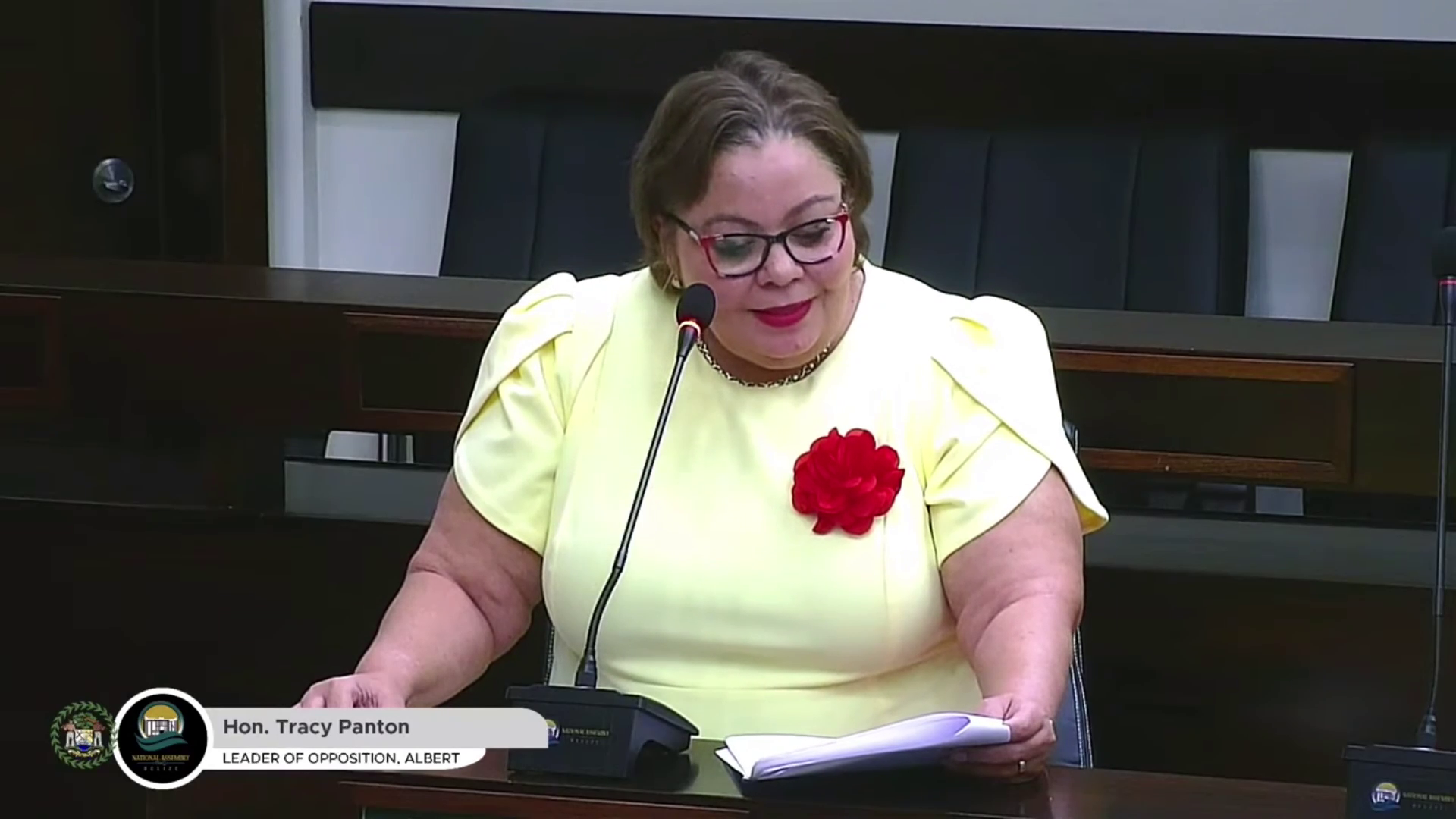
    BELIZE CITY – Opposition Leader Tracy Panton launched a fierce critique of government taxation policies during Monday’s budget debate, positioning the cost-of-living crisis as the central issue affecting Belizean families. Panton strategically shifted focus from abstract economic projections to the tangible realities confronting citizens, particularly emphasizing the impact of fuel prices on household budgets.

    The political confrontation centered on what Panton characterized as excessive government taxation on petroleum products, with her analysis revealing that 41% of regular fuel costs and 46% of premium fuel prices directly fund government coffers through various levies including revenue replacement tax, import duties, excise tax, environmental tax, and GST.

    Panton delivered a comprehensive assessment of economic pressures, citing consecutive increases across essential services and commodities including water rates, electricity costs, grocery items, rent expenses, and licensing fees. She issued a stark warning about impending price hikes for liquid petroleum gas (butane), predicting the government would soon attribute increases to ‘unpredictable global developments.’

    The opposition leader specifically targeted Prime Minister Briceño’s ‘budgeting for prosperity’ framework, labeling it profoundly disconnected from contemporary economic realities. Panton argued that global geopolitical tensions, particularly Middle East instability and ongoing conflicts, have created sustained volatility in oil markets that immediately impacts Belizean consumers long before new shipments arrive in port.

    Her critique extended to the administration’s approach to global economic influences, suggesting the government’s apparent disregard for international political changes has left Belize vulnerable to external shocks rather than providing insulation from their effects.