标签: Belize

伯利兹

  • Who Is Belize’s Cybercrime Law Really Protecting?

    Who Is Belize’s Cybercrime Law Really Protecting?

    In late May 2026, a high-profile arrest in Belize ignited fierce national debate over the original purpose and current application of the country’s 2020 Cybercrime Act, with critics warning the legislation designed to protect vulnerable citizens from online harm is being weaponized by powerful political figures to silence dissent.

    When Belizean activists and ordinary residents first lobbied for national cybercrime legislation, their priorities were clear: curb child luring, crack down on non-consensual revenge porn, and hold school cyberbullies accountable for damaging harassment. Few, if any, imagined the law would be used to orchestrate the arrest of a vocal political opposition figure over a satirical social media post mocking a sitting cabinet minister. But that is exactly what unfolded on May 31, 2026, when former United Democratic Party (UDP) chairman Alberto August was taken into custody by six armed police officers following a complaint filed by People’s United Party (PUP) Home Affairs Minister Oscar Mira.

    August was held in a police cell for 28 hours before being released on station bail, a move that came only after reported intervention from Prime Minister John Briceño. The charge against him, laid under Section 15 Subsection 4 of the 2020 Cybercrime Act, accuses him of using a computer system to disseminate a false statement with intent to harm Mira’s reputation.

    To understand the controversy, it is first necessary to examine the text and original intent of the law. Passed in October 2020 and gazetted shortly after, the Cybercrime Act was explicitly crafted to target harmful cyber activity that endangers private citizens. Its clear provisions criminalize child luring, non-consensual sharing of intimate images, and coordinated online harassment. On its face, Section 15(4) – the clause used to charge August – appears reasonable: it targets actors who knowingly spread false information to destroy another person’s reputation, a provision that makes sense in cases of targeted harassment, fabricated disinformation campaigns, or fake content designed to ruin someone’s livelihood. But legal critics and free speech advocates argue the provision was never meant to be applied to political commentary or satire targeting public officials.

    “This completely twists what cybercrime laws were actually made for,” attorney Leslie (Darynka) Mendez wrote in a public statement following August’s arrest. “When people were advocating for cybercrime legislation, they did so to protect private citizens, children, and young people dealing with cyberbullies at school, children being lured by adults, and women facing threats of revenge porn, not powerful politicians who willingly entered public life, fully knowing that criticism – whether fair or unfair – comes with the territory.”

    The incident that led to August’s arrest began with a satirical Facebook post he published the day before, mocking Mira’s response to the recent murder of Dr. Naun Bonilla, a Belmopan-based medical officer whose killing has amplified public anger over Belize’s growing crime crisis. August’s post mimicked a statement Mira made months earlier after a separate double murder in Belmopan, in which the minister argued that because the two victims did not officially reside in the city, the killing did not undermine Belmopan’s reputation as a safe place to live. August adapted the comment to fit Bonilla’s killing, putting fabricated but satirical words in Mira’s mouth.

    Mira responded angrily the same day, denying he ever made the statement attributed to him and calling the post a shameful exploitation of a tragic death. “Any and all legal recourse available to me will be pursued to ensure that disgusting Alberto August pays for this attack on my name,” he warned. Within 12 hours, six armed police officers arrived at August’s home with a search warrant, seized his electronic devices, and took him into custody.

    August’s attorney, former UDP senator Michael Peyrefitte, called the arrest a politically motivated intimidation tactic. “It was executed with military precision,” Peyrefitte said. “Unless it is what it exactly was: a hit sent out by the Ministry of Home Affairs to lock up Alberto for the weekend because he hurt the minister’s feelings. You don’t put a person in a jail cell for a social media post. If you feel offended by what you view as a false narrative, you file a civil defamation suit – you don’t send armed police to arrest a private citizen.”

    August, who was released Sunday afternoon, acknowledged the psychological toll of his detention. “Mentally sir, it is not an easy situation,” he said. “Being in detention for that kind of period of time, it certainly has an effect on you. But if the intention of the minister was to humiliate me and to cause anxiety and stress for my family, he succeeded.” Despite the ordeal, August says he has no regrets about publishing the post.

    This is not an isolated incident: Belize’s Cybercrime Act has been invoked repeatedly by public figures to target personal and political critics in recent years. Former Commissioner of Police Chester Williams, now CEO of the Ministry of Transport, has brought two separate cybercrime cases against individuals who he accused of online harassment. One case against activist Nichole McDonald was dismissed in 2025, only to be reinstated in May 2026, while a second case against Police Officer Barry Flowers collapsed earlier this month after Williams failed to appear for trial. Senior Magistrate Neeshad Mohammed ultimately dismissed the case, criticizing Williams’ absence as disrespectful to the court and warning that the judicial system should not be exploited to pursue personal vendettas.

    Belize’s experience mirrors a global trend, where broadly worded cybercrime laws originally intended to target harmful activity against private citizens have been repurposed to target political dissent, journalists, and critics of sitting governments. The Committee to Protect Journalists reports that prior to 2024 reforms, at least 25 journalists in Nigeria were prosecuted under that country’s Cybercrimes Act, with the organization calling the law “a readily available tool to harass the press.” In Jamaica, women’s rights activist Latoya Nugent was arrested on cybercrime charges in 2017 after naming accused sexual perpetrators on social media; charges were ultimately dropped two months later. Similar patterns have been documented in Tunisia, where authorities use cybercrime laws to detain dissident journalists and students, and Jordan, where a 2023 expansion of cybercrime legislation opened the door to prosecutions for vague offenses like “spreading fake news.”

    The core structural flaw that enables this misuse is shared by all these laws, including Belize’s Section 15(4): the provision is broadly worded, with no explicit exemption for political speech, satire, or fair criticism of public officials. Compounding this risk, the act grants police broad search and seizure powers, including the authority to enter private homes, seize electronic devices, and copy digital data, and carries harsh penalties: up to $10,000 in fines and five years in prison for summary conviction, or $15,000 and 10 years for indictment.

    “What the PUP did over the weekend is scary because they are saying that if I don’t like your criticism of me, I will lock you up,” Peyrefitte said. “You’re a political figure, you are subject to criticism, you are subject to be made fun of, subject to ridicule. We have gotten to the point where we seriously cannot even criticise these people. You cannot even have an opinion if that opinion is going to hurt the feelings of some tender minister who cannot handle being criticised or mocked.”

    Top government officials have defended Mira’s actions, with Prime Minister Briceño backing his minister and arguing that Mira was simply exercising his rights as a private citizen. “Oscar Mira also is a citizen, and if he feels that somebody is slandering him, he has every right to go and make a report,” Briceño said. While the prime minister admitted he would not have personally expended effort pursuing August, he added that “sometimes we do need to take a stance. Maybe I should consider taking out lawsuits against Alberto August; maybe I should have all PUPs take out lawsuits against him.” Briceño rejected any characterization of August’s post as satire, calling it “disgusting.”

    Mira for his part has denied abusing his office, arguing that public officials do not surrender their constitutional rights to protect their reputation when they take office. He maintains August’s post crossed the line between legitimate criticism and unlawful slander by publishing fabricated quotes.

    Critics have pointed to a clear double standard in the case: after August’s arrest, Mira’s brother Brian Mira posted a public comment threatening physical violence against August, writing he would “take a charge” if he encountered the former UDP chairman. The comment has since been deleted, but no police action has been taken against Brian Mira, a disparity Peyrefitte says exposes the unequal application of the law.

    As the case prepares to move through the courts, Belizeans are already raising urgent questions about the future of free speech in the country. The core controversy is not whether public officials have a right to protect their reputation – it is whether that right includes mobilizing state law enforcement to detain a critic over a satirical social media post.

    Across social media, Belizean users have sounded the alarm over what they see as a dangerous shift toward authoritarian overreach. “The ability to criticise, mock, and challenge those in power is not a courtesy extended by the government; it is a right,” one user wrote. “When the people can’t mock or criticise the government without retribution, then we are in tyranny, an authoritarian regime… a very slippery slope.” Another added, “The line between a democracy and something else starts to blur.”

    Many residents have called for urgent amendments to the Cybercrime Act to add explicit protections for political speech and satire, while others have expressed growing fear that the right to free expression is eroding. “Because of social media now, things are coming out, and politicians are scared because the corruption is coming to light,” one user wrote. “We have the right to voice and protest if governments are doing wrong; this is not a dictatorship country – or is it?”

  • $300K Emergency Grants for Beachfront Businesses Hit by Sargassum

    $300K Emergency Grants for Beachfront Businesses Hit by Sargassum

    A major emergency relief package has been rolled out to support Belize’s coastal tourism industry grappling with the growing crisis of massive sargassum accumulation along popular shorelines. The Belize Fund for a Sustainable Future has officially committed BZ$300,000 in emergency response grants to help beachfront businesses that have been pushed into struggle by unrelenting seaweed buildup.

    Named the “Rapid Response Support to Coastal Hotels for Sargassum Management and Cleanup” initiative, the program is being executed through a collaborative partnership between two leading industry groups: the Belize Tourism Industry Association (BTIA) and the Belize Hotel Association (BHA).

    Over the coming six months, the funding will target approximately 40 beachfront properties across some of Belize’s most popular tourism destinations, including San Pedro, Caye Caulker, Hopkins, Seine Bight, Placencia, and multiple remote offshore islands that draw thousands of visitors each year.

    According to a statement from the Belize Fund, eligible participating businesses will follow a straightforward reimbursement structure: after documenting all completed cleanup operations and associated costs, they can submit their claims for compensation through a fully transparent grant management process overseen directly by BTIA.

    The initiative has set clear, ambitious performance targets to address the immediate crisis: teams aim to remove a minimum of 1,250 wet tonnes of sargassum from local beaches each month, while maintaining 12,000 linear feet of clean, visitor-ready shoreline. Beyond cleaning coastal areas, the program is also projected to generate much-needed temporary employment for roughly 200 local workers in coastal communities.

    Dr. Leandra Cho-Ricketts, executive director of the Belize Fund for a Sustainable Future, emphasized that the sargassum problem extends far beyond the tourism sector, creating ripple effects across nearly every part of coastal life. “It affects jobs, families, public health, and coastal communities,” she explained. “This grant helps ensure that affected businesses have the support to respond quickly and responsibly.”

    Coastal hotel and tourism property operators located in affected regions who are interested in applying for the grant are instructed to contact BTIA directly to access full details on eligibility criteria and application requirements.

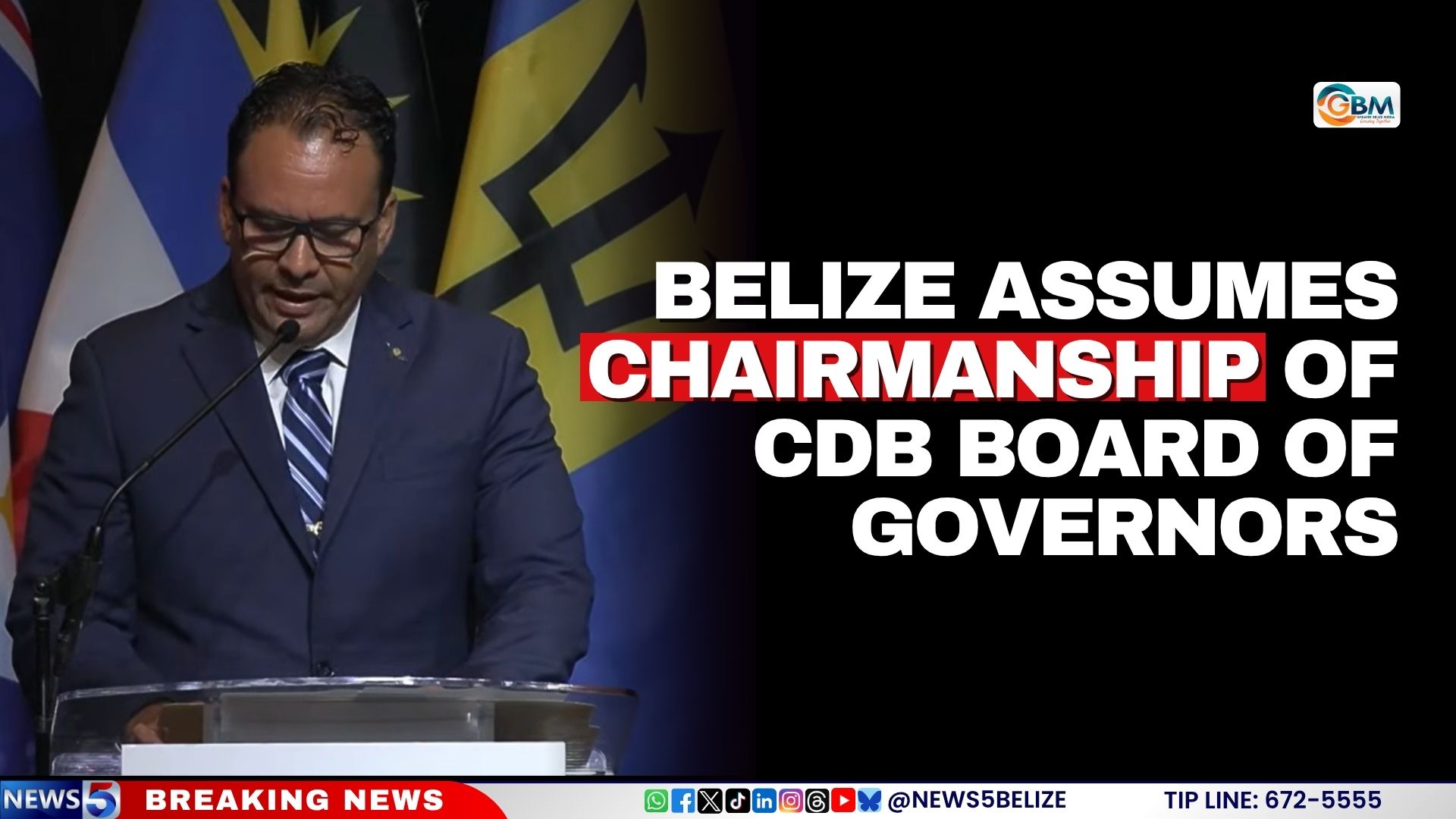
  • Belize Assumes Chairmanship of CDB Board of Governors

    Belize Assumes Chairmanship of CDB Board of Governors

    After more than three decades, Belize has stepped back into a key leadership role at one of the Caribbean’s most influential regional development institutions. At the closing session of the Caribbean Development Bank (CDB)’s 56th Annual Meeting of the Board of Governors, held in Nassau, Bahamas, the Central American nation formally assumed the chairmanship of the CDB’s top governing body, marking its first tenure in the position since 1994.

    Dr. Osmond Martinez, Minister of State in Belize’s Ministry of Economic Transformation, accepted the ceremonial gavel on behalf of Prime Minister John Briceño. In his acceptance remarks, Martinez outlined Belize’s core commitments for its 12-month tenure, centering on advancing inclusive sustainable development and targeted economic transformation across the entire Caribbean region. The handover also brings with it the responsibility of hosting next year’s gathering: Belize will welcome regional delegates and global partners for the 57th Annual Meeting of the Board of Governors in June 2027.

    In a pre-recorded address delivered to the closing ceremony, Prime Minister Briceño framed the chairmanship as a rare and meaningful honor for his country. “Our strength has never rested on the size of our individual states. It is our collective action, our shared purpose, and a firm belief in a better future for the Caribbean,” Briceño emphasized, echoing the collaborative mission that underpins the CDB’s work.

    As the highest decision-making forum of the CDB, the Annual Meeting draws a wide range of key stakeholders from the bank’s 19 regional and 9 non-regional member countries, including finance ministers, representatives from global development partners, private sector executives, and leaders of major international financial institutions. Over the next year, Belize, in its capacity as chair, will guide and shape the bank’s strategic priorities, with three core focus areas: deepening regional economic integration, expanding access to critical climate finance for vulnerable Caribbean nations, and supporting the development of more resilient, robust economic frameworks across member states.

    Belize’s delegation to the Nassau meeting included senior government and financial leaders: Carlos Pol, CEO of the Ministry of Economic Transformation; Henry Anderson, CEO of the Development Finance Corporation; Michael Rudon Jr, Director of the Government of Belize Press Office; and Jerdie King, a government economist.

  • Why is Belize at a Big Environmental Meeting in Uzbekistan?

    Why is Belize at a Big Environmental Meeting in Uzbekistan?

    On June 5, 2026, two senior Belizean government officials traveled halfway across the globe to Uzbekistan to participate in one of the world’s most influential high-stakes environmental gatherings, a decision that carries far-reaching implications for the Central American nation’s key economic sectors from southern agricultural regions to coastal fishing communities on the Cayes.

    The delegation, led by Judene Tingling-Linares from Belize’s Ministry of Sustainable Development and Leroy Martinez, director of the country’s Climate Finance Unit, is in attendance for the 8th Assembly of the Global Environment Facility (GEF) — a quadrennial summit for the world’s largest multilateral environmental funding body. The gathering brings together cabinet ministers, climate policy leaders, and conservation advocates from every region of the world to set the trajectory for global environmental action for the coming four years.

    For context, the GEF functions as a collective global financing pool, designed to support low- and middle-income countries address pressing transboundary environmental challenges that no single nation can resolve alone, from curbing the worst impacts of climate change to safeguarding threatened forest ecosystems and marine biodiversity. Belize has maintained a long-standing partnership with the organization, drawing GEF support for more than three decades to advance a wide range of local environmental initiatives, spanning from professional management of protected natural areas to community-led conservation programs rooted in local livelihoods.

    Government data from Belize confirms that past GEF-funded projects have delivered tangible benefits across the country: they have injected critical resources into rural community development, laid the groundwork for sustainable income streams that do not rely on exploiting natural resources, and boosted national efforts to protect vulnerable ecosystems including old-growth forests, the Belize Barrier Reef, and critical watershed systems that supply clean water to communities across the nation.

    During the summit in Uzbekistan, the Belizean delegation is not only participating in high-level plenary discussions but also engaging in technical negotiations focused on the GEF’s upcoming four-year funding cycle, labeled GEF-9. This cycle will determine the total amount of global financing available and set the institutional priorities that will guide funding allocation for the next four years, making early positioning a critical strategic step for Belize to secure the resources it needs.

    Beyond advancing its own national priorities, Belize is aligning with a broader coalition of Small Island and Coastal Developing States (SIDS) to push for more equitable funding distribution. The coalition emphasizes that nations like Belize face disproportionate climate and environmental vulnerability despite contributing very little to global carbon emissions, and they must not be sidelined or overlooked when global environmental financing is allocated.

  • 66-Year-Old Woman Held at Gunpoint Stepping Out of Her Vehicle

    66-Year-Old Woman Held at Gunpoint Stepping Out of Her Vehicle

    An alarming armed burglary in western Belize left a 66-year-old woman traumatized on Thursday morning, ending with one suspect in police custody and a second man still evading capture as authorities urge local residents to remain vigilant.

    The violent incident unfolded in Cristo Rey Village, a small community located in Belize’s Cayo District. According to official statements from Assistant Superintendent of Police Stacy Smith, local law enforcement received an emergency 911 call at approximately 9:30 AM, reporting that an aggravated break-in was actively underway at a home on the village’s rural outskirts.

    Witnesses told police the two attackers ambushed the elderly homeowner moments after she exited her private vehicle. The pair held her at gunpoint and forced her back into her residence, where they immediately began ransacking the property in search of valuables. Their robbery attempt was cut short when an unexpected vehicle approached the home, prompting the pair to flee the scene with only a single piece of the victim’s jewelry before law enforcement arrived.

    When San Ignacio Police officers pulled up to the residence, they spotted the two men running from the property. A short foot pursuit ensued, leading to the arrest of one suspect. Officers also recovered critical evidence from the area: a loaded .22 caliber pistol, unused live ammunition, and the stolen piece of jewelry that was taken during the attack, which has since been returned to the homeowner.

    In the wake of the incident, Smith emphasized that the quick response from law enforcement would not have been possible without sharp-eyed community members. “It is because of the community’s recognition of strange persons within their area that a call was made and police were able to intercede,” Smith explained. She went on to advise residents across the district to stay alert for emerging patterns of residential burglary, and to immediately report any unfamiliar people or suspicious activity in their neighborhoods to local law enforcement.

    As of the latest update, the second suspected attacker remains at large. Police have not released additional details about the identities of the suspects or the ongoing manhunt as the investigation continues.

  • Got a Shockingly High Light Bill? PUC Says File a Complaint

    Got a Shockingly High Light Bill? PUC Says File a Complaint

    As summer temperatures climb across Belize, thousands of residential electricity customers are facing a different kind of heat: skyrocketing utility bills that have nearly doubled for many households in recent months, sparking widespread public frustration that has now prompted regulatory intervention. Local outlet News 5 has been closely monitoring the growing public anger, with many consumers pushing back against the official explanation provided by Belize Electricity Limited (BEL), the country’s primary electricity provider.

    BEL has attributed the sudden sharp spike in monthly bills to increased energy consumption as households run air conditioning and other cooling systems more frequently during warmer summer weather, and has urged customers to voluntarily cut back on electricity use to lower their costs. But this explanation has failed to convince hundreds of affected consumers, many of whom report that their daily routines and energy usage habits have not changed at all from previous years, yet their bills have jumped dramatically.

    Now the Public Utilities Commission (PUC), Belize’s independent regulatory body for public utility services, has stepped in to address consumer concerns, issuing an official public notice on Thursday outlining clear steps for customers who believe their bills are inaccurate. The commission is urging all residential consumers to regularly check their physical electricity meter readings, and cross-reference those numbers with the consumption totals listed on their monthly billing statements.

    The PUC emphasized that any customer who spots sudden unexplained increases in their bill, consumption totals that do not align with their household’s actual energy use, or a significant gap between their on-meter reading and the amount billed should take immediate action to resolve the issue.

    Under the PUC’s formal two-step complaint framework, customers must first reach out directly to BEL’s Customer Care Department to request clarification on their bill. If BEL’s response does not resolve the consumer’s concern, the matter can then be escalated to the PUC’s own Communications and Consumer Affairs Office for independent review.

    The first tier of review is an informal complaint process, where consumers submit a description of their issue alongside supporting documentation such as copies of their billing statements, receipts, or photos of their meter readings. PUC staff will then review the submission and contact BEL directly to negotiate a resolution between the utility and the customer.

    If the informal process fails to deliver a satisfactory outcome, consumers can advance their claim to the formal complaint stage. At this level, both the consumer and BEL will participate in a formal mediation process overseen by the PUC, which is required to be completed within a 30-day window. If mediation also does not resolve the dispute, the complaint will be brought before the full PUC commission for a final binding ruling.

    The PUC notes that complaints can be filed for a wide range of utility-related issues beyond just incorrect billing. These include faulty meter readings, unexpected or wrongful service disconnections, unplanned service interruptions, problems with new electricity installation, property damages related to utility work, public safety hazards related to electricity infrastructure, and any other unfair or improper utility practices.

    Consumers can file their complaints through multiple convenient channels: they can send an email to the PUC’s dedicated consumer inquiry inbox at info@puc.bz, or reach the commission’s consumer affairs team by phone at 501.223.4938.

  • Dr Bonilla Murder Case: Two Accused to Return for Disclosure in 3 Months

    Dr Bonilla Murder Case: Two Accused to Return for Disclosure in 3 Months

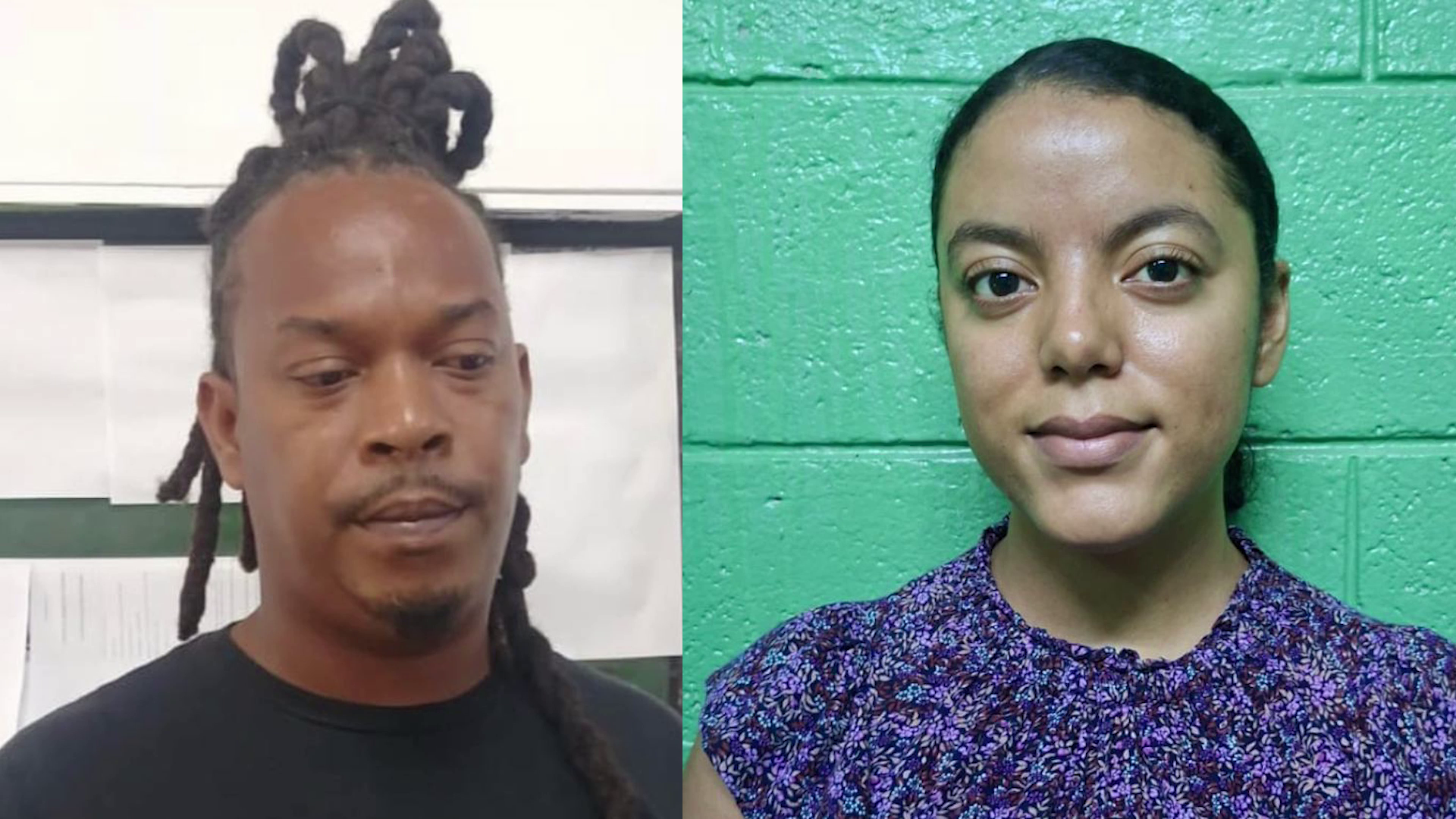
    In the quiet capital city of Belmopan, a brutal murder tied to a bitter business dispute has left a prominent local medical professional dead and his family grappling with overwhelming grief, as two accused defendants head toward the next phase of a high-profile criminal case. On Wednesday, 26-year-old Hannah Rebekah Foreman and 37-year-old Edwin Albert Bethran Jr were ordered held without bail at Belize’s central prison after being formally charged with the May 29 killing of 36-year-old Dr. Naun Bonilla. The case is scheduled to return to court for mandatory evidence disclosure on September 1, 2026.

    Outside the courtroom following the hearing, Angel Bonilla, the victim’s older brother, spoke publicly about the family’s devastating loss and their quest for justice. “Nothing is worth a life. There is nothing that can replace the huge void that has been left in our family,” he told reporters. If he had known the dispute would end in violence, he added, he would have pressured his brother to abandon the business conflict entirely. The family is not just seeking a formal arraignment, he emphasized—they are pushing for a full conviction to hold those responsible accountable.

    Court documents and case filings reveal that Foreman was no stranger to Dr. Bonilla: the two were once close business partners who launched two joint medical ventures in November 2023—Insights Medical Clinic and Belmopan Medical Laboratory Services—each holding an equal 50% stake in the operations. The partnership operated without major conflict for more than two years, but tensions boiled over after the company secured a lucrative National Health Insurance laboratory services contract in January 2026.

    What began as a disagreement over ownership and operational control quickly escalated into a bitter legal battle. Foreman has claimed that Dr. Bonilla forced her out of the business by locking her out of the shared clinic and lab facility, revoking her access to company administrative systems, and placing her on an unlawful unpaid suspension. For his part, Dr. Bonilla filed counter-claims alleging that Foreman had diverted thousands of dollars in patient payments into her personal bank accounts, destroyed critical company records, and attempted to re-register the entire business under her sole ownership using a forged copy of his signature. A full civil trial on these ownership allegations was already scheduled when Dr. Bonilla was fatally shot last month.

    Law enforcement investigators took Foreman into custody within hours of the shooting, and subsequent probe has led authorities to conclude that Foreman contracted Bethran, the second defendant, to carry out the fatal attack.

    For the Bonilla family, the loss is compounded by the knowledge that Dr. Bonilla dedicated more than a decade of his life to training to serve his home community. After graduating high school in Belize, he spent 14 years completing his medical education abroad before returning to open his practices, building a business he was deeply proud of. Angel Bonilla called the circumstances of his death unfathomable: “He was killed for his own work. For the proceeds of his work. What he was so proud of. It is beyond anyone’s wildest dream.”

    He added that the family had been aware of the escalating tension with Foreman for months, noting the conflict had been “brewing, unfortunately, for a little too long.” Now, he carries deep regret for not pushing his brother to walk away from the partnership before violence erupted. “I feel that I failed him by not warning him,” he said. “You know, like the parable says, a thief is a killer.”

    As the case moves forward, the Bonilla family waits for the legal process to unfold, with the next court hearing set to open the door for full disclosure of evidence in the coming months.

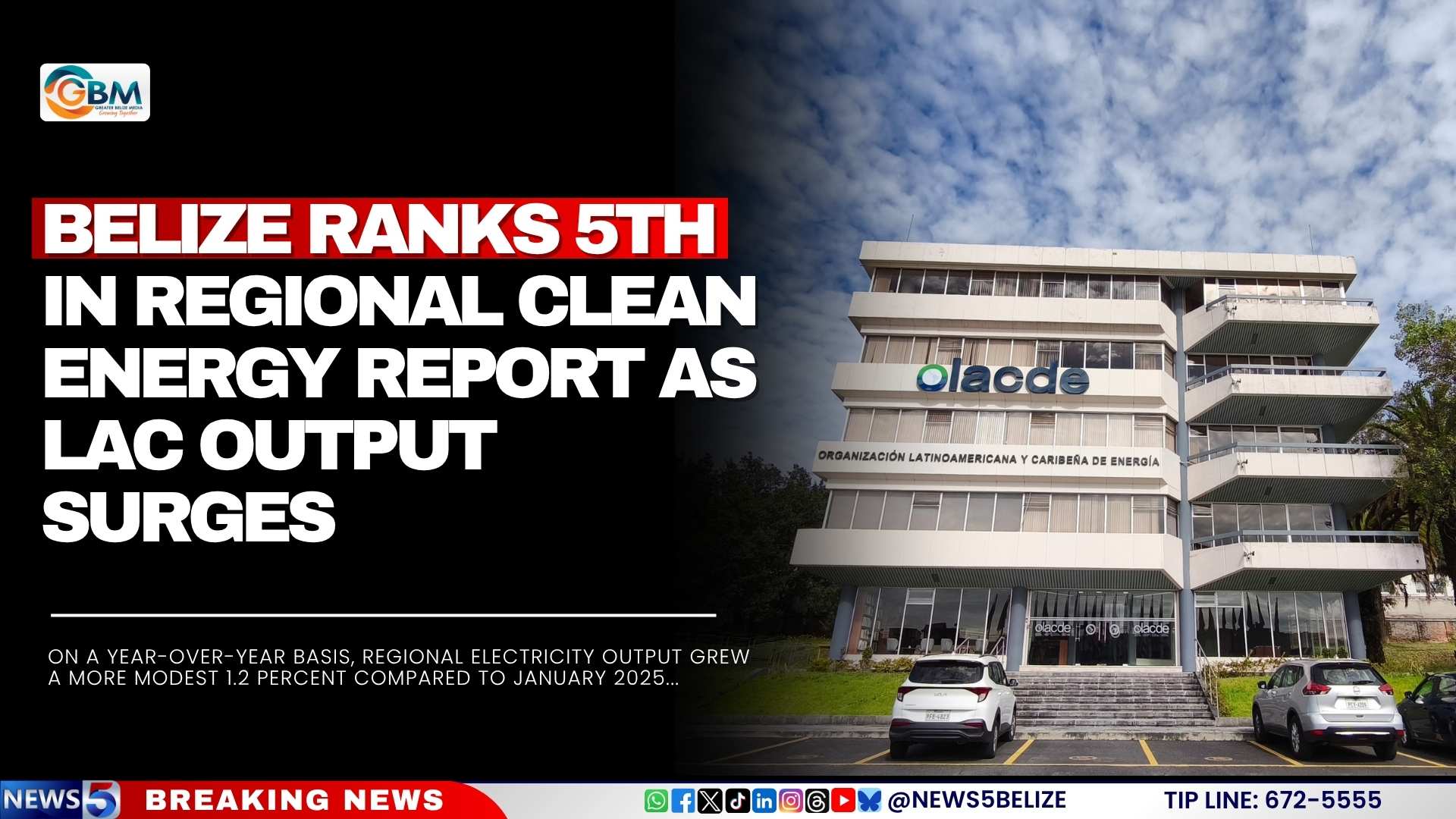
  • Belize Ranks 5th in Regional Clean Energy Report as LAC Output Surges

    Belize Ranks 5th in Regional Clean Energy Report as LAC Output Surges

    As nations across the globe accelerate their transition away from fossil fuels toward low-carbon energy systems, a new 2026 regional energy report highlights strong progress across Latin America and the Caribbean (LAC) — with Belize emerging as one of the region’s top performers in renewable electricity generation.

    Released by the Latin American and Caribbean Energy Organization (OLACDE), the latest report tracks regional energy output for January 2026, revealing that total LAC electricity generation hit 171 terawatt-hours (TWh) that month. This marks a 9.6% jump from December 2025, a surge primarily driven by the rebound of hydropower generation after widespread drought and hydrological constraints that had limited output across the region in prior months eased.

    When ranked by the share of total electricity generated from renewable sources, Belize secured the 5th spot in the regional ranking, with 90.9% of its domestic power coming from clean renewable resources in January. Only four LAC nations outperformed Belize: Paraguay, which hit a perfect 100% renewable generation rate, Costa Rica at 97.8%, Uruguay at 96.5%, and Ecuador at 91.6%. Colombia, Brazil and Venezuela also landed in the region’s top tier of renewable energy performers, per the report’s findings.

    Across the entire LAC region, renewables now make up 66% of the total energy mix, with hydropower alone accounting for 44.5% of all regional electricity generation. Natural gas remains the most widely used fossil fuel in the region, making up 23.8% of total output. OLACDE notes that natural gas largely functions as a flexible backup capacity for regional grids that have integrated high levels of variable renewable energy sources like wind and solar.

    Despite the overall strong growth in clean energy, the report also identifies key seasonal vulnerabilities that challenge grid stability across the region. Compared to December 2025, solar generation dropped by 30% in January, geothermal output fell by 36%, and wind generation declined by 11%. OLACDE analysts emphasize that these seasonal fluctuations underscore the critical need for investment in dispatchable energy technologies that can offset the intermittency of variable renewables and keep regional grids stable through changing seasonal conditions.

    Looking at longer-term year-over-year trends, regional electricity output saw a far more modest 1.2% growth in January 2026 compared to the same month in 2025. Hydropower added an extra 10.8 TWh to overall output year-over-year, but lower solar generation pulled total regional output down by 11.2 TWh, offsetting much of the hydropower gain.

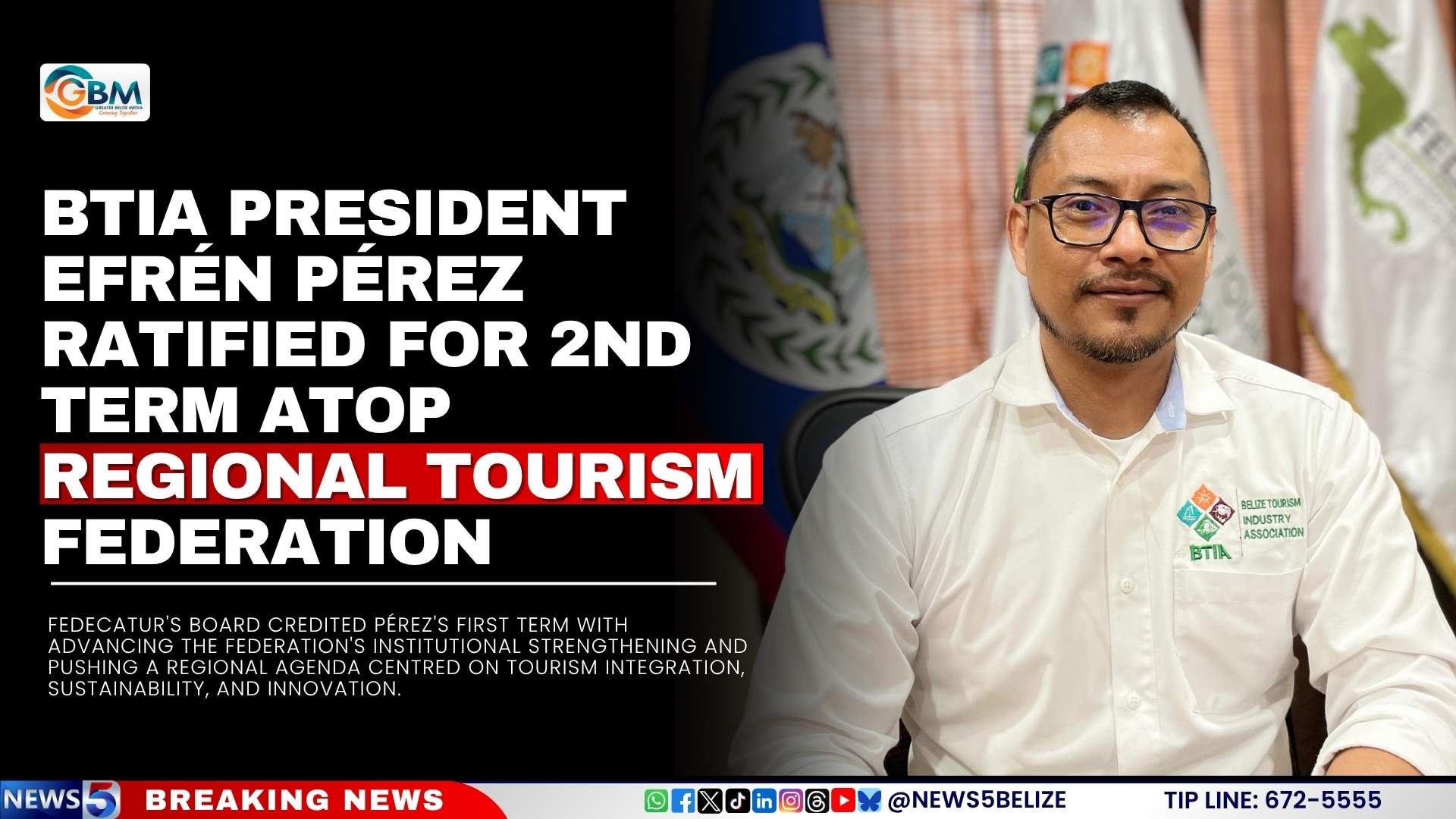
  • BTIA President Efrén Pérez Ratified for Second Term Atop Regional Tourism Federation

    BTIA President Efrén Pérez Ratified for Second Term Atop Regional Tourism Federation

    In a significant development for Central America and the Caribbean tourism sector, Efrén Pérez, current president of the Belize Tourism Industry Association, has secured unanimous approval to serve a second consecutive term as president of the Federation of Tourism Chambers of Central America and the Dominican Republic (FEDECATUR). The official ratification was announced during the III Ibero-American Forum on Sustainable Tourism, Innovation, and Development, a high-profile industry gathering hosted in San Pedro Sula, Honduras that drew hundreds of stakeholders including tourism leaders, public sector representatives, global intergovernmental body delegates, and private sector executives from across the Ibero-American region.

    FEDECATUR’s Board of Directors highlighted the key achievements of Pérez’s first term to justify their unanimous decision to re-appoint him. During his initial mandate, Pérez spearheaded meaningful progress in institutional strengthening for the regional federation, and advanced a cohesive regional policy agenda focused on three core pillars: cross-market tourism integration, environmentally sustainable tourism practices, and industry innovation through new technologies and business models.

    Speaking after the confirmation, Pérez framed the renewed mandate as a collective vote of confidence in the shared vision of a more connected, competitive, and fully integrated tourism economy across Central America and the Dominican Republic. “Our ongoing commitment remains centered on amplifying the voice of the private tourism sector across the region, and building a strategic, constructive partnership with regional governments,” Pérez stated. “Together, our goal is to drive inclusive economic growth, expand quality job opportunities, and deliver long-term prosperity for local communities that depend on tourism.”

    For his second term, FEDECATUR has already laid out a clear policy roadmap. Key priorities include expanding and deepening public-private sector dialogue on regional tourism challenges, upgrading air and land transportation connectivity across member states, lowering regulatory barriers that hinder cross-border visitor mobility, and embedding sustainable development as a non-negotiable core pillar of all regional tourism policy. The federation also plans to strengthen collaborative ties with international tourism bodies and multilateral institutions to access funding, technical expertise, and global market opportunities for member stakeholders.

    As the leading representative body for the organized private tourism sector across eight nations, FEDECATUR counts Belize, Guatemala, El Salvador, Honduras, Nicaragua, Costa Rica, Panama, and the Dominican Republic among its core membership. The organization works to align industry priorities, advocate for policy reforms that benefit regional tourism, and position Central America and the Dominican Republic as a cohesive, competitive global tourism destination.

  • Breakthrough in Belmopan Doctor’s Murder: Two Charged in Bonilla Killing

    Breakthrough in Belmopan Doctor’s Murder: Two Charged in Bonilla Killing

    Six days after beloved Belmopan physician Naun Ulices Bonilla was gunned down in a public shooting that sent shockwaves through the Central American community, law enforcement officials have announced a landmark breakthrough in the investigation: two individuals have been arrested and formally charged with his murder.

    The accused are 26-year-old Hannah Rebekah Foreman, a trained laboratory scientist who once worked alongside Bonilla, and 37-year-old Edwin Albert Bethran Junior, a local electrician. Both face joint murder charges for the fatal shooting that took place on May 29, 2026, in Belmopan’s quiet Las Flores neighborhood.

    New court documents and law enforcement sources have painted a clearer picture of the alleged conflict that preceded the killing. Court records show Foreman and Bonilla built a professional partnership starting in November 2023, launching two joint medical ventures: Insights Medical Clinic and Belmopan Medical Laboratory Services. The 50-50 partnership was on track for major growth when the pair secured a lucrative, multi-year National Health Insurance laboratory services contract in January 2026. That success quickly turned bitter, as competing claims over control and financial mismanagement split the business partners.

    According to filings submitted before Bonilla’s death, Foreman alleged the doctor had effectively pushed her out of the company: he locked her out of the clinic facility, revoked her access to core administrative systems, and placed her on an unauthorized administrative suspension. For his part, Bonilla accused Foreman of severe financial misconduct, claiming she had diverted thousands in patient payments to her personal bank accounts, destroyed official company records, and attempted to transfer full ownership of the business to her name using a forged version of his signature. The dispute had already escalated to the country’s court system, with a full civil trial pending when Bonilla was killed.

    Sources close to the investigation have told reporters that less than 24 hours before the shooting, two unidentified men on motorcycles arrived at the company’s office asking specifically for Bonilla. The doctor was not on site at the time, but just hours later he was shot and killed in public. Law enforcement officials confirmed Wednesday that they took Foreman into custody shortly after the shooting, and have developed evidence suggesting she contracted Bethran to carry out the fatal attack. While investigators have not publicly revealed an official confirmed motive, multiple sources familiar with the case say the ongoing business dispute is the central line of inquiry.

    The killing of Bonilla, a well-respected local doctor, shook Belmopan, with community members calling for swift justice in the case from the earliest days of the investigation. Wednesday’s announcement of formal charges marks the most significant progress to date, but investigators emphasize that key questions remain unanswered. Law enforcement teams are still working to map the full sequence of events, confirm all potential connections to the crime, and build a complete case for prosecution. As the legal process moves forward, reporters will continue to track new developments and provide updates to the public.