标签: Barbados

巴巴多斯

  • Credit to captain Chase

    Credit to captain Chase

    West Indies men’s cricket team head coach Daren Sammy has opened up about his side’s recent ICC World Test Championship campaign, highlighting the steady, impactful leadership of Test captain Roston Chase in the wake of a drawn two-match series against Pakistan. The series ended all square at 1-1 after Pakistan secured an eight-wicket victory over the Caribbean side in the second Test, hosted at Port of Spain’s Queen’s Park Oval in Trinidad. This result came on the heels of a solid 1-0 series win against Sri Lanka that West Indies claimed back in July.

    Sammy emphasized that Chase’s leadership has been the most uplifting takeaway from the back-to-back Test campaigns. Through the challenging moments the squad and coaching staff have navigated in recent months, the captain’s consistent communication and shared understanding of the team’s long-term goals have proven critical to maintaining team morale and focus. “Roston has never lost his voice in the dressing room,” Sammy noted, adding that Chase maintains remarkable emotional balance regardless of match outcomes: he does not get overconfident after big wins, nor does he let defeat drag down his leadership, a trait that has cemented his status as a reliable anchor for the side. Sammy also praised Chase’s improving individual on-field performances, alongside the hard work of his entire coaching staff, noting that he is proud of the clear progress the entire program has made over the course of the summer.

    Reflecting on the two back-to-back Test series against Sri Lanka and Pakistan, both part of the ongoing ICC World Test Championship cycle, Sammy said the entire squad has stayed committed to the team’s development process. He pointed to the Sri Lanka series as a particularly standout performance, where the Caribbean side reached significant batting and bowling milestones that had eluded the team for more than a decade. “Against Pakistan we enjoyed the competition, but the look on everyone’s faces after the final Test was one of clear disappointment,” Sammy admitted. “The players knew they had not capitalized on opportunities that would have given them the series win.”

    Even with the disappointing end to the Pakistan series, Sammy was quick to commend every player and staff member for staying aligned with the team’s plan, buying into the group’s definition of success, and tuning out external criticism and noise. The head coach added that the team’s batting unit has consistently delivered critical runs throughout the 2024 summer Test window, but identified second-inning batting performance as a key area for continued improvement. He also reserved praise for his bowling attack, noting that the unit has consistently managed to take all 20 opposition wickets in Test matches – a mark of progress that Sammy says he is particularly proud of.

    Looking ahead, West Indies is set to wrap up their 2024 Test calendar with a series in Bangladesh, and Sammy says the squad is already focused on finishing the year on a high note. A series win in Bangladesh, he added, would be the perfect icing on the cake for what has already been a period of steady growth for the side. “We’ve been clear with every player about our collective and individual goals,” Sammy said. “It’s critical that everyone stays on the same page about what we want to achieve, and exactly how we plan to get there.”


  • Corporate tax windfall raises urgency for faster reforms

    Corporate tax windfall raises urgency for faster reforms

    Barbados has recorded a windfall of more than $150 million in additional corporate tax revenue following the implementation of landmark global tax reforms, but industry leaders are sounding a warning that the Caribbean nation risks losing international companies to more operationally efficient jurisdictions unless it accelerates public sector modernization.

    The new tax regime, which includes the Qualified Domestic Minimum Top-up Tax paired with the OECD-led Pillar Two framework, sets a 15% effective minimum tax for large multinational enterprises and a 9% rate for domestic companies. Introduced to bring Barbados’ tax code in line with global standards and defend its domestic corporate tax base, the reform has already delivered a substantial infusion into the island’s public coffers, data from the Central Bank of Barbados confirms. The Mia Mottley-led administration plans to direct the extra revenue toward strengthening social safety nets, expanding regulatory capacity, and delivering direct economic relief to local citizens.

    However, the unexpected revenue boost has reignited debates over Barbados’ long-term competitiveness as an international business hub, with observers questioning whether higher tax rates will erode the island’s long-standing appeal to global corporations. Carmel Haynes, executive director of the Barbados International Business Association (BIBA), told reporters that while the tax overhaul initially triggered unease across the offshore business sector, overall investor confidence has held up better than early forecasts predicted. “Early projections of a mass exodus of foreign capital simply did not come to pass,” Haynes noted. “While there have been some companies that chose to relocate, we continue to see new business incorporations, so it would be wrong to write off Barbados’ attractiveness at this stage.”

    Central Bank data backs this assessment: after an initial uptick in non-renewals of foreign currency permits when the reform was first rolled out, renewal rates have since stabilized, and the island’s largest corporate taxpayers have opted to retain their local operations. “We have not seen a mass departure of firms over the 9% domestic rate,” Haynes said. “The fact that major taxpayers are still here and meeting their new higher tax obligations signals solid confidence in the market.”

    The impact of the new regime has been uneven across different industry segments. Highly mobile corporate structures set up primarily for tax minimization have faced the most pressure to relocate, but core sectors where Barbados holds established global market share have seen little disruption. Notably, the captive insurance industry, where Barbados ranks among the world’s top five domiciles alongside Bermuda, the Cayman Islands, and Delaware, has remained largely stable.

    Haynes pointed out that many multinationals choose Barbados for strategic advantages that go far beyond base tax rates, including the island’s extensive network of double taxation treaties that offer unique legal protections for firms operating in complex regional markets like Cuba and Venezuela. Now that the 15% global minimum tax has leveled the playing field across all participating jurisdictions, Barbados still retains key competitive edges over its Caribbean peers: administrative and corporate setup costs remain significantly lower than in higher-cost hubs like Bermuda and the Cayman Islands, and the island has long marketed itself as having a highly educated professional workforce that keeps labor costs stable while meeting global regulatory substance requirements. This skilled talent pool is paired with decades of regulatory stability and legal predictability, factors that continue to reassure long-term foreign investors.

    Even with these inherent strengths, BIBA is urging the government not to take existing investor loyalty for granted. With tax rate differences largely eliminated by OECD rules, non-tax factors — particularly administrative efficiency and speed of service delivery — have become the most critical differentiator for competing international business hubs. The association is calling on the Mottley administration to reinvest the new tax revenue directly into public service modernization, cutting bureaucratic red tape, and advancing long-delayed digital transformation projects. A top priority is full digitization of the Corporate Affairs and Intellectual Property Office (CAIPO), with local businesses calling for faster company registration processing, automated cross-agency data sharing to cut redundant paperwork, and legal recognition of digital signatures for corporate transactions.

    “When companies know their applications will be processed quickly, their questions answered and their needs met efficiently, we will outcompete other jurisdictions,” Haynes said. “We cannot rest on our past successes. We cannot assume companies currently operating here will stay indefinitely. We have to meet their modern needs and prove we want their business by delivering the highest quality services possible.” While some government agencies including Business Barbados and the Financial Services Commission have already started expanding staffing to improve service, Haynes warned that the pace of reform needs to accelerate sharply to avoid frustrating investors. “If companies get fed up with delays and leave, the damage will already be done,” she said.

    Looking ahead, long-term uncertainty around the global Pillar Two framework remains, driven by shifting geopolitical dynamics. The United States has not yet formally adopted the regime, facing growing domestic political pushback against global tax mandates, leaving open questions about whether the 15% minimum tax will remain intact over the next decade. “Geopolitical shifts could change the long-term trajectory of the global minimum tax regime,” Haynes noted. “It is still too early to tell if this framework is permanent, so we cannot yet know what its ultimate impact on Barbados will be.”

  • Underage drinking concerns raised at Crop Over events

    Underage drinking concerns raised at Crop Over events

    As Barbados’ iconic Crop Over festival enters its peak summer season, the National Council on Substance Abuse (NCSA) has issued an urgent warning over widespread failures to prevent underage access to alcohol at public festival events. Reports of minors purchasing and consuming alcoholic beverages without mandatory age or identity checks have prompted the public health agency to highlight the serious risks weak regulatory enforcement poses to young people across the island.

    NCSA counselor Mosiah Hoyte shared details of the agency’s on-the-ground observations with local outlet Barbados TODAY, confirming that the issue was detected during the festival’s busiest period, when young attendees gather at events where alcohol is sold and promoted extensively. “There is definitely a major concern about underage alcohol use throughout Crop Over,” Hoyte stated. “Right now, we are not seeing consistent, enforced policies requiring ID checks at festival venues, and as a result, we are directly observing underage drinking taking place across multiple events.”

    Hoyte pointed to a potential conflict between event operators’ commercial priorities and their legal and ethical responsibility to block alcohol access to minors. “Many vendors and organizers are focused on maximizing sales, and any transaction is seen as a good outcome for their bottom line,” he explained. “But this profit-driven approach comes at a huge cost to our young people. When underage drinking is normalized and easily accessible, it opens the door to a wide range of harmful, risky behaviors that can have long-term impacts.”

    The overlap between the Crop Over season and school summer vacations exacerbates the problem, Hoyte added, noting that minors often face reduced adult supervision during the break, giving them more freedom to obtain and consume alcohol. “In our culture, alcohol is tied to almost every social gathering and celebration, and Crop Over is no exception,” he said. “That normalization makes it even more important that all stakeholders step up to protect vulnerable groups, and young people and teenagers are exactly that – a vulnerable population that needs targeted protection.”

    Hoyte emphasized that event organizers have both a legal and moral obligation to enforce age limits: Barbados law explicitly prohibits selling alcohol to anyone under the age of 18. “Organizers need to go the extra mile to implement strict ID checks, not just to comply with the law and protect themselves from legal consequences, but to keep young people safe,” he said. The NCSA counselor also stressed that parental responsibility plays a critical role in addressing the issue, calling on caregivers to increase oversight of children and teenagers during the summer vacation period. “Parents need to take greater responsibility for knowing where their children are, what activities they are participating in, and what substances they have access to, especially during this unstructured break from school,” he added.

    The underage alcohol access uncovered during this year’s Crop Over is part of a longstanding, growing public health challenge for Barbados, recent NCSA data confirms. October 2025 research from the agency shows that alcohol experimentation among students increases nearly fivefold between primary school and secondary school, with adolescents now classified as an increasingly high-risk group for substance use. Earlier NCSA studies have also found that some children as young as 12 report having consumed alcohol, and public health officials have repeatedly named alcohol as the most commonly used substance among young Barbadians.

    For Hoyte, the problem extends far beyond the annual Crop Over festival, framing it as a systemic issue requiring coordinated action across all sectors of society to protect young people from early substance exposure and its long-term harms. “This is not just a festival problem – it is a broader public health issue that demands consistent, collective responsibility from everyone, from event organizers to policymakers to families,” he said.

    Attempts to reach Rudy Maloney, president of the Entertainment Association of Barbados – the trade body that represents festival producers and entertainment promoters across the island – for comment on the NCSA’s allegations were unsuccessful as of press time.

  • NHC looks to youth to fill construction skills gap

    NHC looks to youth to fill construction skills gap

    As Barbados ramps up national housing development across the island, a critical shortage of skilled construction labor has pushed the state-run National Housing Corporation (NHC) to accelerate targeted recruitment and skills training programs for young local workers, NHC General Manager Ian Gill announced in a statement Friday.

    Gill made the announcement during the official groundbreaking ceremony for a new 34-unit residential development in Deanstown, St. James. He emphasized that the ongoing boom in construction activity across Barbados has created an urgent gap in skilled talent that cannot be left unaddressed. “With the rapid expansion of construction projects nationwide, we are facing a looming shortage of skilled workers,” Gill explained. “Our goal is to train young enrollees quickly, so they can gain the hands-on expertise needed to bolster NHC’s workforce and keep our housing development targets on track.”

    To fill this skills gap, the NHC has partnered with two leading local technical training institutions: the Samuel Jackman Prescod Institute of Technology and the national Technical and Vocational Education and Training (TVET) program. The partnership has already yielded early results: the NHC recently hired 10 new young workers who completed their training through the TVET pathway, Gill confirmed, adding that building a pipeline of young skilled talent remains the corporation’s top priority.

    Among NHC’s most successful workforce development initiatives is the Barbados Construction Gateway Initiative, a program designed to train new entrants and connect them to long-term opportunities in the construction sector. Gill noted that dozens of program graduates have gone on to secure permanent contractor roles with the NHC, many of whom still work with the corporation today. The program even proved its value during the national response to Hurricane Elsa, when Gateway Initiative trainees stepped in to support emergency reconstruction work across the island. “It is an awesome initiative that has delivered real results for our organization and for young Barbadians looking for stable careers,” Gill said.

    Beyond workforce development, the NHC is also undergoing a broad internal overhaul of its planning division, integrating new digital tools and emerging technologies like artificial intelligence to modernize operations. “Digitization has completely transformed how we approach planning and drafting work,” Gill explained. “New digital platforms streamline workflows, and even artificial intelligence can now assist with core drafting tasks, letting teams make adjustments faster and more efficiently than ever before.”

    The digital upgrade is part of a broader government mandate to expand the NHC’s role across Barbados’ public sector. Gill confirmed the Mia Mottley administration’s official intention to reposition the NHC as the central planning agency for all central government departments and state-owned enterprises. Under the new mandate, the NHC will take on responsibility for planning all public infrastructure projects across every government agency in the country, a mandate that corporation leadership is preparing to fully deliver on in the coming months.

  • Bay Primary School to be renamed after Sir Garry

    Bay Primary School to be renamed after Sir Garry

    Barbadian Prime Minister Mia Mottley announced Friday that a proposal to rename Bay Primary School in honor of the country’s beloved national hero, cricket icon Sir Garfield Sobers, has already drawn strong early public support, with more than 300 signatures collected to back the initiative. The plan will next be forwarded to the National Honours Advisory Council for formal review.

    Sir Garfield, who passed away recently, has deep roots tied to the school and the surrounding Bayland community. He attended the institution’s predecessor, Bay Street Boys’ School, one of the oldest public primary schools on the Caribbean island. The legendary cricketer also honed his skills and earned his first athletic recognition on Bay Pasture, which today serves as the playing field for Bay Primary School after the campus relocated to its current Bayville site in 1958.

    Speaking during a formal tribute session in the House of Assembly, where lawmakers unanimously adopted a resolution honoring Sir Garfield, Prime Minister Mottley said she expected widespread backing for the renaming plan across the country. Renaming the school after the local-born global icon, she argued, would create a permanent, generations-long source of inspiration for young students from the community. It would stand as a constant reminder that children born and raised in working-class local communities can achieve extraordinary, world-class success, just as Sir Garfield did.

    “There could be no more long-lasting and fitting tribute,” Mottley told the assembled lawmakers.

    Beyond the school renaming, the Barbadian government is launching a second project to embed Sir Garfield’s core values in future generations: a pocket-sized collection of life lessons titled *365 Not Out*. Mottley explained that the book will feature one daily insight drawn directly from Sir Garfield’s life experiences and personal character, with a goal of distributing copies to every schoolchild across Barbados by the start of 2026. The prime minister envisions the book becoming a core touchstone in the national education system, ensuring that Sir Garfield’s wisdom outlives him and continues to guide young Barbadians long into the future.

    Mottley emphasized that Sir Garfield’s greatest contribution to Barbados extended far beyond the countless athletic records he set during his legendary cricket career. His most enduring legacy, she said, is the belief he instilled in ordinary Barbadians that greatness is within reach for anyone, regardless of their background. “Government can build pavilions, fund programmes, and prepare pitches. But we can’t legislate belief,” she noted. “What Sir Garry did for this country was to make aspiration visible.”

    Reflecting on the widespread outpouring of public grief following Sir Garfield’s death, Mottley highlighted the remarkable fact that even 52 years after his final Test match appearance in 1974, the cricket legend remained one of the most respected and beloved figures in the country. Mottley credited his enduring standing to his personal character, rather than his athletic achievements alone: he was known for his quiet humility, often offering gentle encouragement to young emerging cricketers without seeking public recognition for his mentorship.

    The prime minister also used the tribute as an opportunity to challenge Barbadians to reevaluate how the nation recognizes greatness, noting that there was public debate in 1998 when the living sportsman was first named a National Hero, with some questioning whether a non-political figure deserved the honor. “We must not believe that the only people capable of greatness are political persons,” she said. “He was never just a cricketer. He was always the greatest of all time. And he was always a Barbadian man exhibiting some of the best values that this country could have.”

    Mottley also addressed past unfair criticism of Sir Garfield’s plain-spoken communication style, recalling his response to detractors who judged him for his informal use of English: “I never set out to be the best English speaker in the world.” She used the anecdote to push for greater inclusivity across Barbadian society, noting that too many people are marginalized for not conforming to narrow expectations of speech, appearance, or background. “This country must forever be that place that accommodates people,” she said.

    Mottley made clear that both the school renaming and the book project are designed not just to honor Sir Garfield’s legacy, but to create a foundation that encourages the next generation of Barbadian talent to emulate his combination of excellence and humility. “The actions which we take as a government must not be to simply reflect on him and his record, but must always be a platform to see where the next Garry Sobers is going to come from, where the next Robyn Rihanna Fenty is going to come from,” she said.

    Following the prime minister’s address, the House of Assembly unanimously approved the resolution honoring Sir Garfield, naming him “an exemplar of excellence, dignity, humility and grace” and extending its deepest condolences to his family.

  • New St James housing project to deliver 34 homes

    New St James housing project to deliver 34 homes

    Barbados is one step closer to expanding affordable home ownership for its low- and middle-income residents, after the City of Bridgetown (COB) Co-operative Credit Union broke ground this Friday on the Deanstown Heights Housing Development in St James. The project will deliver 34 moderately priced homes, with more than a dozen prospective buyers already confirming their interest before construction even begins, marking a new expansion of the credit union’s role in the country’s housing market.

    Traditionally, COB Credit Union has offered home financing to its members, but this development represents a strategic shift: through its subsidiary COB Financial Services Incorporated (COBFSIA), the organization is now directly developing a full residential community tailored to the needs of ordinary Barbadians. Kemar Cumberbatch, president of COB Credit Union and chair of COBFSIA, called the groundbreaking a defining milestone for the institution during the ceremony, where he turned the first sod for the project.

    “Together we give ordinary people extraordinary economic power, and today that collective boardroom vision becomes a visible reality,” Cumberbatch told attendees. The development is designed with flexibility to fit diverse household needs and budgets: it offers six distinct home models, ranging from 873 to 1,492 square feet of interior space, sited on individual lots between 5,443 and 10,079 square feet. Pricing for the completed homes falls between BDS $362,500 and BDS $571,000, a range structured to align with the financial capabilities of target buyers.

    Cumberbatch emphasized that the true impact of the project will extend far beyond construction statistics. For young professionals securing their first property, working-class families growing their children in a safe, permanent space, and parents building intergenerational wealth, Deanstown Heights turns the long-held Barbadian dream of “a piece of the rock” into a tangible reality. He acknowledged that rising costs for land, construction, insurance and financing have made home ownership increasingly out of reach for many in recent years, prompting COB to redesign the home buying journey to remove common barriers. By integrating land access, home construction, mortgage financing and property insurance under a single connected institutional framework, the credit union eliminates the administrative and financial hurdles that often derail aspiring homeowners.

    “This project demonstrates the evolving powerful role that our credit unions must play in the modern Barbadian economy,” Cumberbatch said, thanking the state-run National Housing Corporation (NHC) for its partnership and expressing openness to future collaborative developments. Rhonnelle Smith, senior operations officer at COBFSIA, outlined the accessible financing terms that set the project apart: developers are offering up to 95 percent financing for buyers, with insurance options provided through partner Cooperators General. As of the groundbreaking, more than 12 potential buyers have already submitted inquiries, with several nearing the final stage of securing commitment letters for their properties.

    Located near established St James communities including Apes Hill, Polo Ground, St Silas Heights, Waterhall Terrace and Waterhall Tenantry, Deanstown Heights benefits from pre-existing local infrastructure including roads, water access and electrical service, reducing development costs and allowing more competitive pricing for buyers. All homes will be constructed using the Forster construction system, a Swiss-engineered sustainable building method that uses 100 percent steel framing for durable, eco-friendly residential architecture.

    Barbados Minister of Housing Chris Gibbs praised the project during the ceremony, noting that it aligns directly with the Mia Mottley administration’s national target of delivering 2,000 new homes per year to address unmet housing demand. While the 34-unit development is a smaller addition to the annual target, Gibbs highlighted its strategic value as an infill project within an existing developed area, leveraging existing infrastructure to keep costs low for both developers and home buyers. He also noted the natural synergy between the COB project and the NHC’s existing waiting list for affordable housing: many applicants on the NHC’s list are also COB credit union members, allowing the partnership to deliver housing to people already actively seeking properties, rather than building unneeded supply.

    Gibbs emphasized that the public-private partnership model used for Deanstown Heights is the future of Barbados housing development, noting that government alone cannot meet the country’s growing demand for affordable home ownership. “This is the type of partnership that we have to explore because, as I said, government can’t do it all,” he said.

  • Waldrond eager to defend her BRTO title

    Waldrond eager to defend her BRTO title

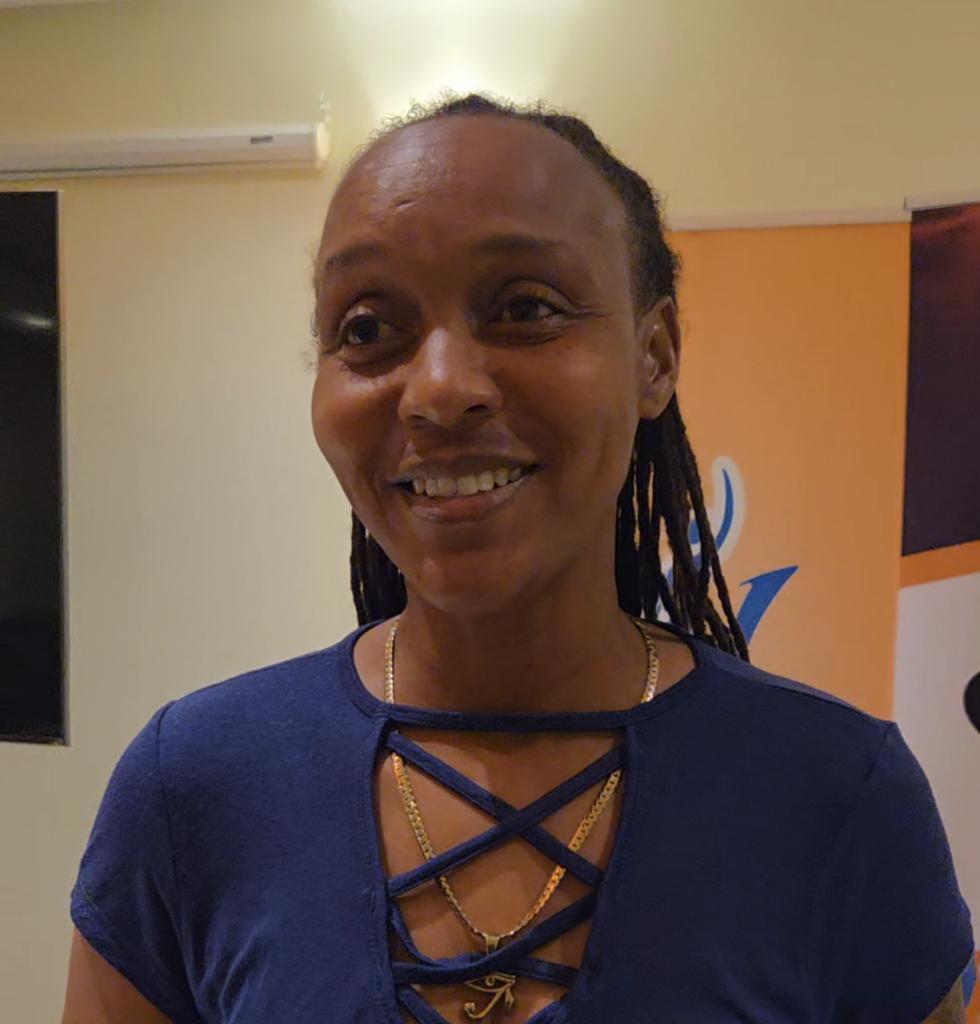
    As the highly anticipated 2024 Barbados Road Tennis Open (BRTO) prepares to kick off later this August, defending women’s champion Sheldene Waldrond has declared she is fully prepared to retain her crown at Barbados’ most prestigious road tennis competition. Spanning from August 15 through October 3, the tournament carries a generous purse that awards a $20,000 top prize to both the men’s and women’s singles champions. In an interview ahead of the tournament, Waldrond revealed she resumed structured training earlier in 2024, specifically adjusting her routine to adapt her game and gain a competitive edge over the field. “I’ve been putting in the work, switching up my training regimen to change the dynamics of my play, and I’m hungry to get back on court and defend my title,” she said. Waldrond, who claimed her 2023 title after a hard-fought final victory over Rachel Smith, also expressed enthusiastic approval of the organizers’ decision to add an Under-18 junior division to this year’s tournament lineup. A long-time advocate for growing the sport among young people, she has made it a priority to mentor emerging female players. “I love seeing young women get involved in road tennis, and I always do what I can to give them confidence and help them grow as competitors,” Waldrond added. For event organizers, 2024 marks a major milestone: this year’s tournament is the fifth iteration of the BRTO, which has evolved from a bold initiative into a cornerstone of Barbadian sporting culture and national pride. Shawn Burke, chairman of the BRTO Planning Committee, reflected on the tournament’s origins and growth, noting that the event was founded five years ago with a clear mission: to elevate Barbados’ unique indigenous sport, create life-changing opportunities for local athletes, and build a national stage that matches the caliber of the island’s exceptional homegrown talent. “What started as an ambitious vision has transformed into Barbados’ premier road tennis competition, one that consistently showcases the absolute best talent our island has to offer,” Burke explained. He added that the tournament’s steady growth over the past five years serves as proof of what can be accomplished when bold vision is paired with consistent commitment and community buy-in. Every year, the organizing team challenges itself to raise the bar for the event, improving experiences not just for competing players, but for the fans and corporate partners who have continued to believe in the sport’s future in Barbados. In honor of the fifth anniversary and in recognition of the critical role fans play in making the BRTO a success, organizers have expanded fan engagement activities for this year’s tournament. Attendees will get the chance to sign a collection of commemorative display rackets, take photos with their favorite players, share their experiences on social media, and enter a competition for a special fifth anniversary prize, which will be awarded to the social media post that earns the most likes from the public. “This fifth anniversary doesn’t just belong to the players who take the court,” Burke said. “It belongs to every single person who has supported this tournament, cheered on our athletes, and believed in our mission over the last five years.”

  • Goodridge raises penalty ‘mismatch’ in new ownership law

    Goodridge raises penalty ‘mismatch’ in new ownership law

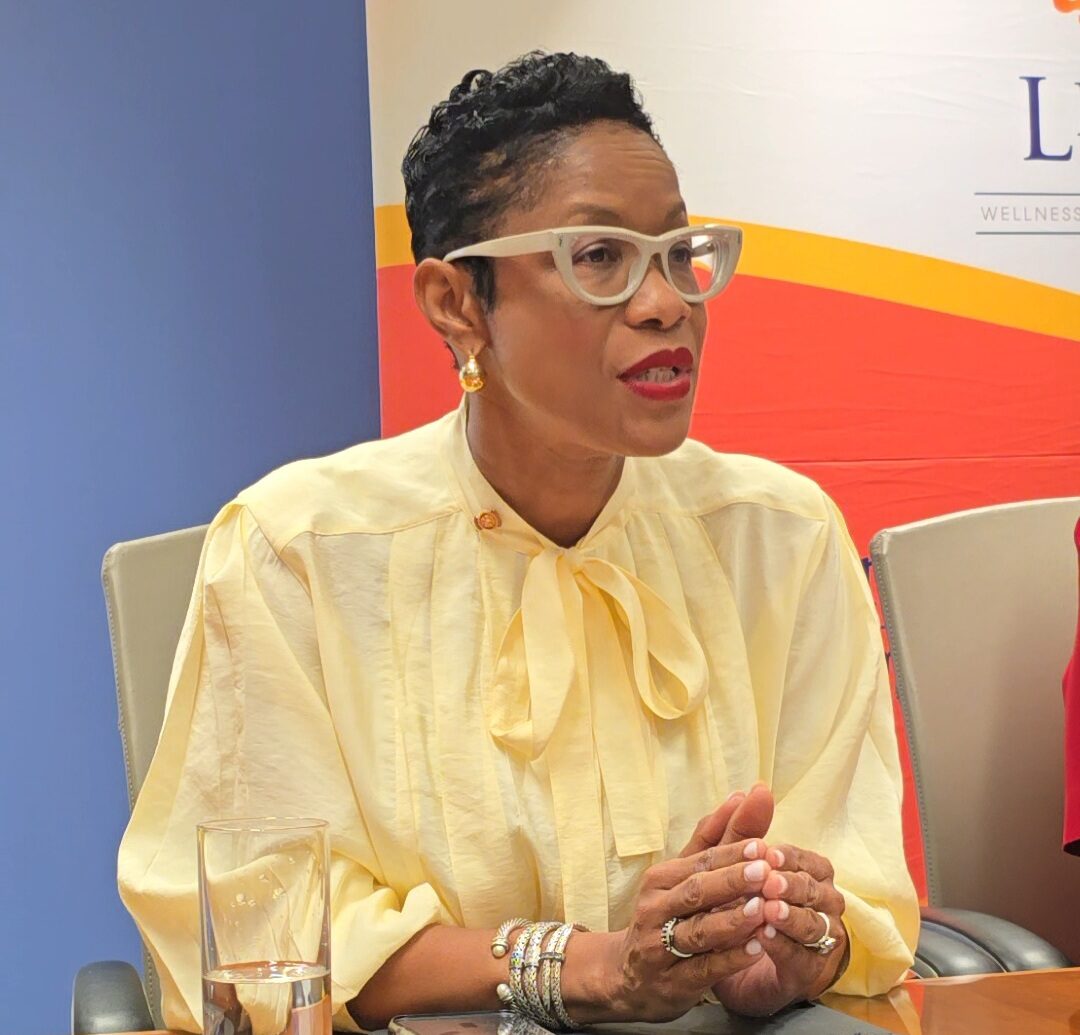
    During Wednesday’s legislative debate on the Beneficial Ownership Transparency and Register Act, opposition senator Karina Goodridge has raised urgent calls for aligning penalties for unauthorized confidential information disclosure with the strict sanctions already outlined in the nation’s Data Protection Act, warning that the currently proposed weak penalties fail to act as an effective deterrent against harmful leaks.

    Goodridge drew direct attention to a stark discrepancy in punishment between the two pieces of legislation: under the new beneficial ownership framework, unauthorized disclosure of sensitive personal data carries a maximum penalty of just a $40,000 fine or one year of imprisonment. By contrast, the Data Protection Act, which governs similar sensitive confidential information, imposes penalties that reach up to $500,000 in fines and three years of prison time for identical offenses.

    The opposition lawmaker emphasized that once sensitive confidential information is leaked and distributed, the damage is irreversible. Information that falls into malicious hands, she warned, can open the door to widespread misuse, fraud, and other harmful outcomes that have lasting impacts on affected individuals. Goodridge specifically pointed to Section 9 of the new beneficial ownership act, which addresses data breach incidents, but argued that the proposed penalties do not match the severity of this serious criminal offense.

    Questioning the logic behind the divergent sentencing guidelines, Goodridge asked why identical confidential information deserves far weaker legal protection simply because it is stored and regulated under a different act of parliament. She called on legislative members to adopt the same tough penalty structure already enshrined in the Data Protection Act for unauthorized disclosures of beneficial ownership data.

    Goodridge also dismissed the proposed one-year prison sentence as inadequate to discourage potential offenders, noting that the short sentence is too minor to create meaningful deterrence: “One year imprisonment, that is only one Christmas missed. That is not really a deterrent. Some people may look at it and say, well, one Christmas… I don’t miss that.” On the topic of financial penalties, she added that a $40,000 fine is easily manageable for many potential offenders to save up over time, while a $500,000 fine poses a significant financial consequence that would push most people to comply with the law and avoid risky, illegal behavior. Maintaining that all unauthorized leaks of confidential information are equally serious regardless of what legislation governs the data, Goodridge pressed lawmakers to revise the penalty structure before finalizing the new bill.

  • Barbadian trio advances to World Under-20 semis

    Barbadian trio advances to World Under-20 semis

    As the 2024 World Under-20 Athletics Championships entered another day of competition in Oregon on Thursday, three track and field athletes from Barbados delivered standout performances to secure their places in the semifinal rounds of their respective events. Leading the charge for the Caribbean nation was Shamari Greenidge-Lewis, a decorated gold medalist from the CARIFTA Games. Competing in the men’s 400-meter sprint preliminary heats, Greenidge-Lewis crossed the finish line with a time of 46.34 seconds, securing a second-place finish in his heat that punched his automatic ticket to the next round.

    Fellow Barbadian sprinter Kadia Rock also maintained her impressive form throughout the 2024 season in the women’s 400-meter event. Drawing a spot in the sixth preliminary heat, Rock recorded a time of 53.32 seconds to finish fourth in her heat. While she did not claim an automatic qualification spot with her top-three finish, her result was fast enough to rank among the fastest non-automatic qualifiers, earning her a place in the upcoming semifinals.

    Rounding out the trio of advancing Barbadian athletes was Rashad Gibson, who competed in the men’s 400-meter hurdles. Slotted into the eighth preliminary heat, Gibson put together a consistent run, clocking 51.74 seconds to finish third in his heat, a result that secured his qualification for the semifinals.

    The solid showing from Thursday’s competitors comes on the heels of a solid effort from another young Barbadian athlete on the opening day of competition. In Wednesday’s evening session, Jayden Walcott competed in the final of the men’s shot put, ultimately finishing sixth overall with a best throw of 19.27 meters in his first major global championship appearance.

  • Beneficial ownership law ‘aims to streamline compliance’

    Beneficial ownership law ‘aims to streamline compliance’

    Barbados has enacted a landmark beneficial ownership reform bill that will consolidate existing regulatory data instead of imposing new reporting requirements on local businesses, according to senior government Senator Lisa Cummins. Speaking during Wednesday’s Senate debate, the leader of government business in the chamber framed the new legislation as a transformative step that simultaneously eases regulatory burdens for legitimate enterprises and reinforces the Caribbean nation’s standing as a transparent, credible global financial hub.

    Contrary to concerns that the law would require businesses to submit extra paperwork, Cummins clarified that the reform only overhauls how existing beneficial ownership information is collected and organized. For years, relevant data on ultimate business owners has already been gathered by multiple domestic regulators, including the Central Bank of Barbados, the Financial Services Commission, and other sector-specific oversight bodies. This information has long been required as part of routine regulatory processes, from initial license applications and changes in major shareholding structures to ongoing supervisory reviews, fit-and-proper person assessments, and enforcement compliance checks.

    Currently, competent domestic authorities already share this collected data with international partners under bilateral and multilateral treaties that Barbados has signed onto. The information already supports a wide range of critical activities, including criminal probes, anti-money laundering operations, terrorist financing investigations, regulatory audits, sanctions enforcement, and other law enforcement initiatives, with the country’s Financial Intelligence Unit leading much of this investigative work, Cummins added.

    A key structural change outlined in the legislation is the restructuring of the former International Business Unit, whose duties have been split between two existing and new entities: the Tax Policy Unit under the Ministry of Finance, and the newly created Business Compliance Unit, known as BCOM. Under the new framework, BCOM will be tasked with maintaining a centralized national beneficial ownership register. This single centralized system will allow businesses to submit required information just one time, eliminating the redundant practice of providing identical data to multiple separate regulatory agencies.

    “What the legislation actually sets out to do is to simplify and create coherence around the collection of business data for all businesses under the beneficial ownership regime,” Cummins explained. “That unit [BCOM] is now going to take responsibility for collating in a single place all of the information with one single submission by businesses.”

    Cummins emphasized that the reform is a critical step to protect Barbados’ financial system and preserve its positive standing with global regulatory partners. “We want to make sure that Barbados cannot be used as a jurisdiction to hide dirty money,” she said. The new law uses a tiered regulatory approach that strengthens necessary safeguards against money laundering and terrorist financing, while cutting unnecessary red tape for law-abiding businesses, she added. This, in turn, will protect Barbadian businesses’ continued access to the global financial system.

    The reform positions Barbados as a jurisdiction that proactively modernizes, upgrades, and transforms its international financial sector through consistent, transparent regulatory practice, Cummins told the Senate, capping the debate on the bipartisan-backed reform.