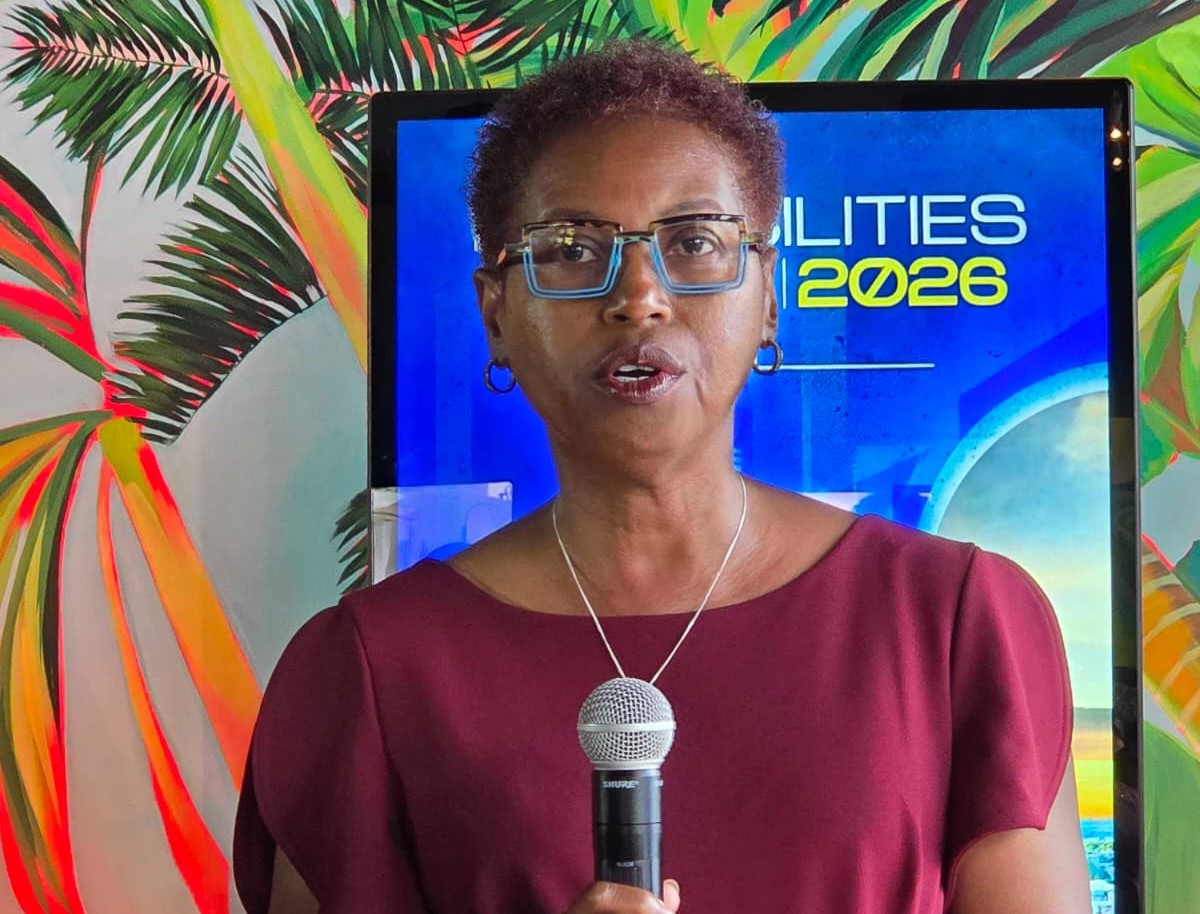
Against a backdrop of cascading global disruptions ranging from rapid technological change to intensifying climate risk, a top Barbadian government official has outlined a bold new vision for Small Island Developing States (SIDS): abandon siloed, outdated development models and invest in proactive institutional capacity to withstand systemic shocks. The call to action came from Claudette Hope-Greenidge, Permanent Secretary of Barbados’ Ministry of Innovation, Industry, Science and Technology (MIST), during her opening welcome address at the first-ever Possibility Summit, a landmark multidisciplinary forum convened to align scientific advancement with national resilience goals. The high-profile opening assembly drew a roster of key stakeholders, including Barbadian Prime Minister Mia Mottley, sitting Cabinet ministers, and representatives from global diplomatic and scientific networks, underscoring the international relevance of the summit’s mission. Hope-Greenidge opened her remarks by stressing that fragmented, discipline-isolated approaches to governance and progress have become obsolete in the 21st century. “Today’s defining global challenges and untapped opportunities simply cannot be addressed through the lens of single academic disciplines or rigid, traditional institutional boundaries,” she told attendees. “Across every continent, nations and communities are navigating unprecedented, interconnected shifts: exponential leaps in digital technology, growing climate-related pressures, rapidly shifting geopolitical alignments, and a sweeping restructuring of the global economic order.” For small island nations like Barbados, Hope-Greenidge emphasized that adapting to these interconnected shifts is not a long-term policy option—it is an urgent immediate priority. She pushed back against the common narrative that small island states are inherently constrained by their geographic size and limited natural resource endowments, noting that Barbados’ historical progress has always stemmed not from physical assets, but from the strength of its foundational national systems. “Our national advancement has always depended on four core pillars: the quality of our public institutions, the depth of our human capital investment, a clear shared national vision, and the ability to plan ahead with strategic foresight,” she explained. That very commitment to proactive, forward-thinking development is what drove the creation of the Possibility Summit, she added. The forum was intentionally structured to close the persistent gap between ambitious national policy goals and on-the-ground implementation in the fields of scientific advancement and national preparedness for global shocks. A core priority of MIST, Hope-Greenidge said, is to reposition research and development (R&D) as a central pillar of Barbados’ national economic planning, rather than sidelining it as a peripheral, non-essential activity. “Our ministry firmly holds that R&D is not a marginal academic exercise—it is a critical building block of national economic strategy, modern governance, and most importantly, the national resilience that will keep us competitive amid global change,” she stated. With leading international experts in attendance—including Professor John Schellnhuber, Director General of the International Institute for Applied Systems Analysis—Hope-Greenidge called for long-term, cross-sector collaboration spanning public agencies, academic institutions, and civil society organizations to lock in Barbados’ long-term competitive edge as a small island leader in adaptive development. The inaugural summit marks a formal step forward for Barbados’ strategy to position SIDS as proactive actors in global transformation, rather than passive victims of systemic change, by centering interdisciplinary cooperation and institutional investment as the foundation for sustained prosperity.