
A new analysis from the International Labour Organization (ILO) has sounded the alarm over the 2026-2027 El Niño event, projecting that it will put widespread pressure on employment and household stability across the Caribbean, with three key economic sectors facing the gravest risks. El Niño, a recurring natural climate cycle defined by anomalous warming of surface waters in the central and eastern Pacific, is known to reshape global weather systems, triggering extreme events ranging from severe drought and record heatwaves to intense flooding across different parts of the world. For the Caribbean, the ILO forecasts that the upcoming 2026-2027 cycle will bring prolonged drought, depleted water reserves, and extreme heat events that will hit core industries particularly hard. Agriculture, which supports smallholder and commercial production of staple crops including maize, beans, and wheat alongside high-value exports like coffee and sugarcane, commercial fisheries, and the tourism sector that forms the backbone of many Caribbean national economies are identified as the most exposed to climate disruption from the event. In its policy brief focused on projected labor market impacts across Latin America and the Caribbean, the ILO lays out a cascade of interconnected risks that extend far beyond immediate weather disruption. The extreme conditions brought by El Niño are expected to cut overall employment levels, push down worker incomes, and degrade already poor working conditions, with disproportionate harm falling on three groups: informal sector workers, rural communities, and people who earn a living through outdoor labor. The report outlines multiple secondary threats that amplify harm for vulnerable populations: El Niño-driven disruptions to food production will worsen existing food insecurity, push up prices for both food and energy, reduce overall workplace productivity, and increase the likelihood that households pushed into poverty will turn to child labor to make ends meet. Additional long-term labor market impacts include widespread loss of rural incomes, increased flows of climate-driven labor migration, a further expansion of informal work that offers little to no protections, and dangerous levels of heat stress that threaten the health and safety of outdoor workers. Fabio Bertranou, ILO Deputy Regional Director for Latin America and the Caribbean, emphasized that the upcoming El Niño event presents an unprecedented challenge to maintaining employment and decent work across the region. Bertranou noted that the final scale of harm will be determined by how well national governments prepare: strong, responsive labor market institutions, robust social protection frameworks, and inclusive social dialogue are critical to shielding the most vulnerable workers from harm. The ILO’s report also highlights a key structural vulnerability that makes Caribbean workers particularly at risk: the region’s already high rates of informal employment mean that the majority of workers lack access to social protection coverage and other formal support systems that help households absorb and recover from climate-related economic shocks. Even with these stark projections, the ILO stresses that the worst outcomes are not inevitable. National governments can drastically reduce risk by taking targeted preemptive action: expanding and strengthening social protection coverage for all workers, investing in climate-resilient infrastructure that can withstand extreme weather, updating occupational safety and health standards to address heat-related risks, expanding accessible early warning systems to help communities and businesses prepare, and fostering ongoing social dialogue between governments, employers, and worker representatives. The organization is calling on regional policymakers to reframe El Niño not as a one-off weather event, but as a systemic threat that can reshape regional economies, labor markets, and employment outcomes for years. Addressing this threat requires coordinated, cross-sector action to protect workers and preserve livelihoods across the Caribbean ahead of the predicted event, the report concludes.
标签: Barbados
巴巴多斯
-

Senior nurse: Investing in nurse education is investing in healthcare
On Wednesday, leaders of Barbados’ Queen Elizabeth Hospital (QEH) accepted a landmark $100,000 donation from the Olga Worrell Memorial Scholarship Trust, a gift framed as far more than financial support—it is a strategic investment that will secure the future of high-quality critical care for generations of Barbadian patients. Senior Nursing Officer Cherry Jackman-Collymore, who leads the hospital’s Medical Directorate, emphasized that the funding fills a critical gap by expanding specialized education and professional development for critical care nursing staff, a sector facing growing workforce pressures as experienced senior practitioners approach retirement.
-

New app aims to bridge school-home communication gap, ease teacher workloads
Barbados has launched a homegrown mobile application that aims to revolutionize school-parent communication while cutting down the administrative burden weighing on local educators, earning official backing from education leaders as a key step forward for the country’s national education digital transformation.
Conceived by Barbadian co-founders Teddy Leon and Tonia Prescod, EduConnect made its official debut at Luther Thorne Primary School, and has already been adopted by five local institutions. Project organizers project that user adoption will climb to roughly 30 schools by the start of the upcoming academic year.
Acting Deputy Chief Education Officer Dr. Denise Charles emphasized that the new tool aligns directly with the Barbadian government’s ongoing education transformation strategy, which centers on integrating technology across all layers of the country’s K-12 school system. Dr. Charles explained that the government’s broader modernization agenda is built around equipping young learners with the adaptable skill set they need to succeed in a fast-evolving global workforce, a goal that depends on connected digital solutions that bridge gaps between schools, teachers, students, families and education policymakers.
Unlike fragmented, outdated communication channels that rely on manual paperwork and disjointed social media updates, Dr. Charles noted that EduConnect delivers real-time centralized access to critical information, from student attendance records and school-wide notices to individualized academic updates for parents. By automating routine administrative tasks that once consumed hours of teachers’ workweeks, the app frees up educators to redirect their time and energy to core instruction and student support, a critical gain as Barbados continues to update its education system for the digital age.
Dr. Charles also tied the launch of EduConnect to the Ministry of Education Transformation’s broader push to embed digital literacy into the national curriculum. She noted that 21st-century careers increasingly require advanced digital competencies, and routine use of integrated education technology like EduConnect helps students build hands-on familiarity with digital tools while fostering key soft skills including critical thinking, cross-team collaboration, innovative problem-solving and adaptability. Additionally, having a centralized digital communication infrastructure in place ensures schools can maintain operational continuity during emergencies such as extreme weather events or public health disruptions, keeping families informed regardless of disruptions to in-person classes.
The app’s origins trace back to a real-world communication gap that Prescod experienced ahead of an oncoming hurricane, Leon explained at the launch event. When Prescod struggled to get clear, timely information about whether schools would close to keep her school-aged twins safe, the pair recognized the gap that existing technology had failed to fill. “EduConnect wasn’t created just to add another app to people’s phones,” Leon said. “It came from that moment of frustration: we have all this modern technology, why can’t parents get instant, reliable alerts about school changes straight to their phones? That’s how the idea was born.”
Leon stressed that the platform is 100% Barbadian designed, developed and built for the unique needs of Caribbean educational communities. Throughout the development process, the team anchored their work in two core questions: would this tool give teachers back time to focus on student growth, and would it empower parents to stay consistently informed and engaged in their children’s learning?
“When teachers spend less time managing manual communication workflows, and parents have access to timely, accurate information, every stakeholder is positioned to better support each child’s success,” Leon added.
Priced at $7 per semester per family regardless of how many children a parent has enrolled in local primary or secondary schools, the app is designed to be accessible for most households. A coalition of local Barbadian businesses including Western Wholesale, Abeds, Club Avolta and Woolworths Barbados have partnered with the initiative to offer exclusive additional discounts for both parents and educators using the platform.
-
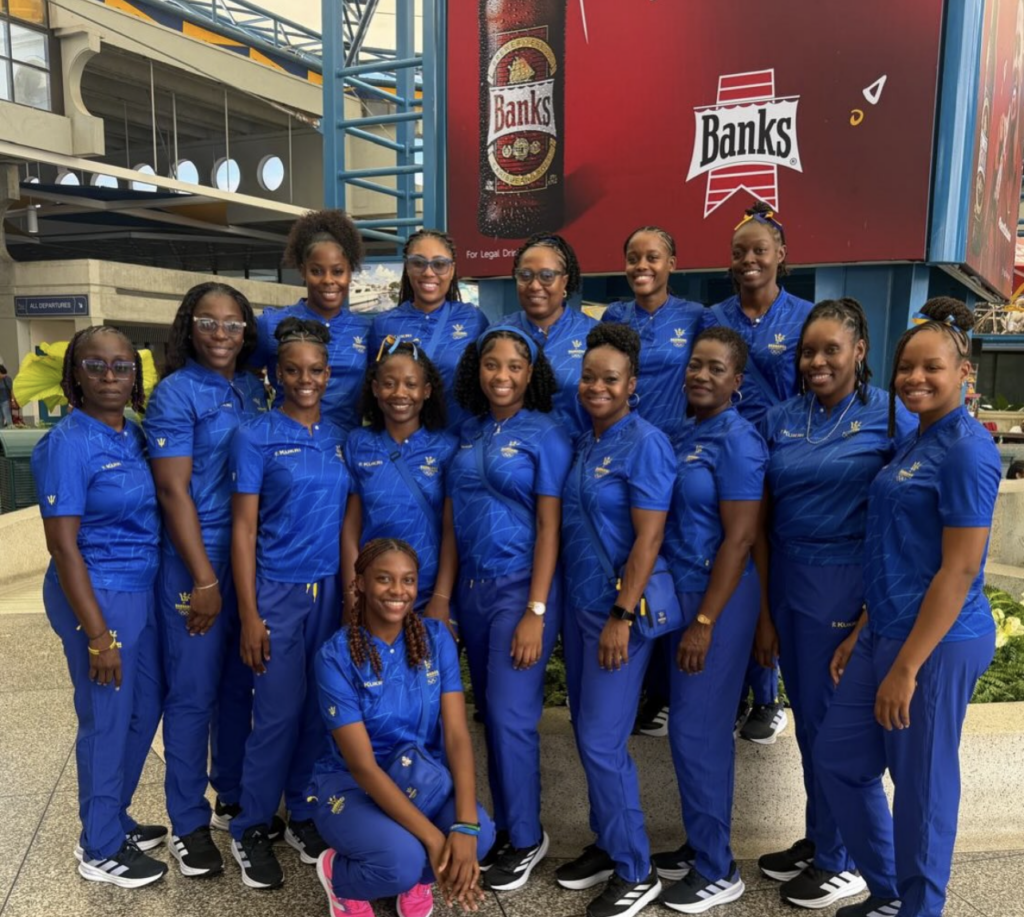
Several Barbadians in action as the CAC Games continue
As the Central American and Caribbean (CAC) Games entered another full day of competition in the Dominican Republic on Wednesday, Barbadian athletes delivered a mixed bag of results across multiple disciplines, with one standout qualifying performance highlighting a day of mixed fortunes for the Caribbean nation’s delegation.
The highlight of Wednesday’s action came from the athletics track, where rising Barbadian sprinter Kelia Bentham secured her place in the women’s 200m final after posting a new season-best time in her semifinal heat. Competing in the second of three semifinal rounds, Bentham crossed the finish line in second position with a time of 23.20 seconds, a personal seasonal best that earned her a spot in the sport’s marquee final round.
Bentham’s breakthrough was countered by early exits for two other Barbadian sprinters in the men’s 200m semifinal stage. Aragorn Straker clocked 21.22 seconds to finish sixth in his second semifinal heat, falling short of the time needed to advance. In the third men’s 200m semifinal, Kuron Griffith posted a 20.67-second run to take fourth place, also missing out on qualification for the final.
Beyond sprinting events, Barbadian shooters competing in multiple women’s shooting qualification rounds also posted solid but non-qualifying results. In the women’s 25m pistol qualification, Tesonna Alleyne finished 14th in the precision segment and moved up to ninth in the rapid fire segment, not enough to advance to the final round. For the women’s 10m air rifle qualification, three Barbadian shooters took home mid-to-back rankings: Brodella Ramchere placed 14th, Camara Williams 20th, and Calleah Walcott 21st respectively.
In racket sports, Barbadian competitors faced tough losses across draw matches on Tuesday and Wednesday. Men’s singles table tennis athlete Tre Riley was knocked out in the round of 32 by Venezuela’s Raymundo Medina, who secured a straight-set victory with scores of 11-7, 11-6, 11-9, 11-6. On the squash court, two Barbadian pairs fell to Guatemalan opponents in Tuesday evening matches: the men’s doubles duo of Khamal Cumberbatch and Darien Benn lost 11-6, 11-1 to Josue Enriquez and Alejandro Enriquez, while the mixed doubles pair of Amanda Haywood and Darien Benn fell 11-7, 11-2, 11-2 to Guatemala’s Jose Toscano and Winifer Bonilla.
In team sports action on Tuesday, Barbados’ national netball team suffered a 61-39 defeat at the hands of Trinidad and Tobago, marking the team’s second match of the tournament after an opening round 56-25 win over Bermuda. Other English-speaking Caribbean teams found more success in the same round: St. Lucia earned a 49-22 win over host nation Dominican Republic, while Jamaica recorded a dominant 79-19 victory over Bermuda.
In other athletics action, skateboarder Tarryn Alleyne secured a spot in Wednesday’s men’s street skateboarding final after finishing sixth out of 10 competitors in the preliminary round. For the 400m semifinal rounds held Tuesday evening, two Barbadian athletes failed to advance to the final: Desean Boyce finished sixth in the third men’s 400m semifinal with a time of 52.35 seconds, while Asia Foster took fourth in the second women’s 400m semifinal in 53.32 seconds, both falling short of the required rankings to move forward.
-

Merchants fret as ‘the bridge in Bridgetown’ closed to pedestrians
In the heart of Bridgetown, Barbados, a 150-year-old historic infrastructure landmark is triggering growing financial strain for local retailers and food service operators, multiple business proprietors have confirmed to local outlet Barbados TODAY. The structure in question is Chamberlain Bridge, better known to locals as the Swing Bridge – a key pedestrian link connecting the lower Careenage district to Bridgetown’s southern commercial hub, currently managed by state-owned Barbados Port Inc. (BPI).
In a recent operational shift that has upended daily movement across the city center, BPI has implemented a fixed schedule that closes the bridge to foot traffic for extended blocks throughout the day, with no set end date for the new restrictions. Notices posted at both ends of the converted lift bridge outline the staggered operating routine: the bridge is raised for marine traffic between 5 a.m. and 8:30 a.m., 10:45 a.m. to 1 p.m., and 3 p.m. to 6 p.m. Pedestrians are only permitted to cross during three windows: 8:30 a.m. to 10:45 a.m., 1 p.m. to 3 p.m., and 6 p.m. to 5 a.m. the following day.
For business owners along Lower Bay Street, the restricted access has already translated to a measurable drop in foot traffic and revenue, with the midday lunch rush hit hardest. Many regular patrons who travel from the other side of the Careenage for midday meals and errands are opting to stay away rather than take the long detour around the waterway, owners report. “Some people across town who come over the bridge for lunch complain that walking all the way around is too much,” shared one local restaurant owner. “It is definitely affecting my business.” The proprietor added that office and bank workers from nearby districts – once a consistent core customer base – are among those skipping the trip entirely.
Navin, operator of Bhairav Variety Store, echoed those frustrations, noting that inconsistent adherence to the published schedule has made the problem even worse. “I am losing business and people who depend on me are inconvenienced,” he said. “The bridge says it is open at a certain time, but when you get there, it is not open. It has happened many times.” That unpredictability, he explained, has deterred even committed regulars from attempting to cross. “When people go there expecting it to open and it does not, they have to walk all the way around. That is not how business works. They need to organise it better so that when they say it will open, it opens.”
Reactions from everyday pedestrians to the new schedule have been split, with some dismissing the disruption as a minor hassle and others describing it as a major break from daily routine. A Jamaican visitor to the island said the unexpected closure extended her travel plans during a recent trip, calling the change “an inconvenience.” For daily commuter Astor Whitehall, however, the longer walk is no cause for complaint: “It doesn’t matter to me — the exercise is good,” he said.
Another regular user acknowledged that the operational change may serve a practical purpose, but argued that the impact on ordinary Bridgetown residents has been underplayed. “For the most part, it will be an inconvenience for ordinary people,” he said. Samantha Yearwood, who crosses the bridge every day for work, said the new rules have completely upended her commute. “It is an inconvenience because I now have to go around the other side to get to work,” she explained.
Elderly pedestrian Frederick Young struck a more conciliatory tone, noting that the restrictions could be justified if they address critical infrastructure needs. “If there is a good reason, I don’t see anything wrong with the time limits,” he said.
As of press time, senior BPI officials have not responded to requests for comment on the new schedule or the concerns raised by local business owners.
Chamberlain Bridge carries deep historical roots for Bridgetown – the city takes its name from the original Indian Bridge that stood on the same site, with the current structure constructed between 1865 and 1867. For more than a century, it accommodated both vehicles and pedestrians, with operators manually swinging the span open to allow schooners to access the Inner Basin. Small fishing vessels could even pass beneath the closed span when mooring in the basin. By the 1990s, age and wear left the original swing mechanism unreliable, with engineers warning that the bridge could get stuck open if activated. It was closed to vehicle traffic for years, before undergoing a conversion to a lift bridge in 2006 that preserved its function as a key pedestrian crossing.
-

Opposition senator demands work permit overhaul
Debate over Barbados’ labor market policies has intensified in the Senate, with opposition Senator Ryan Walters pushing for sweeping changes to the country’s work permit framework, alongside stricter enforcement of national insurance rules and progress on resolving a years-long backlog in employment dispute hearings.
Speaking during Wednesday’s Senate consideration of the Protection of Wages Bill, Walters argued that a growing number of entry-level to mid-tier roles currently being advertised to foreign workers could and should be filled by local job seekers, especially young Barbadians entering the workforce. He pointed to recent public job postings as evidence of systemic flaws in the current regime, listing roles ranging from retail store supervisors, warehouse clerks and sales associates to cellphone device repair technicians, all of which have been advertised for foreign applicants. Even senior leadership positions within the island’s key hotel sector, he added, are frequently being opened to outside candidates ahead of qualified local workers.
“What we are seeing in public job postings makes clear that employers are consistently looking abroad for work that Barbadians – particularly young Barbadians – are fully capable of doing,” Walters said. “This is the perfect moment for the government to overhaul our outdated work permit system. It is unacceptable that in 2026, we still see this volume of work permit applications for these skill sets and entry-level roles.”
Walters called for fundamental changes to the approval process, arguing new guardrails need to be put in place before employers even submit applications to hire foreign workers. He proposed pre-application guidance that would clearly outline which roles are eligible for outside hiring and which must be filled by local candidates first, tightening the entire regime to prioritize Barbadian workers.
But Leader of Government Business Senator Lisa Cummins pushed back against Walters’ criticism, noting that the current system already includes rigorous assessment protocols that do not guarantee approval for every submitted application. She explained that all work permit requests are reviewed by a dedicated government department, and both current and former home affairs ministers – under whose purview the immigration department falls – have repeatedly clarified that a high number of applications does not equal a high number of approvals.
Cummins argued that claims tying open work permit policies to blocked job opportunities for young Barbadians are misleading and factually incorrect. “It is erroneous to claim that the government is blocking young Barbadians from employment just because work permit applications are submitted,” she said. “There has been no public accounting of how many of these applications are actually approved, and submission does not mean applications are automatically granted.”
Beyond the work permit debate, Walters raised two additional pressing labor issues that he said demand immediate government action. First, he called for aggressive enforcement against employers that fail to register their workers with the National Insurance and Social Security Scheme. Walters explained that while unregistered workers may take home slightly more pay in the short term, they are locked out of critical long-term benefits, forcing them to rely on taxpayer-funded welfare services instead of drawing from the national insurance system they have not contributed to.
“Every worker in this country should be contributing to National Insurance, regardless of their income level,” he said. “Weak enforcement hurts workers in the long run and shifts the burden of support to the state.”
Walters also drew attention to a backlog of roughly 3,000 unresolved employment disputes at the Employment Rights Tribunal, saying thousands of workers have waited years for their cases to be heard. He recalled that the governing administration promised in 2024 to transition the tribunal from a part-time body to a full-time institution with dedicated staff and permanent office space, but that campaign promise has yet to be fulfilled. Walters said he is hoping to receive a public update on the tribunal’s modernization during the ongoing debate over the Protection of Wages Bill.
-

Pakistan level Test series with emphatic win over West Indies
After eight straight defeats on the road in Test cricket, Pakistan finally snapped that dreadful losing run on Wednesday, securing a comfortable victory over the West Indies on the penultimate day of the second Test at Queen’s Park Oval.
Resuming the day at 103 for six, already on the brink of an innings collapse, the West Indies batting order could not withstand the pressure from Pakistan’s spin attack, and was eventually bowled out for 117 all out in 46.1 overs. Left-arm spinner Ali Usman led the final push to dismantle the home side’s tail, claiming two of the three remaining wickets to fall.
It took Usman just two overs to claim his first wicket of the day, with Kemar Roach playing a wild slog sweep that completely missed the ball, leaving him bowled for a duck without adding a single run to the West Indies’ overnight total. Next to fall was Justin Greaves, who was already carrying an injury through his innings. After battling for 32 balls to score just three runs, Greaves attempted a pull shot through the onside against fast bowler Mohammad Ali, only to inside-edge the delivery onto his middle stump, leaving the Windies at 115 for eight.
Aggressive all-rounder Shamar Joseph put on a brief show for the small but enthusiastic local crowd, hammering two consecutive boundaries from Usman through the onside. But his cameo did not last long: when he tried to repeat the shot in Usman’s next over, wicketkeeper Mohammad Rizwan completed the catch to end the West Indies innings. Brandon King was unable to bat for the tail, having suffered an injury while fielding on the previous day. Off-spinner Sajid Khan, who had done the bulk of the damage to the Windies batting line-up on Tuesday evening, finished with match figures of 4 for 32, while Usman ended with 4 wickets for 39 runs.
Chasing just 75 runs to seal victory and level the two-match series at 1-1, Pakistan encountered only minor resistance from the West Indies bowling attack, even losing two early wickets in the chase. Fast bowler Jayden Seales worked over Pakistan opener Imam-ul-Haq with a string of testing deliveries, eventually drawing an uncertain prod that edged to Greaves in the slip cordon, with Pakistan at 15 for one. Joseph then claimed a second opener, bowling Azan Awais for 18 when the batsman attempted a cut through the onside and inside-edged the ball onto his stumps, pushing the score to 42 for two.
However, Player of the Match Abdullah Shafique and captain Babar Azam combined for an unbroken third-wicket partnership of 35 runs, just as they had done earlier in the match, to steer Pakistan safely to victory without further loss. After surviving a tense close leg before wicket appeal, Azam finished the match in spectacular fashion, hitting left-arm spinner Jomel Warrican for back-to-back sixes over long-on and cover. Azam ended unbeaten on 24 runs from 30 deliveries, while Shafique finished with an unbeaten 24 from 51 balls.
In post-match honors, Justin Greaves was named Player of the Series for the second consecutive Test series, sharing the award with Pakistan captain Babar Azam.
-

BSTU head urges admin reforms as lapses disrupt school salaries
A growing crisis of unpaid and delayed salaries for public school teachers in Barbados, driven by systemic administrative failures in national education payroll systems, has pushed a top teachers union leader and sitting senator to push for strict, enforceable reforms in the upcoming national Protection of Wages Bill.
Independent Senator Mary-Anne Redman, who also serves as president of the Barbados Secondary Teachers’ Union (BSTU), laid out a wide-ranging pattern of persistent administrative breakdowns in a virtual address to the country’s senate. The problems she documented include months-long pay delays, incorrect salary calculations, and missing agreed-upon allowances that have left hundreds of public school educators unable to cover basic monthly living costs.
Most alarmingly, Redman warned that the ongoing pay crisis is accelerating staff流失 in high-demand, critical subject areas. Talented early-career educators qualified in mathematics, physics and geography — roles already facing nationwide staffing shortages — are leaving the public education system entirely, she explained, because they cannot afford to work without consistent, timely pay. “To interfere with money that people have already earned through their work is a problem Caribbean workers should never have to confront, given our shared history,” Redman told the chamber. “Yet sadly, it is a challenge trade union leaders have had to address far too often.”
Redman pointed to a lack of binding legislative enforcement as a core reason the payroll issues have continued to recur, with temporary teachers disproportionately affected by the gaps. She singled out inaction from some school board secretary-treasurers, tasked with inputting educator payroll data into national payment portals, as a primary driver of widespread frustration and disillusionment across the teaching profession. The BSTU receives a steady stream of monthly complaints from educators who go weeks or months without pay, many stemming from unprocessed paperwork tied to school reassignments.
“Some teachers go for months without any pay at all,” Redman said. “This is incredibly frustrating, especially for new young teachers who already do not find starting teaching salaries attractive or working conditions ideal. Adding the stress of non-payment on top of that is a major deterrent that pushes people out of the sector.”
The issues extend far beyond just total non-payment for extended periods. Even when educators do receive their salaries, they regularly face late disbursements, missing annual pay increments, and unpaid acting allowances for senior roles they have held for multiple years. In June alone, Redman revealed, 21 temporary teachers at one single school received their salaries weeks after the official scheduled payday. The delayed payment left many facing unexpected bank penalties, lasting damage to their personal credit ratings, and excessive tax deductions when their back pay was finally issued as a lump sum.
Grounding her advocacy in international labor frameworks, Redman tied the Barbados pay crisis to the International Labour Organisation’s (ILO) definition of “decent work,” specifically citing ILO Conventions 95 and 173 that outline global standards for wage protection and protections for workers when employers face insolvency. Withholding timely payment for completed work, she argued, is inherently exploitative and damaging to long-term societal stability. “There is nothing more exploitative, counterproductive, and indecent in an employment relationship than forcing people to work without fair, timely payment for the work they have already completed,” she said.
While Redman acknowledged that the Ministry of Education and Ministry of the Public Service have made incremental improvements to payroll processing in recent months, she stressed that the new Protection of Wages Bill must include concrete, accessible redress mechanisms for public sector employees. The proposed legislation, which replaces the outdated Cap. 351 legal framework, currently requires standardized recurring pay dates, regulates unauthorized wage deductions, and expands the regulatory powers of the chief labour officer. However, Redman raised critical concerns that public employees do not have direct access to the Employment Rights Tribunal, forcing them to rely on lengthy grievance processes outlined in the Public Service Act. She cited a BSTU grievance first filed in 2016 that remains unresolved to this day as evidence of the system’s failures.
To fix the ongoing administrative breakdowns, Redman outlined a series of targeted structural reforms designed to speed up dispute resolution and strengthen accountability across school administrations. A top priority recommendation is the creation of an expedited, standalone grievance mechanism exclusively for wage disputes involving public sector educators. Citing analysis from independent public policy analysts, she urged parliament to implement a fast-track process that bypasses the slow traditional bureaucratic channels to resolve payment disputes when the government is the defaulting employer.
The BSTU also renewed its longstanding call for the immediate establishment of the long-delayed Teaching Service Commission, a dedicated oversight body that would overhaul human resources management across the entire Barbados public education system. “This commission has been over 50 years in the making,” Redman said, noting that the independent body would remove more than 4,000 public school teachers from the purview of the overstretched Public Service Commission, easing administrative backlogs. Dedicated, education-specific oversight, she argued, would significantly reduce the frustration, disillusionment, and desperation teachers face when waiting for the pay they have earned.
Beyond the creation of the new commission, Redman called on the government to reclassify school secretary-treasurers as formal public officers, a shift that would enforce stricter operational standards and hold individual administrators accountable for meeting payroll deadlines. This change, she explained, would prevent individual inaction from derailing pay processing and putting educators’ livelihoods at risk. Redman also added that mandatory pre-appointment training for all school board of management members — particularly chairpersons and their deputies — is essential to ensure board leaders understand their legal responsibilities, financial regulatory requirements, and personnel management obligations. Many current board members, she noted, remain unaware that they are legally responsible for the performance and conduct of the secretary-treasurers on their boards.
Despite her sharp critiques of current administrative practices and gaps in existing enforcement frameworks, Redman emphasized that she and the BSTU fully support the proposed Protection of Wages Bill, calling it a critical foundational step toward protecting worker dignity and codifying strong wage protections in Barbados law.
-
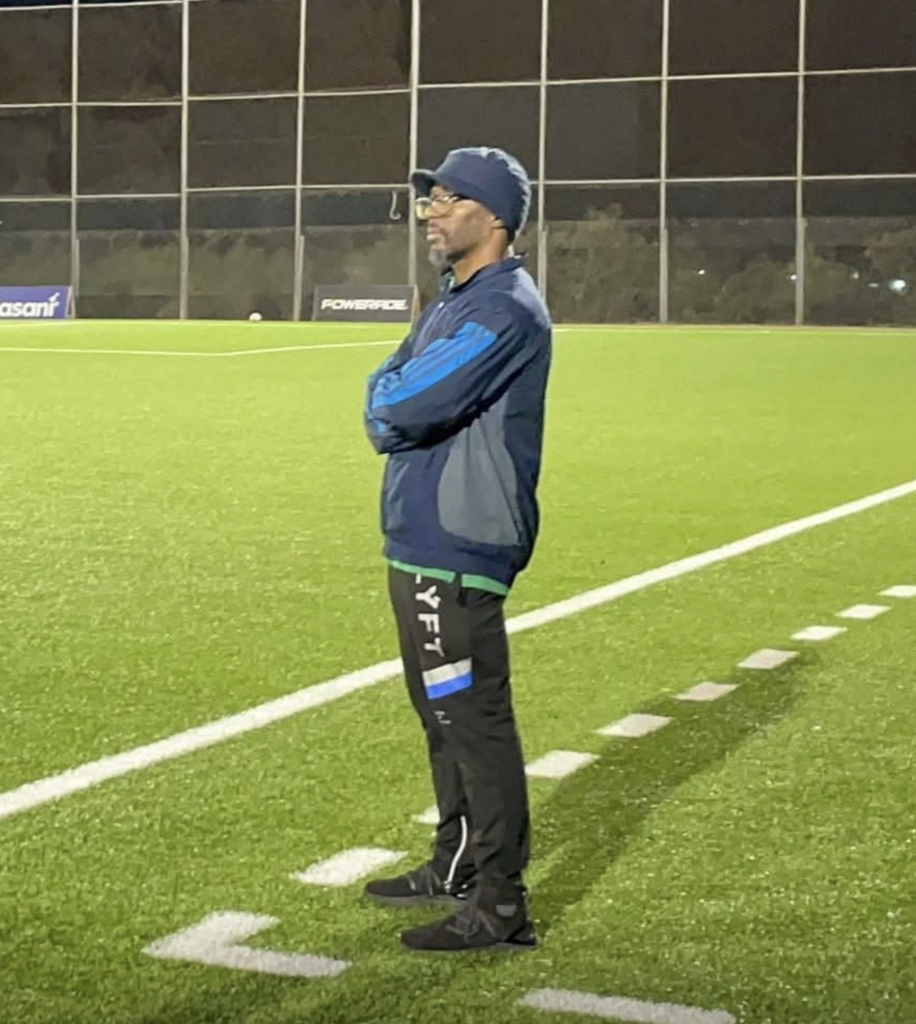
Coach Corbin urges consistency despite RF Prime victory
In a recent matchup of the Barbados Football Association’s Kotex Women’s League at the Wildey Technical Centre, RF Prime claimed a solid 2-0 victory over Technique, but head coach Kirk Corbin is not letting his side get complacent. He is pushing the squad to lock in consistent performance as the season progresses.
The two goals that sealed RF Prime’s win came on either side of halftime, with Kerisha Catlyn breaking the scoreless deadlock just one minute before the break in the 44th minute, and junior talent Jamilah Neblett-Phillips extending the lead just two minutes into the second half.
While Corbin acknowledged he is satisfied with the three points, he emphasized that head-to-head fixtures between RF Prime and Technique have historically been tightly fought contests. The two squads have delivered very close results over the years, with players on both sides falling into a similar age bracket that leaves the teams closely matched physically. According to Corbin, matches between the two sides ultimately come down to mental preparation and the ability to capitalize on critical match moments, factors that ultimately separate the two competitors when they face off.
Corbin also took time to highlight the contributions of his two goalscorers, noting that both are foundational pieces of his RF Prime squad. He described Catlyn as one of the team’s young veterans: currently in her early twenties, she already boasts extensive experience with the national team, and the squad consistently looks to her to deliver game-changing moments. Her goal against Technique marks another milestone in her recovery from a recent injury, as she works her way back to full match fitness and form. For Neblett-Phillips, Corbin pointed out that the young junior national team player, who is currently entering her third year of secondary education, has now notched two goals for the current Kotex League season – a statistic that he says reflects the strength of the development work happening at RF Prime’s academy.
Looking back at the first half of the current season, Corbin admitted that his preparation and squad rotation have been disrupted by persistent injury issues and frequent player unavailability. Academic commitments have also kept several players off the pitch, with many squad members wrapping up final exams and graduation ceremonies in recent weeks. Corbin is optimistic that the upcoming school vacation period will let the squad regroup, saying that the priority over the coming weeks is to get all players back together, support injured athletes through full recovery, and build momentum for a strong second half of the campaign.
Beyond the ongoing Kotex Women’s League, Corbin has expressed enthusiastic support for a major new addition to Barbados’ women’s football calendar: the inaugural Prime Minister’s Cup, set to kick off its first season in the final quarter of the year, with a $100,000 grand prize awarded to the tournament champions. Corbin says female players across the country will welcome both the additional competitive opportunities and the significant cash reward on offer, noting that local female footballers have long voiced frustration over a lack of consistent playing time. With back-to-back tournaments now scheduled through the year, Corbin argues that teams have no excuse not to deliver a high-quality competitive product that will draw spectators to matches. For the first edition of the Prime Minister’s Cup, Corbin says the primary goal is to test the new tournament structure, identify areas for improvement, and build a framework for future iterations. Ultimately, Corbin says, women’s football in Barbados needs to evolve into a consistent, compelling product that makes audiences willing to invest their time and money in the sport long-term.
League action will return to the BFA Technical Centre this coming Saturday, with two upcoming fixtures on the schedule: RF Prime will face off against Whitehall, while Technique will take on Mavericks.
-

Braggin’ Rights eyes multi-sport expansion after giving back more than $500 000 to schools
As one of the Caribbean’s most enduring community-focused alumni sports tournaments prepares to mark its 15th year of operation, event leaders have unveiled ambitious plans to grow beyond its football roots by adding multiple new sports to the annual competition lineup, all while building on a legacy of giving back that has already pumped more than $500,000 into local participating secondary schools.
Cranston Kirton, chair of the Braggin’ Rights organising committee, shared details of the expansion roadmap in an interview ahead of the 2025 edition of the tournament, confirming that organisers are working to reintroduce past sports offerings and add new disciplines over the next five years to support more school communities across Barbados.
“We launched with just football back when we started, and later branched out to add netball, but we’ve had to pause the netball competition for the last several years while the island’s main netball facility undergoes major renovation work,” Kirton explained. “Now that we’re gearing up for our 15th anniversary, we’re ready to rebuild our multi-sport offering: we’re targeting a netball return to the official tournament calendar by 2027, and we plan to run that discipline for at least two consecutive years before adding our next new sport, which will almost certainly be cricket, with hockey to follow after that.” Kirton added that sports fans can expect to see at least one additional competitive sport added to the Braggin’ Rights lineup as early as 2026.
The expansion announcement comes just weeks ahead of the 2025 Braggin’ Rights tournament, which will officially get underway on August 9 with Soccerama, a kickoff event paired with a community Health and Wellness Fair at Empire Playing Field in Bank Hall. This year’s Soccerama round will feature 14 competing teams, headlined by defending open division champions St George Lions, who enter the tournament as heavy favorites to retain their title after a full off-season of organized training and exhibition matches.
The tournament’s age-divided structure will also see the Over-35 division defending champions, St Leonard’s Upper Fifth, chase an unprecedented fourth consecutive title, while last year’s Over-47 division winners Coleridge and Parry will face new competition from two first-time entrants: St Lucy Secondary and Harrison College. Overall, the 2025 tournament will host 21 squads in the Over-35 division and 10 teams in the Over-47 age group.
After 15 years of community-focused operations, Kirton acknowledged that the all-volunteer organising committee has faced no shortage of logistical and financial hurdles along the way, but remains committed to growing the event’s charitable impact. As a charity-driven tournament, 100% of all prize funds are distributed directly to participating schools through alumni associations, giving winning squads a structured way to invest in their former institutions.
To date, long-standing partnerships with local corporate sponsors have allowed the committee to distribute more than $500,000 in total prize funding to participating schools, benefiting everything from campus infrastructure projects to student scholarship programs and extracurricular activity budgets. Kirton noted that the committee is actively seeking new corporate partners and sponsors to expand the tournament’s reach, with the long-term goal of providing meaningful financial support to every school represented by an alumni team in the competition.
“This tournament has always been about more than just sport – it’s about former students coming together to lift up the schools that shaped them,” Kirton said. “Every new partner we bring on board helps us get closer to that goal of supporting every single school in our tournament.”