标签: Barbados

巴巴多斯

  • Barbados wins second CAC gold medal

    Barbados wins second CAC gold medal

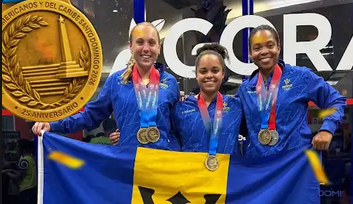
    Against all odds, Barbados’ women’s squash team delivered a historic, come-from-behind victory at the 2024 Central American and Caribbean (CAC) Games hosted in the Dominican Republic, securing the island nation its second gold medal of the tournament and capping off a remarkable overall performance from its full squash delegation.

    The path to the gold medal match was already a tense one for the Barbadian side: during their semifinal clash against Mexico earlier on matchday, key squad member Amanda Haywood suffered an unexpected leg injury that ruled her out of competition for the deciding final against Colombia. With Haywood forced to forfeit her opening singles match in the best-of-three final, Colombia jumped out to an immediate 1-0 lead, putting the Barbadians on the brink of a silver medal finish before their top two players even stepped onto the court.

    But the team refused to let injury derail their title hopes. Margot Prow, who had already claimed individual gold in the women’s singles event earlier in the Games, stepped up first to level the series, delivering a confident, high-stakes win to tie the score at 1-1. It was then up to Meagan Best, the women’s singles silver medallist, to seal the historic win. Best held her nerve against her Colombian opponent, closing out the match to secure a dramatic 2-1 team victory and the gold medal.

    The women’s iconic comeback added to an already solid result from Barbados’ men’s squash squad, which took home bronze after falling to Colombia in their own semifinal matchup. When the final scores were tallied across all squash events at the CAC Games, Barbados’ delegation left the Dominican Republic with an impressive four-medal haul: two golds, one silver, and one bronze. The result cements the nation’s growing reputation as a competitive force in regional squash, with the underdog comeback win already standing out as one of the most memorable moments of this year’s tournament.

  • PMC extends women’s registration

    PMC extends women’s registration

    Organizers of Barbados’ Prime Minister’s Cup have announced an extension to the registration deadline for the tournament’s brand-new women’s division, as they work to reach their goal of fielding 12 competitive teams for the historic first edition of the competition. Omari Eastmond, chair of the Prime Minister’s Cup Organising Committee, confirmed the new cutoff for registration is August 9, giving interested teams and athletes additional time to sign up for the groundbreaking event.

    The introduction of a women’s division marks a major milestone for the Prime Minister’s Cup, which has run for three years without an official women’s bracket. A core part of the initiative’s mission is advancing gender equity in sports, starting with equal prize purses for male and female competitors: the women’s champions will take home the same $100,000 top prize that has long been awarded to the men’s winning team. This equal pay commitment came directly from Barbadian Prime Minister Mia Mottley, who rejected the original proposal of a reduced $50,000 purse for women when the new division was first announced last month.

    “When they came to me and said that the Prime Minister’s Cup for men would get $100 000 and the women would receive $50 000 because they are less teams, I told them this Prime Minister will not practise gender discrimination,” Mottley stated during the tournament’s launch event. She also issued a public call to female athletes across the country, urging them to rise to the occasion and help the tournament hit its 12-team participation goal.

    Eastmond echoed that call, emphasizing the far-reaching benefits of expanding opportunities for women in football beyond the pitch. “Women’s football empowers female athletes, both on and off the field. Young female players consistently report greater confidence and motivation compared to non-players,” he explained. “However, I think the biggest advantage of women’s football is breaking the stereotype that it is a male-oriented and male-dominated sport.”

    Athletes interested in joining the new division can complete their registration via the official Prime Minister’s Cup Instagram page, where a direct registration link is posted in the account’s bio.

  • Brittons Hill teen reported missing

    Brittons Hill teen reported missing

    Law enforcement authorities in Barbados are turning to the general public for help in their search for a missing teenage girl from St Michael. 14-year-old Aaliyah Patricia Phillips, who resides on Villa Road in Brittons Hill, was last reported leaving her family home between midnight and 7 a.m. local time on August 5, 2026.

    Investigators have released a detailed physical description of Phillips to help community members identify her. She stands around five feet tall, has a medium body frame, and a dark brown skin tone. At the time she disappeared, Phillips was wearing long, straight braided hair extensions pulled into a single ponytail. She also wears eyeglasses with brown frames; notably, one of the frame’s arms is broken and currently held together with adhesive tape. Phillips speaks with a distinct, soft Bajan accent.

    Police have stressed that any piece of information, no matter how small it may seem, could prove critical to locating the teen safely. Community members who have any knowledge of Phillips’ current whereabouts are urged to reach out to law enforcement through multiple dedicated contact channels. These include the Hastings/Worthings Police Station at the phone numbers 430-7608 or 430-7614, the national police emergency hotline at 211, Crime Stoppers anonymous tip line at 1-800-TIPS (8477), or any local police station across the country.

  • Sea cadets head to Hong Kong for international exchange

    Sea cadets head to Hong Kong for international exchange

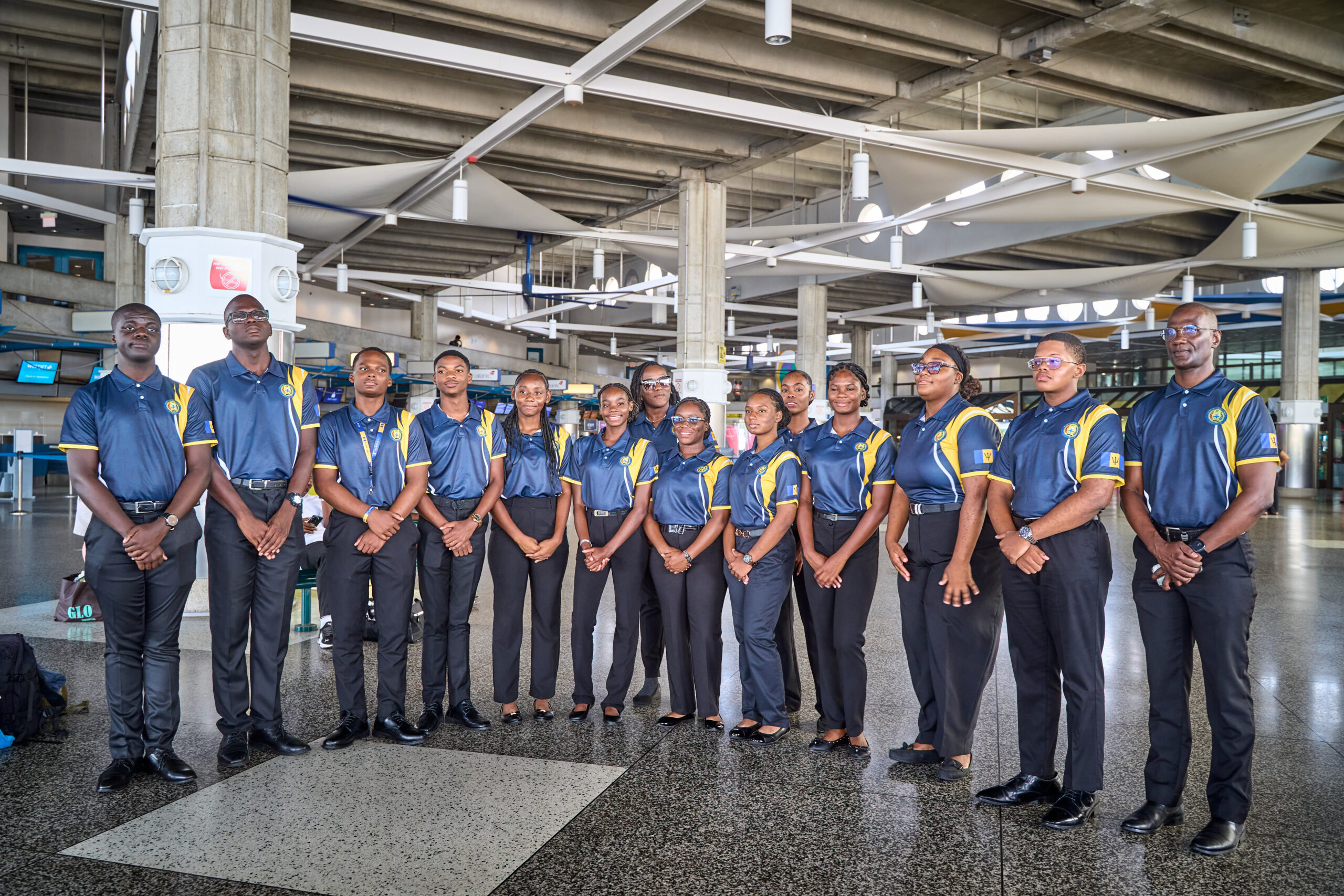
    A delegation of 14 people from the Barbados Sea Cadets Corps, including 11 young cadets, one commissioned officer, and two support staff, has departed from Grantley Adams International Airport for Hong Kong to take part in a 10-day international camp hosted by the International Sea Cadet Association. This gathering will bring together youth maritime training groups from across Asia, Africa, and other global regions, offering a unique platform for joint skill training and cross-cultural connection.

    In a pre-departure briefing to local media, Coast Guard Lieutenant Jerome Belle, the contingent’s lead, outlined the dual mission of the trip: to complete collaborative maritime training exercises with participating cadet teams from South Korea, South Africa, and host Hong Kong, and to serve as cultural ambassadors for the Caribbean island nation. “Over the 10-day program, our cadets will not only build their seamanship skills alongside international peers, but also take part in dedicated cultural exchange activities,” Belle explained. “They will get to experience the distinctive local cuisine of Hong Kong, while also sharing the flavors, long history, and vibrant traditions of Barbados with young people from around the world.”

    As part of the International Sea Cadet Association’s annual global exchange initiative, the camp is designed to foster cross-border friendship and broaden young people’s global perspectives, giving participants the rare chance to connect with peers outside their home region and learn about daily life in other nations. For the cadets, the trip marks an exciting milestone filled with anticipation.

    Petty Officer Khalil Barrow shared his excitement ahead of the flight, noting that cultural exchange and new connections top his list of anticipated experiences. “I’m most looking forward to meeting new people from not just Hong Kong, but all the other countries joining the camp,” Barrow said. “We’re going to take part in open forums and collaborative activities, where we can share our own perspectives and learn from theirs too. It’s not just about training—it’s about building lasting friendships and helping other people understand what makes Barbados special.”

    For Leading Seaman Kris-Elle Agard Jasper, the trip offers a chance to step outside her culinary comfort zone. A self-described picky eater who usually sticks to familiar local foods, Jasper said she is ready to embrace the culinary side of the adventure. “My mom kept telling me that when you go to a new country, you have to try new things,” she said with a smile. “I’m actually looking forward to exploring all the different cuisines I’ll get to try over these 10 days, even if it’s a little outside my usual.”

    The Barbados delegation is scheduled to wrap up their participation in the camp and return home on August 17, bringing back new skills, global connections, and cross-cultural insights to share with their local Sea Cadets community.

  • Griffith pitches Hall of Fame, holiday to honour Sir Garry

    Griffith pitches Hall of Fame, holiday to honour Sir Garry

    Following the recent passing of cricket icon and Barbados National Hero Sir Garfield Sobers, the island nation’s Minister of Sport Charles Griffith has put forward a series of ambitious proposals to honor his unparalleled legacy and ensure his impact on global sport and Barbadian culture endures for future generations. Griffith outlined these plans during a parliamentary sitting Friday, as lawmakers gathered to reflect on Sobers’ extraordinary life and career.

    At the top of the minister’s proposals is the establishment of a National Sports Hall of Fame, designed to celebrate the achievements of Barbados’ most accomplished athletes. Griffith argued the time has come for the country to build this dedicated cultural and historical attraction, telling parliament that both local residents and international tourists would benefit from the immersive, interactive experience the facility would offer. The Hall of Fame would feature cutting-edge exhibits including QR code technology that lets visitors instantly access detailed biographies, career highlights, and archival content on Sir Garfield and other celebrated Barbadian sporting heroes. “Visitors who come to this island should be able to go into that Hall of Fame and scan a QR code and be able to get all of the information in relation to Sir Garfield, all of the information in relation to our sporting heroes on island,” Griffith said.

    Griffith also proposed declaring July 28, Sir Garfield’s birthday, a national public holiday. Widely recognized as the greatest all-rounder in the history of cricket, Sobers’ contributions to the sport and Barbadian national identity deserve ongoing recognition for young people, the minister argued. By creating an official national holiday, Griffith explained that every generation of children would have the opportunity to learn the story of Sobers’ achievements, answering the simple question “What is this holiday about?” with a lesson on the legacy of one of the country’s most beloved figures.

    A third proposal calls for the issuance of a limited-edition commemorative stamp bearing Sir Garfield’s likeness. Beyond serving as a permanent tribute to the National Hero, Griffith noted that proceeds from stamp sales would create a sustainable funding stream to support emerging young Barbadian athletes. The revenue would go toward covering costs for equipment, training access, and competitive opportunities for promising sportspeople who lack the resources to develop their talents.

    Sobers’ death last month triggered an outpouring of tributes from across Barbados, the Caribbean, and the global cricket community. Griffith hailed Sobers as the undisputed “GOAT” – greatest of all time – noting that the cricketing icon embodied every core value of athletic excellence: consistent top-tier performance, inspirational leadership, remarkable resilience, adaptability, outstanding sportsmanship, and a decades-long career at the peak of the sport. “There’s a template that he left on this rock in relation to sportsmen and how they should traverse that journey in sports,” Griffith said.

    The minister shared a personal anecdote from his early days in office, recalling that one of his first official duties was visiting Sobers at his private residence to ask for his blessing in reviving the cricket tournament named in the legend’s honor. Though Griffith admitted he was initially intimidated by a large guard dog at the property entrance, what left a lasting impression was Sobers’ quiet humility, even after a lifetime of global acclaim. “I was struck by the fact of how humble this man was,” he said.

    Griffith also highlighted Sobers’ longstanding commitment to mentoring emerging cricketers, which included shaping the career of West Indies batting legend Brian Lara. Unlike many elite athletes who hoard knowledge and opportunity, the minister noted, Sobers dedicated time to lifting up the next generation. “He was prepared to share that knowledge to better some of our cricketers who also reached the international level, and I think that that is the hallmark of a man who understood that he was able to climb the ladder and wasn’t going to kick it down,” Griffith said.

    In addition to outlining the new honors for Sobers, Griffith updated parliament on the Barbadian government’s ongoing investment in national sports infrastructure. To date, more than $50 million has been allocated to upgrading sporting facilities across the island. Key initiatives include the ongoing Herman Griffith Primary Schools Cricket Competition, island-wide talent identification programs, and the development of a new Sports Council complex at Blenheim, which will be outfitted with modern practice pitches, bowling machines, and video analysis technology to nurture the next generation of elite Barbadian cricketers.

    Drawing inspiration from Sir Garfield’s life and career, Griffith closed by emphasizing the enduring lesson Sobers leaves for young Barbadians across all sports: “I want our youngsters on the island who are involved, not only in cricket, but other areas of sports to see what is possible in relation to dedication, what is possible if you believe in yourself [and] what can happen at the end of the day.”

  • Siblings win global zero-waste fashion award

    Siblings win global zero-waste fashion award

    In a remarkable underdog story that has captured global sustainable fashion circles, 18-year-old Barbadian designer Trinity Rose and her brother Zion Rose, a multi-hyphenate model and actor, have taken home the top Zero Waste International Competition award at the prestigious E.D.W.A.R.D (Ethical Defender of the World) Awards, capping a stunning rise just 18 months after Trinity first picked up a sewing needle. The award was announced at the grand climax of the Sustainable Fashion of the World summit held in Panama City on July 26, an event that unites cross-sector leaders from sustainability, education, innovation, culture, and creative industries to advance actionable eco-friendly solutions for the global fashion industry.

    Trinity, a self-taught designer who only launched her practice in February of the previous year, says her unexpected international win still feels surreal. The young creator only learned of the competition days before the submission deadline, making her first-place finish among thousands of global applicants all the more notable. Her journey into fashion began with a humble gift from her aunt, artist Sheena Rose, who gave Trinity a sewing machine to nurture her early creative spark. Her first projects were lumpy, ill-fitted garments for dolls, but constant encouragement from her brother kept her refining her craft through early missteps.

    “Zion was the one who pulled me out of my creative shell when I was starting out,” Trinity explained. “He kept telling me to keep trying — if a piece didn’t work out, just start over and try again.” Her path to the Panama competition opened unexpectedly during the 2025 CARIFESTA cultural festival, where she connected with Jose Alexander, the lead organizer of the E.D.W.A.R.D Awards. Alexander challenged the novice designer to create a full 10-piece zero-waste collection for the competition, a request that initially caught her off guard.

    “I told him straight away that I’d never attended fashion school, never had any formal training in design,” Trinity recalled. “But he told me that most great designers don’t learn their craft in classrooms, and pushed me to just give it a try. Our dad has always told us to just say yes first, and work out the details later — so that’s what I did.”

    Central to Trinity’s design philosophy is a commitment to unlocking creative potential from discarded and pre-loved materials, a approach that sets sustainable fashion apart from the conventional fast fashion model. “Traditional fashion requires you to source all new materials to get the look you want, but zero-waste design lets you lean into real creativity,” she said. “You take something old, something that would otherwise end up in a landfill, and transform it into something entirely new and unique. One of my favorite pieces from the collection was made from an old thrifted curtain, instead of buying four or five yards of brand-new fabric.”

    Zion echoed this ethos, creating his own award-nominated accessory from upcycled cardboard, scrap fabric, and discarded bag straps. Beyond designing, Zion walked the Panama runway in one of Trinity’s most striking creations, a spaceman-inspired ensemble that he calls the highlight of his career so far. “Walking out onto that international runway, with all those eyes on you, it felt like I was on top of the world,” he said. “I felt like a star, walking in that suit. It was such a proud moment, especially knowing how many hours my sister put into building every single piece in the collection.” Trinity was quick to shut down any assumptions that her brother got the spot through family connections, noting that he earned his place on the runway through raw talent and professionalism. “It was a completely merit-based selection — no nepotism here,” she said. “I reviewed all the available models, and I chose Zion for his confident walk and natural charisma.”

    The sibling pair’s work is managed by their father Corie Rose under their family-run brand Trizon Productions. Corie, who traveled to Panama to watch his children walk the international runway, says the moment left him overcome with emotion. Even with his normally calm, even-keeled demeanor, he couldn’t contain his shock and pride when the first model stepped out. “I was trying to film the show with two cameras, but my hand just dropped — I was so blown away that I stopped recording,” Corie recalled. “We’ve been working quietly on this for just over a year, and to see my kids walking that runway was just out of this world. I never expected it.”

    The family-run brand already has its sights set on global expansion, with a target audience of young, eco-conscious consumers who want stylish, sustainable clothing options. Trizon Productions is already in talks with distribution partners and manufacturers to scale up production, and the brand has already earned significant international traction: the siblings have been featured in major global fashion publications, secured coveted window display spots in Parisian boutiques, and earned top honors in the prestigious Broadway Artists Alliance program.

    Trinity is also exploring plans to bring a major international sustainable fashion event to her home country of Barbados, pitching a new concept of fashion tourism that would draw creators and visitors from across the globe. Following discussions with Colombian fashion industry leaders, Trinity is developing an eco-friendly showcase that leverages Barbados’ stunning natural landscapes, from its coastal shorelines to its rolling inland terrain. “Film tourism is already a big draw for the island, but fashion tourism focused on sustainable design could be the next big thing,” she explained. “We could bring in international designers, models, and fashion lovers from across the world to experience everything Barbados has to offer while celebrating zero-waste design.”

    While the family has not yet released full details of their upcoming projects, they confirmed that scaling production and expanding their global reach are their top priorities right now. “We want to keep this momentum going, strike while the iron is hot, and keep building our brand,” the teen designer said. “Mass production that stays true to our sustainable values is one of our big goals, and we want to get our designs in front of audiences across the globe. You’ll just have to stay tuned to see what’s next.”

  • Bayland says yes to Sir Garry school tribute

    Bayland says yes to Sir Garry school tribute

    Nearly two months after the passing of Barbadian cricketing icon Sir Garfield Sobers, the Bayland community on the island is reacting to the government’s decision to rename Bay Primary School in his honor — while reigniting long-running calls to rebrand the street where he spent his childhood as well.

    The question of how to properly memorialize one of the most legendary figures in global cricket has sparked widespread public debate across Barbados ever since Sir Garfield died on July 17. For decades, residents of Walcott Avenue, the neighborhood where Sir Garfield grew up, have pushed for the street to be renamed in his honor, a request that has never been acted on by officials. Now, after Prime Minister’s office confirmed the primary school renaming, most community members say the move is a fitting tribute to the national hero, but many say it is only the first step.

    The history of Bay Primary School is deeply intertwined with Sir Garfield’s early life. The facility relocated to its current Bayville site in 1958, replacing Bay Street Boys’ School — the educational institution Sir Garfield attended as a child. The original Bay Street Boys’ building, located steps from Barbados’ Government Headquarters, was repurposed to house the Government Information Service the same year the move was completed. Today, the school’s playing field occupies what was once Bay Pasture, the open green space where a young Sir Garfield first developed his world-famous cricket skills.

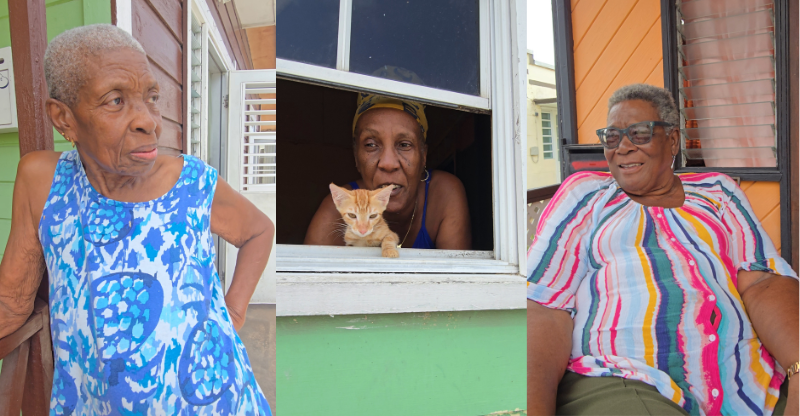
    Just days ahead of the official renaming announcement, government representatives visited the Bayland community to collect resident signatures in support of the change, one parent of a current Bay Primary student confirmed, adding he had personally signed the petition. Longtime Walcott Avenue resident Udine Miller, who lived next door to Sir Garfield for decades, said she was thrilled by the school announcement, but still holds out hope that the avenue will one day carry his name as well.

    “They didn’t rename the avenue, but they can do that,” Miller told reporters. She also shared that after Sir Garfield’s death, authorities repaired the street sign marking the small lane leading to his former home and filled potholes along Walcott Avenue ahead of his funeral service.

    Fellow Walcott Avenue resident Angela Callender echoed Miller’s perspective, saying she fully supports the school renaming while reiterating that the street renaming is long overdue. “I feel it’s wonderful; it’s a great thing to do. It’s the school he went to, and it’s a remembrance of him, which is a great thing. He was a very nice man,” Callender said, recalling personal interactions with Sir Garfield from her own childhood. Another local resident, Maureen, also backed the dual push for renaming, noting that even if just the school is renamed, that would be a meaningful honor.

    Not every member of the community supports the change, however. One Bay Primary alumnus argued the school’s original name should remain unchanged, pointing out that Sir Garfield never actually attended the modern Bay Primary facility that now stands on the pasture. He questioned why officials chose this school over other institutions linked to Sir Garfield, asking, “Why they don’t change Harrison College then, why they don’t change Harvard and Oxford?”

    Most other residents pushed back against that criticism, noting that renaming public facilities to honor prominent Barbadians is a longstanding local tradition, and that Sir Garfield’s status as a national treasure makes the tribute more than deserved. Local business owner Irvin said he supports the school renaming, but shared disappointment that the lane where Sir Garfield lived has not also been renamed, pointing out that a similar lane already bears the name of local music icon Rihanna. Irvin added that the poor condition of Walcott Avenue remains an ongoing point of frustration, noting that even as recently as last year, international cricket fans and players from across the globe travel to Bayland to visit the place where Sir Garfield grew up. “Pakistan, India, all sorts of people come there asking where he lived ‘cause his brother is still there,” Irvin said. “I sorry that it didn’t happen before, but that is life. I am very proud.”

    An elderly resident from a nearby lane welcomed the renaming but added that the government should pair the tribute with increased investment in youth cricket development at primary and secondary schools across the country. “That would be good to develop their skills for the game, introducing it to the children at a young age so they can spur their interest and they will eventually go on to play in the league and then further on,” he explained. “That’s the best way to develop it: introduce it at the school level. Those who like it will excel; those who don’t like it will go on to pick up some other discipline, but give everybody that opportunity, introduce it at the level.”

    Skeeta, a Bayland resident who lives near the school, said the renaming has been a topic of community conversation for years. “It’s a good thing cause he grew up in the area and most people that live in the area know about him. It’s a real good honour to him. I went to school here too,” he said. Elderly resident Jeffrey said renaming Walcott Avenue would be a perfect additional tribute to the cricketing great.

    Francelia Waithe, a Bayland resident who lives steps from Bay Pasture where Sir Garfield played as a child, said she fully backs the government’s decision. “It’s not a bad thing, cause he lived out here most of his young days and he did a lot for cricket,” she said. Jacqueline Straker, who lives at the upper end of Walcott Avenue, said the announcement has made the entire community proud. “All my children went [to Bay Primary], all five went there, and one grand went there,” she said. “I thought they would have named the gap, but they put it back as Walcott Avenue.”

  • Crop Over traffic arrangements win PSV owners’ approval

    Crop Over traffic arrangements win PSV owners’ approval

    As one of Barbados’ most anticipated annual cultural festivals draws to a close, two leading public transport industry associations have offered largely positive feedback on this year’s traffic coordination plans, crediting revised routing and advanced strategic planning for cutting gridlock and creating a smoother travel experience for both operators and festival-goers.

    The Alliance Owners of Public Transport (AOPT) and the Association of Public Transport Owners (APTO) both confirmed that their members experienced far fewer disruptions to service compared to past iterations of the festival. Speaking exclusively to Barbados TODAY, AOPT chair Roy Raphael emphasized that congestion levels were markedly lower this year than in previous Crop Over cycles. “In past years, when event crowds moved through the Bank Hall corridor, it created massive headaches for our sector, making it extremely difficult to move passengers to and from festival sites,” Raphael explained. “This year’s adjusted arrangement eliminated many of those pain points, and we were very pleased with the outcome.”

    Despite the overall improvement, Raphael highlighted key areas where organizers could refine future plans. The primary sticking point for operators was limited access to festival grounds, as widespread road closures forced public service vehicles, minibuses, and taxis to drop off and pick up passengers far from event entrances. To address this and align planning early, Raphael said his association has repeatedly requested a pre-event coordination meeting with the National Cultural Foundation and the Crop Over organizing committee, which would give transport stakeholders the opportunity to weigh in on road closure plans well in advance.

    Raphael also pointed out specific gaps in parking and staging, particularly near popular festival sites like the Botanical Gardens. Currently, taxi operators must follow a convoluted diversion route, he noted, and while ride-hailing apps like Uber have helped some passengers connect with drivers, there is a clear need for a designated, official parking and pick-up zone for taxis to better serve attendees. He added that the 2024 festival saw a significant uptick in visitor use of private taxis, especially at smaller pre-festival events, while larger events were overwhelmingly served by Transport Board buses under an exclusive contract. Raphael argued that opening event transport access to all segments of the public transport sector, rather than limiting it to a single provider, would improve service for attendees and create more equitable opportunities for local operators.

    Anwar Nana, chair of APTO and the new public service vehicle representative on the Transport Authority board, echoed Raphael’s overall satisfaction with this year’s traffic plans, noting that some level of disruption is unavoidable during large scale events. “Of course you’re going to see some disruption when you have a huge surge in travel around a major festival,” Nana said. “It’s normal, and the increased business balances out the minor inconveniences. We don’t have any major complaints on that front.”

    However, Nana raised longstanding industry-wide concerns that extend beyond Crop Over event planning. He stressed that the public transport sector still needs to address behavioral issues among frontline staff, calling on drivers and conductors to improve their on-road conduct and adhere to uniform requirements to boost the sector’s public reputation. “If our workers do better, follow the rules, wear their required uniforms, and act professionally, everything else will fall into place,” Nana added.

  • Warm-up win for Tridents

    Warm-up win for Tridents

    As pre-tournament preparations kick into high gear for the upcoming Caribbean Premier League, the Barbados Tridents gained valuable momentum on Thursday, notching a tight six-run victory against the Barbados Invitational XI in a memorial fixture hosted at Kensington Oval. The match was staged to honor legendary cricketer Sir Garfield Sobers, bringing together emerging local talent and the Tridents’ competitive squad for a high-stakes exhibition ahead of the main league campaign.

    After winning the pre-match coin toss, Tridents captain opted to set a target batting first, and the side delivered a solid total of 183 runs for the loss of eight wickets across their full 20-over allocation. Young batter Rivaldo Clarke led the Tridents’ scoring with a blistering half-century, reaching 50 runs off just 34 deliveries, with six well-placed fours peppering the boundary throughout his innings. Kadeem Alleyne contributed a quickfire 30 runs, while Kevlon Anderson added 28 and Shadrack Descarte chipped in with 21 to push the Tridents to a competitive total. For the invitational side, bowler Tariq O’Neale turned in an outstanding individual performance, claiming four wickets while conceding only 31 runs, and Kemar Hutson-Smith matched O’Neale’s economy to pick up two wickets for 31 runs.

    Chasing the 184-run target to win, the Barbados Invitational XI mounted a strong fight but ultimately fell short of the mark, finishing their 20 overs on 177 runs for seven wickets. Opener Shian Brathwaite produced a standout knock for the home invitational side, scoring an aggressive 81 runs off 51 balls. His innings included seven fours and four towering sixes that kept the run rate on track for much of the chase. Rashawn Worrell supported Brathwaite with 23 runs, and Zachary McCaskie added 16 late in the innings, but the invitational side could not close the gap in the final overs. For the Tridents, spin bowler Zishan Motara was the pick of the attack, taking two wickets for just 16 runs, while Jamar Layne claimed two wickets for 33 runs to seal the narrow win for the CPL side.

    The warm-up fixture provided the Barbados Tridents with critical match practice ahead of their Caribbean Premier League campaign, allowing emerging and established players in the squad to test form and combinations against top local talent, while also honoring one of Barbados’ greatest sporting icons.

  • AI in schools ‘should be encouraged with safeguards’

    AI in schools ‘should be encouraged with safeguards’

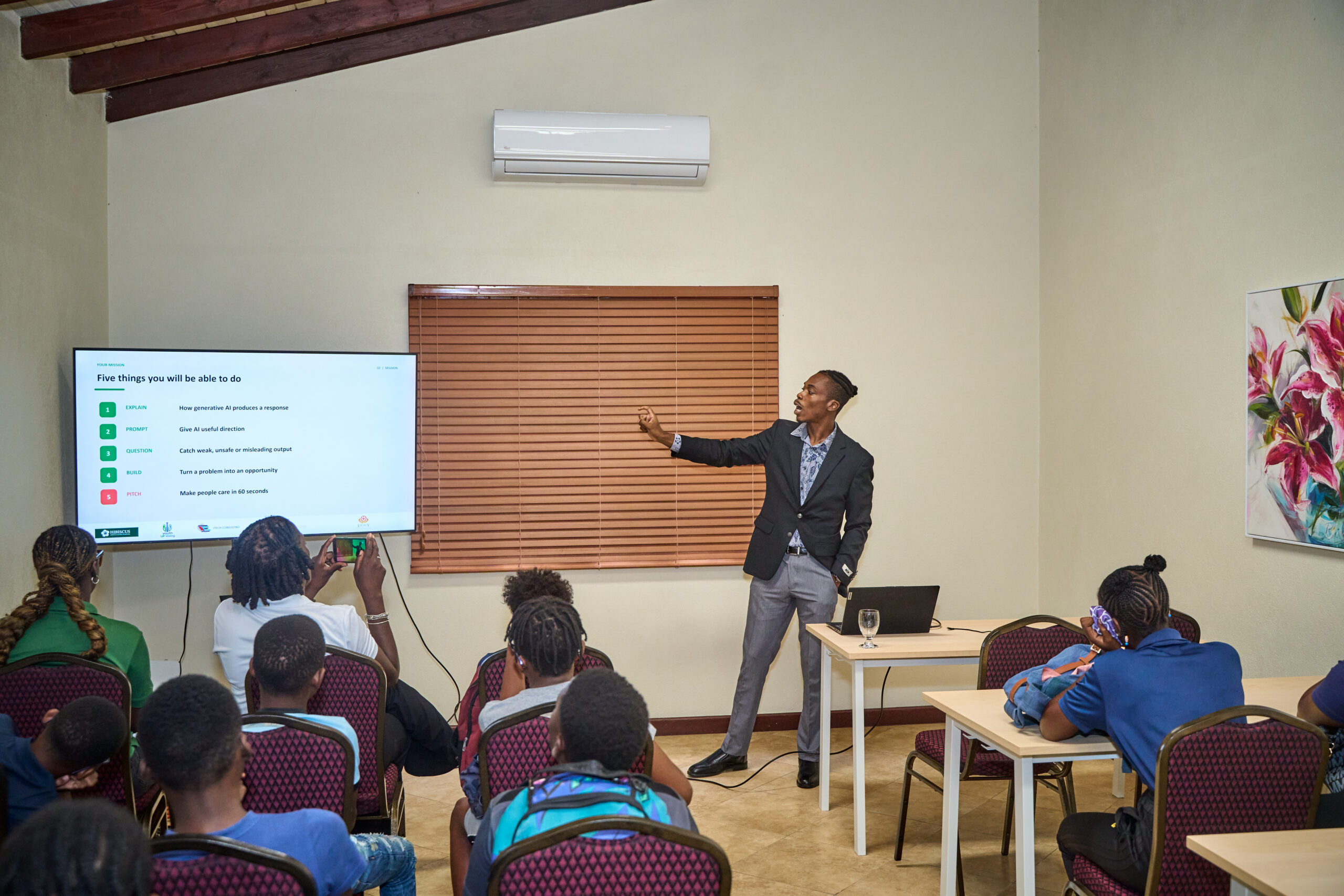
    As artificial intelligence continues to reshape learning landscapes across the globe, a prominent Barbados non-profit leader is calling for a deliberate, balanced approach to integrating the technology into school classrooms. Speaking exclusively to Barbados TODAY on the sidelines of the hands-on youth development workshop *Next Wave: AI + Entrepreneurship Experience*, hosted Friday at the Sugar Cane Club Hotel & Spa, Hibiscus Sports and Culture Foundation founder Akealii Hall laid out a nuanced framework for AI use that prioritizes original human thought over automated output.

    Hosted to help young Barbadians unpack both the transformative potential and hidden risks of widespread AI adoption, the Friday initiative drew support from a coalition of local stakeholders including Youth Uprising, iTech Consulting, the Sugar Cane Club Hotel & Spa and the Legacy Foundation. Beyond introductory lessons on how AI works, the programme gave participants practical training in pairing human creativity with AI tools to launch new ventures: attendees learned to draft business plans, build viable business models, and pitch their ideas to stakeholders, all while leaning into human-led problem solving.

    Hall, who leads the foundation focused on youth skills development, argues that AI’s strengths make it a valuable auxiliary tool for education, not a replacement for independent student work. “There are a lot of benefits of it and it can definitely be used as a good tool within the classroom system, but it has to be used sparingly and knowledgeably,” he explained.

    One of the most productive use cases Hall identified is supporting students in refining work they have already completed independently. For example, AI can act as a powerful proofreading tool for finished essays, checking for punctuation and grammatical errors, and helping students polish their writing to more clearly communicate ideas that they already developed but may struggle to put into polished prose. Hall also noted that AI can streamline administrative work for student research projects, including School-Based Assessments (SBAs) required for the Caribbean Secondary Education Certificate (CSEC) exams. After students complete the core research legwork — conducting surveys, distributing questionnaires, and gathering raw data themselves — AI can organize that information into structured data sets and analysis frameworks to save students time on manual formatting.

    Across every use case, however, Hall emphasized one non-negotiable rule: human work must always come first. He warned against allowing students to rely on AI as their primary problem-solving tool, stressing that preserving opportunities for independent critical thinking has to remain the core goal of education. “You want to always start by leading with humans first,” he said.

    The ultimate objective of the *Next Wave* workshop, Hall added, is to give young people a grounded, practical understanding of the AI tools they interact with daily. By teaching them to balance AI’s efficiency with human creativity and critical thought, the programme aims to equip a new generation of learners and entrepreneurs to use technology responsibly, rather than being controlled by it.