标签: Barbados

巴巴多斯

  • Authorities take ‘soft touch’ approach to enforcing nutrition rules

    Authorities take ‘soft touch’ approach to enforcing nutrition rules

    Barbadian education authorities have reaffirmed their commitment to a collaborative rather than punitive approach to implementing the national School Nutrition Policy, despite acknowledging significant compliance challenges. Speaking at the National Nutrition Conference on Wednesday, officials detailed their strategy of working with vendors to gradually improve food options around schools rather than imposing immediate penalties.

    Nicole Elliott, the education officer responsible for the policy implementation, clarified that authorities are not currently positioned to police or penalize vendors operating outside school gates, despite ongoing concerns about the availability of unhealthy food options. “We are not in a place where we are policing or punishing persons on the outside of schools,” Elliott stated. “However, we are there to work with them.”

    The Ministry of Education is preparing to host a vendor orientation session on April 18 designed to bridge the gap between current offerings and policy requirements. Approved suppliers have been invited to participate in the session, which will focus on improving access to compliant products and equipping vendors with techniques to transition toward healthier offerings.

    Elliott characterized the orientation as “a mediation between them and ourselves on how we would want them to help us to help the nation’s children,” emphasizing that achieving full compliance will be a gradual process requiring patience and sustained effort.

    The School Nutrition Policy, which regulates food sales both within and around school environments, has achieved partial success since implementation. Officials report approximately 85% compliance with standards relating to sugary drinks, but snack compliance remains significantly lower at around 45%.

    Elliott identified challenges beyond school compounds as a major factor, noting that “we still have the external environment that will impact the internal environment.” She emphasized that improving compliance will require enhanced coordination across multiple sectors, including increased availability of approved snack options, strengthened supply chains, and closer collaboration with the agriculture sector.

    Highlighting positive examples, Elliott pointed to schools like Ellerton that have been “growing and selling items to the community” as models that could be expanded to improve access to healthier options across the island.

    When questioned about whether the government should move beyond policy to legislation to address rising childhood obesity and non-communicable diseases, Elliott indicated authorities are not yet prepared to take a more aggressive approach. “I don’t think that we are at a point yet that we need to get to be that aggressive,” she said, noting that meaningful public health transformation “doesn’t happen in six months or one year.”

    Her position reflects the ministry’s broader philosophy, as articulated last December by Minister of Education Transformation Chad Blackman, who indicated compliance checks would prioritize guidance over punishment.

    Supporting this approach, Brian Payne, Assistant Nutrition Officer at the National Nutrition Centre, explained that government strategy has shifted away from emphasizing individual responsibility toward creating environments that make healthy choices easier. “We have moved away from this idea of individual responsibility where everything rests on the individual,” Payne stated.

    He described the School Nutrition Policy as part of a comprehensive public health strategy that includes planned restrictions on trans fats and smoking bans in public spaces. “The idea here is that we are trying to create an enabling environment so that Barbadians can actually not have to make an unhealthy choice, but the environment is conducive toward making a healthy choice,” Payne explained.

    While Barbados continues to confront high rates of non-communicable diseases and obesity, officials expressed confidence that the current policies, implemented gradually and collaboratively, will eventually reverse these troubling health trends.

  • PM make case for energy security as resilience to global shocks

    PM make case for energy security as resilience to global shocks

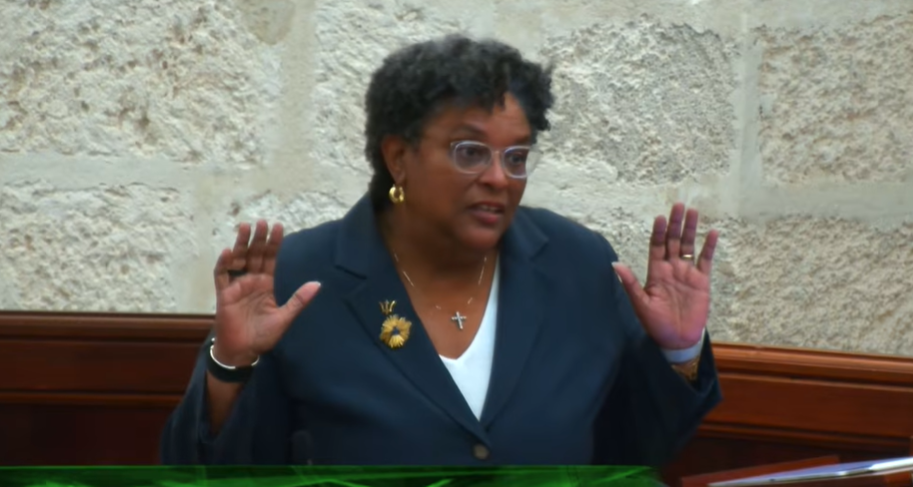
    Prime Minister Mia Mottley has declared an aggressive national initiative to drastically reduce Barbados’s reliance on imported fossil fuels, framing the transition to renewable energy as both an economic necessity and a tool for social empowerment. During a comprehensive 90-minute parliamentary address defending her administration’s budget, Mottley warned that global instability continues to expose the Caribbean nation to severe financial risk, citing the 2022 energy crisis triggered by Russia’s invasion of Ukraine as a cautionary example.

    The Prime Minister revealed that Barbados’s fuel import bill skyrocketed from $728 million in 2019 to approximately $1.122 billion in 2022 when oil prices surged to $120 per barrel. ‘What folly is this?’ Mottley questioned, emphasizing the paradox of a sun-rich nation spending over a billion dollars on imported energy. With fresh conflicts in the Middle East contributing to renewed market volatility, she cautioned that oil prices reaching $200 per barrel would present ‘no mathematical solution’ for the island’s economy.

    Mottley announced concrete measures to accelerate the energy transition, including significantly enhanced battery storage capacity and an urgent national colloquium on energy security scheduled for next month. The government will pursue ‘absolute speed and efficiency’ in acquiring necessary infrastructure to reduce fossil fuel dependence to ‘negligible amounts.’ The Prime Minister emphasized that this transition requires fundamental behavioral changes across all sectors—government, households, and businesses alike.

    Beyond energy security, Mottley framed renewable initiatives as instruments for ‘economic enfranchisement,’ ensuring that new energy generation opportunities serve as ‘a democratizing and an enfranchising tool for the creation of wealth.’ She simultaneously defended the budget’s social protection measures, highlighting expanded reverse tax credits for low-income earners, increased relief for pensioners, and the establishment of the Barbados Republic Child Wealth Fund.

    The Prime Minister acknowledged persistent pressures on middle-income earners while highlighting significant economic progress under her administration: eighteen consecutive quarters of growth, debt reduction from over 170% to just above 90% of GDP, and foreign reserves exceeding $3 billion. Mottley concluded that poverty eradication remains her government’s central mission, asserting that economic achievements ‘could never be enough as long as there are poor people’ and injustice persists.

  • Mandatory dashcams, GPS for PSVs, AG urges

    Mandatory dashcams, GPS for PSVs, AG urges

    In a decisive parliamentary address during the Budget debate, Barbados Attorney General Wilfred Abrahams issued a forceful call for stringent new safety regulations requiring all public service vehicles (PSVs) to install dashboard cameras and GPS tracking systems. The Christ Church representative emphasized that previous governmental efforts to reform the sector through voluntary engagement had proven insufficient against persistent road safety violations and disciplinary breaches.

    Abrahams articulated growing concerns about escalating violence and dangerous driving practices within the transport sector, positioning these issues within broader national anxieties about public safety and criminal activity. “The hot topic is violence and criminality and trying to get Barbados back to what we know it’s supposed to be,” he stated, noting that the PSV sector increasingly operates under a “philosophy that the laws do not apply to us.”

    The Attorney General detailed the Mia Mottley administration’s exhaustive efforts to foster cooperation through dialogue, education, and negotiation. “We have talked about it for a long time. We have tried to encourage, we’ve tried to engage, we’ve tried to educate, we’ve tried to negotiate,” Abrahams recounted. “Nobody can now say that the government has not bent over backwards to meet the PSV sector where it is.”

    With voluntary measures failing to produce adequate compliance, Abrahams asserted that mandatory technological oversight represents the necessary next step. He specified that vehicles should be equipped with dual-facing cameras (forward and backward) alongside GPS tracking to ensure comprehensive accountability throughout operators’ routes. “They must be accountable for the persons they have in that van from the time they leave on their route to the time that they come back,” he emphasized.

    While carefully avoiding blanket condemnation of PSV operators, Abrahams maintained that the sector had reached an inflection point where regulatory enforcement had become unavoidable. “I am not laying blame… up to this point in time, we have tried,” he concluded, signaling a shift from persuasive approaches to mandatory compliance requirements.

  • AAB names record 60-member CARIFTA Games squad

    AAB names record 60-member CARIFTA Games squad

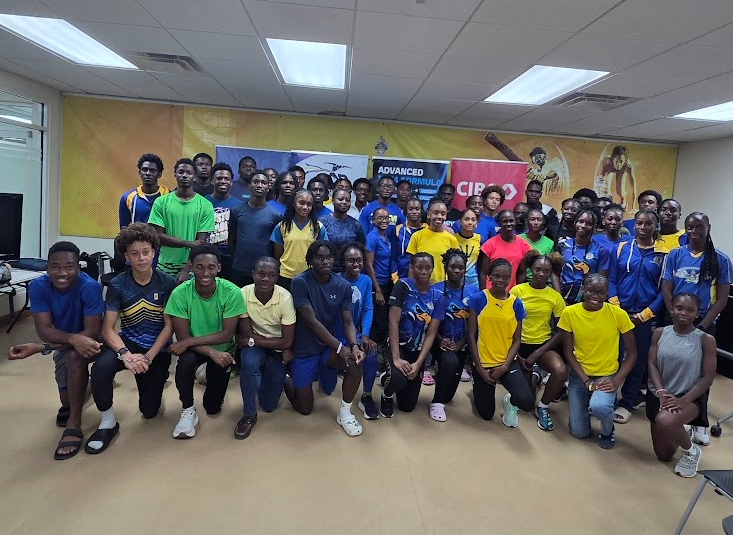
    In an unprecedented move for Barbadian athletics, a historic contingent of 60 competitors has been selected to represent the nation at the upcoming CARIFTA Athletic Championships in Grenada, scheduled from April 4-6. The team, officially unveiled at the Usain Bolt Complex, includes three sets of siblings, underscoring a deep well of familial talent within the island’s track and field program.

    Noel Lynch, President of the Athletics Association of Barbados (AAB), acknowledged the substantial financial investment of $110,000 required to field the team, describing it as a ‘hefty’ but justified price tag. He expressed profound confidence in the squad’s caliber, revealing that 38 athletes had secured their places by achieving outright qualifying standards—a testament to the program’s strength and depth. ‘This is a very strong team, a good team,’ Lynch stated, while candidly admitting to setbacks involving overseas scholarship holders whose university commitments precluded their participation.

    Despite these absences, which may slightly weaken certain event areas, Lynch projected a particularly strong performance for Barbados. He refrained from specific medal predictions but instead praised the efficacy of the AAB’s junior development program and the critical contributions of both affiliated and independent coaches. A notable shift in strategy will see Barbados compete in every relay event, a first in recent memory. This approach has allowed for the inclusion of athletes who, while not hitting exact qualifying marks, demonstrated proximity to the standard and possess value for developmental or relay squad roles.

    The administrative and coaching framework for the Games will be led by Team Manager Angela Jackson and Head Coach Desiree Gamble. They will be supported by a team of assistants including Jarad Murray, Alwyn Babb, Kerrie Beckles, Althea Belgrave, Ramon Armstrong, and Bryan Holder.

    Looking beyond the imminent competition, President Lynch announced Barbados’s formal intention to bid for hosting the 2028 CARIFTA Games. This ambition is directly tied to the progress of the new National Stadium in Waterford, which is reportedly ahead of schedule. Lynch confirmed receiving assurances from the Minister of Sports and Community Development that the facility will be fully functional, with completion targeted for late 2027 or the first quarter of 2028 at the latest, paving the way for a potential home Games celebration.

  • Energy conservation drive ‘would cut’ fuel costs

    Energy conservation drive ‘would cut’ fuel costs

    During a parliamentary debate on the Appropriations Bill, Christ Church West MP Dr. William Duguid unveiled a comprehensive proposal for a nationwide energy and water conservation initiative. The legislator emphasized the urgent need for a coordinated national strategy to address escalating fuel expenses through systematic demand reduction and efficiency enhancements.

    Dr. Duguid articulated a multi-faceted approach encompassing mandatory energy audits for residential properties, government departments, and educational institutions. His proposal advocates for practical behavioral modifications including switching to energy-efficient lighting, optimizing climate control systems, and improving architectural designs for better natural ventilation.

    The parliamentary address highlighted innovative utility pricing mechanisms as a core component of the strategy. Dr. Duguid recommended implementing differential metering systems for electricity, natural gas, and water services, creating financial incentives for off-peak consumption through variable tariff structures. This ‘peak shaving’ methodology aims to distribute demand more evenly while enhancing grid stability.

    A significant portion of the proposal addressed the interconnection between water management and energy consumption. Noting that the Barbados Water Authority represents the nation’s largest electricity consumer due to pumping requirements, Dr. Duguid advocated for parallel water conservation measures. These include comprehensive leak remediation, reduced residential water waste, and continued efforts to minimize non-revenue water loss throughout distribution networks.

    The MP referenced existing renewable energy infrastructure, particularly photovoltaic systems implemented during his tenure as Senior Minister for Infrastructure, as evidence of Barbados’ capacity for energy resilience. These solar installations enable water pumping operations without dependence on imported fossil fuels, providing crucial insulation against global oil market volatility.

    Concluding his address, Dr. Duguid presented economic indicators demonstrating improved national conditions, citing a twenty-year low in the Barbados Growth Adjusted Misery Index, which combines unemployment and inflation metrics. This data was presented as evidence of effective governance while underscoring the continued necessity for energy conservation measures amid global economic uncertainties.

  • Portvale walkout halts sugar harvest amid union recognition battle

    Portvale walkout halts sugar harvest amid union recognition battle

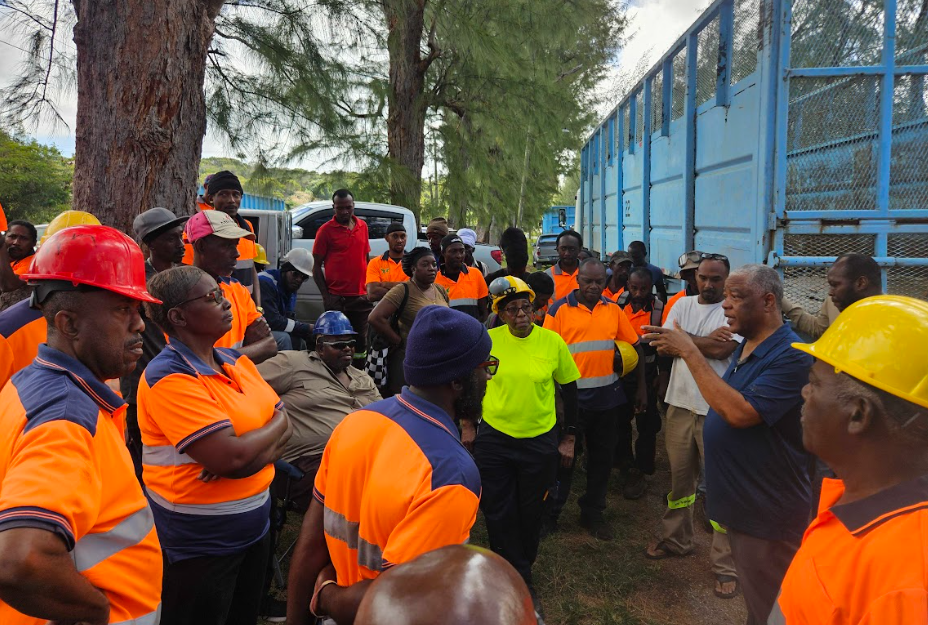
    A labor dispute over union representation and alleged workplace violations has halted operations at Barbados’s sole sugar processing facility, disrupting the critical harvest season. Dozens of workers at the Portvale sugar factory, operated by Barbados Energy and Sugar Company Inc (BESCO), initiated strike action Wednesday following failed recognition efforts by the Unity Workers Union (UWU).

    UWU General Secretary Caswell Franklyn reported that approximately 50 employees have withdrawn their labor in protest of management’s refusal to acknowledge their union despite claiming majority support among hourly workers. The conflict centers on competing representation claims between the newly-formed UWU and the established Barbados Workers’ Union (BWU), which BESCO officially recognizes.

    Franklyn detailed numerous grievances including alleged violations of labor regulations requiring excessive working hours without overtime compensation. “They are asking these workers to work 56 hours a week without any overtime payment,” he stated, noting this exceeds the legal 40-hour weekly threshold. The union leader further raised safety concerns regarding insufficient rest periods between shifts, particularly for personnel operating heavy machinery.

    Additional allegations include unsanitary working conditions where employees reportedly cannot leave their stations to use restroom facilities. Franklyn described the factory’s physical state as hazardous, citing leaking roofs in areas containing high-voltage equipment that present electrocution risks.

    BESCO responded by characterizing the action as an unauthorized strike, maintaining that BWU remains the legitimate bargaining agent. The company asserted that the current compensation model represents industry standard negotiated through proper channels and that workers are appropriately compensated for overtime. BESCO warned that participating employees traditionally forfeit pay during unauthorized work stoppages.

    The dispute occurs against broader instability within Barbados’s sugar industry following the 2024 restructuring that created BESCO after the collapse of the state-owned Barbados Agricultural Management Company. A proposed ownership partnership with Co-op Energy failed in August 2025 due to financing disagreements, undermining worker participation initiatives and contributing to ongoing industry tensions.

  • Griffith: New parenting models needing

    Griffith: New parenting models needing

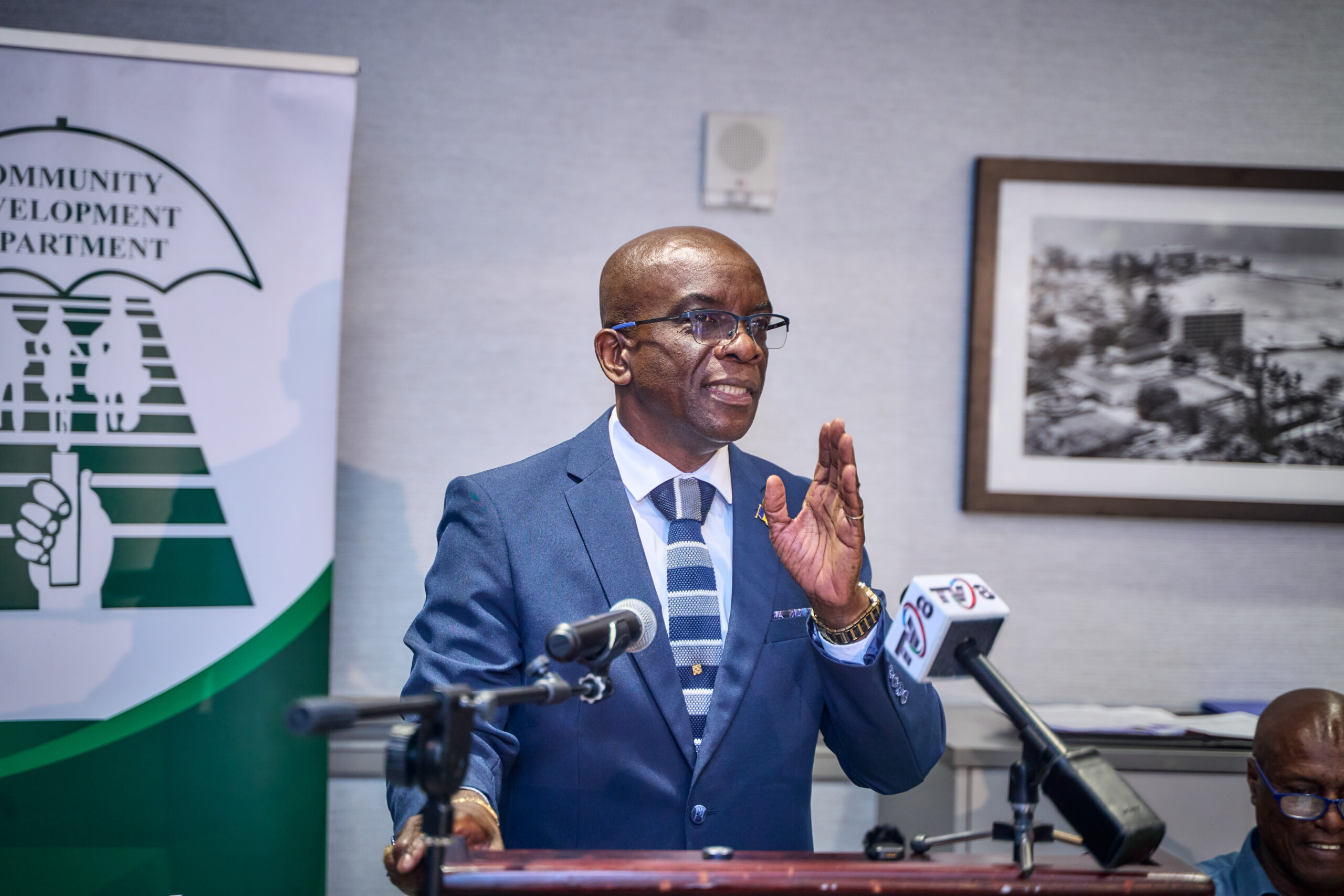
    In a compelling address at the National Parenting Seminar, Barbados’ Minister of Youth, Sports and Community Empowerment Charles Griffith issued a powerful appeal for a fundamental reimagining of parenting strategies across the nation. The event, organized by the Community Development Department at the Hilton Barbados Resort, brought together social workers, educators, and child development advocates to address critical challenges in contemporary parenting practices. Minister Griffith challenged attendees to develop innovative approaches that engage future parents long before they assume parental responsibilities, marking a significant departure from conventional reactive models. Drawing from his ministerial experience, Griffith highlighted disturbing patterns among at-risk youth, questioning why intervention efforts often occur too late in adolescent development. He invoked the wisdom of a former colleague’s observation that ‘it is easier to bend a child than to break a man,’ emphasizing the superior effectiveness of preventive measures over corrective actions. The minister stressed the crucial importance of emotional connectivity within families, sharing his personal practice of concluding every conversation with his 36-year-old son with affirmations of love—a experience many Barbadian youth have never encountered. Griffith particularly emphasized the necessity of involving fathers beyond biological contributions, warning against the reduction of men to mere ‘sperm donors’ in family structures. He further cautioned that traditional seminar-based approaches would likely prove insufficient, urging development of ‘totally new concepts’ to reach individuals grappling with parenting challenges in their daily lives.

  • Springer backs green industry push for St Andrew but urges caution

    Springer backs green industry push for St Andrew but urges caution

    In a nuanced parliamentary address during the Appropriations Bill debate, St Andrew MP Dr. Romel Springer presented a dual-position stance on Barbados’s ambitious green industrialization agenda. While formally endorsing the government’s proposed Green Industrialisation Gateway Advantage (GIGA) initiative, the parliamentarian issued a critical caveat: economic advancement must not jeopardize the parish’s delicate ecological systems.

    Dr. Springer characterized St Andrew as among the island’s most environmentally sensitive regions, emphasizing its exceptional ecological diversity. He articulated a vision where development coexists with preservation, stating his unwavering support for maintaining the area’s natural flora and fauna. “St Andrew being one of the more ecologically diverse parts of Barbados, obviously I would not want to see any type of development that would jeopardize its pristine beauty,” he told the House of Assembly.

    However, the MP simultaneously advocated for his constituents’ economic aspirations, highlighting the rural parish’s pressing needs for investment, infrastructure development, and employment opportunities. He noted the current reality where residents endure extensive commutes for employment, suggesting the GIGA initiative could alleviate this burden by bringing sustainable industry closer to their communities.

    The GIGA project, announced by Finance Minister Ryan Straughn during Monday’s Budget speech, aims to establish Barbados as a hub for environmentally sustainable industries. The initiative specifically promises job creation, climate-resilient industrial development, and positioning the island as a green innovation center.

    Dr. Springer highlighted both immediate construction-phase employment and long-term career opportunities, asserting that St Andrew possesses the intellectual capital and talent necessary to support innovative industries. He acknowledged potential resident concerns about introducing industrial infrastructure to a rural parish but maintained that the long-term benefits for northern Barbados communities would be substantial and transformative.

  • Govt weighs productivity framework to boost growth, business confidence

    Govt weighs productivity framework to boost growth, business confidence

    Barbados is advancing plans to establish a comprehensive national productivity monitoring system across its key economic sectors, a strategic move designed to catalyze economic expansion, streamline business operations, and attract foreign investment. Planning Minister Marsha Caddle confirmed the government’s consideration of this initiative in discussions with Barbados TODAY.

    The development follows a formal recommendation by Paul Inniss, President of the Barbados Chamber of Commerce and Industry, who advocated for such a system during his address at a post-budget forum organized by the Chamber and PricewaterhouseCoopers at the Hilton Barbados Resort. Minister Caddle has subsequently engaged in preliminary discussions with the Growth Council regarding implementation.

    Inniss articulated the critical need for what he termed a “scorecard for delivery”—a transparent accountability framework built on SMART (Specific, Measurable, Achievable, Relevant, Time-bound) goals with quarterly reporting cycles. This system would enable the nation to track commitments versus achievements across key performance indicators including business facilitation efficiency, productivity enhancement, Bridgetown urban renewal, and national resilience building.

    Minister Caddle endorsed the proposal enthusiastically, suggesting the creation of a national “productivity ticker” that would quantitatively measure and display the country’s collective output across transportation, workforce performance, and technological implementation. This visible metric system, she noted, would transform policy aspirations into measurable outcomes.

    The Chamber president emphasized that economic improvements must translate into tangible business experience improvements, noting persistent challenges including high operational costs, systemic inefficiencies, and administrative friction that continue to hinder Barbados’s competitive positioning. True economic progress, he argued, must manifest in practical dimensions: enhanced productivity, responsive governance, efficient goods movement, reliable energy infrastructure, and overall business confidence.

    This initiative represents a significant collaboration between government and private sector leadership to bridge the gap between policy intention and practical execution, addressing what both parties identify as a critical barrier to sustainable economic development.

  • Child activist wants more emphasis placed on community parenting

    Child activist wants more emphasis placed on community parenting

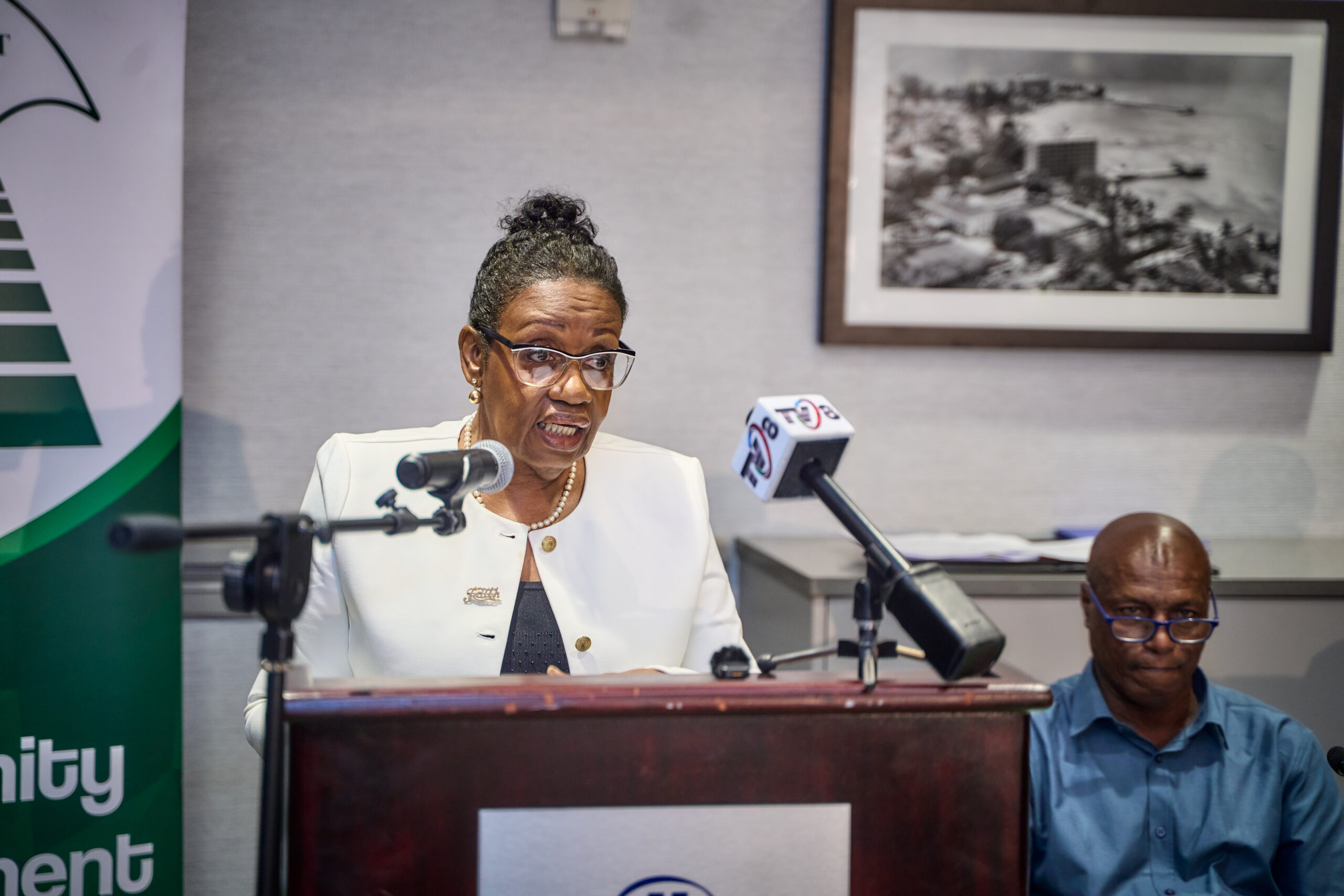
    A United Nations child rights authority has issued a stark warning regarding the powerful pull of negative community influences on Barbadian youth, advocating for an island-wide shift toward collective parenting responsibility. Faith Marshall-Harris, delivering the keynote address at a National Parenting Seminar in Bridgetown, revealed alarming insights from her direct work with at-risk teenagers, many of whom view illicit activities on the ‘block’ as their primary career path. The event, orchestrated by the Community Development Department, convened stakeholders to design a structured framework for community parenting and family-strengthening initiatives slated for national implementation by mid-2026. Marshall-Harris detailed how a pervasive ‘block culture’ offers adolescents not just income but a dangerous sense of structure and belonging, effectively competing with traditional education and family guidance. She emphasized that antisocial behavior is not innate but cultivated through systemic neglect, arguing that the community at large—not just parents at home—bears responsibility for shaping the next generation. The expert also confronted mounting misconceptions about children’s rights on the island, rejecting the notion that prioritizing young people’s welfare diminishes the rights of other vulnerable groups like the elderly. She dismissed claims linking children’s rights advocacy to increased youth violence, instead charging adults with the duty to teach balanced respect for both rights and responsibilities.