Barbados’ government has committed to integrating private public transport operators directly into the national hurricane preparedness framework, addressing longstanding grievances from industry leaders who say they have repeatedly been shut out of critical emergency planning discussions. The commitment came after Roy Raphael, chairman of the Alliance Owners of Public Transport (AOPT), which represents hundreds of transport vehicles across the island, publicly raised concerns that his organization was not invited to a recent high-level government meeting focused on readiness for the 2026 Atlantic hurricane season.
In an interview with local media outlet Barbados TODAY, Raphael explained that the exclusion was not an isolated incident. For years, he said, AOPT has only received emergency planning information secondhand through the state-run Transport Board, a communication gap that has created dangerous confusion during past severe weather events. Raphael noted that when hurricane conditions deteriorated in previous seasons, the delayed and filtered information left some public commuters stranded, as transport operators could not mobilize quickly enough to adjust services in line with national emergency protocols. He emphasized that the industry wants a seat at the table from the earliest planning stages, not last-minute calls for support when a storm is already approaching. “We don’t want people to call us at the last minute,” Raphael said. “We want to be able to hear it at the same time as the Transport Board so that we can coordinate our efforts together.”
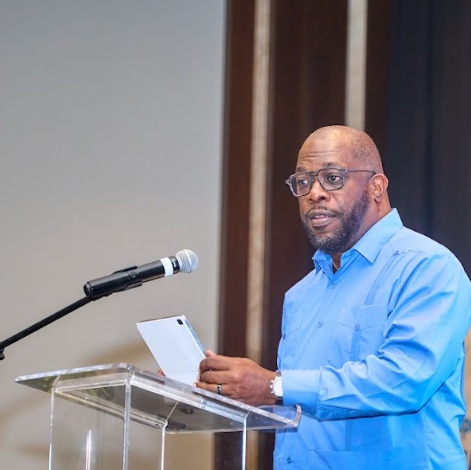
Responding to the complaints, Home Affairs Minister Gregory Nicholls pushed back against claims that private transport operators were deliberately snubbed in the recent meeting. Nicholls clarified that the recent gathering of the Emergency Management Advisory Council was specifically convened to bring together the prime minister, senior government officials, and the heads of standing disaster preparedness committees to review existing plans and confirm protocols were updated and ready for the upcoming hurricane season. This session, he said, was never intended to include external stakeholder input, as the primary purpose was for committee leadership to report to top government decision-makers.
Nicholls explained that day-to-day coordination of disaster response working groups, including the transportation and road clearance committees, falls under the purview of the Ministry of Transport and Works. While he acknowledged that private transport operators are critical stakeholders in effective emergency response, he noted that the recent meeting was structured for internal government reporting, not broad stakeholder engagement. To address the industry’s concerns, Nicholls gave a formal assurance that the government will schedule dedicated meetings between AOPT leadership and officials from the Ministry of Transport and Works to integrate private operators directly into the national preparedness framework. He also stressed that the government never intended to exclude the group long-term, emphasizing that private operators must operate within aligned national protocols to avoid uncoordinated, risky action during emergencies.
“While the private sector transport owners are key and important, we will meet with them, of course, to ensure that they have developed their own protocols, but at the same time they have to operate within a national emergency management framework, because we wouldn’t want them out there on their own, willy nilly, just operating without following established protocols,” Nicholls said. He added that the national emergency plan activates at full capacity once a hurricane watch or warning is issued, with protocols in place to ensure all essential personnel are able to complete their duties and return to safety before conditions worsen. “I want to assure them that it was not a snub,” Nicholls added.
Despite the government’s new commitment, AOPT remains cautious, with Raphael reiterating that the organization will continue pushing for permanent, direct inclusion in all pre-season planning discussions to eliminate communication gaps before the 2026 hurricane season intensifies.