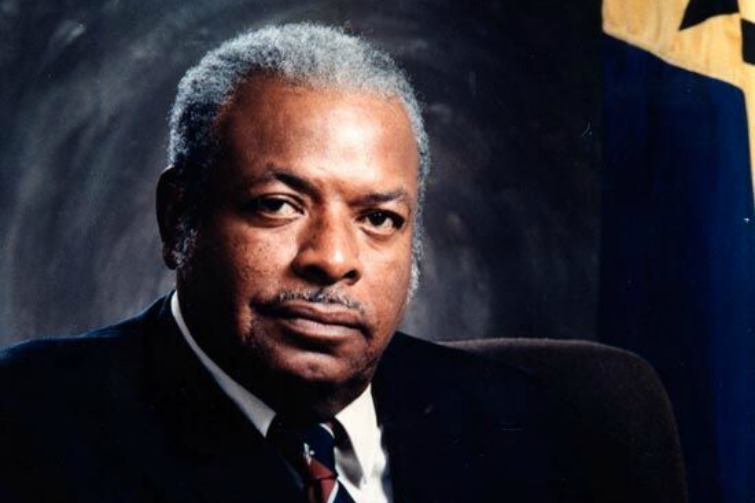
Thirty-nine years to the day after founding father Errol Walton Barrow’s passing, the Democratic Labour Party (DLP) of Barbados has renewed its recognition of the transformative, long-lasting national impact left by the National Hero, whose policy framework continues to shape the country’s trajectory decades later. In a formal commemorative statement released this week, DLP interim president Stephen Lashley paid tribute to the iconic leader, who died in office at the age of 67 on June 1, 1987, while serving just 11 months into his third term as head of Barbados’ post-independence government.
Lashley centered much of his tribute on Barrow’s defining role in steering the island nation to full sovereignty, highlighting one of the leader’s most famous guiding principles: “We shall be friends of all, satellites of none.” Lashley emphasized that this phrasing, coined decades ago, remains the foundational anchor of Barbados’ modern foreign policy.
Beyond national independence, the DLP leader spotlighted Barrow’s far-reaching social transformation agenda, which grew out of the founding father’s core conviction that “education is freedom.” Under Barrow’s leadership, Barbados introduced universal free secondary education, and developed three key higher education institutions that still serve the nation today: the University of the West Indies at Cave Hill, Barbados Community College, and the Samuel Jackman Prescod Institute of Technology. Lashley also praised Barrow’s forward-thinking national school meals programme, designed to ensure all children could learn in a comfortable, well-nourished environment, removing barriers to educational access for low-income households.
Economically, Lashley credited Barrow with building the durable foundations that underpin Barbados’ modern economy. Through prudent stewardship of national resources and proactive monetary policy, Barrow established key national institutions including the Central Bank of Barbados in 1972. He also strategically diversified the country’s economy by championing the growth of international business, light manufacturing, and the tourism sector that remains a core driver of national income today. Barrow also prioritized social safety nets, strengthening the National Insurance Scheme that continues to provide long-term financial security for generations of Barbadians.
“Mr Barrow was the people’s champion,” Lashley said, noting that every policy and piece of legislation passed under Barrow’s administration grew from the unwavering belief that every Barbadian citizen deserves an equal stake in the nation’s success. Regionally, Barrow’s commitment to Caribbean integration was unmatched: he was a founding father of CARIFTA, the regional trade bloc that later evolved into the Caribbean Community (CARICOM). On the global stage, he demonstrated unflinching commitment to principle, publicly opposing the 1983 U.S. invasion of Grenada and taking a firm, vocal stance against apartheid in South Africa. These actions cemented his reputation as a courageous Caribbean leader unafraid to speak truth to power, Lashley added.
Thirty-nine years after his death, Barrow’s legacy remains a guiding moral and political compass for the party he founded, Lashley said. He pointed to Barrow’s core “mirror-image” politics principle, which holds that all government action must directly reflect the needs and priorities of the people, as the enduring benchmark for effective, accountable leadership. Barrow’s influence can still be felt across every key sector of Barbadian life, from global diplomacy to public health, education, and affordable housing, Lashley noted. Closing his tribute, the DLP interim president pledged that the party has fully inherited Barrow’s mission, and remains committed to completing the social and economic revolution the iconic leader launched more than half a century ago.