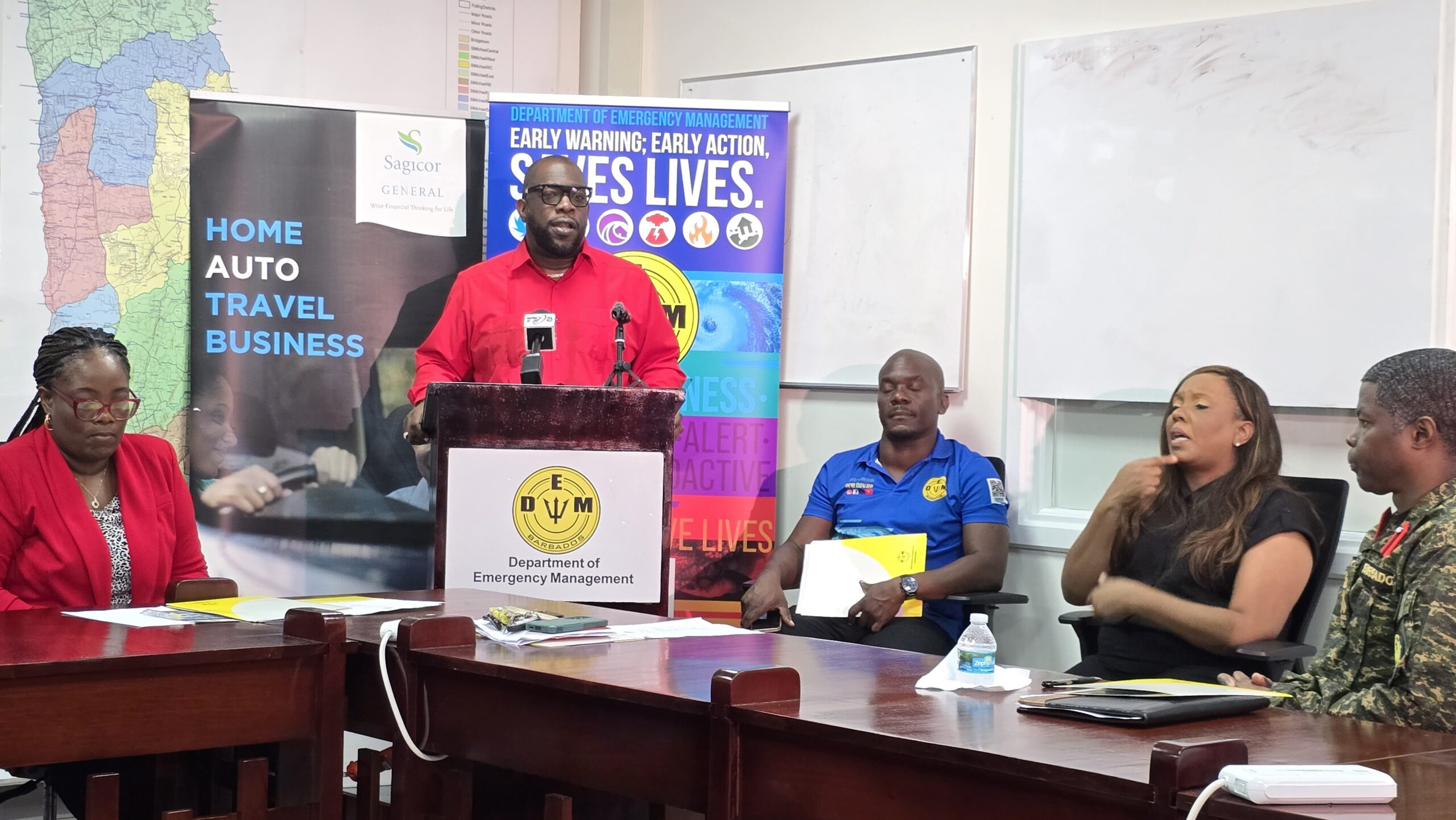
As climate change drives more rapid and extreme storm intensification across the Atlantic, the government of Barbados is moving to scale up a life-saving public initiative designed to strengthen residential infrastructure against hurricane-force winds. The free hurricane strap installation program, which has already improved the structural resilience of more than 2,000 Barbadian households, has drawn $300,000 in government funding since its launch in November 2022, Minister of Home Affairs and Information Gregory Nicholls confirmed during Monday’s 2026 Atlantic hurricane season outlook event.
The program is a collaborative effort between the Ministry of Home Affairs, which leads national disaster preparedness strategy, and the Ministry of Housing, Lands, and Maintenance. Nicholls emphasized that the initiative targets vulnerable homeowners who lack the financial means or access to purchase and install the critical roof-securing hardware themselves, while wealthier households are still encouraged to source the straps independently if they are able.
“Every carpenter, builder, and contractor in the industry will confirm how critical roof strapping is to holding a structure together during severe storms,” Nicholls said. “Our goal is to build resilience from the ground up, starting at the individual homeowner level. For those who cannot afford this protection, we are delivering it for free. Trained teams are still available across the island to complete installations for qualifying homeowners who have yet to access the program.”
To expand reach and public participation, Nicholls announced a new public awareness partnership between the Government Information Service and the Department of Emergency Management (DEM), aimed at educating more Barbadians about the program’s benefits and eligibility requirements.
Alongside highlighting the program, Nicholls raised pointed concerns about shifting residential construction trends that have weakened Barbados’ overall hurricane preparedness. For decades, Barbadian home design favored gable-shaped roofs with wide overhangs, engineered to redirect air pressure evenly across a structure during high winds, reducing the risk of roof lift or structural failure. In recent decades, however, many modern home builders have abandoned this proven design, creating new stock of housing that is far more vulnerable to damage during intense storms.
Nicholls framed the strap program as one core component of a broader government strategy to reverse this trend and boost household-level resilience across the island. The initiative has grown increasingly urgent as meteorologists document a troubling new pattern of rapid storm intensification, a trend that leaves communities with far less time to prepare for extreme weather. Barbados Meteorological Services director Sabu Best has previously observed that tropical storms that were once days from strengthening can now jump to Category 5 intensity in just 24 hours – a rate of intensification rarely seen in previous decades.
While the government acknowledges it cannot make every home on the island completely impervious to hurricane damage, Nicholls stressed that proactive investment in small, low-cost upgrades like roof strapping will drastically reduce casualty and damage totals when the next major storm makes landfall. “We cannot stop intense hurricanes from forming, but we can take concrete action today to protect our people and their homes,” he added.