标签: Barbados

巴巴多斯

  • Tourism faces labour shortages as hotels struggle to find staff – industry leader

    Tourism faces labour shortages as hotels struggle to find staff – industry leader

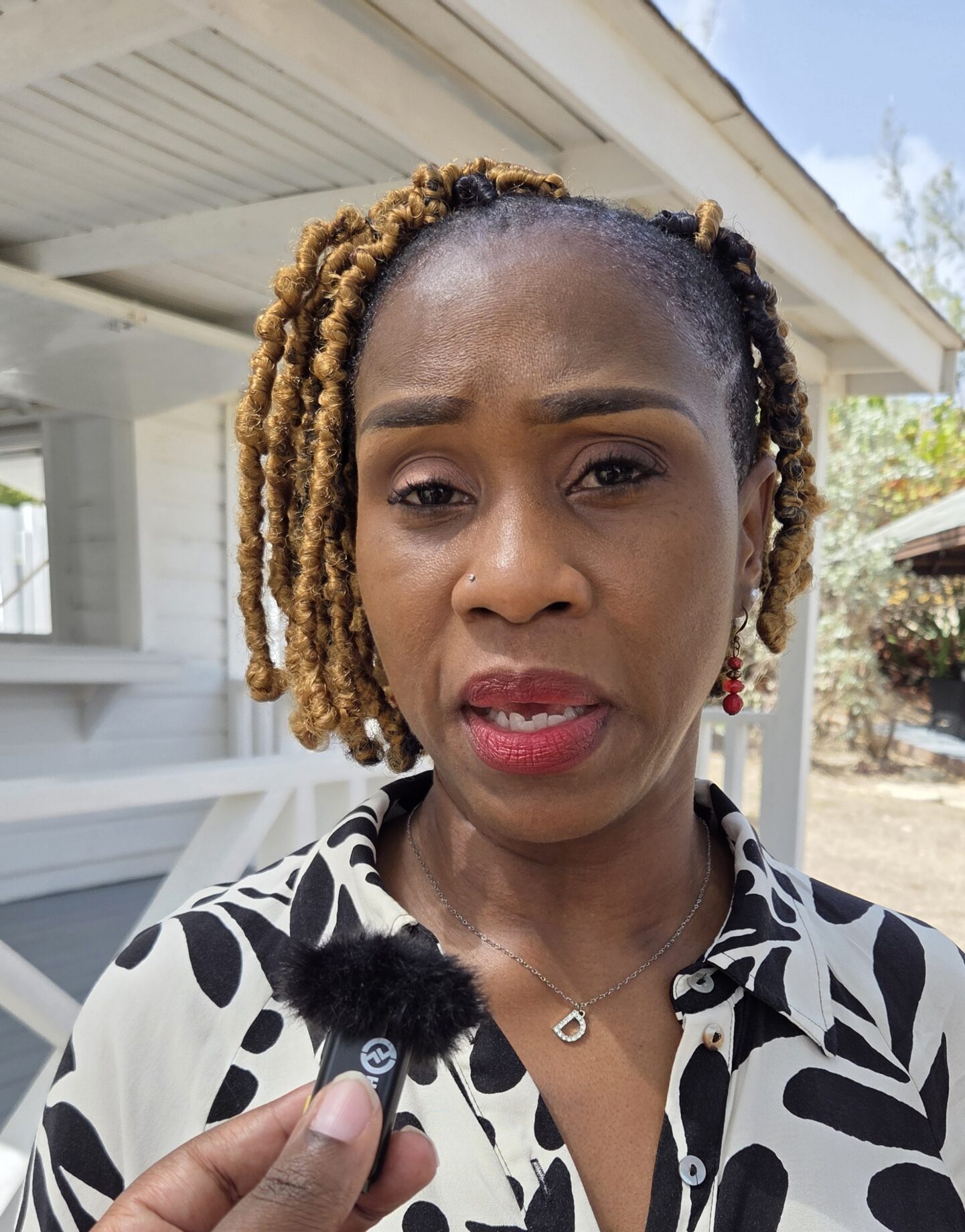
    Barbados’ accommodation sector is currently navigating an unprecedented labor crisis, a top industry executive has confirmed, describing widespread hiring challenges that are putting mounting pressure on local hotels. Speaking exclusively to Barbados TODAY this Wednesday, Cicely Denise Callender, Executive Director of Intimate Hotels of Barbados (IHB), pulled no punches when outlining the sector’s most pressing threat: a persistent, industry-wide shortage of willing and qualified workers.

    Addressing attendees at IHB’s 26th annual general meeting, held this year at the Ocean Spray Apartments in Inch Marlow, Callender explained that open positions exist across every corner of the island’s hospitality trade, yet local interest in filling these roles has dropped to worrying lows.

    “From housekeeping to front-of-house restaurant and waitstaff roles, every single segment of our industry is facing a critical staffing gap,” Callender said. “To put it plainly, we are on a struggle bus right now when it comes to finding Barbadian workers who want to build a career in this sector, stay in their roles, and bring passion to the work they do to support our national tourism economy.”

    Callender noted that what makes this shortage particularly striking is the historical centrality of tourism to Barbados’ national identity and economy. For generations, the sector was a cornerstone of local employment, but a clear cultural shift has seen younger workers and job seekers drifting away from hospitality roles entirely.

    She pointed to one pervasive misconception that may be fueling this exodus: a widespread public belief that hospitality work equals servitude, rather than the skilled, valuable professional service it actually is. Highlighting the sharp difference between these two perceptions, Callender called for targeted public outreach and educational campaigns starting at the primary and secondary school levels to reframe the industry and showcase the meaningful career opportunities it offers.

    As Barbados continues to recover and grow its international tourism footprint, the labor shortage remains a major barrier to further expansion and improved visitor experiences, with industry leaders now pushing for coordinated action to reverse the current trend.

  • ‘Sovereign debt’ blasted as imposed burden on small states

    ‘Sovereign debt’ blasted as imposed burden on small states

    At the official launch of the Caribbean Policy Development Centre (CPDC)’s new documentary *Tides of Debt* held at the Marriott Hotel in Hastings on Wednesday, Barbados Agriculture Minister Dr. Shantal Munro-Knight delivered a sharp rebuke of the global financial system’s framing of Caribbean debt, rejecting the widely used term “sovereign debt” as an inaccurate, harmful misnomer that erases the structural roots of the region’s growing fiscal crisis.

    A former executive director of the CPDC itself, the regional umbrella NGO behind the documentary project, Dr. Munro-Knight argued that the crippling debt burden holding back Caribbean nations does not stem from domestic policy missteps, but rather from centuries of historical inequity and a global economic architecture built to ignore the region’s acute climate vulnerability. She invoked Nigerian author Chimamanda Ngozi Adichie’s work on the danger of single stories to warn against reducing complex regional economic struggles to a narrative of national failure.

    “I stay away from that notion of sovereign debt. I don’t like it,” Dr. Munro-Knight stated. “Because even that word, ‘sovereign debt,’ it makes it national; it makes it country-owned. If you understand all of our history, we would know that our challenge of debt is nuanced, it’s systemic, it’s structural, it is global, and it is historical. That notion of sovereign debt as being owned nationally as having a place within the context of what countries singly do—we need to be able to repudiate that.”

    Data presented at the launch backed this claim, drawing on Inter-American Development Bank (IDB) research that quantifies the direct link between climate shocks and debt accumulation. The analysis shows that one major climate disaster pushes a small Caribbean nation’s public debt up by an immediate 10 percent, with that figure surging to 18 percent just three years after the event. These persistent, unplanned climate-driven costs, the minister emphasized, are the primary driver of the region’s debt, not excessive domestic spending.

    This shared understanding of the debt crisis is what led Barbados to develop the landmark Bridgetown Initiative, a global policy framework designed to overhaul outdated international financial rules to better support climate-vulnerable developing nations. Dr. Munro-Knight called out traditional multilateral lenders for their crippling bureaucratic delays, which leave small island states defenseless when disaster strikes. She gave a stark example: “You’ve got to take two years to write the proposal before then you can get the readiness grant to get ready, then to do the actual proposal, and by that time two hurricanes, a flash flood, ash fall, and everybody dead—but we’re still waiting on the release of funds. The Bridgetown Initiative said hold on, stop. Let’s re-look. Let’s restructure.”

    She also highlighted the gap between global guidance and on-the-ground reality for small island economies. International institutions often pressure developing nations to “mobilize private finance” to address climate and development challenges, but Dr. Munro-Knight noted that Caribbean private sectors are inherently small and risk-averse, making global de-risking mechanisms a non-negotiable prerequisite for progress. The Bridgetown Initiative, she argued, has gained global traction not because it is a Barbados-led project, but because it gives voice to a long-silenced crisis shared by dozens of vulnerable nations across the Global South. “We either lie down, play dead, or we get up and we act in the moment,” she said.

    Dr. Munro-Knight pointed to Barbados’ own dramatic economic turnaround since 2018 as proof that region-led innovative fiscal strategies can work, even when dismissed by international observers. When the current administration took office that year, Barbados faced a fiscal catastrophe: a 176 percent debt-to-GDP ratio, the third highest in the world, just 6.6 weeks of import cover, and the immediate threat of Tropical Storm Kirk. To pull the country out of crisis, the government pioneered new tools, including pandemic and natural disaster clauses in sovereign bonds that allow the government to pause interest payments after a catastrophe, as well as groundbreaking debt-for-climate swap agreements.

    Critics predicted the restructuring would fail, but the results have exceeded expectations. The process generated $165 million in new capital and $125 million in annual savings, Dr. Munro-Knight revealed. None of those savings were absorbed into general government spending; instead, they were directed to a sustainability trust that funds critical environmental and development projects, including the south coast reclamation and wastewater initiative that now provides irrigation for local agriculture. Today, Barbados’ debt-to-GDP ratio has fallen to 93.3 percent, the first time it has dropped below 100 percent in the country’s modern history. “When Barbados restructured its debt and went to the international market in 2018, everybody said it would fail,” the minister said. “Look at where we are now… The metrics show that it worked. We can’t be afraid.”

    Turning to her role as agriculture minister, Dr. Munro-Knight connected this fiscal innovation directly to food security, which she framed as core to regional sovereignty and survival. Under the government’s current Barbados Economic Recovery and Transformation (BERT 3.0) plan, national growth targets are explicitly tied to cutting the country’s food import bill. She noted that Barbados spent $8.6 billion on imported fresh produce last year, despite a national strategic crop plan that identified 16 crops that can be grown locally for a fraction of the import cost.

    Recalling her decades of work in trade negotiations with the CPDC, the minister highlighted how global trade rules are rigged against small developing nations seeking food sovereignty. She shared an anecdote from a past World Trade Organization negotiation, where a senior American official told developing country delegates that pursuing domestic food production was an “anachronism of bygone days” that should be abandoned in favor of relying on cheap imports. “The structural inequalities and the constraints of debt force the region into situations where we are making hard choices—we call it the developer’s dilemma,” she explained.

    To address this, the Barbados government has launched “Mission 2”, a cross-sectoral initiative to legally and socially protect the country’s water and food security. In closing, Dr. Munro-Knight urged Caribbean civil society to preserve their collective memory of these structural injustices and push back against efforts by global actors to dilute the meaning of regional resilience. For the Caribbean, food security is not just a technical policy goal, she argued—it is core to national development and cultural identity. “What we are doing is not just about growing. We are feeding a nation, but in feeding a nation, we’re also changing a cultural pattern. It is about people fundamentally. It is about how we feed our children, how our children through generations will have a relationship with land and ownership of land,” she said. “If we allow others to define that and remove our relationship from the earth, then part of us as people of the Caribbean is going to be lost.”

  • Farmers sign on as $84.4m crop drive begins to cut food imports

    Farmers sign on as $84.4m crop drive begins to cut food imports

    Barbados is moving forward with a bold new agricultural strategy designed to shrink its heavy annual food import bill, with government officials confirming this week that the island nation has begun signing participating farmers onto a targeted 16-crop development programme. Chief Agricultural Officer Paul Lucas disclosed in an interview with Barbados TODAY Wednesday that final contract negotiations with participating growers are currently wrapping up, marking the official launch of the coordinated public sector initiative.

    The programme is a collaborative effort between the Ministry of Agriculture’s technical teams, its specialized strategic planning unit, and the state-run Barbados Agricultural Development and Marketing Corporation (BADMC), with a long-term goal of strengthening the island’s domestic agricultural sector and delivering sustained economic benefits to local farming communities. According to Lucas’s projections, the initiative is on track to generate approximately $84.4 million in wholesale value once fully operational, a milestone that would make significant progress toward the government’s core objective of cutting Barbados’ annual food import bill, which currently sits between $80 million and $100 million.

    “Our calculations, based on current wholesale market pricing, put the total projected value at around $84.4 million,” Lucas explained. “In the long run, this programme will help us cut unnecessary national spending, and our overarching goal is to keep reducing our reliance on foreign food imports as much as possible.”

    A key pillar of the strategy is prioritizing crop varieties that are naturally well-adapted to Barbados’ tropical climate and soil conditions. Among the 16 selected crops, four already boast robust domestic production that has already pushed import volumes for these products to minimal levels: cucumber, cassava, sweet potato, and yams. Lucas noted that these staples have long been traditional crops for Barbadian farmers, who have honed generations of expertise growing them successfully in local conditions.

    To remove common barriers to entry for small and medium-scale growers, the Ministry of Agriculture is providing critical production inputs and infrastructure support ahead of the upcoming planting season, including a network of new water storage tanks to help growers manage inconsistent rainfall. Additionally, all farmers joining the programme are guaranteed a fixed buyer market for their harvested produce, eliminating the risks of volatile market price swings and post-harvest uncertainty that have long discouraged expanded production in the sector.

    “For growers who want the security of a guaranteed market for their crops when harvest time comes, we can deliver that security,” Lucas said. “They don’t have to worry about finding a buyer or absorbing marketing losses, because that side of the operation is already handled through the programme.”

    This targeted support has already sparked a notable resurgence of interest in onion production, a crop that struggled to gain traction among farmers due to post-harvest challenges. BADMC’s new dedicated onion drying facility has addressed a longstanding pain point: inconsistent tropical weather made traditional open-air curing a high-risk process that often left farmers with significant post-harvest losses. Lucas reported that since the facility and the broader programme were announced, farmer interest in growing onions has risen sharply.

    “Before this infrastructure was in place, farmers always worried they would lose entire crops during the drying stage because weather conditions were never predictable,” he said. “Now that that risk has been removed, we’ve seen a real renewed appetite to expand onion production.”

    The initiative is rolling out amid broader climate concerns, however, as meteorologists have forecast an upcoming El Niño pattern that brings elevated risks of drought and increased pressure on soil health across the Caribbean. Despite these potential headwinds, the Ministry of Agriculture says it has put in place robust technical support to help farmers adapt to challenging conditions and meet production targets. Officials are also urging Barbadian consumers to back the initiative by prioritizing locally grown produce when shopping for groceries.

    “When you choose to buy local, you’re improving lives and strengthening livelihoods across our farming communities, and helping our whole society build a more resilient food system,” Lucas emphasized. “We all benefit from fresher, healthier local food, more sustainable agricultural systems, and we’re supporting working families and helping rural communities grow. Choosing local is an investment in building a stronger Barbados.”

    The full breakdown of the 16 priority crops and their projected annual production volumes (in kilograms) is as follows: 127,055 kg of beets, 1,295,255 kg of butter squash, 298,897 kg of cabbage, 226,093 kg of cantaloupe, 510,719 kg of carrots, 672,093 kg of cassava, 1,342,641 kg of cucumber, 662,238 kg of lettuce, 1,020,696 kg of onion, 625,121 kg of hot pepper, 878,460 kg of sweet pepper, 294,546 kg of pumpkin, 2,897,083 kg of sweet potato, 803,682 kg of tomato, 1,051,496 kg of watermelon, and 924,789 kg of yam.
  • Five-car smash damages water main, closes Black Rock

    Five-car smash damages water main, closes Black Rock

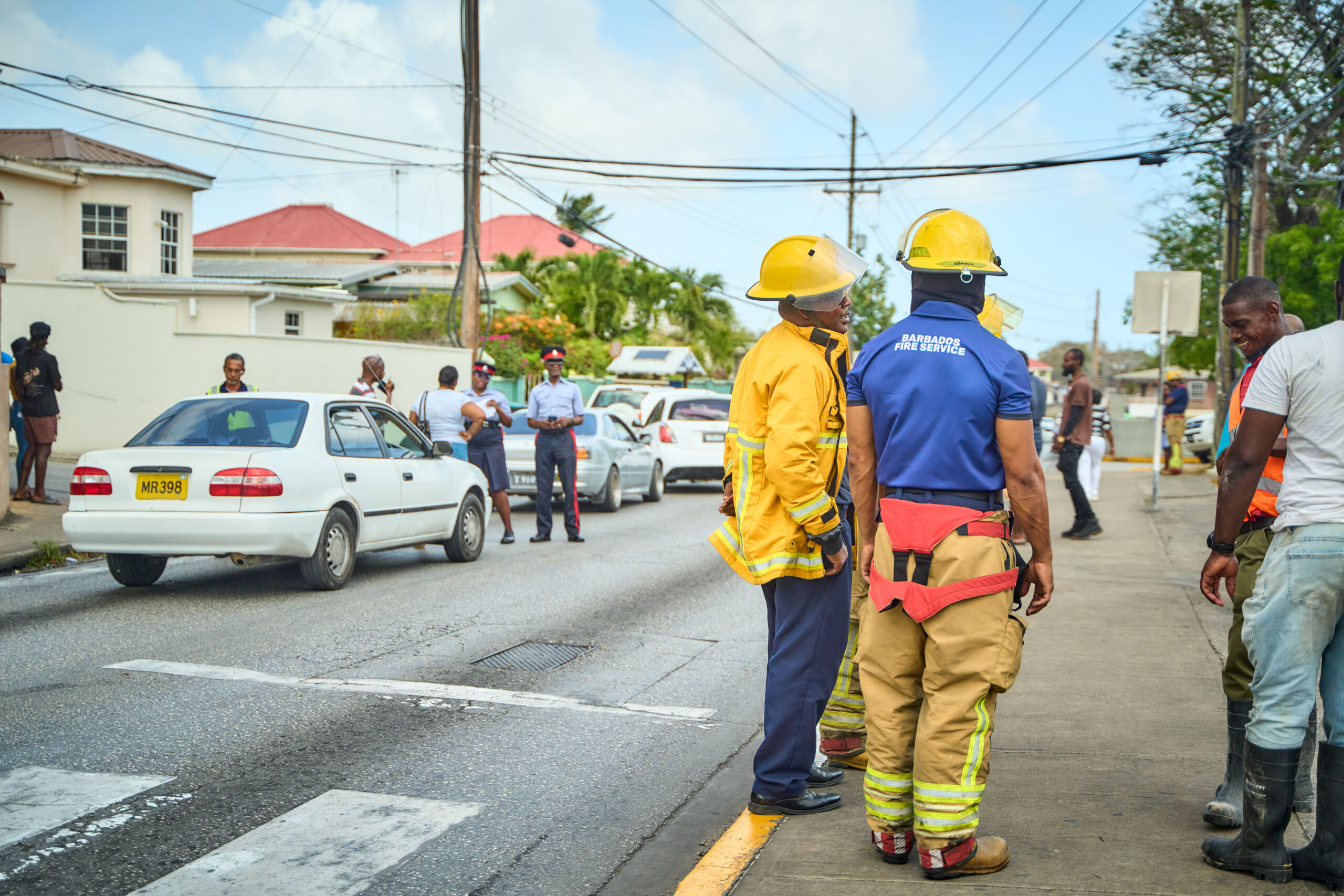
    A major multi-vehicle crash brought one of Barbados’ busiest arterial roads to a complete halt on Wednesday afternoon, after a collision between five passenger cars damaged a critical local water main and left the busy route impassable. As of the publication deadline, emergency officials have confirmed that no life-threatening or severe injuries have been recorded from the incident, which unfolded near popular local retail outlets just after noon.

    Charmaine Sandiford, a station officer with the Barbados Fire Service, shared details of the rapid emergency response with local outlet Barbados TODAY, confirming that the first emergency call came into service at 12:21 p.m. The initial report to dispatch described a four-car crash in the immediate vicinity of the Little Caesars outlet, located near the northern entrance of the Carlton Supermarket on Black Rock Main Road. When first responders arrived on scene, however, they confirmed that five separate vehicles were involved in the pileup rather than four.

    The emergency operation was overseen by Divisional Officer Marlon Small, with a total of nine fully trained firefighters and two dedicated water tenders deployed to the crash site. Beyond the extensive damage to the vehicles involved, responders found that one vehicle had veered off the roadway and struck an underground water main, rupturing the pipeline and creating additional hazards for the area. Sandiford noted the crash triggered widespread travel disruption for both commuters and commercial traffic, as the entire corridor had to be closed to all vehicles while crews secured the crash site and conducted an initial damage assessment.

    Local photojournalist Shamar Blunt captured imagery of two of the five damaged vehicles at the scene for Barbados TODAY. While the impact of the collision left multiple vehicles heavily damaged and knocked out the local water line, emergency management teams have not reported any serious injuries among drivers or passengers involved in the crash as of press time. Local law enforcement officials have confirmed that investigations into the root cause of the collision remain ongoing, with updates to be released as more information becomes available.

  • Barbadians urged to take greater responsibility for health, wellbeing

    Barbadians urged to take greater responsibility for health, wellbeing

    As more Barbadians shift toward proactive health management, a leading local wellness organizer is pushing for expanded collective effort to encourage widespread personal accountability for physical and mental wellbeing ahead of a major island-wide fitness event.

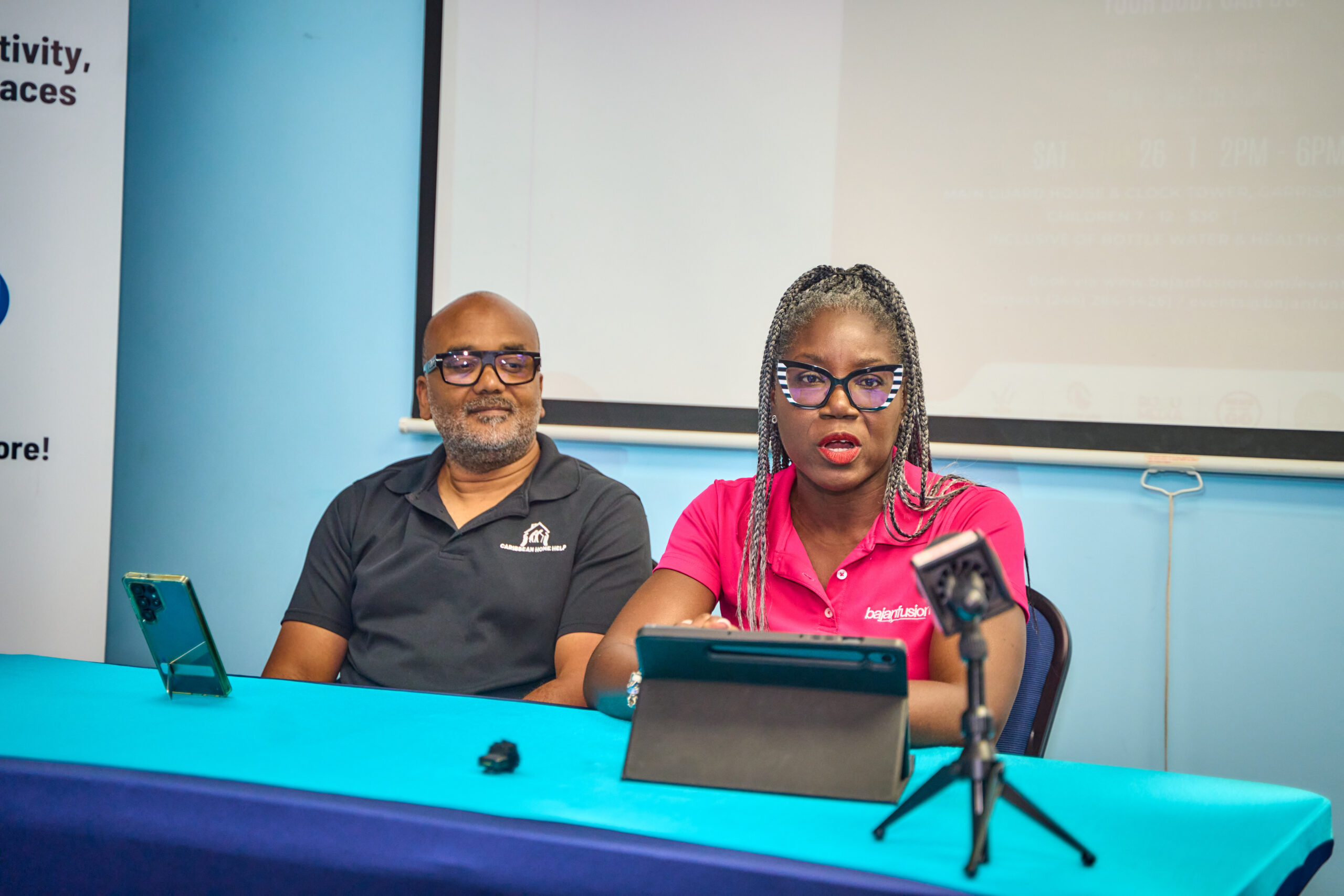
    Celia Collymore, founder and project lead of Barbados-based wellness initiative Bajan Fusion, shared her perspective during the official media launch of the organization’s upcoming Fitness Party, scheduled to take place Saturday, June 13 at the Historic Garrison Savannah’s Main Guard House and Clock Tower in St Michael. Carrying the theme ‘Move. Recharge. Thrive.’, this year’s gathering is timed to coincide with Global Wellness Day and Men’s Health Month, with a portion of all ticket proceeds set to be donated to the Men Empowerment Network Support, a local organization working on men’s health advocacy.

    Reflecting on evolving public attitudes toward wellness across Barbados, Collymore outlined a mixed landscape of engagement with healthy living. Speaking to reporters, she noted that locals fall across a spectrum of mindsets: ‘Every time I connect with people, it’s a mix of feelings.’ For many, a personal wake-up call such as watching a loved one battle or die from a preventable health condition is enough to spark motivation to adopt better self-care habits. Others already struggle with poor health but are open to making sustainable changes when provided with accessible guidance and community support.

    However, Collymore pointed out that a significant portion of the population still downplays the value of consistent healthy living, with many holding the fatalistic view that death is inevitable regardless of lifestyle choices, so they see no reason to adjust their daily habits.

    Despite these persistent barriers, Collymore emphasized that public attitudes have shifted dramatically for the better over the past decade, particularly in the wake of the global COVID-19 pandemic. ‘Especially since COVID and after, I find that Barbadians are really taking more charge of their lives,’ she said, pointing to the exponential growth of community-led wellness groups, recreational run clubs, and local sporting events across the island as tangible evidence of this shift. Comparing the current landscape to when she launched Bajan Fusion in 2012, Collymore noted that widespread cultural change around health has already transformed life on the island, adding that she is encouraged by the growing number of Barbadians prioritizing their wellbeing.

    Even with this progress, Collymore warned that Barbados’ persistently high prevalence of non-communicable diseases (NCDs) makes clear that far more work remains to reach population-wide health goals. ‘There’s still a lot of people who are not taking care of themselves, and that’s really where we need to zoom in a bit more,’ she explained. Bajan Fusion, she added, aligns its community work with the broader public health goals of Barbados’ Ministry of Health and Wellness, supporting government-led efforts to normalize healthy lifestyles across all age groups.

    Collymore argued that even targeted community events like the upcoming Fitness Party can act as a catalyst for long-term, life-changing habits. ‘One day can change your life. Sometimes people just need that one opportunity, that one chance, that one conversation,’ she said. She added that the biggest gap in sustaining healthy habits for most people is accountability and ongoing community connection, noting that many people start their wellness journey strong but lose momentum without support. ‘I think that’s the challenge where people sometimes get started and then they fall off. So how do we help them with that self-accountability, but also community, being able to check in on them and make sure they okay?’

    The 2026 Fitness Party will run from 2 p.m. to 6 p.m. at its St Michael venue, and is designed as an inclusive, family-friendly experience that blends group physical activity, evidence-based wellness education, Barbadian cultural expression, live entertainment, and community connection. Ticketing is structured to be accessible for all ages: adult entry costs $50 Barbadian dollars, while entry for children between 7 and 17 years of age is priced at $30. Full event details and registration information are available on Bajan Fusion’s official website, bajanfusion.com.

  • Strong courts ‘vital’ to development, public trust

    Strong courts ‘vital’ to development, public trust

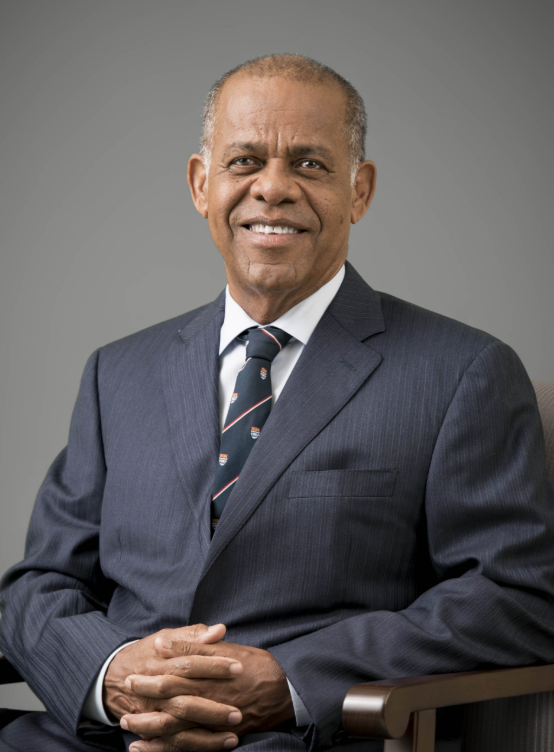
    Delivering the keynote William G. Demas Memorial Lecture at the Caribbean Development Bank’s 56th annual gathering, Caribbean Court of Justice (CCJ) Associate Justice Denys Barrow delivered a urgent, clear message Thursday: strong, autonomous judicial systems are non-negotiable for advancing regional development, cutting pervasive crime, and upholding public faith in governance. Without broad citizen confidence in a region’s justice framework, he warned, the very foundation of law and order risks unraveling.

    Centering his address on the theme “Contributions of the Courts to Caribbean Development: The Enduring Importance of Strong Institutions”, Barrow pushed back against dominant narratives that frame development solely through gross domestic product growth or large-scale infrastructure builds. True progress, he argued, must ultimately be measured by tangible improvements to the daily lives and well-being of all community members. “It is the development of the community that must be the ultimate focus and beneficiary of our efforts,” he stated, noting that economic targets and infrastructure projects are simply milestones on the path to inclusive community advancement, not end goals in themselves.

    Barrow emphasized that functional, accountable institutions, fair legal systems, and intentional policy frameworks all work in tandem to raise quality of life across the Caribbean — including progress on the region’s long-running, costly crisis of violent crime. He referenced the 2023 CARICOM summit hosted in Trinidad and Tobago, where regional heads of state reached a landmark agreement to reframe crime and violence as a public health emergency, rather than treating it exclusively as a law enforcement challenge. This paradigm shift, Barrow explained, redirects regional crime policy away from a singular focus on policing and punishment toward proactive violence prevention that stops harm before it occurs.

    The judge spotlighted grim regional data to contextualize the urgency of reform: Caribbean leaders have confirmed the region’s homicide rate is roughly three times the global average, with growing alarm over persistent spikes in serious offenses including murder, sexual assault, manslaughter, armed robbery, and aggravated assault. Barrow also voiced strong support for the 2023 Needham Point Declaration on Criminal Justice Reform, a sweeping policy blueprint adopted at the seventh biennial Law Conference of the Caribbean Court of Justice Academy for Law. The declaration lays out a series of transformative reforms designed to modernize outdated criminal justice systems across the Caribbean, targeting longstanding pain points including chronic case backlogs, dangerous prison overcrowding, and eroding public trust in judicial institutions.

    One of the declaration’s most ambitious and impactful proposals sets binding timeframes for case resolution: the document calls for regional judicial systems to aim to complete trials for indictable serious criminal cases within one year of charges being filed, while minor summary offenses should be finalized within six months. For a transitional adjustment period, the declaration sets staggered targets of two to three years for indictable matters and 12 months for summary offenses. Barrow stressed that eliminating unreasonable court delays serves the public good as much as it benefits parties directly involved in cases. “Beyond the interests of accused persons, victims, witnesses and family members, society as a collective has an overriding interest in the avoidance of unreasonable delay,” he said. Cutting backlogs, he argued, is critical to rebuilding public confidence by delivering early acquittals for innocent people, swift consequences for guilty offenders, and reinforcing the public’s understanding that crime will be followed by accountability.

    On the topic of sentencing, Barrow noted that courts must continuously navigate and balance the competing needs of offenders, crime victims, and the broader public, striking a careful balance between demands for retribution and goals of rehabilitation. To illustrate this balance, he referenced the high-profile Campus Trendz case from Barbados that reached the CCJ on appeal: a 2010 robbery that ended with perpetrators throwing a Molotov cocktail into a locked clothing store, killing six young women trapped inside. In its ruling, the CCJ upheld six concurrent life sentences for the primary offender, meeting the public’s legitimate demand for retribution while also reaffirming that rehabilitation must remain a core consideration alongside other sentencing principles.

    Barrow argued that prioritizing rehabilitation is especially critical for the Caribbean because the vast majority of the region’s violent offenders are young people. “The existential truth is that our nations cannot simply treat our young men as lost and write them off,” he said. When legislatures craft laws and courts hand down sentences that center rehabilitation as a core goal, he explained, Caribbean societies are making an investment in their own long-term future.

    The CCJ justice also defended the vital role of independent courts in delivering impartial justice, even in cases that stoke intense public anger and widespread outrage. “The courts exist to provide to society the assurance that, even where popular opinion is outraged, our justice institutions must be trusted to apply the law,” he said. Barrow emphasized that justice must be guided by the rule of law, not personal demands for vengeance or arbitrary leniency — a principle that must be respected by victims’ families, convicted people, and the general public alike.

    He reiterated that sustainable regional development depends entirely on public confidence in core state institutions, and the judiciary is the most critical of these. “It is a fundamental proposition and a predicate of our existence that we trust the courts to deliver justice,” he said. If that trust erodes, Barrow warned, communities will increasingly abandon formal legal processes and turn to extrajudicial “street justice” to resolve disputes, opening the door to a total breakdown of law and order. “What is sought to be prevented is the resort to street justice, the unravelling of the bonds of law and order,” he added.

    Headquartered in Port of Spain, Trinidad and Tobago, the CCJ serves as the final court of appeal for five Caribbean nations: Barbados, Belize, Dominica, Guyana, and Saint Lucia. All five countries have replaced the UK Privy Council with the CCJ as their final appellate body for both civil and criminal cases. Beyond its appellate role, the CCJ exercises original jurisdiction as a court of first instance with exclusive authority to interpret and apply the CARICOM treaty, hearing disputes between CARICOM member states, between member states and the Caribbean Community, and claims brought by individuals and private entities. Rulings from the CCJ in both its appellate and original jurisdictions are final and binding across all participating states.

  • Caribbean leaders demand urgent climate finance and debt relief

    Caribbean leaders demand urgent climate finance and debt relief

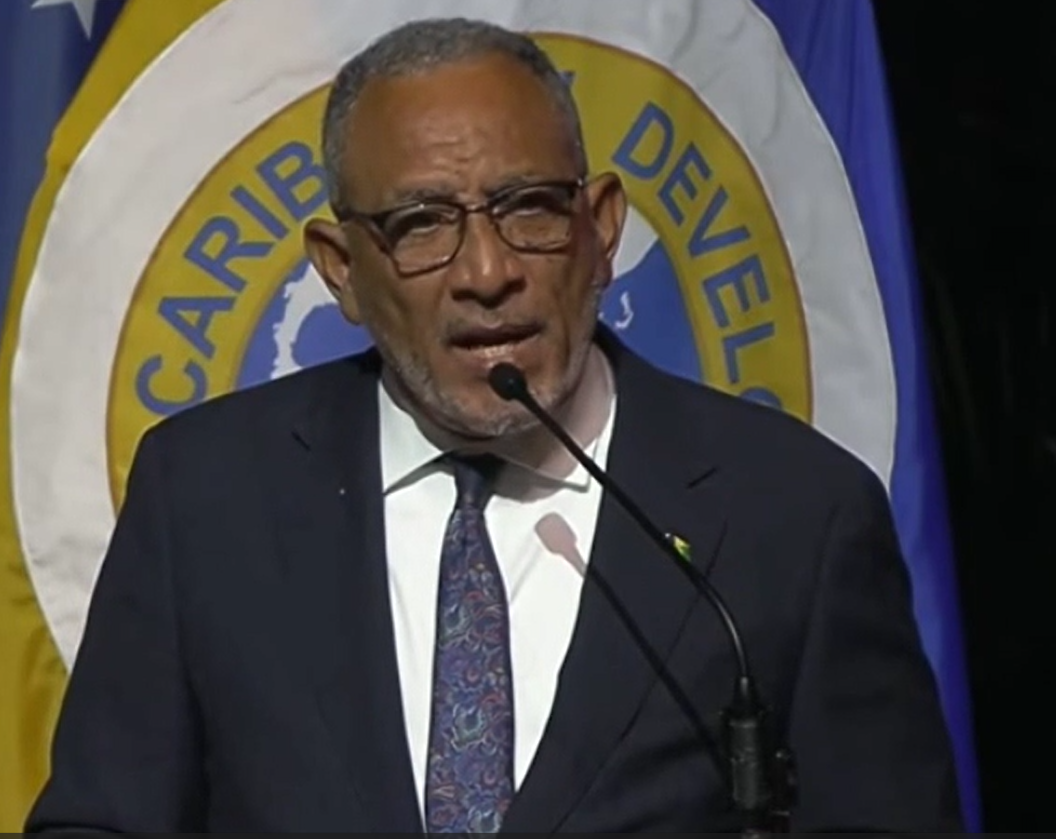
    In a high-stakes address delivered on behalf of the Caribbean Development Bank’s (CDB) borrowing member nations in Nassau, Prime Minister Dr. Godwin Friday of St. Vincent and the Grenadines has issued a urgent, impassioned call for coordinated regional action and sweeping global financial reform to confront the overlapping crises of extreme climate vulnerability and unsustainable sovereign debt that threaten the Caribbean’s future.

    Addressing a gathering of senior regional leaders that included Bahamas Prime Minister Philip Davis, CDB President Daniel Best and central bank governors from across the region, Dr. Friday spoke against the backdrop of the conference theme “Forging the Caribbean’s Future: Strategic Solutions for Uncertain Times”. He opened by framing the region’s current challenge as a navigation through turbulent global shifts, noting that long-standing geopolitical alliances are strained and widely accepted global norms are being challenged without clear, reassuring resolutions for small island nations.

    Dr. Friday pulled back the curtain on the severe economic constraints strangling Caribbean economies, laying bare the region’s chronic debt crisis. Nine of the CDB’s borrowing member nations carry central government debt-to-GDP ratios that exceed the 60 percent prudential threshold, he revealed, and in his own country of St. Vincent and the Grenadines, that figure surges past 113 percent. This crippling debt load, he emphasized, severely erodes governments’ capacity to fund critical public investments that would drive inclusive growth and shield the most vulnerable communities from cascading global price shocks—including spiking fuel costs, rising shipping expenses and a shrinking global aid landscape.

    Beyond the debt crisis, Dr. Friday drew urgent attention to the catastrophic funding gap holding back the region’s efforts to build climate resilience. While Caribbean nations require an estimated $14 billion annually to implement comprehensive climate adaptation, mitigation and response measures, the region currently mobilizes less than 10 percent of that total. “It is therefore imperative that our development partners become more adaptive, more responsive, and willing to provide highly concessional financing and dedicated resources for loss and damage that will not worsen a bad debt situation,” he argued.

    Despite the systemic barriers the region faces, Dr. Friday offered measured praise for the CDB’s long-standing role as a critical pillar of regional development. He highlighted tangible, impactful projects supported by CDB investment in St. Vincent and the Grenadines, including the modernization of Kingstown’s port, nationwide school improvement initiatives, and expanded rural road infrastructure that have strengthened the country’s ability to withstand climate shocks. When targeted institutional capital is paired with local community expertise, he noted, it delivers transformative change: improving lives, strengthening local communities and building the climate-resilient economic assets the region needs to thrive.

    Looking ahead to the immediate challenges on the horizon, Dr. Friday reminded delegates that the Caribbean is entering the 2026 hurricane season still recovering from the devastating damage inflicted by Hurricanes Beryl in 2024 and Melissa in 2025. To build long-term, multi-dimensional resilience across environmental, economic and social systems, he laid out a clear strategic framework for the CDB’s future priorities, centered on aggressive economic diversification.

    Dr. Friday urged regional states to pursue emerging growth opportunities, including widespread digitalization of public services, expansion of renewable energy development modeled on the geothermal projects already underway in Dominica and St. Kitts and Nevis, and investment in value-added agro-processing to boost domestic food security and reduce reliance on volatile global import markets.

    To turn this ambitious agenda into action, Dr. Friday called for rapid institutional reform within the CDB to address the region’s persistent implementation gap, which has delayed progress on critical initiatives for years. “We must move swiftly to implement the transformative reforms to eliminate friction and drive our institution forward,” he insisted. He closed with a direct appeal to all CDB shareholders and international non-regional partners to fully back the bank’s new strategic direction and provide robust support for the 11th replenishment of the Special Development Fund (SDF 11)—a facility he described as “the lifeblood of concessional financing for the region’s vulnerable members.”

    Ultimately, Dr. Friday urged regional and global leaders to make choices that will lay the groundwork for “a stable, inclusive, and thriving Caribbean that is sustainable for generations to come.”

  • Cave Hill finishes third at Inter-Campus Games

    Cave Hill finishes third at Inter-Campus Games

    The University of the West Indies Inter-Campus Games wrapped up recently at the St Augustine Campus in Trinidad, with the Cave Hill Campus securing third place overall after claiming three of the 14 available championship titles. Team manager Aundrea Wharton shared his assessment of the team’s performance in an exclusive interview with Barbados TODAY, breaking down the results and outlining expectations for future competitions. Wharton confirmed that Cave Hill’s standout wins came in women’s hockey, women’s volleyball, and women’s netball, where all three squads outperformed competing campuses to claim the top podium spot. Despite these strong individual results, Wharton acknowledged that the final overall standing fell slightly short of the program’s pre-tournament projections. “We missed out on two titles we had our sights set on – men’s cricket and men’s volleyball,” he explained. “Our squads in both events finished second, and moving those two positions up from silver to gold would have lifted our overall medal ranking considerably.” That said, Wharton emphasized that the team’s showing was a solid outcome given the unusual context surrounding this year’s restart of the Games. This year’s event marked the first full iteration of the multi-campus competition after COVID-19 pandemic disruptions, and a large majority of Cave Hill’s 130-person delegation had never competed in the UWI Inter-Campus Games before. “Coming into this tournament, almost our entire squad was completely new to the idea of these university games, what they stand for, and the intensity of competition they bring,” Wharton noted. “For these young athletes, this whole experience was a major learning curve that they can build on moving forward.” Looking ahead to the next edition of the Games, scheduled to be hosted by the Cave Hill Campus in Barbados in 2028, Wharton expressed cautious optimism for a stronger result. Roughly 60 percent of this year’s 130 athletes will still be eligible to compete for Cave Hill in four years’ time, and the experience they gained at this year’s tournament will be invaluable, he argued. “Now that they have a first-hand understanding of how hard-fought these Games are, and what it takes to compete for titles, I think we’ll see a very different outcome in 2028,” he said. “Add that to the advantage of competing on home soil, and I know our athletes will be hungry to put on a much better performance for our home crowd.” In the final overall standings, Jamaica’s Mona Campus claimed the first place overall title, with the host St Augustine Campus finishing in second. Wharton also noted that the overall level of competition across all participating campuses was inconsistent this year, a trend he attributes to the post-pandemic restart. “This year felt a little lukewarm across the board, because it’s the first time we’ve been back to full competition after COVID,” he explained. “Many teams hadn’t experienced the intensity of the Games before, so they were still finding their footing. We also saw the debut of Five Islands Campus, which was only founded two years ago and competed in the Inter-Campus Games for the first time ever this year.”

  • CDB launches reform plan to limit effects of climate change, economic shocks

    CDB launches reform plan to limit effects of climate change, economic shocks

    Against a backdrop of mounting global economic turbulence, intensifying climate instability, and dwindling international development financing, the Caribbean Development Bank (CDB) has unveiled an ambitious transformative roadmap for regional progress, launched during its 56th Annual Meeting hosted in Nassau, The Bahamas.

    Opening the gathering, CDB President Daniel Best delivered an impassioned call to action for regional stakeholders, framing the current era of persistent uncertainty as a catalyst to pursue a full “rebirth” of the 56-year-old development institution. Best emphasized that the overlapping crises facing small island Caribbean nations demand unprecedented levels of cross-border collaboration, noting that The Bahamas was a particularly symbolic host for this pivotal moment. Five decades earlier, the CDB held its very first meeting in the country, at a time when the region was navigating the profound upheaval of post-colonial political and economic transition.

    Looking back to the institution’s founding, Best highlighted a core lesson from the region’s early leaders: uncertainty is not a signal to retreat, but a mandate to build collective solutions. He pointed to accelerating climate threats playing out across Caribbean communities, recalling a firsthand visit to Jamaica in the immediate aftermath of Hurricane Melissa. “What I witnessed was nothing short of gut-wrenching; communities flattened, homes gone, and a hospital barely standing. And yet within those damaged walls, nurses and doctors pressed on, working tirelessly to care for the injured, because that is who we are as a region. We persevere even in the face of devastation,” Best said.

    To turn that perseverance into tangible progress, Best announced that the CDB has already significantly expanded its development interventions: since 2025, the bank has approved and disbursed more than $400 million in funding to upgrade critical infrastructure, expand educational access, and strengthen private sector growth across the region. Of that financing, a historic $226.7 million has been committed to climate action – a new annual record for the institution. This includes the first-ever single-country Green Climate Fund (GCF) project for The Bahamas, which will upgrade national water security systems and boost coastal storm resilience. Best also revealed a groundbreaking unified regional initiative led by the CDB: a multi-country housing retrofit program spanning more than 15 Caribbean nations, which will convert millions of climate-vulnerable residential structures into storm-resistant shelters, protecting families from future extreme weather events.

    The Nassau gathering, which brought together regional finance leaders including Barbados Finance Minister Ryan Straughn, served as the official launch pad for the CDB’s new 10-year strategic framework, which will guide the bank’s work from 2026 through 2035. The strategy centers on building three core pillars of resilience: social, economic, and environmental, with an explicit priority on investing in Caribbean youth – a demographic that makes up nearly half of the region’s total population. “Too many remain disconnected from opportunity,” Best warned, identifying youth unemployment and disenfranchisement as one of the region’s most pressing long-term economic challenges. “Our strategy prioritizes skills development, entrepreneurship support, and expanded access to finance so that our young people can build their futures here at home.”

    To demonstrate the early impact of this youth-focused approach, Best highlighted the success of Nkrumah Fong, a young Jamaican clean technology innovator and founder of Ceres Labs. Through a CDB-funded clean-tech incubator program, Fong’s company developed Vector One, a breakthrough carbon absorption technology that cuts greenhouse gas emissions from vehicles, commercial ships, and heavy industrial generators.

    Beyond youth development, Best stressed that strengthened institutional governance is a non-negotiable foundation for sustained regional progress, pointing to the CDB’s successful governance reform partnership with Belize’s Development Finance Corporation as a replicable model for turning policy commitments into tangible results.

    To equip the CDB to deliver on its ambitious new strategic goals, Best announced a sweeping internal transformation initiative called CDB Forward. Built around four core pillars – a non-negotiable culture of operational excellence, a streamlined operating model, enhanced governance frameworks, and expanded long-term financial capacity – the reform program is designed to position the CDB as a faster, more agile partner for its borrowing member countries. “CDB Forward speaks to how the bank must change, but more importantly, to why that change matters for our citizens,” Best explained. He added that the reforms will eliminate bureaucratic bottlenecks that cause project delays, speed up delivery of development support to member nations, and expand access to financing to help countries address mounting sovereign debt pressures and growing climate-related costs.

    Closing his opening address, Best urged delegates gathered for the week of solution-focused workshops and policy seminars to move beyond discussion and prioritize immediate, actionable execution. He challenged the current generation of Caribbean leaders to match the courage and vision of the CDB’s founding fathers, who established the institution 56 years ago to support the region’s independent development. “The Caribbean has never waited for history to happen to it. We have always been at our best when we had the courage to shape history ourselves. Let us leave determined to build a Caribbean that is stronger, greener, more resilient, more inclusive, and more prosperous than the one we inherited,” Best said.

  • Williams happy with team’s performance in Grenada

    Williams happy with team’s performance in Grenada

    The Whitsuntide Games, one of the Caribbean’s most anticipated regional track and field competitions, recently wrapped up in Grenada, and a delegation from neighboring Barbados left the event with an impressive haul of accolades — none more notable than the historic performance of 17-year-old sprint prodigy Jalino Hamlet. As a member of Barbados’ Extreme Velocity Track and Field Club, Hamlet walked away with the Games’ highest individual honor: Most Outstanding Athlete, after shattering six competition records across multiple events.

    In a post-meet interview with local media outlet Barbados TODAY, Extreme Velocity head coach Glen Williams expressed nothing short of complete satisfaction with his team’s results across the four-day competition, which drew roughly 1,100 competing athletes from across the Caribbean region. Williams noted that the 2024 iteration of the Whitsuntide Games was the largest in the event’s history, making his squad’s achievements all the more meaningful.

    Williams highlighted that the majority of his athletes showed clear, measurable improvements from their previous outings, with particularly standout results coming from the club’s junior division. Many regional track and field programs consistently struggle with inconsistent performance from junior competitors, but Williams emphasized that his young athletes defied expectations, delivering dramatic personal bests and top finishes against tough competition.

    Hamlet, a student at Barbados’ prestigious St Leonard’s Boys’ School, has been on a rapid upward trajectory this season, following a strong debut performance at the CARIFTA Games — another elite Caribbean track and field event also held in Grenada earlier this year. At the Whitsuntide Games, his record-breaking run spanned every round of competition he entered: he set new event records in both the heats and final of the 200-meter sprint, repeated that feat in both the preliminary rounds and final of the 400-meter sprint, and rounded out his historic performance as a member of the Under-17 Boys’ 4x100m relay team, which also set new records in both its prelim and final race.

    “Six total new records at one meet — that’s why he earned the Most Outstanding Athlete trophy,” Williams explained, adding that the entire club is proud of both Hamlet’s achievements and the hard work the whole team put in to prepare for the Games. With the Whitsuntide Games now behind them, the young Barbadian athletes are set to carry this momentum into upcoming regional competitions later this year.