标签: Barbados

巴巴多斯

  • Area folk rejoice over heritage sites for cricket legends Sobers, Worrell homes

    Area folk rejoice over heritage sites for cricket legends Sobers, Worrell homes

    For decades, the quiet residential neighborhoods of Bay Land and Bank Hall in St Michael, Barbados, have held a special place in the island nation’s sporting and cultural history: they are the childhood stomping grounds of two of cricket’s most iconic figures, national heroes Sir Garfield “Gary” Sobers and Sir Frank Worrell. On Friday, longtime local residents reacted with overwhelming joy and pride to a formal government announcement that will turn these unassuming historic properties into permanent, state-protected heritage landmarks, honoring two men who put Barbadian cricket on the global map.

    The groundbreaking initiative was first unveiled last Saturday by Minister of Pan-African Affairs and Heritage Trevor Prescod, during the official launch of Heritage Month at the Cricket Legends Museum. Prescod used the occasion to outline the government’s new approach to preserving national history, emphasizing that this project moves far beyond fleeting, temporary tributes to safeguard irreplaceable pieces of Barbadian cultural identity. The state-led preservation effort will kick off first in Bay Land, centered on the childhood home of Sobers – a living national hero universally hailed as the greatest all-rounder in the history of international cricket.

    In his remarks, Prescod stressed that the state has a responsibility to act proactively to honor national heroes while they are still alive to experience the nation’s gratitude. “We can’t have a national hero like Gary Sobers still very much alive… and the state not contributing to having that home that he grew up in symbolically as a representation of his greatness,” Prescod told attendees. “We want to change that… trust me, we’re gonna make sure we do that.”

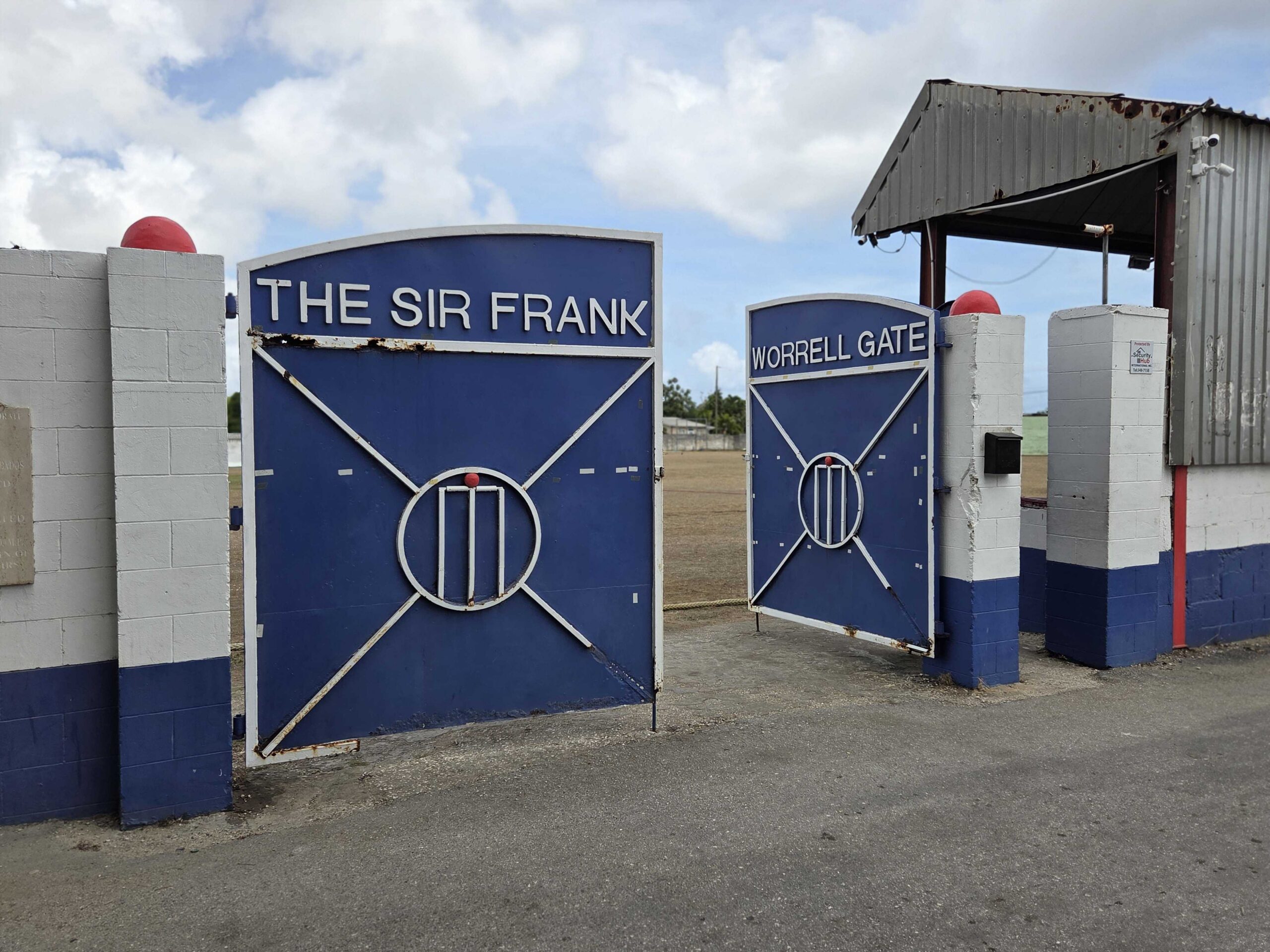
    From Bay Land, the project will expand to the eastern edge of the Empire Cricket Club ground, where the former family home of Sir Frank Worrell stands. Worrell made history as the first Black man to serve as full-time captain of the West Indies cricket team, cementing his legacy as a trailblazer both in sport and in breaking racial barriers in international athletics. To deliver a restoration that honors both properties’ history and structural integrity, the Ministry will partner closely with the Barbados National Trust, ensuring the landmarks are protected for future generations of Barbadians and cricket fans worldwide.

    For locals who have grown up alongside these historic sites and shared neighborhoods with the legends before they rose to global fame, the government’s plan is a long-overdue recognition of the community’s deep connection to Sobers and Worrell. Eudine Miller, who lived next door to Sobers as a child, said she could not be happier with the designation, arguing the honor should have been granted decades ago. “They should have done this ever since,” Miller said, reflecting on her childhood memories of the young cricket prodigy. “Fun, loving, loving family, yeah, kind. That’s how I remember him: playing cricket, a lot of cricket. He was a friendly guy.” Miller added that she hopes the heritage designation will pave the way for local authorities to rename the street where Sobers grew up in his honor, a change many local residents have long supported.

    Michael Welch, a lifelong resident of Walcott Avenue, framed the initiative as more than just a preservation project – he called it a critical investment in inspiring Barbados’ next generation. By making Sobers’ childhood home a public landmark, Welch argued, young people will have a tangible, accessible example of how talent and hard work from a small Barbadian neighborhood can change global sport. “I feel that’s a good movement, that’s a good movement because he is a big builder for a lot of people to follow him in cricket and stuff,” Welch explained. “Not only cricket, but sports. It gives the youngsters something to do instead of just being on the block and stuff like that. It was using him with encouragement. A lot of people love him; he was a well-loved person.”

    The plan to preserve Worrell’s former home has also earned strong support from the property’s current caretaker, even as formal planning details remain in early stages. For years, the home – which once had an official commemorative plaque that has since fallen off – has been an unassuming draw for cricket tourism from across the globe. Even locals who do not follow cricket closely acknowledge the undeniable impact of Worrell’s legacy. “I ain’t really a cricket fan, but the contribution—he deserves it. So that’s as far as I could go with that,” local resident Gregory said of the late legend.

    Rodney Bushell, a member of the Belle family who currently maintains the property and has historical ties to the Worrell estate, moved into the home after it sat vacant for years following renovations ahead of the 2007 Cricket World Cup. Bushell noted that formal discussions with the Barbados Cricket Association and housing authorities have moved slowly, but he welcomes the prospect of protecting the site for future generations. While he clarified that all formal decisions about the property’s future must be approved by his cousin, who manages the Worrell estate, Bushell said he is fully open to opening the home to cricket fans to experience its unique history.
  • Barbados President retires ‘Lieutenant Colonel’ from official title

    Barbados President retires ‘Lieutenant Colonel’ from official title

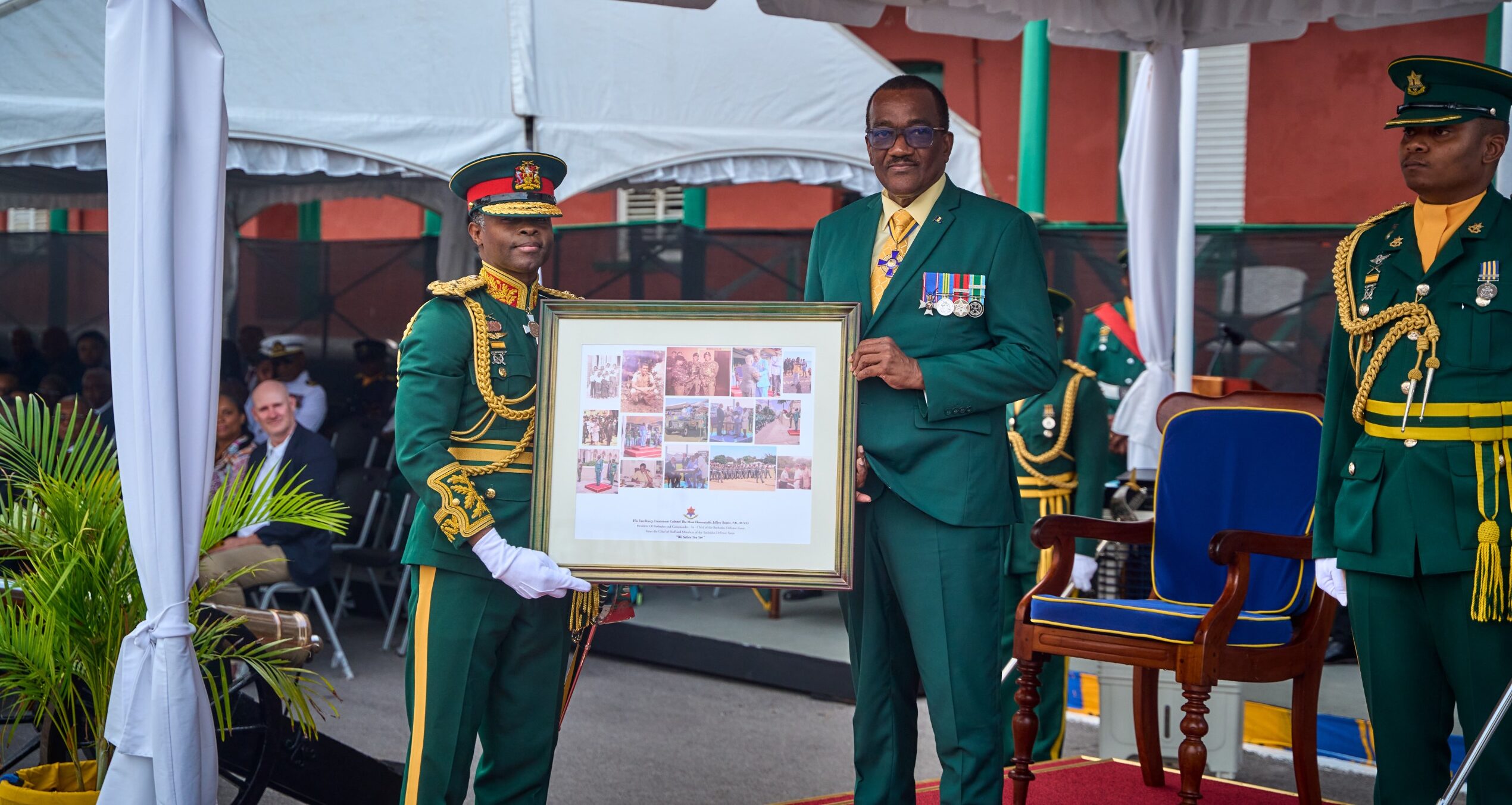
    In a symbolic announcement made Saturday during the first-ever Commander-in-Chief Parade at St Ann’s Fort in The Garrison, Barbados President Jeffrey Bostic has declared he will remove his long-held military rank of Lieutenant Colonel from all official titles, stepping into his new role as the nation’s head of state under the honorific “The Most Honourable Jeffrey Bostic”.

    Bostic, who spent 26 years in service with the Barbados Defence Force (BDF), opened up about his decades-long connection to the national military and the deep pride he has carried for the rank he earned through his years of active duty. Even after transitioning to a career in politics, Bostic intentionally chose to keep his military title as a deliberate statement of what the BDF is capable of contributing to the nation, and to inspire currently serving troops to realize their own professional and personal potential within the force.

    “Barbados had to understand what this force is capable of doing and who this force is capable of producing,” Bostic told the gathered service members. “It was supposed to be an inspiration to each and every one of you in uniform serving this force to understand what this force can do for you and what you can do for this force and this country.”

    Now that Bostic has risen to the highest constitutional office in Barbados, the president says this career milestone marks a natural turning point to step away from his former military designation. “I’ve reached this point in my journey, this destination, this office of the president of this country and your commander-in-chief, and I’ve now determined that this is the time… that from my official title I will drop the lieutenant colonel,” he explained.

    In a lighthearted aside, Bostic joked that combining his military rank and presidential honorific often created unnecessary confusion for event hosts tasked with introducing him at official engagements. “From now, I am very happy to be The Most Honourable Jeffrey Bostic,” he added.

    Beyond the announcement about his title change, Bostic used the platform of the inaugural parade to encourage all BDF members to hold fast to the institution’s proud history and its far-reaching contributions to Barbados and neighboring Caribbean nations, especially through periods of national and regional crisis. “You are inheritors of the BDF, and the BDF is your inheritance,” he told assembled troops. “It built me, it sustained me for 26 years, and today it honours me with this command.”

    Looking back on his years of active service, the president reaffirmed his enduring pride in the fellow service members he served alongside, and pledged to continue supporting all BDF personnel in his current constitutional role as the nation’s Commander-in-Chief. “Together we will guard this inheritance for Barbados and for those who come after us,” Bostic said, closing his remarks with a blessing for the force, its cadet program, service members’ families and the entire nation of Barbados.

  • Three choirs unite for charity concert at St  Mary’s Anglican Church

    Three choirs unite for charity concert at St  Mary’s Anglican Church

    Barbados’ vibrant choral scene is set to deliver a one-of-a-kind collaborative performance this June, as three of the island’s most respected vocal ensembles team up for a special fundraising concert that blends world-class musical talent with community-focused good works. Scheduled for Sunday, June 7 at 6 p.m. at St Mary’s Anglican Church in the capital city of Bridgetown, the event, branded *We Have a Gospel to Proclaim*, will bring together the St Mary’s Augmented Choir, The Clarion Singers, and The Myriad Singers of Barbados for a night of moving, inspirational music, capped off by a joint performance from a combined mass choir made up of singers from all three groups.

    Each ensemble brings its own artistic direction to the collaborative project: Akhanni Drakes leads the St Mary’s Augmented Choir, Derek Marshall helms The Clarion Singers, and John Bryan directs The Myriad Singers of Barbados. Beyond the featured vocal performances, attendees will also enjoy live instrumental accompaniment from a roster of accomplished local musical groups, including the 441 Clarinet Ensemble, the Barbados String Quartet, and trumpeters from the esteemed Barbados Defence Force Band.

    All proceeds generated from the concert will go directly to two high-impact community causes: the Barbados Cancer Society, which supports residents impacted by the disease, and the St. Mary’s Church Roof Restoration Project, which preserves the historic Bridgetown place of worship. The concept for the cross-ensemble concert grew out of a years-long shared goal among the three choir directors, who have long hoped to combine their talents to deliver both exceptional music and tangible public benefit.

    “We have wanted to bring our choirs together for some time, and we felt this was the right moment to make it happen,” explained Derek Marshall, director of The Clarion Singers. “Beyond presenting excellent choral music, we wanted the concert to serve a greater purpose. By supporting both the Barbados Cancer Society and the restoration of St Mary’s Church, we hope to demonstrate how music can unite people around causes that matter. We also see this festival as the beginning of many future collaborations involving even more musicians and charitable initiatives.”

    Attendees can look forward to a curated program of sacred and uplifting vocal music, featuring individual sets from each participating choir before the evening builds to the grand mass choir performance that showcases the emotional power and harmonic beauty of hundreds of collective voices. Event organizers have expressed hope that this concert will lay the groundwork for a lasting new tradition of cross-ensemble collaboration across Barbados’ music community, creating ongoing opportunities to support local nonprofits and community improvement projects.

    Tickets for the event are priced at $50 BBD and can be purchased directly from any member of the three participating choirs. Organizers have urged music lovers and community supporters to secure their tickets early, noting that this event marks just the first in a planned series of collaborative musical and charitable ventures across the island’s arts sector.

  • Young entrepreneur starts new business venture

    Young entrepreneur starts new business venture

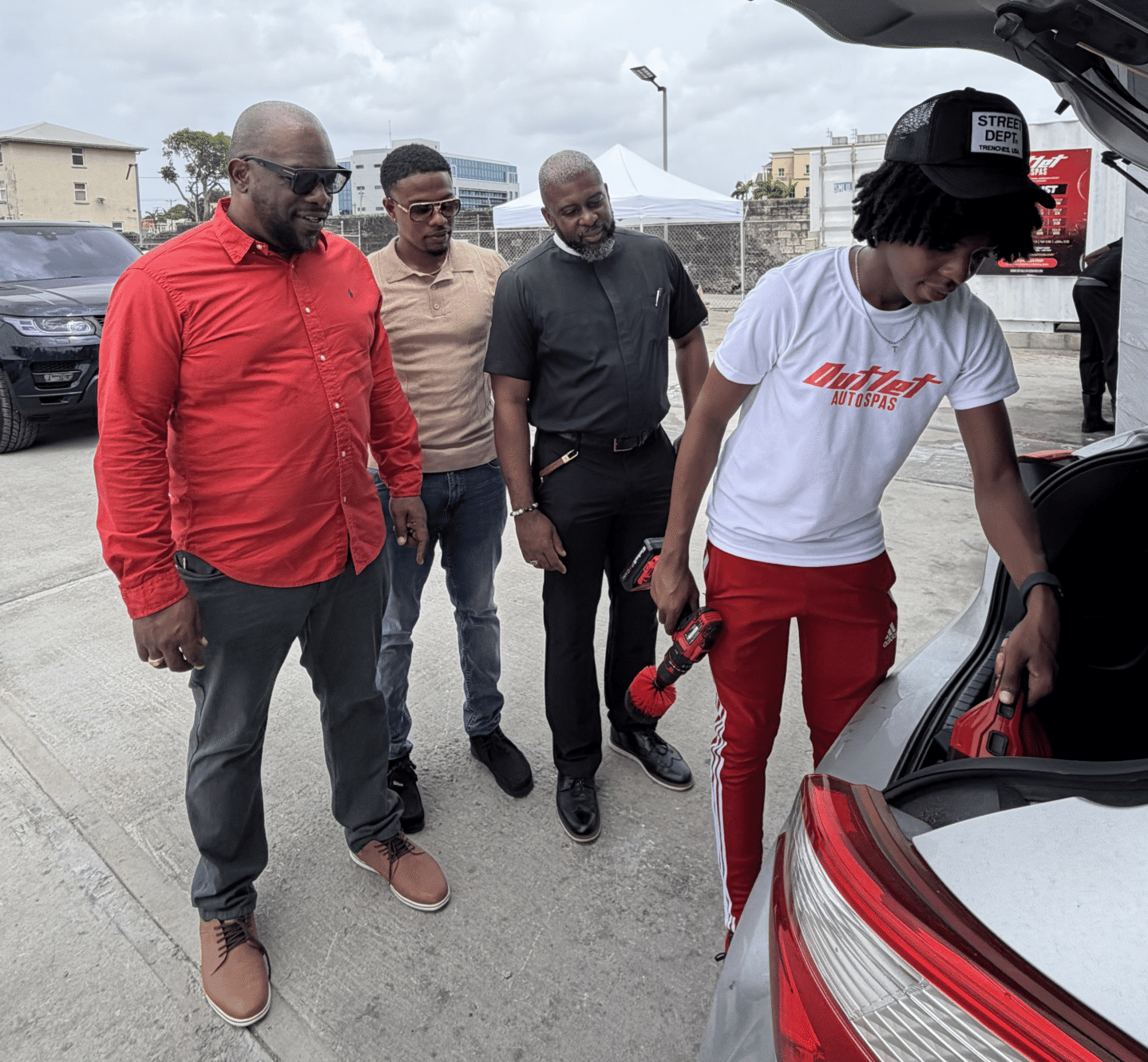
    After years of quiet planning and overcoming multiple startup barriers, acclaimed Barbadian entrepreneur Tyrique Wilson — founder of the widely successful 2020 Carrington’s Rum Cream brand — has broadened his business holdings with the official launch of Outlet Auto Spas. The new vehicle valeting and professional car detailing facility is located at the Sugar Cane Mall car park in Bridgetown, and opened its doors to customers for the first time this past Saturday, marking the fulfillment of a personal and professional goal Wilson has held since his youth.

    Speaking at the facility’s grand opening ceremony, Wilson detailed the long journey that led to the new venture, noting that six weeks of intensive hands-on preparation preceded the opening. “It’s our very first day opening after six weeks of preparation, getting all the equipment, getting all the bookings, getting the marketing out there, and finally we’re here,” he shared.

    The idea of launching a car wash and auto care business first took root when Wilson was still a secondary school student, but unforeseen financial and logistical obstacles put his plans on hold for years. “Car wash businesses have always spoken to me. From the time I was in secondary school, I wanted to start a car wash, but the barriers to entry are a bit higher in terms of getting the canopy done, getting cement done and getting all the equipment,” Wilson explained. “I’m so happy that I’m finally able to do it now after years of wanting to do it and weeks of preparing to get it done.”

    While Wilson smoothly built Carrington’s Rum Cream into a successful brand, he openly acknowledged that launching the brick-and-mortar auto spa came with far greater challenges. “It was extremely difficult, I’m not going to lie,” he said. “Because it’s a car wash business and has a physical location, there are so many moving parts that you have to pay attention to, whether that be organising bookings, making sure you have the correct equipment or ensuring the water drains out properly.”

    The opening ceremony drew a number of prominent local figures, including Barbadian Senators Gregory Nicholls and Shane Archer. Senator Nicholls, who first met Wilson during Wilson’s time as a law student, praised the young founder’s persistence and commitment to entrepreneurship, framing the new business as a powerful example of what young Barbadian creators can achieve with opportunity. “I remember him as a law student in the faculty. He’s actually a brilliant legal mind,” Nicholls said, recalling that Wilson previously supported him with constitutional research work. “To see him here, opening his second business, is really a testament that young people have a lot of talent. Once we give them the opportunities, they will rise to the top and reach for the stars.”

    Nicholls also commended Wilson for his choice to pause his legal career to pursue his entrepreneurial goals, noting that stepping away from a established academic path was a risky, high-stakes decision — one that has already paid off with impressive tangible results.

  • Push against junk food marketing to curb childhood obesity

    Push against junk food marketing to curb childhood obesity

    Public health advocates from Barbados are sounding a urgent alarm over a growing public health crisis across the Caribbean: rising childhood obesity fueled by skyrocketing consumption of ultra-processed foods, driven by predatory marketing targeted at young people inside school campuses.

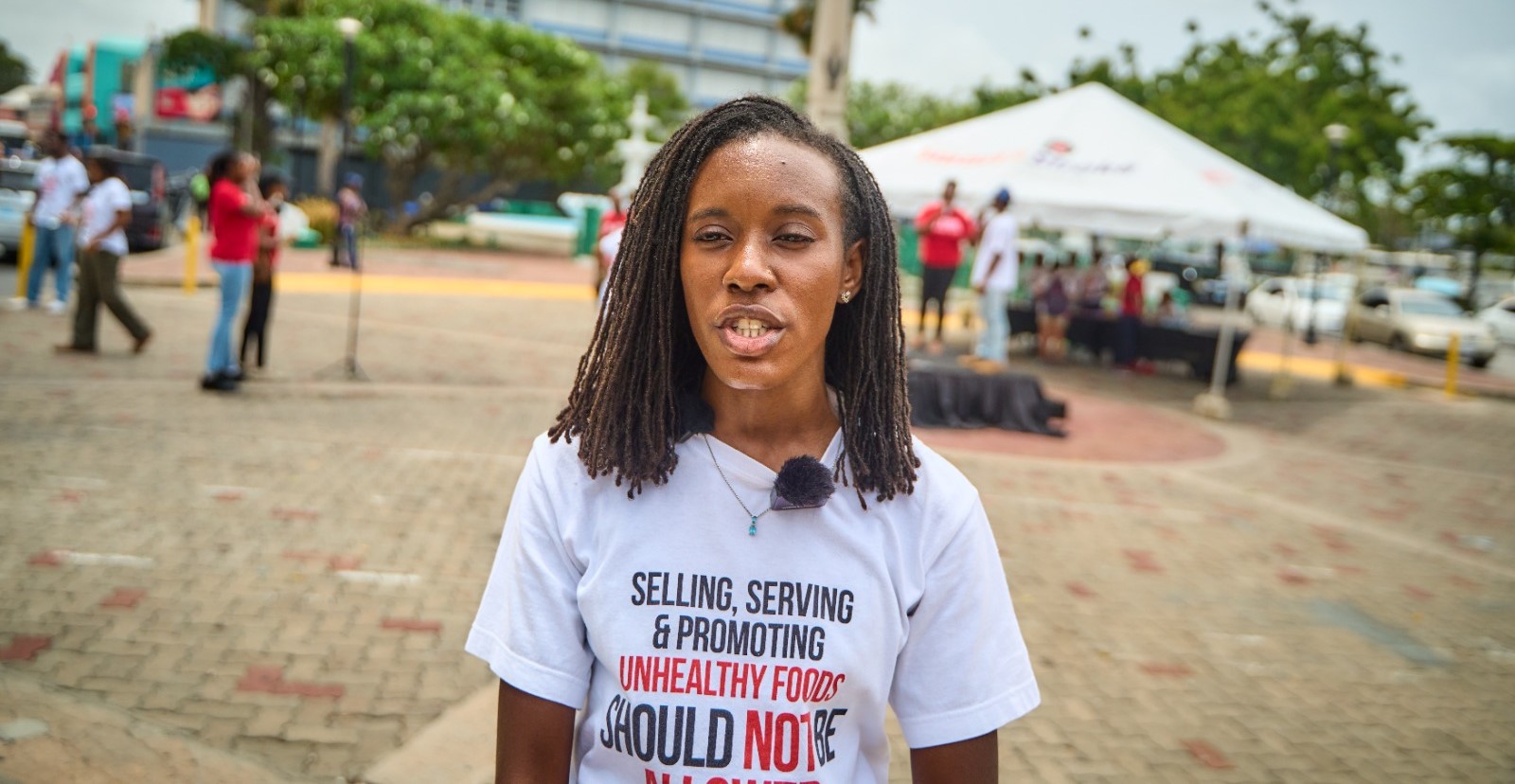
    Kabira Foster, Youth Advocacy Officer with the Heart & Stroke Foundation of Barbados, shared the warning on the sidelines of the third annual Hope for the Future event, held Saturday in Bridgetown’s National Heroes Square. The gathering, a core component of the foundation’s ongoing Make It Make Sense 2.0 public health campaign, was organized to shine a spotlight on predatory advertising of unhealthy food and drinks to children and push for systemic changes to create healthier learning environments across the island’s schools.

    Decades of public outreach have worked to embed healthier eating habits among young Barbadians, but aggressive industry marketing continues to undermine progress, Foster explained. The foundation’s core mission is to guarantee schools remain safe, supportive spaces where children can learn, grow and develop long-term healthy habits—and junk food marketing is actively eroding that goal.

    “The root of this issue is the steady infiltration of marketing for these unhealthy food and beverage products on school grounds,” Foster said in an interview with Barbados TODAY. “We are seeing a sharp uptick in consumption of these ultra-processed items, and that is directly driving the increase in childhood obesity rates we are observing right here in Barbados, and across the entire Caribbean region.”

    The Hope for the Future initiative was launched shortly after the Barbados government implemented its landmark School Nutrition Policy in 2023. The first gathering brought together a cross-sector group of stakeholders: student representatives, national policymakers, school canteen operators, and public health advocates, to map out pathways for building nutritious, supportive food environments for school-age children. Last year’s event built on that foundation, and this year’s iteration shifted focus to the specific, underaddressed threat of junk food marketing within school campuses.

    “Hope for the Future 3.0 centers specifically on the threat of unhealthy food and beverage marketing in our schools, and the urgent need for restrictions on this advertising to protect children from the well-documented harms of poor dietary habits,” Foster noted.

    Throughout the day of the event, organizers ran hands-on public engagement activities and one-on-one interviews with attendees, to measure public attitudes toward junk food advertising and better understand how marketing shapes children’s current eating habits.

    “We’ve had incredibly productive conversations and engagement with members of the public, who were easily able to name the specific marketing tactics brands use within school walls to lure children and push them to consume more of these unhealthy products,” Foster said. Organizers are also collecting public input on policy and community measures that could be put in place to rein in predatory marketing and make it easier for young people to choose nutritious options.

    The campaign builds on global public health research that links exposure to junk food marketing in childhood to long-term higher rates of obesity, heart disease, and type 2 diabetes, conditions that place growing strain on public health systems across small island developing states like Barbados.

  • Light & Power warns customers to isolate renewable systems ahead of storms

    Light & Power warns customers to isolate renewable systems ahead of storms

    As the Caribbean island nation of Barbados accelerates its preparations for the annual Atlantic hurricane season, the country’s main power provider Barbados Light & Power (BL&P) has issued a critical public safety alert, highlighting the life-threatening risks that improperly installed or unregulated solar energy systems and backup generators pose to line crews working to restore power after storm-related outages.

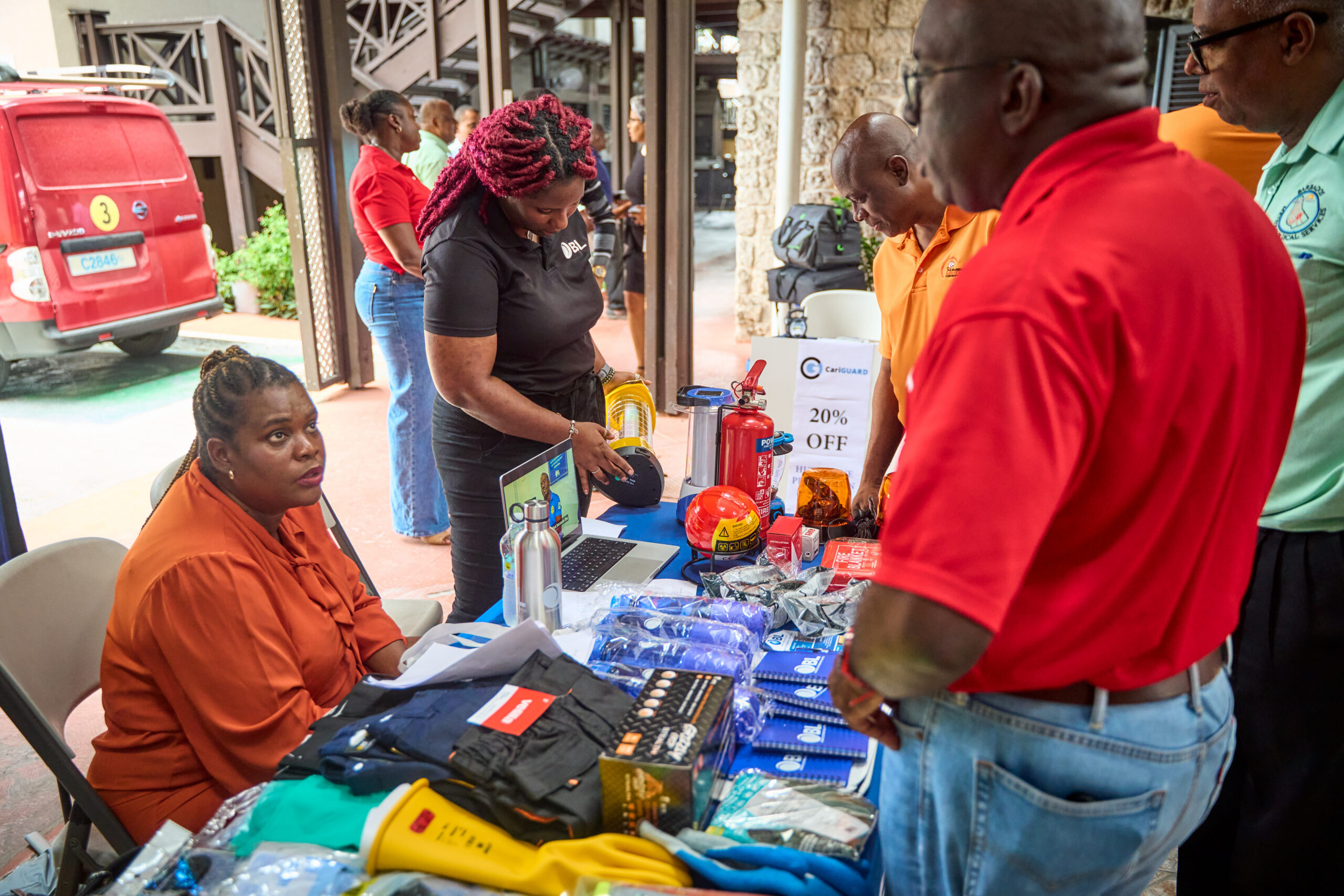
    The warning was delivered by BL&P’s Renewable Energy Business Unit Manager Robert Harewood during a hurricane preparedness exposition and press briefing held Friday at the utility’s Garrison Hill headquarters in St. Michael. The event brought together representatives from the Barbados Meteorological Service and multiple relevant stakeholders to educate utility workers and the public on proactive risk mitigation for the coming storm cycle.

    Currently, around 3,500 BL&P customers have grid-tied private renewable energy systems installed at their properties, a number that reflects the island’s growing transition to clean energy – but also makes this safety reminder all the more urgent, Harewood emphasized. He explained that post-hurricane power restoration efforts are already notoriously dangerous work, as crews navigate chaotic landscapes filled with downed poles, tangled fallen wires, and damaged infrastructure that can obscure system connections. When private renewable energy sources remain connected to the grid, they can keep power flowing through lines that crews assume are fully de-energized, creating unseen shock hazards that put first responders’ lives at severe risk.

    “In the past, especially during restoration, it’s a difficult time because you have poles down, you have wires on the ground as well,” Harewood said. “Sometimes when the guys go to restore, it’s not always easy to understand what is connected where because of the chaos out in the field.” He added that even with careful pre-work checks, unmarked private systems can lead to unexpected danger: “In the effort to get customers back on, sometimes it’s possible that our crew could go and work on a line and be impacted by power from a renewable system that they may not have realised was there.”

    Harewood noted that properly permitted, BL&P-approved renewable energy installations are required to include a dedicated manual isolation switch that allows homeowners to disconnect their private system from the public grid before a storm makes landfall. He urged all customers with grid-tied solar systems to activate this safety switch whenever a severe weather event is forecast, as a straightforward precaution to protect responding crews.

    However, the manager voiced growing concern over unregistered renewable energy systems that have been connected to the grid without BL&P’s knowledge or oversight, many of which lack the mandatory isolation switches and other required safety features. “We’ve realised in recent times there’s some customers that have renewable systems without our knowledge, and they may not have that isolation switch,” he said.

    While most grid-tied solar systems are engineered with an automatic shutdown feature that disconnects them from the grid when public power goes out, Harewood stressed that this automatic safeguard is not infallible. Equipment damage from storm surge, wind, or debris can cause the mechanism to fail, leaving dangerous live power flowing through public lines.

    The safety warning also extends to improperly connected backup generators, which carry many of the same risks for utility crews. Harewood advised homeowners to always verify that all private power equipment is safely disconnected before a storm, and to consult a certified professional to inspect installations after a storm passes if there is any uncertainty about their safety and connection status. “Otherwise, you really should contact your installer, whoever installed the renewable system, to have it checked and make sure that everything is okay,” he added.

  • Young people seek a bigger role in climate decisions

    Young people seek a bigger role in climate decisions

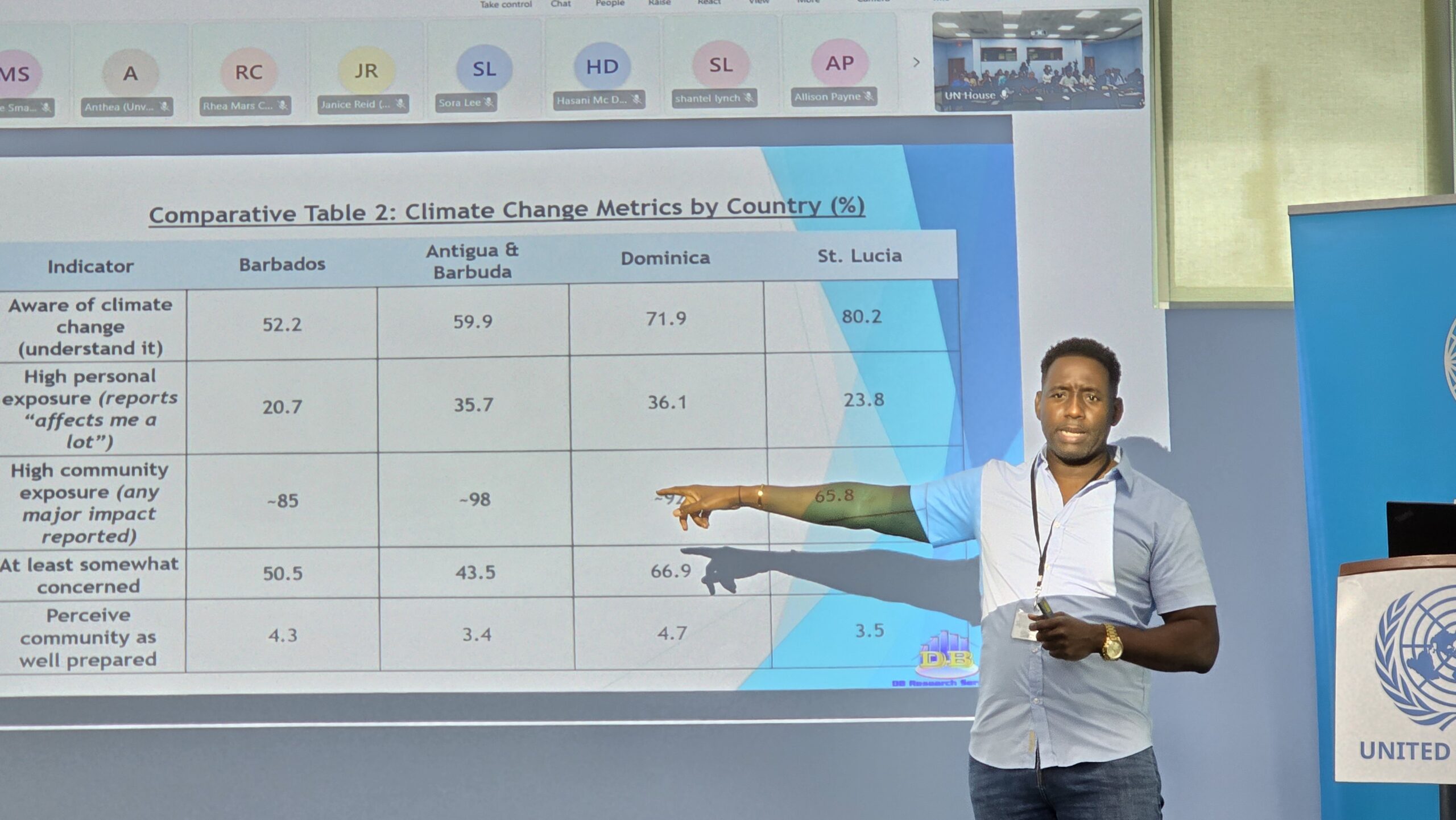
    On the occasion of World Environment Day, new findings from a UNICEF-commissioned survey have laid bare a critical disconnect across the Eastern Caribbean: while a large share of the region’s young people are passionate about building careers in the fast-growing green and circular economy, deep gaps in accessible information, skills training, and open opportunities are keeping them from turning that ambition into action. The survey, carried out in 2023 across four island nations – Barbados, Antigua and Barbuda, Dominica, and Saint Lucia – was formally presented at the UN House in Bridgetown, with its full report titled *Young People’s Knowledge, Attitudes and Practices on Climate Change and Green and Circular Economies in the Eastern Caribbean*. Research organizers confirmed that while the overwhelming majority of respondents demonstrated clear awareness of climate change and a strong desire to contribute to regional climate solutions, multiple structural barriers continue to block their entry into green career paths. “The most encouraging takeaway from this work is that young people are already ready to be part of the solution,” explained Maryam Abdu, UNICEF’s acting representative for Barbados and the Eastern Caribbean, during the presentation of findings. “So many are actively seeking green jobs and specialized training, but systemic hurdles stand in their way. The largest gap by far is accessible information – and information is power, especially in today’s fast-moving digital era. Beyond that, many young people report that training programs and open job roles are out of reach, with opportunities feeling unevenly distributed and nearly inaccessible for most.” The study’s results also underscored a widespread demand among youth for greater inclusion in climate policy decision-making, as well as targeted support to smooth their transition into green and circular economy roles. Abdu called on regional stakeholders to ramp up investment in youth development and meaningful inclusion, arguing that meaningful climate action cannot succeed without centering young people. “When we expand access to information, training, and new opportunities, that also means young people deserve a seat at the table, not just a chance to be consulted,” she said. “You are not just the future – you are the leaders of today. This work is not just about sharing data; it is about taking collective action.” Abdu added that the study’s findings should serve as a roadmap for policy updates and program rollout across every Eastern Caribbean nation. “Let us use these insights to first improve our policy frameworks, then strengthen programs that directly support young people and address climate impacts,” she noted. “We need to tear down the barriers holding them back and build tangible, accessible opportunities for Caribbean youth. If we want young people to succeed – and we absolutely do – we have to make sure the skills they learn align with the jobs of the future.” Brian Bogart, country leader for the World Food Programme (WFP) in the region, echoed Abdu’s remarks, noting that young people across the Caribbean are already informed, engaged, and prepared to contribute to climate action – but regional institutions have not kept pace with their ambitions. “Across the region, the United Nations is growing a portfolio of youth-focused initiatives tied to climate action and the transition to circular, blue, and green economies,” Bogart explained. “In Barbados alone, young leaders are already actively involved in national climate policy processes, contributing directly to national climate plans and national climate financing frameworks. Climate action summits have also created critical spaces for meaningful youth participation. Through programs like the Green Rising initiative, our goal is to equip more than 5,000 young people with the core skills needed for green and blue economy careers, while supporting youth-led innovation and entrepreneurship.” Even with this expanding support, Bogart emphasized that long-standing structural barriers continue to limit full youth participation in the green economy. He stressed that stronger, more intentional connections between education systems, skills training, and employment outlets are urgently needed to close gaps. “This means expanding access to hands-on opportunities: apprenticeships, internships, and certification programs that deliver real-world experience and open doors to long-term careers,” he said. “It also requires making information about these opportunities clear, accessible, and co-designed with young people themselves. Young people are not just asking to be told what opportunities exist – they are asking to be included, to be equipped with the skills they need, and to play a meaningful role in shaping their own futures.” Michele Small-Bartley, CARICOM’s Programme Manager for Youth Development, noted that the regional bloc’s updated CARICOM Youth Development Action Plan already provides a strong foundational framework for advancing youth participation and climate resilience across all member states. “This plan calls for greater coordination, more inclusive processes, and an evidence-based approach to youth development across the region,” she explained. “It prioritizes youth participation, employability, leadership, resilience, well-being, and institutional strengthening – all priorities that align directly with the findings from this UNICEF study. We continue to work closely with member states and partner organizations to build a stronger enabling environment for youth development across the Caribbean.” Small-Bartley added that the study’s findings reinforce the urgent need for more robust systems and accountability mechanisms to support youth entering the green economy. “We are advancing the CARICOM youth development governance structure and a regional youth development index, because we know that good intentions are not enough,” she said. “We need formal systems, we need solid data, we need cross-stakeholder coordination, clear accountability, and structured mechanisms that lift youth voices from just being consulted to being full participants in decision-making and action.” She closed by emphasizing that the goal of regional efforts should not just be to prepare young people to participate in green and circular economies – but to empower them to lead those sectors in the decades ahead.

  • St George Sec student tops national letter writing contest

    St George Sec student tops national letter writing contest

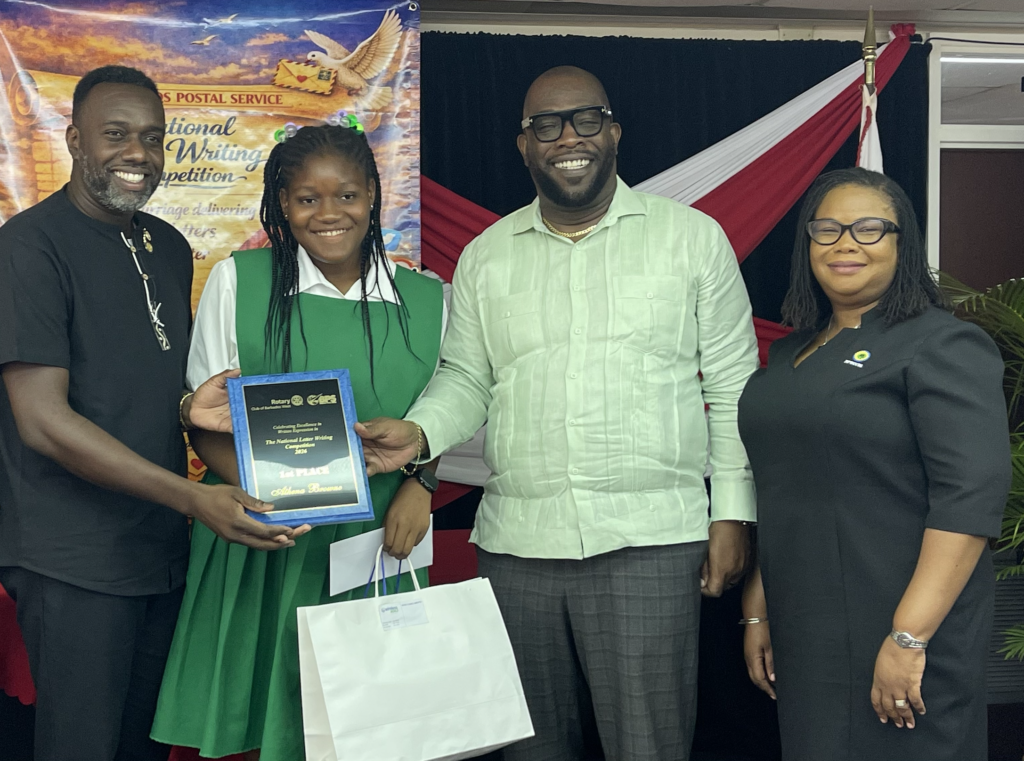
    On a celebratory Friday held at Bridgetown’s Cheapside General Post Office, 16-year-old Athena Browne, a second-form student from St George Secondary School, walked away with the top prize at the annual Barbados Postal Service National Letter Writing Competition. Her thoughtful entry, which explored the enduring value of in-person human connection amid an increasingly digitized communication landscape, captured the full attention of judging panel and secured her first place. Following Browne in the rankings were Knela Walcott of Harrison College, who took second place, and Olivia Dean of The Alleyne School, who claimed third. A special honor was also extended to 9-year-old Xachary Haywood of St Mark’s Primary School, recognized as the competition’s youngest participating competitor. In post-award remarks, Browne shared that joining the contest was a deliberate step to hone her written communication skills, marking not her first attempt at competitive writing. When describing the creative spark behind her winning work, she explained that she framed her letter as a casual conversation with a close friend who had relocated abroad, centering the narrative on how digital tools can complement, rather than replace, genuine human connection. Browne went on to encourage other young Barbadians to lean into writing-based activities, noting that strong writing proficiency opens doors to a wide range of creative and professional career paths from poetry to narrative storytelling. Addressing the gathered attendees, Minister of Home Affairs and Information Gregory Nicholls emphasized that the annual competition extends far beyond simply distributing awards to top performers. “Today we are not just handing out trophies—we are lifting up the voices, celebrating the intellect, imagination, ambition, vision and untapped potential of Barbados’ next generation,” Nicholls told the crowd. He stressed that this year’s theme, “Why Human Connection Matters in a Digital Age,” struck a particularly resonant chord at a moment when technology has become the default mode for most daily communication. Unlike quick digital messages, Nicholls noted, traditional letter writing demands intentional thought, genuine empathy, sincere expression and quiet self-reflection, making it one of the most meaningful forms of communication ever created. “Your words matter, your ideas matter, and your contribution to building the future of Barbados matters most of all,” he said, urging all participants to continue nurturing their writing talents. Barbados Postmaster General Joann Busby added context to the long-running competition, revealing that the Barbados Postal Service has partnered with the Universal Postal Union (UPU) to bring the international contest’s national round to the island’s youth for nearly 20 consecutive years. “This year’s call for young writers to explore the importance of human connection in a digital world could not have been timelier,” Busby said. While she acknowledged that modern technology has revolutionized communication by allowing instant contact across long distances, she stressed that digital platforms are unable to fully replicate the empathy, understanding, warmth and depth of in-person interaction built around shared experience. “A handwritten or carefully crafted letter demands intentionality, effort and unique personal expression that cannot be replicated by a 280-character tweet or a quick text message,” she added. For the competition’s youngest honoree, 9-year-old Haywood, the draw of the event was simple: writing is fun, and participation brings its own rewards. When asked what inspired his entry, he shared that his work also centered on the value of human connection, and he joined simply because he was excited to test his skills. His advice to other young prospective writers is straightforward: “Writing is fun and you will win a prize for writing.” Haywood’s mother Natasha shared that her son had been thrilled from the day his school told him about the competition. He poured hours of work into his letter, with extra support from his teachers, and could hardly contain his excitement, jumping for joy, when he learned he would receive special recognition at the ceremony. Natasha Haywood urged fellow parents to prioritize their children’s creative growth, saying “The best thing we can do is encourage our kids to keep reading, keep writing, and stand by them every step of the way.” Organized annually by the Barbados Postal Service in partnership with the Universal Postal Union, the competition was created to foster core skills among the nation’s youth: literacy, creative thinking, independent research and intentional communication that connects people across divides. Now in its 20th year, the event continues to draw hundreds of young participants from across the country’s primary and secondary schools.

  • Heritage minister: Writing surge would close cultural, educational gaps

    Heritage minister: Writing surge would close cultural, educational gaps

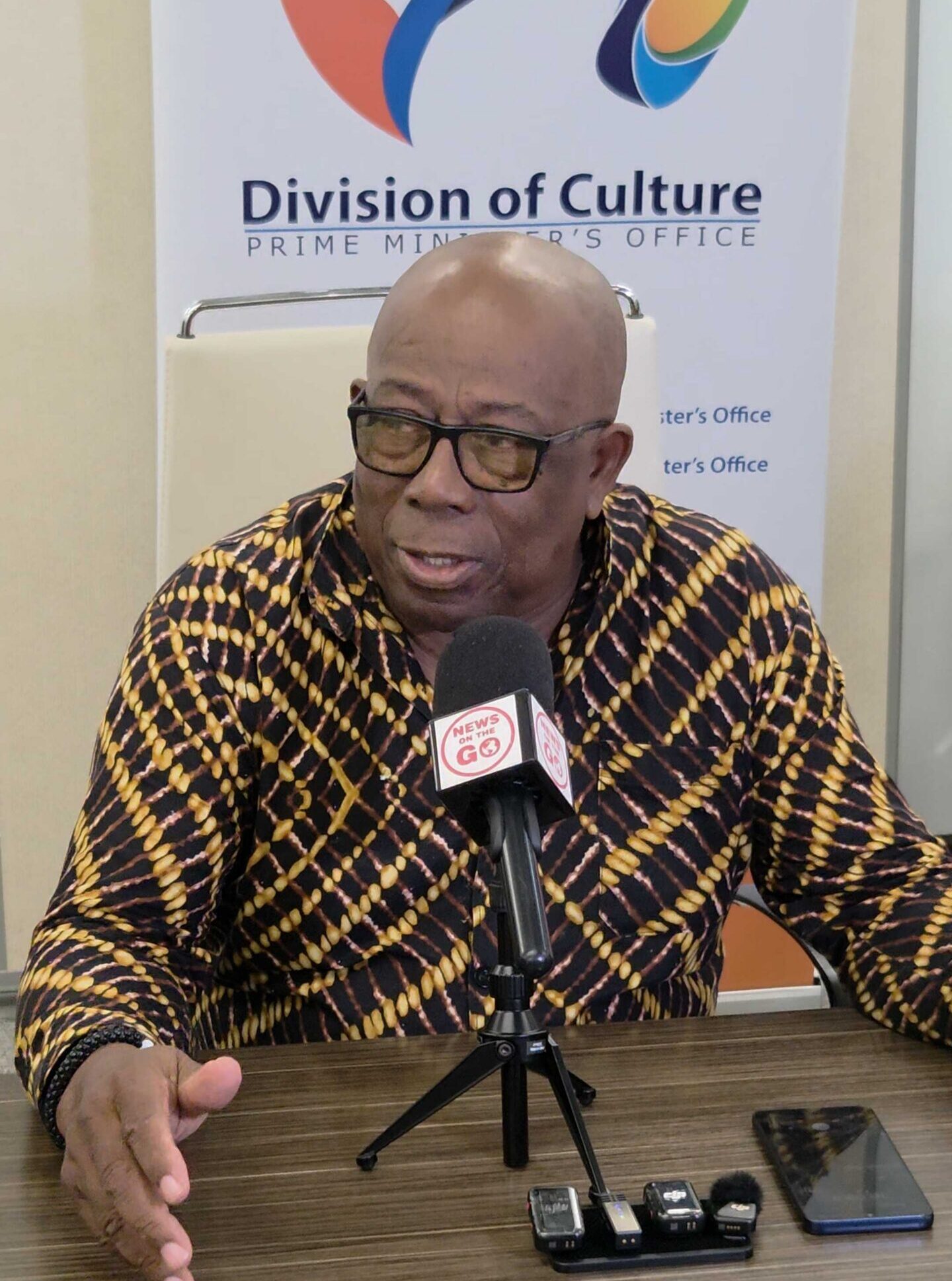
    At the launch of a new writing competition tied to Barbados’ annual Season of Emancipation, the country’s Minister of Pan-African Affairs and Heritage Trevor Prescod has issued a pressing call to action, warning that the nation faces a critical shortage of homegrown writers whose work is essential to protecting Barbados’ unique cultural identity and driving inclusive national development. Prescod framed the literary sector as a dangerously underrepresented pillar in the ongoing regional movement to preserve indigenous Caribbean heritage, noting that the current gap in locally produced content threatens to erode connection to national history among younger generations.

    Highlighting that the dearth of Barbadian literature stretches across educational and popular spaces, Prescod appealed to both aspiring and established writers to reimagine their craft not just as a creative passion, but as a legitimate cultural responsibility and scalable economic enterprise. “What this country needs is writers,” he emphasized during the event. “Not just occasional articles or hobbyist work — we need original, Barbadian-centered content built as a sustainable business. That requires the same entrepreneurial drive and strategic skill that any other industry demands.”

    The writing contest, organized to address this gap, offers a top prize of $20,000, with submissions open to interested creators through the end of July. This year’s competition centers on the legacy of iconic pan-Africanist leader Marcus Garvey, a trailblazer in Black self-determination who established his own newspapers in the 1920s despite never completing formal secondary or university education. Prescod pointed to Garvey’s legacy of self-publishing and independent media ownership as a critical historical example for contemporary Barbadian creators, arguing that modern writers must channel Garvey’s same initiative to package, publish, and distribute their work to global audiences.

    Prescod made clear that the demand for local content extends far beyond general literature: educational spaces across the nation’s primary and secondary schools currently rely heavily on imported texts, which leave many young learners disconnected from their own heritage. He shared startling observations from conversations with library officials, noting that too many Barbadian children cannot name the country’s national heroes, nor do they have familiar, accessible cultural references that reflect their own lived experiences. “Even some children do not even know who our national heroes are. They don’t have a mental construct of what they look like,” Prescod said. “Our primary and secondary education systems need books created for our students, by people who share our context.”

    He challenged local authors to develop and commercialize accessible educational and historical works rooted in Caribbean and Barbadian realities. Such content, he argued, would do more than fill a gap in curricula: it would foster strong cultural identity and inspire ambition among young readers, who would see themselves and their potential reflected in local stories. “I don’t see why some of us cannot prepare small books so that our children can see examples of our own talent, mirror the content they read every day, and be able to say, ‘I want to be like A, B, or C’ — a Caribbean, Barbadian figure,” he explained. “Society is starving for that kind of representation.”

    Prescod confirmed that the Barbadian government, through the Office of Pan-African Affairs and Heritage, is prepared to support writers and cultural creators as they work to turn their intellectual property into long-term, sustainable businesses, framing investment in local literature as an investment in the nation’s future.

  • Early intervention key to tackling gang crime, Lashley says

    Early intervention key to tackling gang crime, Lashley says

    Barbados is pushing forward with sweeping new anti-crime legislation aimed at curbing a recent surge in gang-related violence, youth offending, and firearm-related crime, with the country’s top legal affairs official emphasizing that early, broad-based social support must be at the heart of long-term crime prevention efforts.

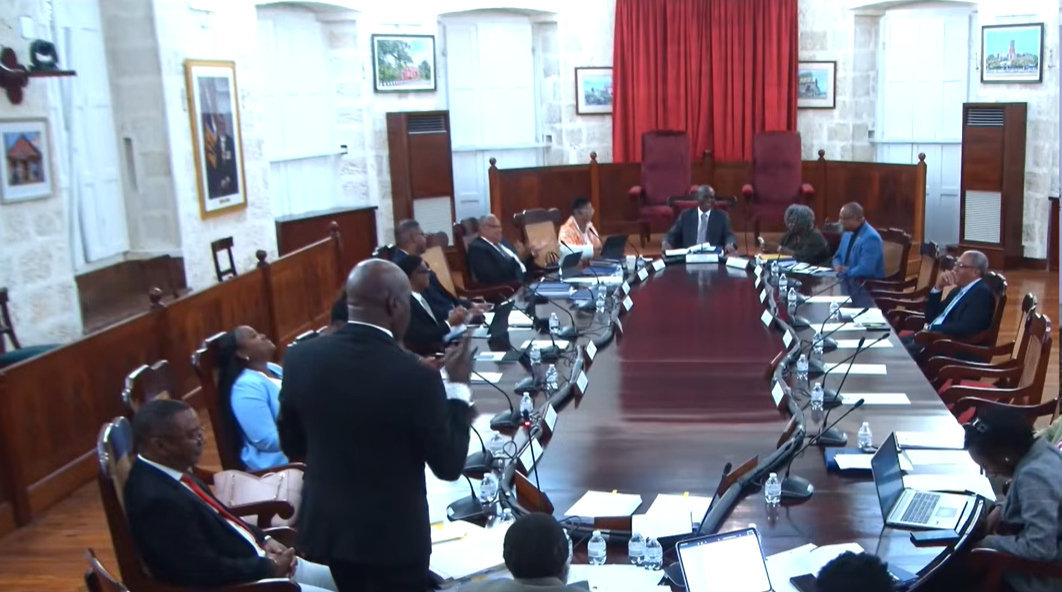
    Minister of Legal Affairs and Criminal Justice Michael Lashley presented the Criminal Gangs (Prevention and Control) Bill to the Senate on Friday, marking a historic first under recently revised constitutional rules: Lashley, a member of the lower House of Parliament, became the first minister to appear before the upper legislative chamber to steer major legislation through the cross-chamber process. In his opening address, Lashley framed the bill as a long-overdue landmark that addresses a critical gap in the Caribbean nation’s criminal justice system.

    “There is nothing on our current statute books that specifically addresses gang activity,” Lashley told lawmakers. “No existing criminal legislation in Barbados directly targets criminal gang operations, which is why this bill is so necessary.” The proposed legislation, he explained, will equip law enforcement agencies and public prosecutors with a targeted new legal framework to tackle the growing wave of gang-linked violence, illegal weapons possession, and violent offending that has impacted communities across the country.

    Development of the bill was rooted in extensive public engagement, Lashley noted, with input gathered from a broad range of stakeholders including legal professionals, labor union leaders, and ordinary Barbadian citizens to ensure the legislation balances public safety needs with civil liberties.

    Even as he defended the urgent need for stronger enforcement tools, Lashley – a veteran criminal barrister with decades of experience in the justice system – stressed that new laws alone cannot reverse Barbados’ rising crime trends. Drawing on pre-sentencing reports prepared under the country’s existing Penal System Reform Act, he highlighted a consistent pattern of unaddressed behavioral and social issues that emerge long before young people enter the criminal justice system.

    “Time and again, these reports lay out a clear trail of warning signs dating back to adolescence: 13-year-olds getting into repeated trouble at school, 14-year-olds assaulting educators, 15-year-olds struggling with marijuana dependency, 16-year-olds expelled from the education system entirely,” Lashley said. “What these reports almost never show is any targeted social intervention to step in and help that young person turn their life around.” He added that most files also document deep-seated family instability and other overlapping social disadvantages, making the case for systemic early intervention to divert at-risk youth away from criminal activity before they offend.

    “We have to redesign our crime prevention strategy to center early social intervention as a core pillar,” Lashley argued. “That is the only way we can save young people from becoming entangled in the criminal justice system permanently.”

    Beyond early intervention and new anti-gang legislation, Lashley reiterated his longstanding support for reintroducing a dedicated drug court to Barbados’ justice system, noting that substance abuse is a leading contributing factor to a large share of the country’s offending. “I am a strong advocate for bringing back the drug court, because so many crimes are directly tied to drug dependency,” he said. “Specialized, treatment-focused programs like this deliver meaningful positive outcomes for both offenders and communities.”

    The minister also called for a more holistic approach to social intervention that extends beyond offenders to include crime victims and their families. Unaddressed trauma and unresolved anger from victimization, he warned, can create cycles of retaliation and push more people toward criminal activity. “Social intervention has to be all-encompassing – it must support not just people convicted of crimes, but the families and individuals impacted by harm,” he said.

    Lashley additionally pushed for improved monitoring of offenders who have been released on bail, noting that a small share of individuals reoffend while awaiting trial. He confirmed that the government is moving forward with plans to roll out upgraded monitoring systems in the near future to reduce recidivism risk and protect public safety.

    Friday’s first cross-chamber ministerial appearance follows constitutional amendments approved last December, which eliminated the longstanding rule that restricted ministers to participating in debates only in their home legislative chamber. The change is designed to streamline the legislative process and improve government accountability across both houses of parliament.