标签: Barbados

巴巴多斯

  • Calls for cultural shift as abuse against men rises

    Calls for cultural shift as abuse against men rises

    Across Barbados, a hidden public health and social crisis is quietly unfolding: a rising tide of male domestic abuse survivors are enduring their trauma in silence, blocked from seeking help by deep-seated social stigma, public ridicule, and inconsistent enforcement of existing protections, advocates have warned. This gap in support exposes long-entrenched cultural biases that permeate the island’s justice system, and top stakeholders are now calling for urgent systemic change to address the unmet needs of male victims.

    The issue was brought to center stage during the recent National Consultation on Victims and Victim Support, where Minister of Legal Affairs and Criminal Justice Michael Lashley joined Fabian Sargeant, head of the Men’s Empowerment Network, to push for widespread public education and foundational cultural shifts to tackle the growing problem. Lashley shared a harrowing anecdote from his early career practicing law in the magistrates’ courts that laid bare the severity of public bias against male victims. He recalled a man who appeared in court seeking a protection order, telling the bench he feared for his life – and in response, the entire courtroom erupted in laughter. That mockery did not end when the proceeding adjourned: as the victim stepped out onto the court steps, bystanders continued laughing and pointing at him, Lashley said.

    The minister lamented that this cruel reaction stems from a deep-rooted cultural double standard that has shaped public and institutional attitudes for generations. “We hold this view that men should not need protection either,” Lashley explained, adding that he commended the victim for choosing to pursue legal protection rather than responding with violent retaliation. “He didn’t pick up a rock, a hammer or a stick to strike back at the woman… but that’s how harmful stereotyping works.” Lashley emphasized that every stakeholder across the criminal justice system has a critical part to play in dismantling these harmful biases, noting that legal protections on paper are only effective if they are enforced consistently and fairly.

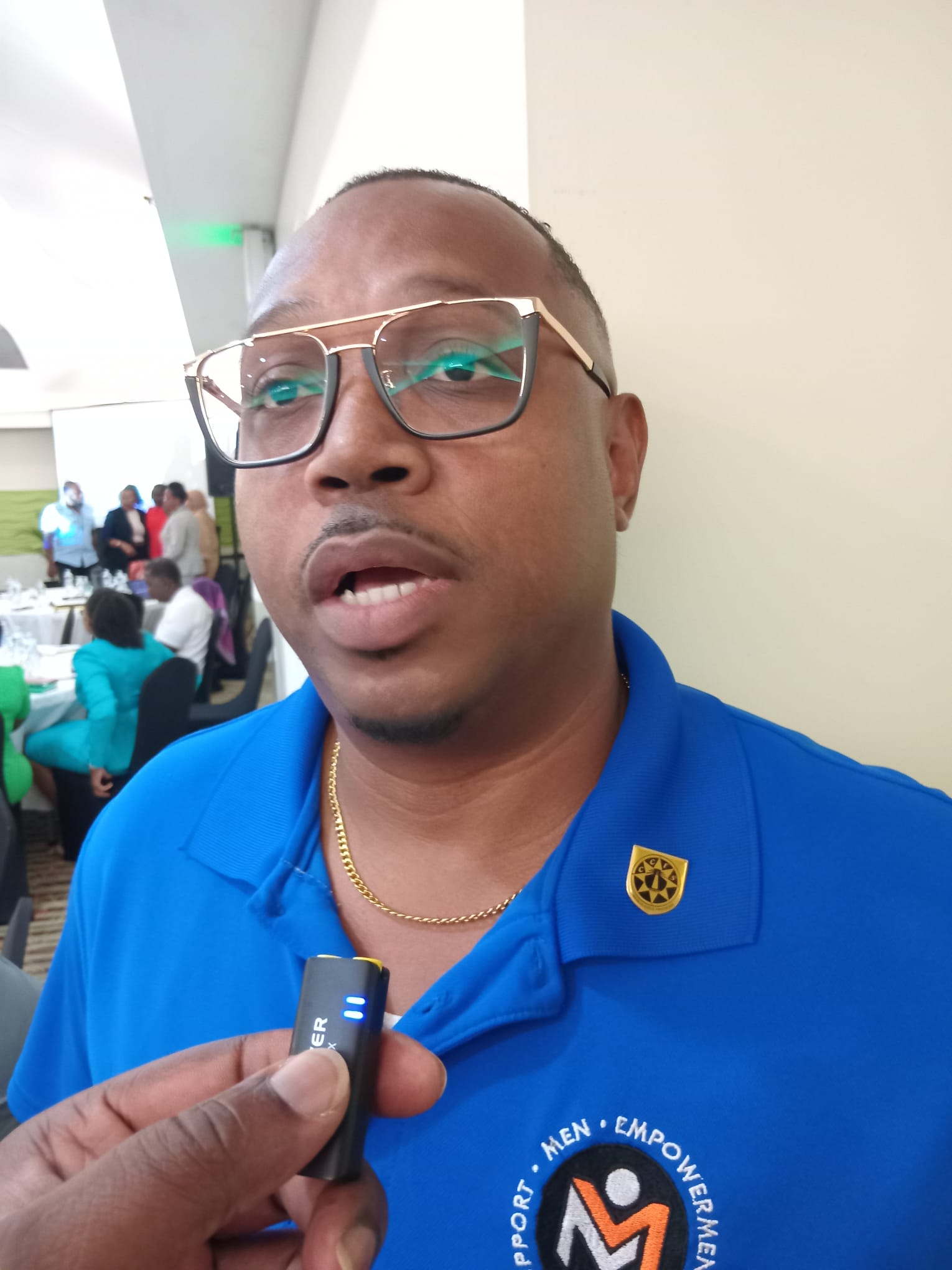
    Sargeant fully echoed Lashley’s concerns, explaining that harmful socialization and pervasive stigma push a growing number of male abuse victims to suffer alone. Speaking to Barbados TODAY on the sidelines of the symposium, Sargeant acknowledged that decades of research and public awareness have rightfully centered women as the primary victims of domestic violence, but that has come at the cost of ignoring a fast-growing crisis affecting men. “Because of our culture, and the way we socialize boys from a young age, men don’t think it’s appropriate to come forward and report abuse, so they suffer in silence,” he said.

    This culture of silence triggers a devastating domino effect that harms individuals and strains public services across the island, Sargeant argued. Unaddressed abuse erodes male survivors’ self-esteem, cuts into workplace productivity, and eventually pushes more people into already overburdened social and mental health systems, including psychiatric care. Compounding the issue, many men do not even recognize their own experiences as domestic abuse, Sargeant added: even when men are stabbed, scalded, beaten or attacked by their partners, they often dismiss the harm as a minor conflict they can overcome on their own. This lack of recognition stems in part from decades of public messaging that has exclusively framed women as the only victims of domestic abuse, leaving no space for male survivors to see their experiences reflected.

    “For our organization, education is the most critical tool we have to change this narrative and help men understand what abuse looks like when they experience it,” Sargeant said.
    While legal protections such as protection orders are already available to male victims under existing law, advocates stressed that formal frameworks are not enough to fix the crisis when the people working within those systems still hold biased attitudes. Sargeant raised specific concerns about how male survivors are treated when they reach out to law enforcement or social services for help, noting repeated cases where victims were met with dismissive attitudes, laughed at, or had their reports minimized as unimportant or unworthy of action.

    Looking toward long-term solutions, the consultation emphasized that addressing the crisis is critical to protecting the well-being of future generations, noting that unaddressed adult conflict and poor emotional regulation directly harm youth development. “An emotionally unintelligent parent cannot raise an emotionally intelligent child,” Sargeant said. “Change has to start with empowering adults to regulate their emotions and address abuse, so we can build a better future for everyone.”


  • Victims to be prioritised in criminal justice reforms

    Victims to be prioritised in criminal justice reforms

    Barbados has kickstarted a transformative overhaul of its national criminal justice framework that shifts the long-standing institutional focus from offender prosecution to victim-centered support and healing. The launch of the initiative took place Monday at the opening of a high-profile two-day stakeholder symposium held at the Radisson Hotel, where government officials outlined a plan to build a rigorous, compassionate and tightly coordinated support system that ensures trauma survivors do not have to navigate the aftermath of violence and crime on their own.

    The symposium brought together a cross-section of key stakeholders, including senior judiciary representatives, officers from the Barbados Police Service, officials from multiple government ministries, licensed social workers, trauma counsellors, and leaders from local non-governmental organisations focused on victim support. Addressing the gathered delegation, Minister of Legal Affairs and Criminal Justice Michael Lashley pledged rapid, tangible action to close long-standing gaps in institutional care for vulnerable crime survivors.

    Lashley acknowledged that while Barbados’ existing criminal justice system has long been recognised as fair and impartial, its historical structure has always prioritised the investigation and prosecution of offenders over the physical, emotional and legal healing of the people harmed by crime. “We have built our criminal justice system around the investigation of offences and the prosecution of offenders. One thing you can say about our system is that it is fair and that it is impartial, but we have not focused centrally on victims. How we treat the most vulnerable among us is a measure of who we are as a nation. If we are working on rebuilding the Barbadian civilisation, this matters,” Lashley told attendees.

    Drawing on decades of professional experience as a practicing attorney, Lashley shared first-hand accounts of the profound fear and secondary trauma that victims often face when navigating the country’s current legal ecosystem. He recalled a specific case from his private practice involving a domestic violence survivor who had successfully obtained a court-issued protection order, but was left trembling in terror after the perpetrator easily accessed her confidential safe housing location.

    Lashley explained that the current fragmented system, lacking a centralised, cross-agency coordination unit, leaves victims exposed to unnecessary harm when they enter the often-intimidating court environment. Survivors are regularly forced to relive traumatic events repeatedly during testimony and face aggressive cross-examination from experienced defence legal teams, he added. “Ask yourself what happens to the victim after the police report is filed. Who calls them weekly to check and see if they are safe? Who explains what bail means? Imagine a victim going into the court for the first time in their life, having to face trained and experienced legal counsel in a courtroom with jurors, and then the media is there too to report everything. The system itself can feel like a further burden through delays and complexity,” Lashley argued.

    Under the proposed reform plan, a dedicated specialised victim advisory unit will likely be established to conduct individual needs assessments, advocate on behalf of survivors within the legal system, and connect victims to critical support services including trauma counselling, emergency alternative housing, and personalised legal guidance. Lashley noted that recent legislative updates, including the recently passed anti-gang legislation, upcoming parliamentary debates on a specialised gun court, and proposed amendments to the Evidence Act, all work hand-in-hand with the new victim-centered reforms to strengthen overall public safety.

    To address deep-rooted systemic gaps, the Ministry of Legal Affairs and Criminal Justice has already conducted extensive cross-sector consultations with the Office of the Director of Public Prosecutions, national prison authorities, domestic violence and victim shelters, and individual trauma survivors to gather on-the-ground insight. Preliminary findings from these consultations confirmed that while a range of victim support services currently exist across Barbados, they operate in isolated institutional silos that create gaps in care, eroding public trust in the rule of law.

    Lashley emphasised that legislative change means little without consistent, robust implementation and enforcement, particularly when it comes to domestic violence protection orders. “An order on paper is only as good as its enforcement. We need to ensure that victims understand how to report breaches, and that breaches are responded to in a swift manner. Any new system must be designed with survivors, not just for them. Their feedback must drive continuous improvement,” he said.

    The minister assured attending stakeholders that the outcomes of the two-day symposium would not be left unused, pledging that a dedicated inter-agency working group would be formed immediately after the event’s closing session to translate symposium recommendations and priority actions into enforceable operational policy. “We are not just about talk. I don’t want out of this symposium a document dated and signed and then there is no action on it. There will be action on it. No victim should navigate the aftermath of crime alone,” he stated.

    Marilyn Rice-Bowen, event chairperson and a victim support program practitioner with 22 years of direct experience, echoed Lashley’s call for tangible action, stressing that the symposium must move beyond abstract academic debate to deliver concrete structural change for vulnerable Barbadian citizens. “Over the next two days, we will not be debating whether Barbados needs a national victim support framework; that question has already been answered. What we will be doing is something more purposeful. We will be designing it together with rigour, with compassion, and with a commitment to those who need it most at the centre of every decision we make,” Rice-Bowen said.

  • West Indies Women lose World Cup warm up

    West Indies Women lose World Cup warm up

    Ahead of the upcoming ICC Women’s World Cup, one of the most anticipated global events in women’s cricket, India’s national women’s team picked up a confidence-boosting 26-run win over the West Indies women’s side in a warm-up fixture held in Cardiff on Monday.

    With regular West Indies captain Hayley Matthews sidelined for the warm-up encounter, all-rounder Chinelle Henry stepped up to lead the Caribbean side. After winning the pre-game coin toss, Henry made the call to send India into bat first, putting her bowling unit to an early test. India’s top order delivered a dynamic batting performance, building up to a competitive total of 179 runs for the loss of eight wickets at the close of their 20 overs.

    Emerging batter Bharti Fulmali emerged as India’s standout performer with the bat, striking an unbeaten half-century off just 40 deliveries to anchor the late-innings push. Star opener Smriti Mandhana added a quick-fire 39 runs from 23 balls, giving India’s innings a powerful early momentum, while Yastika Bhatia chipped in with 36 runs before retiring out per warm-up match protocols. For West Indies, veteran spinner Afy Fletcher turned in a dominant bowling display, claiming four wickets for just 23 runs to keep her side in contention. Karishma Ramharack, Deandra Dottin and Aaliyah Alleyne each picked up one wicket to round out the West Indies bowling effort.

    Chasing the 180-run target, West Indies got off to a flying start, putting on 63 runs without losing a wicket by the ninth over. But a sudden batting collapse turned the tide of the match: the Caribbean side slumped to 102 runs for five wickets by the 14th over, and could never recover their early momentum. They were eventually restricted to 153 runs for eight wickets, falling 26 runs short of India’s total. Opener Dottin led the West Indies batting with a 44-ball 49, and opening partner Shemaine Campbelle scored 25 runs before retiring out, but the rest of the batting line-up failed to build on the solid opening stand. For India, young spinner Shreyanka Patil was the pick of the bowlers, taking four wickets for 36 runs, while left-arm spinner Radha Yadav supported her with three wickets for just 25 runs to seal the win.

    Following the match, Fletcher reflected on her strong individual performance, noting that she was pleased to see her off-season pre-tournament preparation pay off ahead of the World Cup. “It’s always good to be among the wicket takers, so I mean to see that work that has been done and to come out and just keep it simple and executing, it’s a good feeling,” Fletcher said. “Then the contribution from the team was excellent work. It’s always good to be contributing to the team.”

    West Indies will wrap up their warm-up schedule against defending champions Australia in Cardiff on Wednesday, before kicking off their official World Cup campaign against New Zealand in their opening group match on June 13.

  • AI integration necessary to strength Ports

    AI integration necessary to strength Ports

    As regional stakeholders gathered to chart the future of hemispheric maritime infrastructure, Barbados’ top tourism and transport official delivered a clear call to action: port authorities across the Americas must prioritize artificial intelligence and full digital transformation to build the resilient, efficient, and sustainable maritime networks the 21st century demands.

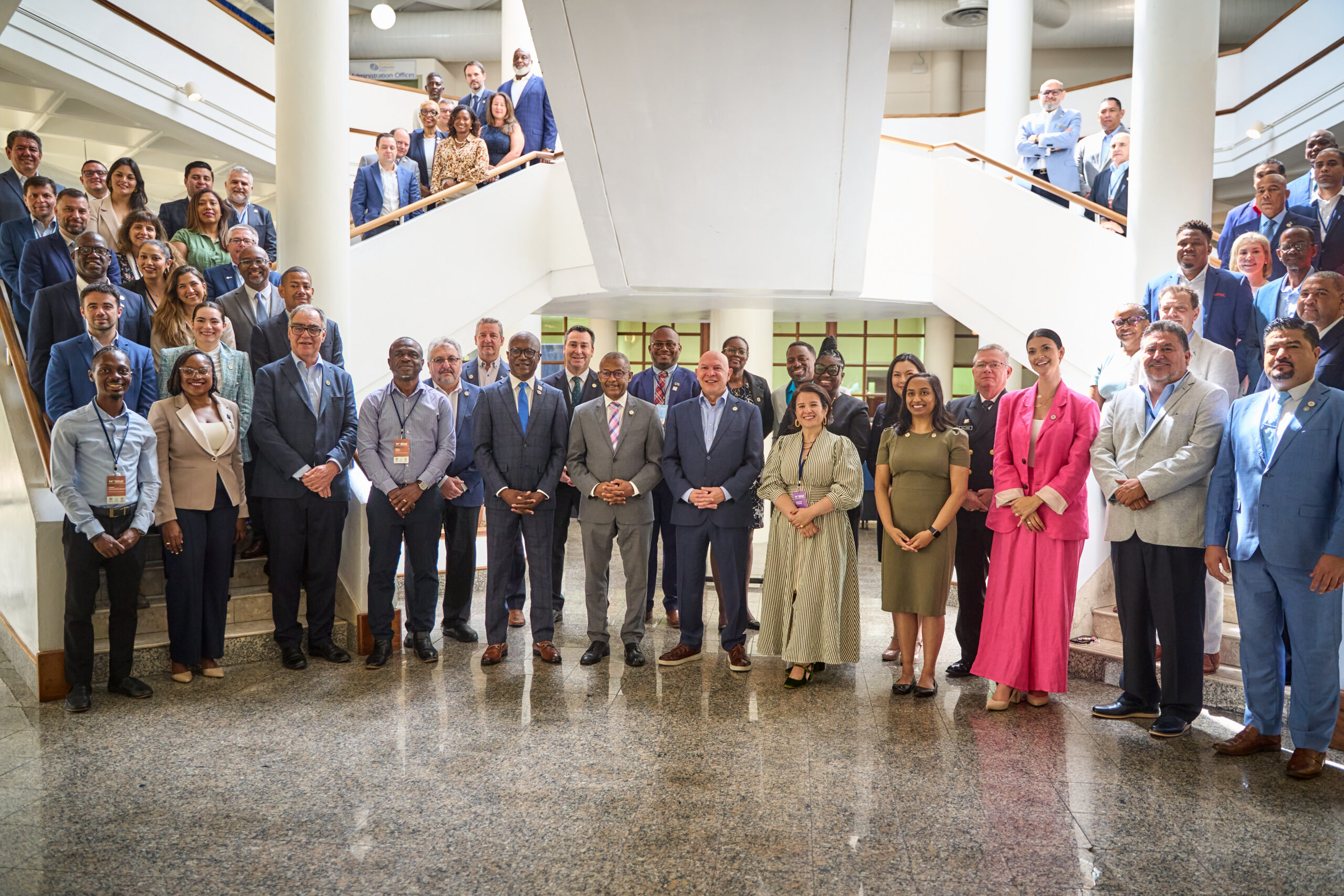
    Ian Gooding-Edghill, Barbados’ Minister of Tourism and International Transport, opened the 14th Regular Meeting of the Inter-American Committee on Ports (CIP) on Monday at the Lloyd Erskine Sandiford Centre, where more than 100 port leaders and industry stakeholders from 35 nations across the Americas have convened to explore this year’s theme, “The Scope of Artificial Intelligence: Reshaping Strategies for Sustainable and Secure Ports.”

    Gooding-Edghill emphasized that for small island developing states and coastal nations in particular, modern, well-functioning ports are far more than ancillary economic infrastructure – they are the critical lifelines that underpin national survival, economic prosperity, and collective security. The gathering comes at a uniquely pivotal moment, he noted, as regional nations work to shore up their maritime networks against a growing wave of global disruptions, from climate-fueled extreme weather to shifting supply chain dynamics and evolving security threats.

    “This meeting carries fundamental importance, because our collective future depends in large part on developing maritime gateways that are modern, resilient, and effectively governed,” the minister told delegates. “For small islands and coastal states especially, ports are not peripheral assets. They sustain our commerce, power our vital tourism sectors, and guarantee access to the food and energy supplies our populations depend on.” Beyond trade and economic activity, Gooding-Edghill added, ports also play an irreplaceable role in coordinating disaster response and post-event recovery, making ongoing modernization a non-negotiable priority at both the national and regional levels.

    Turning to the conference’s core focus on technological innovation, the minister stressed that digital transformation is no longer a discretionary upgrade for ports aiming to stay competitive in an increasingly interconnected global economy. “Digitization is no longer optional for ports that want to remain competitive, efficient, secure, and sustainable,” he said. He outlined the wide-ranging benefits AI already brings to port operations, from optimizing cargo logistics and enhancing on-site safety and security to enabling predictive maintenance that cuts costly downtime and improves data-driven operational decision-making.

    Yet Gooding-Edghill also issued a critical caution: technology alone cannot deliver long-term, inclusive success. Transforming regional port systems to meet future challenges requires more than just cutting-edge tools, he argued. It demands intentional investment in institutional readiness, robust governance frameworks, upskilling for existing workforces, and a sustained commitment to keeping innovation centered on people and inclusive of all communities.

    The minister called on regional leaders and policymakers to pursue collaborative action to ensure the benefits of AI and digital advancement are shared equitably across the entire hemisphere. “We share a collective responsibility to ensure that the gains from these advances are distributed broadly and fairly across our region,” he said, pushing for strengthened institutional capacity, updated policy frameworks, and clear safeguards to protect trust, enhance port security, and uphold public accountability.

    Gooding-Edghill added that national governments and private industry stakeholders must proactively center workers and local communities throughout the transition, ensuring no group is left behind as the maritime sector evolves. “If we move forward with intentional foresight and cross-border cooperation, we can build port communities that are not only smarter, but also more resilient, more sustainable, and more responsive to the changing needs of our people,” he concluded.

  • Police warn of fake cybercrime notice

    Police warn of fake cybercrime notice

    A fraudulent cybercrime notice circulating across social media platforms in Barbados has been exposed as a fake by local law enforcement, with officials urging residents to avoid engaging with the deceptive communication. The Barbados Police Service (TBPS) confirmed this week that the message, which falsely claims affiliation to a non-existent “Barbados Cyber Crime Security Authority”, was never created or distributed by the national police force.

    The scam message employs intimidating language to pressure recipients into responding, falsely claiming that the sender has flagged the target’s online activities as violations of the 2025 amended Barbados cyber security laws. It further alleges that the office of the police commissioner has opened an official cybercrime case against the recipient, provides a fabricated file number, and threatens that severe punitive action will be initiated within 24 hours if no response is received. To add a veneer of legitimacy, the fake notice falsely bears the name of Richard Boyce, the actual Commissioner of Police, and lists the authentic official address of the TBPS headquarters on Roebuck Street, Bridgetown, St. Michael.

    In an official public advisory, TBPS has emphasized that the communication is a clear scam, and warned members of the public not to reply to the message, click any embedded links, or share any personal or financial information with the scammers behind the post. Law enforcement officials stressed that the Barbados Police Service never issues formal legal or case-related notices through unsolicited social media or online messaging platforms, so any communication of this nature claiming to be from police should be treated as suspicious immediately.

    Following the public exposure of the scam, TBPS confirmed that formal investigations have been launched to trace the origin of the fraudulent message and identify the parties responsible for circulating the fake notice, in a move to protect local residents from falling victim to similar cyber fraud schemes.

  • Slam-O-Dom gives back

    Slam-O-Dom gives back

    Five local secondary educational institutions have significantly boosted their preparation for the upcoming inter-school domino tournament, thanks to a targeted donation of specialized playing equipment. The Alleyne School, Grantley Adams Memorial Secondary School, Graydon Sealy Secondary School, Christ Church Foundation School, and Lester Vaughn Secondary School are the five campuses that benefited from the collaborative contribution, which was organized by former event planners of the defunct popular Slam-O-Dom domino competition, working alongside the family of the late Inspector Rodney Inniss.

    Each of the recipient schools walked away with four purpose-built domino playing tables and four full sets of domino tiles, resources that will directly support teams as they train and refine their strategies ahead of the tournament’s official launch date of October 13. Beyond simply supplying gear for the upcoming contest, the initiative carries a broader educational mission. The driving goal of this donation project is to create a structured, accessible opportunity that encourages greater student participation in competitive dominoes as an organized extracurricular activity. At the same time, the sport is promoted as a tool that helps young learners build and strengthen core transferable skills, including strategic critical thinking, self-discipline, collaborative teamwork, and respectful sportsmanship that translates to all areas of student life.

  • Daryll Jordan Secondary School closed

    Daryll Jordan Secondary School closed

    A fire that broke out in the parish of St. Lucy on Sunday has forced an unexpected closure of Daryll Jordan Secondary School for Monday, June 8, disrupting the daily routine of hundreds of students and prompting urgent arrangements for regional exam candidates. Local education authorities confirmed the campus shutdown in a public notification issued over the weekend, following safety assessments conducted in the wake of the Sunday blaze. While the fire did not directly destroy the entire school facility, structural hazards, residual smoke damage, and ongoing investigations into the cause of the ignition have left the site unsafe for occupancy, officials explained. Of particular note is the special direction given to students scheduled to sit their Caribbean Secondary Education Certificate (CSEC) examinations at Daryll Jordan on Monday. All registered candidates for today’s exams have been instructed to relocate to the nearby Alexandra School to complete their assessments, ensuring that their academic progress is not derailed by the unplanned closure. Education teams have already coordinated to reallocate exam materials, set up alternate testing spaces, and communicate the change to students and guardians to minimize confusion. As of Monday morning, no update has been provided on when Daryll Jordan Secondary School will resume normal classes, with authorities indicating that the campus will remain closed at least through the end of the day while safety evaluations continue.

  • Violent offences account for almost half of probation cases

    Violent offences account for almost half of probation cases

    During a milestone celebration marking eight decades of operation, senior Barbadian officials have laid bare the pressing challenges and critical impact of the island nation’s Probation Service, revealing new 2025 statistics that show nearly half of all current probation cases are tied to violent or threatening offenses.

    The anniversary event, held Sunday at the Sanctuary Empowerment Centre in Country Road, St. Michael, featured opening remarks from Minister of Home Affairs and Information Gregory Nicholls, who framed the celebration against a backdrop of growing public safety strain. Nicholls noted the service is operating at a uniquely difficult moment for Barbados, as courts see a steady influx of young male defendants, including teenagers who have not yet reached legal adulthood.

    Citing official 2025 departmental data, Nicholls disclosed that a total of 295 people are currently under active probation supervision across the country. Of that group, 138 – or nearly 47% – were placed on probation for offenses ranging from bodily harm and sexual violence to property crimes committed with threats or intimidation. The minister emphasized that these statistics represent more than just numbers on a spreadsheet; they stand for young Barbadians whose long-term life trajectories remain uncertain.

    “These are not people already handed final conviction sentences – these are individuals diverted to probation supervision. These are our children, Barbadian children, and our collective question is not just how to punish offending behavior, but how we support them to build better futures after their mistakes,” Nicholls explained.

    He went on to outline that the Probation Service fills an irreplaceable role in the national justice system, acting as a final, evidence-based intervention point before offenders face escalating criminal involvement and harsher penalties. “This is not the end of the road for the people who come through our doors. For many, it is the last viable off-ramp to stop their lives from unraveling completely,” the minister said.

    The service delivers a range of structured interventions, including pretrial diversion programs, mandatory pre-sentence reports for courts, ongoing community supervision, targeted counseling, life skills training, and one-on-one mentorship. Nicholls pushed back against common misperceptions that probation is a lenient “soft option” for offenders, noting that properly resourced probation programs have been proven to cut rates of repeat offending.

    That impact is already visible in national data, he added: Barbados has recorded measurable progress in lowering its overall recidivism rate in recent years, a gain that did not occur by chance. It is the product of unglamorous, daily work by probation staff who walk alongside people working to rebuild their lives after conviction, Nicholls said.

    Despite these gains, the service is facing growing operational pressure, most notably a crippling understaffing crisis that has been flagged in recent national conversations about the country’s justice institutions. The Probation Service is not immune to this widespread challenge, Nicholls confirmed, even as officers continue to deliver core services against all odds.

    The 2025 annual output reflects the extreme workload staff are managing: the department completed 492 pre-sentence reports, 519 progress updates for courts, 203 community service assessments, and 117 domestic relation case reports. While these numbers prove the service is still meeting core demands, Nicholls warned that this current level of output is not sustainable long-term – even as it demonstrates the extraordinary commitment of the service’s workforce.

    Nicholls paid tribute to probation officers across the department, noting their critical contributions to public safety often go unrecognized by the general public. Unlike police officers or judges, who regularly receive public acknowledgment for their work, probation staff operate largely behind the scenes, working in courtrooms, office cubicles, family homes and community centers across the island. They manage heavy, complex caseloads and carry the emotional weight of supporting people in crisis, work that rarely draws public attention, he said.

    The minister also highlighted the steady evolution of the service over its 80 years of operation. Today, the department uses a modern digital case management system, offers specialized training in alternative dispute resolution, and runs targeted initiatives including the Community Pillars Mentorship Programme and aftercare services for people released from prison.

    To continue delivering impactful rehabilitation, Nicholls argued, the service needs sustained new national investment. “If we are serious about making rehabilitation a core national justice strategy – and we must be – we have to be equally serious about properly resourcing the institution that delivers that work. That means more frontline staffing, ongoing specialized training, and prioritizing the well-being of our officers just as much as we prioritize outcomes for the clients they support,” he said.

    Chief Probation Officer Dr. Angela Dixon echoed Nicholls’ remarks, celebrating the dedication of every generation of past and current staff that has allowed the service to reach its 80-year milestone. “This 80-year mark did not happen by accident. It was built through God’s grace, the relentless dedication of countless staff across every era, and the unwavering support of community partners and citizens across Barbados,” Dixon said.

    She acknowledged the daily struggles that come with the role, noting that the work extends far beyond what can be summarized in a standard job description. “We all know what it feels like to walk in on a Monday morning to a full caseload and a phone already ringing off the hook. We know what it means to sit across from someone in the middle of a personal crisis and find the right response when there is no official script to follow,” Dixon explained.

    “What this work demands cannot be contained in a job description. It requires us to hold onto hope for people who have already lost hope in themselves, to see the person standing in front of us not for the mistake they made, but for everything they can still become,” she added.

    As the service enters its ninth decade of operation, Dixon encouraged all current staff to carry forward the mission and commitment that has sustained the organization through 80 years of service to the people of Barbados.

  • Barbadians urged to protect heritage, pass on values

    Barbadians urged to protect heritage, pass on values

    As Barbados marks its annual Heritage Month, a senior cultural official has issued a pressing call to all Barbadians, encouraging them to step into active roles in safeguarding the island nation’s rich cultural legacy and passing down foundational core values to upcoming generations.

    Senior Cultural Policy and Research Officer Sheron Johnson made this appeal during the official Heritage Month interfaith service hosted at James Street Methodist Church this past Sunday. In her address to the gathered congregation, Johnson outlined a core truth that has shaped Barbadian national identity: the country’s strength does not stem from uniform backgrounds or beliefs, but from intentional unity, mutual respect, and cross-community understanding.

    She framed Heritage Month as more than just a ceremonial observance, describing it as a purpose-built opportunity for all Barbadians to pause and reflect on the collective legacy that has forged the modern nation. “Though we may come from different backgrounds, cultures, and denominations, we are united by a common story. Our shared heritage reminds us that the strength of a country is not found in uniformity but in unity,” Johnson told attendees. “Heritage therefore lives in our traditions, our language, our music, our customs, and in the faith that has sustained generations before us.”

    First conceptualized roughly 14 years ago, Heritage Month was designed to bring greater national visibility to Barbados’ cultural assets and amplify the ongoing work of conservation across the country, Johnson explained. Beyond the annual celebration, she emphasized that heritage stewardship is a year-round responsibility: “We recognise that heritage needed to be practised and safeguarded and preserved every day. This month gives us time to pause, to reflect, to gather our thoughts, and it also serves to promote the work programmes and projects that are going on within our ministry and our stakeholders and give them greater impetus and clarity.”

    A key focus of this year’s observance is celebrating the unifying bonds that connect all Barbadians, even amid their diverse lived experiences and beliefs. Johnson specifically highlighted the underrecognized impact of religious and faith communities on Barbados’ decades of social and national development. “It also means appreciating the contributions of various faith communities that have worked to promote justice, peace, education, and service. By respecting one another’s beliefs, we strengthen the bonds that hold our community together,” she said.

    Johnson pushed back against the common misconception that heritage is a static inheritance, noting that it requires active care and intentional transmission to survive. “Heritage was not merely inherited from previous generations but must be actively protected and passed on. The values of faith, integrity, kindness, respect, and love for neighbour must be intentionally passed on to future generations,” she stressed.

    During her address, she also paid public tribute to James Street Methodist Church for its longstanding commitment to preserving the legacy of one of Barbados’ most revered National Heroes, The Right Excellent Sarah Ann Gill. She specifically commended the congregation for its recent restoration work on the historic Hurst Memorial Chapel, as well as its consistent upkeep of Gill’s original gravesite. Johnson added that one of the first official commemorative plaques linked to the Barbados National Register was installed at the site of Gill’s former home this past December, marking a key milestone in national heritage documentation.

    Repeating her urgent call to action, Johnson stressed that proactive conservation is critical to protecting cultural and historical assets before they are lost to time. “It is important that as a nation we preserve historical sites, our languages, traditions, and customs before they disappear. Most importantly, we must teach future generations that heritage is something to cherish, not something to forget,” she said.

    She also echoed earlier remarks from Trevor Prescod, Minister in the Prime Minister’s Office with oversight for Pan-African Affairs and Heritage, who opened Heritage Month last week with a call for young Barbadians to deepen their connection to their personal and national identity and heritage.

    Closing her address, Johnson encouraged every Barbadian to seize the opportunity of Heritage Month to celebrate the nation’s layered history, while contributing to the work of shaping an inclusive, connected future. “Let us honour the faith of our ancestors, cherish the heritage of our nation, and commit ourselves to building a society where every person is valued, respected, and encouraged to contribute their gifts for the common good,” she said.

  • OPINION: The rights of a displaced worker

    OPINION: The rights of a displaced worker

    Across the globe, a sweeping pattern of workforce reduction has emerged in recent years, as both public sector agencies and private companies restructure their operations under the banner of boosting operational efficiency, cutting overhead costs, and preserving long-term business viability and productivity. For countless workers, this trend has meant sudden unemployment through layoffs, retrenchment, or redundancy — leaving them out of work and struggling to make ends meet, even as companies frame these cuts as legitimate business decisions.

    While mass layoffs have become commonplace, terminated workers hold clear legal protections when employers fail to follow established fair procedures before cutting staff. Industry best practices and legal frameworks universally require that employees facing job loss are entitled to a transparent, fair review process, adequate advance notification of termination, and eligible severance compensation where the terms of employment or local regulation mandate it.

    If an employer skips required procedural steps or fails to provide the mandated notice period, workers retain the right to file a wrongful dismissal claim in civil court for breach of employment contract. Under labor and contract law, any termination without required advance notice is formally classified as a breach of contract, and the standard legal remedy for this violation is pay in lieu of notice — compensation equal to the wages an employee would have earned during the required notice period.

    There are, however, limited exceptions to this rule. Employees terminated for gross misconduct, such as theft, workplace violence, or other serious violations of company policy, are not eligible for pay in lieu of notice, and immediate termination is legally justified in these cases. Similarly, workers who resign without providing the required notice, or employees still in a probationary period, forfeit their right to this compensation. Eligibility for all forms of termination pay is also bound by the specific terms outlined in an individual’s employment contract, so workers are advised to review their agreements closely after receiving termination notice.

    For workers facing layoff or redundancy, additional benefits may be available depending on local labor regulations. Many jurisdictions require employers to provide severance pay for large-scale redundancies, and displaced workers are typically eligible for state unemployment benefits to bridge the gap between jobs. In cases of planned workforce reductions, some regional rules also mandate that employers offer retraining programs to help displaced workers build new skills for future roles. A small number of employers also extend existing health insurance coverage for a limited period after termination, a significant benefit for laid-off workers navigating the job market.

    Above all, displaced workers are reminded to verify that all outstanding financial obligations are settled before their employment ends. This includes any unpaid accrued wages, compensation for earned but unused vacation time, and all other contractual monetary benefits tied to the role. This guidance comes from Dennis DePeiza, a Labour Relations & Employment Relations Consultant with Regional Management Services Inc.