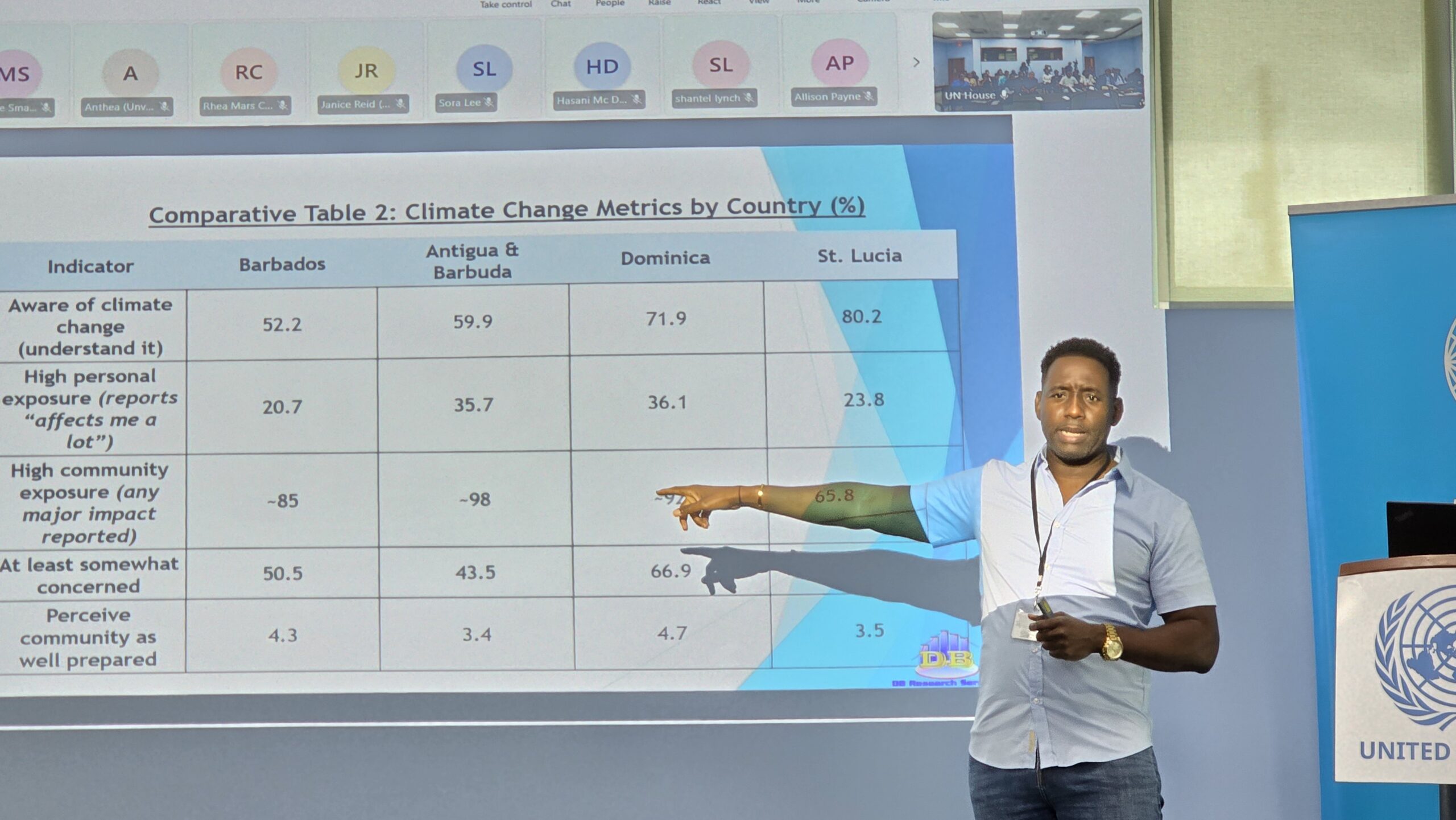
On the occasion of World Environment Day, new findings from a UNICEF-commissioned survey have laid bare a critical disconnect across the Eastern Caribbean: while a large share of the region’s young people are passionate about building careers in the fast-growing green and circular economy, deep gaps in accessible information, skills training, and open opportunities are keeping them from turning that ambition into action. The survey, carried out in 2023 across four island nations – Barbados, Antigua and Barbuda, Dominica, and Saint Lucia – was formally presented at the UN House in Bridgetown, with its full report titled *Young People’s Knowledge, Attitudes and Practices on Climate Change and Green and Circular Economies in the Eastern Caribbean*. Research organizers confirmed that while the overwhelming majority of respondents demonstrated clear awareness of climate change and a strong desire to contribute to regional climate solutions, multiple structural barriers continue to block their entry into green career paths. “The most encouraging takeaway from this work is that young people are already ready to be part of the solution,” explained Maryam Abdu, UNICEF’s acting representative for Barbados and the Eastern Caribbean, during the presentation of findings. “So many are actively seeking green jobs and specialized training, but systemic hurdles stand in their way. The largest gap by far is accessible information – and information is power, especially in today’s fast-moving digital era. Beyond that, many young people report that training programs and open job roles are out of reach, with opportunities feeling unevenly distributed and nearly inaccessible for most.” The study’s results also underscored a widespread demand among youth for greater inclusion in climate policy decision-making, as well as targeted support to smooth their transition into green and circular economy roles. Abdu called on regional stakeholders to ramp up investment in youth development and meaningful inclusion, arguing that meaningful climate action cannot succeed without centering young people. “When we expand access to information, training, and new opportunities, that also means young people deserve a seat at the table, not just a chance to be consulted,” she said. “You are not just the future – you are the leaders of today. This work is not just about sharing data; it is about taking collective action.” Abdu added that the study’s findings should serve as a roadmap for policy updates and program rollout across every Eastern Caribbean nation. “Let us use these insights to first improve our policy frameworks, then strengthen programs that directly support young people and address climate impacts,” she noted. “We need to tear down the barriers holding them back and build tangible, accessible opportunities for Caribbean youth. If we want young people to succeed – and we absolutely do – we have to make sure the skills they learn align with the jobs of the future.” Brian Bogart, country leader for the World Food Programme (WFP) in the region, echoed Abdu’s remarks, noting that young people across the Caribbean are already informed, engaged, and prepared to contribute to climate action – but regional institutions have not kept pace with their ambitions. “Across the region, the United Nations is growing a portfolio of youth-focused initiatives tied to climate action and the transition to circular, blue, and green economies,” Bogart explained. “In Barbados alone, young leaders are already actively involved in national climate policy processes, contributing directly to national climate plans and national climate financing frameworks. Climate action summits have also created critical spaces for meaningful youth participation. Through programs like the Green Rising initiative, our goal is to equip more than 5,000 young people with the core skills needed for green and blue economy careers, while supporting youth-led innovation and entrepreneurship.” Even with this expanding support, Bogart emphasized that long-standing structural barriers continue to limit full youth participation in the green economy. He stressed that stronger, more intentional connections between education systems, skills training, and employment outlets are urgently needed to close gaps. “This means expanding access to hands-on opportunities: apprenticeships, internships, and certification programs that deliver real-world experience and open doors to long-term careers,” he said. “It also requires making information about these opportunities clear, accessible, and co-designed with young people themselves. Young people are not just asking to be told what opportunities exist – they are asking to be included, to be equipped with the skills they need, and to play a meaningful role in shaping their own futures.” Michele Small-Bartley, CARICOM’s Programme Manager for Youth Development, noted that the regional bloc’s updated CARICOM Youth Development Action Plan already provides a strong foundational framework for advancing youth participation and climate resilience across all member states. “This plan calls for greater coordination, more inclusive processes, and an evidence-based approach to youth development across the region,” she explained. “It prioritizes youth participation, employability, leadership, resilience, well-being, and institutional strengthening – all priorities that align directly with the findings from this UNICEF study. We continue to work closely with member states and partner organizations to build a stronger enabling environment for youth development across the Caribbean.” Small-Bartley added that the study’s findings reinforce the urgent need for more robust systems and accountability mechanisms to support youth entering the green economy. “We are advancing the CARICOM youth development governance structure and a regional youth development index, because we know that good intentions are not enough,” she said. “We need formal systems, we need solid data, we need cross-stakeholder coordination, clear accountability, and structured mechanisms that lift youth voices from just being consulted to being full participants in decision-making and action.” She closed by emphasizing that the goal of regional efforts should not just be to prepare young people to participate in green and circular economies – but to empower them to lead those sectors in the decades ahead.