标签: Bahamas

巴哈马

  • AAIA will not investigate circumstances of plane crash just outside Bahamian jurisdiction

    AAIA will not investigate circumstances of plane crash just outside Bahamian jurisdiction

    A small passenger aircraft carrying 11 people crashed off the Florida coast earlier this week following an in-flight emergency declaration, and Bahamian aviation investigators have confirmed they will not lead a probe into the incident due to jurisdictional boundaries.

    The Air Accident Investigation Authority (AAIA) of The Bahamas released an official statement outlining its decision, confirming the plane departed from Abaco in The Bahamas, bound for Grand Bahama, when the pilot declared an emergency. The crash occurred approximately 50 miles northwest of Vero Beach, Florida, placing the incident outside of Bahamian territorial waters.

    Of the 11 people on board, a number of whom hold Bahamian nationality, all were pulled from the water alive by rescue teams. Three individuals sustained minor injuries during the crash, though the AAIA noted that current information on the latest condition of those injured has not been confirmed.

    Per international aviation investigation protocols, the AAIA has formally notified all relevant governing bodies of its decision to cede investigative authority. That includes Panama, the country where the aircraft is registered, and the United States, which is both the state of design and manufacture for the plane.

    While the Bahamian body will not lead the probe, it has offered full cooperation to the agencies taking over the investigation, stating it is prepared to provide logistical coordination and targeted assistance if requested. The AAIA also emphasized it will not release unconfirmed speculation about potential causes of the crash, details of the aircraft’s condition before the incident, or the full scope of injuries and damage sustained, pending formal investigation by the lead authority.

  • Incumbents see vote totals rise as COI support surges at polls

    Incumbents see vote totals rise as COI support surges at polls

    Fresh off Tuesday’s general election in The Bahamas, unofficial vote counting reveals a mixed political landscape where long-serving and sitting parliamentarians have largely held onto their seats, while a rising third party has gained significant traction across multiple constituencies. According to preliminary data compiled and reviewed by The Tribune, many incumbent MPs from both the Progressive Liberal Party (PLP) and the Free National Movement (FNM) not only retained their electoral districts but also grew their raw vote shares compared to the 2021 general election. At the same time, the Coalition of Independents (COI) has recorded substantial gains in nearly every constituency tracked, marking a notable shift in voter sentiment toward alternative political options.

    One of the clearest examples of incumbent growth can be found in the Elizabeth constituency, where PLP incumbent JoBeth Coleby-Davis secured a decisive re-election victory. Across 14 polling divisions, Coleby-Davis captured 2,308 votes, a 22 percent increase from her 2021 total of 1,893 votes when she first ousted then-FNM incumbent Duane Sands. This cycle, she defeated FNM challenger Heather Hunt, who finished with 1,285 votes. Even in this solidly PLP-held seat, the COI saw its support more than double: candidate Donna Dorset Major took 544 votes, up from just 204 votes the party earned in Elizabeth in 2021.

    In Bamboo Town, PLP incumbent Patricia Deveaux successfully defended her seat against FNM chairman Duane Sands, though her vote total dipped slightly to 1,716 from 1,790 in 2021. Deveaux defeated Sands, who earned 1,352 votes, in a high-profile contest that pitted the sitting MP against the FNM’s top party official. For the COI, candidate Maria Daxon — who ran in the constituency in 2021 — saw her support jump nearly 80 percent, rising from 378 votes to 677 this cycle.

    Veteran PLP politician Glenys Hanna Martin secured a historic sixth consecutive term in Englerston, capturing 1,913 votes across 10 polling divisions. While her total was down from 2,249 in 2021, she still won by a wide margin over FNM candidate Heather McDonald (348 votes) and COI contender Faith Percentie (385 votes). The FNM’s vote share in Englerston fell from 498 in 2021, while the COI more than doubled its support, growing from 163 votes to 385 in this election.

    Across multiple FNM-held constituencies, incumbents also grew their support, matching the trend seen in PLP-held seats. In St Anne’s, FNM incumbent Adrian White retained his seat with 2,346 votes, up from 2,007 in 2021. PLP challenger Keno Wong earned 1,402 votes, an increase from the 1,253 votes the PLP took in the district in 2021, while the COI’s Graham Weatherford earned 346 votes, nearly doubling the party’s 2021 total of 172. In Sea Breeze, PLP incumbent Leslia Miller-Brice boosted her vote total from 2,448 in 2021 to 2,911 this cycle, defeating FNM challenger Trevania Clarke-Hall, who earned 929 votes (down from the FNM’s 1,090 in 2021). The COI’s William Knowles took 565 votes, more than doubling the party’s 2021 total of 276 in the district.

    This pattern of growing incumbent support and rising COI support also extends to Grand Bahama, the country’s second-most populous island. In East Grand Bahama, FNM incumbent Kwasi Thompson increased his vote total from 2,090 in 2021 to 2,342 this cycle, edging out PLP challenger Monique Pratt, who earned 1,912 votes — an increase from the PLP’s 1,686 votes in 2021. COI candidate Dexter Edwards earned 498 votes, up from 372 for the party in 2021. In Marco City, FNM leader Michael Pintard secured re-election with 2,534 votes, up from 2,340 in 2021. His PLP challenger Edward Fields II earned 1,399 votes, down from the PLP’s 2,021 in 2021, while COI candidate Jillian Bartlett increased the party’s vote total from 298 in 2021 to 365 this cycle.

    As unofficial counting continues, the preliminary results highlight two key takeaways from the 2024 general election: sitting MPs from both major parties have largely retained their hold on their constituencies, even as the COI has emerged as a competitive alternative that has expanded its voter base across every region of the country.

  • Landslide for Brave

    Landslide for Brave

    The Bahamas has witnessed a seismic shift in its long-running political cycle, after Prime Minister Philip “Brave” Davis led the Progressive Liberal Party (PLP) to an unprecedented second consecutive general election victory — a feat not achieved by any ruling party in nearly three decades.

    The outcome of the contest was nothing short of a landslide. Unofficial vote tallies confirmed the PLP secured 32 out of the 41 contested parliamentary seats, a result that nearly mirrored the party’s overwhelming 2021 win. In that election, the PLP took 32 of 39 seats and ousted the Free National Movement (FNM) from power after a single term in office. This year’s resounding win stands as a clear public endorsement of Davis’ first-term administration, and a decisive rejection of the FNM, which failed to convince Bahamian voters that it deserved to reclaim power after just one term as the parliamentary opposition.

    The PLP’s dominance was most pronounced on New Providence, the country’s most populous island, where the party held all but two constituencies: Freetown and Killarney. Before Davis’ historic win, the last party leader to secure back-to-back election victories was former Prime Minister Hubert Ingraham, who led his party to wins in both 1992 and 1997.

    Despite the historic victory, the result comes alongside a notable observation: voter turnout hit an all-time low for general elections in the Bahamas, opening up public debate over whether the PLP’s overwhelming seat share stems from broad popular support, inherent weaknesses in the opposition FNM, widespread voter apathy, or a combination of all three factors. Davis himself acknowledged the lower-than-expected turnout, noting that low participation is never healthy for a democratic society, and emphasized the need for future action to ensure all eligible voters feel their ballot makes a meaningful difference.

    Even with low turnout, the voters who cast ballots delivered an unambiguous result. The PLP ran a short but fiercely aggressive campaign centered on its first-term record, which the party framed around post-pandemic economic recovery, restored international confidence in the Bahamian economy, increased foreign direct investment, expanded economic opportunity for citizens, and a platform of unfinished work that required a second mandate to complete. Throughout the campaign, Davis and PLP candidates repeatedly urged voters to return the party to office to see their agenda through.

    In his victory address to supporters, Davis framed the win as more than just a political victory for his party. “Tonight is a political victory, but this is truly a victory for the whole country,” he said. “For the first time in almost a generation, we have a historic opportunity. Let us make the most of it.” He added, “I will begin our second term as I began the first with a humble spirit and with a heart full of gratitude. Thank you for your trust and faith in me. I will not let you down.”

    Even before unofficial results were finalized, Davis had privately expressed confidence that the PLP would secure its historic consecutive win. PLP insiders noted that reports from on-the-ground poll workers indicated strong enthusiasm among voters who turned out, even as overall participation lagged. As early results began to come in, supporters gathered at PLP headquarters broke into cheers, particularly when early counts showed the party leading in key battleground constituencies including Pinewood and Tall Pines.

    As the night went on, the full scale of the PLP’s victory became clear. Incumbent PLP representatives celebrated at their constituency offices, thousands of supporters flooded Nassau’s Clifford Park, and celebratory motorcades crossed New Providence. Despite intermittent rain, crowds danced in the streets and honked car horns in celebration across the island.

    Davis used his victory speech to reach out to opposition supporters, calling for national unity and emphasizing that he would serve all Bahamians regardless of their vote. “To the Bahamians who voted today but did not vote for us, I want you to know I’ve listened to you. I’ve heard you. I want you to know that I will continue to work hard for all Bahamians,” he said. He pledged to deliver on every campaign promise with unwavering commitment, saying, “I will deliver the party’s promises with every bone in my body and every beat in my heart.”

    Davis emphasized that the election result sent an unambiguous message about the direction Bahamian voters want for their country. “You voted because you believe that together we can make some of the big changes that would fulfil our missions we share for our Bahamas,” he said. “We all want a country that has more opportunities, a country where safety and prosperity belong to all Bahamians. You want a country in which all of you and your children and grandchildren will thrive.”

    The PLP’s renewed mandate comes as the Bahamas continues to grapple with pressing domestic challenges, including a high cost of living, strained public healthcare systems, and persistent inflation. Davis first took office in 2021 amid similarly severe economic headwinds, including mounting national debt, stagnant growth caused by the COVID-19 pandemic, and ongoing recovery efforts from the devastating Hurricane Dorian that struck the country in 2019. For his second term, Davis has campaigned on a broad policy agenda that includes expanded worker protections, stricter immigration enforcement, a new migrant health insurance scheme, integration of artificial intelligence into public services, expanded vocational training opportunities for workers, expanded housing support, and a range of other social and economic programs.

  • Pintard non-committal on leadership after FNM loss

    Pintard non-committal on leadership after FNM loss

    The Bahamas’ general election delivered a devastating blow to the Free National Movement (FNM) on polling day, leaving the long-established political party grappling with significant internal upheaval and growing calls for party leader Michael Pintard to step down from his post.

    In the final seat count, the FNM secured only eight parliamentary seats. While the party managed to flip the Freetown and MICAL constituencies from the ruling Progressive Liberal Party (PLP), it suffered high-profile losses that amplified the scale of its defeat. Notably, the FNM lost the St Barnabas seat; deputy party leader Shanendon Cartwright failed to win re-election in his St James constituency, and party chairman Dr. Duane Sands was defeated in his Bamboo Town race.

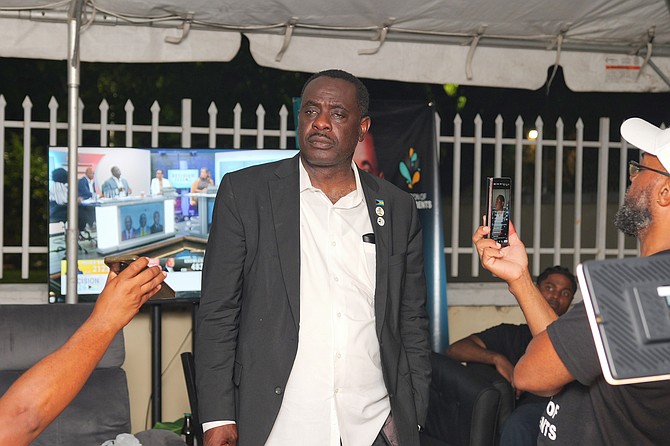
    Pintard, who successfully retained his own Marco City seat, offered no clear confirmation that he would stay on as party leader when questioned about his political future shortly after the results were finalized. He stated that he would first hold internal consultations with the party’s senior team in the coming days before any announcement is made.

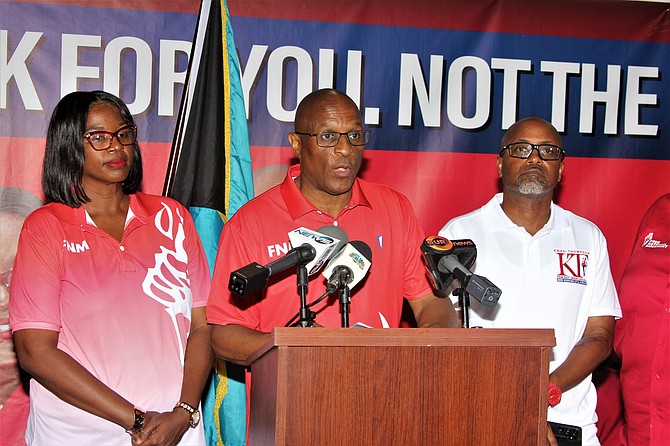
    “I believe in party conventions,” Pintard told reporters. “I have always respected that process. Over my four and a half years as leader, we have held three conventions, two of which included leadership contests. I am fully committed to following the party’s constitutional process. First and foremost, though, I am committed to talking through our next steps with the party team, and in the next few days we will reach a decision and share it publicly.”

    Pintard’s ambiguous remarks set the stage for what could become a competitive open leadership contest as the FNM begins the slow work of rebuilding after a second consecutive election failure where its policy platform failed to connect with Bahamian voters. The FNM’s winning candidates include J. Leo Ferguson in MICAL, Lincoln Deal in Freetown, Frazette Gibson in Central Grand Bahama, Kwasi Thompson in East Grand Bahama, Dr. Andre Rollins in Long Island, Adrian White in St Anne’s, and Michela Barnett-Ellis in Killarney, alongside Pintard in Marco City.

    Shortly after the results became clear, Pintard called incumbent Prime Minister Philip Davis to congratulate him and the PLP on their election victory, formally conceding defeat. In his public concession address, Pintard paid tribute to the defeated Cartwright, calling him a close friend and brother in the party and praising his years of service to the FNM and Bahamian public.

    The FNM leader emphasized that the Bahamian people had exercised their democratic right to choose their government, and the party fully accepted the outcome of the vote. “The people of the Bahamas have spoken, and we accept their decision,” he said. “That is how democracy works. We put forward our platform, we ask voters for their trust, we count every ballot, and we honor the final result. That has always been the Bahamian way, and tonight we honor that tradition once again.”

    He thanked voters who cast their ballots for FNM candidates, noting that the party had grown its caucus size in Parliament compared to the previous term, adding that official final results would be confirmed the following day. Pintard framed the election loss as a temporary setback, not a rejection of the core values the FNM campaigned on.

    “You believe in a different kind of government,” he said, addressing supporters. “You believed in honest, accountable government that acts fairly in all its dealings, fairly in awarding government contracts. You believed in a Bahamas that works for every one of our people. That belief did not lose tonight. That belief endures, and it will outlast every election that comes.”

    Throughout the campaign, the FNM positioned itself as the standard-bearer for clean, transparent governance, but the 2024 defeat leaves the party grappling with urgent questions about its electoral strategy, leadership direction, and ability to build broad voter support following its 2021 general election loss. Even constituencies political observers had tipped as potential PLP losses, including seats in Abaco, were retained by the incumbent government. The Abaco race drew controversy before voting day, after revelations emerged that the PLP government had distributed more than $200,000 in gift cards funded by the Ministry of Finance to residents under the names of PLP candidates and officials, framed as Hurricane Dorian disaster relief – a move the opposition decried as blatant vote-buying.

    In his address to supporters, Pintard urged all FNM backers not to lose heart, speaking directly to young party members, long-time loyalists, and unsuccessful candidates. He invoked the legacy of former FNM Prime Minister Hubert Ingraham, reminding the crowd that the party’s founding mission to advance government accountability and transparency did not end with Ingraham’s retirement, nor would it end with this election defeat. He confirmed that the FNM would now step into its constitutional role as His Majesty’s Loyal Opposition, where it would hold the new PLP government accountable and carefully scrutinize its legislative and policy agenda.

    When asked whether the Coalition of Independents (COI) and unaffiliated independent candidates split the opposition vote and aided the PLP’s victory, Pintard confirmed that his pre-election warning had been borne out. “It was clear that not just the COI, but independents as well, helped the PLP,” he said. “We made this point repeatedly during the campaign: a vote for COI or a vote for an independent is a vote that ultimately helps the PLP. We see that very clearly now.”

    That comment signals a likely line of internal debate that will emerge as FNM officials conduct their post-election review, with some expected to argue that third-party candidates contributed to the party’s poor performance.

    Pintard closed his remarks by thanking the FNM’s extensive network of campaign workers, volunteers, financial donors, national headquarters staff, all candidates, and their families for their dedication and sacrifice throughout the election cycle. “To my wife and daughter, I want to say a special thank you, but the truth is, every one of our candidates has spouses and loved ones who stood with them,” he said. “To all of you who have stood beside and behind these candidates and workers, we extend a special thank you for the sacrifices you made, the price you paid right alongside them.”

    He also offered a final note of gratitude to the voters of Marco City, who re-elected him to Parliament. “To the people of Marco City who have honored me with the privilege of representing you again, I want to say thank you,” he said. “I will continue to serve you with everything that I have. To every one of you in this room tonight, I recognize every day that I stand on your shoulders, that you have given me the rarest of opportunities to serve our community, and I will do so vigilantly.”

  • COI plays major election spoiler as Bain falls short in Pinewood

    COI plays major election spoiler as Bain falls short in Pinewood

    In yesterday’s Bahamian general election, the upstart Coalition of Independents (COI) left a lasting mark on the country’s political landscape even though it failed to secure a single parliamentary seat. The minor third party proved it can no longer be ignored by the nation’s two dominant political forces — the ruling Progressive Liberal Party (PLP) and opposition Free National Movement (FNM) — after siphoning off thousands of protest votes that would likely have bolstered the FNM’s bid to unseat incumbents, most notably across the key island of New Providence.

    COI’s strongest showing of the cycle came in the Pinewood constituency, where party leader Lincoln Bain came astonishingly close to ousting sitting PLP representative Myles Laroda. Early vote projections that placed Bain in the lead sent social media platforms into a frenzy, as observers watched a minor party candidate mount a historic challenge to a major party incumbent. When all ballots were finally counted, Laroda retained his seat by a narrow margin of 314 votes, earning 1,446 ballots to Bain’s 1,132. FNM candidate Denarii Rolle finished a distant third behind Bain — marking the first time in history that a COI candidate outpolled a major party nominee in a constituency race.

    For Bain personally, the 2024 result represents a dramatic improvement over his 2021 general election performance in Pinewood, where he earned just 579 votes, or roughly 17% of the total vote share. The party’s growing traction was visible across other constituencies as well. In Englerston, COI candidate Faith Percentie also outperformed FNM nominee Heather McDonald, even as long-serving PLP incumbent Glenys Hanna-Martin held onto the seat for a sixth consecutive term. Across multiple races, COI candidates crossed the 10% vote threshold required to retain their candidate deposits — a key metric that proves the party built a tangible, sustained base of support rather than just appearing on the ballot. That bloc is overwhelmingly made up of Bahamian voters who hold deep frustration with the country’s two established major parties.

    Long before polls opened, FNM Leader and Opposition Leader Michael Pintard warned that COI and independent candidates would split the anti-incumbent opposition vote, handing an advantage to the ruling PLP. After conceding his party’s poor election showing, Pintard reaffirmed that assessment, noting “a vote for the COI or a vote for an independent, it’s a vote for the PLP. So, we understand that clearly.”

    COI’s rapid rise in Bahamian politics has been fueled by a hardline platform focused on immigration reform and widespread public distrust of the traditional political establishment. Over the past five years, the party has consistently captured more public attention and momentum than the official opposition FNM, a shift that upended the country’s traditional two-party dynamic.

    Following the release of final election results, Bain pushed back against former Prime Minister Hubert Ingraham’s longstanding claim that election results in The Bahamas cannot be stolen. Bain alleged that Laroda’s final vote total “jumped” unexpectedly during the vote tabulation process, contradicting earlier on-the-ground trends that pointed to a Bain victory in Pinewood. He specifically raised questions about the handling of advanced poll ballots, claiming election officials failed to maintain proper chain of accountability while counting votes.

    Despite challenging the legitimacy of the Pinewood outcome, Bain urged his supporters to remain optimistic, framing political change as a long-term project that requires sustained organizing and sacrifice. “Nothing worth having is easy,” he told supporters. “The fight has just begun.” He called on COI backers to deepen their involvement in future electoral cycles, urging them to serve as poll observers and participate in recounts to strengthen the party’s electoral oversight. “You cannot go to war without enough soldiers,” he said. “We shouldn’t have one poll that doesn’t have three people watching.”

    Bain framed his current dispute over electoral procedures as part of a broader, generations-long push for electoral reform in The Bahamas, drawing parallels to past landmark changes won by the two major parties. “The PLP didn’t win until they lobbied for one man, one vote,” he noted. “The FNM had to get the purple finger system going on to stop people from voting several times.” He argued that the current flaws in the country’s electoral process demand the same level of organizing and advocacy to address.

  • Voters face missing names despite short election lines

    Voters face missing names despite short election lines

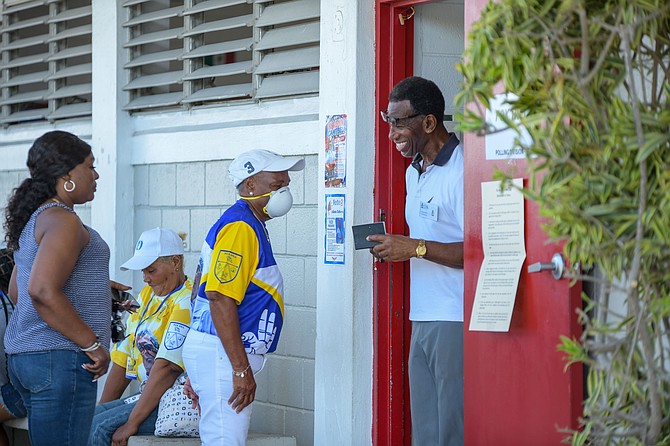
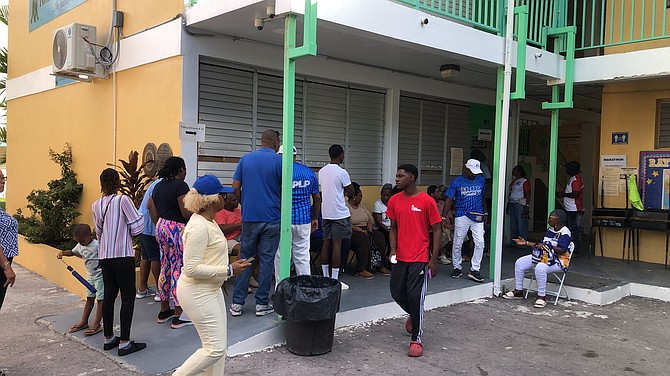
    On general election day across the country, voting operations in most electoral districts unfolded far more smoothly than pre-election forecasts had warned, though persistent issues with voter roll inaccuracies have validated longstanding opposition concerns about the integrity of the electoral registry ahead of the vote. A field survey conducted by The Tribune across polling stations nationwide found that most voters waited less than an hour to cast their ballots, with many completing the process in just a handful of minutes.

    The majority of polling locations opened on schedule, voting lines moved at a consistent pace, and numerous voters commended the overall administrative organization of the election. That said, scattered issues including mismatches in the voter register, insufficient ballot supplies, unexpected delays, and accessibility challenges were reported throughout voting day.

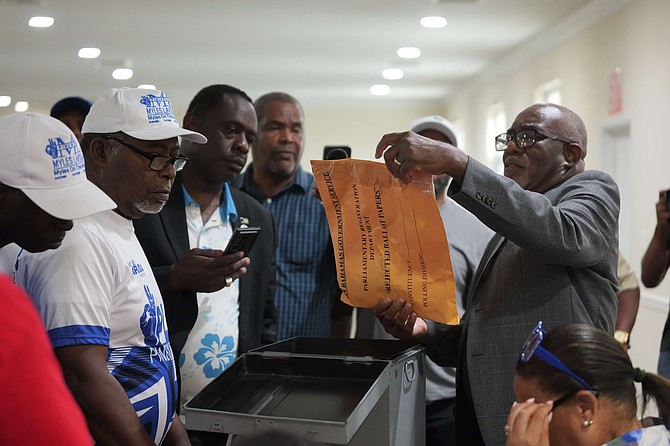
    The most common grievance centered on voters whose names were missing from their local voting register, voters incorrectly assigned to constituencies they did not reside in, and approved voter transfers that were never updated in the official registry.

    At Yellow Elder Primary School, a polling location serving the St Barnabas constituency, Michael Halkitis, candidate for the Progressive Liberal Party (PLP), noted that multiple voters who had applied for transfers found their changes had never been finalized. “Some of them just voted in the constituency where they appeared because the transfer was not finalised, so you had some of them, but by and large, a very smooth process,” Halkitis told The Tribune. He added that voter turnout was consistent through the morning, with the earlier advanced polling likely reducing election day turnout numbers. When asked why affected voters rarely opted to file protest ballots, he explained that most avoid the option out of a belief that protest ballots are never officially counted.

    Parallel issues emerged in the Golden Isles constituency, where Free National Movement (FNM) candidate Brian Brown documented cases of voters who held valid voter ID cards but could not find their names on the register at the Anatol Rodgers High School polling station. Brown confirmed that several of these impacted voters were ultimately forced to cast protest ballots.

    Complaints about the flawed voter register also spread rapidly across social media platforms. Local voter Shadai Toote shared a live video detailing her experience: she had submitted a transfer request from St Barnabas to Fort Charlotte back in March, but was ultimately incorrectly assigned to Bains and Grants Town — a constituency where she has never lived. “It’s like appalling to me,” Toote said. “I can’t begin to fathom that we’ve had four plus years to get prepared for something like this, and they still dropped the ball, so I’m being advised that I can’t vote in the constituency I’m in because I’m not on any of their registries.”

    Similar reports came from Abaco, where multiple voters opted to forgo voting entirely after discovering they had been assigned to the wrong constituency. Jobeth Coleby-Davis, PLP candidate for the Elizabeth constituency, confirmed her campaign team had received multiple complaints about incorrect constituency assignments. “They’ve been noticing it. And I think when those incidents come up, they speak with the returning officer, the presiding officer, to see how they would allow it to move ahead,” she said.

    Heather Hunt, FNM candidate for Elizabeth, shared one voter’s experience: the voter’s card correctly listed Elizabeth as their constituency, but their name appeared on the register for a different district. “They were sent to another constituency because that’s where the name appears on the register, and they had already tow the line and everything for almost half an hour,” Hunt said. “So that frustration we’re hearing, but you know, that person just is determined to, you know, exercise their right to vote, and so they just decided that they’re going to take that drive and go to the other constituency where their name is.”

    One of the most significant disruptions arose in Long Island, where FNM candidate Andre Rollins reported that Polling Division Nine, the island’s largest voting district, received 60 fewer ballots than the number of registered voters assigned to the location. “The fact that it’s the largest polling division means that it is curious that the Parliamentary Registration Department would send much fewer number of ballots than the number of people who are on the register,” Rollins said. “We have 360 plus persons on the register here on polling division number nine. However, they included only 300 white paper ballots in polling division nine ballot box when they send it from New Providence here to Long Island.”

    Rollins noted that legal guidance provided to the FNM suggested the polling station should not have opened at all, as the shortage put eligible voters at risk of being disenfranchised. The issue was ultimately resolved by reallocating surplus ballots from three smaller nearby polling divisions — 25 extra ballots were pulled from each of Divisions Three, Four and Eight, bringing Division Nine’s total ballot count up to 375.

    Ballot shortages were also reported on New Providence. In Fort Charlotte’s Polling Division One, voting was delayed for nearly 45 minutes after the station exhausted its initial ballot supply and had to wait for additional stock to be delivered.

    Not all voting experiences were marred by issues, however. At Jordan Prince-Williams Baptist School, Bamboo Town resident Darren Sinclaire described his voting experience as efficient and well-organized, noting that he and his elderly mother completed the entire process in roughly eight minutes. When asked if he felt anxious after hearing widespread warnings about voter register errors ahead of election day, Sinclaire said: “Yeah, I was, because I heard a lot of errors on the register and stuff like that, so I wondered if there would be any error on our parts, but everything went pretty smooth.”

    In Fort Charlotte, voter Nadia Benaby arrived at the CC Sweeting Senior High School polling station at 8:45 a.m. and finished voting by 9:15 a.m. She called the experience the smoothest voting process she had participated in across six general elections. At the same polling location, though, FNM candidate Travis Robinson highlighted concerns including late delivery of ballots.

    Voters across multiple other constituencies, including Freetown, Centerville, Garden Hills and Carmichael, reported average wait times of 20 minutes or less, reflecting that the majority of voting operations ran according to plan.

  • Pintard promises change at final FNM rally

    Pintard promises change at final FNM rally

    On the eve of The Bahamas’ hotly contested general election, Free National Movement (FNM) leader Michael Pintard brought his party’s campaign to a close Saturday night with a sweeping call for national change, positioning the opposition as a transformative alternative to the incumbent Davis administration that has left thousands of Bahamians struggling economically.

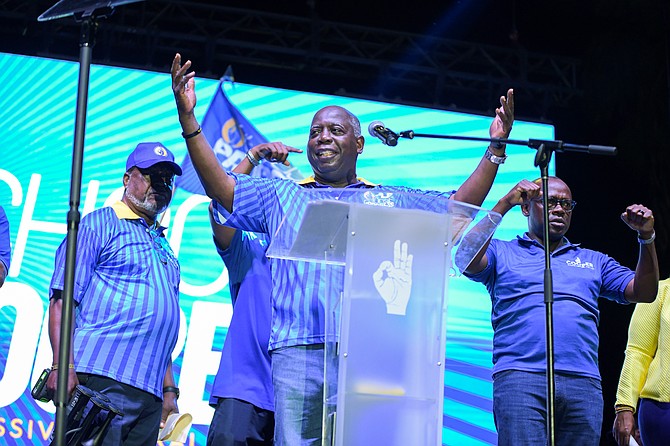
    Speaking to a fired-up crowd of supporters at a rally held near the former Queen Elizabeth Sports Centre, Pintard framed the FNM’s core mission as restoring public trust in national governance, promising Bahamians a new administration rooted in honesty, transparency, and tangible improvements to everyday quality of life.

    “Tonight, we’ve come to make the case that things can in fact be different,” Pintard told the audience. “We are asking you once again to invest your trust in a team that promises to serve you in humility, to be honest in the conduct of public affairs, and to be open and transparent with you about how every decision is made.”

    Pintard opened his critique of the ruling Progressive Liberal Party (PLP) by questioning the impact of billions in value-added tax revenue collected by the Davis administration, asking supporters what tangible improvements Bahamians have actually seen in critical areas of daily life. “They’ve earned a tremendous amount of money and we are left to ask: What have they done with the money? What can we touch and feel that has made a difference in the most fundamental areas of our lives?” he said.

    The FNM leader cast the upcoming election as a defining battle for expanded economic opportunity, particularly for marginalized groups including young Bahamians, frontline healthcare workers, small business entrepreneurs, and working families struggling to make ends meet.

    Opening up about his personal background, Pintard reflected on his upbringing in a single-parent public-school household, crediting his mother with building the character and determination that led him to the final campaign rally of a national election. “I had no idea that one night I’d be on a stage at the last rally before a poll in one of the greatest countries on this side of glory,” he said.

    Pintard emphasized that the national government holds a fundamental “duty of care” to help children and young people build a more prosperous future than the current generation inherited, while warning against the rise of a system where personal and professional success depends exclusively on political connections rather than merit.

    He laid out the FNM’s key policy pledges ahead of the vote: the construction of 5,000 new affordable homes over a five-year term, the expansion of public healthcare staffing with 100 additional doctors and more than 200 new nursing positions, targeted grants and low-interest loans to grow small and medium entrepreneurship, and intentional economic diversification to reduce The Bahamas’ longstanding reliance on tourism and financial services. Pintard also highlighted the party’s priorities around strengthening national food security, protecting domestic fisheries, expanding technology infrastructure, and unlocking new economic opportunities in the blue and green economies. “We believe this country can grow on more than just tourism and financial services,” he added.

    On governance reform, Pintard pledged to implement long-delayed national Freedom of Information legislation to enforce greater government accountability and transparency, telling supporters he has no fear of open records because the FNM has no corrupt activity to hide. “I’m not scared of freedom of information because we ain’t going to be doing no crookedness,” he said.

    The opposition leader also spoke forcefully about strengthening border protection and upholding national sovereignty, promising to prioritize Bahamian workers for all available jobs and economic opportunities across the country. “We will never displace Bahamians who should have first option — first dibs — on all things in our country,” he said. Pintard closed his remarks by urging supporters to turn out in force to vote, framing the election as a once-in-a-generation defining moment that will shape the nation’s trajectory for years to come.

    Before Pintard took the stage, former Prime Minister Hubert Ingraham, a towering figure within the FNM, addressed the crowd to ramp up pressure on the incumbent administration, urging Bahamians to vote the PLP out of office to allow a new government to audit the nation’s public finances and citizenship records.

    Ingraham accused the Davis administration of failing to address a laundry list of public concerns, ranging from weak governance oversight and reckless public spending to fraudulent Bahamian passports, strained public healthcare services, and uncompetitive no-bid government contracts. He directly asked the crowd whether the PLP had earned a second term in office, delivering a sharp rebuke: “They haven’t earned it, don’t give it to them. They have failed to properly address multiple allegations against their governance, fraudulent Bahamian passports, excessive unexplained public expenditure, healthcare system in crisis, inadequate and inefficient public services.”

    The former prime minister added that the administration’s consistent inability to pay its public obligations and the award of “large numbers of no bid contracts for suspiciously exorbitant sums of money to a favored few are all good reasons” to deny the PLP another term. “It’s time for someone else to check our books,” Ingraham stressed. “Someone needs to check the books, the treasury, and somebody needs to check our citizenship record. If for no other reason, you vote tomorrow, vote for somebody else to have a look at the books.”

    Ingraham also defended Pintard against recent PLP criticism that the FNM leader lacks sufficient executive experience to serve as prime minister, noting that every first-time prime minister takes office without prior experience in the nation’s top job. He added that Pintard is already a tested leader, having served in two different cabinet positions during a previous FNM administration. “I hear some of them talking about experience, and how critical it is for a prime minister to have experience,” Ingraham said. “Well, the first thing is, nobody who gets elected for the first time has any experience as prime minister.”

  • Davis urges voters to ‘choose progress’ at PLP’s final rally

    Davis urges voters to ‘choose progress’ at PLP’s final rally

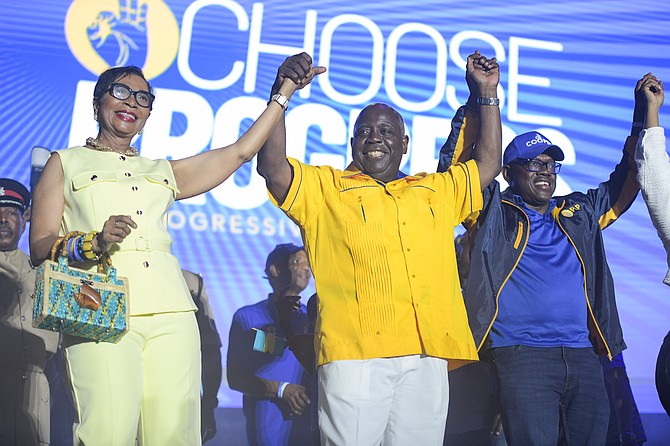
    On the eve of The Bahamas’ critical general election, the ruling Progressive Liberal Party (PLP) brought its months-long nationwide campaign to a rousing close on Monday night with a closing rally held at Nassau’s iconic Montagu Park. The event was headlined by incumbent Prime Minister Philip “Brave” Davis, who delivered the final push for voter support ahead of Tuesday’s polling.\n\nDavis was joined on stage by key senior party figures, including Deputy Prime Minister Chester Cooper, St Anne’s parliamentary candidate Keno Wong, incumbent Centreville Member of Parliament Jomo Campbell, and incumbent Carmichael Road MP Keith Bell. A number of other PLP representatives were notably absent from the final gathering, with party insiders indicating most were wrapping up last-minute outreach efforts in their own constituencies to sway undecided voters ahead of polling day.\n\nIn his closing address to hundreds of assembled supporters, Davis issued a direct appeal to Bahamian voters to grant the PLP a second consecutive term in office, arguing that a new mandate would allow the government to see through the policy and infrastructure projects launched during the party’s current four-and-a-half-year tenure. He opened his remarks by extending gratitude to both loyal PLP backers and all Bahamians for their ongoing support throughout his time as prime minister, noting that public prayers and encouragement had been a critical source of strength through challenging moments of his leadership.\n\n“At the core of our democratic system is the fundamental right of every citizen to make their own choice at the ballot box,” Davis told the crowd. “Tomorrow, that choice could not be clearer: you can vote for continued progress by casting your ballot for the PLP. Or you can choose the opposition’s ‘reset’ platform, which would take our country backward to the old ways of doing things.”\n\n“Over the course of this entire campaign, we have laid out for the Bahamian people a clear record of what our administration has delivered over the past four and a half years,” he added. “We have shared our detailed plan for the next term, shown voters exactly what we will deliver in a second term, and invited every Bahamian to partner with us to build a stronger, more prosperous future for this country. My friends, I trust you will make the right choice. I trust you will stand with us and choose progress.”\n\nDavis also used his address to update attendees on his weekend meetings with delegations from three major international election observation missions: the Caribbean Community (CARICOM), the Commonwealth of Nations, and the Organization of American States (OAS). Combined, the three organizations field observer teams representing 78 member nations, all deployed to monitor the fairness and transparency of Tuesday’s general election process. Davis welcomed the international observers, noting that independent international monitoring groups have supported Bahamian electoral processes for decades.\n\n“I am happy and proud to say that these observers continue to be deeply impressed by the strength of our democratic institutions here in The Bahamas,” Davis said. “They have already seen firsthand the passion and respect that Bahamian voters bring to the electoral process, and that is a testament to how far our democracy has come.”\n\nThe rally closed with a symbolic moment as Davis and his small group of senior colleagues joined hands on stage, with R. Kelly’s “Sign of a Victory” playing over the park’s speaker system to cap off the event. Former Bahamian Prime Minister Perry Christie, one of the PLP’s most respected elder statesmen, also joined the party leadership on stage to lead attendees in a closing prayer for victory, as crowd chants of support rang out across Montagu Park ahead of polling day.\n

  • Decision Day: Bahamians head to polls to choose next govt

    Decision Day: Bahamians head to polls to choose next govt

    Bahamian voters are heading to polling stations across the archipelago on Thursday to decide one of the most consequential political contests in the nation’s modern history: whether to grant incumbent Prime Minister Philip “Brave” Davis a rare second consecutive term, or to oust his Progressive Liberal Party (PLP) and return the Free National Movement (FNM) to power. The outcome will either break or perpetuate the decades-long pattern of alternating rule between the country’s two dominant political parties that has defined Bahamian electoral politics since independence.

    The snap election, called three months earlier than constitutionally required, caps a tense, condensed campaign season that laid bare deep public anxiety over core domestic issues: soaring cost of living, unaddressed immigration challenges, questions of election integrity, and a persistent lack of government accountability. More than 209,000 registered Bahamian voters are eligible to cast ballots across 40 newly expanded constituencies, which added St James in western New Providence, and Bimini and the Berry Islands ahead of this vote. This total marks a record high for voter registration, driven by a late surge in sign-ups after Davis dissolved Parliament on April 8 to call the early contest.

    Davis, who led the PLP to a decisive victory over the FNM in the 2021 general election, gambled on an early vote to capitalize on strengthening macroeconomic indicators that have emerged during his first term. The Bahamas has seen improved sovereign credit ratings, a robust tourism-driven recovery from the economic collapse triggered by the COVID-19 pandemic, and a wave of new foreign direct investment. The incumbent party has campaigned on this track record of economic stabilization, framing itself as the only force capable of continuing the nation’s post-pandemic progress.

    Against this backdrop of top-line growth, however, ordinary voters continue to grapple with persistent daily financial pressures: skyrocketing grocery costs, soaring rent and utility bills, and strained access to affordable healthcare. To address these concerns, the PLP’s “Blueprint for Progress” campaign manifesto pledges a slate of new policy initiatives: expanded worker protections, stricter immigration enforcement, a new migrant health insurance scheme, targeted investment in artificial intelligence infrastructure, expanded job training programs, and expanded housing assistance, all aligned with Davis’ campaign slogan of helping Bahamians “learn, earn and own.” Throughout the final stretch of the campaign, Davis framed the contest as a stark choice between continued progress and a return to failed past policies, dismissing the FNM as unfit to govern, arguing the opposition lacks both the ideological vision and temperament to lead the nation.

    The FNM, led by party leader Michael Pintard, has sought to flip Davis’ framing, positioning itself as a transparent, accountable alternative to the scandal-plagued incumbent administration. Pintard has repeatedly pushed back on Davis’ attacks, arguing that the Davis administration has failed to deliver on its 2021 promises of reform, has done little to ease cost of living pressures for working families, and has consistently fallen short on transparency commitments.

    The FNM’s manifesto puts forward a series of populist policy pledges designed to resonate with struggling voters: eliminating value-added tax (VAT) on essential groceries, medical supplies and educational materials; launching a new national lottery to generate revenue for social programs; constructing at least 5,000 new affordable homes; hiring 100 additional doctors and 200 new nurses to expand public healthcare capacity; strengthening immigration enforcement; and rolling out the long-delayed Freedom of Information Act (FOIA) within the first 90 days of taking office.

    The FOIA pledge has proven particularly potent for the opposition, as transparency has emerged as one of the PLP’s biggest vulnerabilities. When Davis took office in 2021, he campaigned on sweeping accountability reforms, but many long-discussed anti-corruption and open government measures remain stalled or unimplemented. While Davis has defended his record, framing transparency as a matter of personal character and trust, the opposition has seized on these delays to argue the incumbent administration has no interest in being held accountable to public scrutiny.

    Beyond policy disputes, the campaign has been overshadowed by persistent concerns about the integrity of the voter roll and electoral administration. Over the past several months, multiple court cases have been filed involving foreign nationals accused of possessing fraudulent voter identification cards and other official government documents. While Parliamentary Commissioner Harrison Thompson has repeatedly defended the accuracy and integrity of the voter register, opposition leaders and independent civil society activists have continued to raise red flags about systemic vulnerabilities. Those concerns escalated after early voting was marred by long lines and widespread administrative failures. PLP chairman Fred Mitchell denied claims of systemic chaos but acknowledged that the long wait times voters faced were unacceptable, admitting that election officials failed to properly calculate the number of polling booths, voting spaces and staff needed to accommodate early voters.

    Multiple controversies have also hounded the incumbent PLP in the final weeks of the campaign. The Bahamian Tribune reported that more than $200,000 in Hurricane Dorian relief gift certificates distributed to Abaco residents in the names of PLP candidates and party officials were funded through the Ministry of Finance, according to testimony from Premier Importers CEO Chris Lleida. Shortly after that controversy broke, reports emerged that outstanding electricity bills for residents of Grand Cay and Moore’s Island were cleared to zero just two weeks before the election, shortly after Davis visited the islands and promised debt relief. Government officials defended the move, saying it was meant to resolve long-standing billing discrepancies that dated back to Hurricane Dorian and the COVID-19 pandemic. But critics have called the timing suspicious, with former Prime Minister Hubert Ingraham publicly accusing the PLP of attempting to buy votes ahead of polling day.

    The contest has also exposed deep internal rifts within both of the Bahamas’ major parties. Former FNM Prime Minister Dr. Hubert Minnis is running as an independent candidate in the Killarney constituency after being denied the party’s nomination for his seat. Meanwhile, Ingraham, another former FNM prime minister, made a rare return to the campaign trail to stump for the party, leveling sharp criticism against PLP Fort Charlotte candidate Sebas Bastian, warning of the risks of Bastian rising to a leadership role within the PLP.

    A third force, the Coalition of Independents led by Lincoln Bain, has positioned itself as a radical break from the decades-old PLP-FNM cycle of alternating power, framing itself as a new option for voters fed up with both major parties. To date, however, no third party has ever won enough seats to form a government in the Bahamas’ post-independence history. International electoral observers are on the ground across the country to monitor Thursday’s voting process, closely watching for any signs of irregularity as the nation waits for results.

  • PM promises sweeping reforms on election eve

    PM promises sweeping reforms on election eve

    As the Bahamas prepares for its hotly contested general election, the country’s two major political parties have wrapped up their final campaign events over the weekend, delivering starkly contrasting closing messages to voters ahead of polling day.

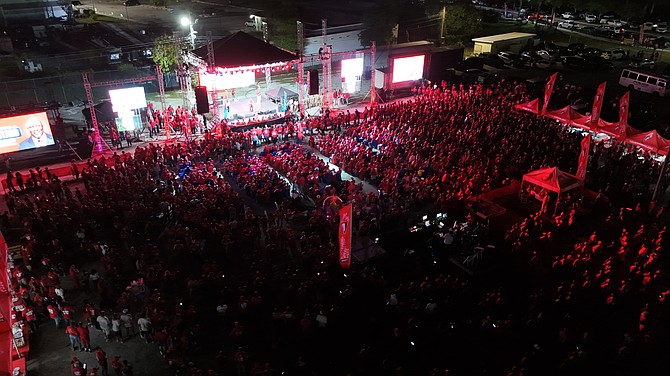
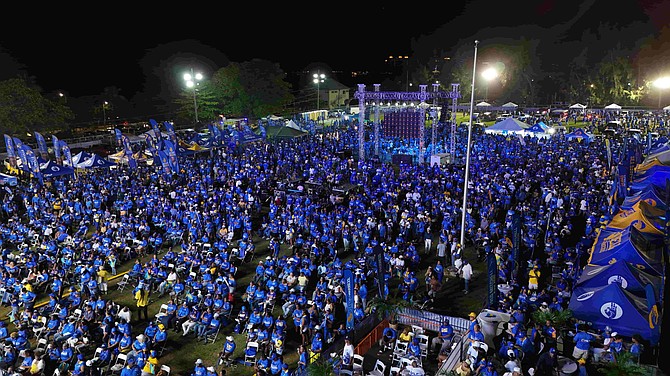
    Incumbent Prime Minister Philip “Brave” Davis, leader of the Progressive Liberal Party (PLP), took the stage Saturday night before a crowd of thousands of energized supporters at Nassau’s Clifford Park, framing his administration’s bid for a second term as a chance to build on four years of progress. The rally opened with the entrance of Davis to the song *Goodness of God*, complete with celebratory fireworks, live performances from local artists, and speeches from all PLP candidates, as attendees repeatedly cheered on the party’s re-election bid.

    During his keynote address, Davis laid out an ambitious policy agenda for a new term, centered on expanding access to opportunity across housing, workforce development, healthcare, and small business growth. A core pillar of the plan is upskilling: Davis committed that a returning PLP government would train 25,000 Bahamians through the Upskill Bahamas initiative by 2031, building on the existing National Apprenticeship Programme. The administration also plans to construct new campuses for the Bahamas Technical and Vocational Institute (BTVI) and a new Public Health Authority academy, while investing in the expansion of the domestic creative economy to retain local talent.

    “For too long, we have watched some of our writers in this country get their education, build their careers and they don’t come back home because the opportunity was not here, because the path home was not clear,” Davis told the crowd. “So we are not just educating young Bahamians. We are building a country where people will stay and build both their careers and our country.”

    On housing, Davis prioritized expanding affordable homeownership, specifically targeting essential workers including nurses, teachers, and law enforcement officers through an expanded rent-to-own programme. To protect renters, he pledged new national mandatory housing standards and the creation of a dedicated residential tenancy authority, alongside a programme to repurpose distressed properties for the affordable housing market. “For every Bahamian who wants a path to ownership, this government is going to offer significantly increased help in building that path,” he added.

    For healthcare, Davis highlighted ongoing clinic renovations and new hospital projects, while announcing new reforms for a second term: full health insurance coverage for all public servants, including Bahamian contract workers, expanded prescription drug coverage under the National Health Insurance scheme, a permanent 24-hour suicide prevention hotline, and the rollout of telemedicine and mobile clinics to all Family Island health facilities within three years. He also confirmed an expansion of the catastrophic healthcare fund to shield families from crippling medical debt following unexpected serious diagnoses.

    To cut red tape for local entrepreneurs, Davis announced a new unified digital one-stop application system that would allow business owners to register a company, obtain a business license, sign up for National Insurance Board coverage, and secure a tax identification number all through a single form. A unified development approval portal with legally binding mandatory decision timelines will also end the longstanding problem of development applications sitting unanswered for months, he said.

    Davis closed his address by attacking the opposition Free National Movement (FNM), dismissing its leadership as petty, spiteful, and ill-suited for national office. Speaking directly to FNM leader Michael Pintard, he noted that the role of prime minister requires steady temperament and sound judgment that voters can trust, calling out the opposition’s recent campaign claims. “This not a job for those with anger management issues. But above all, people have to be able to trust your judgment,” he said. He also pushed back against FNM claims of shifting voter momentum after the opposition’s recent SOS rally, pointing to the massive turnout at Clifford Park as evidence of PLP’s support.

    Meanwhile, at the FNM’s closing rally held at Savannah Sound Park on the island of Eleuthera, Pintard doubled down on scathing criticism of the PLP, framing the election as a chance to remove a dishonest, corrupt administration that has betrayed public trust.

    Pintard opened by accusing the PLP of repeated lies to voters, including false claims about FNM policy. He refuted PLP assertions that the FNM would eliminate the popular national school lunch programme, noting the FNM originally created the policy when it held power. He also denied claims that an FNM government would mass fire public servants and postal workers, turning the accusation back on Davis, who he criticized for failing to intervene when dozens of women social services workers were fired from the Marathon constituency under a PLP MP. “Philip was in charge when the member of parliament for Marathon fired women in social services. What did Davis do? He did absolutely nothing to protect those Bahamian women, more than 90 percent of those in urban renewal, more than 95 percent were fired under Philip,” Pintard said.

    On national sovereignty, Pintard called out the PLP for failing to address a rising tide of scam marriages designed to exploit Bahamian immigration law. He emphasized that the FNM welcomes legal immigrants and supports genuine cross-border relationships, but will crack down on fraud that undermines national borders. “If two persons fall in love, one from elsewhere, one from here, I celebrate love. They should be entitled to all the rights. But for those who fake love to make paper, we don’t rate you. We rate our laws,” he said. “And so tonight we have an opportunity to send a message to the PLP to let them know we need new leadership in the country that will protect the sovereignty of the country.”

    Pintard laid out his own policy platform for voters, including commitments to restore reliable banking access to Family Islands by forgiving or reducing business license fees for commercial banks to incentivize their return to smaller islands. A FNM government would also modernize the national post office, introduce a new national lottery with proceeds directed to sports, culture, education, environmental protection, and youth development, increase agricultural subsidies, and expand educational access for students with disabilities including autism.

    On corruption, Pintard said an FNM administration would root out graft in public agencies without mass layoffs of civil servants, noting he never fired staff during his tenure leading two government ministries. “We make no apology for wanting better for you. They can run as many ads as they want so you don’t have to see brothers and sisters arrested for putting their hand in the cookie jar. We will change it and we will make it better without one single person being fired,” he said.

    He closed by attacking Davis’s call for early election, alleging the prime minister scheduled the vote before releasing a new budget to hide a widening national deficit. Pintard noted that under the PLP, even without the shocks of Hurricane Dorian or the COVID-19 pandemic, national debt has increased by $2 billion, and the extra billion dollars in annual Value Added Tax revenue that the government collected has not been accounted for. “The PLP with no Dorian and no COVID has added $2 billion on our national debt. The VAT was supposed to be collected to pay down the debt but it has grown. The country was earning a billion dollars extra under Davis and Chester but you don’t know where the money is,” he said. “Philip says we are desperate for power, I say he is desperate to keep power,” he added, also questioning the accounting of $120 million from the sale of Grand Lucayan and claiming Davis should retire rather than seek a second term.