标签: Bahamas

巴哈马

  • Election observers call for independent voting authority

    Election observers call for independent voting authority

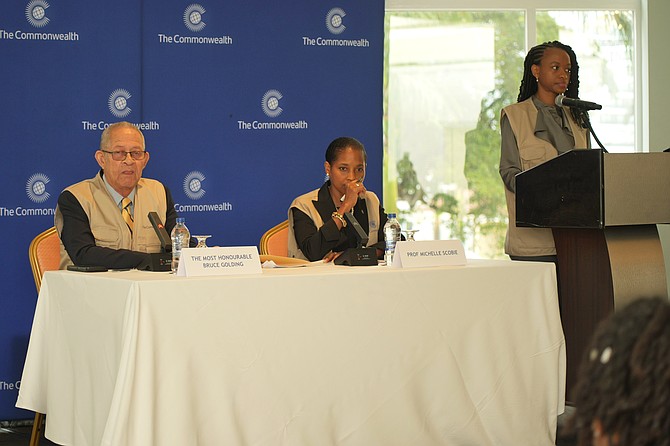
    The Commonwealth Observer Group, which has monitored Bahamian electoral processes since 2017, has issued a stark call for comprehensive, long-overdue reform of The Bahamas’ election infrastructure, a day after releasing its preliminary findings from the most recent national vote. Though the current Davis administration has taken incremental steps to modernize the country’s electoral system, the international monitoring team argues far deeper changes are needed across three critical areas: election management frameworks, digital voting technology, and national media coverage rules.

    Leading the observer mission is former Jamaican Prime Minister Bruce Golding, who emphasized that many key reform recommendations put forward after previous observation missions have sat unaddressed for years. Golding pushed for the creation of a permanent domestic oversight body tasked with systematically reviewing findings from international observer groups and implementing actionable changes, a core recommendation the Commonwealth has put forward for decades.

    One of the most high-priority proposals the group has reintroduced is the establishment of an independent national election management body. Golding noted that 24 years have passed since the last national referendum on the issue, a timeline that he says makes it long past time to revisit the question for Bahamian voters. This call comes on the heels of weeks of formal complaints from Bahamian opposition parties, which have raised widespread concerns about the Parliamentary Registration Department’s management of the recent electoral process, including doubts over the accuracy and integrity of the national voter register and inadequate pre-election consultation and preparation.

    While Golding praised multiple elements of the recent election — including the peaceful conduct of voting on election day, the professionalism of political party agents, and robust security arrangements across polling sites — the mission documented a series of persistent operational failures. These included widespread reports of voters being incorrectly assigned to constituencies, omitted entirely from voter rolls, and significant logistical breakdowns during last month’s advance polling period.

    Golding outlined a series of immediate adjustments for the Parliamentary Registration Department, urging officials to apply lessons learned from the advance poll to all future electoral events. Key fixes include revising the number of voters assigned to individual polling stations, improving crowd control protocols, adjusting staffing deployment, adding clearer directional signage, accelerating the distribution of certified voter lists to political parties and returning officers, and strengthening proactive communication with both the public and political stakeholders about operational changes.

    When asked about the potential for fixed election dates to resolve some scheduling and planning challenges, Golding noted the mission had not thoroughly evaluated the policy, but explained that the reform carries both benefits and drawbacks. “A situation may arise in a country which demands a return to the electorate and it may not necessarily be a good thing for that necessity to be imprisoned by the fact that the election date is fixed,” he said, “At the same time, a fixed election date does provide some predictability so that people can plan.”

    Additional procedural reforms recommended by the group include publishing preliminary voter lists online to enable public verification and correction of errors, and moving from optional to mandatory biometric voter identification cards for the next national election. Golding commended the Davis administration’s rollout of optional biometric cards as a positive step toward modernization, but said full mandatory adoption is needed to eliminate roll inaccuracies.

    One of the most concerning trends the mission identified is a persistent drop in voter turnout, a shift from The Bahamas’ historical record of high voter participation before the dual shocks of Hurricane Dorian and the COVID-19 pandemic. “This time around, there’s no COVID. We don’t have a hurricane and based on the preliminaries of the turnout, it seem to be somewhere in the region of 56 percent. That worries me,” Golding said. He noted that declining turnout is a regional trend across the Caribbean, and urged Bahamian political parties to investigate the root causes of growing voter alienation. To reverse the decline, Golding proposed launching a robust cross-platform public information campaign that uses both traditional and social media months ahead of the next election to boost voter awareness and engagement.

    On media issues, the group acknowledged that press freedom is generally respected across The Bahamas, but documented significant public unease over the governing administration’s arrangements at the state-owned Broadcasting Corporation of The Bahamas (BCB) in the lead-up to the election. The Commonwealth restated its long-standing recommendation that ZNS, the national public broadcaster, provide equal access and balanced, impartial coverage to all registered political parties and candidates, regardless of incumbency.

    The mission also received multiple reports of close, overlapping ties between private media outlet owners and the country’s major political parties, raising concerns about widespread implicit and explicit biased coverage. To address this, the group recommended that private media organizations collaborate to create an independent self-regulating media association for industry professionals, alongside a formal code of ethical conduct to guide political coverage.

    Golding also flagged issues around the recent redistricting process that created two new parliamentary constituencies, arguing that the final boundary map was drawn to benefit the incumbent Davis administration. “The delimitation of constituencies under this arrangement has the potential to confer an unfair advantage in election outcomes,” he said.

    Closing his presentation of preliminary findings, Golding congratulated re-elected Prime Minister Philip Davis on his victory, and commended all Bahamian voters for turning out and casting their ballots in a peaceful, orderly manner. A full, detailed final report from the Commonwealth observer mission will be published at a later date.

  • Golding criticises lack of campaign finance laws

    Golding criticises lack of campaign finance laws

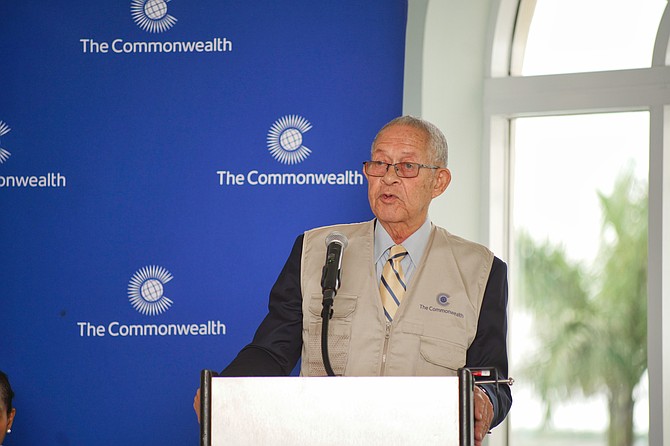
    Unaddressed gaps in campaign finance regulation have left Bahamian elections persistently vulnerable to undue monetary influence, according to Bruce Golding, former Jamaican Prime Minister and head of the Commonwealth Observer Group. In a public press conference held at the British Colonial Hotel, where the group released its preliminary evaluation of the upcoming 2026 Bahamian general election, Golding issued sharp criticism of successive Bahamian governments’ failure to advance long-promised reform despite repeated warnings from international observer missions.

    Golding noted that the need for updated campaign finance rules has been flagged by international monitoring teams for years, with no meaningful legislative action ever following these repeated calls. During his remarks, he joked that even if global monitoring bodies continued sending observer delegations to the Bahamas for another 100 years, the same unheeded recommendations would be repeated year after year. He emphasized that international bodies alone lack the leverage to force the necessary changes. “The people of The Bahamas need to make this their business. It is their democracy. It is their future,” Golding said. “Politicians can afford not to listen to the Commonwealth Secretariat, but they cannot refuse to listen to their own constituents. That is why real progress depends on the level of civic activism Bahamian citizens choose to exercise.”

    The push for campaign finance reform is not a new conversation in Bahamian politics: major parties from across the ideological spectrum have repeatedly promised to advance the policy when campaigning, but have never followed through on those pledges once in power. Most recently, current Prime Minister Philip “Brave” Davis confirmed in 2024 that campaign finance reform was not a priority for his administration, despite earlier commitments to move the legislation forward. Golding observed that this pattern—opposition parties embracing reform with great urgency, only to abandon the issue once they win power—is a common trend across many Commonwealth nations.

    This election cycle has brought the absence of regulation into sharp relief, as reports have emerged of widespread candidate distribution of gifts and vouchers to voters, a practice critics widely characterize as explicit vote buying. Off the record, sources from the opposition Free National Movement (FNM) have alleged that the ruling Progressive Liberal Party (PLP) poured massive amounts of unregulated campaign funding into outreach across the country.

    Golding warned that small jurisdictions like the Bahamas, which have relatively small voter rolls per constituency, are particularly susceptible to this kind of monetary influence and illicit vote buying. Wealthy candidates or well-funded parties can easily calculate the exact number of votes they need to secure a win, then deploy unrestricted financial resources to buy that support directly, he explained. “This is something that worries us,” Golding added.

    To address these systemic gaps, Golding outlined a series of key policy recommendations. First, he called for mandatory registration of all political parties, arguing that these organizations wield enormous public influence and cannot be allowed to operate with anonymous backing. He also proposed legally mandated caps on individual and corporate political donations, binding limits on overall campaign spending for both parties and individual candidates, and significant enforceable sanctions for any violations of these rules. Additionally, Golding recommended adopting a formal code of conduct for all political parties and candidates to regulate campaign behavior, particularly to curb the spread of personal attacks against opponents that have become increasingly common on social media platforms.

  • ‘We thought we was going to die’

    ‘We thought we was going to die’

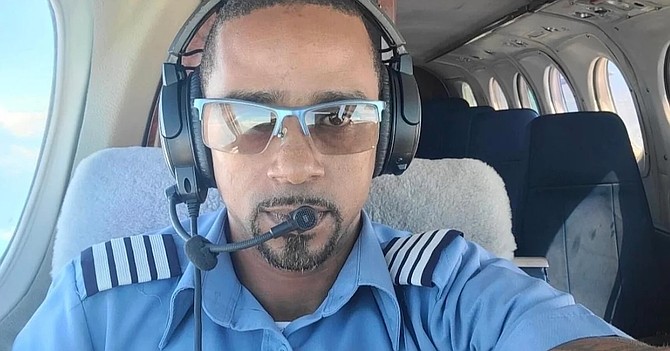
    On a fateful election day flight from Abaco to Grand Bahama, a routine 20-minute journey turned into a devastating fight for survival when a twin-prop Beechcraft King Air 300 suffered dual engine failure amid stormy weather, forcing the experienced pilot to ditch the aircraft into the Atlantic Ocean 80 miles off Florida’s coast. For the 11 people on board, the hours that followed would test every ounce of their will to live — and end in a rescue that survivors call nothing short of a miracle.

    Olympia Outten, a Grand Bahama resident who could not swim and carried a lifelong fear of sharks, broke down in tears as she recounted the terrifying moments after the aircraft began its steep nosedive into the water. Outten was traveling with her two sons and niece, all heading home to cast their ballots in the country’s general election, when her niece first spotted the unsettling sight of the plane’s propellers grinding to a halt mid-flight.

    Pilot Ian Nixon, a 43-year-old aviator with 25 years of flying experience, told reporters that the failure extended far beyond just the engines: he lost navigation systems, radio communication, and all critical avionics shortly after the emergency began. After making unsuccessful attempts to alert air traffic control in Freeport and Miami, Nixon made the split-second decision to keep the plane airborne as long as possible before intentionally ditching it into the choppy sea. “Once I hit the water, my first thought was, ‘we didn’t die,’” Nixon recalled to CBS News. “That’s one of the things I remembered. We didn’t die, let’s get everyone out.”

    The impact of the crash threw the aircraft into chaos. Outten was slammed against the cabin wall and trapped by a jammed seatbelt, only freed after her son worked to loosen the buckle. The emergency door tore off on impact, striking a male passenger in the chest, while Outten’s niece was thrown from the rear of the plane to the front, suffering cracked ribs. Outten sustained a hip injury, and her son, who lives with asthma, suffered a severe attack and began vomiting while the group waited for help. One female passenger suffered a sudden heart attack shortly after escaping the sinking plane, and Outten dragged the non-swimmer into the small life raft, reassuring her “you ain’t gonna sink baby, you gonna live” and urging the group to pray as they waited.

    After escaping the flooding fuselage, Outten found herself frozen at the open exit, staring out at what she described as a vast, dark “black sea.” “When I went to the door, I stood still because I thought we were gonna die — all I saw was dark water around us,” she said. When her niece urged her to swim, Outten admitted “I told her I can’t swim.” The young woman then coached her aunt through the water, walking her through how to move her legs to stay afloat until Outten could reach the partial wreckage of the plane’s wing, where survivors clustered to stay out of the frigid water.

    After clinging to the wing for as long as the unstable wreckage allowed, the group boarded the limited life raft and drifted for five full hours in open water, pelted by rain from a passing storm and convinced they would never be spotted. Nixon had declared an emergency with air traffic control before contact was lost, triggering a multi-agency search that initially located eight survivors before locating the remaining three. The group’s luck turned when a U.S. military helicopter on a routine training exercise in the area spotted the raft and pulled all 11 people from the water. “We cried and rejoiced when that rescue plane finally came overhead,” Outten said. “I thank God the US Marines saw us and saved us.”

    Medical responders confirmed that two passengers arrived with life-threatening injuries, while others were treated for broken bones, lacerations, and pre-existing conditions that worsened during the ordeal. For Tamicka Nixon, the pilot’s wife and an aviation industry worker herself, the hours between the loss of communication and the confirmation that her husband was alive were an agonizing test of nerve. The pair usually stay in contact during routine flights, so when 20 minutes passed after the flight was scheduled to land with no word, she knew something was wrong. She was actually in the process of casting her own vote when air traffic control called to alert her of the emergency.

    “It was truly, truly nerve-wracking while I’m trying to make a conscious effort to be strong for my family,” she told reporters. For hours, the situation was a waiting game, as she coordinated with aviation contacts and rescue teams to keep search operations moving. “Communication between contacts and rescue resources became critical during the search,” she noted, adding that the wait for news of the survivors was almost unbearable.

  • Crash pilot had US licence revoked over conviction

    Crash pilot had US licence revoked over conviction

    A recent ocean plane crash that ended in a miraculous full survival of all on board has now sparked intense public scrutiny over the pilot’s decades-long legal and regulatory battles rooted in a prior drug conviction.

    Ian Nixon, the pilot at the controls of a Beechcraft King Air 300 that went down roughly 80 miles off Florida’s coast this Tuesday, has been widely praised for his emergency handling that let all 11 passengers and crew endure five hours adrift in open water before rescue. But newly uncovered 2022 Supreme Court documents lay bare a tangled 15-year history of regulatory action against Nixon, dating back to his 2007 U.S. federal conviction.

    Court records show Nixon was first issued a commercial pilot license by the U.S. Federal Aviation Administration in 2002. That changed in May 2007, when he was found guilty of conspiracy to supply illegal substances into the United States in a Florida federal court and served a prison term for the offense. In 2009, the FAA permanently revoked his American pilot license as a result of the conviction.

    Following his release from custody, Nixon returned to his home country The Bahamas in 2011. There, he successfully converted his revoked U.S. commercial license to a valid Bahamian pilot license, and secured a flying position with local regional carrier Pineapple Air. He also obtained a security pass granting him access to restricted airside areas at Lynden Pindling International Airport (LPIA), Nassau’s main international hub.

    The first sign of regulatory pushback came in March 2013, when the Bahamas Department of Civil Aviation (DCA) sent an email to Nixon’s employer notifying the airline that his U.S.-origin permit had been revoked and demanding the document’s return. Nixon later told officials he was informed his 2007 U.S. drug conviction was the sole reason for the revocation.

    Over the following years, two key regulatory actions prompted Nixon to launch a judicial review challenge with the Bahamas Supreme Court. The first was a February 2018 decision by the DCA director to suspend Nixon’s Bahamian commercial pilot license and airman medical certificate, pending investigation into a separate aircraft accident involving the pilot. The second was the 2013 permanent revocation of his LPIA restricted-area security pass and official identification badge.

    In the 2022 ruling on the challenge, Justice Loren Klein laid out the full details of the case. Government respondents defending the regulatory actions argued Nixon had intentionally hidden critical information on his 2013 application for a new security badge: he failed to disclose his prior felony conviction in the U.S. After conducting a cross-check with U.S. Customs and Border Protection, airport officials confirmed the conviction and prison term, leading to the pass revocation.

    Respondents also presented allegations of ongoing violations: they claimed that even after his aviation credentials were restricted, Nixon continued to fly commercial operations in breach of Bahamian aviation rules. He allegedly accessed restricted LPIA airside areas with help from his wife, who worked for local aviation services firm Executive Flight Support, and used repeated deceptive tactics to obtain identification badges at airports in Rock Sound and Grand Bahama. These violations continued, they said, until a 2018 crash involving Nixon.

    Justice Klein ruled that while the two regulatory actions were connected, they were legally distinct. He granted Nixon an extension of time and leave to challenge the 2018 license suspension, noting that a suspension is inherently temporary and constitutes a continuing impact on the pilot’s ability to work, and that Nixon had presented an arguable case with reasonable prospects of success. Klein stressed, however, that judicial review only examines the procedural legality of decisions, not whether the outcome was substantively correct.

    The judge dismissed Nixon’s challenge to the 2013 revocation of his security pass, closing that portion of the case. As of the time of this week’s crash, no final ruling on the license suspension challenge had been publicly released, and it remains unclear whether the suspension was ever lifted, allowing Nixon to return to commercial flying.

    The revelation of Nixon’s ongoing regulatory battle has raised urgent questions about aviation safety oversight in The Bahamas: how a pilot with a permanently revoked U.S. license and a felony drug conviction was able to regain commercial flying privileges, and how he continued to operate in the years after his credentials were suspended. At the same time, aviation safety experts note that Nixon’s emergency skills during Tuesday’s ditching remain undisputed, with all 11 on board surviving a five-hour wait for rescue in open ocean, an outcome widely described as extraordinary.

  • Carnival cruise passenger dies after jumping from balcony

    Carnival cruise passenger dies after jumping from balcony

    A fatal incident has rocked a Caribbean Carnival Cruise voyage this week, after a male passenger died Wednesday following an overboard jump from his private stateroom balcony, as the vessel traveled toward New Providence island. Carnival Cruise Line has publicly confirmed the event that unfolded aboard the Carnival Liberty, in an official statement obtained by multiple international media outlets.

    In the statement, the company detailed that the guest apparently scaled his balcony railing and jumped into the ocean while the ship was making its way from Celebration Key to Nassau, the capital of the Bahamas. Quick-acting crew members immediately launched a comprehensive search operation after the alarm was raised, and managed to recover the passenger from the open water. Despite their rapid response, the man did not survive the incident.

    Carnival representatives added that the cruise line is currently extending full support to the man’s travel companions, who are family members accompanying him on the trip. “Our thoughts and prayers are with them and their loved ones,” the statement read.

    As of Thursday, details remain unclear on whether the man was pronounced dead at the scene when pulled from the water, or if he passed away after being brought back aboard the Carnival Liberty. Citizen journalism outlet TMZ has released amateur video footage capturing the rescue effort. A married couple traveling on the ship told the outlet that they heard the urgent “man overboard” announcement over the ship’s intercom system, and confirmed that the captain immediately ordered the vessel to turn around to begin the search.

    Local authorities in the Bahamas have not yet registered an official report on the incident, a representative for the Royal Bahamas Police Force told The Tribune. No further details on the passenger’s identity, age, or potential motive for the jump have been released to the public as of yet, as the investigation remains in its early stages.

  • Davis pledges to unite country as he is sworn in for second term as PM

    Davis pledges to unite country as he is sworn in for second term as PM

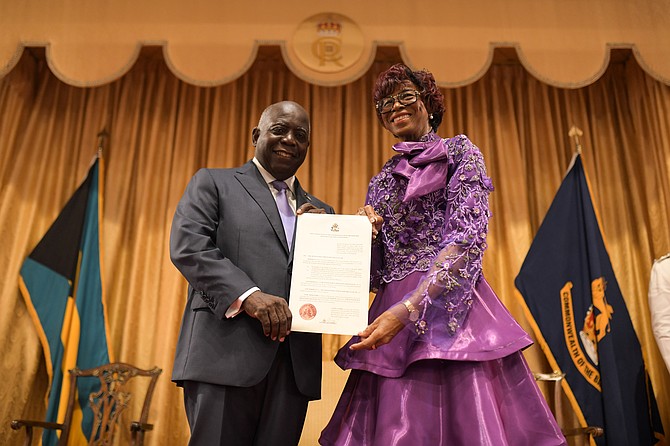
    In a historic break with decades of Bahamian political tradition, Prime Minister Philip “Brave” Davis has been officially inaugurated for a second consecutive term, one day after his Progressive Liberal Party (PLP) secured a landslide victory in the country’s general election. The swearing-in ceremony, held at Government House, formalized Davis’ new mandate after the PLP captured 32 of 49 parliamentary seats? No, correct: PLP won 33 of 41 total seats in Tuesday’s vote, a dominant margin that ended a 30-year cycle where Bahamian voters ousted sitting administrations after just a single term.

  • Minnis ‘disappointed’ by loss but pledges to remain active

    Minnis ‘disappointed’ by loss but pledges to remain active

    One day after final votes were tallied in The Bahamas’ general election, former prime minister Hubert Minnis opened up about his unexpected loss of the Killarney constituency seat — a post he held for nearly 20 years — revealing that while disappointment lingers, his engagement with the community he represented is far from over.

    Minnis’ defeat came after a historic and politically charged campaign that saw the former leader of the Free National Movement (FNM) split from the party he once headed, launching a rare independent bid for re-election following months of public friction with current FNM leader Michael Pintard and the party’s senior leadership. When the FNM leadership declined to renominate Minnis as its candidate for the 2026 general election, he opted to stay in the race, marking the first time any former Bahamian prime minister has run as an independent after leaving the party they once led. On election night, early results projected FNM nominee Michela Barnett-Ellis as the winner of the Killarney seat, ending Minnis’ decades-long hold on the constituency.

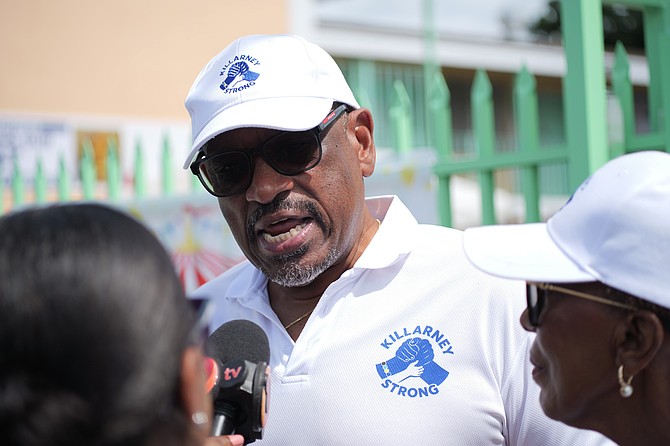
    The former prime minister arrived at a mandatory vote recount at the New Providence Community Centre on Thursday morning clad in his signature campaign gear — a branded “Killarney Strong” shirt and matching hat — and remained outwardly calm throughout the process. Speaking to reporters after the recount confirmed his loss, Minnis acknowledged the letdown of the outcome, but framed defeat in an unexpectedly reflective light.

    “Of course, I would have been somewhat disappointed that I lost in Killarney,” he told reporters outside the centre. “Sometimes defeat can be victory. In terms of feeling, I still feel good. I woke up this morning and did my usual thing and just came from coffee house with my lovely wife enjoying a nice morning of coffee.”

    As a long-time resident of the Killarney constituency, Minnis made clear that he has no plans to step back from community work. He announced a new initiative to launch an Educational Trust Fund, designed to provide much-needed financial aid to local high school students facing economic barriers. The former prime minister confirmed he will seed the fund with $100,000 of his own personal capital, and he plans to solicit additional donations from outside sponsors to expand the fund’s reach.

    For months leading up to election day, Minnis remained confident he would retain the Killarney seat, even as pundits questioned his odds as an independent candidate. When asked on election day what his future would hold if he lost, he dismissed the question and reaffirmed his belief in a victory.

    When asked Thursday whether his defeat signals the end of his formal political career, Minnis said he has not yet held in-depth conversations with his family about his long-term plans, stressing that his loved ones will be central to any future decision he makes. When pressed on whether he would consider reconciling and rejoining the FNM, he ruled out that possibility, noting that he currently plans to shift his focus to supporting his children as they grow their own business ventures. When asked what factors led to his defeat, he simply replied, “Only God knows.”

    The 2026 general election delivered a decisive victory for the incumbent Progressive Liberal Party (PLP), which secured a second consecutive term in office. Unofficial final results show the PLP winning 33 of the 41 available parliamentary seats, while the FNM only captured eight seats. When asked for comment on the FNM’s poor overall performance in the election, Minnis said he does not interfere in the internal affairs of his former party.

    “To be honest with you, I can’t tell you my real belief or what I believe happened,” he said. “I will write that in my journals, you know, but that’s my belief, and it would be backed up with some facts, but it’s not for public consumption at this time, the public is not prepared to take that. They can’t devour it at this time.”

  • Voter turnout voter turnout a ‘tragic’ 58%

    Voter turnout voter turnout a ‘tragic’ 58%

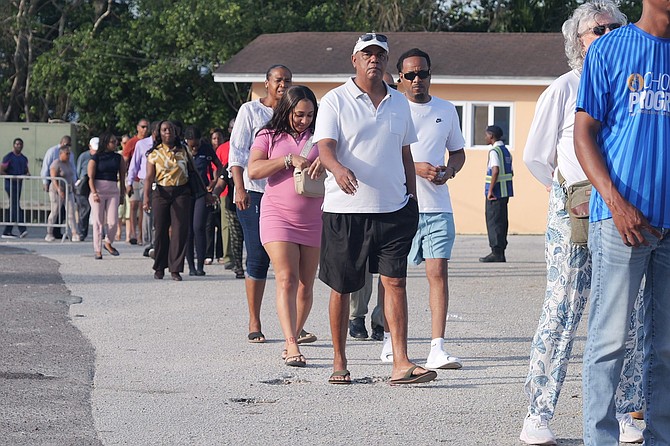
    In the wake of Tuesday’s general election in the Bahamas, an alarming projected voter turnout of just 58 percent has sent shockwaves through the nation’s political landscape, with senior electoral officials warning the figure would mark an unprecedented collapse in civic participation if officially confirmed. Geoffrey McPhee, an election consultant with the country’s Parliamentary Registration Department, told reporters Wednesday that the unofficial estimate — which remains subject to confirmation as recounts proceed across 25 contested constituencies — points to voter turnout falling even lower than the 2021 snap election held at the height of the COVID-19 pandemic.

    McPhee emphasized that the 58 percent figure is still preliminary, drawn from preliminary on-the-night assessments by election staff, but called the projected drop a devastating blow to the country’s democratic culture. “Our folks, we have gone south with respect to excitement about elections. That is really, really, that’s horrible,” he said, adding that the 2021 COVID-era turnout, already a historic low, outperforms the current projection. “That’s tragic, because with elections, once they miss the election, they don’t feel the urgency to reengage.”

    The projected slump represents a staggering break from the Bahamas’ strong post-independence voting tradition. For decades after the nation gained independence, general election turnout routinely exceeded 88 percent, and regularly climbed above 90 percent through the first three decades of self-governance. The 1977 inaugural post-independence general election recorded an 88.6 percent turnout, with numbers rising to 90.4 percent in 1982 and holding above 90 percent through 1987. Turnout stayed consistently high even as power shifted between major parties: it hit 91 percent when the Free National Movement (FNM) ended the Progressive Liberal Party’s (PLP) decades-long hold on government in 1992, and reached 93.2 percent when the FNM secured a landslide second term in 1997. Through 2002, 2007 and 2012, turnout remained firmly above 90 percent, and even in 2017, the first election to show a clear downward trend, participation still hit 88.4 percent.

    The first historic rupture came in 2021, when turnout fell sharply to 64.9 percent. If the current 58 percent projection holds, Tuesday’s election will set a new post-independence low for voter engagement. The low turnout coincided with the PLP securing a commanding second consecutive term in office, with unofficial results showing the party winning 32 of 41 seats, nearly matching its 2021 landslide victory that ousted the FNM from power.

    Prime Minister Philip “Brave” Davis, leader of the PLP, acknowledged the unexpectedly low turnout, noting that weak participation is never healthy for a democratic society and that more work must be done to help all voters feel that their ballots carry meaningful weight. So far, the highest recorded local turnout is expected in the New Providence constituency of Fort Charlotte, where former Island Luck CEO Sebas Bastian defeated FNM candidate Travis Robinson by more than 2,300 votes on an estimated 72 percent turnout, according to local insiders.

    Civil society leaders have joined electoral officials in sounding the alarm, stressing that the projected low turnout should concern all Bahamians regardless of partisan alignment. Matt Aubry, head of the nonpartisan Organisation for Responsible Governance (ORG), said that weak participation does not necessarily equal voter apathy. Instead, he argued, many disengage because they do not feel their concerns are being addressed or that voting will lead to tangible change in their daily lives.

    During the organization’s voter education outreach across the election cycle, Aubry said, ORG teams heard repeated frustration, particularly from young and first-time voters, who criticized campaigns for focusing heavily on personality politics and sensationalized rhetoric instead of the bread-and-butter issues affecting most Bahamian households. These include persistent struggles with the cost of living, limited economic opportunity, rising crime, high energy costs, inadequate housing and eroding public trust in political leadership.

    Voters also repeatedly raised concerns about longstanding gaps in governance transparency, accountability, public procurement, campaign finance reform and access to information, even as more residents recognize how directly policy choices impact their daily lives and opportunities. Beyond policy grievances, Aubry noted that issues during the advanced voting process — including reported gaps in preparedness and efficiency — combined with ongoing public anger over the violation of campaign laws around candidate treat-giving by multiple parties, may have further eroded motivation to participate. The delayed and partial rollout of new biometric voter identification cards, paired with widespread misinformation and speculation on social media, also created confusion that may have undermined public confidence in the integrity of the electoral process for some voters, he added.

  • Election of nine women shows real progress, says former MP

    Election of nine women shows real progress, says former MP

    A historic milestone for gender parity in Bahamian politics has emerged after this week’s general election, with nine women securing seats in the 41-member House of Assembly — a result former opposition leader Loretta Butler-Turner calls an unprecedented leap forward for women’s participation in frontline governance.

    Butler-Turner, a former Long Island Member of Parliament representing the Free National Movement (FNM), told local media the outcome signals the long-standing political glass ceiling blocking women from national office is far more permeable than it was in previous election cycles. While she emphasized that systemic barriers still place disproportionate pressure on female candidates compared to their male counterparts, she framed the 202? election results as a clear sign of shifting attitudes among Bahamian voters.

    “The Bahamian people have spoken, and with more women at the legislative table than ever before, I’m optimistic we’re building a Parliament that better reflects the country it serves,” Butler-Turner said.

    Of the nine women elected this cycle, seven represent the Progressive Liberal Party (PLP) and two are members of the FNM. The full list of newly elected female MPs includes Glenys Hanna-Martin for Englerston, Michela Barnett-Ellis for Killarney, Frazette Gibson for Central Grand Bahama, Leslia Miller-Brice for Sea Breeze, Lisa Rahming for Marathon, JoBeth Coleby-Davis for Elizabeth, Ginger Moxey for Pineridge, Patricia Deveaux for Bamboo Town, and Pia Glover-Rolle for Golden Gates. Combined, women will now hold roughly 22 percent of all seats in the House of Assembly, a marked improvement from the 2021 general election, when only seven PLP women won seats and no female FNM candidates claimed victory.

    Butler-Turner noted that the progress achieved this election cycle is just the first step toward meaningful gender equity in Bahamian politics. The next critical challenge, she argued, is to retain newly elected women in public service and build on the current momentum to recruit and support more female candidates in future races. She added that while Bahamian voters are increasingly open to electing women, female candidates still face structural disadvantages that their male peers do not encounter.

    “There’s more openness now, but women still have to work harder to be seen as viable political candidates,” Butler-Turner said. “That’s changing as more of us run and win.”

    She identified three persistent core barriers for women in Bahamian politics: limited access to the substantial campaign funding required to compete competitively, competing personal responsibilities that leave many women with less time to dedicate to full-time campaigning, and the disproportionate public scrutiny female candidates face over their personal and professional lives. Even so, she stressed that growing numbers of women are overcoming these hurdles, and voter attitudes continue to evolve in favor of female leadership.

    Butler-Turner also highlighted the strong campaign run by outgoing PLP Senator Robyn Lynes, who ran for the Killarney seat and ultimately lost to Barnett-Ellis. She praised Lynes’ ability to connect quickly with voters and build cross-partisan support for her policy platform, noting her performance demonstrated how strategic messaging and energetic campaigning can shift electoral dynamics even in the final stages of a race.

    “She connected with voters quickly, and her message gained traction across the political spectrum,” Butler-Turner said. “It’s a good example of how a clear message and strong delivery can shift momentum, even late in a race. Her high-energy campaign and messaging was commendable.”

  • Bannister says Pintard must resign after crushing defeat

    Bannister says Pintard must resign after crushing defeat

    Following the Free National Movement’s (FNM) humbling defeat in last Tuesday’s general election in the Bahamas, internal divisions have erupted over the future of party leader Michael Pintard, with a senior former party official calling for his immediate resignation in line with longstanding political tradition.

    The election delivered a second consecutive consecutive term to the incumbent Progressive Liberal Party (PLP), while the FNM secured only eight out of 40 contested parliamentary seats – a result that nearly mirrored the party’s historic poor performance in the 2021 poll. While Pintard managed to hold onto his own Marco City constituency, he has so far declined to confirm whether he will step down, noting only that he will consult with his inner circle in the coming days to determine his next move.

    Despite minor gains for the FNM, which flipped the Freetown and MICAL seats from the PLP, the party lost its hold on St Barnabas, leaving it badly outnumbered in the new parliament. The election also brought an unexpected shakeup: the upstart Coalition of Independents performed far stronger than predicted against FNM candidates, particularly across multiple constituencies in New Providence, signaling growing voter discontent with the established opposition party.

    Opinions within the FNM’s senior ranks are deeply split on how to move forward. Some top officials have privately argued that Pintard should stay on in the interim to keep the party stable until a formal leadership convention can be called. Others, however, are pushing for an immediate exit, arguing that new leadership is required to rebuild the party’s base and reignite supporter enthusiasm.

    Desmond Bannister, the country’s former deputy prime minister and a long-time FNM figure, is the most prominent voice calling for Pintard’s departure. “The tradition in politics is that if you lose an election, you resign,” Bannister explained in comments this week. “That doesn’t mean that you don’t have a chance to come back at some stage.” He pointed to former FNM leader Dr Hubert Minnis, who stepped down after defeat and later launched a bid to retake the party leadership, as a well-known example of this precedent. Bannister added that stepping aside would not close the door on a potential future comeback for Pintard.

    But FNM Secretary General Serfent Rolle pushed back against calls for an immediate resignation, arguing that it is far too early to pressure the leader out. He emphasized that the FNM has longstanding internal processes for addressing leadership questions, and party councils are already holding a series of meetings to assess the election result, review the party’s financial position and map out a path forward.

    “We have to have a stable party, and that’s what I’m going to be fighting for,” Rolle said. “People want blood all the time because they like drama, and it’s all that. But nobody can die for that. It will happen. There will ultimately be a convention.”

    As the party conducts its post-election internal review, key questions continue to swirl around why the FNM’s policy and campaign message failed to resonate with Bahamian voters. Carlyle Bethel, a former official with the FNM’s Torchbearers Youth Association, released a public statement calling for sweeping restructuring and generational renewal within the party, paired with an end to the infighting that has plagued internal operations. Bethel argued that the party’s long-time loyalists have been sidelined and treated as disposable for far too long, noting that a fundamental shift in party culture is non-negotiable.

    Bannister echoed those criticisms, confirming that many long-time FNM supporters felt alienated by the current leadership team. “These are loyal FNM supporters who decided that they’d been alienated by the party,” he said. “Whether reasonable or not, they didn’t support the party in the election. These are people who campaigned for the FNM all their adult life. Many of them actually led the campaigns of PLP candidates who were successful.” Bannister stressed that the FNM must urgently develop a targeted strategy to rebuild trust and reconnect with supporters who have walked away from the party.

    The former deputy prime minister also raised serious alarm over alleged widespread violations of electoral law during the campaign, including systemic vote buying and undue influence over voters. “I’m alarmed that almost every candidate I saw was breaking the law in terms of what benefits they give to voters,” he said, calling for the country to strengthen existing legislation banning voter inducements and improve enforcement of existing rules. Bannister specifically called on the FNM’s team of prominent lawyers to review whether legal challenges should be filed over irregularities in the Grand Cay and Moore’s Island constituencies, where the incumbent PLP government rolled out new benefits to voters just days before polling opened.

    Bannister also gave credit to the PLP for running what he described as a masterful, well-resourced campaign, and urged the FNM to undertake a full review of how political parties structure their operations and prepare for national elections. He argued that leadership focused on policy development should not be tasked with managing election organization, adding that the FNM must become far more professional and efficient in its campaign operations to compete going forward.

    He also noted that the relatively low voter turnout in the election suggests the PLP still holds only minority support among the overall electorate, with many voters choosing to stay home rather than back either the incumbent government or the FNM as a viable alternative.

    With Pintard’s future uncertain, the FNM is widely expected to face a competitive leadership contest in the coming months. The eight FNM candidates who won their seats, in addition to Pintard, are J Leo Ferguson in MICAL, Lincoln Deal in Freetown, Kwasi Thompson in East Grand Bahama, Dr Andre Rollins in Long Island, Adrian White in St Anne’s, Frazette Gibson in Central Grand Bahama, and Michela Barnett-Ellis in Killarney. Bannister described the incoming group of FNM MPs as highly competent, noting that any of the newly elected lawmakers would be capable of serving as the party’s parliamentary leader.