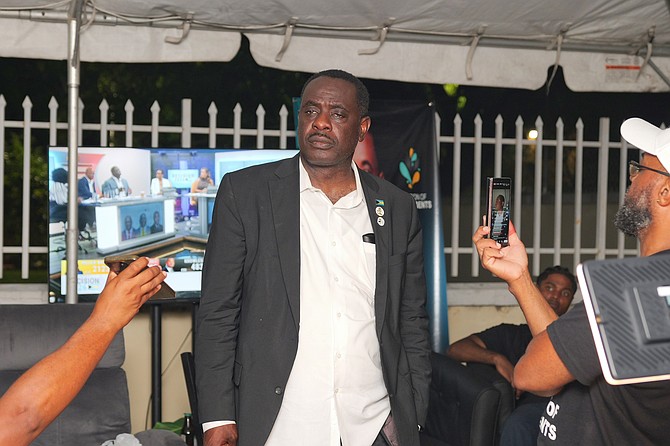
In yesterday’s Bahamian general election, the upstart Coalition of Independents (COI) left a lasting mark on the country’s political landscape even though it failed to secure a single parliamentary seat. The minor third party proved it can no longer be ignored by the nation’s two dominant political forces — the ruling Progressive Liberal Party (PLP) and opposition Free National Movement (FNM) — after siphoning off thousands of protest votes that would likely have bolstered the FNM’s bid to unseat incumbents, most notably across the key island of New Providence.
COI’s strongest showing of the cycle came in the Pinewood constituency, where party leader Lincoln Bain came astonishingly close to ousting sitting PLP representative Myles Laroda. Early vote projections that placed Bain in the lead sent social media platforms into a frenzy, as observers watched a minor party candidate mount a historic challenge to a major party incumbent. When all ballots were finally counted, Laroda retained his seat by a narrow margin of 314 votes, earning 1,446 ballots to Bain’s 1,132. FNM candidate Denarii Rolle finished a distant third behind Bain — marking the first time in history that a COI candidate outpolled a major party nominee in a constituency race.
For Bain personally, the 2024 result represents a dramatic improvement over his 2021 general election performance in Pinewood, where he earned just 579 votes, or roughly 17% of the total vote share. The party’s growing traction was visible across other constituencies as well. In Englerston, COI candidate Faith Percentie also outperformed FNM nominee Heather McDonald, even as long-serving PLP incumbent Glenys Hanna-Martin held onto the seat for a sixth consecutive term. Across multiple races, COI candidates crossed the 10% vote threshold required to retain their candidate deposits — a key metric that proves the party built a tangible, sustained base of support rather than just appearing on the ballot. That bloc is overwhelmingly made up of Bahamian voters who hold deep frustration with the country’s two established major parties.
Long before polls opened, FNM Leader and Opposition Leader Michael Pintard warned that COI and independent candidates would split the anti-incumbent opposition vote, handing an advantage to the ruling PLP. After conceding his party’s poor election showing, Pintard reaffirmed that assessment, noting “a vote for the COI or a vote for an independent, it’s a vote for the PLP. So, we understand that clearly.”
COI’s rapid rise in Bahamian politics has been fueled by a hardline platform focused on immigration reform and widespread public distrust of the traditional political establishment. Over the past five years, the party has consistently captured more public attention and momentum than the official opposition FNM, a shift that upended the country’s traditional two-party dynamic.
Following the release of final election results, Bain pushed back against former Prime Minister Hubert Ingraham’s longstanding claim that election results in The Bahamas cannot be stolen. Bain alleged that Laroda’s final vote total “jumped” unexpectedly during the vote tabulation process, contradicting earlier on-the-ground trends that pointed to a Bain victory in Pinewood. He specifically raised questions about the handling of advanced poll ballots, claiming election officials failed to maintain proper chain of accountability while counting votes.
Despite challenging the legitimacy of the Pinewood outcome, Bain urged his supporters to remain optimistic, framing political change as a long-term project that requires sustained organizing and sacrifice. “Nothing worth having is easy,” he told supporters. “The fight has just begun.” He called on COI backers to deepen their involvement in future electoral cycles, urging them to serve as poll observers and participate in recounts to strengthen the party’s electoral oversight. “You cannot go to war without enough soldiers,” he said. “We shouldn’t have one poll that doesn’t have three people watching.”
Bain framed his current dispute over electoral procedures as part of a broader, generations-long push for electoral reform in The Bahamas, drawing parallels to past landmark changes won by the two major parties. “The PLP didn’t win until they lobbied for one man, one vote,” he noted. “The FNM had to get the purple finger system going on to stop people from voting several times.” He argued that the current flaws in the country’s electoral process demand the same level of organizing and advocacy to address.