标签: Bahamas

巴哈马

  • Climate scientists heap praise on BACSWN’s world-first aviation platform

    Climate scientists heap praise on BACSWN’s world-first aviation platform

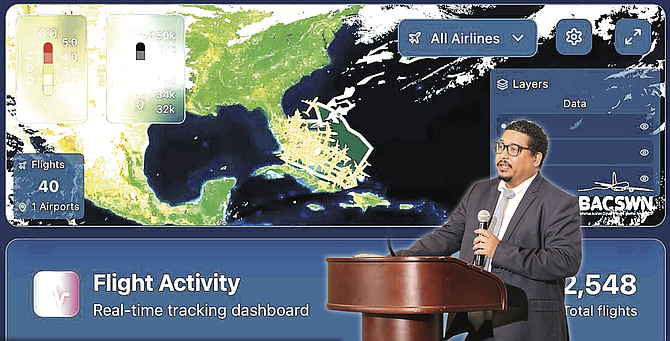
    An unprecedented United States-certified real-time aviation carbon credits platform, developed by the Bahamas Aviation, Climate & Severe Weather Network (BACSWN), has emerged as a standout innovation at a landmark Intergovernmental Panel on Climate Change (IPCC) gathering in Nassau, capturing significant attention from top climate researchers and policymakers focused on cutting aviation industry greenhouse gas emissions.

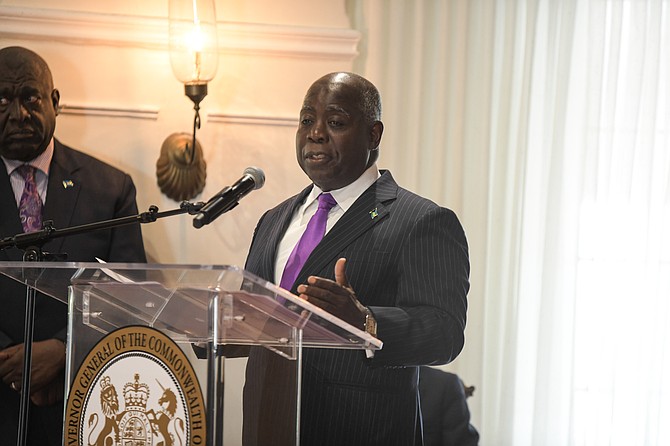
    Hosted at the British Colonial Hotel, this week-long session is the largest IPCC meeting ever held in the Caribbean, serving as a critical stepping stone for the panel’s upcoming Sixth Assessment Report (AR7), scheduled for full publication in 2028. The event counts BACSWN among its partial sponsors, and Bahamian Prime Minister Davis opened the gathering with a keynote address highlighting the government’s formal partnership with BACSWN and the Office of the Prime Minister’s Climate Change Unit to bring the global conference to Nassau.

    During technical presentations, BACSWN Chief Operating Officer Michael Strachan and Quincy Rolle, CEO of Tribune Digital Labs and the project’s lead developer, walked delegates through the platform’s core capabilities, showcasing how its proprietary flight path intelligence software delivers tangible emissions reductions. Unlike generic carbon offset programs, BACSWN’s system integrates cutting-edge real-time meteorological data, high-resolution 3D terrain mapping, and live flight tracking analytics to give airline dispatchers and flight crews actionable insights for route optimization. By adjusting flight paths to leverage favorable weather and avoid unnecessary fuel burn, the system cuts fuel consumption and generates independently verifiable, measurable carbon reduction outcomes that qualify for official carbon credit status.

    The platform runs on BACSWN’s proprietary WxSenseNet™ weather monitoring network, combining live flight data with a custom-built algorithm that tracks emissions continuously in real time. After years of iterative development and growing interest from international commercial carriers, Rolle confirmed the full system is complete at the 2024 S&P Global Carbon Markets Conference in Barcelona, where 16 patents have already been filed and are awaiting approval. The project made its public debut at that same Barcelona conference in December 2024, with major technical updates unveiled the following year, marking a remarkably fast trajectory from initial concept to a globally relevant, deployable solution.

    The initiative is part of a broader $427 million heads of agreement signed with the Bahamian government in May 2025, which also includes plans to build the Caribbean’s first Next-Generation Aviation Weather Centre. The facility will leverage advanced multi-function phased-array radars supplied by U.S. defense contractor Raytheon Technologies, and features formal research collaborations with leading global climate and weather institutions including the U.S. National Oceanic and Atmospheric Administration (NOAA), the U.S. National Center for Atmospheric Research, Tomorrow.io, and The Weather Company. As the official designated meteorological provider for international civil aviation in Bahamian airspace, BACSWN’s core mandate also includes supporting the U.S. Federal Aviation Administration (FAA) in ensuring safe, efficient movement of all commercial, cargo, and private flights traversing the country’s airspace.

    Following the presentations, multiple IPCC delegates offered enthusiastic feedback on the platform’s potential. Kisolel Lina Posanau, a climate research officer, meteorologist, and IPCC expert reviewer from Papua New Guinea, highlighted the unique value the technology offers vulnerable small island and developing nations working to advance climate adaptation and build sustainable aviation sectors. Winston Chow, a leading Singaporean climate scientist and co-chair of IPCC Working Group II, who has previously called The Bahamas a “living case study of the current climate realities,” echoed that praise, emphasizing the urgent need for scalable technologies that bridge climate science, operational efficiency, and measurable emissions reductions.

    Delegates from a range of countries have already expressed formal interest in adapting BACSWN’s framework to support their own national climate action plans, sustainable transportation policy, and future carbon market development. The warm international reception has cemented The Bahamas’ growing reputation as an unexpected emerging leader in aviation climate innovation, highlighting that small island developing states can deliver impactful, actionable technological solutions to the global climate crisis.

    “Our aviation-based carbon credits platform offers a powerful tool to reduce the environmental impact of air travel, particularly in the airspace of island nations like The Bahamas, which are highly sensitive to the effects of climate change,” Rolle explained of the project’s core mission. The IPCC Nassau meetings are scheduled to run through May 22.
  • Watson, Rahming and former NBA player Fox named to Senate

    Watson, Rahming and former NBA player Fox named to Senate

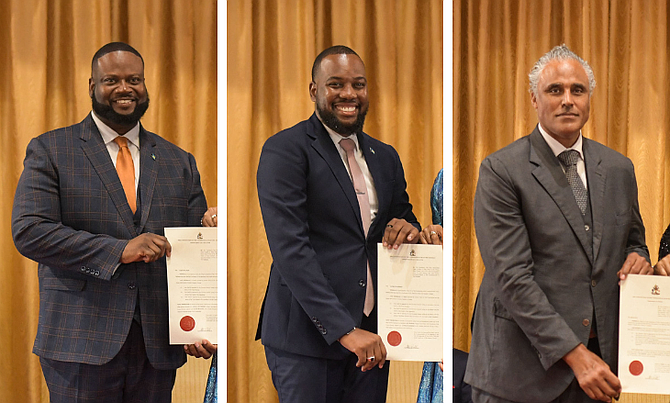
    Fresh off the Progressive Liberal Party’s commanding landslide win in last week’s general election, the Bahamas’ new parliamentary framework began to take shape on Wednesday, with a slate of Senate appointments that drew widespread public attention, including several high-profile figures from media, sports and public relations. The PLP secured a dominant majority in the May 12 poll, taking 32 of the 41 available House of Assembly seats and leaving the incumbent Free National Movement with just 8 seats, forcing the opposition to launch a new rebuilding effort following its second consecutive electoral defeat.

    The official swearing-in ceremony for government-aligned senators was held at Government House, where PLP Prime Minister Philip “Brave” Davis formally introduced his slate of appointees to the upper legislative chamber. Alongside returning former Senate President Lashelle Adderley, Davis’ picks included D’Asante Small, Deputy Director of Communications for the Public Hospitals Authority; former electoral candidates Robyn Lynes (Killarney) and Keno Wong (St Anne’s); PLP legal team representative Keenan Johnson; and sitting public sector leaders JaAnn Major and Kevin Simmons. Two appointees stood out for their particularly high public profiles: Clint Watson, General Manager of the state-owned ZNS broadcasting network, and Latrae Rahming, the PLP’s veteran communications director.

    Speaking after the ceremony, Prime Minister Davis emphasized his confidence in the new cohort of senators, noting that many of the appointees had already proven their capabilities through both public service and personal scrutiny. “Each of these individuals has been tested, either by my own experience working alongside them or in the unforgiving court of public opinion,” Davis said. “I am proud to welcome them to the Senate as we begin the work Bahamians elected us to do.”

    For Rahming, who previously led the PLP’s public relations response during the party’s last term in government, his move to the upper chamber carries a core mission: reigniting young people’s faith in the country’s democratic process and encouraging greater civic participation. Pointing to the lackluster voter turnout recorded in last week’s election, Rahming noted that many young Bahamians have grown disengaged from exercising their democratic rights, and he aims to change that narrative through his work in the Senate.

    Watson, a former journalist, brings a policy priority focused on reforming the Bahamas’ media landscape and advancing long-delayed transparency legislation. Citing his decades of experience in the news industry, Watson highlighted that public demand for a national Freedom of Information Act remains strong, and he will push to codify that law to build a more open, progressive modern Bahamas.

    On the opposition side, the Free National Movement also confirmed its own Senate appointees, led by one of the Bahamas’ most recognizable public figures: former NBA champion Rick Fox. Fox’s appointment comes as the FNM works to rebuild its public profile and regroup following its heavy electoral defeat, and the party also named three other senators: attorneys Elsworth Johnson and Arinthia Komolafe, and Dr Trevor Johnson.

    Outgoing Opposition Leader Michael Pintard acknowledged that the FNM had hoped for a far better electoral result, but the party accepted the mandate given to it by Bahamian voters and will fulfill its role as the official opposition in Parliament. “The people have spoken, and we respect their decision,” Pintard said. “Our job now is to hold the government accountable while we work to rebuild our party and earn the trust of voters moving forward.”

  • Researchers say conch, lobster and grouper stocks overfished

    Researchers say conch, lobster and grouper stocks overfished

    A landmark 73-year analysis led by Sea Around Us researchers has delivered a stark warning for The Bahamas’ marine ecosystems: 11 out of 12 of the nation’s most culturally and commercially vital seafood species are now categorized as overfished, with most being harvested far faster than natural populations can replenish. Published in the peer-reviewed journal *Frontiers in Marine Science*, the findings validate long-held anecdotal concerns from local Bahamian fishers, who have reported declining catches of iconic species for decades.

    To build their dataset, researchers reconstructed total catch records stretching from 1950 through 2022, offering one of the most comprehensive long-term assessments of Caribbean fisheries ever conducted. The 12 species evaluated represent the backbone of The Bahamas’ seafood economy and cultural identity. Among the at-risk populations, Nassau grouper and yellowfin grouper were ranked as “grossly overfished”; queen conch, Caribbean spiny lobster, hogfish, black grouper, rock hind and wahoo fell into the “overfished” category; and lane snapper, mutton snapper and gray snapper were listed as “slightly overfished.” Only one species — dolphinfish, more commonly known as mahi mahi — was found to have a stable, healthy population.

    The results carry profound implications for The Bahamas, a nation where seafood is central to both domestic food security and a tourism-driven economy. Across the 73-year study period, researchers estimated that a total of 1.3 million tonnes of seafood were harvested from Bahamian waters, averaging 17,500 tonnes per year. Just two species — Caribbean spiny lobster and queen conch — made up more than half of that total catch: lobster accounted for 33% (around 425,000 tonnes) and conch for 21%. Both are now officially overfished, with lobster populations at just 61% of the biomass required to support long-term maximum sustainable yield, and queen conch at 59%. Maximum sustainable yield is the scientific benchmark for the largest catch that can be maintained indefinitely under stable environmental conditions.

    Reef-dwelling groupers and snappers showed the most alarming population declines of all species assessed. Yellowfin grouper, the most imperiled species in the study, was found to have only 40% of the biomass needed for sustainable harvesting. Nassau grouper, which has been listed as critically endangered by the International Union for Conservation of Nature since 2015, was measured at just 49% of the required sustainable biomass. Data shows Nassau grouper catches exceeded maximum sustainable yield for nearly 40 years before populations collapsed from their mid-1990s peak, and the species has yet to show any signs of recovery in the decades since.

    Breaking down catch contributions across the fishing sector, the study found that recreational fishing — including tourism-focused charter boats, sportfishing operations, and visiting angling groups — accounted for 46% of total historical catch, the largest share of any segment. Industrial fishing, centered primarily on export-focused spiny lobster operations, made up 26% of total catch, while small-scale artisanal fishing for local markets contributed 23%, and small-scale subsistence fishing accounted for the remaining 5%.

    The study’s clear findings intensify pressure on Bahamian fisheries regulators, who have long struggled to manage iconic seafood industries hampered by incomplete population data, inconsistent enforcement of fishing rules, and persistent high public demand for local catch. Dr. Krista Sherman, study co-author and researcher at the Perry Institute for Marine Science, emphasized that the overfished status of key species creates direct risks for domestic food access. “These species are the backbone of The Bahamas’ domestic seafood supply, supporting commercial and subsistence fishers across the islands and anchoring local food security,” Sherman explained. “Their overfished status means fewer fish in local markets and on local plates unless targeted management action is taken. These assessments not only improve our understanding of the status of key fisheries but also provide a critical foundation for the sustainable management of these valuable resources moving forward.”

  • PM defends large Cabinet size – Pintard says backbench silenced

    PM defends large Cabinet size – Pintard says backbench silenced

    Fresh off a landslide general election victory that solidified his party’s hold on national power, Bahamas Prime Minister Philip “Brave” Davis is standing firm against growing criticism over the unprecedented size of his new Cabinet, arguing that a large, talented ministerial team is critical to delivering on the ambitious campaign promises his Progressive Liberal Party (PLP) made to voters.

    The political clash erupted this week following the PLP’s resounding win in the May 12 general election, where the party secured 33 of the 41 available parliamentary seats — a decisive mandate that gave Davis near-total control of the national legislature. When the new administration unveiled its ministerial line-up, it immediately drew public and opposition scrutiny: at 29 members total, the Cabinet includes 21 full Cabinet ministers, seven junior ministers of state, and the prime minister, making it the largest ruling council in Bahamian history.

    This new Cabinet represents a notable expansion from the 22-member team Davis assembled when he first took office in 2021, and dwarfs the 16-member initial Cabinet of the previous Free National Movement (FNM) administration, which took power in 2017 with just 13 full ministers and three ministers of state. When measured against population, the scale becomes even more striking: with the Bahamas’ total population sitting just above 400,000, the country now has roughly one national minister for every 14,000 residents. For context, far more populous Caribbean nations including Jamaica and Trinidad and Tobago maintain ministerial teams of roughly the same size, despite having millions more citizens.

    Speaking during a ceremonial swearing-in event for nine newly appointed senators, Davis pushed back against critics, emphasizing that the government has a full slate of urgent near-term priorities and long-term transformative national goals that require the most capable leaders in key roles.

    “We need the best hands on deck,” Davis stated. “At the start of our last term, some already questioned our move to expand the size of the administration. But it was precisely that approach that allowed us to deliver the progress that earned us a renewed vote of confidence from the Bahamian people. Now, the task ahead is even larger, so we must bring every available talent to bear to deliver on our commitments.” This echoes Davis’s reasoning after the 2021 election, when he argued the scale of the country’s challenges demanded an “all hands on deck” governing strategy.

    But Opposition Leader Michael Pintard, who was recently sworn in to lead the FNM following the party’s election defeat, argues that the oversized Cabinet poses a direct threat to parliamentary accountability. The core of his criticism centers on the fact that the vast majority of the PLP’s elected parliamentary representatives now hold paid Cabinet positions, leaving only a tiny handful of ruling-party backbenchers — the elected MPs who do not hold government posts and are traditionally responsible for providing internal scrutiny of the administration from within the ruling party’s ranks.

    “One of the core reasons we must remain vigilant in holding this government to account is that the government has effectively silenced its own backbench,” Pintard said. “This arrangement leaves almost no room for independent scrutiny from ruling party elected members. It is inappropriate for the majority of an administration’s elected representatives to hold Cabinet posts, because what healthy governance requires is robust, open debate and space for disagreement. Backbenchers are supposed to hold the Cabinet accountable, but we already knew this administration has no interest in dissent — we have seen that repeatedly, so this move does not surprise us.”

    Beyond accountability concerns, Pintard also raised questions about the additional public financial burden that 29 senior government appointments will place on national coffers, urging the government to disclose the full cost of the expanded Cabinet. The opposition leader added that his party would carry out its constitutional oversight responsibilities by supporting government policies that benefit the Bahamian people and opposing measures that do not serve the public interest.

    Turning to the FNM’s own post-election reflection, Pintard acknowledged that both the ruling PLP and the opposition FNM failed to energize voters in the recent contest, contributing to low turnout and widespread public disillusionment with the political system. He added that rebuilding public trust in political institutions is a critical task for all national leaders, and the FNM is conducting a full, transparent review of every factor that led to its recent election defeat.

    “We are still assessing all contributing factors, from personnel choices at every level starting from the top leadership,” Pintard said. “We are committed to taking a sober, honest look at what worked and what did not, and making the necessary adjustments — nothing is off the table. I am deeply honored that the FNM executive council and our newly elected members have supported my return as leader, and I will repay that confidence with diligent work to rebuild our party and serve the Bahamian people.”

  • OPM says Bahamas seeking information from US on DEA allegations

    OPM says Bahamas seeking information from US on DEA allegations

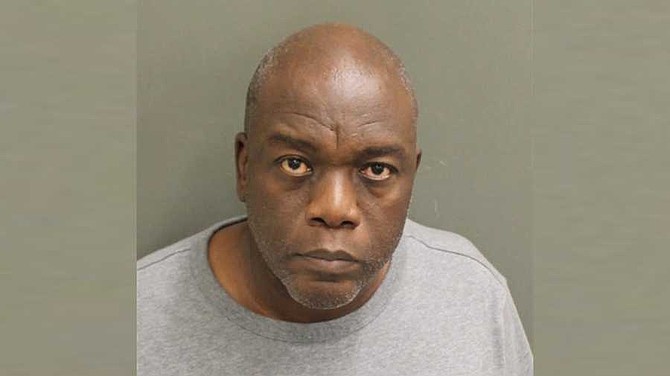
    In the wake of explosive allegations tied to a U.S. drug enforcement investigation that link an unnamed Bahamian politician to a large-scale cocaine trafficking plot, the Office of the Prime Minister (OPM) has confirmed the administration is treating the claims with the utmost gravity. The incident traces back to a small plane crash off Florida’s coast earlier this month that led to the arrest of convicted cocaine smuggler Jonathan “Player” Gardiner, with new details emerging from a sealed Drug Enforcement Administration (DEA) affidavit first obtained exclusively by The Tribune.

    According to details from the court document, when Gardiner was pulled from the wreckage of the May 12 crash, he was in possession of a $30,000 Bahamian currency cash payment stowed in an envelope marked with a handwritten name. U.S. prosecuting officials have redacted that name in all public court filings, referring to the individual only as “Politician-1”.

    The affidavit makes an even more serious allegation: that the same unnamed politician met with an undercover DEA operative—who was posing as a member of a drug trafficking organization and a smuggling pilot—inside the Bahamian Parliament building back in October 2024. During that meeting, the pair are alleged to have negotiated a multi-hundred kilogram cocaine shipment estimated to be worth $30 million.

    In an official statement released yesterday, the OPM acknowledged the government has reviewed the allegations circulated in press reports stemming from the U.S. investigation. “The Government of The Bahamas has seen the allegations arising from a U.S. investigation, as reported in the press, and takes this matter extremely seriously,” the statement read.

    To advance a full and transparent accounting of the claims, the administration announced it will open formal diplomatic and law enforcement channels to request U.S. authorities share available intelligence and evidence related to the case. Simultaneously, the OPM confirmed that Bahamian domestic law enforcement agencies have already been instructed to launch their own independent inquiries into the allegations.

    Crucially, the prime minister’s office emphasized that as of the statement’s release, U.S. officials have not provided any formal, official information to the Bahamian government that names or identifies any specific public official connected to the case. “To date, the Government has received no official information identifying any public official in relation to this matter,” the statement noted.

    Despite the lack of formal identification, the Bahamian government issued a clear pledge of accountability, stressing that no individual will receive special treatment regardless of their position. “The position of the Government of The Bahamas remains wherever wrongdoing is established, any person involved will be held accountable without fear or favour, and the chips will fall where they may,” the statement concluded.

  • New Attorney general Munroe dismisses conflict concerns

    New Attorney general Munroe dismisses conflict concerns

    Following the Progressive Liberal Party’s landslide victory in last week’s Bahamian general election, where the party secured 32 of the 41 available parliamentary seats, a new cabinet has taken shape, bringing with it questions around potential ethical conflicts for one top appointee.

    Wayne Munroe, the newly sworn-in Attorney General and Minister of Legal Affairs, is pushing back against growing public concerns that his decades-long legal career — marked by multiple high-profile lawsuits against the Bahamian government and extensive representation of defendants charged by state agencies — will create unacceptable conflicts of interest in his new role leading the country’s legal framework.

    Munroe is no stranger to top government office: he previously served as Minister of National Security under the Progressive Liberal Party, and held the Freetown parliamentary constituency seat for years. In a notable twist from the election results, he became the only nominated cabinet member to fail to retain his seat in last week’s vote. Despite the election outcome for his constituency, the party tapped him for the critical attorney general role, and he was officially sworn in during a formal ceremony at Government House this past Friday.

    In a press briefing immediately after the ceremony, Munroe leaned into his extensive legal background as a strength for the role, rather than a liability. Over his decades in private practice, Munroe built his reputation handling complex civil and constitutional litigation, including multiple cases brought against the government. Beyond private practice, he has also previously served as a sitting Supreme Court judge and led the Bahamas Bar Association as its president, giving him deep cross-sector experience across the country’s legal ecosystem.

    Addressing the conflict of interest claims directly, Munroe shared a lighthearted observation from peers to frame the conversation. “Someone made a joke and said, if I have to be in court, they prefer for me to be representing the government than suing the government,” he told reporters. “If I’m not in government, I’m going to go back to the business that I do, which is civil and constitutional litigation.”

    When pressed on whether any of his past lawsuits against the government remain active, Munroe clarified that he had stepped away from active private practice four and a half years ago, leaving no ongoing personal litigation against the state. For any potential future matters that involve legal work from his former law firm, he committed to following standard ethical protocols: “You recuse yourself,” he said, confirming he would step aside from any matters where a conflict could arise.

    Munroe’s appointment fills the role left vacant by former Attorney General Ryan Pinder, who signaled his departure from the post back in January. At the time, Pinder told reporters that while he had not formally stepped down earlier, his tenure had come to a formal end, and he had no plans to remain in frontline Bahamian politics, quipping, “Don’t hold your breath” for a return to elected office.

    The appointment comes as the new Progressive Liberal Party government settles into its mandate, with the leadership banking on Munroe’s decades of cross-cutting legal experience to guide the country’s legislative and regulatory agenda over the coming term.

  • Prime Minister names Jerome Fitzgerald to Cabinet post

    Prime Minister names Jerome Fitzgerald to Cabinet post

    Nearly a decade after a high-profile corruption scandal helped sink the Progressive Liberal Party (PLP) in a landslide 2017 electoral defeat, Jerome Fitzgerald — the Bahamian politician whose career has long been tied to that controversy — has been tapped to return to the national Cabinet, where he will oversee the country’s economic affairs.

    Fitzgerald, a former member of parliament for the Marathon constituency and ex-education minister who is set to be appointed a senator, was officially sworn into office on Saturday as Prime Minister Philip “Brave” Davis launched his second term in office. His comeback to top-level government is not a sudden surprise, however: over the PLP’s previous term, Fitzgerald served as a senior advisor in the Prime Minister’s Office, where insiders say he wielded outsized behind-the-scenes influence, and he also managed the PLP’s successful 2024 re-election campaign.

    Fitzgerald’s most damaging political controversy emerged on the eve of the 2017 general election, when leaked internal emails revealed he had lobbied heavily for multi-million-dollar brokerage, trucking, and limousine contracts tied to the massive Baha Mar resort development for a company founded by his father. The scandal became a central talking point for the opposition Free National Movement (FNM), which campaigned heavily on allegations of widespread PLP corruption. The FNM went on to win that election in a historic landslide, and Fitzgerald lost his Marathon parliamentary seat.

    The leaked correspondence showed Fitzgerald requested a $20,000 monthly stipend from original Baha Mar developer Sarkis Izmirlian, claiming the funds would cover medical expenses for his ailing father. In a 2014 email, he pressed Baha Mar executives to direct brokerage and shipping business to Bahamas Cargo and Logistics, his father’s firm, after earlier overtures had only resulted in a one-time contract for 40 containers.

    “Unfortunately despite all efforts by you and promises to me by Daniel Liu (CCA’s vice president) that we would receive the brokerage and trucking work, we have not apart from a one time deal to move 40 containers. I do not know why, I am disappointed, but I have accepted it and moved on,” Fitzgerald wrote in the message. “I know that the interior Furniture and Fittings should begin arriving shortly, and I would really wish to now establish a relationship between Baha Mar and Bahamas Cargo and Logistics Limited (“BCL”) where all ports of entry can be advised that BCL is to collect the paperwork and clear shipments for Baha Mar. It is my hope that the relationship will continue when the hotel opens and we will again be the broker and trucker for this property as we were for so many years.”

    Izmirlian ultimately forwarded the email to his senior leadership team, noting that all contracts should be awarded based on competitive cost and demonstrated capability, not political pressure. At the height of the scandal, Fitzgerald denied abusing his office to steer contracts to himself or his family. He clarified at the time that he held no ownership stake in BCL and never personally held a contract with Baha Mar or its affiliates, arguing he only followed up on his father’s pre-existing business discussions after his father fell ill. He maintained that no contract ever materialized from his outreach.

    The Baha Mar controversy is not the only scandal that marked Fitzgerald’s past tenure in government. In 2012, an underground fuel leak at a Rubis service station in his Marathon constituency released approximately 12,000 gallons of unleaded gasoline. The leak was detected in late December 2012, and a subsequent investigation by global environmental consulting firm Black & Veatch found local residents had been exposed to potentially dangerous toxins, including benzene, a confirmed human carcinogen. Though the firm’s final report was completed in February 2014, it was not released to the public until April 2015, after months of sustained public pressure and a heated town hall meeting with angry stakeholders. Marathon residents and local business owners expressed outrage over the delay, with critics accusing the PLP government of suppressing the report and failing to warn affected communities about the public health risks in a timely manner. Multiple local families ultimately filed legal action against Rubis Bahamas and the service station’s former operator.

    Fitzgerald’s return to senior public office first stirred controversy back in 2021, when the Prime Minister’s Delivery Unit announced on social media that he would serve as the unit’s senior policy advisor and head. The announcement was quickly deleted, and while initial OPM sources claimed the appointment had not been finalized, the office later confirmed Fitzgerald had joined the team without offering details on his specific role. Prime Minister Davis has long defended Fitzgerald, dismissing the Baha Mar controversy as “no harm” and “no foul” in 2021 comments to reporters, saying he has full confidence in Fitzgerald’s ability to help guide the country. Davis argued he was seeking out the most capable Bahamians to advance his policy agenda, and that Fitzgerald was one of the people he trusted to deliver results. When pressed specifically on the 2017 Baha Mar scandal, Davis questioned the premise of the question, repeating that there was no wrongdoing tied to Fitzgerald’s actions.

    Following Saturday’s swearing-in ceremony, Fitzgerald said he had worked closely with Davis and the full Cabinet over the past five years, praising Davis as a leader with a “heart of gold” and noting the pair had secured significant progress during the last term, even as much work remains to address national challenges. Over the past three months, Fitzgerald said he had traveled extensively across the Bahamas, speaking directly with thousands of citizens to better understand their challenges, aspirations, and desire for a government that creates pathways for all Bahamians to learn, earn, and build personal wealth. That commitment, he said, will be at the center of his work leading the country’s economic portfolio. He also noted he is optimistic about the Bahamas’ future, pointing to high youth turnout and engagement in the recent election as a promising sign, and emphasized that young people should remain actively involved in government planning and decision-making moving forward.

  • FNM: Bastian and Miller-Brice posts may be tested in court

    FNM: Bastian and Miller-Brice posts may be tested in court

    A brewing political controversy has emerged in the Bahamas after the recent swearing-in of two new Cabinet ministers, with the main opposition Free National Movement (FNM) demanding full transparency and threatening to bring the issue before the courts for judicial review over alleged compliance gaps with the country’s Gaming Act.

    The controversy centers on Sebas Bastian, the newly appointed Minister of Innovation and National Development and MP-elect for Fort Charlotte, and Leslia Miller-Brice, incoming Minister of Culture, Arts and Heritage and MP-elect for Seabreeze. Both appointees have well-documented connections to the Bahamian gaming sector: Bastian previously served as chief executive of major gaming operator Island Luck, while Miller-Brice’s husband Leander Brice recently stepped down as head of GLK Limited, which trades as A Sure Win Gaming House Operator, ahead of his wife’s appointment.

    Under Sections 25 and 26 of the Bahamas’ Gaming Act, sitting Cabinet ministers, members of the national Gaming Board, and their immediate family members are prohibited from holding gaming employment licences, and are barred from holding a 5% or greater financial stake in any licensed gaming operator. While the law does not implement an outright ban on all individuals with past industry ties serving in Cabinet, it raises critical questions about whether current regulatory restrictions have been fully satisfied for the two new appointees.

    In an official statement released this week, the FNM argued that the governing Progressive Liberal Party (PLP) has failed to provide the Bahamian public with clear explanations for how the pair were cleared for Cabinet service. The opposition said Bahamians deserve full disclosure of whether either minister or their families retain any gaming-related financial interests, and if such interests were divested, full details of when and how that process was completed. If full disclosure does not resolve outstanding questions, the FNM says the matter should be tested in court to cement a clear judicial interpretation of the law that upholds the national interest.

    FNM Chairman Dr. Duane Sands emphasized that the dispute is not a minor technical debate, but a core issue of transparency, governmental accountability, and public trust in the rule of law. “The public deserves an explanation from the Progressive Liberal Party,” Sands said, noting that a number of critical questions remain unanswered: Have the ministers fully given up any ongoing income from gaming sector businesses? Do any hidden holdings still exceed the 5% ownership cap? He also pointed to a striking inconsistency: Prime Minister Philip “Brave” Davis previously ruled Miller-Brice out as a suitable candidate for Cabinet in his last administration, and the public is owed an explanation for why that assessment has changed. Sands added that while the FNM has not formally committed to legal action, all possible pathways remain on the table, and the government must prove it has followed both the letter and the spirit of existing law.

    Both appointees have pushed back against criticism, asserting that they completed all required regulatory steps to meet compliance standards ahead of their swearing-in. Bastian stepped down as Island Luck CEO earlier this year after being ratified as a PLP candidate. Speaking on the sidelines of the official swearing-in ceremony at Government House Saturday, he said his team had worked closely with gaming regulators to confirm all conditions for appointment were satisfied, and directed further questions to the Bahamas Gaming Board. “The gaming laws are in place, and we would’ve done work with the regulator to ensure that we were compliant and meet all of the regulatory conditions, which were a prerequisite obviously to these appointments, and I am confident that they have been satisfied,” he said.

    Miller-Brice echoed that defense, noting that she and Bastian had proactively engaged with the Gaming Board to adhere to all existing rules and guidelines ahead of taking up their new posts. “We have taken the proactive steps necessary, we have engaged with the Gaming Board, and so we’ve done all that we can to follow the rules and the guidelines that the gaming board has put in place,” she said. “Now this gives me and Mr. Bastian an opportunity to take on the role of serving in the capacity as cabinet ministers.”

    Latrae Rahming, communications director for the Office of the Prime Minister, has directed all inquiries about the compliance process to the Gaming Board, noting that a formal public statement addressing the matter will be released in the near future. However, many observers and critics say that referring the issue to the Gaming Board is unlikely to resolve concerns, as the Act grants the sitting minister responsible for gaming the authority to appoint all board members, designate the board chair, and terminate board appointments at will, raising questions about the board’s independent oversight capacity.

    Questions about Miller-Brice’s gaming ties and Cabinet eligibility have circulated for months. She served in the previous Davis administration as Bahamas’ Ambassador to CARICOM and chair of the National Independence Secretariat, but was not selected for a Cabinet post at that time. In July 2025, she publicly called for a review and amendment of the Gaming Act’s restrictions on Cabinet members and their families holding gaming licences, though she declined to confirm whether she was directly affected by the existing rules. Prime Minister Davis responded at the time by stating that there were no plans to amend the law, and existing eligibility rules governing gaming interests would remain in force for all Cabinet appointees.

  • Plane crash survivor is alleged cocaine kingpin

    Plane crash survivor is alleged cocaine kingpin

    What began as a routine ocean rescue off Florida’s coast in May 2026 unfolded into a dramatic twist that has sent shockwaves through Caribbean law enforcement and political circles: the capture of one of the world’s most-wanted alleged cocaine kingpins, thanks entirely to an unforeseen accident. Jonathan Eric Gardiner, a 50-something Bahamian man with a prior drug trafficking conviction in the U.S., was one of 11 passengers forced to ditch their Election Day flight from Abaco to Grand Bahama after both engines failed mid-flight during a storm. For five hours, the survivors drifted in life rafts 80 miles off Florida’s coast – in U.S. airspace – until the U.S. Coast Guard winched them to safety. When agents checked Gardiner’s identity, they discovered he had been a top target of a three-year undercover DEA investigation into a massive international drug trafficking network, and he was immediately taken into U.S. custody.

    The full, extraordinary details of the case are laid out in a newly unsealed deposition from DEA Special Agent Michael Coleman, a veteran of the agency’s Bilateral Special Operations Division. Coleman’s filing reads like a modern thriller, complete with paid confidential informants, wiretapped communications, coded text messages, a dead drug-smuggling pilot, a crashed plane on Rum Cay, and an allegation of a secret meeting with an unnamed high-ranking Bahamian politician inside the Bahamian Parliament Building in October 2024. That meeting, allegedly held to coordinate an upcoming 1,000-kilogram cocaine shipment valued at roughly $30 million, has left unanswered questions about potential high-level corruption that echo the dark drug-smuggling era of the 1980s, when Colombian cartels turned Bahamian islands into smuggling fortresses.

    The DEA’s investigation traces back to 2023, when agents launched a probe into multiple drug trafficking organizations (DTOs) moving multi-ton cocaine shipments from South American producer nations including Colombia and Venezuela through the Bahamas, then on to consumer markets in the United States by air and sea. One of the primary groups under surveillance was a network based in Georgia, and investigators quickly identified Gardiner – who uses the street nickname “Player” – as the network’s primary South American cocaine supplier. Gardiner had previously served 18 years in a U.S. federal prison for drug trafficking and money laundering, before being deported back to the Bahamas 12 years before the 2023 investigation began. The DEA also confirmed he first connected with key Georgia DTO member “Shorty” while both served time in the same U.S. prison.

    To build their case, DEA agents recruited two confidential informants to infiltrate the network. The first, a repeat offender with prior convictions for narcotics, robbery, fraud, firearms and immigration offenses, agreed to cooperate in exchange for having pending narcotics charges – which included 84 kilograms of seized cocaine and $84,000 in cash – dropped entirely. The second informant had no criminal record and agreed to work exclusively for financial compensation. Over the course of 18 months, agents intercepted hundreds of wiretapped calls and text messages between network members, gained access to Gardiner’s Apple iCloud account via a seized device belonging to a DTO distributor, and tracked cross-border travel between Georgia, Florida, Nassau and other Bahamian hubs.

    Coded communications intercepted by agents reveal a steady stream of large-scale drug transactions. In one early 2023 shipment, agents intercepted messages referencing “sorter machines” – a coded term investigators confirm refers to money counting machines common in drug trafficking operations – and “dinner plates”, which translate to kilograms of cocaine. In June 2023, the Georgia DTO leader told a co-conspirator during a monitored call that his Bahamian supplier – who was barred from entering the U.S., had four private planes, an estimated $30 million net worth, and maintained a hangar full of cocaine – had shown him 1,500 kilograms of the drug via FaceTime. While the indictment does not explicitly confirm that this description refers to Gardiner, it matches details of his background as a deported convicted trafficker. The leader also explained that the operation relied on corrupt Bahamian government officials to bypass air traffic control and coast guard inspections.

    By June 2024, the DEA had gathered enough evidence to secure a grand jury indictment charging 14 members of the network with federal narcotics trafficking and conspiracy charges. The arrest of Gardiner, however, would not come for another year, until the unexpected plane crash placed him directly in U.S. law enforcement’s hands. When agents searched Gardiner after his rescue, they found he was carrying three cell phones, a small amount of cash, and an envelope holding $30,000 handwritten with the name of a prominent Bahamian politician. That name has been redacted in public court filings, leading to widespread speculation about the identity of the mystery “Politician-1” first referenced in the October 2024 Parliament Building meeting allegation.

    This case is not an isolated incident, Coleman’s deposition emphasizes. In November 2024, U.S. authorities unsealed a separate 13-defendant indictment charging a different Bahamian-based drug trafficking network with smuggling cocaine into the U.S. with the protection of corrupt politicians, senior Royal Bahamas Police Force (RBPF) officers, and high-ranking Royal Bahamas Defence Force (RBDF) personnel. That scheme, which ran from 2021 to 2024, saw former RBDF chief petty officer Darrin Alexander Roker plead guilty in October 2026 to conspiracy to import cocaine, after admitting he shared law enforcement vessel location data with traffickers. Roker, who is terminally ill with aggressive prostate cancer, was sentenced to 48 months in federal prison. RBPF sergeant Prince Albert Symonette and former RBPF chief superintendent Elvis Nathaniel Curtis – who previously oversaw security at Lynden Pindling International Airport – are also among those charged in that case, with allegations that Curtis arranged for a $2 million payout to a high-ranking Bahamian politician in exchange for clearing large drug shipments.

    Coleman notes that the current affidavit submitted to the court is only intended to establish probable cause for Gardiner’s detention, and does not include all evidence gathered during the three-year investigation. When Gardiner was arrested after the crash, he was already facing indictment for his role as the foreign supplier for the Georgia network, and additional charges are expected as the investigation unfolds. For Bahamian authorities and the public, however, the biggest remaining question is one that has not been answered: who is Politician-1, and will the full details of alleged political complicity in modern Caribbean drug trafficking finally be made public?

  • Davis names one of largest Cabinets in Bahamian history

    Davis names one of largest Cabinets in Bahamian history

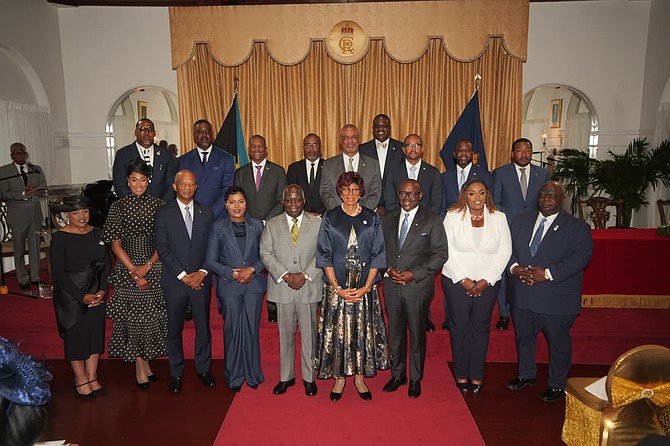
    Following a decisive landslide victory in the country’s general election, Bahamas Prime Minister Philip Davis has formally inaugurated one of the largest executive administrations in Bahamian history, installing a 28-member team of Cabinet and state ministers in multi-day ceremonies at Government House.

    Led by Davis, who secured a rare second consecutive term as prime minister – the first Bahamian leader to achieve this milestone in nearly 30 years – the new government comprises 21 full Cabinet ministers and 7 state ministers. Among the high-profile appointments, Deputy Prime Minister Chester Cooper has taken on the additional role of Minister of Education, Science and Technology. Wayne Munroe, previously the national security lead, has shifted portfolios to serve as Senator, Attorney General and Minister of Legal Affairs, while veteran politician Fred Mitchell returns to lead the Ministry of Foreign Affairs. Michael Halkitis has been sworn in as the new Minister of Finance.

    The full roster of Cabinet appointments covers every major government portfolio: Clay Sweeting leads Works and Family Island Affairs, Michael Darville takes charge of Health and Wellness, and Glenys Hanna-Martin returns to head the Tourism Ministry. Keith Bell serves as Minister of Housing and Land Reform, Jobeth Coleby-Davis leads Energy, Utilities and Aviation, and Mario Bowleg oversees Youth and Sports. Jomo Campbell holds the Agriculture and Marine Resources portfolio, Pia Glover-Rolle leads Labour, Public Service and National Insurance, and Zane Lightbourne heads Environment and Natural Resources. Ginger Moxey returns as Minister for Grand Bahama, while Lisa Rahming takes on Urban Renewal and Community Development. Myles Laroda fills the vacant National Security portfolio, Leon Lundy leads Transport, and Leslia Miller-Brice takes charge of Culture, Arts and Heritage. Two new senators were appointed to Cabinet: Jerome Fitzgerald as Senator and Minister of Economic Affairs, and Barbara Cartwright as Senator and Minister of Social Services. Rounding out the Cabinet is Sebas Bastian, who serves as Minister of Innovation and National Development.

    Alongside the full Cabinet, seven state ministers were also formally installed: Bacchus Rolle as State Minister of Social Services, Leonardo Lightbourne as State Minister for Agriculture and Marine Resources with oversight of the Bahamas Agricultural and Industrial Science Institute (BAMSI), Kirk Cornish and Mckell Bonaby as state ministers based in the Office of the Prime Minister, Wayde Watson as State Minister for Innovation and National Development, Darren Pickstock as State Minister for Immigration in the Ministry of Foreign Affairs, and Owen Wells as State Minister in Health and Wellness.

    The size of the new administration has already drawn comparison to Davis’ first term, when his 2021 22-member Cabinet (including state ministers) faced public criticism. At that time, Davis defended his decision to expand the executive branch, arguing that the country’s complex, large-scale challenges demanded additional capacity. “I know everyone is trying to distract from our job at hand. The enormity of the task at hand is what caused me to select the number of persons that I have,” Davis stated in 2021, a position he is expected to reaffirm for this larger 28-member administration.

    The size of the Davis-led administration stands in sharp contrast to the previous Minnis administration, which took office after the 2017 general election with an initial 13 Cabinet ministers and just 3 state ministers, less than half the size of the current executive team.