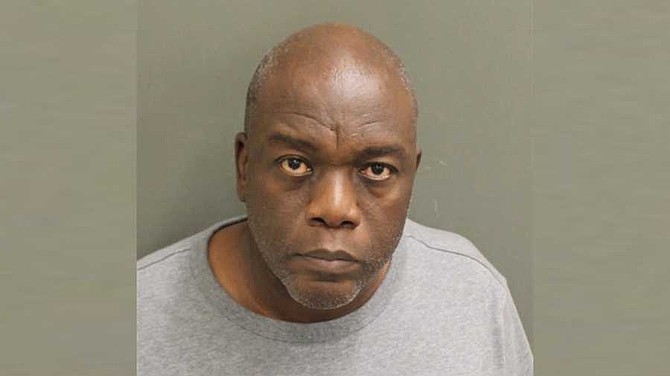
What began as a routine ocean rescue off Florida’s coast in May 2026 unfolded into a dramatic twist that has sent shockwaves through Caribbean law enforcement and political circles: the capture of one of the world’s most-wanted alleged cocaine kingpins, thanks entirely to an unforeseen accident. Jonathan Eric Gardiner, a 50-something Bahamian man with a prior drug trafficking conviction in the U.S., was one of 11 passengers forced to ditch their Election Day flight from Abaco to Grand Bahama after both engines failed mid-flight during a storm. For five hours, the survivors drifted in life rafts 80 miles off Florida’s coast – in U.S. airspace – until the U.S. Coast Guard winched them to safety. When agents checked Gardiner’s identity, they discovered he had been a top target of a three-year undercover DEA investigation into a massive international drug trafficking network, and he was immediately taken into U.S. custody.
The full, extraordinary details of the case are laid out in a newly unsealed deposition from DEA Special Agent Michael Coleman, a veteran of the agency’s Bilateral Special Operations Division. Coleman’s filing reads like a modern thriller, complete with paid confidential informants, wiretapped communications, coded text messages, a dead drug-smuggling pilot, a crashed plane on Rum Cay, and an allegation of a secret meeting with an unnamed high-ranking Bahamian politician inside the Bahamian Parliament Building in October 2024. That meeting, allegedly held to coordinate an upcoming 1,000-kilogram cocaine shipment valued at roughly $30 million, has left unanswered questions about potential high-level corruption that echo the dark drug-smuggling era of the 1980s, when Colombian cartels turned Bahamian islands into smuggling fortresses.
The DEA’s investigation traces back to 2023, when agents launched a probe into multiple drug trafficking organizations (DTOs) moving multi-ton cocaine shipments from South American producer nations including Colombia and Venezuela through the Bahamas, then on to consumer markets in the United States by air and sea. One of the primary groups under surveillance was a network based in Georgia, and investigators quickly identified Gardiner – who uses the street nickname “Player” – as the network’s primary South American cocaine supplier. Gardiner had previously served 18 years in a U.S. federal prison for drug trafficking and money laundering, before being deported back to the Bahamas 12 years before the 2023 investigation began. The DEA also confirmed he first connected with key Georgia DTO member “Shorty” while both served time in the same U.S. prison.
To build their case, DEA agents recruited two confidential informants to infiltrate the network. The first, a repeat offender with prior convictions for narcotics, robbery, fraud, firearms and immigration offenses, agreed to cooperate in exchange for having pending narcotics charges – which included 84 kilograms of seized cocaine and $84,000 in cash – dropped entirely. The second informant had no criminal record and agreed to work exclusively for financial compensation. Over the course of 18 months, agents intercepted hundreds of wiretapped calls and text messages between network members, gained access to Gardiner’s Apple iCloud account via a seized device belonging to a DTO distributor, and tracked cross-border travel between Georgia, Florida, Nassau and other Bahamian hubs.
Coded communications intercepted by agents reveal a steady stream of large-scale drug transactions. In one early 2023 shipment, agents intercepted messages referencing “sorter machines” – a coded term investigators confirm refers to money counting machines common in drug trafficking operations – and “dinner plates”, which translate to kilograms of cocaine. In June 2023, the Georgia DTO leader told a co-conspirator during a monitored call that his Bahamian supplier – who was barred from entering the U.S., had four private planes, an estimated $30 million net worth, and maintained a hangar full of cocaine – had shown him 1,500 kilograms of the drug via FaceTime. While the indictment does not explicitly confirm that this description refers to Gardiner, it matches details of his background as a deported convicted trafficker. The leader also explained that the operation relied on corrupt Bahamian government officials to bypass air traffic control and coast guard inspections.
By June 2024, the DEA had gathered enough evidence to secure a grand jury indictment charging 14 members of the network with federal narcotics trafficking and conspiracy charges. The arrest of Gardiner, however, would not come for another year, until the unexpected plane crash placed him directly in U.S. law enforcement’s hands. When agents searched Gardiner after his rescue, they found he was carrying three cell phones, a small amount of cash, and an envelope holding $30,000 handwritten with the name of a prominent Bahamian politician. That name has been redacted in public court filings, leading to widespread speculation about the identity of the mystery “Politician-1” first referenced in the October 2024 Parliament Building meeting allegation.
This case is not an isolated incident, Coleman’s deposition emphasizes. In November 2024, U.S. authorities unsealed a separate 13-defendant indictment charging a different Bahamian-based drug trafficking network with smuggling cocaine into the U.S. with the protection of corrupt politicians, senior Royal Bahamas Police Force (RBPF) officers, and high-ranking Royal Bahamas Defence Force (RBDF) personnel. That scheme, which ran from 2021 to 2024, saw former RBDF chief petty officer Darrin Alexander Roker plead guilty in October 2026 to conspiracy to import cocaine, after admitting he shared law enforcement vessel location data with traffickers. Roker, who is terminally ill with aggressive prostate cancer, was sentenced to 48 months in federal prison. RBPF sergeant Prince Albert Symonette and former RBPF chief superintendent Elvis Nathaniel Curtis – who previously oversaw security at Lynden Pindling International Airport – are also among those charged in that case, with allegations that Curtis arranged for a $2 million payout to a high-ranking Bahamian politician in exchange for clearing large drug shipments.
Coleman notes that the current affidavit submitted to the court is only intended to establish probable cause for Gardiner’s detention, and does not include all evidence gathered during the three-year investigation. When Gardiner was arrested after the crash, he was already facing indictment for his role as the foreign supplier for the Georgia network, and additional charges are expected as the investigation unfolds. For Bahamian authorities and the public, however, the biggest remaining question is one that has not been answered: who is Politician-1, and will the full details of alleged political complicity in modern Caribbean drug trafficking finally be made public?