标签: Bahamas

巴哈马

  • Foreigners at PMH have not shown any symptoms of Ebola

    Foreigners at PMH have not shown any symptoms of Ebola

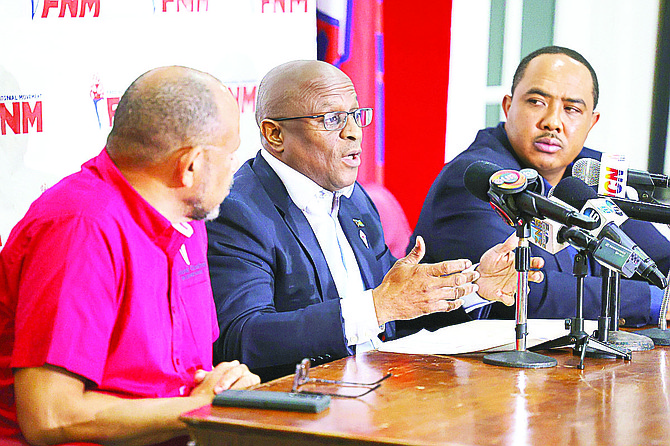
    Bahamian health authorities have issued an update confirming that two foreign nationals, placed under monitoring following travel from the Democratic Republic of Congo (DRC), remain in stable good health with no signs of Ebola virus infection. The two men, one British and one French, work as cargo pilots and were first flagged for screening on Friday upon landing at Lynden Pindling International Airport. Arriving on a British Airways flight originating from London’s Heathrow Airport, the pair presented with mild fever-like symptoms during routine entry health checks and were immediately moved into isolation as a precaution.

    The health incident triggered rapid precautionary action from officials, including an emergency press conference held the same day, after the pilots disclosed they had spent approximately three weeks in the DRC before traveling onward to Ethiopia and then to The Bahamas. The alarm came as an ongoing Ebola outbreak across several parts of Central Africa has already claimed hundreds of lives, stoking global fears of cross-border spread.

    However, health officials have clarified key context that eases immediate risk concerns: the specific regions of the DRC the pilots visited do not currently report active Ebola transmission or confirmed cases. Investigations also found the pair had no contact with confirmed Ebola patients, did not attend any high-risk gatherings such as funerals, and never handled potentially infectious materials like bodily fluids. After their initial fever was detected, no further Ebola-compatible symptoms have developed in either man.

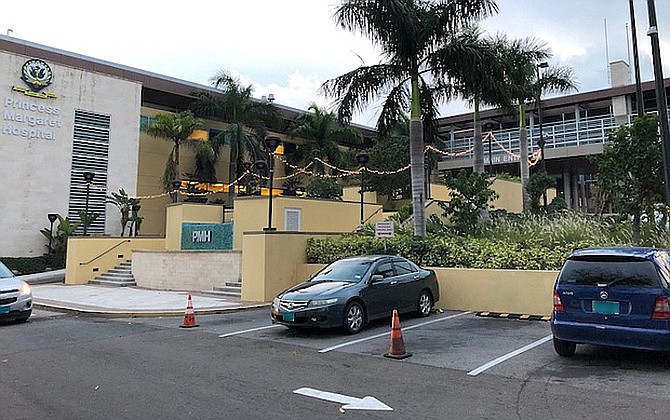
    By Sunday, the two pilots had been transferred to the specialized Modular Unit isolation and monitoring ward at Nassau’s Princess Margaret Hospital (PMH), in full compliance with World Health Organization global health safety protocols. In an official statement, the Bahamas Ministry of Health emphasized that as of the latest update, neither individual has developed any symptoms consistent with Ebola Virus Disease. Officials also stressed that the overall risk to the Bahamian public remains extremely low, and no confirmed Ebola cases have ever been recorded in the country. All 216 other passengers and crew members on the incoming flight were screened, cleared, and released without incident.

    This monitoring case unfolded against a backdrop of growing international response to the DRC outbreak, with multiple nations implementing new travel measures to slow potential spread. The United States, for example, has enacted temporary entry restrictions for lawful permanent residents who have traveled to the DRC, Uganda, or South Sudan within the prior 21 days. When questioned Friday about potential Bahamian travel restrictions for arrivals from Ebola-affected regions, Health and Wellness Minister Dr Michael Darville noted that any such policy change would require full discussion and review by the entire national government.

    For context, Ebola is a severe, often fatal viral illness caused by strains of the Orthoebolavirus genus. Early symptoms typically include fever, intense headache, fatigue, muscle and joint pain, sore throat, and general weakness. In advanced severe cases, the disease progresses to vomiting, diarrhea, and abdominal pain.


  • ‘Security failures’ at Old Fort Bay allegedly allowed man to enter expat resident’s home

    ‘Security failures’ at Old Fort Bay allegedly allowed man to enter expat resident’s home

    A devastating security failure at Old Fort Bay, an elite gated community in the Bahamas, allowed an unauthorized man to access an expat resident’s private property early on the morning of May 21, resulting in violent threats, tens of thousands of dollars in property damage, and a ongoing police investigation, according to allegations from the resident directly impacted by the incident.

    The resident, who chose to remain anonymous out of fear for personal safety, told local outlet The Tribune that the intruder was mistakenly cleared through the community’s service gate at approximately 5:33 a.m. — a full two hours before the entrance is scheduled to open — without any prior confirmation from the household. Moments after gaining entry, the suspect drove through a secondary private gate, damaged multiple features on the property, and forced his way into the home’s main entrance.

    When reached for comment, the Royal Bahamas Police Force confirmed the incident remains an active investigation, with formal allegations including trespassing, death threats, and around $40,000 in major property damage. A senior police source also confirmed the suspect is currently detained at Sandilands Rehabilitation Centre, where he has been admitted previously. As of press time, investigators have not been able to conduct a formal interview with the suspect, as he has been deemed unfit for questioning due to mental health status.

    Multiple sources familiar with the case indicate the suspect, who is separated from his wife, entered the property believing his estranged spouse — who previously worked as a contractor for the expat resident’s company — was present at the home. The resident recalled the intruder screaming “Get my wife outside. I’m going to kill everybody” at the top of his lungs during the incident, adding that he was armed inside the home and came just two seconds from opening fire on the intruder. The suspect also brought two large dogs onto the property, which were later collected by his estranged wife after the confrontation ended.

    After reviewing the incident’s surveillance footage, the resident has raised sharp questions about the competency of the community’s security team and the response from responding law enforcement. He noted that security staff failed to verify the man’s identity or obtain permission from the household before granting him entry, a catastrophic mistake that never should have happened. Even more concerning, he said, cameras recorded security personnel parked outside the property during the incident, leaving the household with a dangerous false sense of safety that defines the community’s security model.

    In a formal statement sent to all Old Fort Bay residents shortly after the incident, the Old Fort Bay Property Owners Association (OFBPOA) acknowledged that an unauthorized individual had gained entry to the community and caused property damage just after 5:30 a.m. on May 21. The association noted that Royal Bahamas Police Force officers responded quickly to the scene, apprehended the suspect, and took him into custody, adding that the association was working collaboratively with law enforcement on the ongoing investigation. When contacted by The Tribune for additional comment on the resident’s allegations, OFBPOA representatives declined to speak on the record.

    The resident alleges that long-simmering tensions between him and the property owners association — stemming from past legal disputes over construction regulations and previous complaints of delayed security responses during an incident roughly a year prior — led to the inadequate follow-up to the breach. He argues the incident has laid bare systemic flaws in the community’s security protocols, especially given the premium monthly fees residents pay for the promise of exclusive gated protection.

    “One of the main reasons I think people choose to live in a gated community, especially as expats, is for the security that comes with that, and it’s an extreme false sense of security,” he said. The resident plans to file a formal lawsuit against OFBPOA next week, centered entirely on the negligent security breach that allowed the intruder onto the property. He also intends to file formal complaints with Bahamas regulatory bodies that oversee private security operations, arguing that residents paying high security fees deserve staff trained to de-escalate high-risk situations.

    He pointed out that the community allocates roughly $1 million annually to its security budget, but he claims very little of that funding goes toward training or upgrading personnel. He also questioned whether the association follows its own published internal security policies, which outline a requirement for the community’s security committee to meet annually and update protocols after any breach or break-in incident. The resident says this is the third major incident with inadequate security response he has experienced in the community, and despite providing feedback after each event, no changes have been implemented.

    Local reporting confirms intruder incidents are rare at Old Fort Bay, and when they do occur, they almost always involve people sneaking onto the property rather than being granted explicit access through official security checkpoints. For the impacted resident and his girlfriend, however, the incident has been life-altering, leaving them with lasting psychological trauma that extends far beyond the physical damage to their home.

    “My girlfriend can’t sleep, she has to go see a forensic psychiatrist this weekend. They had to give her Ativan so she could try and calm down. She’s not eating, she’s in a complete mess,” the resident said. The experience has completely upended his sense of safety in the community he moved to for protection: “I went and bought two bulletproof vests this weekend online. Is that normal? I live in Old Fort, I live in a security community, I gotta go buy bulletproof vests?”

    He added that the lingering threat remains unresolved: “If this guy gets out in two months, six months, one year, whenever he gets out, and you have zero assurance that Old Fort security knows what they’re doing, you’re gonna fall back in the exact same situation eventually.”

  • Health officials to brief media on BA flight at LPIA

    Health officials to brief media on BA flight at LPIA

    A developing public health incident is unfolding at Lynden Pindling International Airport in The Bahamas, where an inbound British Airways commercial flight has been detained over potential Ebola exposure risks. Health authorities are preparing to hold a formal press briefing on site Wednesday evening to share updated details on the situation, after reports emerged that two passengers on the flight had recently visited regions currently grappling with Ebola transmission.

    Journalists have already assembled at the airport, waiting for official confirmation and further guidance from the Bahamian Ministry of Health and Wellness and other interagency response teams. As the investigation continues, the government of the neighboring Cayman Islands has released an official public statement addressing the incident, confirming they are aware of the widespread reports that the London-origin flight was being held in Bahamian territory over what has been described as a serious public health threat.

    According to the Cayman Islands government statement, all passengers and crew aboard the detained aircraft are currently undergoing comprehensive health screening by Bahamian public health officials. Critically, the statement confirmed that multiple Cayman Islands residents are among the passengers, including Rolston Anglin—who holds two senior cabinet positions as Minister for Finance and Economic Development and Minister for Education and Training.

    Cayman public health officials have moved quickly to reassure the local population, emphasizing that there is no immediate public health risk to the Cayman Islands at this stage of the response. They have urged residents to avoid unsubstantiated rumor and unnecessary speculation, noting that cross-border authorities are actively monitoring the situation minute-by-minute as screening and testing procedures are completed.

  • Pintard called out on Cartwright snub

    Pintard called out on Cartwright snub

    A bitter internal debate has erupted within the Free National Movement (FNM) of the Bahamas in the wake of the party’s crushing defeat in the May 12 general election, after a senior former party figure publicly called out opposition leader Michael Pintard for his controversial Senate selection choices.

    Former Cabinet minister Leslie Miller delivered sharp criticism of Pintard this week, labeling the FNM leader’s decision to exclude deputy party leader Shannedon Cartwright from his Senate picks as “mean-spirited” and “spiteful”. Pintard, who successfully held onto his Marco City parliamentary seat despite the party’s poor overall performance, named four people to fill the FNM’s Senate openings: former professional basketball player Rick Fox, two attorneys Elsworth Johnson and Arinthia Komolafe, and Dr Trevor Johnson. Cartwright, who lost his bid for the newly created St James constituency to Progressive Liberal Party candidate Owen Wells, was noticeably absent from the list.

    Critics across the party have argued that the snub is a deliberate move to sideline Cartwright, a sitting party deputy who represented the St Barnabas constituency from 2017 up to the 2026 general election. The FNM emerged from the national vote with just eight parliamentary seats, a result that left the party as the official opposition against the governing Progressive Liberal Party.

    Miller, who has long standing as a former FNM Cabinet member, argued that Pintard’s exclusion of Cartwright raises serious questions about both his leadership style and how he treats senior party stakeholders. “I just see the leader of opposition as a mean-spirited person on his actions as leader to FNM, has proven that over and over and over again,” Miller told local media.

    While Miller acknowledged that Cartwright never personally approached him to say he was seeking a Senate appointment, he added that he is confident the former lawmaker would have accepted the position if it had been offered. Miller also extended his criticism to Pintard’s treatment of two other former senior party figures from the Minnis administration: Desmond Bannister and Renward Wells. He alleged that Pintard has actively worked to push the two veteran politicians out of key frontline political roles, treating them unfairly in the process.

    When reporters from The Tribune reached out to Pintard to ask for an explanation for Cartwright’s exclusion from the Senate lineup, the opposition leader declined to provide any on the record comment. As of press time, Cartwright also had not responded to multiple requests for comment on the controversy.

  • Campbell waits for own survey an overfished marine species

    Campbell waits for own survey an overfished marine species

    A recent peer-reviewed scientific study has sounded the alarm over widespread overfishing of key commercial marine species across The Bahamas’ waters, but Bahamian officials say they will hold off on crafting regulatory changes until they can complete an independent domestic fisheries assessment. The study, published this week by the Perry Institute for Marine Science (PIMS), analyzed 72 years of historical catch data stretching from 1950 to 2022, and found that 11 out of the 12 commercially valuable species included in the assessment were suffering from varying degrees of overexploitation.

    Among the most at-risk populations, the study labeled Nassau grouper and yellowfin grouper as “grossly overfished”. Research data showed yellowfin grouper populations currently hold just 40 percent of the total biomass required to maintain a sustainable long-term harvest, while Nassau grouper populations sit at only 49 percent of that sustainable threshold. Other species flagged as overfished include queen conch, Caribbean spiny lobster, and black grouper, all of which the study identifies as the “backbone” of The Bahamas’ domestic seafood market. The report warns that ongoing population declines of these iconic species pose a direct threat to national food security and the stability of local seafood supply chains.

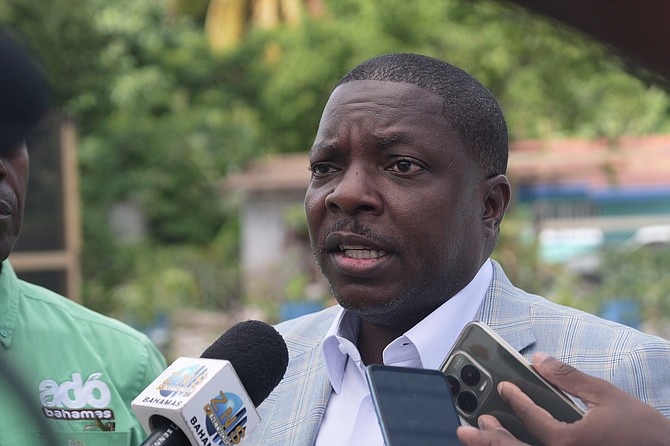
    Speaking to reporters at a community farming event this week, Agriculture and Marine Resources Minister Jomo Campbell confirmed that ministry staff have reviewed the PIMS findings, but stopped short of endorsing the study’s conclusions. “That was one report,” Campbell told journalists, when asked whether there was risk that future generations of Bahamians could lose access to these culturally and economically important traditional seafood species. “What we first have to establish based on our findings is in fact whether there is overfishing and in what sectors.”

    Campbell explained that the Bahamian Department of Marine Resources, led by Acting Director Dr. Gittens, is already in the process of conducting its own independent fisheries survey. Once the domestic assessment is complete, ministry officials will compare the two datasets, gather input from stakeholders across the Bahamian fishing industry, and then develop a formal evidence-based action plan to address any identified issues. Campbell added that the government expects to release its response to the overfishing concerns “in short order” after the internal survey is finalized.

    PIMS officials noted they have prepared to share their full dataset and findings with the Department of Marine Resources and national fisheries management working groups, as the government undertakes a broader review of revisions to the country’s national fisheries regulations. In a separate update on the Golden Yolk agricultural development initiative, Campbell confirmed that a second media tour of the project is scheduled to take place within the coming weeks.

  • Royal Caribbean backs new farm to boost food security

    Royal Caribbean backs new farm to boost food security

    A landmark community farming initiative, backed by major cruise line Royal Caribbean and the Bahamas Ministry of Agriculture, opened its doors to the public in Centreville on Wednesday, marking a key milestone in the country’s push to address local food insecurity and cut reliance on imported food products.

    The official launch was marked by a ceremonial ribbon-cutting, drawing a cross-section of attendees including senior government figures, local community organizers, and top executives from Royal Caribbean. The Royal Caribbean Group Foundation has anchored the project with a $75,000 total contribution, allocating $50,000 to cover initial site development and infrastructure costs, and an additional $25,000 earmarked for ongoing operational maintenance. Complementing this private sector support, Jomo Campbell, Minister of Agriculture and Marine Resources, announced the ministry would add a $10,000 cash grant alongside $5,000 in agricultural equipment vouchers redeemable through the ministry’s fish and farm store.

    Philip Smith, president of the Bahamas Agricultural Development Organization (ADO), explained that the Centreville site is the fifth community farm completed under a national strategic scheme that aims to roll out similar projects across all 41 of the country’s parliamentary constituencies. Under the initiative’s operational model, 70 percent of all fresh produce harvested from the farm will be distributed free of charge to low-income and food-insecure residents within the Centreville community. The remaining 30 percent will be sold to local restaurants, generating recurring revenue to cover long-term operating costs and keep the project self-sustaining.

    Smith’s vision for the project grew out of 15 years of experience leading the Bahamas Feeding Network, a regional hunger relief organization that distributes more than 5,000 prepared meals to vulnerable communities each week. Through that work, Smith has repeatedly witnessed the deep systemic gaps in local food access that leave thousands of Bahamians struggling to put nutritious food on the table. The community farm model, he says, is designed to transform the existing feeding network into a more self-sustaining system, while also shifting national consumption patterns toward locally grown agricultural products.

    Smith also highlighted Royal Caribbean’s long-standing commitment to hunger relief across the Bahamas, recalling past large-scale donations to the Bahamas Feeding Network, including a previous gift of two 40-foot shipping containers full of frozen meat that allowed the network to expand services to thousands of additional families. “It’s just been amazing,” Smith said of the company’s consistent support.

    Philip Simon, president of Royal Caribbean Bahamas, framed the farm project as a strategic investment in both community well-being and long-term national resilience. As global supply chain disruptions and climate change have pushed food security to the forefront of policy concerns for small island nations like the Bahamas, agricultural and sustainability projects have taken on new urgency, Simon explained. Beyond addressing immediate food access gaps, he noted the project also aims to reconnect young Bahamians to the country’s agricultural heritage and encourage the next generation to pursue careers in farming and community development.

    “At one point in our national story, farming and fishing were simply a way of life,” Simon said. “Families understood the value of working the land, growing food, and being able to provide not only for themselves but for others as well. So today we hope that we are planting seeds not only in the soil but in the minds of young people who may one day become farmers, entrepreneurs and leaders in our communities.”

    Minister Campbell echoed that sentiment, emphasizing that the new farm represents far more than a local food project—it is a critical step forward for national self-sufficiency, agricultural education, and inclusive economic development. “We are planting hope, self-sufficiency, education and sustainability for generations to come,” Campbell said. He added that the farm will serve as a hands-on educational space for local families and young people to learn core agricultural skills, while simultaneously expanding access to affordable fresh produce for all Centreville residents.

  • Immigration tops new govt agenda

    Immigration tops new govt agenda

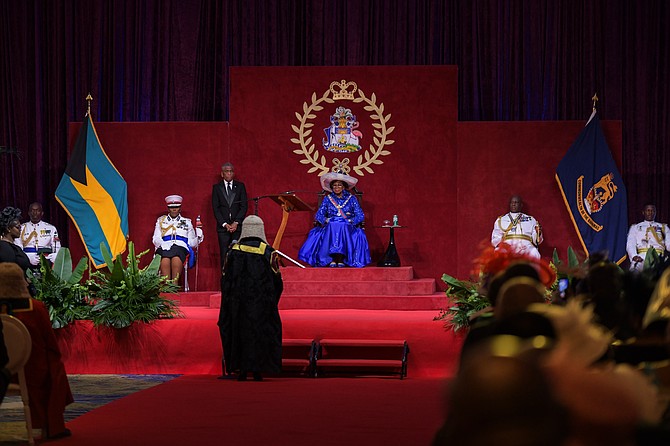
    In a ceremonial opening of the new Parliament marked by traditional pageantry, the Bahamas’ re-elected Davis administration has laid out an ambitious second-term policy platform that places sweeping immigration overhauls at the top of its legislative priorities. The event, held at the Atlantis resort, saw 41 newly elected Members of Parliament sworn into office before an audience of family, supporters, and dignitaries, who gathered in vibrant formal attire ahead of a post-ceremony celebratory reception.

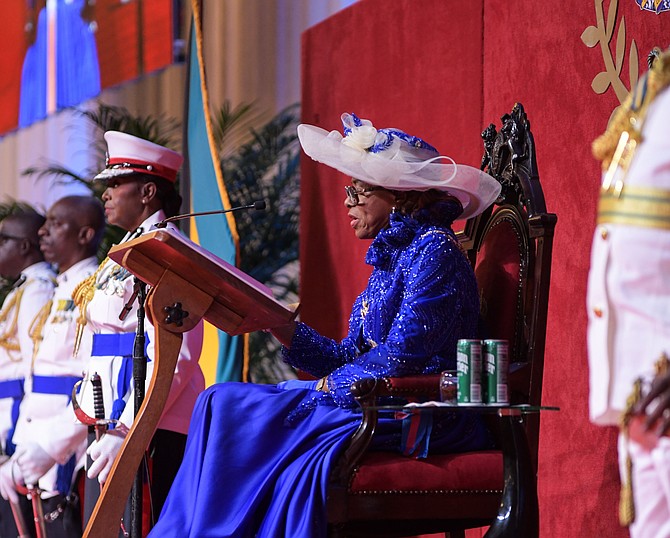
    The ceremonial address was delivered by Governor General Cynthia “Mother” Pratt, who spoke on the administration’s behalf following the Progressive Liberal Party’s landslide victory in the May 12 general election. The PLP secured 33 of the 41 available parliamentary seats, granting Prime Minister Philip “Brave” Davis a substantial governing majority and breaking a 25-year political trend in which incumbents were ousted after a single term.

    Central to the administration’s planned legislation is a package of tough new immigration measures crafted to address longstanding public concerns over document fraud, border security, and irregular migration. Pratt announced plans to introduce the Employer Immigration Compliance Act, which will impose harsh new penalties on businesses that violate existing work permit regulations. Complementing this reform will be a new national e-verify portal, allowing employers to confirm a job candidate’s legal work eligibility before extending an offer of employment.

    Additional policy changes include daily fines for individuals who overstay their valid visas, strengthened enforcement of re-entry bans, and a fully integrated biometric immigration system equipped with overstay alerts, automated biometric e-gates, and upgraded fraud detection infrastructure. A dedicated immigration fraud intelligence unit will also be established to investigate and prosecute violations, with mandatory sentencing required for any public official found guilty of facilitating immigration or passport fraud.

    These pledges come in the wake of a 2023 controversy that prompted the administration to launch an independent immigration commission. After leaked documents exposed allegations of discretionary approvals and political interference linked to then-Immigration Minister Keith Bell, the Davis administration promised the panel would overhaul national immigration policy, review departmental operations, and rebuild public trust. To date, however, the government has released little detailed information about the commission’s ongoing work.

    Pratt noted that the administration begins its second term against a backdrop of widespread global uncertainty, driven by accelerating climate threats, persistent inflationary pressures, and rapidly shifting geopolitical dynamics. “Armed with our unshakeable confidence in the strength, resilience and potential of the Bahamian people, my government is resolved to meet these challenges head on,” she stated in the official Speech from the Throne.

    Beyond immigration reforms, the administration outlined a broad range of domestic policy initiatives across multiple sectors. To protect consumers from anti-competitive practices, the government will introduce updated modern competition legislation that targets price fixing, abuse of market dominance, and unfair pricing schemes. A new national investment policy will also be rolled out, establishing clear national development priorities and transparent requirements for foreign and domestic investors to ensure Bahamian residents share in the benefits of economic growth.

    Workers’ rights will see a generational update via the planned Employment Bill 2026, which the administration describes as the most significant expansion of labor protections in decades. The legislation will strengthen baseline workplace standards, expand maternity leave protections, add new provisions for mental health and wellness leave, and create new safety nets for working parents. Many of these provisions were first previewed during the Davis administration’s first term and included in the party’s pre-election manifesto, including a plan to roll out three annual unpaid mental wellness days for workers as an initial pilot.

    To boost public sector efficiency, a new National Productivity Council will be established to improve government performance, and a contributory public sector pension plan will be rolled out to expand coverage for civil servants. In the housing sector, the government will launch a national rental property registration system that enforces minimum living standards and strengthens tenant protections, alongside a new Residential Tenancy Authority with the power to conduct inspections, investigate complaints, and enforce housing regulations nationwide.

    Energy policy reforms will include a new Electricity Consumer Protection Code, which grants the Utilities Regulation and Competition Authority expanded power to enforce service standards, improve billing transparency, and strengthen consumer safeguards. Proposed energy equity legislation will eliminate price penalties that force Family Island residents to pay higher electricity rates solely based on their geographic location, and major national energy contracts will now require mandatory local content hiring and workforce training to ensure Bahamian workers benefit from the ongoing transition to clean energy. The administration also plans to promote wider adoption of energy-efficient appliances and residential renewable energy systems.

    The administration’s additional second-term commitments include comprehensive reform of the national education curriculum, expanded access to healthcare coverage, enhanced legal protections and social support for elderly residents, and new initiatives to boost national food security. Plans to grow the country’s creative economy include establishing an online intellectual property rights registry and a small claims dispute mechanism to protect Bahamian creators, alongside new tax incentives to attract more local and international film production to the islands.

    On climate resilience and environmental protection, the government reaffirmed its commitment to finalizing an updated national building code and will launch a dedicated Bahamas Environmental Tribunal to strengthen enforcement and adjudication of environmental regulations. Comprehensive new waste management and marine pollution legislation will also be introduced, with stronger criminal and civil penalties for violations.

  • Davis administration revives long-delayed FOIA promise

    Davis administration revives long-delayed FOIA promise

    For more than a decade, Bahamian voters have waited for successive national governments to turn a passed Freedom of Information Act (FOIA) from a hollow piece of legislation into a working framework for open governance. Now, the Davis administration has once again committed to full implementation of the law, reviving a decades-old transparency promise that has gone unfulfilled through multiple previous terms of office.

    Governor General Cynthia “Mother” Pratt formally laid out the renewed commitment in the annual Speech from the Throne this week, as the administration unveiled its updated legislative agenda for the coming term. “My government will continue expanding and fully implementing the Freedom of Information Act, and ensure that public bodies maintain trained FOIA officers and disclosure systems,” Pratt said in her official address.

    The new pledge comes against a backdrop of more than 10 years of broken transparency commitments from every Bahamian administration that has held power since the FOIA was first passed. The legislation was initially approved by the Ingraham administration just ahead of the 2012 general election, but no official enactment date was ever set. The subsequent Christie administration restructured the bill to update its provisions, but never moved to put those provisions into effect. In 2021, the Minnis administration appointed the nation’s first ever FOIA commissioner, but the new department was left chronically underfunded, preventing it from carrying out its core mandate.

    Before the Davis administration took office following the 2021 general election, the Progressive Liberal Party’s (PLP) Blueprint for Change campaign platform made a sweeping set of transparency and accountability promises. Beyond full implementation of the FOIA, the party pledged to deliver an Ombudsman Bill, an updated Public Disclosure Act, a comprehensive new Anti-Corruption Act, campaign finance reform, a formal government Code of Conduct, a national Whistleblower Act, electoral reform and public procurement reform.

    To date, only two of those promised reforms – electoral reform and procurement reform – have been completed, and watchdog groups continue to raise persistent concerns about gaps and weaknesses in the new procurement system. The Protected Disclosures Bill, which establishes legal protections for whistleblowers who report unlawful or unethical government activity, did pass Parliament during the administration’s first term, but no official confirmation has been given that the law has actually been enacted and put into force. Notably, none of the other unfulfilled transparency pledges from the 2021 campaign were included in this week’s released legislative agenda.

    Adding to questions about the administration’s commitment, Prime Minister Philip “Brave” Davis stated publicly as recently as June 2025 that full funding for FOIA implementation and other anti-corruption mechanisms was not a top priority for his government. Governance advocates have long warned that repeated delays to these anti-corruption and transparency reforms are no accident, arguing that prolonged inaction amounts to a deliberate choice to avoid public oversight of government activity.

    When fully implemented, the FOIA will grant Bahamian citizens a legal right to access records held by all public authorities, a foundational change that advocates say will drastically improve government transparency and hold elected officials accountable for their decisions. More than 120 countries around the world – including major democracies like the United States, United Kingdom, Canada and regional neighbor Jamaica – already have active freedom of information or access-to-information laws that enshrine this right for their populations.

  • Senior Customs officer faces 77 charges in $58k bribery case

    Senior Customs officer faces 77 charges in $58k bribery case

    A high-ranking official with the Bahamas Customs Department has been formally arraigned on dozens of serious corruption charges, marking a high-profile case of alleged public sector malfeasance in the island nation. Pamela Williams, a chief customs revenue officer who was stationed in Exuma during the period of the alleged offenses, appeared before Freeport Magistrate Uel Johnson on Tuesday to answer to 77 criminal counts connected to more than $58,000 in illicit payments solicited from a local Bahamas-based business and an American citizen.

    Court records detail that the alleged illegal activity unfolded over a two-year span, running from March 2023 through April 2025. The sprawling list of charges includes 19 counts of bribery, 19 counts of extortion, 19 counts of money laundering, 19 counts of fraud by false pretences, and one final count of fraudulent breach of trust. In total, prosecutors allege Williams wrongfully obtained $58,045: $56,320 from Coastal Systems Bahamas Ltd, and $1,725 from American national Geoffrey C Lawes.

    According to prosecution arguments, Williams leveraged her formal authority as a senior public servant to solicit the unauthorized payments, acting without legal justification or legitimate work-related purpose. For the extortion charges, prosecutors claim she intentionally secured multiple cheques made out directly to her from both entities, knowing she had no legal right to demand the funds.

    The money laundering charges center on allegations that Williams deliberately concealed the illicit proceeds by depositing the cheques into her personal Royal Bank of Canada accounts. Cheques from Coastal Systems Bahamas, totaling more than $56,320, were deposited into an RBC account held under her name, while three Bank of America cheques from Lawes were also moved into her personal Canadian bank account to hide the criminal origin of the funds, prosecutors say.

    On the fraud charges, the prosecution claims Williams obtained the cheques with clear intent to defraud both the Bahamas Customs Department and the Bahamian government, which are the rightful owners of all legitimate customs revenues.

    During the court hearing, it took Magistrate Johnson nearly an hour to read through the full list of 77 charges, requiring a mid-proceeding pause to drink water. Wearing light-wash jeans and a white blouse, Williams appeared composed throughout the lengthy proceeding, with relatives believed to be her sisters sitting quietly in the back of the courtroom. After the hearing concluded, Williams left the court building in a vehicle with a blanket pulled over her head to shield her from press and public view.

    Standard legal procedure meant Williams was not required to enter a formal plea at this initial hearing. Magistrate Johnson denied bail for Williams, though the court informed her defense attorney Ernie Wallace that he could file a subsequent bail application with the Bahamas Supreme Court. The case was prosecuted by Corporal Kenton Smith, and has been adjourned until September 26, when voluntary bill of indictment proceedings are scheduled to begin.

  • Privy Council orders state to pay Ngumi another $50k

    Privy Council orders state to pay Ngumi another $50k

    A landmark ruling from the UK Privy Council, The Bahamas’ highest appellate court, has ordered the Bahamian government to pay an additional $50,000 in damages to Douglas Ngumi, a Kenyan national who endured more than six years of unlawful detention in one of the Caribbean nation’s most notorious human rights abuse cases. The decision redefines legal time limits for immigration detention and delivers a sharp rebuke to systemic delays and negligence in the country’s immigration enforcement system.

    Ngumi’s ordeal began in January 2011, when he was arrested by Bahamian immigration officials for overstaying his visa. What followed was 6-and-a-half years of imprisonment at the Carmichael Road Detention Centre, where he remained until his release in August 2017 – never deported, never granted legal release, and denied nearly all basic constitutional protections. Evidence presented at trial detailed widespread abuse: multiple severe beatings by guards, including one incident where he was stripped naked, tied to a table, and beaten with a PVC pipe that left his back wounds infected; overcrowded cells, non-flushing toilets, contaminated drinking water; regular exposure to contagious disease; and frequent violent raids that included the use of tear gas. The Bahamian government never presented any witness testimony or evidence to refute Ngumi’s claims of abuse.

    The core legal dispute in the latest appeal centered on the first three months of Ngumi’s detention. Lower courts – the Bahamas Supreme Court and Court of Appeal – had ruled that immigration officials were legally entitled to hold Ngumi for three months while arranging a formal deportation order. The Privy Council overturned this conclusion, emphasizing that no meaningful steps were taken to secure a deportation order in that window, and no order was ever issued at all. Under Bahamian immigration law, detention is only authorized for the purpose of processing deportation, the board noted. If officials fail to act within a reasonable period, the legal basis for detention vanishes entirely.

    The ruling set a clear new precedent: barring extraordinary special circumstances, government authorities must make a final decision on whether to issue a deportation order within 1 to 2 working days after a court recommends deportation. Any extended detention beyond that window, without formal justification, is unlawful. The Privy Council also confirmed that while Ngumi’s initial arrest was lawful, his failure to be brought before a magistrate within the required 48-hour window rendered all subsequent detention unlawful after that initial period.

    The $50,000 award adds to the $750,950 in damages already ordered by the Court of Appeal, which itself had increased an original $641,950 award handed down by the Supreme Court in 2020 – at the time the largest damages award for unlawful detention in Bahamian history. Ngumi had pushed for a far larger total award of more than $11 million, arguing that lower courts had drastically undervalued the gravity of his suffering and abuse. The Privy Council rejected most of Ngumi’s additional challenges to damages calculation, ruling that local courts are better positioned to assess awards based on domestic economic and social context, and that damages should be evaluated holistically rather than through a simple daily rate calculation. Still, the court sided with Ngumi on the critical point that the first three months of his detention was unlawful and warranted additional compensation, plus accrued interest at 6.25%.

    Ngumi’s case has stood for years as a glaring indictment of long-standing systemic failures in The Bahamas’ immigration detention system. After his original 2020 Supreme Court win, Ngumi spoke publicly about his ongoing hardship, revealing he was still homeless, sleeping in a borrowed vehicle, going hungry, and bathing outdoors. “From 2017, I’ve never slept in a bed or locked a door,” he said at the time.

    Following the latest ruling, Bahamian Attorney General Ryan Pinder said the judgment would not require changes to current immigration detention practices, as necessary reforms had already been implemented. Pinder claimed that the Office of the Attorney General now holds weekly meetings with detention center management to ensure compliance with legal requirements and protection of detainees’ constitutional rights. Legal activists argue the ruling sets a critical new guardrail against arbitrary detention, sending a clear message that bureaucratic inaction cannot justify prolonged deprivation of liberty.