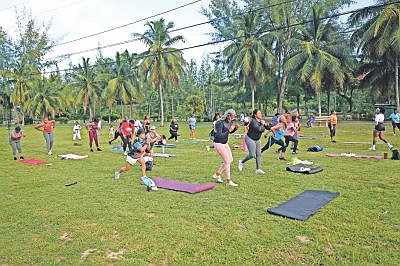
A new, no-cost community wellness initiative, Fitness in the Park 2026, is set to launch at Nassau’s scenic Goodman’s Bay Park, bringing accessible health and fitness opportunities directly to local residents. Backed by the Bahamas Public Parks & Public Beaches Authority, the program transforms the park’s open, sunlit outdoor space into a dynamic community fitness hub, hosting a diverse lineup of activities tailored to varying fitness interests and experience levels. Attendees will have the opportunity to join high-energy group aerobics sessions, calming guided yoga classes designed to build flexibility and reduce stress, and structured karate lessons that focus on discipline, self-defense, and physical conditioning. Unlike paid gym memberships or private fitness classes that create financial barriers for many community members, this initiative is fully free to all participants, designed to encourage people of all ages and fitness backgrounds to prioritize physical wellness while connecting with neighbors in a relaxed, welcoming outdoor environment. The partnership between public park authorities and community health organizers underscores a growing commitment to expanding accessible public wellness resources that leverage the country’s beautiful natural outdoor spaces.
标签: Bahamas
巴哈马
-
Sebas warns govt against modern ‘digital colonialism’
In back-to-back addresses this week, two senior Bahamian government officials have sounded the alarm over growing risks of external technological control, framing the pursuit of digital sovereignty as the next critical phase of the nation’s independence project.
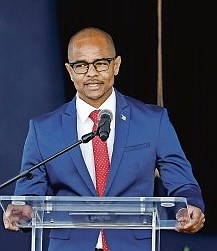
Speaking to the Rotary Club of Southeast Nassau, Innovation and National Development Minister Sebastian Bastian laid out a sweeping framework for why the Caribbean nation must reevaluate its relationship with foreign technology providers. Political independence, gained by The Bahamas in 1973, is no longer enough to guarantee full control over national affairs, he argued, as all sectors of public and private life become increasingly reliant on foreign-owned digital infrastructure, cloud services and algorithms.
“The next form of colonialism may not arrive with soldiers,” Bastian said in his address titled “The Power of Sovereignty.” Instead, he warned, it emerges through un-auditable systems, unchallengeable algorithms, one-sided exit clauses, and essential services that nations can use but never control. “Digital colonialism begins wherever convenience becomes dependency.”
Bastian emphasized that his call for greater national control is not a rejection of foreign investment, international partnerships, or a push for full state ownership of every digital asset. Instead, he outlined a balanced approach: “open, but not exposed; connected, but not captured; partnered, but never powerless.”The minister highlighted submarine telecommunications cables as one of the most critical pieces of national infrastructure, noting that roughly 99 percent of global internet traffic traverses these cables, carrying everything from banking transactions and government communications to healthcare and education data. For an archipelagic nation like The Bahamas, control over cable routes, landing points, capacity, maintenance and emergency recovery is core to national resilience, he said, stressing that “No single failure should isolate our people or paralyse our economy.”
The same logic applies to data centres and cloud infrastructure, which now underpin nearly every core government function, from civil registration and customs to taxation, social assistance, health records and emergency response. Bastian argued that governments must retain the ability to audit critical systems, access their own data, migrate services if a provider changes contract terms, recover from cyberattacks, and exit agreements when necessary. “If someone else can switch off the systems that run your country, you have digitised dependence — not development,” he said.
Turning to public procurement, Bastian said governments must never purchase “black box” technology that they cannot audit, secure, operate or leave. Contracts for critical systems must mandate open standards, data portability, strong cybersecurity protections, service continuity, full audit rights, clear exit provisions, secure off-site backups, and structured knowledge transfer to local teams. “This is not technical housekeeping,” he said. “This is statecraft.”
Bastian extended his warning to the private sector, noting that hotels are heavily reliant on foreign booking platforms, retailers depend on external payment processors, creators are tied to large social networks, and many small businesses store all their sensitive data on a single foreign cloud service. While these tools create major economic opportunities, they also concentrate power in the hands of external entities, leaving local businesses vulnerable when algorithms are adjusted, fees rise, or accounts are suspended. “A business that needs an algorithm’s permission to reach its own customers does not fully own its market,” he said.
To counter these risks, Bastian called on private businesses to maintain direct customer relationships, protect their intellectual property, retain independent copies of all their data, strengthen cybersecurity defenses, and diversify sales and payment channels. He also advocated for greater support for domestic Bahamian technology firms, including improved access to capital, intellectual property protection, and opportunities to enter global markets.
A core pillar of Bastian’s vision is building local technical expertise. The minister stressed that even if The Bahamas continues to partner with global technology firms, purchasing off-the-shelf systems will never eliminate dependence if local Bahamians lack the skills to operate, repair, adapt and secure that technology. “A nation cannot outsource what it never learned to do,” he said.
Capacity building must be written into technology contracts from the start, Bastian argued, with major digital projects required to create apprenticeships, professional certifications, trained public sector staff, experienced local engineers, vendor-neutral technical documentation, and opportunities for local firms. He called for a national skills pipeline that stretches from primary schools through technical training, university and full employment, reaching all parts of the country including New Providence, Grand Bahama and the smaller Family Islands. The nation needs a new generation of local software developers, cybersecurity professionals, data scientists, cloud architects, network engineers, AI specialists and technology-literate public leaders to govern digital systems, he said.
Bastian also urged the nation to develop homegrown technology solutions tailored to the unique challenges Bahamians face, including inter-island logistics, hurricane preparedness, marine protection, financial services, tourism, public health, food security, digital government and the creative economy. Ultimately, he said, Bahamian technology should serve the broader Caribbean market, local cybersecurity firms should compete for international clients, and local creators should retain full ownership of their digital content. “We must not generate the data while someone else captures all the value,” he said. “The Bahamas must not simply log into the future. We must help code it.”
Framing the push for digital sovereignty as the natural continuation of the 1973 independence movement, Bastian said responsibility for achieving this goal extends far beyond the national government, to telecom providers, banks, educational institutions, private tech firms, regulators, investors, entrepreneurs, parents and ordinary citizens. He called on every business to audit its resilience in the event of a major digital platform failure, every government ministry to map who controls its systems and confirm local capacity to operate and develop them, and every school to assess whether it is merely teaching students to use technology, or equipping them to build it. “The generation of 1973 secured the right to govern our land,” he said. “Our generation must secure the right to govern our digital future.”
Shortly after Bastian’s address, Economic Affairs Minister Senator Jerome Fitzgerald echoed the warning during a speech at the CANTO conference, noting that the entire Caribbean faces the risk of a new era of digital colonialism unless regional governments take coordinated action to take greater control of data, technology infrastructure and artificial intelligence. Fitzgerald warned that Caribbean nations are increasingly dependent on foreign-owned digital systems, with all the valuable data, profits and decision-making power remaining outside the region. “The Caribbean is entering the digital age through an architecture that risks reproducing the central logic of the colonial age,” he said, describing the current dynamic as “extraction without ownership, participation without power, and dependence presented as development.”
Fitzgerald called for the creation of a Caribbean Digital Sovereignty Compact that would establish unified regional standards for data centres, cybersecurity, cloud service contracts and disaster recovery. He also proposed building shared regional cloud and cybersecurity capabilities, and requiring all technology contracts to include open standards, independent audit rights, Caribbean-controlled encryption and mandatory knowledge transfer. He noted that the upcoming World Telecommunication and ICT Policy Forum, scheduled to be held in New Providence from September 1 to 4, will give Caribbean governments and regulators a key opportunity to align on a unified, coordinated position on digital sovereignty.
-

Orlando’s Bahamian community launches new chapter with inaugural meet & greet
A new chapter of Bahamian community organizing made its official debut in Orlando Friday night, as the freshly established Central Florida Chapter of Bahamians in Central Florida (BICF) hosted its first public Meet & Greet at local venue CB Bistro. The event drew a sold-out capacity crowd, a turnout that organizers frame as a landmark moment for the growing Bahamian diaspora across Central Florida.
Friday’s gathering brought together a diverse cross-section of attendees: native Bahamians, people of Bahamian descent, and friends of the Bahamian community from across the wider Central Florida region. Over the course of the evening, participants connected over shared cultural ties, built new professional and personal networks, and celebrated the distinct traditions and heritage of The Bahamas. For organizers, the overwhelming response to the launch event confirms what they had long suspected: there is unmet demand for a dedicated local group that prioritizes preserving Bahamian culture while forging tight-knit community bonds in the region.
The inaugural evening also served another key organizational purpose: formal confirmation of the chapter’s founding executive leadership team, which will steer the group through its critical early development years. The confirmed slate of officers includes Chairman Terrelle Tynes-Wilson Harvey, Deputy Chairman Paul Fernander, Treasurer Yvonne Laing Larris, Assistant Treasurer Lenny Curtis, Secretary Krystle Curling, Assistant Secretary Virginia Brathwaite, and Chaplain Reginald Pennerman. Organizers note that additional committee roles and supporting officer positions will be filled and announced publicly in the coming weeks as the chapter continues to build out its infrastructure.
Currently, the newly formed executive committee is deep in work drafting a formal Constitution and Articles of Association, documents that will outline the group’s long-term governing structure. Under the proposed organizational framework, the chapter will operate under the umbrella of Bahamians in Central Florida with a clear four-part mission: unite Bahamians and allies of Bahamian culture through fellowship, educational programming, community outreach, and mutual support for members. Beyond community building, the organization has also outlined plans to contribute to broader public good, including backing disaster relief initiatives targeted at The Bahamas, expanding access to educational programming for community members, and supporting local and national charitable projects.
To support its operations, the chapter has established a formal membership structure open to all who align with its mission: native Bahamians, people of Bahamian heritage, and any supporters of the group’s work. Annual membership dues are set at $100, with a tier of benefits including discounted entry to all chapter events, full voting rights on organizational matters, eligibility to run for elected leadership positions, and exclusive access to the group’s ongoing networking events. Under the proposed bylaws, all executive leadership positions will stand for re-election every two years to ensure democratic governance of the chapter.
Buoyed by the success of the launch event, organizers are already moving forward with planning their next public gathering: a community-wide potluck that will allow members to share traditional Bahamian cuisine and deepen connections. Full details on the potluck will be released in the near future as arrangements are finalized. Chapter leadership says the energy and momentum generated by the sold-out inaugural event has laid a strong, stable foundation for the organization, with the long-term goal of becoming one of Central Florida’s most prominent and impactful Bahamian community groups.
-

$20K overtime in one month
The Bahamas’ leading public electricity utility, Bahamas Power and Light (BPL), is facing a growing industrial dispute after an internal audit exposed staggering overtime payouts to just three senior staff in one department, triggering immediate regulatory changes from the utility’s board and a fierce pushback from the country’s electrical workers union.
Internal BPL payroll records obtained exclusively by The Tribune reveal that between May 2025 and April 2026, three employees working in BPL’s Fuel and Performance Department accumulated a combined $601,295.16 in overtime pay. The two highest earners took home $265,551.83 and $217,729.70 respectively, accounting for more than 80% of the total three-person payout. When compared to their annual base salaries – listed as roughly $78,388 and $56,182 – their overtime earnings exceeded three times their regular annual pay. The third employee recorded $118,013.63 in overtime over the 12-month period.
The overtime payments were tied to routine operational tasks including fuel transfers between storage facilities, tanker operations, and fuel pumping assignments. Monthly claim sheets show multiple months where individual staff earned more than $20,000 in overtime alone. For example, the employee who earned $217,729.70 over the year recorded $25,000.11 in overtime during February 2026, $22,400.51 in January 2026, and $20,890.30 in October 2025. The top overtime earner, meanwhile, was paid more than $24,000 in overtime in three separate months, peaking at $26,273.01 in October 2025.
The records also raise significant questions about the plausibility of reported working hours. One entry from the Christmas holiday week shows one employee logged 18 hours of work on Christmas Day, followed by 24-hour shifts on December 26, 27, and 28 – totaling 90 hours of work across four consecutive days.
Following the completion of the internal probe, BPL’s board of directors moved to implement immediate reforms to the utility’s overtime policies, though full details of both the existing framework and proposed changes have not been released to the public as of press time. The dispute comes at an already difficult time for BPL, which has faced widespread public anger over repeated, widespread power outages that have disrupted daily life across the country through the summer months.
The Bahamas Electrical Workers Union (BEWU), which represents BPL frontline and administrative staff, has rejected the policy change outright, issuing a “high alert” notice to all members ordering them to work only their contracted regular hours and leave immediately after their shifts end. The union argues that BPL’s unilateral change to overtime rules directly violates Clause 30 of the existing industrial agreement between the utility and the union, and has accused BPL leadership of harassing and intimidating union officials and frontline staff.
“We will not stand for these injustices,” the union’s official notice read, emphasizing the directive for members to limit work to “NORMAL WORKING HOURS ONLY” before leaving the workplace.
BEWU President Kyle Wilson doubled down on the union’s opposition in an interview with The Tribune, arguing that BPL has no legal or contractual authority to unilaterally alter working arrangements outlined in the industrial agreement. Wilson noted that if overtime payouts were processed in line with previously negotiated terms and approved by BPL management, the total amount earned by workers is not a legitimate point of dispute. “If it’s in the industrial agreement, it must be respected,” he said.
Wilson also stressed that overtime scheduling is entirely controlled by BPL management, not individual employees. “Overtime is only at the discretion of management,” he explained, a claim backed by the reviewed payroll records, which show all monthly overtime claim sheets include official management approval entries. The union leader rejected criticism of high-earning staff, saying BPL should raise any concerns through formal collective bargaining channels rather than imposing abrupt changes. “No one’s going to bully me or this union,” he said.
Wilson also questioned why BPL did not raise overtime concerns during negotiations for a new industrial agreement, which was finalized and signed by both parties in June 2026, just months before the probe’s findings were released. “We just recently signed a new agreement in June and if they had any concerns why didn’t they come to the union and explain those concerns before signing off on an industrial agreement?” he asked.
The union leader also launched a direct criticism of BPL Executive Chairman Christina Alston, accusing her of consistent disrespect for the union and implementing policies that directly contradict the terms of the industrial agreement. Wilson confirmed he has not seen the full text of the new overtime policy, and declined to characterize the union’s directive as a formal work-to-rule industrial action. “I encouraged people to come to work and do the jobs that they are paid to do, okay?” he said. “I don’t know what you’re referring to with work to rule.” Still, the union’s written notice explicitly instructs members to depart after completing their standard shifts.
The potential impact of the union’s directive on electricity reliability remains unclear, in part due to recent sector restructuring on the island of New Providence, the country’s most populous. The newly created Bahamas Grid Company (BGC) now manages New Providence’s transmission and distribution network, while BPL retains responsibility for power generation and maintains a close working partnership with BGC. Wilson noted that despite the restructuring, BPL workers still regularly provide overtime support for BGC operations, particularly for specialized underground and overhead line work.
“A lot of overtime that our workers are working is to help Bahamas Grid,” Wilson said. “We were told these people were coming with expertise that we don’t have. Yet still they’re relying on us, the former transmission and distribution workers, to assist BGC where they’re falling down.” Wilson’s comments suggest the restriction on overtime could leave BGC without critical support for urgent operations, though the full extent of any disruption is not yet known. The union leader also placed blame for recent widespread power outages squarely on BGC, saying “BGC can’t keep the light on. They need to focus on that and leave us alone.”
Wilson also pushed back against the focus on Bahamian workers’ overtime earnings, pointing to large contracts awarded to external and foreign firms for electricity sector work. He claimed foreign contractors working on the system earn far higher hourly rates than domestic Bahamian staff, though The Tribune has not been able to independently verify those claims. Finally, Wilson addressed unpublicized allegations that he has personally benefited from large overtime payouts, saying no BPL leadership has ever raised the issue with him directly: “They never came to me,” he said.
-

Ministry confirms Ferry Bridge needs replacement after video
A viral social media post highlighting severe structural decay on the Ferry Bridge linking Great Exuma and Little Exuma has prompted official confirmation from the Bahamas’ Ministry of Works and Family Island Affairs that the aging crossing requires full replacement — though the government has yet to announce when construction on a new structure will get underway. The bridge is counted among nine high-priority infrastructure projects prioritized by the current Davis administration, after engineering assessments completed by the ministry verified the need for full replacement. In an official statement released Tuesday evening, the ministry noted that its technical teams have long been aware of the crossing’s deteriorating condition, and preliminary design work for the replacement bridge has already been finalized. Necessary pre-construction technical reviews and public planning processes are currently moving forward, according to the agency.
Despite confirming the replacement plan, officials declined to address a key claim accompanying the widely shared viral video: that chunks of concrete break away and fall into the surrounding water when heavy trucks traverse the structure. The footage shows loose material dangling from the bridge’s underside, which the accompanying social media post identified as exposed reinforcing steel. Until the replacement project breaks ground, ministry engineers will conduct regular safety inspections of the existing structure to protect the thousands of motorists and local residents who depend on the inter-island connection. “In the interim, the Ministry’s engineers will continue to monitor the existing structure, and advise on any measures necessary to protect the safety of motorists and residents who rely on this critical connection between Great and Little Exuma,” the statement read. Officials added they recognize the Ferry Bridge’s central role in supporting daily life and local economic activity across the Exumas, and will publish additional updates as technical design, procurement, and implementation work progresses.
Before the ministry released its formal statement, Glenn Davis, Chief Councillor of Exuma, told local outlet The Tribune that government assessments of the bridge had been completed previously, and replacement plans had already been drafted. “I don’t know if it’s a danger,” Davis said, “but I know that heavy vehicles or heavy loads shouldn’t cross the bridge.” He explained that government inspectors carried out a full review of the structure last year, and concluded that full replacement was the only viable solution, adding that the existing bridge has stood for decades and all required pre-planning work to scope the project has already been finished.
Local perspectives on the bridge’s safety have been divided in the wake of the viral video. Cecil Smith, a long-time Exuma resident, warned against drawing conclusions about the bridge’s safety from social media footage alone. “I am not aware of any report by certified government engineers or otherwise that the bridge is unsafe,” Smith said. “However, there have been in the past some restrictions about certain tonnage going across the bridge.” Smith added that he does not know the official weight limit or whether those restrictions are still enforced, and stressed that only qualified government engineering professionals can properly assess the structure’s condition, arguing the viral video does not prove the bridge is at risk of collapse. Another local resident, who requested anonymity, told reporters that she believes the viral footage exaggerates the bridge’s current condition, though she acknowledged that critical repairs or replacement are long overdue.
The renewed public scrutiny of the Ferry Bridge comes just one week after a sudden structural failure led to the immediate condemnation of the Fresh Creek Bridge on the nearby island of Central Andros, which cut off a critical transportation artery for the community. As The Tribune reported on August 5, an intermediate supporting pier on one of the Fresh Creek Bridge’s pile caps sank, shifting the entire structure’s weight to just two external supports and causing three concrete bridge slabs to subside. Officials ordered the bridge immediately closed to all vehicle traffic, announcing that the structure would be fully demolished rather than repaired due to the extent of the damage.
The sudden closure severely disrupted travel across Central Andros, cutting off access to the island’s airport, government service centers, and local businesses. It also initially delayed restoration work by Bahamas Power and Light crews, who were unable to transport heavy equipment to repair outages in Cargill Creek and parts of South Andros. Officials noted that a prefabricated temporary bridge sourced from a supplier in New York will take approximately two months to be delivered and installed on Andros, leaving residents facing extended disruption to travel and commerce.
-
Govt considering Fox Hill land for about 80 affordable homes
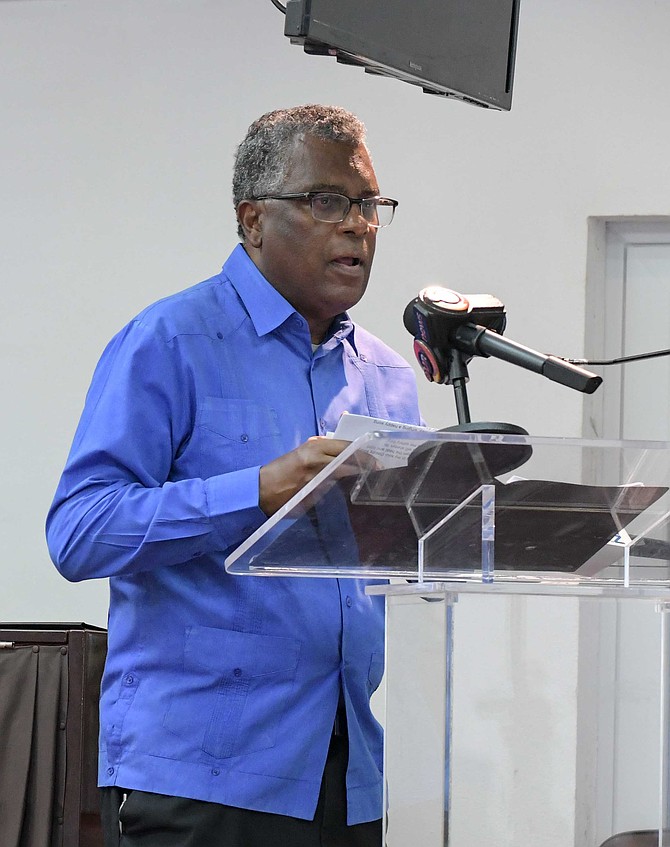
A transformative affordable housing initiative could soon move forward in Fox Hill, The Bahamas, as the current Davis administration weighs plans to convert roughly 13 acres of underused vacant land along Bernard Road into a residential subdivision holding approximately 80 new homes, local Member of Parliament Fred Mitchell confirmed this week.
Mitchell shared details of the proposal during a stop at St Paul’s Baptist Church, part of the annual cross-community church visits that kick off the region’s iconic Fox Hill Day celebration season. The vacant site, situated directly across from the 700 Wines and Spirits retail outlet, has been offered to the national government following a series of failed prior development attempts by private actors, according to Mitchell.
For the Fox Hill community, affordable housing has remained one of the most pressing unmet needs for residents in recent years, making the proposed subdivision a potentially game-changing solution for local families seeking stable, accessible homeownership. “I think if we could develop the 13 acres it would be wonderful,” Mitchell told attendees at the church service. “I think you could probably get 80 homes in there or so and it would be a good thing, and hopefully affordable housing for people because housing is a big issue in this area.”
The announcement came amid a long-standing tradition that unites the country’s major political parties around the annual Fox Hill Day celebrations. This year, delegations from both the ruling Progressive Liberal Party and the opposition Free National Movement traveled across the community to join services at four key local congregations: St Paul’s Baptist Church, Macedonia Baptist Church, Mount Carey Union Baptist Church, and St Mark’s Native Baptist Church. In keeping with custom, parliamentarians from both parties joined together to form a combined choir for the services and delivered official presentations to each host church. This year’s program also featured youth-focused programming, including performance pieces and short comedy skits created and performed by local children.
The multi-day church visits serve as the opening segment of the broader Fox Hill Day festival, an annual gathering that draws together neighborhood residents, faith leaders, local nonprofits, and political figures to honor the area’s distinct history, cultural roots, and shared heritage. Held every year on the second Tuesday of August, Fox Hill Day holds the distinction of being the oldest continuously running festival in The Bahamas. The event traces its origins to 1838, when it was established to commemorate the formal emancipation of enslaved Africans across the Bahamas. Today, celebrations retain their traditional core, blending interdenominational church services, authentic Bahamian cuisine and beverages, and widespread community singing and dancing.
-

Eleuthera father dies in Haiti boating tragedy
A routine family getaway to Haiti has turned into an unthinkable tragedy for a Bahamian community, after a 39-year-old father of three from Eleuthera died in a boating accident just four days into the trip. As Andre Dean’s family waits for clear answers from Haitian law enforcement about the exact circumstances of his death, they are pushing back hard against damaging online rumors that falsely linked his passing to violence and drug trafficking.
According to Dean’s sister, Kenva Neely, who spoke to The Tribune from Haiti, Dean traveled to the Caribbean nation last week alongside Neely and their mother to visit family on his stepfather’s side. This trip marked Dean’s second visit to Haiti, after he fell in love with the country during his first stay. Neely shared that her brother had reflected deeply on the privileged life his three young children – aged two, 10, and 16 – enjoy back in The Bahamas, telling his family he wanted his kids to learn gratitude for their comfortable lives after seeing the conditions local children navigate in Haiti.
Dean’s wife and three children remained in The Bahamas for the trip, a choice that leaves them now grieving from thousands of miles away as the family works to bring Dean’s body home. Neely explained that Dean told relatives he planned to go boating with local friends on Sunday evening, though she was not present for that conversation. Though weather conditions were rough that day, Neely said her brother believed the journey would be safe. When Dean failed to return by Monday morning, the family immediately launched a search effort led by their stepfather and other local relatives. By Monday evening, their search ended in grief when Dean’s body was recovered from the waters off Port-de-Paix, in northwestern Haiti, alongside the bodies of other people who had been on the boat.
In the wake of Dean’s death, unfounded rumors spread rapidly across social media, claiming Dean had been shot, killed in a violent incident, or was involved in drug activity. Neely has forcefully refuted all these claims, noting that she personally saw Dean’s body and confirmed he had no gunshot wounds or signs of foul play. The family’s working belief is that Dean drowned in the accident, with only a small bruise on his head consistent with hitting a rock or reef during the capsizing. Neely said the cruel online speculation has left her mother in tears, emphasizing that Dean traveled to Haiti solely for a family vacation, drawn back by his affection for the country.
Described by Neely as a joyful, ambitious, and deeply family-oriented man, Dean worked as a self-employed construction worker and had recently finished building a new home with his wife, who is originally from Abaco. In the days before the trip, he had taken his own children to the beach to build sandcastles and share quality time, always focused on earning enough to give his family a stable, comfortable life.
As of Tuesday, the family was still attempting to arrange their return to The Bahamas, but told reporters all available flights were fully booked. They will continue coordinating with Haitian authorities to process Dean’s death and facilitate the repatriation of his body. Bahamian officials have also stepped in to support the family: the Ministry of Foreign Affairs confirmed that embassy staff will maintain constant contact with both Dean’s relatives and Haitian law enforcement as the investigation moves forward. Local political representative North Eleuthera MP Sylvanus Petty was among the dozens of people who shared public condolences for the family following news of Dean’s death, in an outpouring of support that has spread across Bahamian social media.
-

Ministry defends strict public school hair rules
As the Bahamas approaches a new academic year, a long-simmering debate over public school hairstyle policies has reignited, sparked by a private school’s social media post showcasing Black male student leaders in natural hairstyles that remain off-limits for most public school students across the country.
Earlier this year, St Andrew’s International School, one of the nation’s most prominent private institutions, shared photos on its official Facebook page of its 2026 Alpha Phi Alpha Fraternity-nominated Head Boy and Deputy Head Boy. Both Black students wore cultural natural hairstyles: one with braids, the other with twists. The post quickly garnered over 500 reactions and more than 100 shares, drawing widespread public comment that highlighted the stark divide between private and public school grooming standards in the Bahamas.
Commenters were quick to criticize the double standard. Many questioned why high-achieving Black students at a private school could openly embrace their natural hair, while public school students are held to far stricter rules that have even resulted in students being removed from classrooms for non-compliant hairstyles. One commenter noted that hair texture and style have no connection to academic ability or student potential, while another pointed out the striking irony that a school originally founded amid opposition to racial integration now leads in allowing Black students to wear their cultural hairstyles.
Despite growing criticism of the outdated policy, Bahamas’ Ministry of Education has made clear it has no plans to revise or relax its existing grooming standards. Education Director Dominique McCartney-Russell defended the policy in a recent press briefing, arguing that the rules— which require all male public school students to maintain low haircuts and ban hair extensions for female students except for documented medical reasons— are designed to keep students focused on their studies and foster an orderly, positive learning environment.
McCartney-Russell confirmed that the Ministry has not held any internal discussions about amending the policy, even amid repeated public pushback and high-profile incidents of non-compliance that have disrupted the school year for students. “Those standards are in place to ensure that the focus is on the academic and not on any other issue,” she said. “We believe that these standards assist with the development of a positive learning environment, and that’s what we maintain for all of our 40,000 children.”
The policy frames grooming rules as part of the Ministry’s broader discipline framework, meant to instill order and personal responsibility among students. McCartney-Russell noted that students are welcome to wear any hairstyle they prefer during summer breaks, and acknowledged that many struggle to adjust to the rules when the academic year resumes. Once students comply with the haircut requirements, she added, they are able to express their individuality through other appropriate, policy-aligned channels.
This is not the first time the policy has sparked public outrage. In September 2025, Eyewitness News reported on a high-profile incident at CC Sweeting Senior High School, where the mother of a male student spoke out after her son and a group of other boys were removed from class over their hairstyles. The student in question had a faded cut less than an inch long with tapered edges and shaved sides, a style that school administrators still deemed unacceptably ungroomed. Though the mother complied by taking her son to a barber to adjust his cut, she told reporters she saw nothing inappropriate about his original hairstyle, and noted that the boys were barred from campus entirely until their hair met Ministry standards. She framed the incident as a form of cultural stigma against Black hairstyles, pointing to the greater freedom granted to students at many private institutions like St Andrew’s.
A separate 2025 incident at RM Bailey Senior High School also drew widespread condemnation, after the school posted a controversial Facebook photo showing a group of male students standing with an educator holding a clump of cut hair. The caption read: “Excellence has a look. Pacer Chronicles. They came to school looking like hoodlums…. and after sitting in the barber’s chair… beautiful.” The post was later removed following public backlash.
McCartney-Russell pushed back on accounts of widespread student suspensions, saying that the Ministry typically calls parents in for meetings to address grooming violations rather than immediately sending students home. Even so, she confirmed that the Ministry’s position remains unchanged: no reviews of the grooming policy are planned, and the existing rules will remain in effect for the upcoming school year and beyond.
-

Power outages forces Supreme Court closure
A weeks-long downtown power outage in Nassau has triggered an unprecedented disruption to the Bahamas’ judicial system, forcing the Supreme Court to shut its doors entirely and drawing sharp criticism from the country’s top legal body over persistent infrastructure failures and poor public communication.
What began as a localized power interruption on Friday afternoon rapidly escalated into a full-blown crisis for the judiciary. According to a senior court official, Bahamas Power and Light (BPL) provided no advance or ongoing updates about the outage after power cut out around 4pm Friday. Left with no information about when service would resume, court administrators opted to keep the facility’s backup generators running nonstop through the weekend, assuming the issue would be resolved quickly. By Monday morning, the generators had completely exhausted their fuel supply.
After officials paid out of pocket for emergency refueling—an unbudgeted expense not accounted for in the judiciary’s annual operating plan—one of the court’s primary generator units suffered permanent damage to its seals from the continuous operation. The unit repeatedly failed on Monday, forcing court administrators to order a full shutdown of the Supreme Court while technicians waited for the system to cool to complete repairs.
The closure has upended a tightly scheduled judicial calendar, where most hearing dates are locked in six to 12 months in advance. For the Bahamas Bar Association, the disruption amounts to a direct attack on citizens’ constitutional rights to timely justice. In a scathing statement, the association condemned both BPL and relevant government authorities for their failure to maintain consistent communication with the judiciary throughout the outage.
“When the doors of the Courts cannot open, the rights of citizens to be heard, to have their liberty preserved or vindicated, and to have their disputes resolved in a timely manner are placed in jeopardy,” the association said, adding that the lack of advance warning left the judiciary unable to put contingency plans in place, leaving litigants, witnesses, and legal professionals stranded without information. “This is unacceptable.”
Attorney General Wayne Munroe acknowledged that any loss of court time poses a significant concern for the justice system, though he noted that backup generators are not designed to operate 24 hours a day continuously. “Anything that causes loss of any court time clearly is something that is not useful,” he said.
The outage’s ripple effects extended far beyond the Supreme Court. The nearby Industrial Tribunal also lost power on Monday, with a senior official confirming that the outage brought all proceedings to a halt. Without electricity, the tribunal could not operate its computers, cooling systems, or even running water. The official added that the facility has struggled with longstanding infrastructure issues, including an elevator that has been out of service for months, persistent mould growth, and extreme overheating during summer months. Despite these challenges, the official stressed that the tribunal has no backlog of cases and has stayed ahead of its scheduling.
Downtown businesses have also absorbed thousands of dollars in unexpected costs to stay operational. Allen Williams, manager of the popular downtown eatery Cafe Matisse, told reporters that his establishment has kept its generator running nonstop since Friday afternoon to preserve thousands of dollars worth of perishable food inventory. He estimated the business has already spent around $1,000 on extra fuel, and like court officials, he received no direct updates from BPL about the outage or restoration timeline. “Long as they down, we burning fuel,” Williams said. “Very expensive.”
In a statement released Monday, BPL blamed the Bank Lane area outage on a cable fault near Rawson Square that was identified by Bahamas Grid Company (BGC) technicians around 2:30am Tuesday. The utility said crews from BPL and BGC were working together to complete repairs and expected power to be fully restored by 1am Wednesday. However, the statement did not address the loss of power reported by multiple downtown stakeholders that began as early as Friday afternoon.
The outage is the latest in a string of high-profile failures for BPL that have rocked the Bahamas this summer. Less than two weeks ago, a transformer explosion at Blue Hills triggered a seven-hour-long island-wide blackout across New Providence, affecting most residents on the island. Just days later, western New Providence communities endured five consecutive days of rolling outages, forcing some residents to sleep in their cars for cool air, throw out entire refrigerators full of spoiled food, and spend hundreds of dollars on generator fuel. Outages have continued in recent days and spread to some of the country’s Family Islands as well.
BPL has attributed the recent spate of outages to a combination of factors, including physical cable faults, overloaded transformers, tripped feeders and breakers, damaged power lines, small infrastructure fires, and unusually high summer energy demand that has pushed the grid beyond its designed capacity. Last week, BPL Chief Operating Officer Anthony Christie acknowledged that the country’s power grid is under severe strain, with many key circuits and transformers operating at or near maximum capacity.In a separate clarification, Police Commissioner Shanta Knowles noted that the ongoing closure of sections of Central Police Station is unrelated to the power outage, and is instead the result of planned extensive renovations. Members of the public seeking to file police reports during the renovations are directed to use facilities at the Tourism Police Unit on Parliament Street and the downtown wharf.
-
Mom seeks cure for toddler’s mystery illness
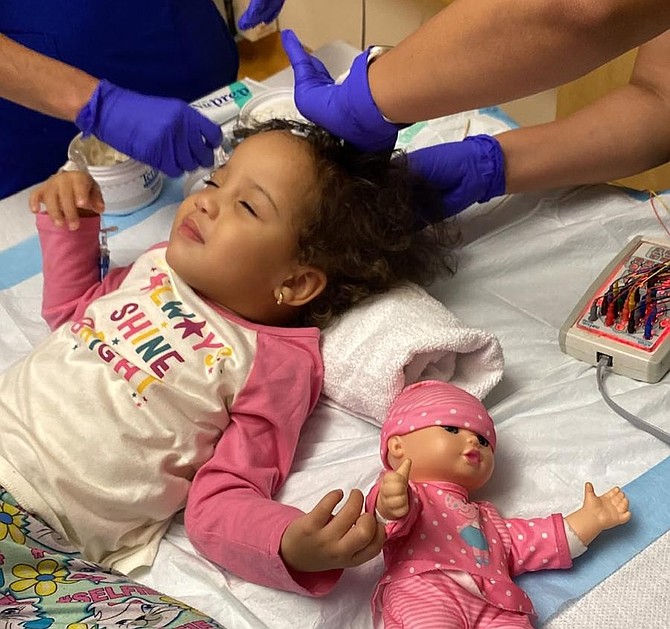
For Bahamian mother Deryl King, life has shifted into an endless, anxiety-fueled vigil over her 4-year-old daughter, Selah Grace Rahming – a once-healthy, thriving child who has rapidly lost all core developmental abilities to a mysterious, undiagnosed medical condition defined by crippling daily seizures.
Selah was born a perfectly healthy child in January 2022, hitting all early developmental milestones on schedule: she learned to walk, speak, feed herself and interact with the world just as any growing toddler would. The first red flags appeared around her first birthday, when she began experiencing febrile seizures linked to fever. By October 2024, those isolated episodes had progressed to chronic seizure activity. King brought her daughter to Nicklaus Children’s Hospital in Miami, where clinicians diagnosed her with epilepsy and began targeted treatment. But just over a year later, in December 2025, Selah’s health took a devastating, unexpected turn.
What began as subtle changes – difficulty holding her head up, unexplained drooling – quickly snowballed into a complete loss of the skills Selah had worked so hard to master. By the start of 2026, the three-year-old had lost the ability to chew, swallow, hold objects, walk, and speak. Today, she cannot process solid food at all, leading to dangerous unintended weight loss, and depends entirely on her mother for every aspect of daily care. Seizures now strike multiple times a day, each one leaving Selah gasping for air, vomiting, and utterly weakened. Through every night, King sleeps beside her daughter, holding her breath between seizures to listen for Selah’s next inhale, terrified that one episode will stop her breathing permanently.
“ I do fear that all the time because it literally cuts her breath,” King shared in an interview. “So, during that time, I’m not breathing just to make sure I hear her breathing.”
Watching her daughter regress at such speed has been emotionally crushing for King, particularly because after dozens of tests and specialist visits across the U.S., clinicians still have no answer for what is causing the catastrophic decline. The uncertainty has turned King’s entire life upside down: a former banking professional who owns a local 3D photography business, she has stepped away from all work to provide 24/7 care for Selah, while still raising her 19-year-old son. Most days are consumed by trips to physical therapy sessions and repeated medical appointments, as the family searches for any clue that could point to a diagnosis and a path to treatment.
King has relied on the national health insurance program in the Bahamas to cover much of Selah’s ongoing care, but the specialized testing and intensive treatment the little girl needs is not available locally. To access the advanced care Selah needs, the family plans to travel to Panama this month, where leading neurologists and developmental specialists can run the full range of diagnostic testing, begin targeted treatment, and provide intensive therapy to help Selah regain lost skills. The entire trip and course of care is projected to cost $30,000 – a sum the family cannot cover on their own.
To raise the needed funds, King launched a public GoFundMe campaign, a step that was personally difficult but ultimately necessary. “I can’t do it on my own,” she explained. “A lot of times we keep things ourselves because we don’t want to be a burden. But there comes a time when you have to realise that you cannot do it on your own.” As of press time, the campaign has already raised $17,195, moving the family more than halfway to their goal.
For King, the ultimate hope extends far beyond a diagnosis: she longs to see her daughter regain the abilities she lost, to run, play with other children, and speak again. When asked what word she most aches to hear from Selah, her answer was simple and heart-wrenching: “Mummy. I haven’t heard that in so long.”