标签: Bahamas

巴哈马

  • Bahamian man sentenced to 27 years in US for child abuse

    Bahamian man sentenced to 27 years in US for child abuse

    A 38-year-old Bahamian national residing unlawfully in the United States has been handed a 27-year federal prison sentence following his conviction for sexually abusing an 11-year-old girl placed in his care, US law enforcement and judicial authorities confirmed last week.

    Rian Wayne Johnson entered a guilty plea to one count of sexual exploitation of children as part of a negotiated plea agreement with prosecutors. In addition to the custodial sentence, US District Judge Elizabeth Hanes mandated that Johnson complete a full mental health evaluation and ongoing treatment during his incarceration, and also require him to take part in educational or vocational training programs to prepare for any potential reentry into society.

    The case traces back to Johnson’s arrest last July, when his former girlfriend contacted the Newport News Police Department in Virginia to report the alleged abuse. According to investigative records, the woman stumbled upon explicit photographs of the young victim, identified only as Jane Doe 1, at the couple’s shared Virginia residence while she was investigating her suspicion that Johnson was being unfaithful.

    The pair had met five months prior to moving in together, and Johnson brought the 11-year-old, who is not his biological child, into the shared home. Johnson told his girlfriend at the time that he had maintained a relationship with the girl’s mother dating back to when the victim was just two years old.

    Following the report, detectives executed a search warrant at the residence, seizing five separate electronic devices and documenting the scene with investigative photography. A forensic review of the devices uncovered a large collection of explicit photos and videos featuring the minor, including one that captured Johnson masturbating while the child’s breasts were exposed. Johnson’s former girlfriend also told investigators she viewed a video that showed the victim performing oral sex on Johnson, and she positively identified the defendant as the adult male in the footage.

    When interrogated by federal agents, Johnson did not deny the allegations. He admitted the videos depicted him engaging in sexual activity with the child, and confirmed that he had intentionally pressured, persuaded, and coerced the underage victim—who was well below the age of consent—to participate in sexually explicit conduct. Johnson acknowledged that all the offenses occurred between May 30 and July 15 of last year, across Eastern Virginia and additional locations outside the district.

    During the sentencing hearing, Johnson’s legal team pushed for the court to issue the mandatory minimum sentence of 15 years in prison, a request that aligned with Johnson’s own petition to the judge. Johnson cited his personal history of childhood abuse, lifelong struggles with substance dependence, and pre-existing mental health conditions as mitigating circumstances. He also argued that data on age-related recidivism showed his 38 years of age made him statistically unlikely to commit similar offenses after release, and claimed that the federal sentencing guidelines were structurally flawed. As a non-citizen, Johnson further argued he would face additional collateral punishment beyond prison time—namely eventual deportation—that US citizens would not face for the same crime.

    Prosecutors pushed back forcefully against these claims, dismissing the call for a 15-year sentence as “far below the guideline range of 30 years to life imprisonment” and wholly unreasonable. They emphasized that a lenient sentence would fail to reflect the extreme gravity of Johnson’s crimes against a vulnerable child and would not send a clear deterrent message to other potential offenders.

    Judge Hanes ultimately sided with prosecutors, handing down a 27-year prison term that includes credit for the time Johnson has already served in custody since his arrest. Upon completion of his custodial sentence, Johnson will also be required to serve a 10-year term of supervised release, during which he will remain under strict monitoring by federal probation authorities.

  • US Ambassador hosts local leaders aboard USS Nimitz

    US Ambassador hosts local leaders aboard USS Nimitz

    As one of the longest-serving commissioned naval vessels in the world nears the end of its decades of active service, it made a strategically significant stop in Bahamian territorial waters that underscores the deep security ties between the United States and The Bahamas. In a stop timed to tie into U.S. anniversary celebrations, US Ambassador to The Bahamas Herschel Walker welcomed a high-level delegation of Bahamian government and military leaders for a day of engagement aboard the nuclear-powered USS Nimitz, according to official statements from the US Embassy in Nassau.

    This port call was organized as part of the embassy’s Freedom 250 initiative, a nationwide series of events commemorating the 250th anniversary of the United States’ founding. Beyond its anniversary tie-in, the gathering was deliberately structured to showcase the ongoing collaborative security work that forms the backbone of the bilateral relationship between the two neighboring nations.

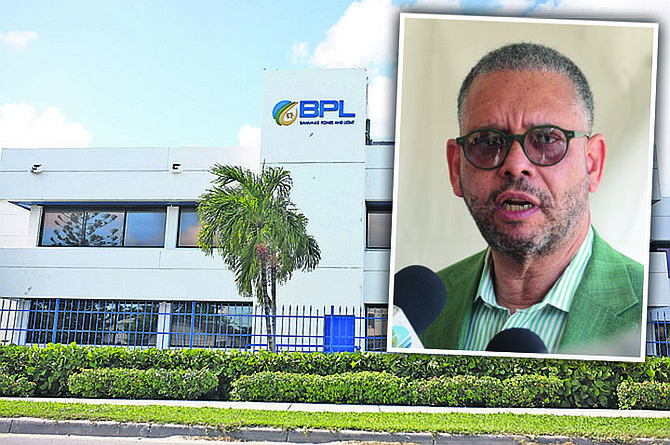
    During their time aboard the aircraft carrier, the Bahamian delegation — which included National Security Minister Miles Laroda, Energy, Utilities and Aviation Minister JoBeth Coleby-Davis, and Royal Bahamas Defence Force (RBDF) Commodore Floyd Moxey — received a full tour of the vessel’s key operations areas. The group visited the navigation bridge and the expansive flight deck, observed active takeoff and landing operations for deployed aircraft, and viewed a coordinated demonstration of the strike group’s naval capabilities. Walker was joined on the tour by US Defence Attaché Commander Victor Lange, and the entire party was formally received by Rear Admiral Cassidy “Dudley” Norman, commander of Carrier Strike Group 11, which the USS Nimitz leads.

    In remarks following the tour, Walker emphasized the uniquely close bond between the two countries. “The United States and The Bahamas aren’t just friends and neighbors — we’re family,” he said. “The Bahamas and Caribbean are America’s third border, and in many ways our first — it is where our shared security begins. This visit is a powerful reminder that Bahamian security is American security, and we are committed to protecting these waters together.”

    Commissioned in May 1975, the USS Nimitz holds the distinction of being the oldest actively serving aircraft carrier in global operation. This current deployment marks the final tour of duty for the vessel after 51 years of service to the US Navy. For this final deployment, the carrier and its accompanying strike group have been conducting operations across the Caribbean region explicitly to support shared regional security goals.

    US Embassy officials noted that the high-profile visit was far more than a ceremonial stop: it served as a tangible reminder of the decades-long security partnership that anchors US-Bahamas relations. This collaboration includes everything from joint cross-border counternarcotics operations to coordinated maritime security work through Operation Bahamas, Turks and Caicos. It also encompasses a 20-year ongoing partnership between the Rhode Island National Guard and the RBDF. To sustain this cooperation, the US provides approximately $13 million each year in targeted support to the RBDF, covering programming, specialized training, new equipment, and capacity-building initiatives.

    Beyond the broader bilateral partnership, the visit also aligns with the core policy priorities Embassy Nassau has laid out under Ambassador Walker’s leadership: protecting US citizens residing or traveling abroad, securing the shared borders that connect the two nations, and continuing to deepen the people-to-people and government-to-government relationship between the United States and The Bahamas.

  • Abaco teen killed in boat driven by twelve-year-old

    Abaco teen killed in boat driven by twelve-year-old

    A devastating fatal accident on the waters near Abaco’s Nunjack Cay has left a tight-knit Bahamian community in mourning and reignited long-simmering demands for tougher enforcement of existing boating safety regulations, after authorities confirmed a 12-year-old child was at the helm of the vessel when the incident unfolded.

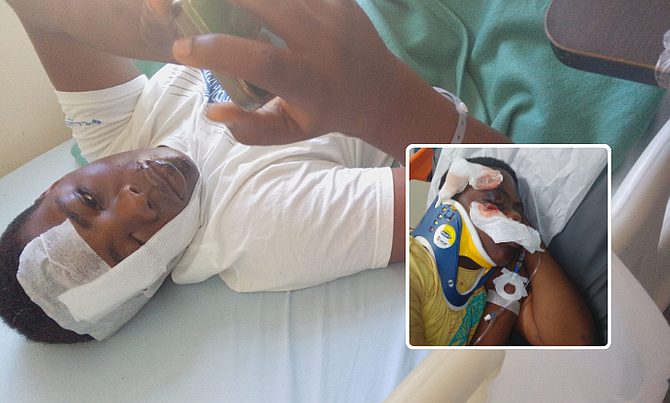
    Fifteen-year-old Kyron Curry, a beloved tenth-grade student at Patrick J Bethel High School, lost his life on Friday when he fell overboard from the 17-foot Cobia craft, which was carrying four teen passengers ranging in age from 12 to 16 off the coast of Green Turtle Cay, less than 10 miles from the incident’s starting point. According to initial police accounts, none of the vessel’s passengers were adults, and the 12-year-old operator was well below the legal age to helm a motorized boat of the size being used.

    Witness statements from the surviving teens outline the chaotic moments that led to the tragedy: Curry was standing on the bow of the moving vessel, holding a towing rope, when he lost his balance and fell into the water. After the fall, the young passengers reported hearing a sharp loud noise, then spotted blood spreading across the water’s surface. Un able to locate Curry quickly, the group navigated back to Green Turtle Cay to summon emergency assistance. Local volunteer boaters launched an immediate search effort and eventually recovered the unconscious teen, who had suffered a severe fractured skull. Curry was rushed to a local medical facility, where medical staff pronounced him dead on arrival.

    The tragedy sent shockwaves through the small, close-connected island community, where nearly everyone knew the popular young student. Community members described Curry as a bright, well-mannered teenager who was widely liked across the island. When Curry’s body was brought to the local clinic, deputy chief councillor Elvardo Butler was among the dozens of residents who gathered to wait for updates. He recalled the devastating moment when Kyron’s mother’s screams confirmed the death of her only child, leaving the entire gathered crowd heartbroken. “It hurt my heart to see it, and then to watch the kid that was driving the boat just sit there and sob; it was a hard situation all around,” Butler shared in an interview.

    Butler, a long-time community leader on the island, laid blame for the incident squarely on systemic adult negligence, arguing that lax attitudes toward unsupervised youth boating created the conditions for the preventable death. “I’m not mad at them because they’re kids, but some type of adult supervision should’ve been on that boat no matter what happened,” he said, pushing back against claims that the tragedy was an unavoidable accident. While he stopped short of directly attacking the 12-year-old operator’s family, he called for accountability, noting that community members had repeatedly warned the child’s parents about their repeated pattern of allowing underage, unsupervised boating. Those repeated warnings, he claimed, were dismissed outright.

    “If you come on the cay and interview about 100 people, they’ll tell you the same,” Butler said. “We’ve been talking to these people over and over regarding coming in the harbour, regarding these kids, swimming across the harbour, all different type of stuff. But it’s like we lost our way over there. You can’t say nothing to anyone no more. It’s unfortunate and that’s the way it is.”

    Current Bahamian law explicitly bars any person under the age of 16 from operating a motorboat with an engine larger than 10 horsepower, with only two narrow exceptions: if the minor has passed a certified practical boating safety test, or if a 14- to 16-year-old operator is under direct, on-board supervision of an adult aged 16 or older. There is no indication the 12-year-old operator met either of these requirements to legally operate the vessel.

    Butler added that the problem of unsupervised youth operation of motorized vehicles extends far beyond boating. He claimed it is common for children as young as pre-teens to operate motorbikes and scooters across the island without any adult oversight, a pattern of dangerous behavior that has gone unaddressed for years.

    Local political leaders joined the community in mourning: Abaco area MP Kirk Cornish released a public social media statement expressing profound sorrow over the tragedy and extending his deepest condolences to Curry’s grieving family. Relatives of the teen declined to speak publicly about the incident Tuesday, asking for privacy as they grieve.

    As of Tuesday, law enforcement officials have not yet made a decision on whether to file criminal charges in connection with the death. Chief Superintendent Michael Thurston, the top-ranking officer in Abaco, told reporters that investigators are exploring all possible avenues of the case and coordinating with the Port Department to review all relevant regulations and evidence. He added that in response to the tragedy, the Royal Bahamas Police Force will ramp up public awareness campaigns on social media to educate boaters about safety rules, in an effort to prevent similar deaths in the future.

    Assistant Superintendent Nicholas Johnson, press liaison for the Northern Bahamas, offered an early update that suggested charges may not be forthcoming, noting that at this stage of the investigation, there is no evidence of criminal wrongdoing that would justify formal charges. Once the full investigation is concluded, the case will be turned over to the coroner’s office for an official inquest into the cause of death, he confirmed.

  • Gov’t ratifies ILO pacts for worker and maternity rights

    Gov’t ratifies ILO pacts for worker and maternity rights

    In a landmark move for labor rights in the Bahamas, the current Davis administration has taken a critical step forward to reinforce workplace safety standards and expand maternity protections for working women across the nation. The action unfolded during an international conference held in Geneva, where the government formally ratified three core conventions from the International Labour Organization (ILO).

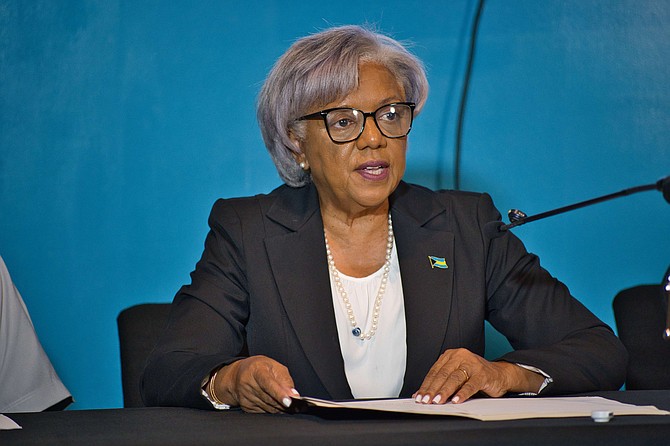
    During a formal ratification ceremony, Minister of Labour and Public Service Pia Glover-Rolle officially submitted the country’s instruments of ratification to ILO Director-General Gilbert Houngbo, marking the culmination of years of preparatory work. Among the three agreements, Conventions 155 and 187 focus on updating and strengthening the country’s national occupational safety and health regulatory framework, while Convention 183 centers on upgrading legal protections for pregnant workers and new mothers.

    This ratification process was not a rushed decision. For years, government stakeholders held extensive consultations with the ILO’s tripartite council, which brings together representatives from governments, employer organizations, and labor unions. The Bahamas’ Cabinet officially gave its approval for the ratification last year, clearing the final bureaucratic hurdle for this milestone.

    The Davis administration has already signaled that broader long-awaited reforms to the country’s maternity and paternity leave legislation are in the pipeline, with those changes on schedule to be fully implemented by the middle of 2026. Right now, government teams are already making preparations for the third round of the nation’s Decent Work Country Programme. Over the next three years, additional targeted consultations will be held to guide revisions to domestic legislation, bringing the country’s national laws fully into alignment with the standards outlined in the three newly ratified conventions.

    In remarks following the ceremony, Minister Glover-Rolle framed the moment as a turning point for all Bahamian workers. “This is a defining moment for Bahamian workers,” she said. “Ratifying these three conventions means that every worker in this country, whether they are on a construction site or in an office, will have the full force of international occupational safety and health standards protecting them, and every working woman will have modern maternity protections in place. This administration made a commitment to decent work for all, and we are taking the necessary steps to deliver that promise.”

    A public statement released by the Ministry of Labour and Public Service echoed this sentiment, noting that the ratification reflects the government’s overarching commitment to advancing fair, safe, and dignified working conditions for all people employed across the Bahamas.

  • Justice but too late for Brave Claudia

    Justice but too late for Brave Claudia

    After more than 11 years of legal battles waged by the Bahamian government against a victim of state-custodial sexual violence, the UK-based Privy Council, the Caribbean nation’s highest court of appeal, has issued a landmark ruling holding the Bahamian government legally responsible for the 2014 rape and unlawful detention of Claudia Edwards Bethel, a 35-year-old Jamaican-Bahamian mother who died before seeing her fight for justice concluded.

    Bethel’s story began in the early hours of December 13, 2014, when Bahamian law enforcement carried out a raid on the Twilight Bar in New Providence, detaining a group of women suspected of immigration violations. Bethel, a bartender at the establishment who had been married to a Bahamian citizen since 2010, immediately presented immigration officials with a valid spousal permit issued by the department itself, proving her legal right to reside in the country. Despite this clear documentation of her lawful status, officers arrested her, stating only that the detention was for “immigration purposes,” and never filed any criminal charges against her.

    She was held in custody over the entire weekend, first at Central Police Station and then at the Carmichael Road Detention Centre, under the pretense that her permit required verification—an impossibility, as all government immigration offices were closed for the weekend. On December 15, senior immigration officer Norman Bastian obtained custody of Bethel by lying to his superiors, falsely claiming a female immigration officer would accompany them during her transfer. Instead, Bastian drove Bethel around New Providence before taking her to his private residence, where he raped her, held her captive overnight, and assaulted her again the next morning. During her captivity, Bastian intimidated Bethel by implying he carried a licensed firearm and that his nephew, a notorious figure known as “Death,” would harm her, according to trial records.

    Within hours of being released and returned home on December 16, Bethel reported the assaults to police and turned over physical evidence of the crimes. She also chose to waive her right to anonymity to push for full accountability. At trial, the judge accepted Bethel’s consistent testimony that she repeatedly begged to return to her three young children, only to be refused, and found Bastian had “misused and abused his authority” as a senior immigration officer. Bastian was convicted of sexual assault, and his liability for false imprisonment, assault, and battery was never successfully disputed in subsequent appeals.

    The legal battle over state responsibility, however, dragged on for more than a decade. Initially, the Supreme Court ruled that Bethel’s arrest and detention had been lawful at first, only becoming unlawful later, and limited the state’s liability to only the sexual assaults. The Bahamian Court of Appeal later overturned that ruling, finding unanimously that the state was vicariously liable for all of Bastian’s actions, and that Bethel’s detention had been unlawful from the moment of her arrest. The court rejected the government’s request to appeal the ruling to the Privy Council, but authorities pursued the appeal anyway at public expense.

    Tragically, Bethel never lived to see the final verdict. In May 2021, one day after giving birth to her fourth child, Emmanuel, she died from complications of COVID-19 at Princess Margaret Hospital. On Thursday, the Privy Council issued its final ruling, dismissing the government’s appeal in full and upholding the Court of Appeal’s finding that the state is fully responsible for all harms against Bethel.

    In its ruling, the Privy Council noted that Bastian had acted under the color of his official authority when he obtained custody of Bethel, and that his actions were closely connected to his role as an immigration officer. “Bastian’s actions after he obtained custody of Bethel from the Detention Centre were sufficiently connected to his employment as an immigration officer as to make the Immigration authorities vicariously liable for his actions,” wrote Sir Michael Barnett, quoting the Court of Appeal’s original finding the Privy Council upheld. “Bethel had been at the detention centre under the control of the Department of Immigration. She was ‘released’ from the detention centre, not to her freedom, but to the custody of Bastian.”

    Speaking after the ruling, Bethel’s mother Valerie Thompson expressed long-awaited relief for her late daughter. “I thank the Lord, I am so joyful,” Thompson told The Tribune. “I’m very, very happy and Claudia would be very, very happy. She will be smiling down from heaven at finally getting justice.”

    Human Rights Bahamas president Stephanie StFleur described the ruling as both a long-overdue triumph for Bethel and her family and a damning condemnation of systemic failures by Bahamian authorities. “A woman who proved her lawful status was arrested without cause, locked up for a weekend, and delivered by the State into the hands of her rapist,” StFleur said. “The Government then spent eleven years and untold public funds fighting her instead of compensating her. Justice has finally been done – but Claudia did not live to see it. That is a stain on our country that no damages award can remove.”

    StFleur called the ruling a damning indictment of Bahamian authorities, noting they failed Bethel at every step: the unlawful arrest despite proof of legal status, the unlawful detention over the weekend, the transfer of her to Bastian’s custody, and the 11-year legal battle to avoid accountability. The delay in justice, she added, highlights the barriers that keep many survivors of sexual violence from coming forward.

    “Cases like Claudia Bethel’s remind us why many victims of rape and sexual violence never come forward. The fear, the trauma, the stigma, and the years of waiting for justice can be overwhelming,” StFleur said. “Our mothers, daughters, sisters, aunts, nieces, and grandmothers deserve better when it comes to how rape cases are handled in The Bahamas. They deserve to be heard, protected, respected, and believed.”

    Fred Smith, an attorney for Bethel’s estate who led the legal team against the government, praised Bethel’s extraordinary courage and resilience. A graduate with a bachelor’s degree in cosmetology, Bethel was set to receive a master’s degree before her death, and never wavered in her pursuit of accountability, Smith said.

    “To see how strong she was and how she persevered in pursuing her rights. She stands as a shining example. She didn’t hide in the shadows. She was brutally honest and was courageous,” Smith said.

    Human Rights Bahamas has outlined four key demands for the Bahamian government following the ruling: issue a full public apology to Bethel’s family and pay all ordered damages without further delay; commission an independent review of immigration arrest and detention practices, including the conduct of raids targeting migrant women and conditions at the Carmichael Road Detention Centre; introduce binding legal safeguards for women and vulnerable people in state custody, including enforceable requirements for mandatory female officer escorts for female detainees; and disclose the full public cost of the 11-year litigation against a survivor of state harm.

    In a memorial tribute published after the ruling, StFleur honored Bethel’s legacy and called for broader systemic change to protect survivors. “No woman should ever have to choose between her safety and her freedom. No survivor should be silenced, ignored, or forgotten,” StFleur wrote. “May Claudia’s legacy remind us of the importance of accountability, human rights, and the protection of all people, regardless of their status, nationality, or circumstance. May Claudia Edwards rest in eternal peace, and may her memory continue to inspire a push for meaningful change across The Bahamas.”

    All that remains now is a final court ruling on the amount of damages the government will be required to pay to Bethel’s estate and family.

  • FNM takes DEA ‘Politician 1’ allegations to police

    FNM takes DEA ‘Politician 1’ allegations to police

    Political tensions in The Bahamas have reached a new boiling point this week after opposition lawmakers formally called on national police to launch a full, urgent investigation into explosive drug trafficking allegations laid out in a US federal court affidavit. The sworn document, filed in the United States District Court for the Southern District of New York, links an unnamed Bahamian political figure, referenced only as “Politician-1”, to a $30 million cocaine trafficking conspiracy.

    In an official letter dated June 11, addressed to Police Commissioner Shanta Knowles and copied to National Security Minister Myles Laroda and Attorney General Wayne Munroe, Opposition Leader Michael Pintard called for an “urgent and comprehensive investigation” into every detail of the allegations. The request was co-signed by every opposition member of the House of Assembly, confirming unified opposition push for accountability.

    The affidavit centers on Jonathan Eric Gardiner, who is also known by the alias “Player”, and outlines a startling claim: in October 2024, Politician-1 met with an undercover Drug Enforcement Administration (DEA) source and a pilot inside The Bahamas’ Parliament building to negotiate details of a cocaine shipment moving from Colombia, through The Bahamas, and ultimately to the United States. The allegations also suggest that the criminal network received protection and support from politicians, public officials, and members of Bahamian security and law enforcement agencies.

    Pintard laid out clear mandates for the proposed investigation, calling on police to work alongside national security bodies and international partners to first unmask the identity of Politician-1, then probe whether any elected official or public servant facilitated the alleged criminal activity, and finally uncover any complicity among law enforcement or security personnel that enabled the trafficking network. Beyond the drug trafficking claims, Pintard also called for full investigations into linked money laundering activities, suspicious financial flows, and hidden beneficial ownership structures tied to the alleged criminal enterprise.

    The request also extends to a full audit of government contracts, concessions, and financial dealings connected to Gardiner’s construction firm, Top Notch Builders Limited, and all of its affiliated entities. Public records already confirm that Top Notch Builders was awarded high-profile public contracts for two major projects: the Obadiah Wilchcombe Complex in Grand Bahama and the Renaissance at Carmichael housing development on New Providence.

    In the letter, Pintard emphasized the gravity of the claims, noting that the allegations are set out in a sworn court document, making them a critical threat to national security. “These allegations, as presented in a sworn complaint before a U.S. federal court, raise profound national security concerns and, if substantiated, would represent a serious breach of public trust, the rule of law, and the integrity of public institutions,” he wrote.

    Pintard added that urgency, independence, and full transparency are non-negotiable, given the potential damage to The Bahamas’ international reputation and public faith in national governance. “The public must be assured that no individual – regardless of position – is above the law, and that all allegations of criminal conduct touching public office are investigated thoroughly and impartially,” the letter concluded.

    This formal request marks the latest escalation from the opposition Free National Movement, which has pushed the allegations to the top of national political debate this week. Tensions flared earlier in the House of Assembly, after Speaker Patricia Deveaux blocked multiple attempts by Pintard to table documents related to the US court filing, sparking heated verbal exchanges between government and opposition lawmakers.

    So far, the Office of the Prime Minister has responded that the governing administration will request official information from US authorities, and that local law enforcement agencies will launch their own internal inquiries into the claims.

  • ‘Wait and see’ ‘wait and see’ says Walker

    ‘Wait and see’ ‘wait and see’ says Walker

    A high-stakes diplomatic and political standoff has emerged in The Bahamas after the nation’s top House official brushed off damning allegations contained in a U.S. federal criminal complaint, drawing a measured but firm response from the U.S. ambassador to the country. Speaking to reporters on Grand Bahama this week, U.S. Ambassador Herschel Walker pushed back against House Speaker Patricia Deveaux’s characterization of the accusations against Bahamian national Eric Gardiner and an unnamed senior Bahamian politician as nothing more than “frivolous and malicious gossip,” telling the public to “wait and see” how the ongoing investigation unfolds.

    Walker emphasized that the case remains an active, open investigation, noting that premature commentary risks unfairly prejudicing either side of the proceedings. “It is funny because people say things like that, but you know it’s an open investigation, and I think people know when it is an open investigation, you just wait and see what’s going to happen,” Walker told reporters. “You really don’t want to say anything about it because you don’t want to hurt either side.”

    Contrary to claims that the allegations are baseless gossip, the accusations are part of a formal criminal filing in the Southern District of New York — one of the most high-profile federal court jurisdictions in the United States, where prosecutors regularly handle complex, high-stakes cases involving transnational drug trafficking, public corruption, organized crime, and major financial fraud.

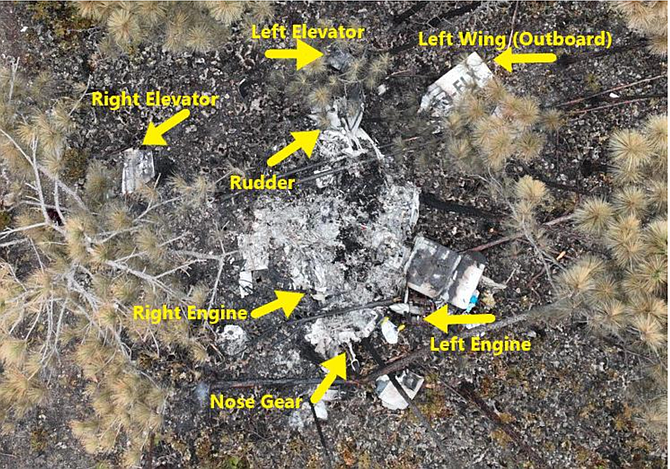
    Gardiner, the primary defendant named in the complaint, was taken into U.S. custody shortly after a plane crash off Florida’s coast on May 12, which coincided with The Bahamas’ general election. The small aircraft, traveling between Abaco and Grand Bahama, carried 12 people total, and Gardiner was one of 11 who survived the crash. Court records show investigators recovered $30,000 in cash inside a cross-body bag marked with the name of a senior Bahamian politician, only identified in court documents as “Politician 1.”

    Tensions flared earlier this week when Deveaux blocked Opposition Leader Michael Pintard from tabling documents related to the U.S. criminal complaint in the House of Assembly, moving to block any parliamentary debate of the allegations entirely by labeling them malicious and unsubstantiated.

    Walker reiterated his longstanding policy of declining to comment on active law enforcement probes, saying public speculation before investigators conclude their work risks spreading unsubstantiated misinformation. “That’s why I don’t really comment on things like that because being an open investigation, who knows? And we don’t want to just put things out there that is just not true,” he said.

    The core allegations laid out by federal prosecutors paint a picture of deep infiltration of drug trafficking operations into Bahamian political circles. Prosecutors claim Gardiner, who goes by the alias “Player,” was a key figure in a Bahamas-based cocaine trafficking network that sourced bulk narcotics from Colombia and other South American countries for smuggling into the U.S. He is formally charged with conspiring to import no less than five kilograms of cocaine into the U.S., and is accused of acting as a foreign supplier for a Georgia-based drug trafficking ring, coordinating the movement of multiple-kilogram cocaine shipments from The Bahamas into South Florida.

    Most explosively, the criminal complaint alleges that undercover Drug Enforcement Administration agents, posing as members of a Mexican drug cartel, met with the senior unnamed Bahamian politician directly inside the House of Assembly building to negotiate a plan to ship cocaine through The Bahamas en route to the U.S. According to investigators’ accounts, the politician agreed to use their position to facilitate the smuggling operation in exchange for regular cash payments.

  • Rollins demands PLP disclose if Gardiner donated to campaign

    Rollins demands PLP disclose if Gardiner donated to campaign

    A fiery confrontation has erupted in Bahamian parliamentary budget debates, as Long Island Member of Parliament Dr Andre Rollins has launched intensified scrutiny over multi-million dollar government contracts awarded to a construction firm tied to a convicted US narcotics trafficker, calling for full disclosure of any campaign donations the trafficker may have made to the governing Progressive Liberal Party (PLP) over the past decade.

    At the center of the controversy is Top Notch Builders, a company that was granted a $35 million public-private partnership (PPP) contract to build the Eight Mile Rock administrative complex just 24 hours before the May 2017 general election. Public corporate registry documents from The Bahamas directly link Eric Gardiner, a man previously convicted of drug trafficking charges in the United States, to the firm, where he is listed as president and a director. Corporate filings further show that Top Notch Builders owns Complete Construction, the developer behind the current administration’s flagship Carmichael Village affordable housing initiative, which launched during the previous legislative term.

    In a surprising reveal, current Finance Minister Michael Halkitis has confirmed he previously held a director position at Top Notch Builders, though he maintains he stepped down from the role in 2021, citing disruptions caused by the COVID-19 pandemic.

    Dr Rollins dedicated the bulk of his budget debate address to pressing for clear answers about the awarding process for the Eight Mile Rock contract. He is demanding confirmation of which government official approved the deal, whether the contract was put out for mandatory competitive bidding, and whether Gardiner has ever contributed to PLP campaign coffers. “Who in the government knew what, and when did they know it?” Rollins asked lawmakers. “Was the project open to a competitive bidding process, and if not, why not? Which minister of government was responsible for signing off on the terms of the agreement?”

    Additional context around the case dates back to a plane crash on a previous Election Day, when U.S. rescue teams recovered Gardiner alongside ten other survivors. Authorities reported Gardiner was carrying $30,000 in cash at the time of the crash, and multiple survivors were observed wearing clothing and accessories branded with PLP branding. Dr Rollins argues Bahamian voters have a right to know whether Gardiner made any campaign donations to the PLP after the 2017 awarding of the Grand Bahama contract.

    “This is important because it would help to explain why a company he is alleged to be a beneficial owner of would receive unusually favourable contractual terms by public contract,” he explained. “It would also help us to investigate which government ministers had direct involvement in the issuance of that eight mile rock government complex contract to Top Notch.”

    Dr Rollins also alleged that a controversial “poison pill provision” was written into the PPP contract, designed to make the agreement impossible for a new administration to cancel. He claimed that when the Minnis administration took office in 2017, officials would have been required to pay the full value of the contract, including all accrued principal and interest, if they chose to terminate the deal.

    “It’s unbelievable that any government would not have done its due diligence on the principal of Top Notch Builders,” he said. “And with a principal who has been already convicted of narcotics trafficking by the United States of America to get $50.6m in government money means… if one was so minded or had that amount of money to wash or clean, it would be a very convenient way to do so.”

    Broadening his critique to public-private partnership arrangements as a whole, Dr Rollins warned that without mandatory public disclosure and robust oversight, PPPs can easily be exploited as vehicles for money laundering. He added that full, nationwide implementation of the Freedom of Information Act would significantly improve government transparency and accountability by creating a verifiable public paper trail for all state contracts.

    The debate quickly devolved into a heated parliamentary exchange after Dr Rollins opened his remarks with sharp criticism of the role of big money in Bahamian politics and alleged procedural exploitation in the House of Assembly. Fox Hill MP Fred Mitchell repeatedly raised points of order arguing Rollins’ comments were not relevant to the budget debate, a position that was later upheld by House Speaker Patricia Deveaux.

    The back-and-forth escalated into a public clash between Dr Rollins and Speaker Deveaux, with both accusing the other of undermining The Bahamas’ democratic institutions. At one tense point, Dr Rollins warned the Speaker to be cautious, saying he did not want to see her suffer a negative health incident. “You could never,” Speaker Deveaux shouted in response. “Ten of you. Ten just like you could not bring my health event. Be careful. Boy look here. Don’t do that.”

  • Wells announces plan to regulate funeral sector

    Wells announces plan to regulate funeral sector

    During Thursday’s 2026/2027 Budget Debate in the Bahamas House of Assembly, State Minister for Health and Wellness Owen Wells outlined a far-reaching legislative and administrative reform package aimed at modernizing the country’s healthcare sector, with new regulation of the funeral services industry highlighted as a key priority for protecting vulnerable grieving families.

    Wells emphasized that families place unparalleled trust in funeral service providers during periods of profound loss, creating a critical need for formal oversight to guarantee ethical, professional care. The upcoming Funeral Services Industry Bill will enshrine binding requirements for operator licensing, uniform professional standards, robust consumer protections, and formal accountability mechanisms, all designed to ensure services uphold the dignity that end-of-life care demands. While the core framework of the legislation has been confirmed, Minister Wells did not release further details on timelines for tabling the bill, proposed penalties for non-compliance, or the specific agency that will be tasked with enforcing the new rules.

    The funeral industry regulation is just one component of a broader push to expand and update healthcare sector governance. Minister Wells confirmed that the ministry is also advancing three other key legislative initiatives: a Patients’ Rights Bill, an updated Elderly Abandonment Bill, and ongoing work to embed other existing health legislation into force.

    The Patients’ Rights Bill will establish a formal, clear framework to guide interactions between patients and healthcare providers, codifying core protections including informed consent for medical procedures, patient confidentiality, guaranteed access to personal health information, mandatory professional conduct standards, and requirements for respectful treatment of all care recipients. For vulnerable older Bahamians, the revised Elderly Abandonment Bill will strengthen existing legal protections, set clearer care standards, and reinforce commitments to upholding the dignity and overall wellbeing of the country’s aging population.

    Beyond legislative changes, the ministry is pursuing structural administrative reforms to keep pace with its growing scope of work. For years, the ministry has relied on external legal support from the Public Hospitals Authority, the Office of the Attorney General, and the Department of Legal Affairs to handle regulatory and legal matters. As the sector expands and modernizes, Wells announced that a dedicated in-house Legal Unit will be established during the 2026/2027 fiscal period.

    This internal legal team will cut response times for pressing regulatory and legal issues, reduce costly delays in contract negotiations, strengthen public procurement processes, and ensure all ministry policies and programs are legally sound from their design stage. The new unit will also reduce the administrative burden on the Office of the Attorney General by handling routine and specialized health sector legal work internally, including licensing reviews, administrative actions, contract drafting, regulatory rollout, and clinical governance matters.

    To address longstanding coordination gaps across the public healthcare system, Wells also announced the creation of a Public Health Operations Task Force. The inter-agency body will conduct a comprehensive review of how core public health entities – including the Ministry of Health and Wellness, the Department of Public Health, Princess Margaret Hospital, Rand Memorial Hospital, the Supplies Management Agency, and other relevant stakeholders – interact and operate. It will map existing workflows, identify systemic bottlenecks and service duplication, and propose evidence-based practical solutions to streamline cross-agency coordination and improve service delivery for patients.

    Digital modernization of health records will also remain a key priority during the upcoming budget cycle. The ministry will continue rolling out universal Electronic Medical Records across all Department of Public Health facilities, while working to integrate these systems with other major public healthcare institutions. Plans are also in place to strengthen the national Health Information Exchange, allowing authorized care providers to securely access critical patient data when needed for treatment.

    Wells pushed back against any perception that these reforms are merely bureaucratic adjustments, noting that every proposed change is centered on people. “These topics may appear administrative in nature, but their purpose is people-centred and intended to protect patients, support families, assist healthcare workers and strengthen public confidence in our healthcare system,” he said. The government’s overall legislative agenda for the health sector is focused on four core goals: strengthening patient protections, updating outdated professional regulations, improving national public health preparedness, and supporting innovation in how care is delivered to Bahamian communities.

  • John Bethell, businessman and civic leader, dies at 81

    John Bethell, businessman and civic leader, dies at 81

    One of The Bahamas’ most respected long-serving business and community figures, John Frederick “Johnny” Bethell, passed away peacefully at his Eastern Road residence on June 3 at the age of 81. For more than six decades, Bethell stood at the helm of the family-owned Bethell Estates Ltd, leaving an indelible mark on both the nation’s business landscape and its civic institutions through decades of dedicated public service.