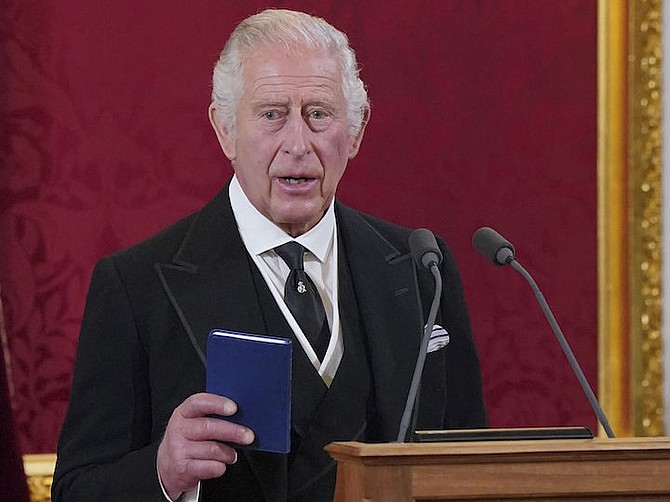
As King Charles III prepares for his upcoming visit to The Bahamas, a prominent Rastafari organization is making preparations to stage a public rally to amplify longstanding demands for reparatory justice and a formal apology from the British Crown for systemic injustices against people of African descent. The Ethiopia Africa Black International Congress (E.A.B.I.C.), led by Royal Ambassador High Priest Richmond McKinney, has drafted a formal petition to deliver directly to the monarch during his trip, expanding the demands to include support for African repatriation, increased sovereign independence from the United Kingdom, and the establishment of a permanent, structured dialogue between the group and British officials.
This planned demonstration is not an isolated action: it aligns with a growing, region-wide movement pushing for reparations for the harms of slavery and colonialism, and a growing push to cut formal ties with the British monarchy. Just recently, The Bahamas National Reparations Committee (BNRC) publicly stated that the Royal Family should not arrive in the country without addressing historical harms, repeating its calls for a clear apology for the transatlantic slave trade and colonial rule, and reaffirming its push for The Bahamas to transition to a republican form of government that removes the British monarch as head of state.
McKinney emphasized that the Rastafari community in The Bahamas has been a leading voice in advocating for reparations and self-determination for more than 50 years, pointing to shifting momentum across the Caribbean that has brought these long-sidelined demands into the mainstream. He highlighted regional precedents, including Barbados’ historic transition to a republic in 2021 and ongoing political efforts in Jamaica to remove the British monarch as its head of state, as proof that the movement for full sovereignty is gaining traction across the region. “We can’t claim to be a truly independent nation when our political system still requires us to swear allegiance to the British monarchy,” McKinney noted in an interview outlining the group’s plans.
The protest will also draw attention to what the group frames as ongoing systemic injustices facing Black communities in The Bahamas and across the global African diaspora, connecting historical harms to present-day inequalities. Beyond a formal apology from the British government, the petition calls for substantial reparatory compensation and targeted structural reforms to redress the intergenerational damage caused by centuries of chattel slavery and colonial rule. It also lays out a call for practical, supported pathways to enable any person of African descent who wishes to repatriate to the African continent to do so with dignity and full institutional support.
McKinney praised the recent formal engagement of the Caribbean Community (CARICOM) in the reparations movement, noting that the regional bloc’s efforts to advance this cause align with a mission that Rastafari activists have championed for generations. “We give thanks that CARICOM is on board now for reparation,” he said.
In the text of the petition, E.A.B.I.C. makes the case that the 19th century abolition of chattel slavery did nothing to repair the cumulative harm of generations of forced labor, forced family separation, mass displacement, and economic exploitation that defined colonial rule. The group argues that meaningful reparations must extend far beyond symbolic gestures of recognition, requiring concrete financial investment and systemic change to address lasting inequalities.
The organization is requesting formal acknowledgement of the petition from King Charles III’s office, and that the document be forwarded to relevant British government and diplomatic bodies for review, with a formal written response that outlines clear pathways for ongoing negotiation and engagement. McKinney estimates that the Rastafari community now makes up approximately 15% of The Bahamas’ Black population, reflecting significant growth of the movement in recent decades. He framed E.A.B.I.C.’s action as part of a broader global struggle to secure justice, restore African cultural identity, and achieve full self-determination for Black communities across the Caribbean and the entire African diaspora.