标签: Bahamas

巴哈马

  • COI plays major election spoiler as Bain falls short in Pinewood

    COI plays major election spoiler as Bain falls short in Pinewood

    In yesterday’s Bahamian general election, the upstart Coalition of Independents (COI) left a lasting mark on the country’s political landscape even though it failed to secure a single parliamentary seat. The minor third party proved it can no longer be ignored by the nation’s two dominant political forces — the ruling Progressive Liberal Party (PLP) and opposition Free National Movement (FNM) — after siphoning off thousands of protest votes that would likely have bolstered the FNM’s bid to unseat incumbents, most notably across the key island of New Providence.

    COI’s strongest showing of the cycle came in the Pinewood constituency, where party leader Lincoln Bain came astonishingly close to ousting sitting PLP representative Myles Laroda. Early vote projections that placed Bain in the lead sent social media platforms into a frenzy, as observers watched a minor party candidate mount a historic challenge to a major party incumbent. When all ballots were finally counted, Laroda retained his seat by a narrow margin of 314 votes, earning 1,446 ballots to Bain’s 1,132. FNM candidate Denarii Rolle finished a distant third behind Bain — marking the first time in history that a COI candidate outpolled a major party nominee in a constituency race.

    For Bain personally, the 2024 result represents a dramatic improvement over his 2021 general election performance in Pinewood, where he earned just 579 votes, or roughly 17% of the total vote share. The party’s growing traction was visible across other constituencies as well. In Englerston, COI candidate Faith Percentie also outperformed FNM nominee Heather McDonald, even as long-serving PLP incumbent Glenys Hanna-Martin held onto the seat for a sixth consecutive term. Across multiple races, COI candidates crossed the 10% vote threshold required to retain their candidate deposits — a key metric that proves the party built a tangible, sustained base of support rather than just appearing on the ballot. That bloc is overwhelmingly made up of Bahamian voters who hold deep frustration with the country’s two established major parties.

    Long before polls opened, FNM Leader and Opposition Leader Michael Pintard warned that COI and independent candidates would split the anti-incumbent opposition vote, handing an advantage to the ruling PLP. After conceding his party’s poor election showing, Pintard reaffirmed that assessment, noting “a vote for the COI or a vote for an independent, it’s a vote for the PLP. So, we understand that clearly.”

    COI’s rapid rise in Bahamian politics has been fueled by a hardline platform focused on immigration reform and widespread public distrust of the traditional political establishment. Over the past five years, the party has consistently captured more public attention and momentum than the official opposition FNM, a shift that upended the country’s traditional two-party dynamic.

    Following the release of final election results, Bain pushed back against former Prime Minister Hubert Ingraham’s longstanding claim that election results in The Bahamas cannot be stolen. Bain alleged that Laroda’s final vote total “jumped” unexpectedly during the vote tabulation process, contradicting earlier on-the-ground trends that pointed to a Bain victory in Pinewood. He specifically raised questions about the handling of advanced poll ballots, claiming election officials failed to maintain proper chain of accountability while counting votes.

    Despite challenging the legitimacy of the Pinewood outcome, Bain urged his supporters to remain optimistic, framing political change as a long-term project that requires sustained organizing and sacrifice. “Nothing worth having is easy,” he told supporters. “The fight has just begun.” He called on COI backers to deepen their involvement in future electoral cycles, urging them to serve as poll observers and participate in recounts to strengthen the party’s electoral oversight. “You cannot go to war without enough soldiers,” he said. “We shouldn’t have one poll that doesn’t have three people watching.”

    Bain framed his current dispute over electoral procedures as part of a broader, generations-long push for electoral reform in The Bahamas, drawing parallels to past landmark changes won by the two major parties. “The PLP didn’t win until they lobbied for one man, one vote,” he noted. “The FNM had to get the purple finger system going on to stop people from voting several times.” He argued that the current flaws in the country’s electoral process demand the same level of organizing and advocacy to address.

  • Voters face missing names despite short election lines

    Voters face missing names despite short election lines

    On general election day across the country, voting operations in most electoral districts unfolded far more smoothly than pre-election forecasts had warned, though persistent issues with voter roll inaccuracies have validated longstanding opposition concerns about the integrity of the electoral registry ahead of the vote. A field survey conducted by The Tribune across polling stations nationwide found that most voters waited less than an hour to cast their ballots, with many completing the process in just a handful of minutes.

    The majority of polling locations opened on schedule, voting lines moved at a consistent pace, and numerous voters commended the overall administrative organization of the election. That said, scattered issues including mismatches in the voter register, insufficient ballot supplies, unexpected delays, and accessibility challenges were reported throughout voting day.

    The most common grievance centered on voters whose names were missing from their local voting register, voters incorrectly assigned to constituencies they did not reside in, and approved voter transfers that were never updated in the official registry.

    At Yellow Elder Primary School, a polling location serving the St Barnabas constituency, Michael Halkitis, candidate for the Progressive Liberal Party (PLP), noted that multiple voters who had applied for transfers found their changes had never been finalized. “Some of them just voted in the constituency where they appeared because the transfer was not finalised, so you had some of them, but by and large, a very smooth process,” Halkitis told The Tribune. He added that voter turnout was consistent through the morning, with the earlier advanced polling likely reducing election day turnout numbers. When asked why affected voters rarely opted to file protest ballots, he explained that most avoid the option out of a belief that protest ballots are never officially counted.

    Parallel issues emerged in the Golden Isles constituency, where Free National Movement (FNM) candidate Brian Brown documented cases of voters who held valid voter ID cards but could not find their names on the register at the Anatol Rodgers High School polling station. Brown confirmed that several of these impacted voters were ultimately forced to cast protest ballots.

    Complaints about the flawed voter register also spread rapidly across social media platforms. Local voter Shadai Toote shared a live video detailing her experience: she had submitted a transfer request from St Barnabas to Fort Charlotte back in March, but was ultimately incorrectly assigned to Bains and Grants Town — a constituency where she has never lived. “It’s like appalling to me,” Toote said. “I can’t begin to fathom that we’ve had four plus years to get prepared for something like this, and they still dropped the ball, so I’m being advised that I can’t vote in the constituency I’m in because I’m not on any of their registries.”

    Similar reports came from Abaco, where multiple voters opted to forgo voting entirely after discovering they had been assigned to the wrong constituency. Jobeth Coleby-Davis, PLP candidate for the Elizabeth constituency, confirmed her campaign team had received multiple complaints about incorrect constituency assignments. “They’ve been noticing it. And I think when those incidents come up, they speak with the returning officer, the presiding officer, to see how they would allow it to move ahead,” she said.

    Heather Hunt, FNM candidate for Elizabeth, shared one voter’s experience: the voter’s card correctly listed Elizabeth as their constituency, but their name appeared on the register for a different district. “They were sent to another constituency because that’s where the name appears on the register, and they had already tow the line and everything for almost half an hour,” Hunt said. “So that frustration we’re hearing, but you know, that person just is determined to, you know, exercise their right to vote, and so they just decided that they’re going to take that drive and go to the other constituency where their name is.”

    One of the most significant disruptions arose in Long Island, where FNM candidate Andre Rollins reported that Polling Division Nine, the island’s largest voting district, received 60 fewer ballots than the number of registered voters assigned to the location. “The fact that it’s the largest polling division means that it is curious that the Parliamentary Registration Department would send much fewer number of ballots than the number of people who are on the register,” Rollins said. “We have 360 plus persons on the register here on polling division number nine. However, they included only 300 white paper ballots in polling division nine ballot box when they send it from New Providence here to Long Island.”

    Rollins noted that legal guidance provided to the FNM suggested the polling station should not have opened at all, as the shortage put eligible voters at risk of being disenfranchised. The issue was ultimately resolved by reallocating surplus ballots from three smaller nearby polling divisions — 25 extra ballots were pulled from each of Divisions Three, Four and Eight, bringing Division Nine’s total ballot count up to 375.

    Ballot shortages were also reported on New Providence. In Fort Charlotte’s Polling Division One, voting was delayed for nearly 45 minutes after the station exhausted its initial ballot supply and had to wait for additional stock to be delivered.

    Not all voting experiences were marred by issues, however. At Jordan Prince-Williams Baptist School, Bamboo Town resident Darren Sinclaire described his voting experience as efficient and well-organized, noting that he and his elderly mother completed the entire process in roughly eight minutes. When asked if he felt anxious after hearing widespread warnings about voter register errors ahead of election day, Sinclaire said: “Yeah, I was, because I heard a lot of errors on the register and stuff like that, so I wondered if there would be any error on our parts, but everything went pretty smooth.”

    In Fort Charlotte, voter Nadia Benaby arrived at the CC Sweeting Senior High School polling station at 8:45 a.m. and finished voting by 9:15 a.m. She called the experience the smoothest voting process she had participated in across six general elections. At the same polling location, though, FNM candidate Travis Robinson highlighted concerns including late delivery of ballots.

    Voters across multiple other constituencies, including Freetown, Centerville, Garden Hills and Carmichael, reported average wait times of 20 minutes or less, reflecting that the majority of voting operations ran according to plan.

  • Decision Day: Bahamians head to polls to choose next govt

    Decision Day: Bahamians head to polls to choose next govt

    Bahamian voters are heading to polling stations across the archipelago on Thursday to decide one of the most consequential political contests in the nation’s modern history: whether to grant incumbent Prime Minister Philip “Brave” Davis a rare second consecutive term, or to oust his Progressive Liberal Party (PLP) and return the Free National Movement (FNM) to power. The outcome will either break or perpetuate the decades-long pattern of alternating rule between the country’s two dominant political parties that has defined Bahamian electoral politics since independence.

    The snap election, called three months earlier than constitutionally required, caps a tense, condensed campaign season that laid bare deep public anxiety over core domestic issues: soaring cost of living, unaddressed immigration challenges, questions of election integrity, and a persistent lack of government accountability. More than 209,000 registered Bahamian voters are eligible to cast ballots across 40 newly expanded constituencies, which added St James in western New Providence, and Bimini and the Berry Islands ahead of this vote. This total marks a record high for voter registration, driven by a late surge in sign-ups after Davis dissolved Parliament on April 8 to call the early contest.

    Davis, who led the PLP to a decisive victory over the FNM in the 2021 general election, gambled on an early vote to capitalize on strengthening macroeconomic indicators that have emerged during his first term. The Bahamas has seen improved sovereign credit ratings, a robust tourism-driven recovery from the economic collapse triggered by the COVID-19 pandemic, and a wave of new foreign direct investment. The incumbent party has campaigned on this track record of economic stabilization, framing itself as the only force capable of continuing the nation’s post-pandemic progress.

    Against this backdrop of top-line growth, however, ordinary voters continue to grapple with persistent daily financial pressures: skyrocketing grocery costs, soaring rent and utility bills, and strained access to affordable healthcare. To address these concerns, the PLP’s “Blueprint for Progress” campaign manifesto pledges a slate of new policy initiatives: expanded worker protections, stricter immigration enforcement, a new migrant health insurance scheme, targeted investment in artificial intelligence infrastructure, expanded job training programs, and expanded housing assistance, all aligned with Davis’ campaign slogan of helping Bahamians “learn, earn and own.” Throughout the final stretch of the campaign, Davis framed the contest as a stark choice between continued progress and a return to failed past policies, dismissing the FNM as unfit to govern, arguing the opposition lacks both the ideological vision and temperament to lead the nation.

    The FNM, led by party leader Michael Pintard, has sought to flip Davis’ framing, positioning itself as a transparent, accountable alternative to the scandal-plagued incumbent administration. Pintard has repeatedly pushed back on Davis’ attacks, arguing that the Davis administration has failed to deliver on its 2021 promises of reform, has done little to ease cost of living pressures for working families, and has consistently fallen short on transparency commitments.

    The FNM’s manifesto puts forward a series of populist policy pledges designed to resonate with struggling voters: eliminating value-added tax (VAT) on essential groceries, medical supplies and educational materials; launching a new national lottery to generate revenue for social programs; constructing at least 5,000 new affordable homes; hiring 100 additional doctors and 200 new nurses to expand public healthcare capacity; strengthening immigration enforcement; and rolling out the long-delayed Freedom of Information Act (FOIA) within the first 90 days of taking office.

    The FOIA pledge has proven particularly potent for the opposition, as transparency has emerged as one of the PLP’s biggest vulnerabilities. When Davis took office in 2021, he campaigned on sweeping accountability reforms, but many long-discussed anti-corruption and open government measures remain stalled or unimplemented. While Davis has defended his record, framing transparency as a matter of personal character and trust, the opposition has seized on these delays to argue the incumbent administration has no interest in being held accountable to public scrutiny.

    Beyond policy disputes, the campaign has been overshadowed by persistent concerns about the integrity of the voter roll and electoral administration. Over the past several months, multiple court cases have been filed involving foreign nationals accused of possessing fraudulent voter identification cards and other official government documents. While Parliamentary Commissioner Harrison Thompson has repeatedly defended the accuracy and integrity of the voter register, opposition leaders and independent civil society activists have continued to raise red flags about systemic vulnerabilities. Those concerns escalated after early voting was marred by long lines and widespread administrative failures. PLP chairman Fred Mitchell denied claims of systemic chaos but acknowledged that the long wait times voters faced were unacceptable, admitting that election officials failed to properly calculate the number of polling booths, voting spaces and staff needed to accommodate early voters.

    Multiple controversies have also hounded the incumbent PLP in the final weeks of the campaign. The Bahamian Tribune reported that more than $200,000 in Hurricane Dorian relief gift certificates distributed to Abaco residents in the names of PLP candidates and party officials were funded through the Ministry of Finance, according to testimony from Premier Importers CEO Chris Lleida. Shortly after that controversy broke, reports emerged that outstanding electricity bills for residents of Grand Cay and Moore’s Island were cleared to zero just two weeks before the election, shortly after Davis visited the islands and promised debt relief. Government officials defended the move, saying it was meant to resolve long-standing billing discrepancies that dated back to Hurricane Dorian and the COVID-19 pandemic. But critics have called the timing suspicious, with former Prime Minister Hubert Ingraham publicly accusing the PLP of attempting to buy votes ahead of polling day.

    The contest has also exposed deep internal rifts within both of the Bahamas’ major parties. Former FNM Prime Minister Dr. Hubert Minnis is running as an independent candidate in the Killarney constituency after being denied the party’s nomination for his seat. Meanwhile, Ingraham, another former FNM prime minister, made a rare return to the campaign trail to stump for the party, leveling sharp criticism against PLP Fort Charlotte candidate Sebas Bastian, warning of the risks of Bastian rising to a leadership role within the PLP.

    A third force, the Coalition of Independents led by Lincoln Bain, has positioned itself as a radical break from the decades-old PLP-FNM cycle of alternating power, framing itself as a new option for voters fed up with both major parties. To date, however, no third party has ever won enough seats to form a government in the Bahamas’ post-independence history. International electoral observers are on the ground across the country to monitor Thursday’s voting process, closely watching for any signs of irregularity as the nation waits for results.

  • Pintard promises change at final FNM rally

    Pintard promises change at final FNM rally

    On the eve of The Bahamas’ hotly contested general election, Free National Movement (FNM) leader Michael Pintard brought his party’s campaign to a close Saturday night with a sweeping call for national change, positioning the opposition as a transformative alternative to the incumbent Davis administration that has left thousands of Bahamians struggling economically.

    Speaking to a fired-up crowd of supporters at a rally held near the former Queen Elizabeth Sports Centre, Pintard framed the FNM’s core mission as restoring public trust in national governance, promising Bahamians a new administration rooted in honesty, transparency, and tangible improvements to everyday quality of life.

    “Tonight, we’ve come to make the case that things can in fact be different,” Pintard told the audience. “We are asking you once again to invest your trust in a team that promises to serve you in humility, to be honest in the conduct of public affairs, and to be open and transparent with you about how every decision is made.”

    Pintard opened his critique of the ruling Progressive Liberal Party (PLP) by questioning the impact of billions in value-added tax revenue collected by the Davis administration, asking supporters what tangible improvements Bahamians have actually seen in critical areas of daily life. “They’ve earned a tremendous amount of money and we are left to ask: What have they done with the money? What can we touch and feel that has made a difference in the most fundamental areas of our lives?” he said.

    The FNM leader cast the upcoming election as a defining battle for expanded economic opportunity, particularly for marginalized groups including young Bahamians, frontline healthcare workers, small business entrepreneurs, and working families struggling to make ends meet.

    Opening up about his personal background, Pintard reflected on his upbringing in a single-parent public-school household, crediting his mother with building the character and determination that led him to the final campaign rally of a national election. “I had no idea that one night I’d be on a stage at the last rally before a poll in one of the greatest countries on this side of glory,” he said.

    Pintard emphasized that the national government holds a fundamental “duty of care” to help children and young people build a more prosperous future than the current generation inherited, while warning against the rise of a system where personal and professional success depends exclusively on political connections rather than merit.

    He laid out the FNM’s key policy pledges ahead of the vote: the construction of 5,000 new affordable homes over a five-year term, the expansion of public healthcare staffing with 100 additional doctors and more than 200 new nursing positions, targeted grants and low-interest loans to grow small and medium entrepreneurship, and intentional economic diversification to reduce The Bahamas’ longstanding reliance on tourism and financial services. Pintard also highlighted the party’s priorities around strengthening national food security, protecting domestic fisheries, expanding technology infrastructure, and unlocking new economic opportunities in the blue and green economies. “We believe this country can grow on more than just tourism and financial services,” he added.

    On governance reform, Pintard pledged to implement long-delayed national Freedom of Information legislation to enforce greater government accountability and transparency, telling supporters he has no fear of open records because the FNM has no corrupt activity to hide. “I’m not scared of freedom of information because we ain’t going to be doing no crookedness,” he said.

    The opposition leader also spoke forcefully about strengthening border protection and upholding national sovereignty, promising to prioritize Bahamian workers for all available jobs and economic opportunities across the country. “We will never displace Bahamians who should have first option — first dibs — on all things in our country,” he said. Pintard closed his remarks by urging supporters to turn out in force to vote, framing the election as a once-in-a-generation defining moment that will shape the nation’s trajectory for years to come.

    Before Pintard took the stage, former Prime Minister Hubert Ingraham, a towering figure within the FNM, addressed the crowd to ramp up pressure on the incumbent administration, urging Bahamians to vote the PLP out of office to allow a new government to audit the nation’s public finances and citizenship records.

    Ingraham accused the Davis administration of failing to address a laundry list of public concerns, ranging from weak governance oversight and reckless public spending to fraudulent Bahamian passports, strained public healthcare services, and uncompetitive no-bid government contracts. He directly asked the crowd whether the PLP had earned a second term in office, delivering a sharp rebuke: “They haven’t earned it, don’t give it to them. They have failed to properly address multiple allegations against their governance, fraudulent Bahamian passports, excessive unexplained public expenditure, healthcare system in crisis, inadequate and inefficient public services.”

    The former prime minister added that the administration’s consistent inability to pay its public obligations and the award of “large numbers of no bid contracts for suspiciously exorbitant sums of money to a favored few are all good reasons” to deny the PLP another term. “It’s time for someone else to check our books,” Ingraham stressed. “Someone needs to check the books, the treasury, and somebody needs to check our citizenship record. If for no other reason, you vote tomorrow, vote for somebody else to have a look at the books.”

    Ingraham also defended Pintard against recent PLP criticism that the FNM leader lacks sufficient executive experience to serve as prime minister, noting that every first-time prime minister takes office without prior experience in the nation’s top job. He added that Pintard is already a tested leader, having served in two different cabinet positions during a previous FNM administration. “I hear some of them talking about experience, and how critical it is for a prime minister to have experience,” Ingraham said. “Well, the first thing is, nobody who gets elected for the first time has any experience as prime minister.”

  • Davis urges voters to ‘choose progress’ at PLP’s final rally

    Davis urges voters to ‘choose progress’ at PLP’s final rally

    On the eve of The Bahamas’ critical general election, the ruling Progressive Liberal Party (PLP) brought its months-long nationwide campaign to a rousing close on Monday night with a closing rally held at Nassau’s iconic Montagu Park. The event was headlined by incumbent Prime Minister Philip “Brave” Davis, who delivered the final push for voter support ahead of Tuesday’s polling.\n\nDavis was joined on stage by key senior party figures, including Deputy Prime Minister Chester Cooper, St Anne’s parliamentary candidate Keno Wong, incumbent Centreville Member of Parliament Jomo Campbell, and incumbent Carmichael Road MP Keith Bell. A number of other PLP representatives were notably absent from the final gathering, with party insiders indicating most were wrapping up last-minute outreach efforts in their own constituencies to sway undecided voters ahead of polling day.\n\nIn his closing address to hundreds of assembled supporters, Davis issued a direct appeal to Bahamian voters to grant the PLP a second consecutive term in office, arguing that a new mandate would allow the government to see through the policy and infrastructure projects launched during the party’s current four-and-a-half-year tenure. He opened his remarks by extending gratitude to both loyal PLP backers and all Bahamians for their ongoing support throughout his time as prime minister, noting that public prayers and encouragement had been a critical source of strength through challenging moments of his leadership.\n\n“At the core of our democratic system is the fundamental right of every citizen to make their own choice at the ballot box,” Davis told the crowd. “Tomorrow, that choice could not be clearer: you can vote for continued progress by casting your ballot for the PLP. Or you can choose the opposition’s ‘reset’ platform, which would take our country backward to the old ways of doing things.”\n\n“Over the course of this entire campaign, we have laid out for the Bahamian people a clear record of what our administration has delivered over the past four and a half years,” he added. “We have shared our detailed plan for the next term, shown voters exactly what we will deliver in a second term, and invited every Bahamian to partner with us to build a stronger, more prosperous future for this country. My friends, I trust you will make the right choice. I trust you will stand with us and choose progress.”\n\nDavis also used his address to update attendees on his weekend meetings with delegations from three major international election observation missions: the Caribbean Community (CARICOM), the Commonwealth of Nations, and the Organization of American States (OAS). Combined, the three organizations field observer teams representing 78 member nations, all deployed to monitor the fairness and transparency of Tuesday’s general election process. Davis welcomed the international observers, noting that independent international monitoring groups have supported Bahamian electoral processes for decades.\n\n“I am happy and proud to say that these observers continue to be deeply impressed by the strength of our democratic institutions here in The Bahamas,” Davis said. “They have already seen firsthand the passion and respect that Bahamian voters bring to the electoral process, and that is a testament to how far our democracy has come.”\n\nThe rally closed with a symbolic moment as Davis and his small group of senior colleagues joined hands on stage, with R. Kelly’s “Sign of a Victory” playing over the park’s speaker system to cap off the event. Former Bahamian Prime Minister Perry Christie, one of the PLP’s most respected elder statesmen, also joined the party leadership on stage to lead attendees in a closing prayer for victory, as crowd chants of support rang out across Montagu Park ahead of polling day.\n

  • PM promises sweeping reforms on election eve

    PM promises sweeping reforms on election eve

    As the Bahamas prepares for its hotly contested general election, the country’s two major political parties have wrapped up their final campaign events over the weekend, delivering starkly contrasting closing messages to voters ahead of polling day.

    Incumbent Prime Minister Philip “Brave” Davis, leader of the Progressive Liberal Party (PLP), took the stage Saturday night before a crowd of thousands of energized supporters at Nassau’s Clifford Park, framing his administration’s bid for a second term as a chance to build on four years of progress. The rally opened with the entrance of Davis to the song *Goodness of God*, complete with celebratory fireworks, live performances from local artists, and speeches from all PLP candidates, as attendees repeatedly cheered on the party’s re-election bid.

    During his keynote address, Davis laid out an ambitious policy agenda for a new term, centered on expanding access to opportunity across housing, workforce development, healthcare, and small business growth. A core pillar of the plan is upskilling: Davis committed that a returning PLP government would train 25,000 Bahamians through the Upskill Bahamas initiative by 2031, building on the existing National Apprenticeship Programme. The administration also plans to construct new campuses for the Bahamas Technical and Vocational Institute (BTVI) and a new Public Health Authority academy, while investing in the expansion of the domestic creative economy to retain local talent.

    “For too long, we have watched some of our writers in this country get their education, build their careers and they don’t come back home because the opportunity was not here, because the path home was not clear,” Davis told the crowd. “So we are not just educating young Bahamians. We are building a country where people will stay and build both their careers and our country.”

    On housing, Davis prioritized expanding affordable homeownership, specifically targeting essential workers including nurses, teachers, and law enforcement officers through an expanded rent-to-own programme. To protect renters, he pledged new national mandatory housing standards and the creation of a dedicated residential tenancy authority, alongside a programme to repurpose distressed properties for the affordable housing market. “For every Bahamian who wants a path to ownership, this government is going to offer significantly increased help in building that path,” he added.

    For healthcare, Davis highlighted ongoing clinic renovations and new hospital projects, while announcing new reforms for a second term: full health insurance coverage for all public servants, including Bahamian contract workers, expanded prescription drug coverage under the National Health Insurance scheme, a permanent 24-hour suicide prevention hotline, and the rollout of telemedicine and mobile clinics to all Family Island health facilities within three years. He also confirmed an expansion of the catastrophic healthcare fund to shield families from crippling medical debt following unexpected serious diagnoses.

    To cut red tape for local entrepreneurs, Davis announced a new unified digital one-stop application system that would allow business owners to register a company, obtain a business license, sign up for National Insurance Board coverage, and secure a tax identification number all through a single form. A unified development approval portal with legally binding mandatory decision timelines will also end the longstanding problem of development applications sitting unanswered for months, he said.

    Davis closed his address by attacking the opposition Free National Movement (FNM), dismissing its leadership as petty, spiteful, and ill-suited for national office. Speaking directly to FNM leader Michael Pintard, he noted that the role of prime minister requires steady temperament and sound judgment that voters can trust, calling out the opposition’s recent campaign claims. “This not a job for those with anger management issues. But above all, people have to be able to trust your judgment,” he said. He also pushed back against FNM claims of shifting voter momentum after the opposition’s recent SOS rally, pointing to the massive turnout at Clifford Park as evidence of PLP’s support.

    Meanwhile, at the FNM’s closing rally held at Savannah Sound Park on the island of Eleuthera, Pintard doubled down on scathing criticism of the PLP, framing the election as a chance to remove a dishonest, corrupt administration that has betrayed public trust.

    Pintard opened by accusing the PLP of repeated lies to voters, including false claims about FNM policy. He refuted PLP assertions that the FNM would eliminate the popular national school lunch programme, noting the FNM originally created the policy when it held power. He also denied claims that an FNM government would mass fire public servants and postal workers, turning the accusation back on Davis, who he criticized for failing to intervene when dozens of women social services workers were fired from the Marathon constituency under a PLP MP. “Philip was in charge when the member of parliament for Marathon fired women in social services. What did Davis do? He did absolutely nothing to protect those Bahamian women, more than 90 percent of those in urban renewal, more than 95 percent were fired under Philip,” Pintard said.

    On national sovereignty, Pintard called out the PLP for failing to address a rising tide of scam marriages designed to exploit Bahamian immigration law. He emphasized that the FNM welcomes legal immigrants and supports genuine cross-border relationships, but will crack down on fraud that undermines national borders. “If two persons fall in love, one from elsewhere, one from here, I celebrate love. They should be entitled to all the rights. But for those who fake love to make paper, we don’t rate you. We rate our laws,” he said. “And so tonight we have an opportunity to send a message to the PLP to let them know we need new leadership in the country that will protect the sovereignty of the country.”

    Pintard laid out his own policy platform for voters, including commitments to restore reliable banking access to Family Islands by forgiving or reducing business license fees for commercial banks to incentivize their return to smaller islands. A FNM government would also modernize the national post office, introduce a new national lottery with proceeds directed to sports, culture, education, environmental protection, and youth development, increase agricultural subsidies, and expand educational access for students with disabilities including autism.

    On corruption, Pintard said an FNM administration would root out graft in public agencies without mass layoffs of civil servants, noting he never fired staff during his tenure leading two government ministries. “We make no apology for wanting better for you. They can run as many ads as they want so you don’t have to see brothers and sisters arrested for putting their hand in the cookie jar. We will change it and we will make it better without one single person being fired,” he said.

    He closed by attacking Davis’s call for early election, alleging the prime minister scheduled the vote before releasing a new budget to hide a widening national deficit. Pintard noted that under the PLP, even without the shocks of Hurricane Dorian or the COVID-19 pandemic, national debt has increased by $2 billion, and the extra billion dollars in annual Value Added Tax revenue that the government collected has not been accounted for. “The PLP with no Dorian and no COVID has added $2 billion on our national debt. The VAT was supposed to be collected to pay down the debt but it has grown. The country was earning a billion dollars extra under Davis and Chester but you don’t know where the money is,” he said. “Philip says we are desperate for power, I say he is desperate to keep power,” he added, also questioning the accounting of $120 million from the sale of Grand Lucayan and claiming Davis should retire rather than seek a second term.

  • BEWU boss: ‘This is our contract. It has nothing to do with politics’

    BEWU boss: ‘This is our contract. It has nothing to do with politics’

    As the Bahamas approaches its upcoming general election, a scheduled lump-sum payment to hundreds of utility workers has ignited public debate over its timing and potential political motivations, with union leadership pushing back firmly against claims of improper political maneuvering.

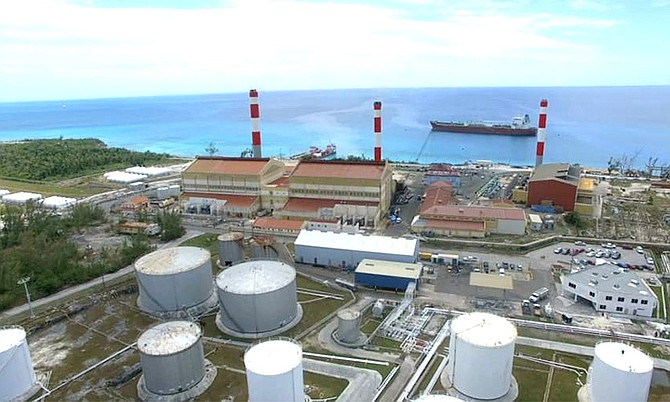
    Kyle Wilson, president of the Bahamas Electrical Workers Union (BEWU), confirmed last week that more than 800 junior line staff employed by Bahamas Power and Light (BPL) received a one-time $3,500 cost of living supplement, a benefit explicitly outlined in the union’s existing industrial agreement with the power provider. Speaking to The Tribune, Wilson emphasized that the payout structure was finalized through collective bargaining more than 18 months before the election was called, and the timeline for disbursement aligns with the contractual schedule laid out years in advance.

    “This is a contractual entitlement for our members, it has no connection to electoral politics whatsoever,” Wilson stated. “It is purely a coincidence that the scheduled payment date falls just days before the general election. There is no political angle to this at all.” He also clarified that all funds for the supplement come directly from BPL’s operating budget, rather than being drawn from government public coffers.

    The timing of the payouts has attracted increased public and media scrutiny, coming on the heels of a controversial decision by the incumbent Davis administration to erase outstanding residential electricity bills for customers on Grand Cay and Moore’s Island. The government has framed that move as a correction of longstanding billing errors that emerged in the wake of Hurricane Dorian and the COVID-19 pandemic, but political observers have questioned whether the series of financial benefits for voters are timed to sway electoral support.

    Wilson pushed back against these insinuations, accusing political commentators and critics of attempting to politicize a routine internal labor matter. He noted that BPL has a long history of issuing similar cost-of-living lump-sum payments to union employees, meaning the current disbursement is neither unusual nor without precedent.

    “Everything is amplified in the lead-up to an election,” Wilson explained. “Opponents and commentators will try to twist any development to score political points, but this is strictly an internal issue between BPL and its unionized workforce. This has nothing to do with the election, in any shape or form.”

    Wilson expressed satisfaction with the outcome of the collective bargaining process, noting that the agreement strikes a fair balance for both workers and the utility. He also praised BPL management for sustaining stable, productive labor relations over the past several years, adding that there have been no major work stoppages, union-led demonstrations, or disputes escalated to the national Labour Board during that tenure.

    He specifically credited BPL Chief Executive Officer Toni Pratt with fostering a collaborative negotiating environment, which allowed the company and union to reach an amicable agreement that protects worker benefits while supporting the company’s goal of delivering reliable electrical service to Bahamian consumers across the country. Wilson added that the union remains committed to holding up its end of the agreement by supporting workers in delivering high-quality service to the public.

  • Bahamas Health Ministry on hantavirus alert after cruise outbreak

    Bahamas Health Ministry on hantavirus alert after cruise outbreak

    A recent fatal hantavirus outbreak on an international cruise vessel has spurred public health officials across the globe into action, with Bahamian health authorities confirming they are actively monitoring the situation even as no immediate threat to the island nation has been identified. The World Health Organization issued a global alert after the outbreak unfolded aboard the MV Hondius, a cruise ship operating on an itinerary that carried passengers from Argentina through South Atlantic islands to South Africa, along the east African coast. The incident has already claimed three lives, with eight people falling ill and five confirmed cases of infection to date.

    Health and Wellness Minister Dr. Michael Darville told reporters Friday that the vessel has no plans to dock in the Bahamas or any other Caribbean ports, ruling out an immediate arrival risk. Cross-checking of passenger and crew manifests also found no Bahamian nationals among those on board, meaning the outbreak has not impacted local populations at this stage. Even so, Darville emphasized that the country’s public health surveillance network remains on high alert, as officials understand the inherent dangers of the virus.

    Hantavirus is primarily transmitted to humans when individuals inhale airborne particles contaminated with rodent droppings or urine, and it is not commonly passed between people, per the Bahamian Ministry of Health. International reports note that the strain behind this outbreak is the Andes variant, the only documented hantavirus strain capable of spreading from person to person. Drawing a parallel to leptospirosis, another rodent-borne illness that public health officials in the Bahamas already monitor, Darville noted that two government agencies—the Department of Public Health and the Ministry of Environment—are already working aggressively to cut rodent populations across the country. He added that officials will soon announce new, innovative strategies to control rodent numbers and reduce associated disease risks.

    Multiple countries around the world—including Switzerland, the United Kingdom, the Netherlands, France, Singapore, and South Africa—have launched contact tracing operations and are isolating former passengers of the MV Hondius to contain the spread of the virus. The alert reached Bahamian authorities through the Caribbean Public Health Agency, and Darville confirmed that the nation was never asked to participate in contact tracing efforts due to the absence of Bahamian passengers on the voyage.

    As a major hub for the global cruise industry, the Bahamas has invested heavily in advanced public health infrastructure to monitor and respond to infectious disease threats. Darville explained that the country maintains local gene sequencing capabilities, and operates a highly sophisticated surveillance and analysis system through its reference lab, which currently tracks HIV, upper respiratory viruses, and a wide range of other infectious diseases.

    Public Hospitals Authority Managing Director Dr. Aubrynette Rolle also confirmed that the country’s public hospital system is fully prepared to respond if any cases do emerge, noting that the system has access to functional ventilators and dedicated isolation facilities. While Rolle acknowledged that no country can ever claim to have enough ventilators to match a large-scale surge in severe cases, the public health system maintains working units in emergency departments, intensive care units, and neonatal care wards, with additional backup units available. The system also has dedicated isolation rooms fitted with HEPA filtration and negative pressure technology, and can rely on backup support from private facilities including Doctors Hospital during a public health crisis.

  • Davis urges Grand Bahamians to ‘choose progress’ over FNM

    Davis urges Grand Bahamians to ‘choose progress’ over FNM

    With the Bahamas’ general election just days away, Prime Minister Philip “Brave” Davis made a forceful closing pitch to voters in Grand Bahama’s Pineridge community Thursday, framing the upcoming ballot as a defining choice between sustained forward momentum and a return to past stagnation, while sharply critiquing the opposition Free National Movement (FNM)’s record in office.

    Addressing a crowd of energized Progressive Liberal Party (PLP) supporters, Davis positioned the May 12 vote as one of the most consequential national decisions in modern Bahamian history. He framed the contest as a clear binary: voters can either extend the PLP’s four-and-a-half-year term to build on the progress the administration has delivered, or “hit reset” by elevating the FNM led by Opposition Leader Michael Pintard, a outcome Davis argues would reverse recent gains.

    Looking back at Grand Bahama’s history as a dynamic economic hub for the Bahamas, Davis acknowledged that repeated hurricane strikes and years of cumulative hardship had eroded the island’s economic vitality and community confidence. Under the current PLP administration, he argued, targeted large-scale infrastructure projects and policy reforms have laid the groundwork for a robust, long-term recovery.

    A centerpiece of Davis’ address was the recent government acquisition of the Grand Bahama Power Company, a move he called a historic turning point for the island. The acquisition, he explained, is designed to cut burdensome electricity costs for residential and commercial consumers while aligning Grand Bahama’s energy infrastructure with national energy reform efforts. Beyond lower costs, Davis said the restructured system will open new professional opportunities for Bahamian engineers, technicians, and other energy sector workers. He slammed the FNM for opposing the acquisition, noting the opposition failed to address the island’s long-running high energy cost crisis when it held power.

    Davis also pushed back against criticism of his administration’s handling of long-running disputes with the Grand Bahama Port Authority, accusing previous governments of allowing the entity to avoid accountability for years while Grand Bahama’s economy stagnated. Under the PLP, he said, the government has launched legal action to formalize and enforce the Port Authority’s obligations to the island and the nation, pledging that the second phase of arbitration will secure required annual payments and outstanding arrears owed to the public.

    Outlining his agenda for a second term, Davis vowed to advance the government’s signature major development projects across Grand Bahama, including the long-awaited Freeport Health Campus, full redevelopment of Grand Bahama International Airport, and the revitalization of the Grand Lucayan resort.

    Turning to national economic performance, Davis pushed back against FNM claims that the Bahamian economy is in disarray, pointing to recent consecutive credit rating upgrades from leading international agencies including Moody’s, Standard & Poor’s, and Fitch as independent proof of the country’s positive trajectory. He noted the two back-to-back upgrades in a single fiscal year mark a milestone not achieved in more than two decades, arguing that global financial analysts would not issue positive assessments if the economy were truly struggling, as the opposition claims.

    Davis also addressed public criticism of the administration’s immigration policies and government travel spending, asserting that the PLP has strengthened border enforcement while forging global investment partnerships that have brought billions of dollars in new capital to the Bahamas.

    Warned against voter complacency despite high turnout for PLP campaign events, Davis urged every supporter to turn out at the polls on election day, stressing that the progress the administration has delivered can only continue if voters actively choose to protect it at the ballot box.

    Other top PLP figures joined Davis in hitting the campaign trail in Grand Bahama, echoing his call for voters to choose continuity and progress. Kingsley Smith, the PLP candidate for West Grand Bahama, delivered a fiery defense of the Davis administration’s record, contrasting the PLP’s delivery of major projects with the FNM’s term between 2017 and 2021, when the opposition held all five Grand Bahama parliamentary seats – all of which earned cabinet positions – including that of current Opposition Leader Pintard.

    “Five cabinet seats, zero deliveries. That is the FNM record on Grand Bahama,” Smith told the crowd, arguing that even with full cabinet representation, the FNM failed to advance any of the island’s top priorities: no new airport development, no upgraded healthcare facilities, no resort revitalization, and no action to acquire the power company and lower energy costs. Smith credited the Davis administration with moving forward on every one of these stalled priorities in less than a full term, framing the PLP as the only party with a clear vision for Grand Bahama’s future. He called Davis the strongest advocate for Grand Bahama of any modern prime minister, urging supporters to stand united behind the government and vote for progress.

    Pineridge MP Ginger Moxey echoed that framing, attributing Grand Bahama’s ongoing economic recovery and redevelopment momentum directly to the Davis administration’s policies. She highlighted the Grand Bahama Power Company acquisition as a transformative step that will cut energy costs for residents, businesses, churches, and schools across the island, while also pointing to other new projects already underway including the MSC cruise port, a major new development at Xanadu Beach, and the upcoming Afro-Caribbean Marketplace. Moxey framed the election as a clear choice: “forward with progress and strength or backwards” with the FNM.

    Deputy Prime Minister Chester Cooper closed out the rally’s messaging, stressing that continued progress depends on PLP re-election. He called the May 12 vote a “generational milestone,” noting that the PLP has delivered tangible economic gains including the historic credit rating upgrades, record tourism growth, billions in new investment across Grand Bahama, and a pipeline of infrastructure and redevelopment projects. Cooper emphasized that the Davis administration has shown unprecedented political courage in confronting long-unresolved issues with the Grand Bahama Port Authority and high energy costs, issues previous administrations avoided for decades. He repeatedly urged voters, especially young voters, not to derail Grand Bahama’s growing economic momentum by voting out the incumbent government, warning that an FNM victory would put all ongoing progress and planned investments at risk, and urging voters to “protect their progress” at the polls.

  • Ingraham targets Sebas Bastian’s potential to rise to prime minister

    Ingraham targets Sebas Bastian’s potential to rise to prime minister

    One of the Bahamas’ most iconic political figures, former Prime Minister Hubert Ingraham, has reversed a long-held personal decision to stay out of the upcoming general election’s campaign trail, emerging at a recent Free National Movement (FNM) rally to publicly oppose incumbent Prime Minister Philip Davis’ bid for a second term. His change of heart stems from deep concerns over the future trajectory of the ruling Progressive Liberal Party (PLP) and the potential ascent of PLP Fort Charlotte candidate Sebas Bastian to the nation’s highest office.

    In his remarks to energized FNM supporters on Wednesday night, Ingraham acknowledged that he had no initial plans to campaign against Davis, noting a personal friendship with the incumbent that transcends partisan divides. “Brave is my friend. We are on different teams, so we never vote for each other,” Ingraham explained, emphasizing that his original plan was to remain on the sidelines during Davis’ re-election race. That neutral stance shifted entirely when he considered what a second Davis administration could mean for Bastian’s political career, he added.

    Ingraham warned voters that a win for Bastian in the hotly contested Fort Charlotte constituency would put the PLP candidate on a clear path to the prime minister’s office. To block that outcome, he urged local voters to throw their support behind FNM candidate Travis Robinson in the key race. “If you want to make sure Sebas doesn’t become your prime minister, stop him in Fort Charlotte,” Ingraham argued.

    The former prime minister also hit Bastian over his partisan political history, pointing out that Bastian was once a member of the FNM before defecting to the PLP. He told Fort Charlotte voters that any candidate claiming ongoing ties to the FNM should be rejected at the polls, going on to question Davis’ decision to nominate Bastian in the first place. Ingraham claimed Bastian’s political rise was due to patronage from former PLP Prime Minister Perry Christie, whom Bastian has referred to as a father figure. “Perry went against the will of the people in the Bahamas and made Sebas the man he is today,” Ingraham claimed.

    Drawing on a historic electoral example from the 1997 Fort Charlotte race, Ingraham pushed back against the idea that personal wealth should translate to electoral success. He recalled that FNM candidate Zhivargo Laing entered that race with just $14,000 in net worth, facing off against a millionaire opponent who reported $14 million in assets. Despite the massive financial gap, Ingraham noted, Fort Charlotte voters elected Laing and sent the wealthy challenger home, a precedent he argued should hold in 2024.

    Beyond the partisan race for Fort Charlotte, Ingraham used his speech to highlight broader flaws he sees in the Bahamas’ current electoral system. He described last week’s advanced polling as “chaotic”, repeating his longstanding call for elections to be taken out of government hands and overseen by an independent, adequately funded electoral commission — a model already adopted by many other nations across the Caribbean region.

    Ingraham acknowledged that some of the blame for disorganized advanced polling stemmed from poor appointment of election officials, but he framed the issue as a systemic problem of democratic governance rather than just an isolated mistake. He noted that public trust in election outcomes depends on a neutral, transparent process that all parties can believe in, a prerequisite for losers to accept results after ballots are counted. Even with his criticism of the advanced poll, Ingraham said he was heartened to see voters waiting patiently in disorganized lines to cast their ballots, calling the turnout a powerful display of democratic commitment in the Bahamas. He urged all FNM supporters to turn out on official election day, May 12, and remain in line to vote no matter how long the wait.

    Ingraham also called for sweeping modernization of the country’s voting infrastructure, saying he hoped the 2024 election would be the last time Bahamian voters are required to carry paper voter cards. He noted that even many developing countries — including fellow Caribbean nation Haiti — have already transitioned to more secure biometric voting identification, and that the Bahamas’ reliance on paper cards puts it far behind global standards. Ingraham recalled that his own administration first attempted to pass electoral reform and introduce biometric identification more than 23 years ago, with bipartisan support from the PLP at the time. The reform failed only after his government opted to put the question to a public referendum, where voters rejected the change.

    The former prime minister added that he also hopes the Bahamas will eventually eliminate the outdated practice of marking voters’ fingers with ink after they cast ballots. On the topic of ballot security, he instructed FNM poll workers to closely monitor presiding officers at every polling location to ensure only one ballot is issued to each registered voter. He closed by reiterating his criticism of electoral mismanagement, pointing to alleged irregularities at an advanced polling site that included improper ballot counting and unauthorized movement of ballot boxes without notification of all participating political parties.