标签: Antigua and Barbuda

安提瓜和巴布达

  • Former Police Commissioner Questions DPP’s Decision to Drop Major Cannabis Case

    Former Police Commissioner Questions DPP’s Decision to Drop Major Cannabis Case

    A former police commissioner-turned-attorney is putting pressure on Antigua and Barbuda’s top prosecutor to open up about why authorities dismissed a high-profile cannabis importation case against a Canadian defendant, shining a new spotlight on accountability within the country’s criminal justice system. Attorney-at-law Wendell Alexander, who is representing the family of a teen killed in a recent police-involved shooting, argues that the Office of the Director of Public Prosecutions (DPP), as a publicly funded constitutional body, owes the public a fulsome explanation for its decision to discontinue the high-stakes drug case, rather than the brief one-sentence reference to medical reasons the office has already released.

    Speaking during an interview on Observer Radio’s *Voice of the People* current affairs programme, Alexander framed transparency as a core requirement for maintaining public trust in justice institutions. “In the interest of transparency, I would say that the public has a right to know because the office of the Director of Public Prosecutions is a public office,” Alexander said. “When certain major decisions are taken, especially if the matter has become a cause célèbre, to give a proper explanation before the general public is good for the justice system.”

    DPP Clement Joseph has defended his decision, noting that the accused Canadian woman is living with late-stage cancer, and that local correctional and health facilities lack the capacity to meet her complex medical needs if she is held in custody ahead of trial. Joseph also emphasized that the choice to discontinue the case was not a rushed one: it has been under active review by his office since March. He added that the case is not permanently closed, and could be reopened at a future date if the defendant’s medical situation changes.

    Still, Alexander has raised questions about whether proper legal protocols were followed in the decision-making process. Though he acknowledges he does not have access to the full case file, he pointed to prior legal precedents where defendants initially ruled medically unfit to stand trial ultimately returned to court after being cleared by medical experts. He also pushed back against the common misconception that DPP decisions are immune from legal challenge, noting that even with the broad discretionary powers granted to the role under Antigua and Barbuda’s Constitution, decisions can be overturned via judicial review in the High Court if they are found to be unreasonable or an abuse of authority.

    Joseph also addressed separate recent public criticism he faced over another drug case involving a Jamaican national, noting that online accusations of improper influence to drop charges were unfounded, as he had not even received the full case file when the allegations began circulating online. He reiterated that the Constitution grants the DPP wide discretionary authority over case prosecution, and that it is not standard practice for Caribbean prosecutors to hold public press briefings to justify rulings on individual cases.

    Beyond the cannabis importation dispute, Alexander is also challenging official handling of the fatal police shooting of 18-year-old Khaleel Simon, a case he has been retained to handle for Simon’s family. Alexander has made a series of serious allegations about procedural misconduct during the incident: he claims a Criminal Investigations Department detective used his personal unmarked vehicle to pursue Simon after receiving tip-off messages via WhatsApp from a female associate of the teen, and that a uniformed officer who rode along in the private vehicle opened fire on Simon without first identifying himself as law enforcement or ordering Simon to exit his vehicle.

    “There is absolutely no right for a police officer in his private vehicle, bring another officer in uniform at the scene and accost Khaleel Simon,” Alexander said. “That’s not the way in which this process and this operation ought to be done.” He also added that no weapon was found in Simon’s vehicle following the shooting, contradicting unconfirmed claims that the teen was armed.

    In response to the shooting allegations, DPP Joseph confirmed that the incident remains an active police investigation, and his office has not yet received the case to review for potential prosecution. Alexander confirmed that Simon’s family is moving forward with plans to file a wrongful death lawsuit against the involved officers and relevant authorities. The attorney is also using both high-profile cases to push for broader criminal justice reforms in Antigua and Barbuda, including the creation of an independent oversight body to investigate all police-involved shootings, mandatory timely public updates on cases of major national interest, and the consolidation of scattered criminal legislation into a single unified penal code.

  • LETTER: One Deportee Is One Too Many

    LETTER: One Deportee Is One Too Many

    In an open letter addressed to the editor of an Antiguan publication, a concerned mother based in St. John’s has added her voice to the growing opposition to the United States’ plan to deport non-citizens to Caribbean nations including Antigua and Barbuda, arguing that even a single deportee would place an unacceptable burden on her already vulnerable country.

    As a parent raising children in Antigua and Barbuda, the writer says she has watched negotiations over the deportation plan with increasing unease. The twin-island nation is one of the smallest sovereign states in the Western Hemisphere, and its domestic institutions already face steep strain from persistent challenges: elevated crime rates, chronically stretched law enforcement budgets, and widespread social instability that touches working families across every community. For parents across the country, daily life already comes with unrelenting worry: children’s safety is uncertain when they travel to school, wait for public transit, or gather with friends outside the home. The writer argues that Antigua and Barbuda should never be forced to absorb additional public safety risks that stem directly from the immigration policy choices of a global superpower.

    The letter voices approval for Prime Minister Gaston Browne’s current stance, which has pushed back against U.S. pressure and demanded formal safety safeguards for any deportation transfers. But the writer goes further, calling on Browne to adopt a total ban on accepting any deportees from the U.S. She emphasizes that no financial compensation can offset the harm that would come if even one high-risk person enters the country through gaps in screening.

    A core contradiction in U.S. assertions about the deportation program underscores the danger, the writer argues: U.S. officials claim that deportees sent to Caribbean nations are not convicted criminals, but at the same time, negotiations over mandatory background checks are still ongoing. This uncertainty over the identities, origins, and criminal histories of potential deportees is enough to justify rejecting the entire plan, she says. If there is any doubt about who is being sent to Antigua and Barbuda, the government has no business agreeing to participate.

    The writer acknowledges that the United States holds full authority to enforce its own sovereign immigration laws. What it is not entitled to, she insists, is shifting the logistical and public safety burden of its deportation program onto small, developing Caribbean nations that lack the resources to manage the risk. The Antiguan government’s first and most important duty is to its own citizens: to the children, aging populations, local communities, and future generations that call the islands home. The writer argues that no amount of external pressure from a larger, more powerful nation justifies making concessions that could erode public safety for Antiguans and Barbudans.

    Closing with a personal appeal rooted in her experience as a mother, the writer urges Browne to hold firm to his opposition and reject all transfers, not just limit the number. The risks of accepting any deportees, she argues, far outstrip any potential economic or diplomatic benefits that might be offered. For her and for countless other parents across the country, the top non-negotiable priority is protecting the safety and security of the next generation as they grow up on the islands.

  • Tribute to Dr. Cuthwyn Lake by Dr James Knight

    Tribute to Dr. Cuthwyn Lake by Dr James Knight

    More than a century after the formal abolition of chattel slavery in the Caribbean, a small group of pioneering Black medical professionals returned to their home region after training abroad, laying the foundation for accessible, quality care for local communities that had long been abandoned by formal healthcare systems. Among these trailblazers was Dr. Cuthwyn Lake, only the third Black general surgeon to serve the people of Antigua and Barbuda, following in the footsteps of Dr. Noel Margetson and Dr. Ivor Heath, alongside pioneering obstetrician-gynecologist Dr. William Joseph. For generations of local residents, the transformative impact of their work remains a hidden but foundational part of the nation’s public health history.

    Before these physicians returned to their home region, the reality of healthcare for Black communities in the post-abolition Caribbean reflected the deeply entrenched inequalities of the past. During slavery, formal medical care existed exclusively for the white planter class, and care for enslaved people was only provided to maintain their ability to perform grueling plantation labor. Surgeons were even deployed to maul recaptured runaway slaves as punishment, amputating feet to discourage future escape attempts. Immediately after abolition, formerly enslaved people were no longer the property of plantation owners, and they lost what little inadequate care they had once received. For more than a century, local communities relied entirely on traditional bush medicines to treat all manner of ailments, a reality documented vividly in *To Shoot Hard Labour*, the oral history of Antiguan working man Papa Sammy that many public health advocates argue should be required reading for all secondary students in the country.

    The work of returning physicians like Lake and his peers changed this reality overnight. Alongside local nurses who stepped in to fill every role, including serving as operating room assistants, these pioneers eliminated widespread preventable illnesses and conditions that had ravaged local communities for generations. Thanks to their work, rates of goiter dropped dramatically, countless people received life-saving care for debilitating conditions like large hydroceles, uterine fibroids, and ovarian cysts, and mortality from preventable conditions like ruptured appendices and childbirth complications plummeted. Today, most people under 50 in Antigua and Barbuda have never experienced the widespread public health crises that were common before these pioneers began their work.

    Lake’s story is intertwined with the broader history of Caribbean medical progress. A close contemporary of Dr. Cuthbert Sebastian, the Antigua-born surgeon who rose to become Governor-General of St. Kitts and Nevis and published *One Hundred Years of Medicine in St. Kitts* in 2002, Lake’s experience mirrored that of medical pioneers across every Eastern Caribbean territory. Sebastian’s account of regional healthcare development could easily be adapted to describe Antigua’s journey with almost no changes.

    For Dr. James Knight, the author of this reflection, Lake was more than a pioneering public figure — he was a professional mentor who shaped his entire medical career. Knight first met Lake in January 1990, shortly after he graduated from a Cuban medical school and was waiting for his professional licensing to be processed. Lake, then a senior leader at Holberton Hospital, offered to support Knight’s onboarding once his licensing was finalized, and Knight began his clinical career working alongside Lake and Dr. Ramamuthi Bekal in the hospital’s operating room.

    Knight remembers Lake as a level-headed, open-minded leader free of the prejudice and professional resentment that plagued many senior medical leaders of the era. He was a thoughtful man with broad general knowledge and a pragmatic approach to the challenges of public health in a small developing nation. When Knight asked Lake why he maintained a close relationship with then-Prime Minister V. C. Bird yet the hospital still regularly lacked basic supplies, Lake replied with characteristic candor: Politicians prioritize visible, popular projects like village basketball courts over behind-the-scenes hospital equipment that delivers far greater public good. Knight notes that even decades later, this misprioritization — favoring sensational, visible projects over the routine organizational and programmatic needs of healthcare — remains a persistent challenge for the region’s health systems.

    Lake was also a forward-thinking healthcare planner who advocated for expanding and renovating Holberton Hospital on its existing site, arguing that the location offered ample room for future growth — a vision that many public health experts now recognize as prescient. Professionally, Lake guided Knight’s career at a critical juncture: when senior colleagues encouraged Knight to leave the hospital for a district medical officer role that offered greater opportunities for private practice, Lake refused to write a letter of recommendation, arguing that gaining broad experience across multiple hospital departments would be far more valuable for Knight’s long-term development. Knight would later call this advice life-changing: the six years of broad clinical experience he gained at Holberton gave him the confidence to become Barbuda’s first full-time resident doctor in 1997.

    Even in challenging professional conflicts, Lake’s calm demeanor and humility won over even his critics. Early in his career at Barbuda, when nursing staff pushed back against his requirement for full eight-hour shifts, a retired Holberton matron noted that Knight’s measured response mirrored Lake’s approach. Though Lake was once nicknamed “Brutus” by nurses early in his career, his good humor, civility, and humility eventually won over all his detractors. By the end of his tenure, he counted staff across every role — from senior consultants to cleaners, cooks, and carpenters — among his most ardent supporters.

    Working in an era before widespread access to specialized surgical care, Lake operated on every part of the human body, but his greatest skill was his deep understanding of human need. Unlike many leaders who saw the COVID-19 pandemic as an opportunity for profit, Lake believed the crisis should be a moment to deepen empathy for vulnerable communities. It is for this reason that naming Antigua and Barbuda’s COVID-19 alternate treatment facility after Dr. Cuthwyn Lake was a fitting tribute. True to his surname, Lake was a steady, calm force like a great lake, a deep reservoir of knowledge who nourished the entire medical community, fostering a culture of excellence and lasting humility that continues to shape the nation’s healthcare to this day.

  • COMMENTARY: If Loving Antigua And Barbuda Is Xenophobic – So Be It!

    COMMENTARY: If Loving Antigua And Barbuda Is Xenophobic – So Be It!

    Across the small island developing states of the Caribbean, conversations about national identity, resource allocation and foreign influence have grown increasingly heated in recent years. No where is this tension more visible than in Antigua and Barbuda, where a provocative new commentary has thrown long-simmering debates about national interest into the global spotlight. The piece, titled “If Loving Antigua And Barbuda Is Xenophobic – So Be It!”, makes an unapologetic case for prioritizing the economic, social and political needs of native-born and long-standing citizens over the interests of foreign investors, transient residents and outside interests that have gained increasing footholds in the country’s economy in recent decades.

    For decades, small Caribbean nations like Antigua and Barbuda have leaned heavily on foreign direct investment, particularly through citizenship-by-investment programs that grant legal status to wealthy outsiders in exchange for major capital infusions into local real estate and infrastructure. These programs have lifted government revenues and spurred job growth in the critical tourism sector, but they have also sparked growing grassroots discontent. Local residents increasingly complain that skyrocketing housing prices have pushed native citizens out of property markets, that foreign-owned businesses reserve the highest-paying positions for overseas staff, and that the political influence of wealthy non-nationals has skewed policy away from addressing widespread poverty and underdevelopment in local communities.

    The commentary’s provocative framing is not an endorsement of blanket hatred or exclusion of outsiders, its author argues. Instead, it is a deliberate rejection of the common tactic used by pro-foreign investment interests to label any call for stricter regulation or prioritization of local citizens as bigotry. By reclaiming the label of “xenophobic” as a badge of honor for those who put Antigua and Barbuda first, the commentary forces a public reckoning with the trade-offs that have come with decades of open-door investment policies. In a region where small island nations are often pressured by global economic powers and international institutions to prioritize foreign business interests over domestic well-being, the piece strikes a chord with a growing nationalist movement that demands greater sovereignty and economic equity for local populations.

    This debate does not exist in a vacuum. Across the globe, small states are grappling with the same balance between opening their borders to global capital and protecting the rights and opportunities of their own people. For Antigua and Barbuda, a nation of fewer than 100,000 people that relies heavily on tourism and offshore finance, the question of who gets to benefit from national development will continue to shape the country’s political and economic trajectory for generations to come. The commentary’s unflinching stance has already sparked fierce pushback from business groups who warn that such rhetoric will deter investment, but it has also galvanized local activists who argue that the current system has left too many citizens behind. What is clear is that this conversation will not be silenced by accusations of bigotry: the fight to define national priority in Antigua and Barbuda is only just beginning.

  • Antigua and Barbuda Continues Discussions with the United States over deportees

    Antigua and Barbuda Continues Discussions with the United States over deportees

    Negotiations between the small Caribbean twin-island nation of Antigua and Barbuda and the United States over a planned deportee resettlement agreement have hit an impasse, driven by a sharp divide over how many deportees the Caribbean country would be required to take in, according to Prime Minister Gaston Browne.

    During his regular weekend radio broadcast, Browne explained that talks have ground to a halt because the volume of deportees Washington has proposed far outstrips the maximum capacity his administration has deemed sustainable for the small nation. Antigua and Barbuda has only offered to accept around 10 deportees per year, yet U.S. negotiators have pushed for a monthly quota of roughly 10 people, a 12-fold increase over the Caribbean country’s proposal.

    Browne emphasized that taking in a far larger cohort of deportees than Antigua and Barbuda can handle would place an unjustifiable strain on the nation’s limited resources and raise tangible risks to public safety. He revealed that at an earlier stage of negotiations, U.S. officials requested the country accept up to 120 deportees, with no promises of financial support or pre-transfer background vetting, a proposal he immediately rejected as completely unacceptable. The prime minister challenged whether any accountable national government could back an agreement that fails to properly defend its core national interests.

    Browne’s public remarks come on the heels of an announcement from neighboring St. Kitts and Nevis, which confirmed the arrival of its first group of Caribbean-born deportees as part of a U.S.-led third-country deportation program. The initiative has been circulated for discussion among multiple member states of the Caribbean Community (CARICOM), with Dominica, Grenada and Guyana also named as potential destination countries for transfers.

    U.S. officials have publicly claimed that the individuals eligible for transfer do not include people convicted of serious crimes, instead limited to those facing removal for immigration violations and other non-felony offenses. Still, Browne has remained firm that Antigua and Barbuda will not agree to accept any deportees under the program without full, comprehensive background checks for every individual.

    As a small, low-population nation with limited law enforcement and social infrastructure, Antigua and Barbuda is uniquely vulnerable to security risks, Browne argued. “We’re small, powerless and very vulnerable,” he said, noting that even one individual with a hidden violent criminal history could cause disproportionate harm to a country of the nation’s size.

    Beyond strict vetting requirements, the Antigua and Barbuda government is also pushing for guarantees that all deportees will arrive with valid, official travel documentation. Browne pointed out that a number of migrants destroy their identity papers after entering the United States, which creates major administrative hurdles to confirming an individual’s nationality and verifying their legal status.

    The government has additionally requested dedicated financial assistance from the United States to cover the costs of supporting, housing and integrating any deportees Antigua and Barbuda agrees to accept. As negotiations between the two sides continue, Browne reaffirmed that protecting the country’s domestic security remains the administration’s top non-negotiable priority.

  • Uncertainties ahead, as 2026 Atlantic Hurricane Season starts in El Niño year

    Uncertainties ahead, as 2026 Atlantic Hurricane Season starts in El Niño year

    As the Caribbean region gears up for the 2026 Atlantic Hurricane Season, leaders and climate experts are sounding a clear note of caution: the fate of the region’s critical fisheries and aquaculture sector will not be determined by the storms themselves, but by the level of advance preparation and post-disaster response that stakeholders put in place. Unlike previous hurricane cycles, this year brings an added layer of complexity: the overlapping impacts of El Niño, which carry both short-term risks and long-term consequences for marine resources and fishing communities across the Caribbean.

    Dr. Marc Williams, Executive Director of the Caribbean Regional Fisheries Mechanism (CRFM), recently outlined the persistent threats facing the $10 billion regional fishing industry. Year after year, hurricane activity inflicts widespread damage that ripples across the entire sector: fishing vessels are wrecked, coastal aquaculture farms are swept away, fish landing sites are destroyed, critical harvesting equipment is lost, and fragile marine ecosystems that underpin catches are left damaged. These disruptions do not stay confined to the water: they directly threaten regional food security, erase the livelihoods of hundreds of thousands of small-scale fishers, drag down national coastal economies, and erode the well-being of coastal communities that depend on fishing for survival.

    Despite these well-documented vulnerabilities, Dr. Williams highlighted that the Caribbean fisheries and aquaculture community has repeatedly shown extraordinary resilience, creative innovation, and unwavering determination to rebuild and adapt in the wake of repeated climate shocks. The core takeaway from his remarks is a straightforward but urgent one: proactive preparedness saves lives, protects livelihoods, and cuts the overall cost of recovery after a disaster hits. Moving forward, he emphasized that preparedness must be embedded as a permanent, non-negotiable pillar of all regional and national fisheries and aquaculture development strategies, rather than an afterthought implemented only when a storm is approaching.

    El Niño, the climate pattern defined by anomalous warming of eastern and central Pacific Ocean waters that reshapes global weather systems, presents a paradox for the 2026 Atlantic hurricane season. On one hand, the prevailing effect of El Niño is increased wind shear across the Atlantic Basin, which typically suppresses the formation and strengthening of tropical storms and hurricanes. But this potential benefit comes with steep costs for Caribbean marine systems: El Niño-driven warmer average sea surface temperatures put extreme thermal stress on coral reefs, which are already struggling with bleaching and degradation from decades of rising global ocean temperatures. As healthy coral reefs are the foundation of most Caribbean fish populations, widespread coral damage would inevitably reduce long-term fish catches and destabilize the entire marine food web.

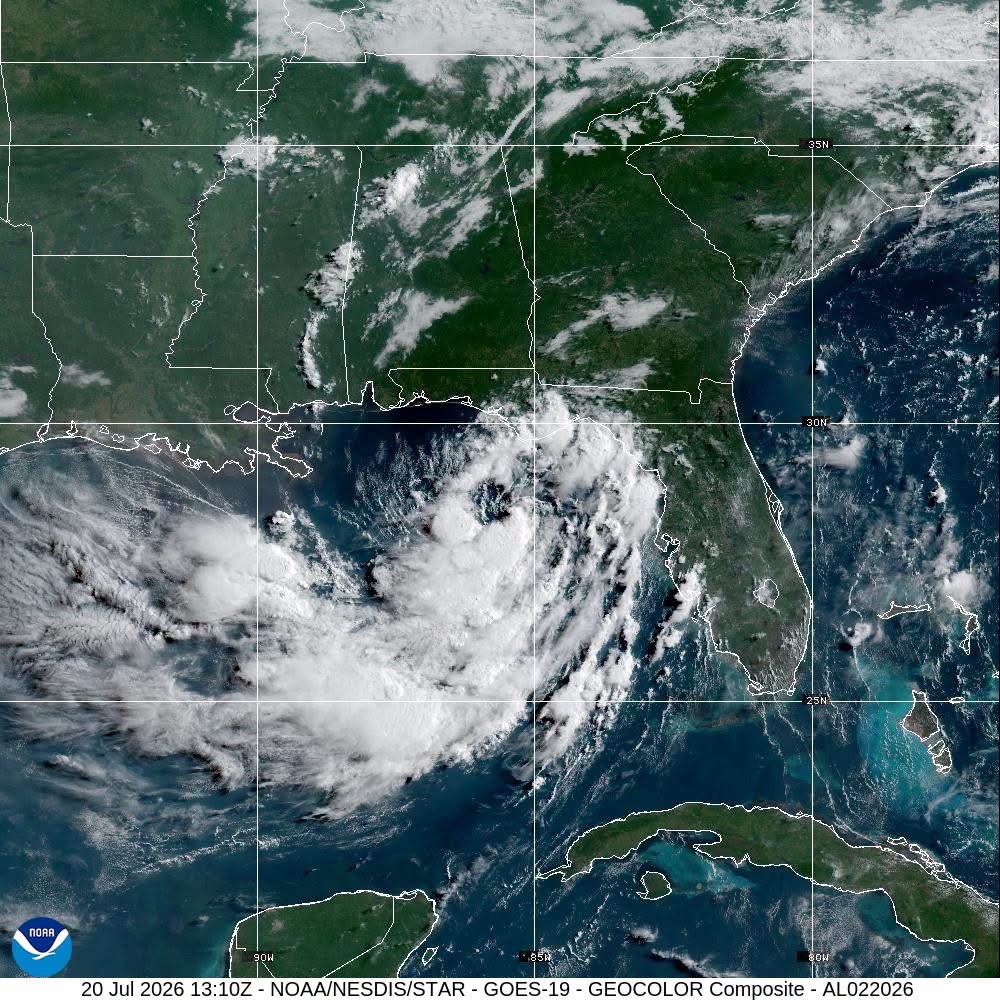
    The U.S. National Oceanic and Atmospheric Administration (NOAA) echoes this contradictory assessment, noting that El Niño is truly a double-edged sword for Atlantic hurricane activity. While El Niño conditions generally suppress tropical storm formation, the concurrent warmer ocean temperatures and calm low-wind conditions can actually fuel the rapid intensification of any storms that do manage to form. NOAA National Weather Service Director Ken Graham stressed that even with El Niño’s suppressing influence, there is no way to predict with certainty how the 2026 season will unfold. It only takes one major hurricane making landfall to turn a quiet season into a catastrophic one, which is why updating and implementing hurricane preparedness plans well before the season starts is non-negotiable, Graham said.

    To address these overlapping risks, Dr. Williams outlined seven key priority actions that regional governments, industry stakeholders, and development partners must advance immediately. First, governments must invest in strengthening early warning systems that give fishers and aquaculture operators enough advance notice of approaching storms to secure their assets. Second, the sector must scale up adoption of climate-smart fishing and farming practices that reduce vulnerability to extreme weather. Third, regional bodies must enhance fisheries safety protocols and improve the accuracy of marine forecasting for fishing grounds. Fourth, targeted investment is needed to build climate-resilient infrastructure across the entire fisheries value chain, from landing sites to storage facilities. Fifth, agencies at the local, national, and regional levels must strengthen coordination to avoid gaps in preparedness and response. Sixth, interventions must center the needs of marginalized groups that are most vulnerable to climate shocks: small-scale fishers, women working in the fisheries sector, young fishing industry workers, and rural coastal households. Finally, communities need to be equipped with the practical tools, local knowledge, appropriate technology, and ongoing support systems to adapt to changing conditions.

    “Let us enter this hurricane season vigilant, united, and fully prepared,” Dr. Williams urged stakeholders across the region. For stakeholders looking to deepen their understanding of disaster preparedness for Caribbean fisheries, a recent public webinar hosted by the CARICOM Secretariat in partnership with CRFM focused specifically on protecting fisheries assets during natural disasters, and is available for on-demand viewing now.

  • Loan Officer Takes Credit Union to Industrial Court Over Oppressive Dismissal

    Loan Officer Takes Credit Union to Industrial Court Over Oppressive Dismissal

    A labor dispute unfolding in Antigua and Barbuda has drawn sharp public attention over workplace due process and employer treatment of staff facing unexpected medical crises, after a former loan officer brought her former employer, Community First Co-Operative Credit Union, before the Industrial Court over what she calls a wrongful and unjust dismissal.

  • Antigua and Barbuda’s Abigail Piper Takes Financial Literacy Message to Miss Caribbean Universe

    Antigua and Barbuda’s Abigail Piper Takes Financial Literacy Message to Miss Caribbean Universe

    As the countdown to the 2026 Miss Caribbean Universe pageant begins, one name carries the hopes and pride of the entire Antigua and Barbuda nation: 27-year-old Abigail Piper, selected to represent the dual-island nation at the June 13 competition hosted in St. Thomas, U.S. Virgin Islands. With more than ten years of pageantry experience under her belt, a stellar academic record, a thriving career in the performing arts, and a deep commitment to community uplift, Piper enters the contest as one of its most well-rounded contenders.

    Piper’s pageantry journey traces back to 2014, when she claimed first runner-up honors at the Christ the King High School Queen of the Forms Pageant, marking the start of a years-long streak of impressive placements. She notched her first major pageant win in 2016, taking home the title of Teen Splash, and in more recent competitions, she secured second runner-up at the Antigua Labour Queen Pageant and first runner-up at Antigua’s Queen of Carnival Pageant. These results have honed the stage presence and competitive grit that she will bring to the regional stage in St. Thomas.

    Beyond the pageant runway, Piper has built a remarkable academic profile. As a student at Christ the King High School, she passed 14 core subjects, earning top Grade One marks in 11 of them. She went on to graduate with honors from Antigua State College, where she completed an associate degree in entrepreneurship, before moving on to Rutgers University. In 2022, she graduated with distinction from Rutgers with a Bachelor of Science degree in accounting, and she is now working toward her ultimate professional goal of earning certification as a Certified Public Accountant.

    Piper’s talents extend far beyond the classroom and the pageant stage, with deep roots in Antigua and Barbuda’s performing arts scene. She has appeared in multiple productions hosted by the Antigua Film Academy, performs regularly as a member of the local band de Alphas, and previously represented the nation as a member of its national cheerleading team. Her contributions to the country’s cultural landscape were formally recognized in 2017, when she was honored with a National Cultural Award. Piper says that her years of training in music, dance and drama have been foundational, helping her cultivate the confidence, self-discipline and commanding stage presence that set top pageant contestants apart.

    What truly sets Piper apart, however, is her commitment to lifting up the next generation through community outreach. Focused on youth empowerment via education and personal development, she has made expanding access to financial literacy for young people a core personal mission. Earlier this year, she completed a tour of primary schools across Antigua’s St. John’s Rural North constituency, where she spoke to students about actionable skills including time management, academic focus, and foundational money management. To complement these conversations, she donated a collection of child-friendly financial literacy books to local school libraries, leaving a lasting resource for future students.

    As she prepares to compete for the Miss Caribbean Universe 2026 crown at St. Thomas’ Ruth E. Thomas Auditorium in Charlotte Amalie, Piper says she hopes her journey sends a message to aspiring young people across the Caribbean: that with consistent determination, anyone can pursue their dreams, lean into their unique talents, and use their knowledge and platform to lift up their local communities.

  • WATCH: Urban Renewal Minister Clears Sidewalk Obstruction on Popeshead Street

    WATCH: Urban Renewal Minister Clears Sidewalk Obstruction on Popeshead Street

    A long-standing pedestrian hazard on Popeshead Street has been eliminated after an unpermitted set of steps that encroached on public walkway space was torn down, clearing the path for foot traffic and eliminating the dangerous need for pedestrians to step into active vehicle lanes. Local official Turner, who has long pushed for a fix to the issue, noted that anyone familiar with the busy corridor is well aware of the persistent problem the obstruction created. For years, the jutting steps narrowed the usable sidewalk dramatically, forcing all types of travelers – from commuters heading into the nearby St. John’s neighborhood to customers visiting local commercial establishments – to divert their path off the walkway and into moving traffic. This put walkers, including people with mobility devices, parents with strollers, and children, at constant risk of collisions with passing vehicles. Now, following the completion of the demolition work, that risk is gone. “Not anymore,” Turner confirmed in a statement shortly after the steps were fully removed. The project was launched specifically to upgrade pedestrian accessibility and overall street safety along the busy Popeshead Street corridor. Turner emphasized that this demolition work is far more than a minor construction job; it serves as a clear example of how small, targeted public space improvements can deliver tangible, meaningful benefits to the community that improve daily life for everyone who uses the street.

  • Officials urge all to Prepare for El Niño, Above average temperatures forecast nearly everywhere for June to August

    Officials urge all to Prepare for El Niño, Above average temperatures forecast nearly everywhere for June to August

    The World Meteorological Organization has formally issued an authoritative alert that El Niño conditions are currently developing in the tropical Pacific, driven by record-warm ocean temperatures, and the climate pattern is projected to reshape global temperature and precipitation patterns while raising the risk of catastrophic extreme weather across multiple regions in the coming months.

    In its latest consensus-driven El Niño/La Niña Update, produced in partnership with the International Research Institute for Climate and Society (IRI), WMO estimates an 80% probability that a fully developed El Niño event will be in place between June and August 2026, with odds climbing to near or above 90% that the event will persist through at least November of that year. While there remains limited uncertainty around the exact timing and peak intensity of the event, the majority of leading global climate prediction models indicate the El Niño will reach at least moderate strength, with a notable possibility of it strengthening into a powerful event.

    WMO’s regular ENSO updates are widely recognized as the gold standard of climate guidance for national governments, humanitarian response organizations, and climate-sensitive economic sectors including agriculture, public health, energy production, and freshwater management. The assessments draw on a collaborative consensus of output from models run by WMO’s Global Producing Centres, paired with input from expert climate scientists and hydrologists from National Meteorological and Hydrological Services and leading climate research centers across every inhabited continent.

    United Nations Secretary-General António Guterres emphasized the urgency of the alert in a recent video address, noting that the science leaves no room for doubt: El Niño is imminent, with a 90% certainty of development in the coming months, and the world must treat this as the critical climate warning it represents. “El Niño conditions will pour fuel on the fire of a warming world. Impacts will hit even harder, travel even farther, and cross borders with devastating speed,” Guterres said. He called for commensurate climate action to meet the scale of the crisis, including ending global dependence on fossil fuels, speeding the transition to renewable energy sources, prioritizing protection for the world’s most vulnerable communities, and expanding access to early warning systems for all nations.

    On-the-ground observations collected through WMO’s global monitoring network show that between late April and mid-May, sea-surface temperatures in the central-eastern Equatorial Pacific – the core reference region for ENSO monitoring – were already approaching the official threshold for El Niño conditions. These rising surface temperature anomalies are being fueled by unusually warm water below the ocean surface, where temperatures are more than 6°C above the long-term average, creating a large reservoir of excess heat that will continue to drive surface warming in the coming months. Complementing these ocean observations, the Southern Oscillation Index, which tracks the atmospheric component of the ENSO cycle, also aligns with the pattern of developing El Niño conditions.

    WMO Secretary-General Celeste Saulo stressed that the global community must begin preparations immediately for a potentially strong El Niño event, which will worsen existing risks of both severe drought and extreme heavy rainfall, while also increasing the likelihood of dangerous heatwaves on land and in marine ecosystems. Saulo recalled that the most recent 2023-2024 El Niño event ranked among the five strongest ever recorded, and was a key contributing factor to the record-breaking global temperatures observed in 2024. “The WMO community will be carefully monitoring conditions in the coming months to inform decision-making by governments, humanitarian agencies and climate-sensitive sectors. Advance seasonal forecasts and early warnings are vital to save lives and cushion the impact on our economies and our communities,” Saulo added.

    To support more targeted regional planning, WMO has also released a complementary Global Seasonal Climate Update that incorporates data on other key climate drivers alongside El Niño, enabling more geographically refined seasonal outlooks.

    El Niño and its opposite phase La Niña make up the El Niño-Southern Oscillation (ENSO), one of the most impactful naturally occurring climate patterns on the planet. El Niño is defined by persistent above-average ocean surface temperatures across the central and eastern Equatorial Pacific, and typically occurs every two to seven years, with individual events lasting roughly nine to 12 months. Most El Niño events begin developing between March and June, reach peak intensity between November and February, and their impact on global average temperatures is usually most pronounced in the second year after onset.

    The impacts of any El Niño event vary based on its strength, duration, time of onset, and how it interacts with other ongoing climate patterns such as the Indian Ocean Dipole. Not all global regions experience ENSO-related impacts, and impacts can even vary within a single affected region. While climate change has not been proven to increase the frequency or intensity of El Niño events itself, it does amplify the severity of El Niño-related impacts: a warmer baseline ocean and atmosphere holds more energy and moisture, creating conditions that worsen extreme weather events including heatwaves and heavy downpours. WMO does not use the non-standardized term “super El Niño” for official operational classifications.

    While every El Niño has unique characteristics, the pattern is typically associated with predictable regional precipitation shifts: increased rainfall across parts of southern South America, the southern United States, portions of the Horn of Africa, and central Asia, and drier-than-average conditions across Central America, northern South America, the Caribbean, Australia, Indonesia, and parts of southern Asia. During the Northern Hemisphere summer, El Niño’s warm ocean waters boost hurricane activity in the central and eastern Pacific while suppressing hurricane formation in the Atlantic Basin, which has led the U.S. National Oceanic and Atmospheric Administration to forecast a below-normal Atlantic hurricane season for the year.

    Regional climate outlook forums coordinated by WMO have already released early outlooks for high-risk regions. The Greater Horn of Africa Climate Outlook Forum projects a high probability of below-average rainfall across most of the northern Greater Horn of Africa during the critical June to September growing season. The South Asian Climate Outlook Forum forecasts below-average monsoon rainfall across South Asia, while the Central America Climate Outlook Forum expects warmer and drier conditions for the Central American region.

    WMO’s complementary Global Seasonal Climate Update accounts for ENSO and other major climate drivers, including the North Atlantic Oscillation, Southern Annular Mode, and the Indian Ocean Dipole, which is closely correlated with Pacific El Niño conditions and is expected to enter a positive phase that will peak at the same time as the intensifying El Niño. For the June to August period, forecasts show above-average temperatures are overwhelmingly likely across nearly every part of the globe, raising risks of dangerous heat stress, compound climate hazards, and accelerated drought development in regions that receive below-average rainfall. Precipitation patterns align with typical El Niño dynamics, increasing the probability of both extreme flooding from excess rainfall and severe drought from prolonged dry conditions across different regions.