
A devastating late-night boat collision off the western coast of Saint Lucia has claimed the lives of two young women, left 14 others injured, and left two more unaccounted for, prompting an outpouring of grief from the country’s top leader. On Saturday night at roughly 11:55 p.m., the larger vessel Ocean Angel collided with the smaller pirogue Mango Tours in waters near Anse Cochon, a collision that proved fatal for two people onboard the smaller craft. The impact sent Mango Tours to the ocean floor, while the Ocean Angel suffered major structural damage that has not resulted in its sinking. Local law enforcement have publicly identified the two deceased victims: 21-year-old Mhakeida Nestor, who hails from La Fargue, Choiseul, and 25-year-old Debbie Dolor of Market Road, Soufrière. In the wake of the tragedy, Saint Lucia’s Prime Minister Philip J. Pierre has offered official condolences on behalf of the island nation’s government and general public. “On behalf of the Government and people of Saint Lucia, I extend my deepest condolences to the families and loved ones of Mhakeida Nestor and Debbie Dolor,” Pierre stated in remarks following the incident. “We mourn with you during this time of immense grief.” Beyond his sympathies for the families of the deceased, Pierre noted that his full attention and prayers are with the 14 injured individuals and the loved ones of the two missing people who are still waiting for word on their relatives’ fates. Early investigations led by the Royal Saint Lucia Police Force have confirmed the basic direction of both vessels at the time of impact: Mango Tours was traveling south through the coastal waters when it collided with the northbound Ocean Angel. Emergency response teams launched search efforts immediately after the collision, and continued active searching for the two missing people through Sunday. The prime minister publicly praised the fast and coordinated work of all first responders and emergency personnel who mobilized to the scene, including the Police Marine Unit, the Saint Lucia Fire Service, the national Coast Guard, local medical teams, and all other supporting agencies that joined the response effort. “The Government will continue to support the ongoing response and the investigations into the circumstances surrounding this tragic incident,” Pierre affirmed. As of the latest updates from law enforcement, both the search-and-rescue operation for the two missing people and the full official investigation into the root causes of the collision remain active and ongoing.
标签: Antigua and Barbuda
安提瓜和巴布达
-
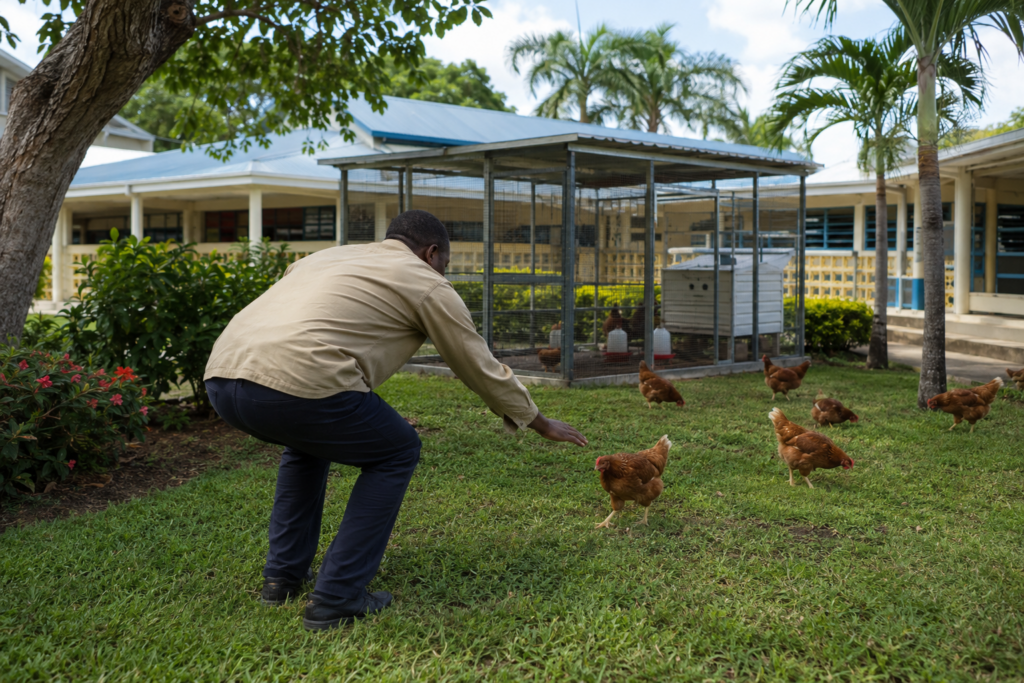
Teen in Custody After 48 Chickens Stolen From Antigua Grammar School
A teenage suspect is currently being held by law enforcement in Antigua following a brazen theft of nearly 50 laying chickens from a well-known secondary school in the capital city of St. John’s. The incident, which unfolded over a 26-hour window between July 16 and 17, has raised questions about security at public educational facilities across the island.
According to initial police reports, the school’s agricultural department locked up its plywood and galvanized steel poultry coop at approximately 9 a.m. on July 16. When a staff member arrived to carry out routine feeding and checks just over 26 hours later, at 11:30 a.m. the next day, they found the coop’s gate unsecured and the entire flock of layer chickens missing.
Crime scene investigators who responded to the theft soon uncovered the thieves’ method of entry: perpetrators had forcibly pried loose a panel of plywood along the coop’s eastern wall, creating a gap large enough to remove all 48 birds. The stolen chickens have an estimated collective value of 2,880 Eastern Caribbean dollars, equal to roughly $1,067 USD, with each mature layer bird valued at 60 Eastern Caribbean dollars.
Acting on a tip from members of the public, police launched a search of properties in the residential Kentish Road area shortly after the theft was reported. During that search, officers recovered 28 live brown chickens, which were later positively identified as the school’s property by a school staff member. The recovered birds have since been returned to Antigua Grammar School, after forensic photographers documented evidence at the recovery site.
Following the recovery, law enforcement took an 18-year-old male resident of Kentish Road into custody for questioning in connection with the theft. As of the latest update, no formal charges have been filed against the suspect, and investigators are still working to locate the remaining 20 missing chickens. Forensic officers have completed processing of both the theft scene and recovery area, gathering evidence to build their case as the investigation continues.
-

UPDATE: Guyanese National Fatally Shot in Potters Village
On a quiet Sunday afternoon in Potters Village, Antigua, a brazen fatal shooting has left a small community reeling from violence, after a Guyanese national identified only as Leyandrew was killed in what law enforcement officials suspect was a pre-planned targeted attack.
Local residents told reporters they first heard the crack of multiple gunshots ring out through the neighborhood before they stumbled on the victim at the scene. According to witness accounts, the entire attack unfolded in mere seconds, catching nearby residents off guard and leaving widespread fear and unease across the tight-knit community. Initial early reporting had labeled the killing an apparent drive-by shooting, with witnesses counting at least four separate shots fired before the gunmen fled.
In the immediate aftermath of the incident, responding police officers moved quickly to secure and cordon off the crime scene, launching a formal criminal investigation into the homicide. Investigating teams have outlined their next steps, which include door-to-door interviews with local residents who may have seen or heard details related to the attack, as well as a full review of all available evidence – most notably nearby surveillance footage that could capture critical clues about the attackers and their escape.
As of the latest update, law enforcement has not identified a clear motive for the killing, and no suspects have been taken into custody in connection with the shooting. This fatal incident marks the latest homicide to impact Antigua and Barbuda, a nation that continues to grapple with rising gun violence as investigators and policymakers work to curb the spread of illegal weapons and violent crime across the twin islands.
Outlets covering the developing story have extended their sincere condolences to the victim’s family and loved ones, who are now grappling with the sudden loss of Leyandrew. This remains an active, developing investigation, and new details will be released to the public as they become available to authorities.
-
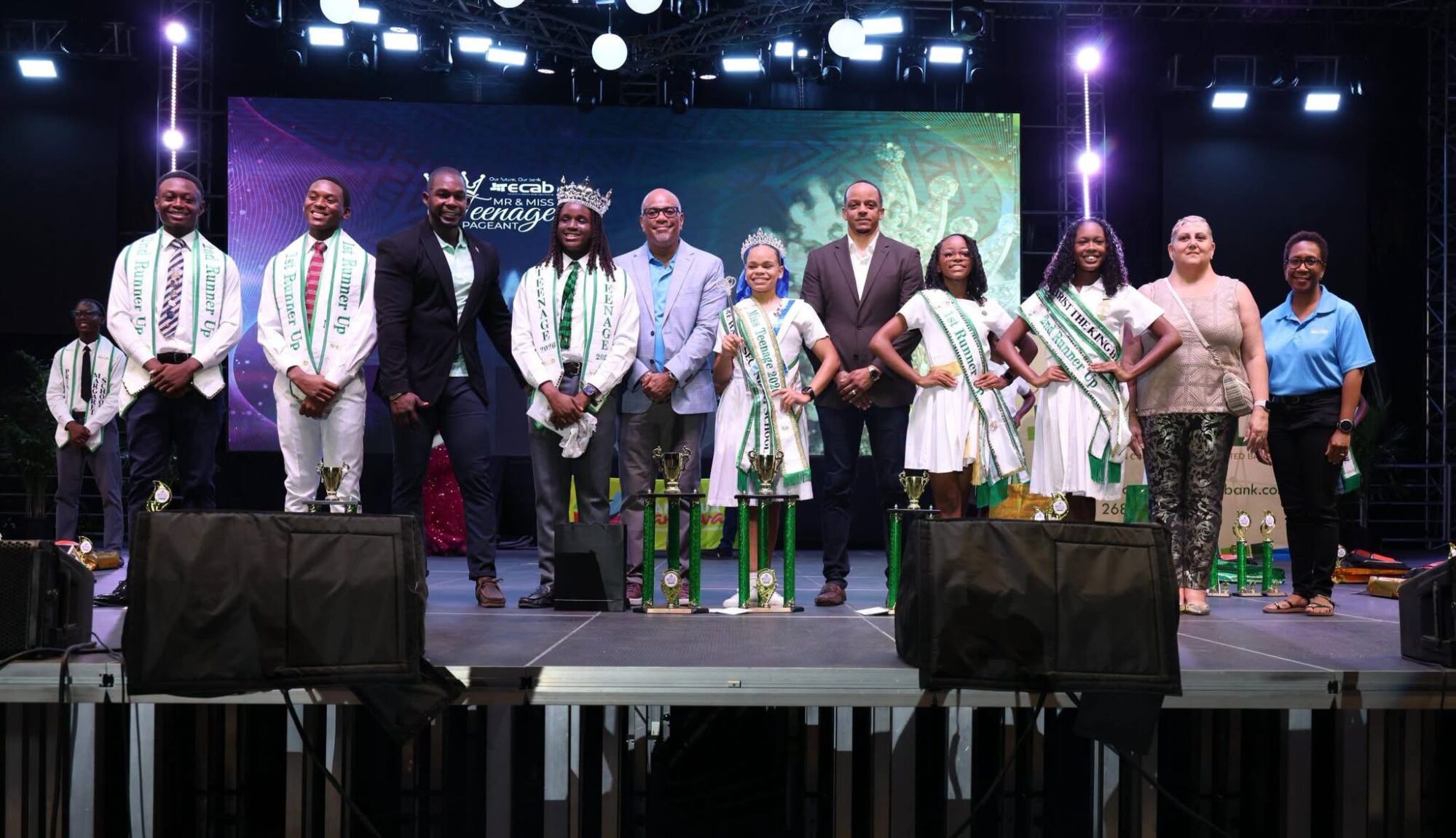
Creative Industries Minister Praises Success of ECAB Teenage Pageant
The ECAB 2026 Mr. and Miss Teenage Pageant, one of Antigua and Barbuda’s most anticipated youth-focused entertainment events, has earned high praise from the nation’s Creative Industries Minister Dwayne George, who celebrated the production as a standout tribute to the talent, self-assurance and untapped potential of the country’s younger generation. In comments following the conclusion of the pageant, George commended organizers for delivering a polished experience that balanced professional production values with broad audience appeal, noting that every segment of the event flowed seamlessly from its opening moments to the final announcement of results.
Beyond recognizing the work of production teams, George extended warm, sincere congratulations to every young contestant who took the stage, highlighting the poise and high standard of performance each participant brought to the competition. “Each of you stepped onto this stage with grace and skill, and you have made the entire nation of Antigua and Barbuda proud,” the minister stated, emphasizing that the pageant provided a meaningful platform for young people to grow and showcase their abilities.
George also took the opportunity to thank the full network of contributors that made the event possible, including the Antigua and Barbuda Festival Commission, national government bodies, corporate sponsors, community partners, volunteer organizers, competition judges, the full production crew and every other stakeholder invested in the pageant’s success. “It was clear from every small detail of the event how much hard work, dedication and passion every person involved poured into making this happen,” George said.
Looking ahead to the nation’s future, the minister framed the contestants as emerging leaders and young ambassadors for Antigua and Barbuda. Through their demonstrated talent and clear potential, he argued, these young people continue to inspire communities across the country, offering a powerful reminder that Antigua and Barbuda’s future remains bright and full of possibility. -
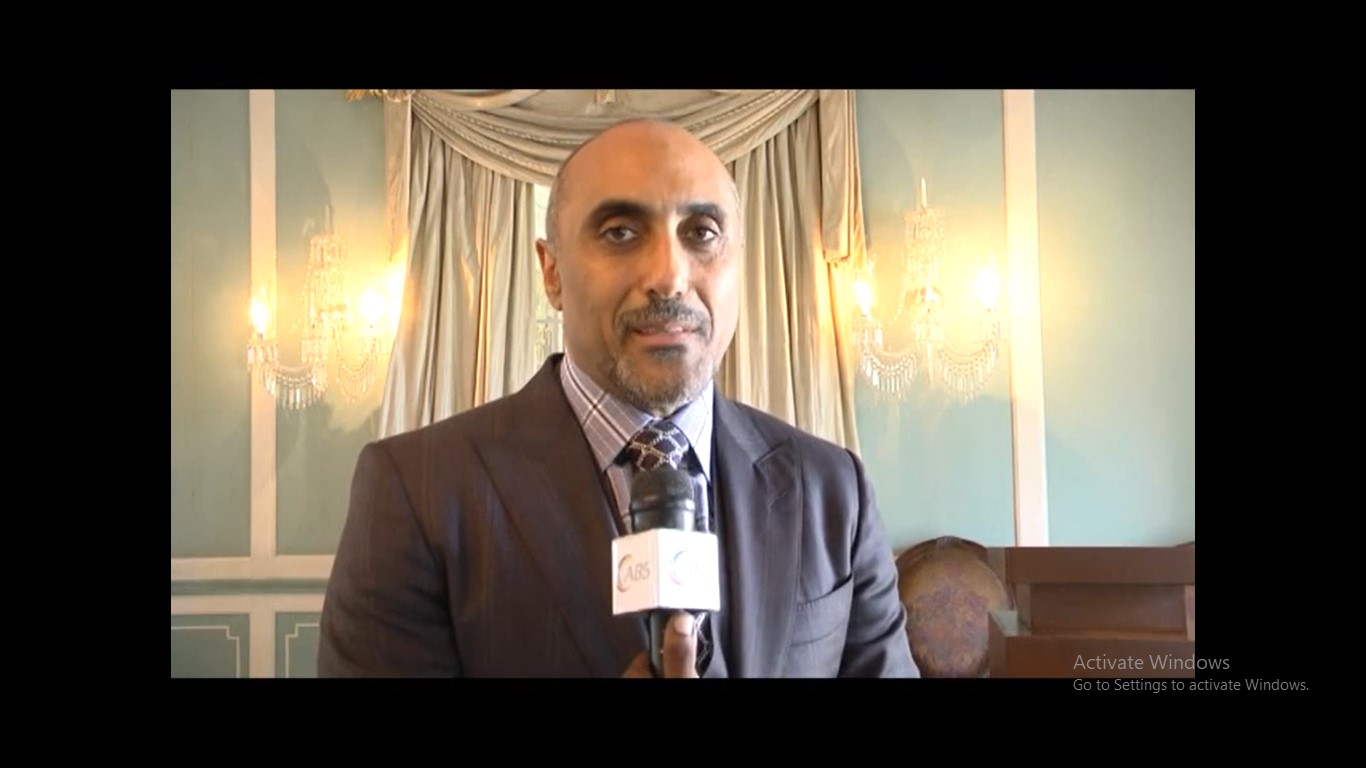
Antigua and Barbuda’s First Fertility Clinic to Open in September
For years, people struggling with infertility across Antigua and Barbuda have faced the financial and emotional burden of traveling abroad to access specialized reproductive care. That is set to change this fall, as the country’s first dedicated fertility clinic moves into its final stages of preparation, with the first patient treatments scheduled to begin as early as September.
The new clinic will be housed within the recently opened Doctors Medical Centre in St. John’s, a facility that already delivers a broad range of general and specialized medical services to local communities. According to the clinic’s co-founder, Dr. Sir Joseph John, all required specialized medical equipment has already been ordered and is currently en route to the twin-island nation, putting the project on track for its planned launch.
The landmark initiative is the product of a cross-border collaboration between local medical professionals and a globally experienced fertility leader. The partnership brings together Dr. Sir Joseph John, Dr. Mansoor, Dr. Yemi, and a Nigerian fertility specialist who has already built and operates multiple high-success fertility clinics in Lagos. What makes this collaboration unique is its connection to Antigua and Barbuda’s Citizenship by Investment Programme: the specialist and her husband gained citizenship through the program, and after establishing their roots in the country, her representative reached out to Dr. John to explore launching a local clinic.
“She is a fertility expert with a number of these very successful fertility clinics in Lagos,” Dr. John shared in an interview with ABS News. “She wanted to do something here, and her agent got in touch with me, and we put this together.”
When it opens, the clinic will offer comprehensive end-to-end fertility care, headlined by in vitro fertilization (IVF) — one of the most common and effective assisted reproductive technologies for people facing fertility challenges. Prior to this launch, accessible local fertility care did not exist in Antigua and Barbuda, and the few available options in the broader Caribbean region were limited to clinics in neighboring Barbados and Trinidad. Dr. John emphasized that the new clinic will eliminate the need for local patients to make costly, stressful trips overseas to get the care they need.
“No longer will folks have to travel to Barbados or anywhere to have their fertility experience or care,” he said. “It will be given from A to Z here.” Healthcare leaders across the country expect the clinic will not only improve reproductive health outcomes for local residents but also position Antigua and Barbuda as a growing hub for accessible specialized medical care across the Eastern Caribbean.
-

US to revive rule that could deny green cards to immigrants using public benefits
In a policy shift announced Thursday by the U.S. Department of Homeland Security, a restrictive Trump-era immigration regulation is set to return, opening the door to denying permanent resident status to immigrants who access common taxpayer-funded public assistance programs including food stamps and Medicaid.
The policy, rooted in the second Trump administration’s broader crackdown on unauthorized migration, frames the change as a defense of fiscal responsibility: officials argue that applicants seeking green cards should not rely primarily on government subsistence programs, a classification known in U.S. immigration law as a “public charge.”
The updated rule will go into effect across the United States on September 18 of this year, according to the DHS’s official announcement. Its origins trace back to 2019, when the Trump administration first introduced the regulation, dramatically expanding the legal definition of a public charge. Under the 2019 framework, any immigrant who received eligible government benefits for more than 12 months within any three-year window would be classified as a public charge, making them ineligible for permanent residency.
That broad expansion was rolled back in 2021 by the Biden administration, which significantly narrowed the criteria that would trigger a public charge green card denial, rolling the policy back to its narrower pre-2019 scope. The reversal came after years of sustained legal challenges and widespread outcry from immigrant support groups.
In a statement posted to the social platform X, U.S. Citizenship and Immigration Services reaffirmed the administration’s policy stance, noting that the revived rule reinforces the long-standing core requirement that immigrants residing in the U.S. must be self-reliant and avoid dependence on public benefits supported by U.S. taxpayers.
The original 2019 version of the rule faced fierce pushback from immigrant advocates, who argued that the policy intentionally targeted low-income immigrant communities, creating an unnecessary barrier that would block thousands of eligible people from accessing permanent legal status in the country. Many public health and social policy experts also warned that the rule would discourage immigrants from accessing life-saving healthcare and food assistance, even when they are legally eligible for those benefits, leading to worse public health and economic outcomes for immigrant families.
-

Argentina, Spain and their stars Lionel Messi and Lamine Yamal meet in World Cup final
After a weeks-long summer of nonstop FIFA World Cup excitement across North America, the tournament’s 104th and final match is finally upon us. Sunday’s clash at New Jersey’s MetLife Stadium, located just outside Manhattan, pits the world’s top two ranked men’s national teams against one another, with kickoff scheduled for 3 p.m. Eastern Time, and the sport’s most iconic global trophy on the line.
Organizers project a sellout crowd of 80,000 fans will pack the stadium’s stands for the historic showdown, with resale markets seeing unprecedented demand for entry: the cheapest available tickets on secondary platforms were listed for close to $10,000 in the lead-up to the match. After days of chaotic weather disruptions across the New York metro area – including thick wildfire smoke that blanketed the region last week, followed by a torrential Saturday downpour that triggered flash flood warnings – conditions have cleared just in time for the final. Sunday morning brought clear blue skies, with a forecast calling for sunny conditions and a comfortable high of 80 degrees Fahrenheit at kickoff.
For Spain, a victory Sunday would cap a stunning breakout tournament for its dynamic, youth-driven squad, headlined by 19-year-old phenom Lamine Yamal. Despite a quad injury suffered earlier this spring that sidelined him for club play, Yamal has turned in a series of virtuoso performances throughout the tournament, announcing himself as one of the sport’s next global superstars. La Roja’s road to the final has been one of dominant defensive play and impressive upsets over elite competition: they have knocked off three top-10 ranked teams to reach this stage, opening knockout play with a 1-0 win over 5th-ranked Portugal, following with a 2-1 quarterfinal victory over 9th-ranked Belgium, and pulling off a stunning 2-0 semifinal shutout of 3rd-ranked France, whose vaunted attacking line had looked unbeatable entering the match. Across seven tournament games, Spain has conceded just one single goal.
On the other side of the pitch, Argentina is chasing a historic second consecutive World Cup title, a win that would cement a decade of unparalleled dominance for the side led by global icon Lionel Messi. Since this core group of players coalesced, Argentina has already claimed the 2022 World Cup trophy, two Copa América titles, and the 2022 Finalissima. Spanish head coach Luis de la Fuente acknowledged the magnitude of Argentina’s achievement in a press conference Friday, calling his opponents “an excellent national team that has had a spectacular run over the last eight or 10 years since this group came together.”
Argentina’s run to the 2026 final has been defined by dramatic, last-gasp wins that have captured the attention of soccer fans worldwide. In all four of their knockout stage matches, Argentina failed to hold a lead at the end of 90 minutes of regulation play. Twice, they scored stoppage-time match winners to advance, and twice they secured their place in the next round with goals in extra time.
At 39 years old, Messi’s performance throughout this tournament has defied expectations for players of any age. He enters the final with eight goals and four assists, including key assists on both late game-winning goals in a tense, heart-stopping semifinal win over England. That mark puts him second in the tournament’s golden boot race, behind only France’s Kylian Mbappé, who finished with ten goals after scoring twice in England’s bronze medal win over Argentina on Saturday. De la Fuente heaped praise on Messi Friday, saying “Messi is something else. He is an irreplaceable player, a player with extraordinary talent, and above all he is an example. His attitude and his behavior, at the age he is now and with the World Cup he is having, are truly spectacular.”
Speculation has swirled for weeks that Sunday’s final could be Messi’s last match wearing the Argentina national team shirt, but Argentine head coach Lionel Scaloni remained noncommittal when asked about the possibility Friday, smiling and shrugging: “I wouldn’t know what to tell you. I don’t know, because he never stops surprising us.”
The narrative of Sunday’s final has been shaped by the irresistible generational parallel between the 39-year-old Messi and 19-year-old Yamal, who both rose through the ranks of FC Barcelona’s famed La Masia youth academy, and made their senior debuts as teen prodigies wearing Barcelona’s iconic blue and red stripes. Yamal now wears the club’s legendary number 10 shirt, the same number Messi wore from 2008 until his departure from the club in 2021. Sunday’s match marks the first ever competitive meeting between the two players, who share a 20-year age gap – and their first meeting came in wildly improbable circumstances years ago, when Yamal was an infant, the pair posed together for a UNICEF charity calendar photo shoot.
When asked about the iconic photo at a fan event in New York Friday, Messi laughed and called the full-circle moment “una locura” – madness. “That’s life,” he said. “I took a photo when he was a baby, and now the two of us are facing each other in a World Cup final.” Messi went on to praise Yamal, calling him a tremendous young talent: “At just 19 years old, he is already one of the world’s leading players. He has his entire career ahead of him, and he has a great opportunity to achieve something historic [on Sunday].” He added with a joke, “We’ll do everything we can to make sure it doesn’t happen this time.”
Across the tournament, roaring crowds of Argentina supporters have turned every match into a home game for the side, with chants, cheers, and celebrations following the team as they closed in on a second straight World Cup title. Argentine players have repeatedly noted that the unwavering support from fans has given them extra motivation to finish the job with a win on Sunday.
-
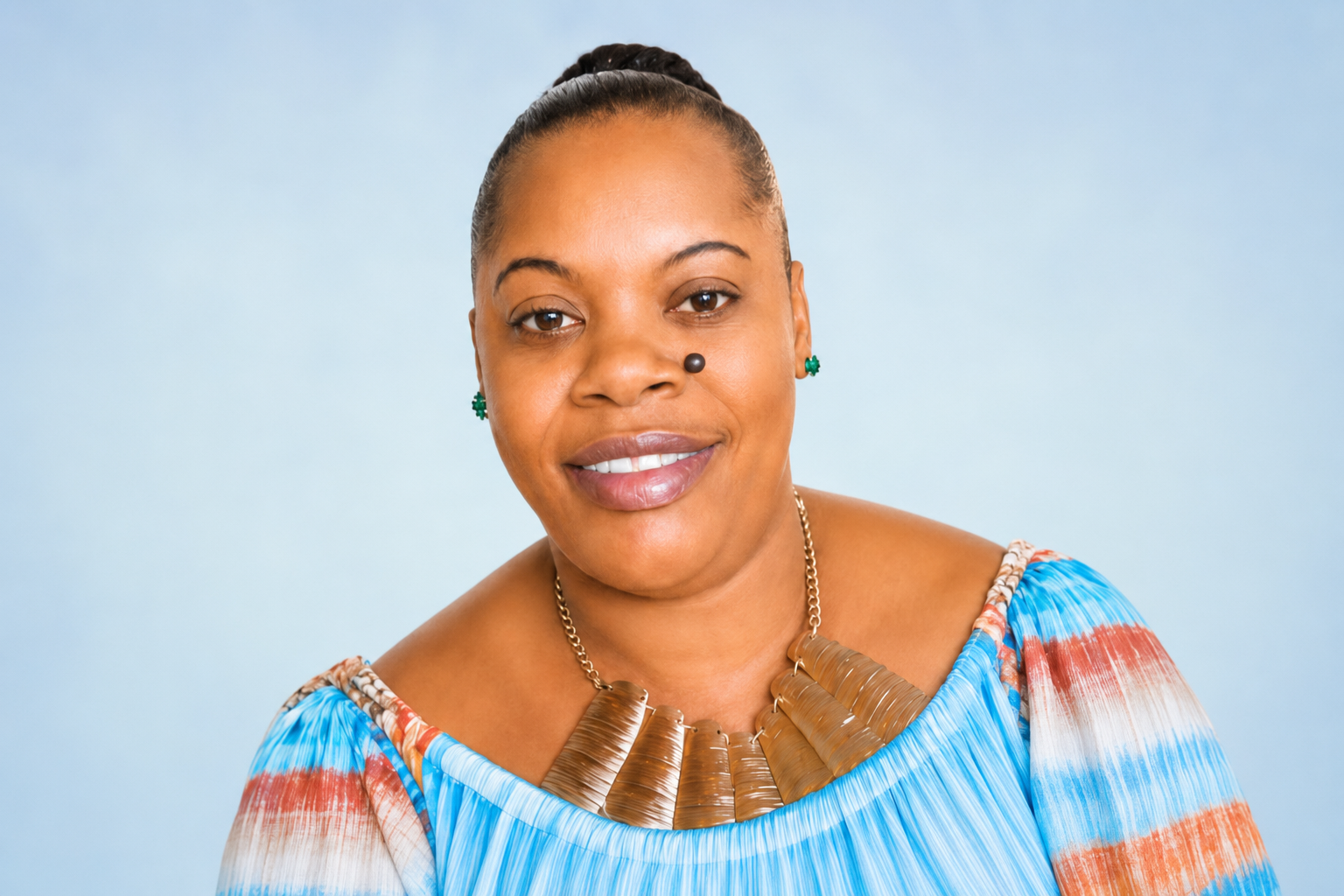
Health Ministry Mourns Former Employee Conie Oberou Williams
A government ministry that oversees public health, environmental policy and civil service administration has officially extended its deepest sympathies to the loved ones of Conie Oberou Williams, a former staff member who passed away recently. In a public statement announcing the funeral plans, the ministry highlighted Williams’ lasting legacy as a highly valued team member, noting that her unwavering commitment to her role, gentle kindness, and energetic, uplifting personality left a profound impact on everyone she worked with. Those who knew Williams will carry memories of her character with them for years to come, the statement added.
Funeral services to celebrate Williams’ life are scheduled to begin at 2:00 p.m. on July 24, held at Mount Zion Baptist Church located in the Golden Grove New Extension community. Immediately following the church service, a burial ceremony will take place at Tranquility Park. For attendees traveling from Grays Farm, a pre-arranged shuttle bus, operated by driver Vernon Tanner, will depart from King George Grounds at 1:30 p.m. to transport guests directly to the funeral service. To honor Williams’ memory, the family has requested that all immediate family members and close close friends attend the service wearing clothing in varying shades of blue.
-

Ferry carrying 116 passengers sinks off Guyana coast, authorities say
A major maritime disaster has unfolded off the northern coast of Guyana, where a passenger ferry carrying 116 people sank mid-voyage on Saturday, leaving dozens of passengers unaccounted for as emergency response teams scramble to launch search operations. The incident occurred when the MV Barima, a 40-meter (131-foot) vessel built back in 1939, capsized close to the Iron Punt region while traveling along its scheduled route from the country’s capital Georgetown to Port Kaituma.
As of the latest official update from local authorities, 53 passengers have been pulled from the water and rescued, but the current status of ongoing search and recovery efforts remains unspecified. Officials have not yet confirmed whether they anticipate finding more survivors among the remaining 63 people who were on board when the ship went down.
Vessel data from maritime tracking platform VesselFinder confirms the advanced age of the ill-fated ferry, which was constructed more than 80 years ago. According to public statements from Public Works Minister Juan Edghill, the vessel was equipped with what was intended to be sufficient safety gear: 250 life jackets, two rigid-hulled rescue lifeboats, and six additional inflatable life crafts.
The government of Guyana has mobilized its top leadership to oversee the response effort, with Prime Minister Mark Phillips taking direct charge of coordinating rescue operations, inter-agency communication, and next steps for the emergency response. Investigations into the root cause of the capsize are expected to be launched once the immediate search operation concludes.
-

Clare Hall Secondary and Antigua Grammar Top ECAB Mr. and Miss Teenage Pageant
The excitement of Antigua Carnival reached a dazzling climax this year as the annual ECAB Teenage Pageant concluded with two standout students claiming the most coveted titles. Katherine Pimentel, representing Clare Hall Secondary School, walked away with the ECAB Miss Teenage 2026 crown, while Soleil Williams from Antigua Grammar School secured the ECAB Mr. Teenage 2026 honors at the closing ceremony.
Pimentel’s road to victory was marked by consistent excellence across multiple competition categories, beyond just capturing the overall title. The young competitor also swept four major individual awards: Personality and Aspiration, Interview, and Leadership in the female division, cementing her status as a well-rounded frontrunner throughout the event.
The pageant also recognized a host of other talented participants from secondary schools across the region. Andrisa Thomas of Antigua Girls’ High School and Xion Joseph of St. Joseph Academy claimed first runner-up positions in the female and male categories respectively, while Brianna Lewis from Christ the King High School and Douve’rt Burnes of Clare Hall Secondary School took home second runner-up honors.
In a standout showing, first runner-up Xion Joseph dominated the male special awards category, taking home five trophies: Most Congenial, Mr. Photogenic, Personality and Aspiration, Interview, and Leadership. Other individual award winners included Narla Nathaniel of Jennings Secondary School, who earned the title of Miss Photogenic; Andrisa Thomas, who received the female Punctuality Award; and Jahmarly Hunts of Ottos Comprehensive School, who won the male Punctuality honor.
Further category awards saw Andrisa Thomas claim the female Creative Research prize, while Douve’rt Burnes took home the male equivalent of that award. The Performing Talent category was overwhelmingly dominated by contestants from St. Mary’s Secondary School, with Kallie Guiste winning the female division and Kristopher Lee securing the male prize. Rounding out the special recognitions, the Most Improved awards went to two students from Pares Secondary School: Kareem Amedee for males and Sarah Williams for females.
Following the conclusion of the competition, the Antigua Carnival Festivals Commission issued a formal statement congratulating every teenager who participated in the 2026 pageant, highlighting the hard work and dedication each contestant brought to the event. The commission also extended special gratitude to title sponsor ECAB, as well as all organizers, volunteers, and supporters whose contributions made the 2026 edition of the pageant a success.