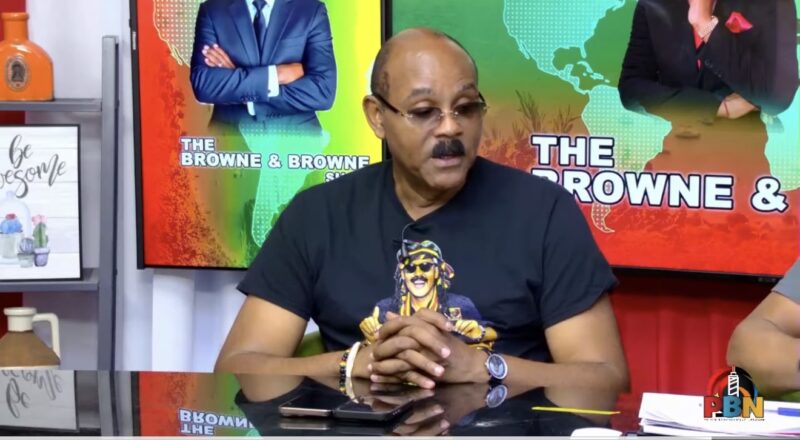
Negotiations between the small Caribbean twin-island nation of Antigua and Barbuda and the United States over a planned deportee resettlement agreement have hit an impasse, driven by a sharp divide over how many deportees the Caribbean country would be required to take in, according to Prime Minister Gaston Browne.
During his regular weekend radio broadcast, Browne explained that talks have ground to a halt because the volume of deportees Washington has proposed far outstrips the maximum capacity his administration has deemed sustainable for the small nation. Antigua and Barbuda has only offered to accept around 10 deportees per year, yet U.S. negotiators have pushed for a monthly quota of roughly 10 people, a 12-fold increase over the Caribbean country’s proposal.
Browne emphasized that taking in a far larger cohort of deportees than Antigua and Barbuda can handle would place an unjustifiable strain on the nation’s limited resources and raise tangible risks to public safety. He revealed that at an earlier stage of negotiations, U.S. officials requested the country accept up to 120 deportees, with no promises of financial support or pre-transfer background vetting, a proposal he immediately rejected as completely unacceptable. The prime minister challenged whether any accountable national government could back an agreement that fails to properly defend its core national interests.
Browne’s public remarks come on the heels of an announcement from neighboring St. Kitts and Nevis, which confirmed the arrival of its first group of Caribbean-born deportees as part of a U.S.-led third-country deportation program. The initiative has been circulated for discussion among multiple member states of the Caribbean Community (CARICOM), with Dominica, Grenada and Guyana also named as potential destination countries for transfers.
U.S. officials have publicly claimed that the individuals eligible for transfer do not include people convicted of serious crimes, instead limited to those facing removal for immigration violations and other non-felony offenses. Still, Browne has remained firm that Antigua and Barbuda will not agree to accept any deportees under the program without full, comprehensive background checks for every individual.
As a small, low-population nation with limited law enforcement and social infrastructure, Antigua and Barbuda is uniquely vulnerable to security risks, Browne argued. “We’re small, powerless and very vulnerable,” he said, noting that even one individual with a hidden violent criminal history could cause disproportionate harm to a country of the nation’s size.
Beyond strict vetting requirements, the Antigua and Barbuda government is also pushing for guarantees that all deportees will arrive with valid, official travel documentation. Browne pointed out that a number of migrants destroy their identity papers after entering the United States, which creates major administrative hurdles to confirming an individual’s nationality and verifying their legal status.
The government has additionally requested dedicated financial assistance from the United States to cover the costs of supporting, housing and integrating any deportees Antigua and Barbuda agrees to accept. As negotiations between the two sides continue, Browne reaffirmed that protecting the country’s domestic security remains the administration’s top non-negotiable priority.