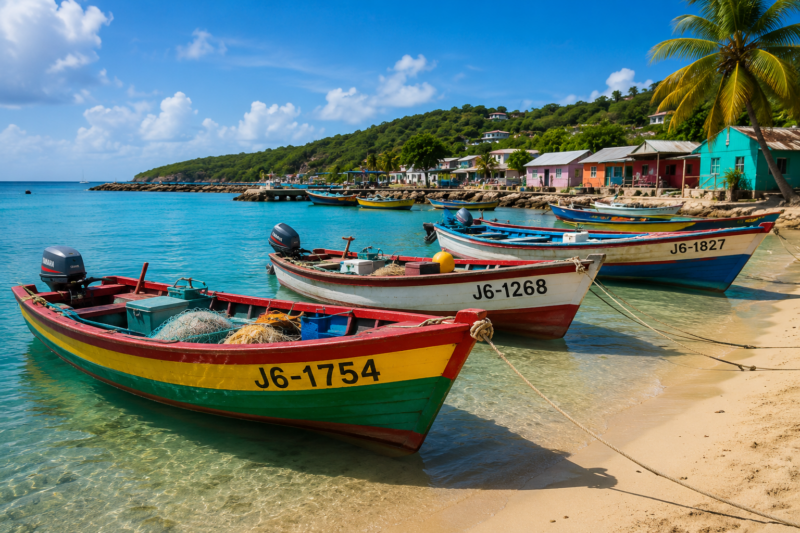
As the Caribbean region gears up for the 2026 Atlantic Hurricane Season, leaders and climate experts are sounding a clear note of caution: the fate of the region’s critical fisheries and aquaculture sector will not be determined by the storms themselves, but by the level of advance preparation and post-disaster response that stakeholders put in place. Unlike previous hurricane cycles, this year brings an added layer of complexity: the overlapping impacts of El Niño, which carry both short-term risks and long-term consequences for marine resources and fishing communities across the Caribbean.
Dr. Marc Williams, Executive Director of the Caribbean Regional Fisheries Mechanism (CRFM), recently outlined the persistent threats facing the $10 billion regional fishing industry. Year after year, hurricane activity inflicts widespread damage that ripples across the entire sector: fishing vessels are wrecked, coastal aquaculture farms are swept away, fish landing sites are destroyed, critical harvesting equipment is lost, and fragile marine ecosystems that underpin catches are left damaged. These disruptions do not stay confined to the water: they directly threaten regional food security, erase the livelihoods of hundreds of thousands of small-scale fishers, drag down national coastal economies, and erode the well-being of coastal communities that depend on fishing for survival.
Despite these well-documented vulnerabilities, Dr. Williams highlighted that the Caribbean fisheries and aquaculture community has repeatedly shown extraordinary resilience, creative innovation, and unwavering determination to rebuild and adapt in the wake of repeated climate shocks. The core takeaway from his remarks is a straightforward but urgent one: proactive preparedness saves lives, protects livelihoods, and cuts the overall cost of recovery after a disaster hits. Moving forward, he emphasized that preparedness must be embedded as a permanent, non-negotiable pillar of all regional and national fisheries and aquaculture development strategies, rather than an afterthought implemented only when a storm is approaching.
El Niño, the climate pattern defined by anomalous warming of eastern and central Pacific Ocean waters that reshapes global weather systems, presents a paradox for the 2026 Atlantic hurricane season. On one hand, the prevailing effect of El Niño is increased wind shear across the Atlantic Basin, which typically suppresses the formation and strengthening of tropical storms and hurricanes. But this potential benefit comes with steep costs for Caribbean marine systems: El Niño-driven warmer average sea surface temperatures put extreme thermal stress on coral reefs, which are already struggling with bleaching and degradation from decades of rising global ocean temperatures. As healthy coral reefs are the foundation of most Caribbean fish populations, widespread coral damage would inevitably reduce long-term fish catches and destabilize the entire marine food web.
The U.S. National Oceanic and Atmospheric Administration (NOAA) echoes this contradictory assessment, noting that El Niño is truly a double-edged sword for Atlantic hurricane activity. While El Niño conditions generally suppress tropical storm formation, the concurrent warmer ocean temperatures and calm low-wind conditions can actually fuel the rapid intensification of any storms that do manage to form. NOAA National Weather Service Director Ken Graham stressed that even with El Niño’s suppressing influence, there is no way to predict with certainty how the 2026 season will unfold. It only takes one major hurricane making landfall to turn a quiet season into a catastrophic one, which is why updating and implementing hurricane preparedness plans well before the season starts is non-negotiable, Graham said.
To address these overlapping risks, Dr. Williams outlined seven key priority actions that regional governments, industry stakeholders, and development partners must advance immediately. First, governments must invest in strengthening early warning systems that give fishers and aquaculture operators enough advance notice of approaching storms to secure their assets. Second, the sector must scale up adoption of climate-smart fishing and farming practices that reduce vulnerability to extreme weather. Third, regional bodies must enhance fisheries safety protocols and improve the accuracy of marine forecasting for fishing grounds. Fourth, targeted investment is needed to build climate-resilient infrastructure across the entire fisheries value chain, from landing sites to storage facilities. Fifth, agencies at the local, national, and regional levels must strengthen coordination to avoid gaps in preparedness and response. Sixth, interventions must center the needs of marginalized groups that are most vulnerable to climate shocks: small-scale fishers, women working in the fisheries sector, young fishing industry workers, and rural coastal households. Finally, communities need to be equipped with the practical tools, local knowledge, appropriate technology, and ongoing support systems to adapt to changing conditions.
“Let us enter this hurricane season vigilant, united, and fully prepared,” Dr. Williams urged stakeholders across the region. For stakeholders looking to deepen their understanding of disaster preparedness for Caribbean fisheries, a recent public webinar hosted by the CARICOM Secretariat in partnership with CRFM focused specifically on protecting fisheries assets during natural disasters, and is available for on-demand viewing now.