A new annual tradition is about to kick off at Irene B. Williams Secondary School, as the campus prepares to open the doors of its very first Visual Arts Show to visitors from September 23 to 25. The three-day exhibition will turn the spotlight on the boundless creativity and original works produced by the school’s own student body, offering young artists a long-awaited public platform to share their artistic visions with the school community.
The planning and execution of this landmark event is led by Andrew Daley, head of the institution’s Visual Arts Department. Over months of preparation, Daley has collaborated closely with fellow visual arts instructors and library skills teachers, who have contributed space, curatorial support and logistical help to bring the show from concept to reality. Organizers have made a point to highlight that the event would not have been possible without the consistent backing of school leadership. In public acknowledgements shared ahead of the opening, the planning team extended formal gratitude to Principal Mrs. Willock and the vice principal, whose guidance, resource allocation and enthusiastic encouragement cleared the way for the inaugural showcase to come to fruition.
For students, the exhibition represents more than just a display of class projects: it is an opportunity to celebrate creative growth, build confidence in their artistic practice, and lay the groundwork for what the school hopes will become a beloved yearly tradition highlighting the importance of arts education in secondary learning.
标签: Antigua and Barbuda
安提瓜和巴布达
-

PHOTOS: Irene B. Williams Secondary School Hosts First Visual Arts Show
-

Minister Joseph calls for investment in health systems for small island states
At the United Nations Headquarters on Wednesday, the Global Health Futures Forum convened cross-sector leaders from government, clinical care, technology, finance and philanthropy to collaborate on actionable strategies for boosting global health outcomes. Opening the forum’s keynote segment, Michael Joseph, Minister of Health, Wellness, Environment and Civil Service Affairs of Antigua and Barbuda, issued a pressing call for strengthened global partnerships and immediate targeted investment to shore up fragile health systems in small island developing states.
Minister Joseph outlined how his nation is leveraging data-driven planning to stretch constrained public resources, directing limited funds to interventions that deliver the maximum public health and quality-of-life impact. Two key local initiatives highlight this approach: a scalable program that expands affordable access to reading glasses for residents living with presbyopia, which preserves working ability and boosts daily quality of life, and a proactive public health campaign that will deliver vision screenings to 16,000 school-aged children to catch undiagnosed vision impairments early.
Addressing forum attendees, Joseph noted that countless children grow up unaware their blurred vision is an untreated, correctable condition, assuming their limited visual experience is how the world naturally appears. “Early screening gives us the chance to identify a problem and help a child before it affects years of learning,” he explained. This preventive intervention not only supports children’s educational progress but also removes long-term barriers to economic mobility that undiagnosed vision issues often create.
The minister also acknowledged the transformative potential of emerging health technologies, particularly artificial intelligence, pointing to promising use cases ranging from rapid stroke risk assessment to advanced analysis of ophthalmic imaging. However, he emphasized that cutting-edge innovation cannot deliver benefits to small island communities without parallel investment in core health infrastructure. New tools, he argued, are useless without the foundational systems, essential medical supplies, diagnostic hardware and trained workforces required to deliver care to local populations.
For small island developing states like Antigua and Barbuda, unmet core health needs are compounded by overlapping structural challenges: recurring climate disasters that disrupt health services and drain public budgets, and chronically tight government finances that leave little room for large-scale infrastructure investment. To build a more equitable, resilient global health system that serves all communities, Joseph said, global partners must commit to investing in both immediate unmet needs and long-term innovative development.
“Before we can talk about the future of healthcare, we have to address what people need today,” Joseph stated. “We see real opportunity in new technology, but governments like ours cannot build the necessary capacity alone. We need partnerships and investment now.”
-
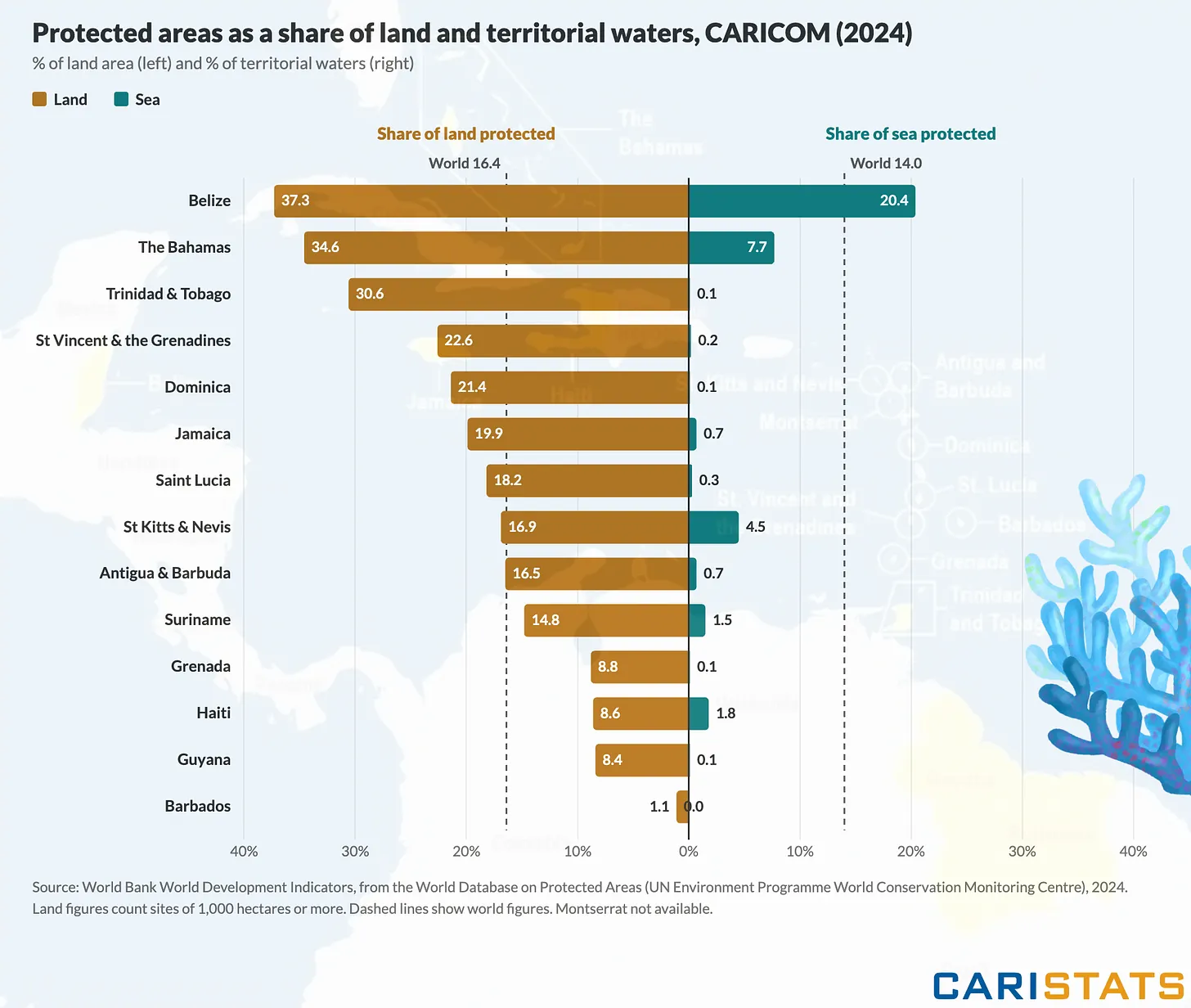
Where Caribbean Conservation Stops at the Shoreline
For decades, conservation efforts across the Caribbean have prioritized the protection of vibrant coral reefs, sprawling marine sanctuaries, and endangered ocean species, drawing global funding, attention, and acclaim for preserving one of the world’s most biodiverse marine ecosystems. But a growing body of on-the-ground research and advocacy highlights a critical gap in regional environmental action: nearly all coordinated conservation work stops abruptly at the Caribbean’s shoreline, leaving coastal ecosystems, inland habitats, and the communities that depend on them disproportionately vulnerable to accelerating climate and human-driven threats.
Coastal mangrove forests, which act as natural storm barriers, carbon sinks, and nurseries for juvenile fish, are among the most impacted by this gap. While mangroves sit at the intersection of land and sea, many marine-focused conservation initiatives do not extend inland to protect these root systems from clearing for coastal development, tourist resorts, and agricultural expansion. Similarly, inland watersheds that feed freshwater into coral reef systems are often unregulated, with runoff from pesticide use and unprocessed sewage spilling into coastal waters, fueling algal blooms that kill reefs already stressed by rising ocean temperatures.
This disconnect between marine and terrestrial conservation also harms local communities, which bear the brunt of increased coastal flooding, erosion, and declining water quality when shoreline and inland ecosystems are left unprotected. Small-scale fishing households, in particular, see their catches drop when mangrove nurseries are destroyed, while low-lying coastal communities face greater risk of deadly storm surges as natural buffer habitats disappear.
Conservation leaders argue that closing this gap requires a fundamental shift in regional environmental strategy, moving beyond siloed marine protection efforts to adopt integrated land-sea conservation frameworks that center the needs of local communities. They note that targeted funding for coastal and inland Caribbean conservation remains drastically underallocated, with less than 15% of regional environmental funding directed to areas above the high tide line, according to recent regional environmental reports. Bridging this divide, they say, is not just critical for protecting the Caribbean’s iconic natural landscapes—it is also essential for ensuring the long-term resilience of the region’s people and economies in the face of accelerating climate change.
-

Three Local Businesses Secure EC$210,000 in Expansion Loans
Three small and medium-sized local businesses in Saint Lucia have successfully secured a combined total of EC$210,000 in targeted expansion loans through the country’s National Development Foundation, a move designed to fuel local economic growth and create new job opportunities for community residents.
The financing, which was distributed after a rigorous vetting process that evaluated business viability, growth potential and community impact, will support three distinct ventures across different sectors of the local economy. None of the recipients received more than EC$80,000 individually, with funding tailored to match each business’s specific expansion blueprints, from upgrading operational equipment to expanding service capacity and opening new physical locations.
Officials from the National Development Foundation noted that the loan program was crafted specifically to address a persistent gap in access to affordable capital for small local entrepreneurs, who often struggle to secure flexible financing from large traditional commercial banks. Unlike standard bank loans, this program offers extended repayment terms and below-market interest rates, designed to reduce the financial burden on growing businesses and set them up for long-term success rather than quick returns.
“Small local businesses are the backbone of our national economy, employing more than half of our country’s private sector workforce and keeping money circulating within local communities,” said a senior spokesperson for the foundation. “This round of funding is just one part of our ongoing commitment to nurturing homegrown entrepreneurship, and we have already seen strong demand from other qualifying businesses looking to expand in the coming months.”
The three recipient businesses span the retail, hospitality and light manufacturing sectors, all of which have been working to recover and grow following recent economic disruptions. Business owners have confirmed that the financing will allow them to hire at least 15 new full-time employees combined within the next six months, a tangible boost to local employment rates.
Local economic analysts point to this type of targeted small business financing as a key driver of inclusive economic growth. By supporting homegrown ventures rather than focusing exclusively on attracting large foreign investment, governments and development institutions can build more resilient local economies that benefit a broader cross-section of the population. The foundation has announced plans to open a new round of loan applications for local entrepreneurs later this quarter, with an additional EC$300,000 earmarked for distribution.
-
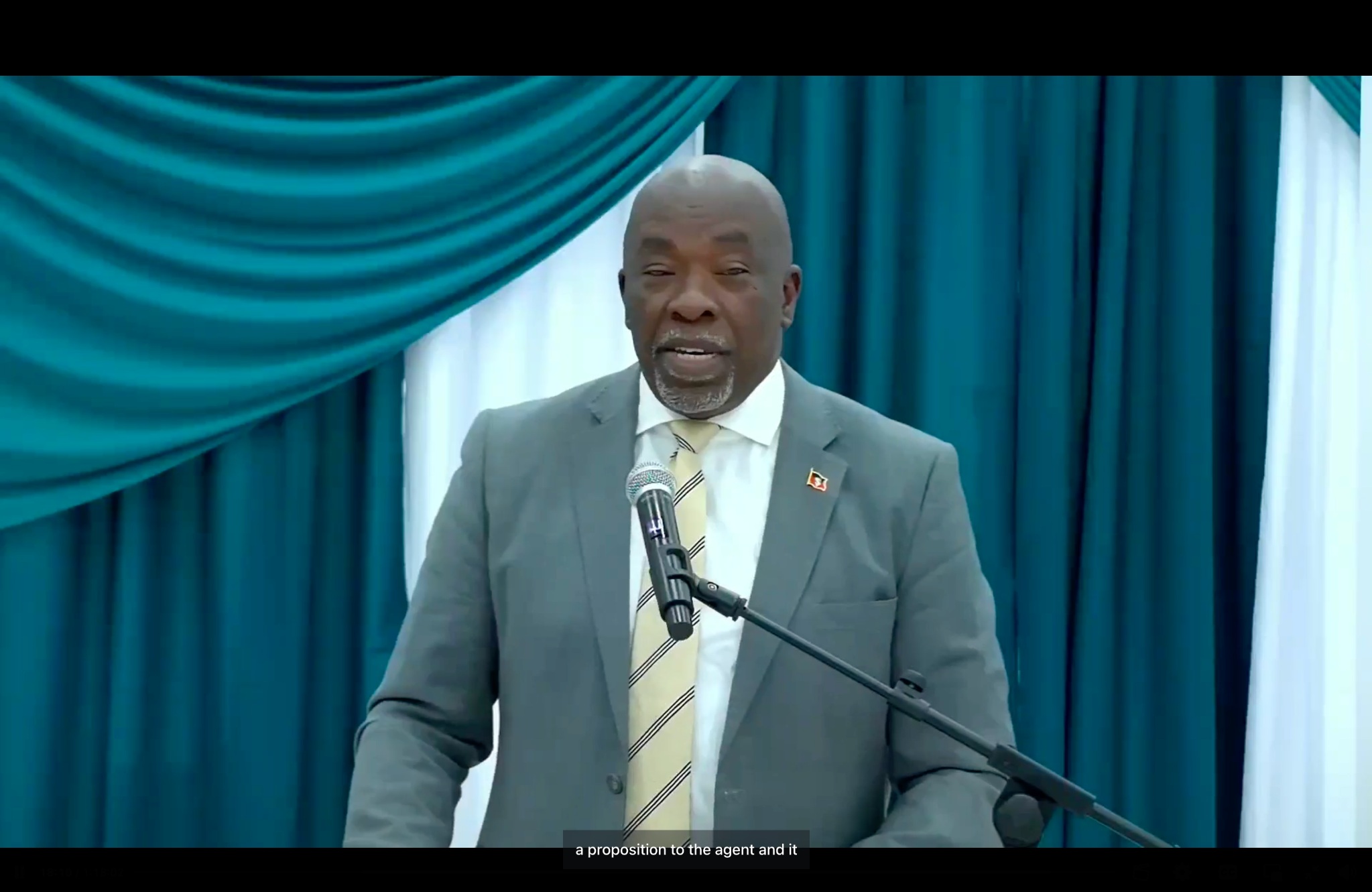
Antigua and Barbuda Plans Government Data Centre With AI Capability
As Caribbean nations increasingly prioritize digital transformation to modernize public administration, Antigua and Barbuda has announced plans to develop a domestically owned data center purpose-built to support advanced artificial intelligence operations, according to Information and Communications Technology Minister Melford Nicholas. The initiative, designed to leverage fragmented public agency data for faster, more informed responses to national challenges, was unveiled during a public lecture on artificial intelligence hosted at the University of the West Indies Five Islands Campus.
Nicholas framed the new data center project as a key infrastructure investment that will be prioritized in the government’s upcoming budget cycle, though he declined to share specific details including the projected construction cost, development timeline, or planned site for the facility. “We have to build, need I say it, our own data center with future AI capability,” Nicholas emphasized during his address.
At the core of the proposal is the creation of a centralized “data lake” that will integrate disconnected datasets from across multiple government departments. This unified repository will give public officials streamlined access to comprehensive records, enabling more robust data analysis to identify systemic challenges and shape evidence-based policy decisions, Nicholas explained.
The project builds on ongoing government efforts to digitize public services across the country, the minister noted. He highlighted the recent transition from paper-based to digital traveler arrival and departure forms as a successful early example of how digital data collection can deliver cross-agency benefits. The digital forms not only simplify the travel process for visitors but also generate actionable data that serves multiple arms of government: tourism officials can now track detailed visitor demographics, length of stay, and accommodation preferences to refine national tourism strategy, while the Ministry of Finance and the Inland Revenue Department use the anonymized travel data to cross-verify hotel tax filings and reduce revenue gaps.
A key driving force behind the government’s push for a local, domestically sourced data infrastructure is the recognized limitation of global commercial AI tools when it comes to delivering accurate, context-specific results for Antigua and Barbuda. Nicholas shared a revealing anecdote to illustrate this gap: when he asked members of the Cabinet to use popular off-the-shelf AI platforms to look up the date of the last execution carried out in Antigua, each tool returned conflicting incorrect results. The root of the issue, he explained, is that critical local historical and administrative data has not been digitized and made available to train these global models, leaving them unable to produce reliable outputs for local use cases.
“If you do not have a sense of what the complete result looks like, how do you know that you have not been given a nicely worded pack of loose nonsense?” Nicholas asked, underscoring the risks of relying on unvetted AI outputs built on incomplete local data.
The minister stressed that the Antiguan and Barbudan government has a core obligation to deliver more accessible, efficient public services to all residents, and that strategic investment in digital infrastructure and AI is a key step toward that goal. However, he offered a cautious note on the scope of AI’s role: the technology will not resolve public administration challenges on its own, and the accuracy and utility of AI outputs will always depend on two critical factors – the quality and completeness of the local data used to train systems, and the critical judgment of the public officials who use those tools to make decisions.
As of the announcement, Nicholas has not confirmed which specific government records will be integrated into the new centralized data system, nor has the government outlined its framework for managing data access, privacy protections, or security protocols for the repository.
-
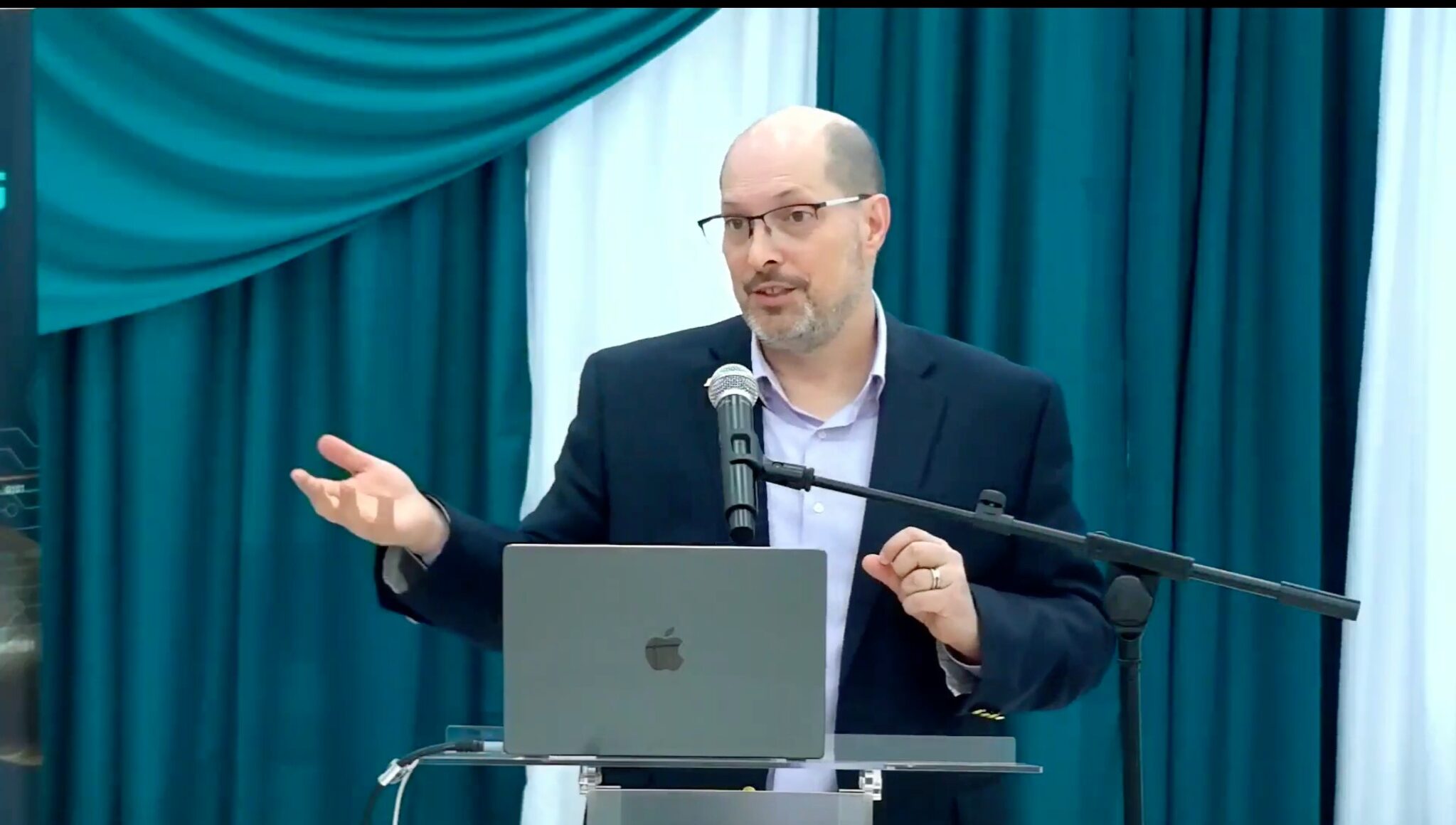
AI Expert Warns UWI Five Islands Against Relying on AI Detectors to Accuse Students
Amid growing debate over artificial intelligence’s disruptive impact on higher education, a leading global education technology expert has issued a critical warning to faculty at the University of the West Indies Five Islands Campus: AI detection tool scores should never be treated as definitive proof that a student cheated on an assignment by using generative AI.
Dr. Joseph South, chief innovation officer at the International Society for Technology in Education (ISTE), shared this assessment during a recent public lecture and Q&A session hosted by the campus. When asked to outline evidence-based best practices for working with AI detection platforms, South cut through common misconceptions with a clear, uncompromising take: “They do not work. There’s no AI detector that’s been proven to work consistently.”
South’s warning was bolstered by an anecdote from UWI Five Islands principal Professor Justin Robinson, who shared a striking example of how unreliable these tools can be. Robinson told attendees that one of his colleagues had submitted an academic paper he wrote back in 2015 — years before the release of the large language models that power today’s mainstream generative AI writing tools — to popular detection platform Turnitin. Despite the paper being entirely human-written years before current AI tools even existed, the tool assigned it an AI-generated likelihood score above 80%.
South acknowledged that detection results can play a limited role in academic integrity processes: if a lecturer already has reasonable concerns about a student’s work, a high score can act as a first prompt for further investigation. But he emphasized that a single detector result should never be used to resolve the question of academic misconduct on its own, given the tools’ well-documented rate of false positives.
The discussion also touched on a deeper, growing rift of mistrust between students and faculty around AI use in academia. When one lecturer asked how universities can rebuild mutual trust when instructors suspect students of over-relying on AI to complete work, and students in turn suspect that lecturers themselves use AI to prepare course materials and assignments, South highlighted a fundamental shift AI has already brought to higher education assessment.
Generative AI makes it possible to produce polished, professional-looking final written work in a fraction of the time it once took a human to write the same assignment. This, South explained, undermines a decades-long core assumption of higher education assessment: that a finished, polished final assignment accurately reflects what a student has learned over the course of a class.
To adapt to this new landscape, South urged post-secondary institutions to fundamentally shift how they evaluate student learning. Instead of focusing the majority of assessment weight on the final written product students turn in at the end of a project or unit, universities should prioritize measuring the incremental work students complete throughout the learning process. This includes tracking how students develop their core arguments, refine their ideas over time, and explain their reasoning step by step.
“I think we need to shift our assessment methods to be more about the process than the product,” South said.
Beyond assessment reform, South also called for higher education communities to host open, transparent discussions about appropriate AI use for both faculty and students. Setting clear, shared expectations for how the technology can and cannot be used across all campus roles, he argued, will help ease the growing suspicion on both sides. More importantly, this open approach will give students the space to learn through practice: to understand when AI can act as a helpful learning tool, and when they need to complete critical thinking and analysis work independently.
-

Pastor Urges Antigua and Barbuda Cabinet to Listen and Support One Another
At the opening of Wednesday’s weekly Cabinet meeting in Antigua and Barbuda, local pastor Ivor Davis delivered a charged meditation calling on government ministers to set aside ego, approach critical national decisions with humble open-mindedness, and foster collaborative support for one another amid the pressures of public office.
Drawing guidance from the biblical text Hebrews 3:7-8, which carries a long-held theological warning against the danger of hardening one’s heart to outside input, Davis framed the daily strains and frustrations of executive leadership not as an excuse to reject advice from colleagues, but as a reason to remain receptive to guidance that can better serve the nation.
He expanded on his message with a reference to Hebrews 3:12, urging cabinet members to anchor their conviction in faith as they navigate the complex, often challenging circumstances that come with governing the twin-island nation. Beyond personal conviction, he emphasized that all communication between ministers should be rooted in respect, designed to build mutual understanding rather than deepen division, and geared toward protecting the collective unity of the governing body.
Davis closed his remarks with a formal prayer, asking for divine wisdom to guide the cabinet’s deliberations, protection for all public officials as they carry out their duties, and that every decision moving forward would center the needs and interests of the Antigua and Barbuda public.
-

“Hornerman,” “Vex Money” Among Caribbean Words Added to Oxford English Dictionary
In a landmark step toward acknowledging the rich linguistic diversity of the Caribbean region, the Oxford English Dictionary (OED) has integrated a wide selection of longstanding Caribbean words and phrases into its latest September 2026 update, formalizing the status of terms that have circulated in family gatherings, Carnival celebrations, and daily community conversations across the area for generations.
Many of the new entries draw directly from the unique cultural and social context of Trinidad and Tobago. Among the most notable additions is *hornerman*, a colloquial term referring to a man who cheats on his partner or pursues a romantic relationship with someone else’s partner. The widely used phrase *to get on*, also added in this update, describes the act of making a dramatic public scene or indulging in an unfiltered emotional outburst. Another widely used term entering the dictionary is *vex money*, a phrase describing a personal emergency fund that a woman hides away for unplanned, unexpected crises. Geographic and familial terms have also been formalized: *Trinbagonian*, the common demonym for a citizen of Trinidad and Tobago, now has an official OED entry, alongside *nana* and *nani*, the regional terms for maternal grandfather and grandmother respectively.
Several new entries shed light on the deep cultural and historical roots of Trinidad and Tobago’s local traditions. *Canboulay*, for example, references 19th-century emancipation festivities that are widely recognized as the direct precursor to the globally famous modern Trinidad Carnival. Folklore is also well represented: *Douen* describes a well-known supernatural child figure from regional folklore, traditionally depicted with feet that face backward, while *jablesse* refers to a dangerous female spirit that is said to disguise itself as an attractive woman to lure men to their deaths.
culinary traditions of the Caribbean have also earned recognition in the update. Two popular local food and drink items now have official dictionary entries: *peanut punch*, a sweet, creamy beverage made from whole peanuts or peanut butter, and *sugar cake*, a dense, sweet coconut confection that is a staple treat in communities across the Caribbean. Beyond Trinidad and Tobago, the update also includes regional terms from Bermuda, such as *bimpert*, a colloquial label for a foolish or silly person.
While all of these terms are being formally added to the OED in 2026, they have been part of everyday Caribbean and Bermudian English speech for well over a century. The integration of these phrases into one of the world’s most authoritative English dictionaries does not create new meaning for the words — instead, it formally documents their established definitions and secures their permanent place in the evolution of the English language, celebrating the unique cultural contributions of Caribbean linguistic communities.
-

LIAT Air Warns of Possible Flight Disruptions as Aircraft Undergoes Maintenance
Caribbean-based regional carrier LIAT Air has issued a formal advisory to passengers alerting them of potential flight schedule adjustments over the next several days, after one of its operating aircraft was pulled from active service to address an unspecified technical fault.
In a public customer notification released on September 24, the Antigua-headquartered airline confirmed that the affected aircraft is currently undergoing targeted maintenance work at its service facility. While repair operations are underway, the carrier confirmed that a limited number of daily flights will require rescheduling or minor routing changes to accommodate the temporary reduction in available aircraft.
Company representatives noted that LIAT Air’s in-house maintenance engineering team is prioritizing both speed and safety in their repair efforts, aiming to return the grounded jet to active revenue service as soon as work is completed. The team has also implemented a series of contingency measures designed to minimize travel disruptions for passengers holding booked tickets in the coming days.
This latest unscheduled maintenance event comes just days after another LIAT Air flight made headlines for a mid-flight emergency. On that occasion, a flight carrying 47 passengers traveling from Georgetown, Guyana to Antigua was forced to execute a safe emergency diversion back to Cheddi Jagan International Airport shortly after departure, after the crew reported an engine-related system fault. All passengers and crew on board that flight disembarked without injury, and no safety incidents were reported during the diversion landing.
As of Thursday’s customer notice, LIAT Air has not confirmed whether the aircraft currently undergoing maintenance is the same jet that was involved in Sunday’s emergency diversion incident.
-

Where Are The Men And Women Of God? Antigua And Barbuda Needs Its Churches To Rise, Unite, And Pray
An open letter from a concerned Antiguan citizen has sparked a public conversation about shifting social norms, cultural preservation, and the role of faith-based institutions in Antigua and Barbuda, calling on religious leaders and believers across denominations to take unified, consistent action to reverse what the writer frames as a growing moral erosion of national life.
The author opens with a pressing question: as secular and harmful worldviews permeate every layer of society, where are the nation’s faith leaders – from pastors and priests to evangelists and dedicated prayer advocates? They argue that mainstream popular culture has increasingly normalized harmful, immoral behaviors, from the open glorification of witchcraft, violent crime, and explicit sexual content in popular music to the mainstream acceptance of what the writer labels deviant alternative lifestyles, ranging from devil worship to non-traditional sexual identities.
Looking back to decades past, the writer paints a picture of a tight-knit, morally grounded society where faith was woven into the fabric of daily public life. Schools across the country held daily morning worship in classrooms, and weekly general assemblies opened with collective prayer before turning to school business. Children were taught clear boundaries of right and wrong from early childhood, and communities were so safe that residents routinely left their front doors unlocked when they left home. Public airwaves once operated under clear unwritten standards: radio never played explicit content describing sexual acts, detailed instructions for committing violent crimes, or promoted occult practices such as the use of amulets, skulls, and duppies (Caribbean supernatural entities) to accumulate wealth. Graphic, explicit music videos featuring this content were unheard of, and profanity was never broadcast over public radio.
The writer also addresses the issue of migration, noting that as a welcoming nation, Antigua and Barbuda has long accepted migrants without prejudice. However, they argue that in the process of adopting outside cultural norms, the nation has failed to protect its own distinct cultural identity and way of life – a shift that has opened the door to the importation of organized criminal activity. The author acknowledges that crime has always existed in the nation, but points to official data showing an alarming share of recent crime is committed by non-nationals. They stress that any person moving to Antigua and Barbuda is expected to abide by local laws, and those who fail to comply should face full legal consequences, including deportation where permitted by law. Echoing the longstanding maxim, “When in Rome, do as the Romans do,” the author emphasizes that all new residents must respect Antiguan social norms and rules.
The writer also highlights the erosion of longstanding cultural traditions around Sundays, the traditional day of rest and worship. In past years, radio stations honored the sanctity of the weekend by playing gospel music or softer, more restrained programming out of reverence. Community bars and other establishments never played loud music that blared through residential neighborhoods until sunrise, disrupting peace and preventing residents from getting adequate rest. This change, the author argues, must be reversed through targeted action.
The core of the letter is a urgent, unifying call to action for all Christian denominations across Antigua and Barbuda – from Baptists and Catholics to Seventh-day Adventists, Anglicans, Moravians, and other groups – to set aside divisions and launch a sustained collective effort. The writer urges churches to organize regular intercessory prayer sessions, going neighborhood by neighborhood to reach community members who have drifted from faith. Rather than holding one-off annual prayer events for show, the author calls on religious leaders to coordinate a large, public gathering at a major national venue such as the Antigua Recreation Ground or Sir Vivian Richards Stadium, after securing government approval, to bring thousands of believers together to pray for national renewal.
This is not a call for empty ceremony, the writer stresses: it is a demand for consistent, visible action. Churches must reclaim their role as a leading force for righteousness, strong families, safe communities, and national peace. If believers truly hold to the power of collective prayer, the writer argues, now is the time to put that faith into practice – not as individual believers, not once a year, but as a unified, consistent movement across the nation.
“Antigua and Barbuda needs its churches to stand up, speak up, and pray up,” the author concludes. “Let us return to God, reclaim our communities, and fight for the soul of our nation.”