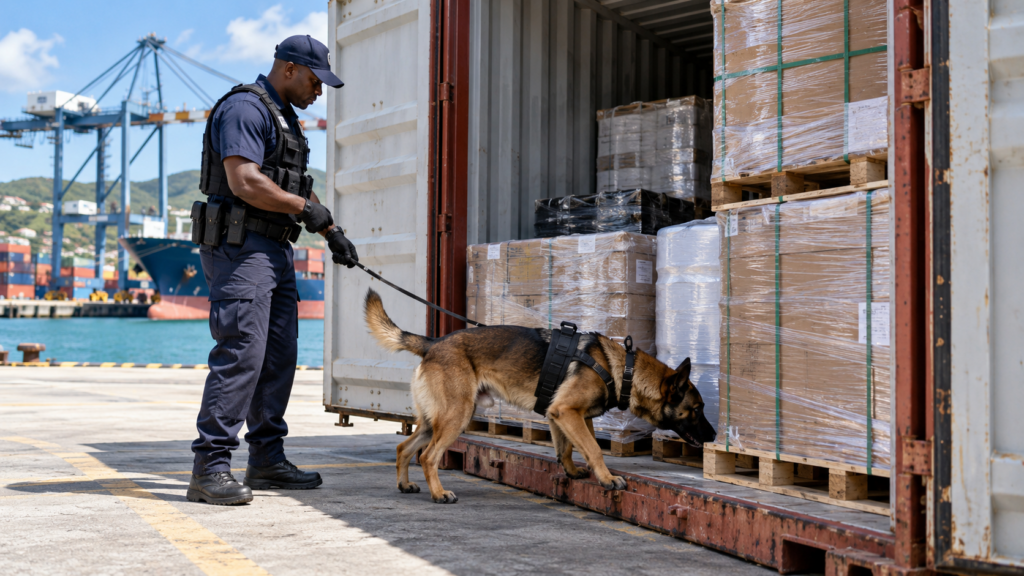
Antigua and Barbuda’s national cabinet has formally approved a plan to introduce specialized detection dogs at the country’s ports, a key new measure in the nation’s ongoing campaign to block illegal firearms and ammunition from crossing its borders. The announcement came following a post-Cabinet briefing led by Maurice Merchant, Director General of Communications, who outlined that the canines will undergo specialized training to assist port security, police and customs teams in identifying concealed firearms, ammunition and undeclared currency being smuggled into the country. As of the briefing, Merchant declined to disclose key details including the number of dogs to be acquired, the total budget allocated for the program, or a firm timeline for deploying the new detection teams. The approval of this initiative comes after extensive consultations between cabinet members and senior leadership from both the national police force and customs department, focused on addressing the growing challenge of gun crime and illicit weapons trafficking into Antigua and Barbuda. During these discussions, cabinet members conducted a thorough questioning of the customs comptroller regarding current protocols for inspecting and clearing incoming shipping containers, which represent a major entry point for contraband. Beyond the detection dog program, the cabinet has issued new directives to strengthen border security protocols: officials have called for heightened inspection scrutiny during the container clearance process, ordered customs teams to accelerate the acquisition of portable scanning devices, and pushed for faster progress to bring the port’s main fixed container scanner into full operational service. Merchant once again did not provide a specific timeline for the delivery or deployment of these new scanning technologies. For national security officials, the addition of detection dogs creates a complementary layer of security for checking cargo and high-risk areas across port facilities, designed to intercept illegal weapons before they can enter domestic circulation and fall into the hands of criminal groups. Merchant emphasized that cabinet views robust border enforcement as an indispensable pillar of its national strategy to combat gun crime, working in tandem with active police operations to seize and recover illegal weapons that have already been smuggled into the country. The urgency of these new measures was underscored by a recent fatal shooting in the community of Bathlodge that claimed the life of 29-year-old Saquania Anthony, leaving two additional people injured. During the cabinet meeting, members extended formal condolences to Anthony’s family and reaffirmed their growing alarm over the frequency of gun-related violence across the nation. In addition to border security reforms, cabinet has also instructed national police forces to ramp up enforcement actions and expand intelligence-led targeted operations to disrupt organized criminal activity that fuels the local gun trade.
标签: Antigua and Barbuda
安提瓜和巴布达
-

Africa-CARICOM Gala Returns for an Elegant Celebration of Fashion, Culture and Cuisine
A one-of-a-kind cultural celebration bridging two continents is set to take place in Antigua and Barbuda this October, as the Antigua and Barbuda Reparations Support Commission (ABRSC) prepares to host its flagship Annual Africa-CARICOM Month Gala Dinner. Scheduled for Saturday, October 3 at the Cortsland Hotel, the evening will blend the timeless elegance of African cultural traditions with the infectious, colorful energy of Caribbean creativity, inviting attendees to explore the deep, centuries-long bonds that connect the two regions.
Starting promptly at 6:30 p.m., the gala has been crafted as an immersive cultural experience, centered on honoring the enduring connections between African and Caribbean communities through four core pillars: cuisine, fashion, music, and shared heritage. Every element of the evening has been curated to highlight the interconnectedness of cultural identities, from the first bite of food to the final musical performance.
Food lovers will have the chance to savor a specially selected menu that draws from the rich culinary tapestries of both Africa and the Caribbean. The all-inclusive dining experience will pair iconic, flavor-forward dishes from each region, allowing guests to trace the movement of culinary traditions across the Atlantic and experience how shared ingredients and techniques have evolved into distinct, complementary food cultures.
Fashion will take a front-and-center role in the celebration, with event organizers encouraging all attendees to dress in their most eye-catching African or Caribbean-inspired attire. The night’s sartorial display is expected to range from bold, geometric traditional African prints and handwoven textiles to sleek, contemporary designs that draw on Caribbean aesthetic sensibilities, creating a visually stunning showcase that doubles as a living celebration of cultural identity. For attendees whose stands out for exceptional creativity and craftsmanship, there will even be awards to recognize standout style.
Completing the cultural experience will be a lineup of live music and live entertainment that reflects the shared artistic roots of African and Caribbean communities. Beyond creating a lively, joyful atmosphere, the performances will underscore both the historical connections between the regions and the ongoing creative exchange that continues to bind their peoples together today.
As part of the official national programming for Africa-CARICOM Month, the annual gala serves a dual purpose: it offers a space to celebrate shared cultural heritage while also emphasizing the critical work of preserving this shared history for future generations. Organizers note that public interest in this year’s event has been exceptionally high, with ticket sales moving much faster than initially projected. Anyone hoping to secure a spot at this unique cultural gathering is encouraged to purchase their tickets as early as possible to avoid missing out.
Tickets are priced at EC$250 per person, covering all food, drink, and entertainment for the evening. Those interested in attending can purchase tickets online through the ticketpulse.events platform, or reserve spots by phone at 464-6377, 764-3651, or 464-2744.
-

LETTER: A 10-Pound Carry-On Allowance Is an Insult to Caribbean Travellers
A frequent leisure traveller has shared a deeply frustrating airport experience that exposes a common, underreported issue plaguing regional air travel: hidden, unreasonably restrictive baggage policies that catch passengers off guard and erode consumer trust.
The traveller, who recently booked a 30-minute regional flight across the Caribbean operated on an ATR aircraft, paid roughly $300 for a ticket that explicitly advertised coverage for one checked bag, one carry-on bag, and one personal item. On its face, the bundled baggage allowance sounded reasonable — that is, until the passenger arrived at the check-in counter and learned of a critical detail omitted from the initial ticketing information: the included carry-on came with a maximum weight limit of 10 pounds, not kilograms, a surprisingly low cap that few casual travellers would anticipate.
The passenger’s carry-on tipped the scales at just 12 pounds, only two pounds over the arbitrary limit. To make the restriction even more absurd, the empty carry-on bag itself weighed approximately eight pounds, meaning the airline’s policy only left roughly four pounds of space for any actual personal belongings. Even a basic outfit consisting of a pair of jeans and walking shoes would eat up the entire remaining weight allowance, leaving no room for essentials like a laptop, a water bottle, medication, or a travel adapter. For the two-pound excess, the traveller was hit with an unexpected $65 overweight fee, a charge equal to more than a fifth of the total cost of the 30-minute flight itself. Though the passenger opted to pay the fee rather than miss their trip, they left the interaction shocked and frustrated by the blatant lack of transparency.
Prior to weighing their own bag, the traveller had observed other passengers forced to dump and rearrange their personal belongings out in the open at the check-in counter, a public spectacle they did not understand until they found themselves in the same situation. The experience of sorting through private items in front of other travellers to avoid unexpected fees is not only deeply embarrassing but also unnecessarily invasive, the passenger noted, and it is entirely avoidable if airlines communicate restrictions clearly upfront.
What made the experience even more unsettling was the post-fee confusion that followed. After paying the $65 charge for the two-pound overweight carry-on, the bag was marked as “excess baggage,” leaving the traveller with unanswered questions. When staff asked which of their bags the traveller considered a “priority,” the passenger was left confused: after paying an extra fee for the overweight carry-on, could the airline still choose to leave the bag behind? If so, what are the official terms for this scenario? Airline customers have a right to clear, straightforward answers to these questions before they are required to hand over extra money and surrender their belongings.
It is understandable that smaller regional aircraft like ATR models have tighter weight and balance restrictions compared to large commercial jets. But that practical limitation does not excuse the lack of transparency, unreasonable weight caps, and undignified treatment of passengers that come with these policies, the traveller argued. Airlines have a responsibility to clearly disclose all baggage weight limits at the point of ticket sale, set allowances that are actually realistic for everyday travel, and ensure passengers are treated with basic dignity throughout the check-in process.
For a 30-minute flight that already costs $300, passengers should not be forced to find out at the airport that their “included” carry-on is functionally useless, unable to hold even a small amount of personal gear without incurring steep surprise fees. This experience highlights a broader need for greater consumer protection and transparency in the regional air travel sector, where hidden fees and opaque policies have become all too common.
-
Tropical Disturbance Now Has 70% Chance of Developing in Atlantic
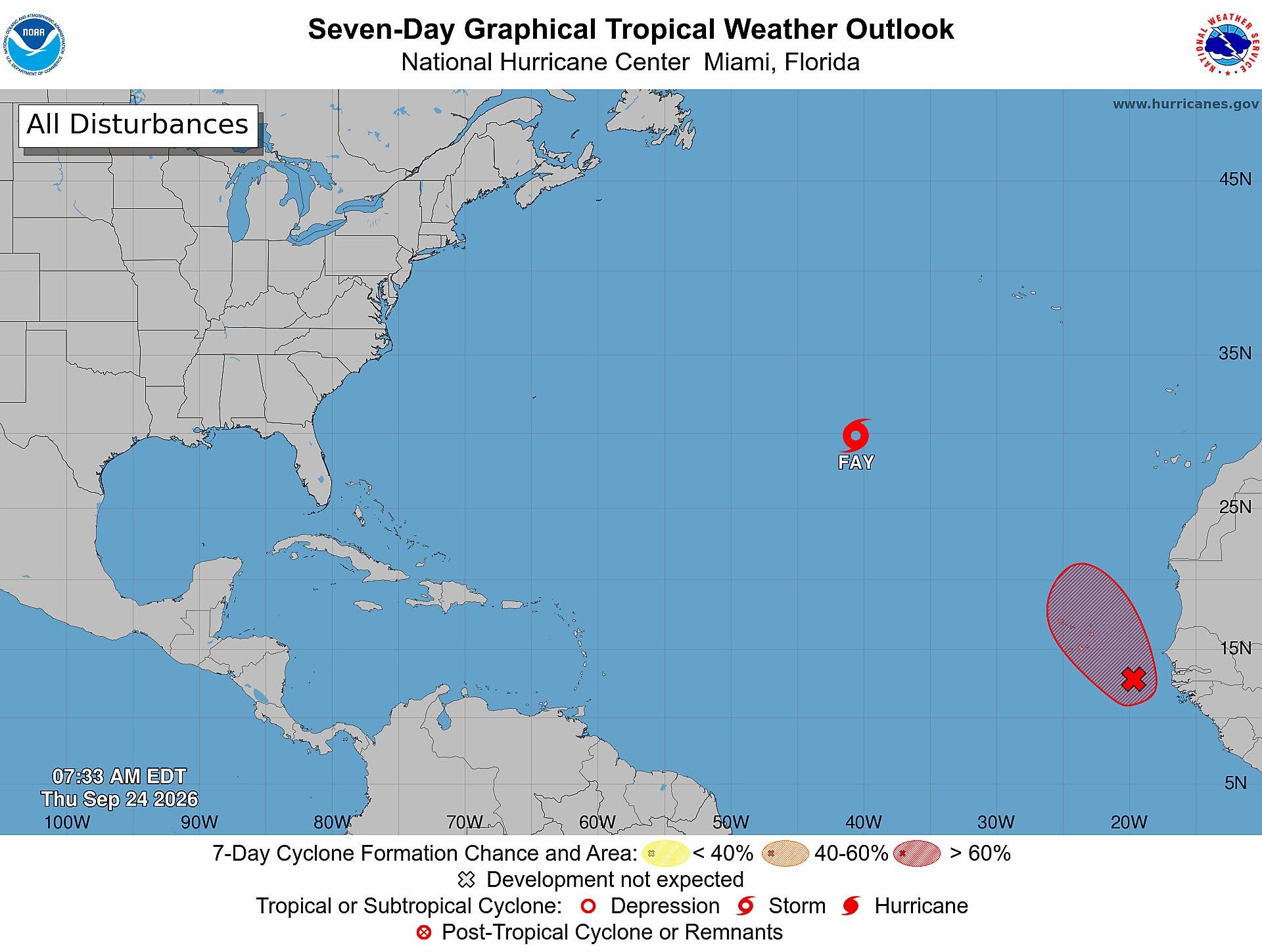
The U.S. National Hurricane Center (NHC) has upgraded its probability forecast for a developing tropical system in the far eastern Atlantic, now estimating a 70% chance that the disturbance will strengthen into either a tropical depression or a named tropical storm. In its official 8 a.m. public update issued Thursday, forecasters outlined that the broad low-pressure system, identified by the designation AL90, is currently positioned several hundred miles south-southeast of the Cabo Verde Islands. At present, the system generates a wide, disorganized spread of showers and convective thunderstorm activity across the surrounding region.
Per NHC forecasting models, AL90 is projected to track northwestward, eventually shifting to a more northward path over the coming days. This trajectory will bring the system close enough to the Cabo Verde Islands to bring unsettled weather to parts of the archipelago by Friday. The 48-hour and seven-day formation probabilities for the system both sit at 70%, marking a 10 percentage point increase from the 60% odds published in the NHC’s 2 a.m. outlook earlier Thursday.
Despite the elevated chance of early formation, NHC forecasters note that unfavorable atmospheric conditions will halt the system’s strengthening by the weekend. Increasing wind shear in the upper levels of the atmosphere is expected to tear the system apart, limiting any further organized development after that point. While the system is not expected to last long, local authorities and residents across the Cabo Verde Islands have been urged to stay updated on the latest forecasts. The disturbance is projected to bring gusty winds, intense downpours, and a heightened risk of flash flooding to portions of the island chain starting as early as Friday.
As of the latest Thursday update, AL90 remains far out in the eastern tropical Atlantic. The NHC’s current assessment confirms that there is no immediate threat to the island nation of Antigua and Barbuda, nor to any areas in the northeastern Caribbean. Forecasters will continue to issue regular updates and track the system’s movement and development closely as it progresses across the Atlantic basin.
-
Halo donates to GN Trust for student-athletes scholarships in UK
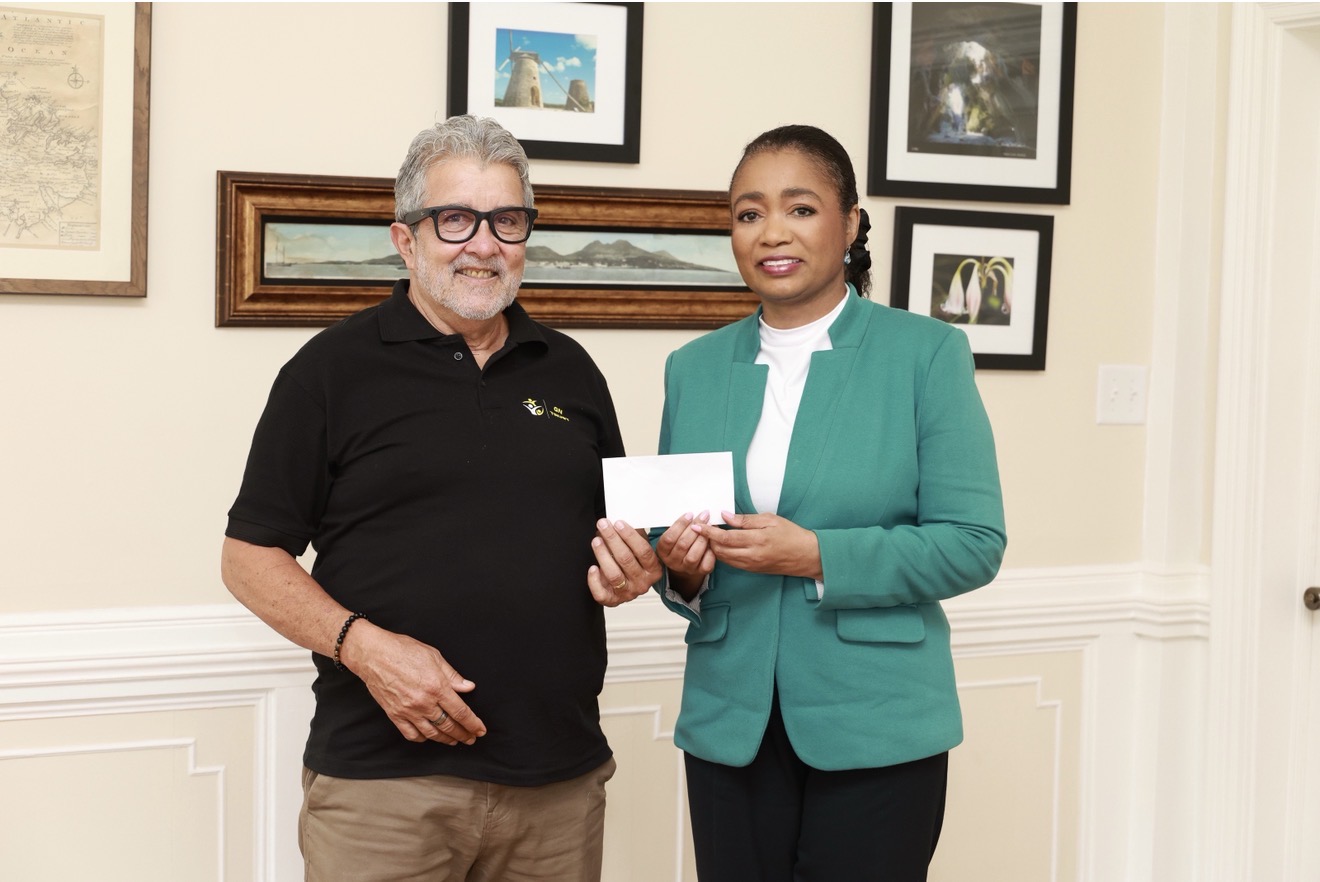
In a formal ceremony held at Government House on Wednesday, the Halo Foundation, led by its founder Her Excellency Lady Sandra Williams, has handed over an $18,000 contribution to Ricky Santos, president of the GN Trust, to expand access to life-changing educational and athletic opportunities for emerging young Antiguan sportspeople.
-

Antigua and Barbuda, Octopus Energy Explore Ways to Cut Electricity Bills and Fuel Imports
Against a backdrop of accelerating climate change and growing global pressure to end fossil fuel dependency, a landmark new partnership between U.K.-based energy innovator Octopus Energy and the government of Antigua and Barbuda has launched to reimagine the Caribbean nation’s energy future. Unveiled during the Global Citizen NOW: Impact Session held alongside New York Climate Week, the collaboration sets out to deliver a cleaner, more affordable, and far more resilient energy system for the country’s residents by leveraging cutting-edge smart renewable technology.
At the core of the joint initiative is a shared goal to cut Antigua and Barbuda’s longstanding reliance on costly imported fossil fuels, by integrating four key clean energy pillars: utility and residential solar power, utility-scale and distributed battery storage, widespread electric vehicle adoption, and flexible, intelligent demand management. What makes the partnership particularly distinct is Octopus Energy’s deep expertise in Virtual Power Plants (VPPs) — a groundbreaking smart energy system that networks decentralized clean energy assets, from rooftop solar panels and home battery banks to electric vehicles, to operate as a single coordinated energy resource that stabilizes grid stress and cuts consumer costs.
Octopus Energy already operates one of the world’s largest VPP networks, connecting and optimizing nearly 500,000 individual energy devices across its existing markets. The combined capacity of this network is roughly equivalent to the output of three full-sized nuclear power stations, demonstrating the scalable impact of the technology the firm will bring to the Caribbean.
For Antigua and Barbuda, this partnership is far more than an energy project: it is a critical step toward delivering the nation’s ambitious climate and energy targets. The country has committed to sourcing 86% of its total electricity from renewable sources and requiring all new car sales to be electric by 2030, goals that require targeted technical expertise and innovative partnership to achieve. As a small island developing state (SIDS), Antigua and Barbuda faces a unique dual crisis: it is on the front lines of climate change impacts including rising sea levels and more intense extreme weather, even as its economy and energy system remain hostage to volatile global fossil fuel markets that keep household energy costs artificially high. Expanding locally generated renewable energy directly addresses both challenges simultaneously, boosting energy security while cutting the country’s carbon footprint.
Gaston Browne, Prime Minister of Antigua and Barbuda, emphasized the stakes of the transition for his nation in remarks following the announcement. “For Small Island Developing States such as Antigua and Barbuda, the transition to renewable energy is both an environmental imperative and an economic necessity,” Browne said. “Our continued dependence on imported fossil fuels exposes our people and businesses to high and volatile energy costs, while climate change poses an existential threat to our development.”
He added that the collaboration with Octopus Energy opens the door to practical, integrated solutions that combine renewable generation, electric mobility, storage, and smart technology to deliver tangible benefits. “Antigua and Barbuda has set an ambitious course towards a cleaner and more sustainable energy future. We welcome partnerships that bring innovation, investment and proven technology to help translate that ambition into measurable benefits for our citizens,” Browne said. “Our objective is clear: to build a modern, resilient and increasingly renewable energy system that delivers cleaner and more affordable power while demonstrating that small island states can lead the global energy transition.”
The partnership will hit its first milestone well ahead of broader energy planning, with Octopus Energy’s electric vehicle division set to supply a fleet of electric vehicles for the 2026 Commonwealth Heads of Government Meeting (CHOGM), which Antigua and Barbuda will host in its capital St. John’s from 1–4 November that year. The event will serve as a live demonstration of the country’s commitment to electric mobility and clean energy for international audiences.
Zoisa North-Bond, CEO of Octopus Energy Generation, noted that the collaboration fills a critical gap for climate-vulnerable small island nations that have long been overlooked in the global clean energy transition. “By partnering with Antigua and Barbuda, we’re exploring how clean power and technology can help address the unique energy challenges small islands face,” North-Bond said. “Our goal is simple: people everywhere should benefit from the lower costs that renewables and smart tech offers. Together, we hope to build an implementable plan to reduce reliance on fossil fuels and build a more resilient energy system.”
Global Citizen, which organized the impact session that brought the two parties together, hailed the partnership as a model for how cross-sector collaboration can deliver tangible progress for SIDS. Michael Sheldrick, Co-Founder and Chief Policy, Impact and Government Relations Officer at Global Citizen, said small island states should never be forced to choose between affordable energy for their residents and climate resilience. “This partnership demonstrates the practical coalition needed to deliver both: government leadership, Octopus Energy’s technology and delivery expertise, and Global Citizen’s ability to convene partners and mobilize action,” Sheldrick said. “Beginning with electric mobility at CHOGM and building towards a smarter, locally powered energy system, Antigua and Barbuda can create a model with relevance far beyond its shores.”
The Antigua and Barbuda partnership is part of Octopus Energy Generation’s broader global expansion strategy, which increasingly prioritizes expanding renewable energy access, attracting clean energy investment, and unlocking economic opportunity in emerging and developing markets. Through the firm’s Power Africa Initiative, Octopus has set a target to catalyze $450 million in new clean energy investment across the African continent. The company is also currently developing Sierra Leone’s first ever utility-scale wind farm on climate-vulnerable Sherbro Island, in partnership with actor and activist Idris Elba’s Elba Hope Foundation. The project will bring reliable, affordable clean power to thousands of currently underserved households and local businesses.
-
Barbuda Secondary School Identified as Safe Tsunami Evacuation Point
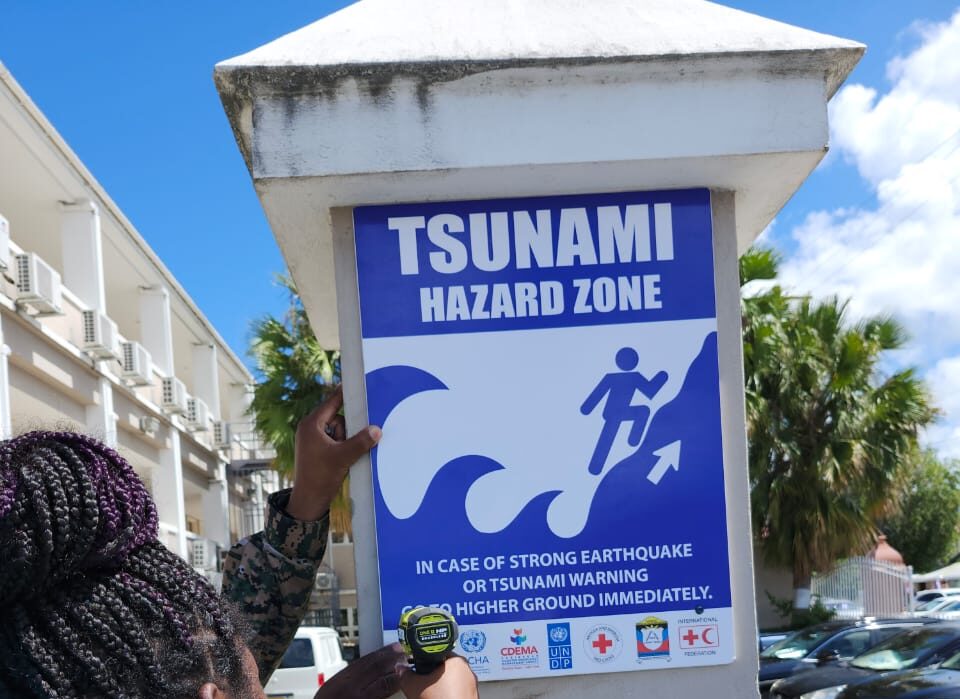
In a milestone for Caribbean coastal safety, the island of Barbuda, part of the twin-island nation of Antigua and Barbuda, has formally achieved recognition as an official Tsunami Ready community, marking the culmination of years of coordinated planning, public engagement, and hazard mapping to protect local residents from tsunami-related threats.
Program representative Christa von Hillebrandt outlined the key technical work that laid the foundation for the designation at Wednesday’s official recognition ceremony. Through targeted hazard modeling conducted by safety experts, Sir McChesney George Secondary School was confirmed to sit outside the highest-risk tsunami inundation zone, qualifying the campus to serve as a designated safe evacuation hub for the island’s population. Von Hillebrandt explained that the modeling work verified that key elevated areas of the island would remain above projected flood levels in the tsunami scenario researchers analyzed, and these findings were used to create a public evacuation map that clearly guides residents to safe locations when warnings are issued.
The secondary school was also put to the test during a full community evacuation drill held as part of the certification process. During the exercise, participants initially set out on foot for the more distant safe location at Louis Hill, but organizers confirmed that the school was a sufficient and closer safe option, allowing the drill to validate the campus as a practical, accessible evacuation point.
Beyond infrastructure and mapping, the Tsunami Ready designation required Barbuda to complete a range of preparedness requirements, including installing clear directional evacuation signage, rolling out public education campaigns, and training community members on emergency response. Local students took a leading role in outreach efforts: students from Sir McChesney George Secondary School and nearby Holy Trinity Primary School participated in hands-on preparedness activities, and even collaborated to create an original music video designed to educate the broader community about core tsunami safety rules.
Local officials have emphasized that the formal recognition is not an endpoint for safety work, but a starting point for ongoing preparedness. Residents are being urged to memorize their assigned evacuation routes and regularly review response protocols for tsunami warnings to ensure they can act quickly when an emergency arises. Barbuda Council Chairman John Mussington announced that the island will fully participate in the regional Carib Wave tsunami exercise scheduled for next March, a large-scale training activity that will allow local emergency teams to test their response plans alongside other Caribbean nations and refine protocols ahead of any real-world event.
-

Sir Curtly Ambrose: Falcons Always Believed They Could Win CPL Championship
The 2024 Caribbean Premier League (CPL) has crowned a first-time champion, as the Antigua and Barbuda Falcons pulled off one of the most compelling underdog stories in the tournament’s recent history to secure their maiden title. The historic win came Sunday at Barbados’ iconic Kensington Oval, where the Falcons chased down the Jamaica Kingsmen’s first-innings total of 170 to clinch an eight-wicket victory with a full 20 overs remaining. Leading the charge to the title was wicket-batsman Amir Jangoo, who delivered a match-winning knock of an unbeaten 57 runs off just 34 deliveries to anchor the winning chase.
For the franchise’s assistant coach and legendary fast-bowling consultant Sir Curtly Ambrose, this breakthrough victory was not the shocking upset that many cricket pundits and fans labeled it. Speaking after the final, the West Indian bowling great revealed that from the opening day of the tournament, the entire playing squad and coaching staff never doubted their ability to compete for the crown, even when almost no outside observers gave the team a shot at advancing past the group stage, let alone lifting the trophy.
“When we started the CPL tournament, not many gave us a chance to qualify, let alone win the championship,” Ambrose noted. “We knew that we had a great team that is capable of not only winning games, but winning the championship.”
Ambrose added that the widespread underestimation of the Falcons actually became an unexpected asset for the side. Lacking the heavy outside expectations that weigh on more favored tournament contenders, the team was able to play loose, free-flowing cricket without the pressure of pre-tournament hype. He also emphasized that much of the team’s success stems from the culture built by head coach Paul Nixon, who prioritized a relaxed, supportive dressing room environment that encouraged players to work hard, play as a cohesive unit, and trust their teammates every step of the way.
“Coach Nixon always stressed that: no pressure. We work hard, we play together as a team, we enjoy what we do and we reap the benefits,” Ambrose said.
The title win also delivered the perfect birthday gift for Ambrose, who celebrated his 63rd birthday on Monday – just 24 hours after his side secured the historic championship victory. For the Antigua and Barbuda franchise, this win cements a remarkable turnaround from tournament underdogs to CPL champions, and stands as a testament to the power of team cohesion and self-belief in high-stakes cricket competition.
-
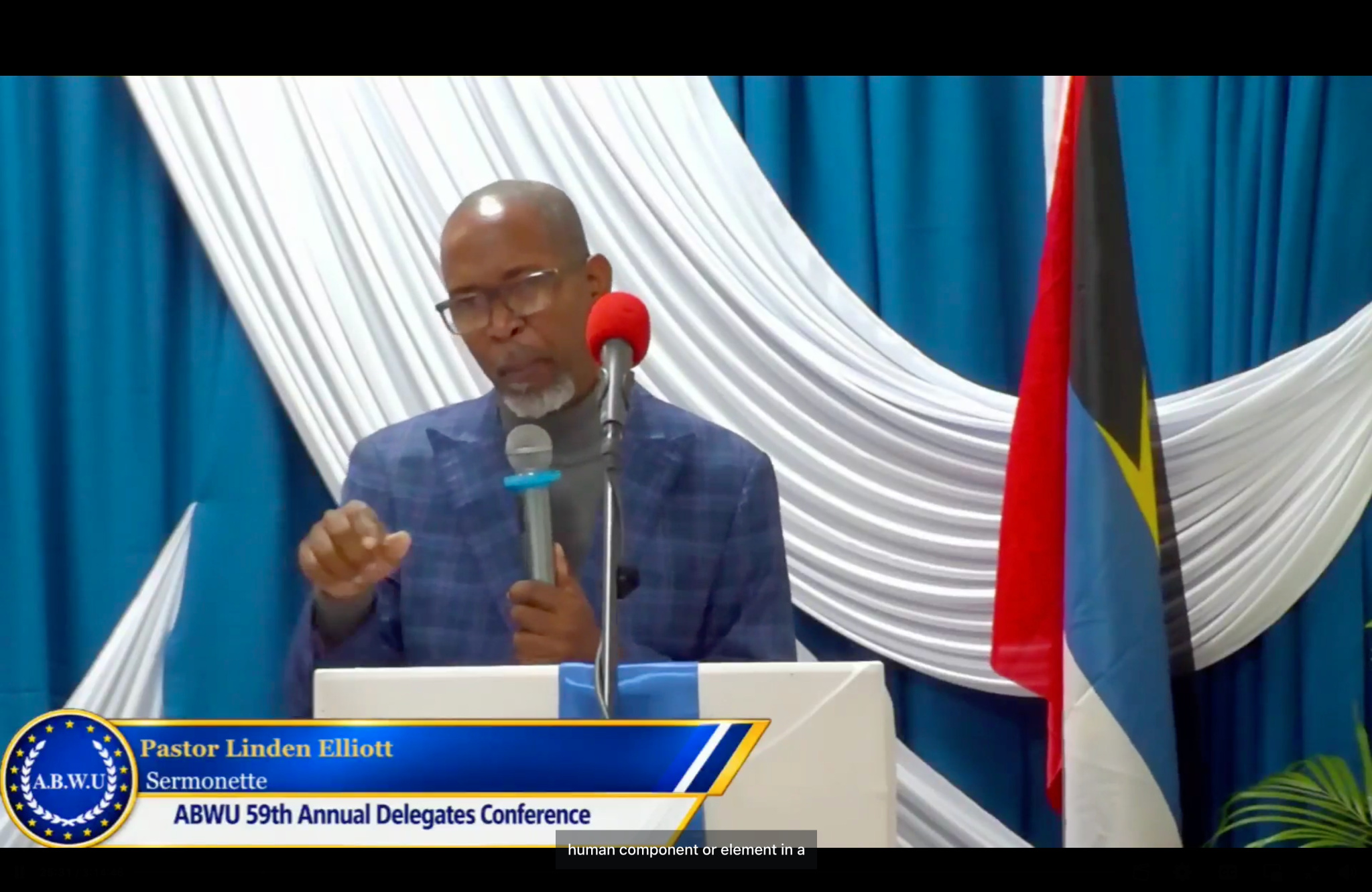
Pastor Criticises Union Executives Enjoying Luxury While Members Struggle
At the opening of the Antigua and Barbuda Workers’ Union’s 59th Annual Delegates Conference, Pastor Linden Elliott delivered a pointed sermonette that has drawn attention to long-simmering concerns over leadership priorities within organized labor. In his remarks centered on the theme “People Versus Policy,” Elliott launched sharp criticism toward union executives who indulge in five-star hotel stays and generous per diem allowances while sidelining the everyday needs of rank-and-file workers who pay union dues to sustain the organization.
Elliott argued that the core mandate of any labor union is inherently rooted in service to the workers it represents, not personal comfort or status gains for those in leadership positions. He emphasized that every policy decision, budget allocation, and leadership practice must be designed to lift up ordinary working people, not cater to the privileges of top officials. “It’s the people’s dues that sustain the union,” he reminded delegates, stressing that working members must always hold the top spot in union priorities, rather than being pushed aside for executive benefits.
The pastor pushed back against the growing trend of administrative and policy-centric union cultures, acknowledging that formal rules and institutional agreements are necessary for functional organizing, but warning against enforcing them in ways that leave vulnerable workers struggling to make ends meet. He called on union leadership to embrace a model of servant leadership, a framework that prioritizes accessibility, humility, and active listening to member concerns. Elliott insisted that rank-and-file workers must be able to approach union administrators with their grievances without being dismissed or dismissed as unimportant, pushing back against the arrogance that can creep into leadership roles when leaders lose touch with their base.
He also issued a clear warning against viewing union office as a pathway to personal prestige or comfortable living, noting that positions of leadership in organized labor carry non-negotiable responsibilities: to protect worker rights, advance economic fairness, and deliver meaningful, responsive representation for every member. In a final push for inclusive practice, Elliott called for equal treatment of all workers regardless of their social background or political alignment, repeating the resounding mantra: “a worker is a worker.”
The 59th Annual Delegates Conference itself is convened under the broader banner “Celebrating 59 Years of Stewardship: Embracing the Changes and Preparing for the Future World of Work,” making Elliott’s call for refocusing on member needs a particularly timely intervention as the union charts its path forward amid shifting global labor dynamics. -
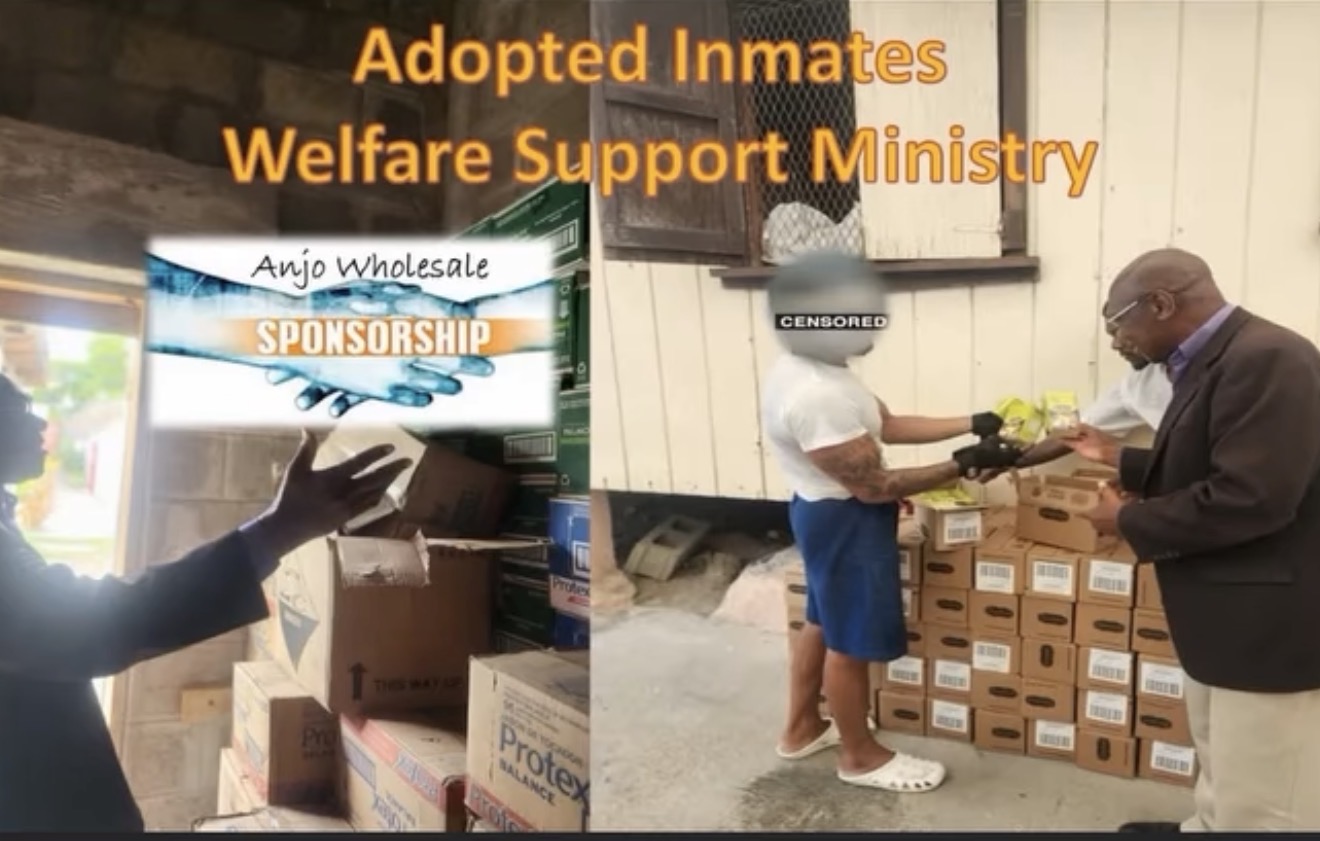
Christian Ministries Center Adopts 21 Inmates for Prayer and Welfare Support
In a notable act of community outreach and restorative support, the Christian Ministries Center has formally launched a targeted initiative that will provide ongoing spiritual care and practical welfare assistance to 21 current inmates at a regional correctional facility. The program, which was months in development, organizers say, fills a critical gap in support systems for incarcerated people, who often face limited access to consistent spiritual guidance and basic material resources during their time in detention.
Lead representatives from the Christian Ministries Center explained that the adoption model is designed to create long-term, individualized connections between the organization’s volunteer network and each of the 21 participating inmates. Beyond regular group and one-on-one prayer sessions tailored to the facility’s security guidelines, the program will also coordinate welfare support, including access to reading materials, personal care items, and connection services for inmates looking to maintain or rebuild ties with their family members on the outside.
Many criminal justice reform advocates have highlighted the importance of such community-led programs, noting that consistent social and spiritual support during incarceration correlates with lower rates of recidivism after release. Organizers added that the initiative is not focused solely on meeting needs during detention; they also plan to work with participating inmates to prepare for reentry into society, connecting them with job placement resources and housing support once their sentences are complete. The Christian Ministries Center has also indicated that it may expand the program to include more inmates in the coming year if the initial pilot phase proves successful.