标签: Antigua and Barbuda

安提瓜和巴布达

  • Antigua and Barbuda Continues Discussions with the United States over deportees

    Antigua and Barbuda Continues Discussions with the United States over deportees

    Negotiations between the small Caribbean twin-island nation of Antigua and Barbuda and the United States over a planned deportee resettlement agreement have hit an impasse, driven by a sharp divide over how many deportees the Caribbean country would be required to take in, according to Prime Minister Gaston Browne.

    During his regular weekend radio broadcast, Browne explained that talks have ground to a halt because the volume of deportees Washington has proposed far outstrips the maximum capacity his administration has deemed sustainable for the small nation. Antigua and Barbuda has only offered to accept around 10 deportees per year, yet U.S. negotiators have pushed for a monthly quota of roughly 10 people, a 12-fold increase over the Caribbean country’s proposal.

    Browne emphasized that taking in a far larger cohort of deportees than Antigua and Barbuda can handle would place an unjustifiable strain on the nation’s limited resources and raise tangible risks to public safety. He revealed that at an earlier stage of negotiations, U.S. officials requested the country accept up to 120 deportees, with no promises of financial support or pre-transfer background vetting, a proposal he immediately rejected as completely unacceptable. The prime minister challenged whether any accountable national government could back an agreement that fails to properly defend its core national interests.

    Browne’s public remarks come on the heels of an announcement from neighboring St. Kitts and Nevis, which confirmed the arrival of its first group of Caribbean-born deportees as part of a U.S.-led third-country deportation program. The initiative has been circulated for discussion among multiple member states of the Caribbean Community (CARICOM), with Dominica, Grenada and Guyana also named as potential destination countries for transfers.

    U.S. officials have publicly claimed that the individuals eligible for transfer do not include people convicted of serious crimes, instead limited to those facing removal for immigration violations and other non-felony offenses. Still, Browne has remained firm that Antigua and Barbuda will not agree to accept any deportees under the program without full, comprehensive background checks for every individual.

    As a small, low-population nation with limited law enforcement and social infrastructure, Antigua and Barbuda is uniquely vulnerable to security risks, Browne argued. “We’re small, powerless and very vulnerable,” he said, noting that even one individual with a hidden violent criminal history could cause disproportionate harm to a country of the nation’s size.

    Beyond strict vetting requirements, the Antigua and Barbuda government is also pushing for guarantees that all deportees will arrive with valid, official travel documentation. Browne pointed out that a number of migrants destroy their identity papers after entering the United States, which creates major administrative hurdles to confirming an individual’s nationality and verifying their legal status.

    The government has additionally requested dedicated financial assistance from the United States to cover the costs of supporting, housing and integrating any deportees Antigua and Barbuda agrees to accept. As negotiations between the two sides continue, Browne reaffirmed that protecting the country’s domestic security remains the administration’s top non-negotiable priority.

  • Uncertainties ahead, as 2026 Atlantic Hurricane Season starts in El Niño year

    Uncertainties ahead, as 2026 Atlantic Hurricane Season starts in El Niño year

    As the Caribbean region gears up for the 2026 Atlantic Hurricane Season, leaders and climate experts are sounding a clear note of caution: the fate of the region’s critical fisheries and aquaculture sector will not be determined by the storms themselves, but by the level of advance preparation and post-disaster response that stakeholders put in place. Unlike previous hurricane cycles, this year brings an added layer of complexity: the overlapping impacts of El Niño, which carry both short-term risks and long-term consequences for marine resources and fishing communities across the Caribbean.

    Dr. Marc Williams, Executive Director of the Caribbean Regional Fisheries Mechanism (CRFM), recently outlined the persistent threats facing the $10 billion regional fishing industry. Year after year, hurricane activity inflicts widespread damage that ripples across the entire sector: fishing vessels are wrecked, coastal aquaculture farms are swept away, fish landing sites are destroyed, critical harvesting equipment is lost, and fragile marine ecosystems that underpin catches are left damaged. These disruptions do not stay confined to the water: they directly threaten regional food security, erase the livelihoods of hundreds of thousands of small-scale fishers, drag down national coastal economies, and erode the well-being of coastal communities that depend on fishing for survival.

    Despite these well-documented vulnerabilities, Dr. Williams highlighted that the Caribbean fisheries and aquaculture community has repeatedly shown extraordinary resilience, creative innovation, and unwavering determination to rebuild and adapt in the wake of repeated climate shocks. The core takeaway from his remarks is a straightforward but urgent one: proactive preparedness saves lives, protects livelihoods, and cuts the overall cost of recovery after a disaster hits. Moving forward, he emphasized that preparedness must be embedded as a permanent, non-negotiable pillar of all regional and national fisheries and aquaculture development strategies, rather than an afterthought implemented only when a storm is approaching.

    El Niño, the climate pattern defined by anomalous warming of eastern and central Pacific Ocean waters that reshapes global weather systems, presents a paradox for the 2026 Atlantic hurricane season. On one hand, the prevailing effect of El Niño is increased wind shear across the Atlantic Basin, which typically suppresses the formation and strengthening of tropical storms and hurricanes. But this potential benefit comes with steep costs for Caribbean marine systems: El Niño-driven warmer average sea surface temperatures put extreme thermal stress on coral reefs, which are already struggling with bleaching and degradation from decades of rising global ocean temperatures. As healthy coral reefs are the foundation of most Caribbean fish populations, widespread coral damage would inevitably reduce long-term fish catches and destabilize the entire marine food web.

    The U.S. National Oceanic and Atmospheric Administration (NOAA) echoes this contradictory assessment, noting that El Niño is truly a double-edged sword for Atlantic hurricane activity. While El Niño conditions generally suppress tropical storm formation, the concurrent warmer ocean temperatures and calm low-wind conditions can actually fuel the rapid intensification of any storms that do manage to form. NOAA National Weather Service Director Ken Graham stressed that even with El Niño’s suppressing influence, there is no way to predict with certainty how the 2026 season will unfold. It only takes one major hurricane making landfall to turn a quiet season into a catastrophic one, which is why updating and implementing hurricane preparedness plans well before the season starts is non-negotiable, Graham said.

    To address these overlapping risks, Dr. Williams outlined seven key priority actions that regional governments, industry stakeholders, and development partners must advance immediately. First, governments must invest in strengthening early warning systems that give fishers and aquaculture operators enough advance notice of approaching storms to secure their assets. Second, the sector must scale up adoption of climate-smart fishing and farming practices that reduce vulnerability to extreme weather. Third, regional bodies must enhance fisheries safety protocols and improve the accuracy of marine forecasting for fishing grounds. Fourth, targeted investment is needed to build climate-resilient infrastructure across the entire fisheries value chain, from landing sites to storage facilities. Fifth, agencies at the local, national, and regional levels must strengthen coordination to avoid gaps in preparedness and response. Sixth, interventions must center the needs of marginalized groups that are most vulnerable to climate shocks: small-scale fishers, women working in the fisheries sector, young fishing industry workers, and rural coastal households. Finally, communities need to be equipped with the practical tools, local knowledge, appropriate technology, and ongoing support systems to adapt to changing conditions.

    “Let us enter this hurricane season vigilant, united, and fully prepared,” Dr. Williams urged stakeholders across the region. For stakeholders looking to deepen their understanding of disaster preparedness for Caribbean fisheries, a recent public webinar hosted by the CARICOM Secretariat in partnership with CRFM focused specifically on protecting fisheries assets during natural disasters, and is available for on-demand viewing now.

  • Loan Officer Takes Credit Union to Industrial Court Over Oppressive Dismissal

    Loan Officer Takes Credit Union to Industrial Court Over Oppressive Dismissal

    A labor dispute unfolding in Antigua and Barbuda has drawn sharp public attention over workplace due process and employer treatment of staff facing unexpected medical crises, after a former loan officer brought her former employer, Community First Co-Operative Credit Union, before the Industrial Court over what she calls a wrongful and unjust dismissal.

  • Antigua and Barbuda’s Abigail Piper Takes Financial Literacy Message to Miss Caribbean Universe

    Antigua and Barbuda’s Abigail Piper Takes Financial Literacy Message to Miss Caribbean Universe

    As the countdown to the 2026 Miss Caribbean Universe pageant begins, one name carries the hopes and pride of the entire Antigua and Barbuda nation: 27-year-old Abigail Piper, selected to represent the dual-island nation at the June 13 competition hosted in St. Thomas, U.S. Virgin Islands. With more than ten years of pageantry experience under her belt, a stellar academic record, a thriving career in the performing arts, and a deep commitment to community uplift, Piper enters the contest as one of its most well-rounded contenders.

    Piper’s pageantry journey traces back to 2014, when she claimed first runner-up honors at the Christ the King High School Queen of the Forms Pageant, marking the start of a years-long streak of impressive placements. She notched her first major pageant win in 2016, taking home the title of Teen Splash, and in more recent competitions, she secured second runner-up at the Antigua Labour Queen Pageant and first runner-up at Antigua’s Queen of Carnival Pageant. These results have honed the stage presence and competitive grit that she will bring to the regional stage in St. Thomas.

    Beyond the pageant runway, Piper has built a remarkable academic profile. As a student at Christ the King High School, she passed 14 core subjects, earning top Grade One marks in 11 of them. She went on to graduate with honors from Antigua State College, where she completed an associate degree in entrepreneurship, before moving on to Rutgers University. In 2022, she graduated with distinction from Rutgers with a Bachelor of Science degree in accounting, and she is now working toward her ultimate professional goal of earning certification as a Certified Public Accountant.

    Piper’s talents extend far beyond the classroom and the pageant stage, with deep roots in Antigua and Barbuda’s performing arts scene. She has appeared in multiple productions hosted by the Antigua Film Academy, performs regularly as a member of the local band de Alphas, and previously represented the nation as a member of its national cheerleading team. Her contributions to the country’s cultural landscape were formally recognized in 2017, when she was honored with a National Cultural Award. Piper says that her years of training in music, dance and drama have been foundational, helping her cultivate the confidence, self-discipline and commanding stage presence that set top pageant contestants apart.

    What truly sets Piper apart, however, is her commitment to lifting up the next generation through community outreach. Focused on youth empowerment via education and personal development, she has made expanding access to financial literacy for young people a core personal mission. Earlier this year, she completed a tour of primary schools across Antigua’s St. John’s Rural North constituency, where she spoke to students about actionable skills including time management, academic focus, and foundational money management. To complement these conversations, she donated a collection of child-friendly financial literacy books to local school libraries, leaving a lasting resource for future students.

    As she prepares to compete for the Miss Caribbean Universe 2026 crown at St. Thomas’ Ruth E. Thomas Auditorium in Charlotte Amalie, Piper says she hopes her journey sends a message to aspiring young people across the Caribbean: that with consistent determination, anyone can pursue their dreams, lean into their unique talents, and use their knowledge and platform to lift up their local communities.

  • WATCH: Urban Renewal Minister Clears Sidewalk Obstruction on Popeshead Street

    WATCH: Urban Renewal Minister Clears Sidewalk Obstruction on Popeshead Street

    A long-standing pedestrian hazard on Popeshead Street has been eliminated after an unpermitted set of steps that encroached on public walkway space was torn down, clearing the path for foot traffic and eliminating the dangerous need for pedestrians to step into active vehicle lanes. Local official Turner, who has long pushed for a fix to the issue, noted that anyone familiar with the busy corridor is well aware of the persistent problem the obstruction created. For years, the jutting steps narrowed the usable sidewalk dramatically, forcing all types of travelers – from commuters heading into the nearby St. John’s neighborhood to customers visiting local commercial establishments – to divert their path off the walkway and into moving traffic. This put walkers, including people with mobility devices, parents with strollers, and children, at constant risk of collisions with passing vehicles. Now, following the completion of the demolition work, that risk is gone. “Not anymore,” Turner confirmed in a statement shortly after the steps were fully removed. The project was launched specifically to upgrade pedestrian accessibility and overall street safety along the busy Popeshead Street corridor. Turner emphasized that this demolition work is far more than a minor construction job; it serves as a clear example of how small, targeted public space improvements can deliver tangible, meaningful benefits to the community that improve daily life for everyone who uses the street.

  • Officials urge all to Prepare for El Niño, Above average temperatures forecast nearly everywhere for June to August

    Officials urge all to Prepare for El Niño, Above average temperatures forecast nearly everywhere for June to August

    The World Meteorological Organization has formally issued an authoritative alert that El Niño conditions are currently developing in the tropical Pacific, driven by record-warm ocean temperatures, and the climate pattern is projected to reshape global temperature and precipitation patterns while raising the risk of catastrophic extreme weather across multiple regions in the coming months.

    In its latest consensus-driven El Niño/La Niña Update, produced in partnership with the International Research Institute for Climate and Society (IRI), WMO estimates an 80% probability that a fully developed El Niño event will be in place between June and August 2026, with odds climbing to near or above 90% that the event will persist through at least November of that year. While there remains limited uncertainty around the exact timing and peak intensity of the event, the majority of leading global climate prediction models indicate the El Niño will reach at least moderate strength, with a notable possibility of it strengthening into a powerful event.

    WMO’s regular ENSO updates are widely recognized as the gold standard of climate guidance for national governments, humanitarian response organizations, and climate-sensitive economic sectors including agriculture, public health, energy production, and freshwater management. The assessments draw on a collaborative consensus of output from models run by WMO’s Global Producing Centres, paired with input from expert climate scientists and hydrologists from National Meteorological and Hydrological Services and leading climate research centers across every inhabited continent.

    United Nations Secretary-General António Guterres emphasized the urgency of the alert in a recent video address, noting that the science leaves no room for doubt: El Niño is imminent, with a 90% certainty of development in the coming months, and the world must treat this as the critical climate warning it represents. “El Niño conditions will pour fuel on the fire of a warming world. Impacts will hit even harder, travel even farther, and cross borders with devastating speed,” Guterres said. He called for commensurate climate action to meet the scale of the crisis, including ending global dependence on fossil fuels, speeding the transition to renewable energy sources, prioritizing protection for the world’s most vulnerable communities, and expanding access to early warning systems for all nations.

    On-the-ground observations collected through WMO’s global monitoring network show that between late April and mid-May, sea-surface temperatures in the central-eastern Equatorial Pacific – the core reference region for ENSO monitoring – were already approaching the official threshold for El Niño conditions. These rising surface temperature anomalies are being fueled by unusually warm water below the ocean surface, where temperatures are more than 6°C above the long-term average, creating a large reservoir of excess heat that will continue to drive surface warming in the coming months. Complementing these ocean observations, the Southern Oscillation Index, which tracks the atmospheric component of the ENSO cycle, also aligns with the pattern of developing El Niño conditions.

    WMO Secretary-General Celeste Saulo stressed that the global community must begin preparations immediately for a potentially strong El Niño event, which will worsen existing risks of both severe drought and extreme heavy rainfall, while also increasing the likelihood of dangerous heatwaves on land and in marine ecosystems. Saulo recalled that the most recent 2023-2024 El Niño event ranked among the five strongest ever recorded, and was a key contributing factor to the record-breaking global temperatures observed in 2024. “The WMO community will be carefully monitoring conditions in the coming months to inform decision-making by governments, humanitarian agencies and climate-sensitive sectors. Advance seasonal forecasts and early warnings are vital to save lives and cushion the impact on our economies and our communities,” Saulo added.

    To support more targeted regional planning, WMO has also released a complementary Global Seasonal Climate Update that incorporates data on other key climate drivers alongside El Niño, enabling more geographically refined seasonal outlooks.

    El Niño and its opposite phase La Niña make up the El Niño-Southern Oscillation (ENSO), one of the most impactful naturally occurring climate patterns on the planet. El Niño is defined by persistent above-average ocean surface temperatures across the central and eastern Equatorial Pacific, and typically occurs every two to seven years, with individual events lasting roughly nine to 12 months. Most El Niño events begin developing between March and June, reach peak intensity between November and February, and their impact on global average temperatures is usually most pronounced in the second year after onset.

    The impacts of any El Niño event vary based on its strength, duration, time of onset, and how it interacts with other ongoing climate patterns such as the Indian Ocean Dipole. Not all global regions experience ENSO-related impacts, and impacts can even vary within a single affected region. While climate change has not been proven to increase the frequency or intensity of El Niño events itself, it does amplify the severity of El Niño-related impacts: a warmer baseline ocean and atmosphere holds more energy and moisture, creating conditions that worsen extreme weather events including heatwaves and heavy downpours. WMO does not use the non-standardized term “super El Niño” for official operational classifications.

    While every El Niño has unique characteristics, the pattern is typically associated with predictable regional precipitation shifts: increased rainfall across parts of southern South America, the southern United States, portions of the Horn of Africa, and central Asia, and drier-than-average conditions across Central America, northern South America, the Caribbean, Australia, Indonesia, and parts of southern Asia. During the Northern Hemisphere summer, El Niño’s warm ocean waters boost hurricane activity in the central and eastern Pacific while suppressing hurricane formation in the Atlantic Basin, which has led the U.S. National Oceanic and Atmospheric Administration to forecast a below-normal Atlantic hurricane season for the year.

    Regional climate outlook forums coordinated by WMO have already released early outlooks for high-risk regions. The Greater Horn of Africa Climate Outlook Forum projects a high probability of below-average rainfall across most of the northern Greater Horn of Africa during the critical June to September growing season. The South Asian Climate Outlook Forum forecasts below-average monsoon rainfall across South Asia, while the Central America Climate Outlook Forum expects warmer and drier conditions for the Central American region.

    WMO’s complementary Global Seasonal Climate Update accounts for ENSO and other major climate drivers, including the North Atlantic Oscillation, Southern Annular Mode, and the Indian Ocean Dipole, which is closely correlated with Pacific El Niño conditions and is expected to enter a positive phase that will peak at the same time as the intensifying El Niño. For the June to August period, forecasts show above-average temperatures are overwhelmingly likely across nearly every part of the globe, raising risks of dangerous heat stress, compound climate hazards, and accelerated drought development in regions that receive below-average rainfall. Precipitation patterns align with typical El Niño dynamics, increasing the probability of both extreme flooding from excess rainfall and severe drought from prolonged dry conditions across different regions.


  • Apostle Stephen Andrews Urges Mourners to Find Hope in Christ After Mary-Clare Hurst’s Passing

    Apostle Stephen Andrews Urges Mourners to Find Hope in Christ After Mary-Clare Hurst’s Passing

    On Tuesday, hundreds of mourners spanning family, political leaders, loyal friends and community supporters filled the SJPC House of Restoration Ministries to lay to rest Mary-Clare Hurst, a pioneering Antiguan and Barbudan public servant who passed away on May 5 at 63. It was here that Apostle Dr. Stephen Andrews delivered a keynote sermon that balanced tribute to Hurst’s trailblazing career with a deeply theological reflection on mortality, grief, and Christian hope.

    Andrews opened his remarks by honoring Hurst’s historic contributions to the nation’s political and labor landscape. As the first woman to hold the role of general secretary of the Antigua and Barbuda Labour Party, Hurst shattered gender barriers throughout her decades of public life, going on to serve multiple terms in the country’s Senate. During her tenure, she also held prominent leadership positions including Leader of Government Business and Minister of State for Tourism, leaving a lasting mark on the nation’s governance and public service.

    Rather than dwelling exclusively on Hurst’s professional accomplishments, Andrews steered his sermon toward the universal human experience of death, drawing heavily on Christian scripture to frame its meaning and the hope that faith offers. Citing 1 Corinthians 15:26, he described death as “the last enemy to be destroyed” — an uninvited force that makes no exceptions for status or achievement, acting as “the great separator” that cuts short relationships, interrupts lifelong work, and leaves indelible pain in its wake. Andrews acknowledged that death strips people of their sense of control and certainty, and that humanity’s instinctive resistance to this loss drives centuries of progress in medicine, caregiving, and life preservation.

    Yet he also noted that the inevitability of death carries a vital lesson: it compels people to prioritize the relationships that give life meaning, and to express love and appreciation to loved ones while they still have the chance. “It is death that forces us to cherish our time on the earth and to have a deep appreciation for relationship,” Andrews told the gathered crowd, urging attendees to live intentionally and not take time with loved ones for granted.

    Returning repeatedly to biblical teaching, Andrews explained that Christian doctrine frames death as an intruder that entered the world through sin, but that its ultimate power was broken by the resurrection of Jesus Christ. Describing the resurrection as a verifiable historical event witnessed by hundreds of early followers, he argued that Christ’s victory over death transformed it from a final end to a transitional passage into eternal life for believers. “The Scripture emphasises the fact that through Christ, this enemy has been defeated, stripped of its power, and will one day be utterly destroyed,” he said.

    Quoting the Apostle Paul’s famous challenge to death — “Where, O death, is your victory? Where, O death, is your sting?” — Andrews added that Christ’s sacrifice and resurrection frees believers from the lifelong fear of death. For followers of Christ, he explained, to leave one’s physical body is to enter immediately into the presence of God, a truth that offers profound comfort to grieving families. He pointed to the Book of Revelation’s promise of a future new creation where “God will wipe away every tear”, eliminating death, mourning, pain and suffering forever.

    In closing, Andrews urged attendees not to view the funeral only as a moment of loss, but to reflect on their own lives and spiritual futures. “None of us knows our time,” he said. “But there is hope.” Following the sermon, he led a special prayer for Hurst’s surviving family, asking God to grant them strength, peace, and endurance through the difficult grieving process ahead, and that they would find comfort in their memories of Hurst and confidence in the Christian promise of eternal life.

    Hurst’s funeral drew one of the largest public gatherings in recent Antiguan and Barbudan political memory, a testament to the respect and admiration the community held for a leader who dedicated her life to breaking barriers and serving the public good.

  • Health Officials Told to Prepare for Measles Threat During World Cup Travel

    Health Officials Told to Prepare for Measles Threat During World Cup Travel

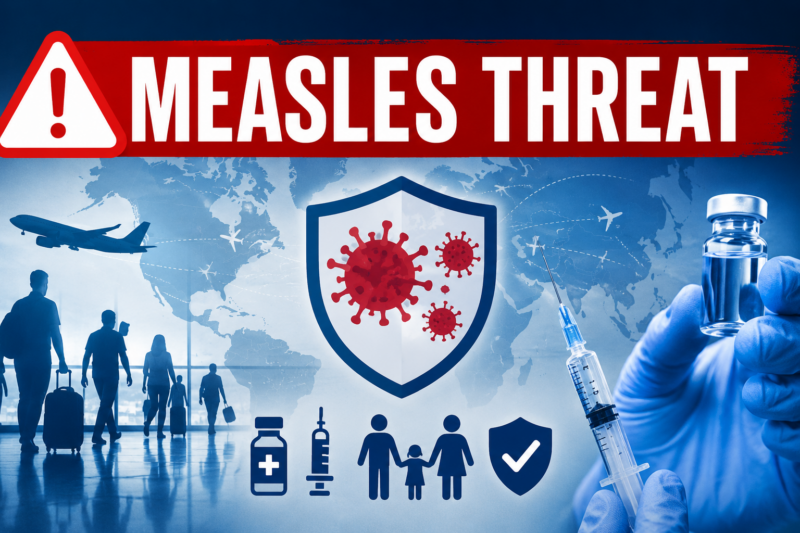
    As the 2026 FIFA World Cup and a wave of other large-scale international mass gatherings approach across the Americas, regional health leaders are sounding a urgent call to action: countries must shore up measles surveillance, expand vaccination coverage, and refine rapid response protocols to counter ongoing outbreaks of the highly contagious disease across the region. This warning came in an official Epidemiological Alert published by the Pan American Health Organization (PAHO) on May 29, which outlines a series of actionable steps public health authorities can take to mitigate the risk of large-scale transmission during high-profile events. The alert notes that rising community transmission of measles combined with a surge in cross-border international travel creates ideal conditions for the virus to spread rapidly when thousands of visitors from across the globe gather for major events.

    In the specific context of the 2026 FIFA World Cup and other upcoming mass gatherings, PAHO advises all host and neighboring countries to boost the sensitivity of their existing disease surveillance systems by rolling out active case-finding protocols. These efforts are designed both to document the absence of circulating measles and rubella in high-traffic areas and to ensure accessible information and vaccination services are available to all incoming and outgoing travelers.

    To cut the risk of international virus spread during the 2026 tournament, PAHO has issued clear guidance for traveler vaccination protocols: all people aged six months and older who cannot provide official proof of full two-dose vaccination or existing immunity to measles and rubella should receive an additional dose of the combined vaccine at least two weeks before traveling to regions with documented ongoing transmission. Beyond vaccination, the organization also recommends that public health systems provide all departing travelers with clear educational resources on the most common signs and symptoms of measles and rubella, which include fever, widespread rash, cough, nasal congestion, conjunctivitis, joint pain, and swollen lymph nodes.

    PAHO guidance also covers protocols during travel and post-arrival: travelers who develop symptoms consistent with measles or rubella while away from home are advised to seek immediate medical attention, wear a well-fitting medical face mask at all times, avoid close contact with other people, and stay away from crowded public spaces for a full seven days after the rash first appears to limit secondary spread. After returning to their home countries, travelers who suspect they may have contracted the virus are encouraged to reach out to a healthcare provider immediately and disclose their recent travel history to help enable fast diagnosis and contact tracing.

    Beyond traveler guidance, PAHO is calling on national governments to strengthen routine epidemiological surveillance in high-risk sites across the region, including border crossings, international airports, seaports, and the venues that will host the 2026 World Cup and other major events. The alert specifically recommends expanding active case-finding efforts, ensuring all suspected cases receive full epidemiological investigation within 48 hours, maintaining fully trained and resourced rapid response teams, and strengthening cross-border coordination for international contact tracing and collaborative outbreak response when clusters are detected.

    This public health alert comes at a time of sustained, alarming growth in measles cases both across the Americas and around the globe. According to data from the World Health Organization (WHO), between January 1 and May 13, 2026, 184,489 suspected measles cases were reported by 155 WHO Member States, with 100,239, or 54.3%, of these cases ultimately confirmed through laboratory testing. The WHO South-East Asia Region accounted for 29% of all global reported cases, followed by the Eastern Mediterranean Region at 21%, while the African Region and the Region of the Americas each made up 19% of the global total.

    In the Americas specifically, 20,521 confirmed measles cases and 25 measles-related deaths have been recorded across 16 countries and one territory between the first and 20th epidemiological weeks of 2026. This figure marks a fourfold increase compared to the 5,123 cases recorded during the same period in 2025, and has already exceeded the total number of cases reported across the entire region for all of 2025.

    As of the latest data, Mexico has confirmed 10,920 cases and 13 deaths so far in 2026, while Guatemala has reported 6,209 cases and 12 deaths. The United States has recorded 1,952 confirmed cases, while Canada has reported 1,018. Peru has logged 301 confirmed cases, and smaller numbers of cases tied to local outbreaks or imported infections have also been reported across Bolivia, Belize, Costa Rica, El Salvador, Honduras, Panama, and Uruguay.

    PAHO officials emphasize that the vast majority of all confirmed measles cases across the region have occurred among people who were unvaccinated, or whose vaccination status could not be officially verified. The organization notes that growing volumes of international travel and ongoing widespread transmission make it clear that maintaining robust disease surveillance systems and ensuring all travelers are fully protected against vaccine-preventable diseases before they attend large international events is critical to preventing larger outbreaks.

    In closing, PAHO reminded national health authorities that under the binding International Health Regulations, a measles vaccination certificate cannot be required as a condition of entry for international travelers. Even so, the organization stressed that widespread vaccination remains the single most effective intervention to stop measles transmission, protect vulnerable communities, and safeguard public health during major global events.

  • Education Minister Encourages Students Writing the Grade 6 National Assessment

    Education Minister Encourages Students Writing the Grade 6 National Assessment

    This week, hundreds of elementary school students across the twin-island nation of Antigua and Barbuda are participating in one of the most significant standardized evaluations of their early academic careers: the Grade 6 National Assessment. Ahead of the high-stakes testing period, Education Minister Daryll Matthew has extended a message of support and perspective to the young test-takers, aiming to ease anxiety and reinforce a balanced view of educational success.

    In his public address to the candidates, Matthew urged students to step into their examination rooms with self-assurance and steady resolve. “Believe in yourselves, stay focused, and do your best,” the minister advised, encouraging young people to draw on the months of preparation they have completed ahead of the assessment.

    Beyond encouraging strong performance, Matthew emphasized a key reminder that often gets lost in conversations around standardized testing: a single examination cannot measure the full potential or inherent value of any student. He stressed that regardless of the scores students receive when results are released, they have already accomplished much to be proud of throughout their time in primary school.

    “No matter the outcome, know that your worth is not defined by a single exam. We are proud of you and all that you have achieved thus far,” Matthew wrote in his statement. To close his message of encouragement, the minister extended spiritual well-wishes to all participating students, saying, “May God grant you wisdom, confidence, and success.”

    The annual Grade 6 National Assessment serves as a key milestone for students in Antigua and Barbuda, marking the end of primary education and informing secondary school placement decisions. For many families and educators across the country, the assessment week brings a mix of anticipation and excitement for the young people moving forward in their educational journeys.

  • Antigua and Barbuda Sponsors CTO Women in Tourism Leadership Awards in New York

    Antigua and Barbuda Sponsors CTO Women in Tourism Leadership Awards in New York

    The annual Caribbean Week in New York drew tourism stakeholders from across the region on Monday, with Antigua and Barbuda stepping forward as the title sponsor of the Caribbean Tourism Organization’s (CTO) highly anticipated Women in Tourism Leadership Dinner and Awards. This year’s gathering brought together a diverse cross-section of female change-makers, business owners and industry specialists from every corner of the Caribbean, uniting them around a shared mission: to honor the outsized contributions women have made to the region’s world-renowned tourism sector, and to nurture the next generation of young women poised to lead the industry forward.

    In his opening welcome address, Charles Fernandez, Antigua and Barbuda’s Minister of Tourism, underscored the dual-island nation’s longstanding dedication to elevating women whose daily work and innovative thinking power the success of its own $2 billion tourism economy. He emphasized that investing in women in tourism is not just a matter of equity, but a core strategy for driving sustainable growth across the entire region’s most vital economic sector.

    Adding a heartfelt, personal touch to the evening’s proceedings, Colin C. James, Chief Executive Officer of the Antigua and Barbuda Tourism Authority, led a special commemorative prayer to honor the trailblazing women in attendance, recognizing the unique challenges they have overcome to build careers in the tourism industry.

    Unlike many industry awards that only recognize top-tier C-suite leaders, this year’s ceremony was designed to celebrate women at every level of the tourism ecosystem. Organizers noted that honorees ranged from high-profile chief executives to frontline and mid-career professionals including independent hoteliers, digital marketing specialists, small business owners, administrative leaders and public service workers – all of whose collective efforts keep the $50 billion Caribbean tourism industry growing year after year.

    The evening also included a landmark announcement that extends the event’s impact beyond recognition: organizers officially launched a new scholarship program through the CTO Foundation, titled “From Her to Her: From Today’s Female Leaders to Tomorrow’s Tourism Stars.” The initiative is designed to provide financial and professional support for young women across the Caribbean pursuing education and training in tourism-related fields, creating a clear pipeline of talent to fill future leadership roles across the region.