标签: Antigua and Barbuda

安提瓜和巴布达

  • Flow Antigua Donates Laptop to Seaview Farm Primary Following Educational Tour

    Flow Antigua Donates Laptop to Seaview Farm Primary Following Educational Tour

    A recent stakeholder engagement session took place at Flow Antigua’s headquarters, where company representatives delivered a comprehensive introduction to the modern telecommunications landscape shaping Antigua and Barbuda’s digital ecosystem.

    During the closed-door session, attendees gained insights into how the regional telecom provider is evolving its infrastructure, expanding service access, and adapting to shifting consumer demands across the island nation. The discussion covered core topics ranging from broadband network expansion to emerging digital services that support both residential and business customers. Company leaders also outlined the role of private investment in strengthening the country’s connectivity, noting that robust telecommunications infrastructure is a cornerstone of economic growth and social inclusion for local communities.

    This gathering forms part of Flow Antigua’s ongoing outreach effort to keep key stakeholders, government partners, and community leaders informed about the company’s strategic development plans in the Caribbean region.

  • Calvin Ayre Foundation Supports Two Urgent Medical Transfers Through Partnership with MBS and CalvinAir

    Calvin Ayre Foundation Supports Two Urgent Medical Transfers Through Partnership with MBS and CalvinAir

    When life-threatening cardiac emergencies strike and local healthcare systems lack the specialized resources to intervene, collaborative partnerships between public and private organizations can mean the difference between life and death. That is exactly the case for two Caribbean residents, Arthur James and Kenneth Edwards, who recently received urgent, life-saving care abroad thanks to a coordinated effort between the Calvin Ayre Foundation (CAF), the Medical Benefits Scheme (MBS), and private aviation provider CalvinAir.

  • AT&LU Pays Tribute to Cheryl Mary-Clare Hurst

    AT&LU Pays Tribute to Cheryl Mary-Clare Hurst

    Dated June 1, 2026, a formal tribute released by the President of the Antigua & Barbuda Trades and Labour Union (AT&LU) honors the life and legacy of the late comrade Cheryl Mary-Clare Hurst, extending heartfelt condolences to her family and loved ones.

    Widely remembered as a dedicated daughter of Antigua and Barbuda, Hurst devoted her entire public life to advancing the national labor movement. Across every role she held across decades of public service – from General Secretary of the Antigua Barbuda Labour Party (ABLP), to Senator, Minister of State, and even her work as a choir member within the party – she consistently embedded the core principles and values of the AT&LU into every aspect of her work. Her unwavering passion for protecting the rights of working people extended to every community across both islands of the nation, earning her widespread respect from union members and workers across the country.

    For the AT&LU, Hurst was far more than an ally; the union was a core part of her identity and lifelong mission. Bernard de Nully, AT&LU President, emphasized in the tribute that the entire union community remains eternally indebted to Hurst for her relentless dedication, consistent support, and unshakable loyalty to both the national trade labor movement and the broader working class.

    Drawing on spiritual comfort to guide mourning, the tribute invokes the biblical verse from John 16:22, which reminds those grieving that present sorrow will ultimately give way to unshakable joy. De Nully closed the tribute with a prayer that the Holy Spirit will guide Hurst’s journey to the afterlife, and that the Almighty will grant enduring comfort to the Hurst family during this period of bereavement. The union’s statement ends with a final wish that the soul of Cheryl Mary-Clare Hurst may rest in eternal peace.

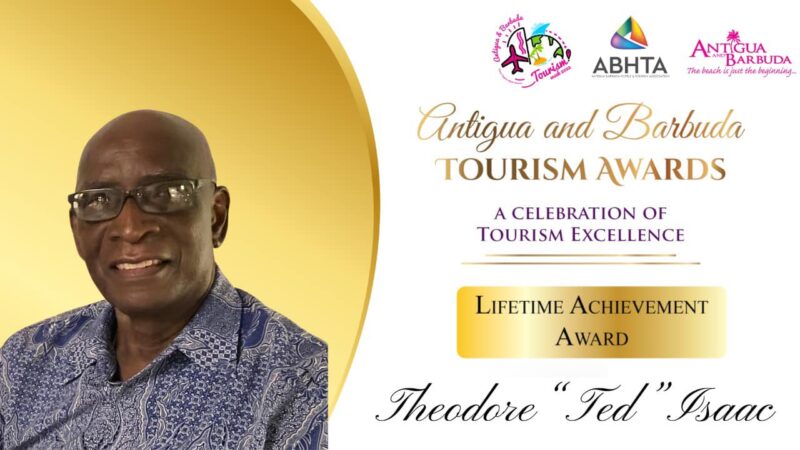
  • Minister Fernandez Pays Tribute To Tourism Pioneer Theodore “Ted” Isaac, CM

    Minister Fernandez Pays Tribute To Tourism Pioneer Theodore “Ted” Isaac, CM

    In a moving ceremony that brought together tourism industry leaders, former colleagues, and family members, a senior government minister has paid public homage to one of the Caribbean’s most influential tourism trailblazers, Theodore “Ted” Isaac, who held the national honor of Companion of the Order of the Medjidie (CM).

    Minister of Tourism, Randall Fernandez, delivered a heartfelt address highlighting Isaac’s decades-long work transforming the region’s tourism sector from a nascent, undervalued industry into the cornerstone of the local economy that it is today. Decades ago, when the Caribbean was still largely overlooked by major international travel operators, Isaac emerged as a visionary advocate, pushing for strategic infrastructure investment, targeted international marketing, and community-centered tourism development that prioritized local employment and cultural preservation.

    Fernandez recalled that Isaac’s early initiatives paved the way for the expansion of world-class resorts, the growth of eco-tourism, and the rise of the cruise ship industry in the region, bringing millions of visitors and billions in revenue to local communities. Beyond his professional achievements, Isaac was also remembered as a mentor to generations of tourism professionals, who often highlighted his commitment to lifting up emerging leaders from marginalized communities. His work also emphasized sustainable tourism practices long before climate action and environmental preservation became core global priorities for the travel industry.

    “Ted Isaac did not just build hotels or attract visitors—he built a legacy that continues to sustain our people and our economy,” Fernandez stated during the tribute. “His vision saw what the rest of the world would only recognize decades later: that our natural beauty, our vibrant culture, and our warm hospitality are our greatest assets, and that when we invest in tourism that works for everyone, we invest in a better future for generations.”

    Industry leaders echoed Fernandez’s remarks, noting that Isaac’s policy recommendations still shape regional tourism strategy today, particularly as the sector works to recover from the impacts of the COVID-19 pandemic and adapt to the demands of a changing global climate. A new annual tourism leadership scholarship has been announced in Isaac’s name, to support young professionals pursuing careers in sustainable tourism development across the region.

  • Desiree Zachariah Represents the Ministry of ICTs at a Workshop on Strengthening Digital Resilience in the Caribbean in Belize

    Desiree Zachariah Represents the Ministry of ICTs at a Workshop on Strengthening Digital Resilience in the Caribbean in Belize

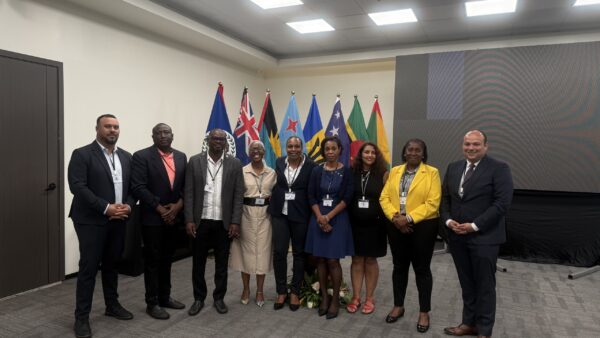
    Against a backdrop of growing global climate and geopolitical uncertainty, small island developing states across the Caribbean are increasingly prioritizing the protection of critical digital infrastructure. This week, a two-day regional workshop focused on boosting Caribbean digital resilience kicked off in Belize, hosted by the UN Economic Commission for Latin America and the Caribbean (UN ECLAC), with official representation from Antigua and Barbuda’s Ministry of Information Communication Technologies, Utilities and Energy.

    Desiree Zachariah, who leads the Business and Data Analytics Unit within the ministry’s eGovernment Department, emphasized that Antigua and Barbuda has long acknowledged the non-negotiable need for robust, secure digital systems to support national operations. For the small island nation, which faces unique vulnerabilities to natural disasters that can cripple local infrastructure, this Belize-based gathering (held June 2–3) offers a rare collaborative platform to engage with cross-regional stakeholders and chart a path forward for rolling out data embassies.

    Unlike traditional data storage solutions, data embassies are purpose-built, off-site secure storage facilities designed to help countries safeguard critical national data from catastrophic loss. In the event of a national crisis—whether a hurricane, cyberattack, or infrastructure failure—data embassies ensure that core government services and digital operations can continue uninterrupted, eliminating the risk of total service disruption. A functional data ecosystem also relies on strong supporting legislative foundations, including clearly defined hosting agreements between partner nations, targeted investments in advanced cybersecurity infrastructure, and reliable high-speed network connectivity to keep systems accessible.

    Over the course of the workshop, participating delegates and stakeholders will dive into layered discussions evaluating the short-term, medium-term, and long-term advantages of deploying data embassies across the region. Attendees will also explore opportunities for public-private partnerships to fund, build, and maintain these critical facilities, with the ultimate goal of fostering coordinated, cross-sector collaboration between governments, private tech firms, and regional institutions. The workshop’s core mission is to build a holistic, region-wide approach to digital resilience that addresses the unique vulnerabilities of Caribbean nations and creates more secure digital futures for all participating states.

  • Analytical Services Director Attends Regional Food Safety Meeting in Barbados

    Analytical Services Director Attends Regional Food Safety Meeting in Barbados

    A critical regional gathering focused on elevating food safety infrastructure across the Caribbean region wrapped up in Bridgetown, Barbados late last month, drawing technical leaders and laboratory stakeholders from 15 CARIFORUM member states. Among the high-level delegates was Dr. Linroy Christian, Director of the Department of Analytical Services of Antigua and Barbuda, who joined the conversation to align national efforts with broader regional development goals.

    Hosted from May 26 to 27, the two-day convening was officially titled the Review Meeting of the Laboratory Rationalisation Strategy and Implementation Plan, and it operates under the umbrella of the European Union’s flagship Food Security Programme for the Caribbean. The initiative was designed to address longstanding gaps in regional testing capacity that have hampered safe agricultural trade and public health protection across small island developing states in the region.

    The core agenda of the meeting centered on collaborative assessment of ongoing work to upgrade testing services for three key sectors: agriculture, fisheries, and consumer food safety. Delegates and technical experts delved into actionable solutions to longstanding challenges, from inconsistent testing protocols across borders to uneven quality assurance standards that create barriers to regional and international trade.

    Key discussion topics included pathways to deepen cross-institutional collaboration between national laboratories, mechanisms to standardize testing methodologies across all CARIFORUM nations, strategies to reinforce robust quality assurance frameworks, and targeted reforms to boost the overall efficiency of testing services. All conversations were anchored in the overarching goal of enabling safe, sustainable food and agricultural trade that benefits both producers and consumers across the Caribbean.

    In a post-meeting statement, Antigua and Barbuda’s Department of Analytical Services emphasized that Dr. Christian’s attendance is part of the nation’s longstanding commitment to coordinated regional action. The participation aligns with ongoing collective efforts to build resilient laboratory capacity, champion evidence-based scientific practice, and advance shared food safety and public health outcomes across the Caribbean bloc.

    For Antigua and Barbuda, the Department of Analytical Services serves as the national lead on a range of critical testing and analysis functions, including routine food safety screening, environmental quality monitoring, and technical support for public health initiatives across the twin-island nation.

  • Former Police Commissioner Questions DPP’s Decision to Drop Major Cannabis Case

    Former Police Commissioner Questions DPP’s Decision to Drop Major Cannabis Case

    A former police commissioner-turned-attorney is putting pressure on Antigua and Barbuda’s top prosecutor to open up about why authorities dismissed a high-profile cannabis importation case against a Canadian defendant, shining a new spotlight on accountability within the country’s criminal justice system. Attorney-at-law Wendell Alexander, who is representing the family of a teen killed in a recent police-involved shooting, argues that the Office of the Director of Public Prosecutions (DPP), as a publicly funded constitutional body, owes the public a fulsome explanation for its decision to discontinue the high-stakes drug case, rather than the brief one-sentence reference to medical reasons the office has already released.

    Speaking during an interview on Observer Radio’s *Voice of the People* current affairs programme, Alexander framed transparency as a core requirement for maintaining public trust in justice institutions. “In the interest of transparency, I would say that the public has a right to know because the office of the Director of Public Prosecutions is a public office,” Alexander said. “When certain major decisions are taken, especially if the matter has become a cause célèbre, to give a proper explanation before the general public is good for the justice system.”

    DPP Clement Joseph has defended his decision, noting that the accused Canadian woman is living with late-stage cancer, and that local correctional and health facilities lack the capacity to meet her complex medical needs if she is held in custody ahead of trial. Joseph also emphasized that the choice to discontinue the case was not a rushed one: it has been under active review by his office since March. He added that the case is not permanently closed, and could be reopened at a future date if the defendant’s medical situation changes.

    Still, Alexander has raised questions about whether proper legal protocols were followed in the decision-making process. Though he acknowledges he does not have access to the full case file, he pointed to prior legal precedents where defendants initially ruled medically unfit to stand trial ultimately returned to court after being cleared by medical experts. He also pushed back against the common misconception that DPP decisions are immune from legal challenge, noting that even with the broad discretionary powers granted to the role under Antigua and Barbuda’s Constitution, decisions can be overturned via judicial review in the High Court if they are found to be unreasonable or an abuse of authority.

    Joseph also addressed separate recent public criticism he faced over another drug case involving a Jamaican national, noting that online accusations of improper influence to drop charges were unfounded, as he had not even received the full case file when the allegations began circulating online. He reiterated that the Constitution grants the DPP wide discretionary authority over case prosecution, and that it is not standard practice for Caribbean prosecutors to hold public press briefings to justify rulings on individual cases.

    Beyond the cannabis importation dispute, Alexander is also challenging official handling of the fatal police shooting of 18-year-old Khaleel Simon, a case he has been retained to handle for Simon’s family. Alexander has made a series of serious allegations about procedural misconduct during the incident: he claims a Criminal Investigations Department detective used his personal unmarked vehicle to pursue Simon after receiving tip-off messages via WhatsApp from a female associate of the teen, and that a uniformed officer who rode along in the private vehicle opened fire on Simon without first identifying himself as law enforcement or ordering Simon to exit his vehicle.

    “There is absolutely no right for a police officer in his private vehicle, bring another officer in uniform at the scene and accost Khaleel Simon,” Alexander said. “That’s not the way in which this process and this operation ought to be done.” He also added that no weapon was found in Simon’s vehicle following the shooting, contradicting unconfirmed claims that the teen was armed.

    In response to the shooting allegations, DPP Joseph confirmed that the incident remains an active police investigation, and his office has not yet received the case to review for potential prosecution. Alexander confirmed that Simon’s family is moving forward with plans to file a wrongful death lawsuit against the involved officers and relevant authorities. The attorney is also using both high-profile cases to push for broader criminal justice reforms in Antigua and Barbuda, including the creation of an independent oversight body to investigate all police-involved shootings, mandatory timely public updates on cases of major national interest, and the consolidation of scattered criminal legislation into a single unified penal code.

  • LETTER: One Deportee Is One Too Many

    LETTER: One Deportee Is One Too Many

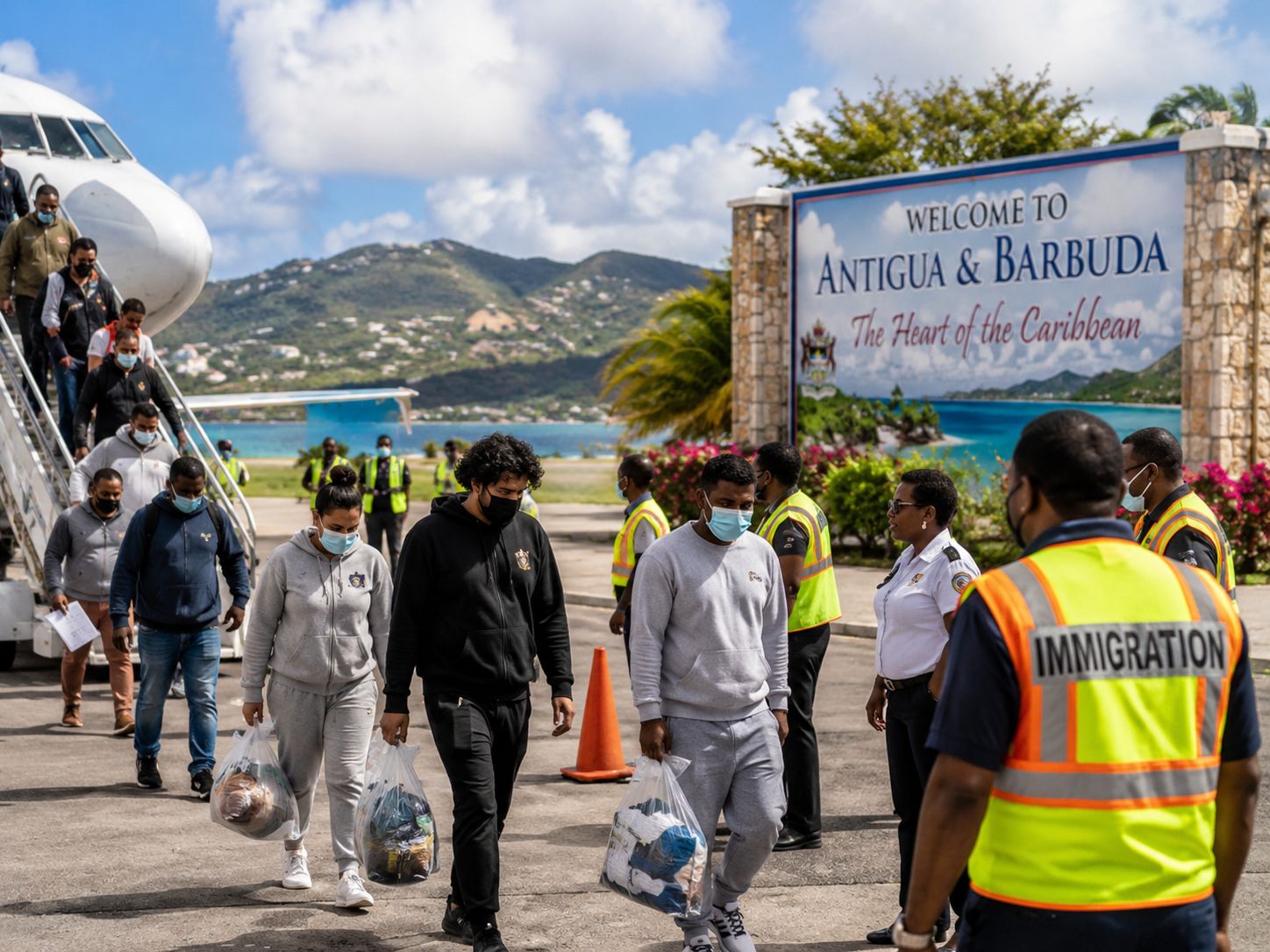
    In an open letter addressed to the editor of an Antiguan publication, a concerned mother based in St. John’s has added her voice to the growing opposition to the United States’ plan to deport non-citizens to Caribbean nations including Antigua and Barbuda, arguing that even a single deportee would place an unacceptable burden on her already vulnerable country.

    As a parent raising children in Antigua and Barbuda, the writer says she has watched negotiations over the deportation plan with increasing unease. The twin-island nation is one of the smallest sovereign states in the Western Hemisphere, and its domestic institutions already face steep strain from persistent challenges: elevated crime rates, chronically stretched law enforcement budgets, and widespread social instability that touches working families across every community. For parents across the country, daily life already comes with unrelenting worry: children’s safety is uncertain when they travel to school, wait for public transit, or gather with friends outside the home. The writer argues that Antigua and Barbuda should never be forced to absorb additional public safety risks that stem directly from the immigration policy choices of a global superpower.

    The letter voices approval for Prime Minister Gaston Browne’s current stance, which has pushed back against U.S. pressure and demanded formal safety safeguards for any deportation transfers. But the writer goes further, calling on Browne to adopt a total ban on accepting any deportees from the U.S. She emphasizes that no financial compensation can offset the harm that would come if even one high-risk person enters the country through gaps in screening.

    A core contradiction in U.S. assertions about the deportation program underscores the danger, the writer argues: U.S. officials claim that deportees sent to Caribbean nations are not convicted criminals, but at the same time, negotiations over mandatory background checks are still ongoing. This uncertainty over the identities, origins, and criminal histories of potential deportees is enough to justify rejecting the entire plan, she says. If there is any doubt about who is being sent to Antigua and Barbuda, the government has no business agreeing to participate.

    The writer acknowledges that the United States holds full authority to enforce its own sovereign immigration laws. What it is not entitled to, she insists, is shifting the logistical and public safety burden of its deportation program onto small, developing Caribbean nations that lack the resources to manage the risk. The Antiguan government’s first and most important duty is to its own citizens: to the children, aging populations, local communities, and future generations that call the islands home. The writer argues that no amount of external pressure from a larger, more powerful nation justifies making concessions that could erode public safety for Antiguans and Barbudans.

    Closing with a personal appeal rooted in her experience as a mother, the writer urges Browne to hold firm to his opposition and reject all transfers, not just limit the number. The risks of accepting any deportees, she argues, far outstrip any potential economic or diplomatic benefits that might be offered. For her and for countless other parents across the country, the top non-negotiable priority is protecting the safety and security of the next generation as they grow up on the islands.

  • Tribute to Dr. Cuthwyn Lake by Dr James Knight

    Tribute to Dr. Cuthwyn Lake by Dr James Knight

    More than a century after the formal abolition of chattel slavery in the Caribbean, a small group of pioneering Black medical professionals returned to their home region after training abroad, laying the foundation for accessible, quality care for local communities that had long been abandoned by formal healthcare systems. Among these trailblazers was Dr. Cuthwyn Lake, only the third Black general surgeon to serve the people of Antigua and Barbuda, following in the footsteps of Dr. Noel Margetson and Dr. Ivor Heath, alongside pioneering obstetrician-gynecologist Dr. William Joseph. For generations of local residents, the transformative impact of their work remains a hidden but foundational part of the nation’s public health history.

    Before these physicians returned to their home region, the reality of healthcare for Black communities in the post-abolition Caribbean reflected the deeply entrenched inequalities of the past. During slavery, formal medical care existed exclusively for the white planter class, and care for enslaved people was only provided to maintain their ability to perform grueling plantation labor. Surgeons were even deployed to maul recaptured runaway slaves as punishment, amputating feet to discourage future escape attempts. Immediately after abolition, formerly enslaved people were no longer the property of plantation owners, and they lost what little inadequate care they had once received. For more than a century, local communities relied entirely on traditional bush medicines to treat all manner of ailments, a reality documented vividly in *To Shoot Hard Labour*, the oral history of Antiguan working man Papa Sammy that many public health advocates argue should be required reading for all secondary students in the country.

    The work of returning physicians like Lake and his peers changed this reality overnight. Alongside local nurses who stepped in to fill every role, including serving as operating room assistants, these pioneers eliminated widespread preventable illnesses and conditions that had ravaged local communities for generations. Thanks to their work, rates of goiter dropped dramatically, countless people received life-saving care for debilitating conditions like large hydroceles, uterine fibroids, and ovarian cysts, and mortality from preventable conditions like ruptured appendices and childbirth complications plummeted. Today, most people under 50 in Antigua and Barbuda have never experienced the widespread public health crises that were common before these pioneers began their work.

    Lake’s story is intertwined with the broader history of Caribbean medical progress. A close contemporary of Dr. Cuthbert Sebastian, the Antigua-born surgeon who rose to become Governor-General of St. Kitts and Nevis and published *One Hundred Years of Medicine in St. Kitts* in 2002, Lake’s experience mirrored that of medical pioneers across every Eastern Caribbean territory. Sebastian’s account of regional healthcare development could easily be adapted to describe Antigua’s journey with almost no changes.

    For Dr. James Knight, the author of this reflection, Lake was more than a pioneering public figure — he was a professional mentor who shaped his entire medical career. Knight first met Lake in January 1990, shortly after he graduated from a Cuban medical school and was waiting for his professional licensing to be processed. Lake, then a senior leader at Holberton Hospital, offered to support Knight’s onboarding once his licensing was finalized, and Knight began his clinical career working alongside Lake and Dr. Ramamuthi Bekal in the hospital’s operating room.

    Knight remembers Lake as a level-headed, open-minded leader free of the prejudice and professional resentment that plagued many senior medical leaders of the era. He was a thoughtful man with broad general knowledge and a pragmatic approach to the challenges of public health in a small developing nation. When Knight asked Lake why he maintained a close relationship with then-Prime Minister V. C. Bird yet the hospital still regularly lacked basic supplies, Lake replied with characteristic candor: Politicians prioritize visible, popular projects like village basketball courts over behind-the-scenes hospital equipment that delivers far greater public good. Knight notes that even decades later, this misprioritization — favoring sensational, visible projects over the routine organizational and programmatic needs of healthcare — remains a persistent challenge for the region’s health systems.

    Lake was also a forward-thinking healthcare planner who advocated for expanding and renovating Holberton Hospital on its existing site, arguing that the location offered ample room for future growth — a vision that many public health experts now recognize as prescient. Professionally, Lake guided Knight’s career at a critical juncture: when senior colleagues encouraged Knight to leave the hospital for a district medical officer role that offered greater opportunities for private practice, Lake refused to write a letter of recommendation, arguing that gaining broad experience across multiple hospital departments would be far more valuable for Knight’s long-term development. Knight would later call this advice life-changing: the six years of broad clinical experience he gained at Holberton gave him the confidence to become Barbuda’s first full-time resident doctor in 1997.

    Even in challenging professional conflicts, Lake’s calm demeanor and humility won over even his critics. Early in his career at Barbuda, when nursing staff pushed back against his requirement for full eight-hour shifts, a retired Holberton matron noted that Knight’s measured response mirrored Lake’s approach. Though Lake was once nicknamed “Brutus” by nurses early in his career, his good humor, civility, and humility eventually won over all his detractors. By the end of his tenure, he counted staff across every role — from senior consultants to cleaners, cooks, and carpenters — among his most ardent supporters.

    Working in an era before widespread access to specialized surgical care, Lake operated on every part of the human body, but his greatest skill was his deep understanding of human need. Unlike many leaders who saw the COVID-19 pandemic as an opportunity for profit, Lake believed the crisis should be a moment to deepen empathy for vulnerable communities. It is for this reason that naming Antigua and Barbuda’s COVID-19 alternate treatment facility after Dr. Cuthwyn Lake was a fitting tribute. True to his surname, Lake was a steady, calm force like a great lake, a deep reservoir of knowledge who nourished the entire medical community, fostering a culture of excellence and lasting humility that continues to shape the nation’s healthcare to this day.


  • COMMENTARY: If Loving Antigua And Barbuda Is Xenophobic – So Be It!

    COMMENTARY: If Loving Antigua And Barbuda Is Xenophobic – So Be It!

    Across the small island developing states of the Caribbean, conversations about national identity, resource allocation and foreign influence have grown increasingly heated in recent years. No where is this tension more visible than in Antigua and Barbuda, where a provocative new commentary has thrown long-simmering debates about national interest into the global spotlight. The piece, titled “If Loving Antigua And Barbuda Is Xenophobic – So Be It!”, makes an unapologetic case for prioritizing the economic, social and political needs of native-born and long-standing citizens over the interests of foreign investors, transient residents and outside interests that have gained increasing footholds in the country’s economy in recent decades.

    For decades, small Caribbean nations like Antigua and Barbuda have leaned heavily on foreign direct investment, particularly through citizenship-by-investment programs that grant legal status to wealthy outsiders in exchange for major capital infusions into local real estate and infrastructure. These programs have lifted government revenues and spurred job growth in the critical tourism sector, but they have also sparked growing grassroots discontent. Local residents increasingly complain that skyrocketing housing prices have pushed native citizens out of property markets, that foreign-owned businesses reserve the highest-paying positions for overseas staff, and that the political influence of wealthy non-nationals has skewed policy away from addressing widespread poverty and underdevelopment in local communities.

    The commentary’s provocative framing is not an endorsement of blanket hatred or exclusion of outsiders, its author argues. Instead, it is a deliberate rejection of the common tactic used by pro-foreign investment interests to label any call for stricter regulation or prioritization of local citizens as bigotry. By reclaiming the label of “xenophobic” as a badge of honor for those who put Antigua and Barbuda first, the commentary forces a public reckoning with the trade-offs that have come with decades of open-door investment policies. In a region where small island nations are often pressured by global economic powers and international institutions to prioritize foreign business interests over domestic well-being, the piece strikes a chord with a growing nationalist movement that demands greater sovereignty and economic equity for local populations.

    This debate does not exist in a vacuum. Across the globe, small states are grappling with the same balance between opening their borders to global capital and protecting the rights and opportunities of their own people. For Antigua and Barbuda, a nation of fewer than 100,000 people that relies heavily on tourism and offshore finance, the question of who gets to benefit from national development will continue to shape the country’s political and economic trajectory for generations to come. The commentary’s unflinching stance has already sparked fierce pushback from business groups who warn that such rhetoric will deter investment, but it has also galvanized local activists who argue that the current system has left too many citizens behind. What is clear is that this conversation will not be silenced by accusations of bigotry: the fight to define national priority in Antigua and Barbuda is only just beginning.