标签: Antigua and Barbuda

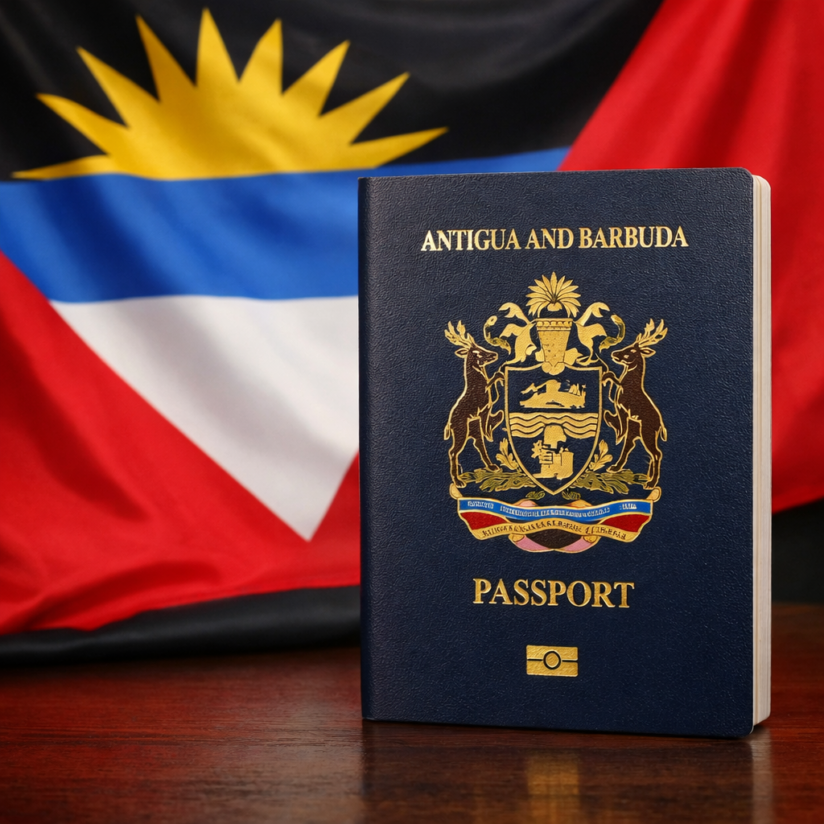
安提瓜和巴布达

  • ECCB Viability Study on Proposed OECS Airline Expected Within Weeks, PM Browne Says

    ECCB Viability Study on Proposed OECS Airline Expected Within Weeks, PM Browne Says

    A years-long debate over launching a regional airline owned collectively by the Organisation of Eastern Caribbean States (OECS) is approaching a critical turning point, with a final feasibility assessment set for completion in the coming weeks. Antigua and Barbuda Prime Minister Gaston Browne announced Saturday that the Eastern Caribbean Central Bank (ECCB) is wrapping up the viability study that will greenlight or reshape the flagship integration project, after OECS leaders unanimously reaffirmed their commitment to the plan at the bloc’s 78th Authority Meeting.

    Speaking during his regular weekly broadcast on Pointe FM, Browne confirmed that the project’s progression remains conditional on the study’s outcome, but leaders are optimistic about the results. “We would have all confirmed our commitment to an OECS Air, subject to the study that has been done by the Eastern Caribbean Central Bank,” Browne stated. “We expect, within a matter of weeks, that the Eastern Caribbean Central Bank would have completed their studies and that it will confirm the viability of this entity.”

    Regional authorities have already secured a base layer of startup funding for the proposed carrier, drawing on a pool of long-unclaimed assets held by the ECCB. Browne disclosed that approximately US$50 million in proceeds have already been earmarked from deposits that have gone unclaimed by their original owners for between 25 and 30 years.

    In a additional boost to the project, French delegates who participated in the recent OECS meeting have flagged potential additional financing from the European Union. Browne explained that the initiative meets eligibility criteria for two major EU development funding streams: the Interreg regional cooperation programme and the Gateway infrastructure support initiative. If this EU funding is secured, the new airline could launch with total capital exceeding US$100 million, according to Browne’s estimates.

    Crucially, the project will move forward regardless of the outcome of the EU funding application. Browne emphasized that even if EU support does not materialize, the OECS already holds enough internal capital to launch the development phase of the airline. “If those two windows are not available, then at least we’ll have the US$50 million to work with within our own resources,” he said.

    For the Eastern Caribbean bloc, the creation of a shared regional airline has long been framed as a cornerstone of deeper economic integration. Planners project that the carrier will cut through longstanding gaps in air connectivity between OECS member states, addressing a critical bottleneck that has held back growth in cross-border tourism, trade and regional mobility for decades. The upcoming ECCB viability study will set the course for the next phase of the project, outlining the timeline and operational structure for the new airline if approved.

  • LISTEN: PM Browne Says Some Homes In China-Funded Projects in Bolans and Barbuda Will Be Offered Under Rent-to-Own Programme

    LISTEN: PM Browne Says Some Homes In China-Funded Projects in Bolans and Barbuda Will Be Offered Under Rent-to-Own Programme

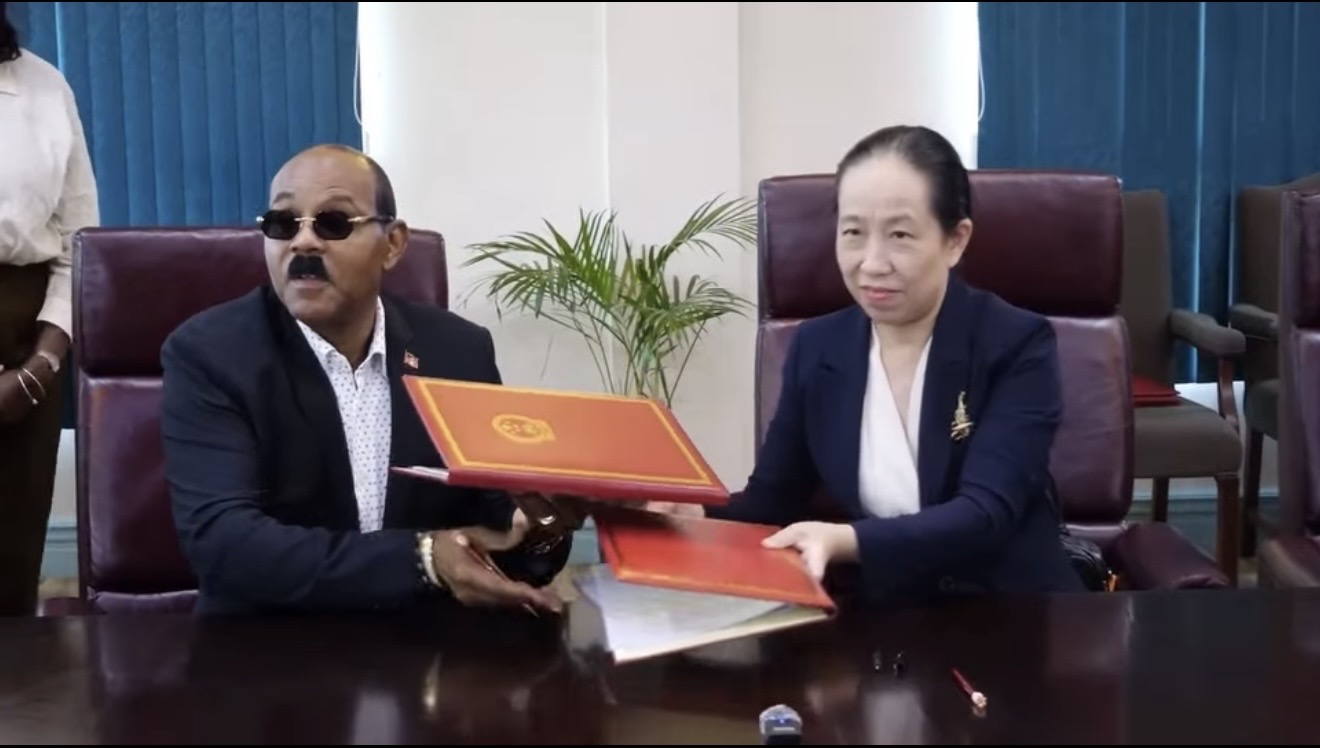
    During an announcement made Saturday, Prime Minister Gaston Browne of Antigua and Barbuda unveiled a potential new policy to expand access to affordable homeownership for the nation’s most vulnerable residents. Under the country’s ongoing Chinese-funded national housing development scheme, a portion of newly constructed residences could be allocated to a flexible rent-to-own framework, designed to address rising unmet demand for accessible housing across the twin-island nation.

    Browne explained that the government is actively evaluating plans to reserve a subset of the upcoming new builds as rental units, with a built-in option for tenants to purchase the property after a set rental period. The units in question are standalone, single-story concrete structures fitted with two or three bedrooms, engineered to withstand extreme weather conditions common to the Caribbean region — a critical design feature for small island nations facing growing climate risks. “More and more people are asking for rental homes that can lead to ownership,” Browne noted, adding that he hopes the adjusted allocation will help satisfy this unmet need.

    The prime minister used the occasion to extend formal gratitude to the People’s Republic of China for its sustained investment in Antigua and Barbuda’s housing sector, emphasizing that the bilateral development partnership has been instrumental in cutting national poverty rates and expanding access to stable housing for low-income households. “You can’t aspire to be a nation with a high quality of life and leave any segment of your population trapped in abject poverty,” Browne stated. “We are working systematically to eliminate remaining pockets of extreme poverty, and we have made meaningful progress thanks to this partnership.”

    To date, China has supported the construction of roughly 250 residential units across two phases of the programme, Browne confirmed. Around 150 of these homes are already finished or in the final stages of completion. A new $20 million USD grant agreement signed just this week will fund the construction of an additional 100 climate-resilient units: 50 will be built in Bolans on the island of Antigua, and another 50 will be constructed on the sister island of Barbuda. Each unit will sit on a plot of land ranging up to three hectares, providing residents with ample space. All told, China’s total investment in the multi-phase housing initiative amounts to roughly $50 million USD, equivalent to around 135 million Eastern Caribbean dollars.

    Browne stressed that the entire programme is intentionally targeted to support “the most vulnerable, some of the poorest people among us.” He went on to praise China’s “shared prosperity” development philosophy, noting that China’s support for infrastructure and social development projects across Antigua and Barbuda and other small developing states is consistently focused on lifting living standards for local communities.

    In closing, Browne called for enhanced cooperation between China and the United States, framing both nations as key strategic partners for Antigua and Barbuda. He noted that the U.S. remains the country’s largest source of tourism arrivals and top trading partner, while China continues to deliver transformative investment in critical public infrastructure and affordable housing. “We would want to see greater cooperation between China and the United States, our two most important partners,” Browne said.

  • Argentina To Launch Citizenship-by-Investment Programme Later This Year

    Argentina To Launch Citizenship-by-Investment Programme Later This Year

    As South America’s second-largest economy continues to grapple with long-standing financing gaps and restricted access to global capital markets, Argentina is moving forward with plans to roll out a groundbreaking citizenship-by-investment (CBI) initiative by the end of 2024, multiple sources close to the planning process told the Financial Times. The program, designed to draw high-net-worth foreign investors in exchange for full Argentine citizenship, is still refining its final eligibility requirements, but preliminary proposals outline two primary pathways to qualify: a non-refundable contribution of roughly $500,000 to state coffers, or the purchase of $1 million worth of Argentine zero-coupon sovereign bonds.

    The new CBI scheme is a core plank of President Javier Milei’s pro-market economic agenda, which prioritizes unlocking large volumes of foreign capital to help the country meet its looming sovereign debt obligations. Since Argentina restructured nearly $65 billion in sovereign debt in 2020, the nation has been effectively shut out of most international capital markets, leaving policymakers scrambling to identify alternative financing sources to stabilize the country’s fragile economy. If the program launches as planned, Argentina will join a small group of nations offering investment-backed citizenship, and will stand out as one of the largest countries globally to operate such a scheme. For successful applicants, Argentine citizenship unlocks substantial travel benefits: an Argentine passport grants visa-free or visa-on-arrival entry to almost 170 countries and territories worldwide, making it a highly attractive option for investors seeking expanded global mobility.

    The proposal builds on sweeping changes to Argentina’s citizenship regulations enacted by the executive branch last year, but those earlier reforms are currently tied up in domestic legal battles. Critics of the changes argue that Argentina’s constitution explicitly grants Congress, not the sitting president’s administration, the exclusive authority to set rules governing nationality and citizenship, a legal challenge that could ultimately delay or derail the broader CBI initiative.

    Proponents of the plan frame it as a win-win for both Argentina and participating investors. Amid rising global geopolitical fragmentation and economic uncertainty, many high-net-worth individuals are seeking alternative residency and citizenship options to diversify their exposure and secure greater travel freedom. Supporters argue that Argentina’s unique combination of geographic size, natural resources, and passport benefits makes it an unmatched offering in the global CBI market. “There is simply nothing else like Argentina in the citizenship-by-investment market,” Eric Major, chief executive of Latitude Group, a global mobility consultancy that provided advisory support to the Argentine government on the program, told the Financial Times.

    Despite these optimistic projections, the initiative has faced sharp pushback from legal scholars, transparency campaigners, and former government officials, who warn that CBI programs carry inherent risks related to national security, weak governance, and inadequate regulatory oversight. Many critics argue that unregulated investment-backed citizenship schemes can create openings for money laundering, corruption, and entry for individuals with criminal backgrounds, risks that Argentina’s already stretched regulatory system may be ill-equipped to manage.

    Paula Carello, an experienced immigration lawyer and former senior official at Argentina’s national citizenship office, argues that the potential downsides of the program far outweigh the limited economic benefits it could generate. “The many risks associated with this type of programme outweigh the benefits for a country of its size and profile,” Carello said. She also raised alarm about the lack of inclusive public debate surrounding the initiative, noting that changes to citizenship touch on core foundational aspects of national identity, and that moving forward with such a sweeping policy without input from across the political spectrum, academic circles, and major national institutions is a troubling overreach by the current administration.

  • Tropical Wave Expected to Bring Showers, Possible Thunderstorms to Antigua and Barbuda

    Tropical Wave Expected to Bring Showers, Possible Thunderstorms to Antigua and Barbuda

    Local communities are on alert Thursday as a moving tropical wave is projected to sweep across the region, bringing unstable and potentially disruptive weather conditions through the afternoon and overnight hours. Local meteorological officials have issued official guidance urging all residents to make simple preparations ahead of the system’s arrival to avoid unnecessary disruptions or safety risks.

    Forecasting data compiled by local weather services shows high confidence in rain developing across the area, with an 80% probability of scattered showers breaking out once the tropical wave moves onshore. Total accumulated rainfall is expected to stay between 1 and 5 millimeters, equal to 0.04 to 0.20 inches, a relatively modest total that still poses localized hazards in low-lying or flood-prone zones. In addition to widespread showers, the system carries a measurable risk of severe convective activity: forecasters project a 30% chance of thunderstorms during the afternoon hours, with that probability climbing to 40% as the system deepens through the evening.

    Meteorologists emphasize that while total rainfall is not extreme, the intermittent periods of heavy downpour can create sudden hazardous conditions for both residents and travelers. The tropical wave is expected to bring intermittent bursts of disruptive weather that can quickly alter travel conditions. Specific warnings have been issued for drivers and people traveling on foot, calling for extra vigilance in areas that have a history of flash flooding or that are likely to experience drastically reduced visibility during heavy shower activity.

    Officials note that residents should monitor updated weather forecasts through the day for any shifts in the system’s track or intensity, and adjust plans accordingly to stay safe through the unsettled conditions.

  • Antigua and Barbuda Intends to Maintain Citizenship by Investment Programme Even if EU Ends Visa-Free Access

    Antigua and Barbuda Intends to Maintain Citizenship by Investment Programme Even if EU Ends Visa-Free Access

    During a weekly radio address on Pointe FM Saturday, Gaston Browne, the Prime Minister of Antigua and Barbuda, made clear that the island nation will not abandon its high-stakes Citizenship by Investment Programme (CIP) even if the European Union follows through on its threat to revoke visa-free travel privileges for Antigua and Barbuda passport holders.

    While the government remains cautiously optimistic that ongoing high-level negotiations with European officials will preserve the current visa-free travel arrangement, Browne confirmed that the country is actively preparing for the worst-case scenario, which could see the privilege withdrawn before the end of 2024.

    “We can anticipate that, despite our best efforts, these visa-free arrangements may be discontinued,” Browne told listeners. “What I will say here, under my leadership and certainly under the Labour Party’s governance of this country, with or without those visa-free arrangements, our CIP programme continues. It is too important a source of non-tax revenue to give it up.”

    The European Union has flagged citizenship by investment programmes across a handful of small nations as a potential security concern, and has publicly warned that it could suspend visa-free access for countries that maintain these schemes. No final ruling on the measure has been issued to date, but Browne acknowledged the risk of action before year’s end. To de-escalate tensions, Antigua and Barbuda has put forward a compromise proposal: instead of scrapping visa-free access entirely, the EU could implement a pre-travel electronic authorization system for visitors from CIP-operating countries, a framework Browne calls a balanced, sensible alternative that preserves long-standing positive relations between the two sides.

    “We have the view that an electronic travel authorization should be sufficient,” Browne said. “We think that it’s a sensible thing to do to maintain the good relations that we’ve had over the years and not to throw the baby out with the bath water.”

    Already, one EU member state – Ireland – has moved to end its visa-free arrangement with Antigua and Barbuda, prompting the Browne administration to push for urgent dialogue with EU leadership before broader restrictions are enacted.

    In a robust defense of the CIP, Browne emphasized that Antigua and Barbuda has enacted sweeping reforms to strengthen its programme in recent years, directly refuting European claims that the scheme poses unacceptable security risks to the bloc. He acknowledged that no immigration programme can eliminate all residual risk, noting that even well-established schemes in large nations have occasionally admitted bad actors. Specifically, he called out the United States’ EB-5 investor visa programme and Canada’s former investor immigration initiative, both of which have faced high-profile scandals involving criminal exploitation.

    “Even the EB-5 programme in the United States, they’ve had a lot of crooks. I mean the one in Canada too. But they keep pointing fingers at us as though they are not fallible and as though their programmes have not attracted crooks too,” Browne argued.

    The prime minister also stressed the independent governance of Antigua and Barbuda’s CIP, noting that political officials, including himself, never interfere with due diligence processes carried out by the country’s Citizenship by Investment Unit (CIU). Over his 12 years in office, Browne said he has never overturned a rejection decision made by the CIU or its governing board, allowing the body to operate with full autonomy.

    He added that Antigua and Barbuda’s due diligence standards match or exceed those of much larger nations, and the country’s small geographic size and close-knit governance actually make it far harder for criminals to evade detection and enforcement.

    “In our countries, I can say definitively in the case of Antigua and Barbuda, our programme is run with integrity,” Browne said. “I would say better integrity than those large countries who are pointing fingers at us.”

    Reaffirming the government’s commitment to collaboration, Browne said Antigua and Barbuda stands ready to address all of the EU’s outstanding concerns and implement additional safeguards – including mandatory biometric screening – if required to reach a resolution. The only major outstanding issue between the two sides currently centers on the implementation of biometrics, he added. “We have said to them, you run investment immigration programmes; any initiative that you have in place, we’ll put in place,” Browne said.

  • LISTEN: PM Says Police Need to ‘Put Some Blows’ on Young Chain Snatchers

    LISTEN: PM Says Police Need to ‘Put Some Blows’ on Young Chain Snatchers

    A bold and highly controversial call from Antigua and Barbuda’s Prime Minister Gaston Browne has put public safety policy, human rights norms and the nation’s stance on a U.S. third-country deportation deal at the center of public discourse. Speaking during his regular Saturday broadcast on local outlet Pointe FM, Browne delivered unflinching remarks urging law enforcement to adopt a far more aggressive approach toward youth involved in a recent uptick in petty street crime, specifically calling for physical force to be used against suspected chain snatchers, even as he acknowledged fierce pushback from human rights defenders is inevitable.

    The prime minister’s comments came against a backdrop of ongoing negotiations between the Caribbean nation and the United States over a proposed third-country deportation arrangement, which would see the U.S. transfer certain non-U.S. nationals to Antigua and Barbuda for processing. Browne used the broadcast to double down on his government’s non-negotiable position: any individual transferred to the country under the deal must hold no criminal record, with the single exception of U.S. immigration violations.

    Highlighting the years of consistent work Antigua and Barbuda has invested to keep its relatively low national crime rate intact, Browne voiced growing alarm over a recent wave of opportunistic petty street offenses. “We have seen a rise in small but disruptive offenses, like thieves snatching gold chains straight off victims’ necks,” Browne told listeners. “I do not understand why police have not yet set up targeted sting operations to crack down on these young thieves, and put some physical force on them when they catch them. The time for soft approaches is over. Hit them, strike them when they are caught doing this. Human rights advocates can say what they want – these young thieves deserve to be confronted with force.”

    Browne argued that opening the country’s borders to deportees with serious criminal histories would put the nation’s hard-won public safety gains at unacceptable risk. While he stopped short of rejecting all transfers outright, he emphasized the government is holding firm to its demand that U.S. authorities formally certify that every individual transferred meets two core criteria: no prior criminal convictions, and no serious communicable health conditions.

    “The only criminal violation we are willing to accept is an offense related to U.S. immigration law,” Browne clarified, adding that Antigua and Barbuda has a long-standing tradition of treating immigration violations as a regulatory, not criminal, matter. The country has repeatedly used amnesty programs to regularize the status of undocumented migrants rather than prosecuting them, he noted.

    He further stressed that the small island nation lacks the specialized infrastructure, training and institutional capacity to manage sophisticated offenders who have developed advanced criminal skills in the United States. “We simply do not have the level of sophistication required to handle hardened, well-trained criminals that learned their trade in your society,” Browne stated he told U.S. negotiators. “If you send these people to our country, what do you expect will happen? You would risk destroying everything we have built.”

  • WATCH: Local Brewery Expected to Begin Operations in Early 2027, Browne Says

    WATCH: Local Brewery Expected to Begin Operations in Early 2027, Browne Says

    A new craft brewery rooted in the local community is on track to throw open its doors to beer lovers in the first quarter of 2027, according to project lead Jane Browne. The independent brewing operation, which has been in the planning and development stage for nearly three years, aims to fill a gap in the region’s fast-growing craft beverage market, bringing a range of small-batch, locally inspired brews to area residents and tourists alike.

    In an interview this week, Browne, who has spent more than a decade working in the craft brewing industry across the Pacific Northwest, shared that the project has already cleared all major zoning and regulatory approvals from the local municipal government. Construction on the 12,000-square-foot facility, which will include a production floor, taproom with indoor and outdoor seating, and a small event space for community gatherings, is set to break ground by the middle of next year. “We’ve worked really closely with city planners, local business associations, and neighbors to make sure this space fits what the community actually wants,” Browne said in the interview. “Early 2027 is a realistic timeline that gives us plenty of time to build out a space that we, and the local area, can be proud of.”

    The brewery has also announced plans to source more than 60% of its raw ingredients, including malted barley and hops, from family-owned farms within a 150-mile radius of the facility, boosting the regional agricultural economy. Once operational, the project is expected to create 18 full-time and 12 part-time local jobs, ranging from brewing and taproom staff to logistics and marketing roles. Local business development groups have welcomed the announcement, noting that craft breweries often act as anchor attractions for small business districts, drawing foot traffic that benefits nearby shops, restaurants, and retail outlets.

    Browne added that the team is already developing test batches of core brews, including an IPA highlighting regional citrusy hops, a smooth oatmeal stout, and a seasonal wheat ale infused with local fruit. Pre-opening events, including pop-up tastings at regional farmers markets, are planned to begin in late 2026 to build buzz and connect with the local community before the full launch.

  • LISTEN: Government’s Bill to WIOC Nears EC$10 Million as It Keeps Fuel Prices Down

    LISTEN: Government’s Bill to WIOC Nears EC$10 Million as It Keeps Fuel Prices Down

    Against a backdrop of global energy market volatility stoked by ongoing geopolitical unrest, Antigua and Barbuda’s government has accumulated close to EC$10 million in outstanding debt to the West Indies Oil Company, Prime Minister Gaston Browne confirmed during his weekly appearance on Pointe FM over the weekend.

    This debt stems from a deliberate policy choice by the Browne administration: the government has forgone collecting full fuel taxes to subsidize retail fuel costs, rather than passing the burden of spiking international oil prices onto local consumers. Instead of letting prices rise with global market trends, the government has covered the gap between unsubsidized costs and fixed retail rates, resulting in the current outstanding balance owed to the regional energy firm.

    Browne explained that the intervention has successfully capped retail prices at EC$14.25 per gallon for gasoline and EC$14.50 per gallon for diesel – rates that remain among the lowest across the entire Caribbean, only outperformed by major oil-producing states in the region. The prime minister traced the current upward pressure on global energy prices to two key sources of geopolitical tension: the ongoing war in Ukraine and heightened geopolitical friction involving Iran, both of which have disrupted global energy supplies and pushed up international crude prices.

    “ We were able to contain the costs of fuel, but it came at a cost to the government,” Browne emphasized during the broadcast. “We’ve been paying them to keep the prices where they are.”

    The administration plans to maintain this price stability framework for as long as possible, arguing that consistent, predictable fuel prices deliver widespread benefits to both domestic households and local businesses. Browne framed the policy as a commitment to protecting the public during periods of economic uncertainty, noting that when fiscal conditions improve, the government will not face criticism for its proactive support during downturns. “At the end of the day, when the bad days arrive, you can be sure that we’ll provide a cover for you, the people,” he said.

    Notably, the prime minister ruled out further cuts to retail fuel prices, warning that artificially low rates would risk encouraging excessive energy consumption that would undermine long-term energy sustainability. “You don’t want gas prices to be too low because that will fuel excessive consumption, and on the other hand you don’t want them to be too high,” he noted. “That $14.25 and $14.50 is reasonable.”

    Looking ahead, the government’s long-term energy strategy does not rely on permanent fuel subsidies. Instead, Browne outlined plans to bring down overall energy costs through two core initiatives: introducing liquefied natural gas as a lower-cost transition fuel and scaling up investment in renewable energy infrastructure. The current subsidy framework will remain in place only until these alternative energy projects are operational and able to drive down baseline fuel costs permanently, the prime minister confirmed.

  • BREAKING: Two Teenagers Shot in South Street Attack

    BREAKING: Two Teenagers Shot in South Street Attack

    Officers from the Royal Police Force of Antigua and Barbuda have launched a full criminal investigation into a late-night shooting that left two adolescent males with non-life-threatening gunshot wounds over the weekend, law enforcement officials confirmed in a public statement this week.

    The incident unfolded at approximately 9:10 p.m. local time on June 27, when emergency dispatch received multiple urgent calls reporting gunfire on South Street in St. John’s, located just outside a local tattoo parlor. First responding patrol officers were dispatched to the scene within minutes to secure the area and provide initial aid to the injured victims.

    Initial findings from the ongoing probe outline that the two teenagers were standing on the side of South Street when they encountered two unidentified men approaching from the direction of Goodwin Street. Both suspects were described by witnesses as wearing all-dark clothing, with hooded garments pulled up to fully conceal their facial features. According to preliminary witness accounts, one of the two men drew a firearm and fired multiple rounds directly toward the pair of teenagers before both suspects fled the area on foot.

    The two victims – a 16-year-old resident of South Street and a 17-year-old from the nearby Villa neighborhood – were quickly transported by emergency medical services to the Sir Lester Bird Medical Centre for urgent care. Hospital officials have confirmed that while both teens sustained gunshot injuries, none of the wounds are considered life-threatening at this time. Both patients remain under close medical observation at the facility as they continue to receive ongoing treatment for their injuries.

    In a public appeal released by the Police Force’s Office of Strategic Communications, law enforcement leadership is urging any member of the public who may have witnessed the shooting, or who holds any information that could help investigators identify and apprehend the two suspects, to come forward immediately. Tipsters can reach the Criminal Investigations Department directly at 462-3913 or 462-3914, or submit anonymous information through the independent Crimestoppers hotline at 800-TIPS (8477). Police officials emphasized that all information provided will be handled with the highest level of confidentiality, and witnesses can choose to remain anonymous if they wish.

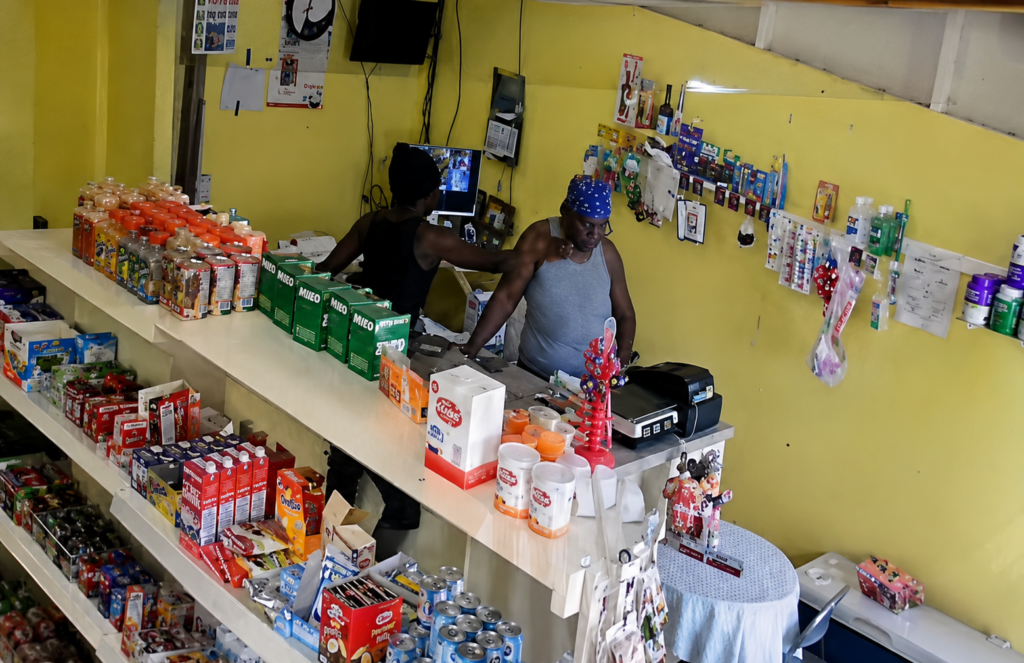
  • OECS Studying Cheaper Food Imports From Dominican Republic to Reduce Cost of Living, Browne Says

    OECS Studying Cheaper Food Imports From Dominican Republic to Reduce Cost of Living, Browne Says

    Against a backdrop of soaring regional living costs that have strained household budgets across small island nations, the Organization of Eastern Caribbean States (OECS) is actively pursuing a policy shift that could bring much-needed relief to consumers: negotiating for cheaper food imports from the Dominican Republic. This initiative was publicly confirmed by Gaston Browne, the Prime Minister of Antigua and Barbuda, who outlined the scope and goals of the exploratory talks in recent public remarks.

    For years, OECS member states have relied on a limited network of food trade partners, which has left the region vulnerable to global supply chain disruptions, fluctuating shipping costs, and inflated pricing from traditional suppliers. The combination of post-pandemic economic aftershocks and global inflationary trends has pushed food prices sharply higher across the Eastern Caribbean, making basic groceries less accessible for low- and middle-income families and amplifying broader cost of living crises across the bloc.

    Against this challenging economic landscape, Browne explained that opening new trade channels with the Dominican Republic, a larger regional producer of a wide range of staple foods, creates a clear opportunity to cut down on import expenses. The Dominican Republic’s geographic proximity to the OECS bloc also reduces shipping distances and associated freight costs, creating additional savings that can be passed on to end consumers. Browne emphasized that bringing down food prices is a top policy priority for OECS leaders, as it directly addresses one of the most burdensome expenses facing households across the region.

    Currently, OECS trade and economic teams are conducting in-depth assessments of the proposal, evaluating everything from trade regulations and supply capacity to potential tariff adjustments that would enable the cheaper import scheme. The initiative reflects a broader push by regional leaders to diversify food import sources, enhance regional food security, and mitigate the impact of global economic volatility on small island economies. If negotiations progress successfully, the new trade arrangement could be implemented in the coming months, delivering tangible relief to consumers across OECS member countries.