The current submission for news processing only includes social media sharing buttons, an image link dated June 16, 2026, and no substantive text content of the original news story. Without the core reporting text, background details, key statements, or event context that make up a complete news piece, it is impossible to conduct a full structured rewrite, in-depth analysis, or accurate fact-checking. The provided image link cannot be accessed or parsed to extract relevant news content through text-based processing workflows. For a complete processing task, submitters need to provide the full text of the original news alongside any supporting links or materials.
博客
-
Masterclass waarschuwt: olie-inkomsten alleen garanderen geen welvaart
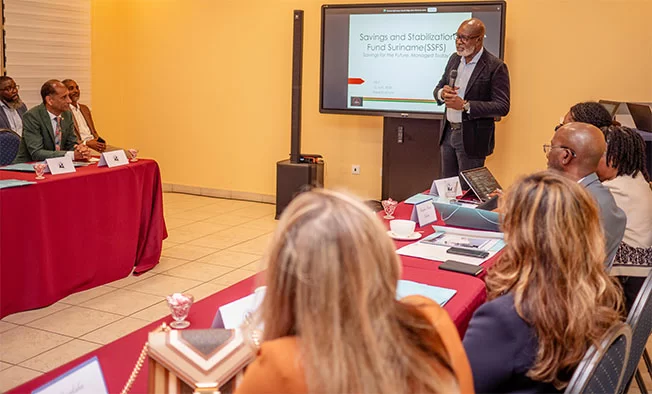
On June 15, a landmark first masterclass focused on Suriname’s upcoming Savings and Stabilization Fund brought together cross-sector stakeholders in Paramaribo’s Hotel Torarica, with industry and policy experts united in a core message: the fund’s long-term success will depend not on the total volume of incoming oil and gas revenues, but on the quality of its management, transparency, and governance structures.
Organized jointly by the Youth Education and Leadership Foundation (YELF) and the Suriname Energy Chamber (SEC), the event gathered representatives from government, the private sector, academia, labor unions, and the national energy sector to deliberate on the fund’s critical role in sustainably managing future natural resource revenues for the South American nation, which has emerged as a new oil and gas producer in recent years.
Opening the masterclass, Minister of Oil, Gas and Environment Patrick Bruinings noted that Suriname is still in the early stages of building its national resource fund framework. While Norway’s widely celebrated sovereign wealth fund is often held up as a global gold standard, Bruinings emphasized that even Norway’s management system evolved gradually over decades, adapting to new research and changing economic conditions, meaning Suriname must build a model suited to its own context through ongoing learning.
Lead presenters Karel Eckhorst and René Abrahams explained that enacting formal legislation to establish the fund is only the first critical step. Equally important is strengthening the government institutions tasked with implementing the Savings and Stabilization Fund law, most notably the Ministry of Finance and Planning, which will oversee core operations of the fund.
Experts further stressed that the fund does not operate in isolation; it is an integrated component of Suriname’s broader public finance system. This means strong regulatory frameworks alone are not enough. The nation also needs to modernize its national budget process, build specialized capacity for evidence-based policy development, and ensure active sustained engagement from civil society across all stages of fund management.
A core design feature of the Surinamese model is a requirement that all fund assets be invested overseas. This structural choice is intended to avoid the disruptive economic impacts that can occur when large volumes of natural resource revenue flood directly into the domestic economy, including rapid currency appreciation and inflation. Returns generated from these international investments will then be allocated to national development priorities through formal budget rules.
Attendees also left the masterclass with a clear warning: the fund on its own cannot shield Suriname from economic volatility or the common pitfalls of resource dependence. To avoid the so-called “Dutch disease” – a condition where resource booms crowd out growth in other non-resource sectors – the nation must continue prioritizing broad economic diversification. Experts identified investments in micro, small, and medium-sized enterprises, general education, knowledge development, and vocational skills training as essential foundations for long-term inclusive, sustainable growth.
The masterclass also traced the decades-long origins of Suriname’s national savings fund idea. As early as the 1970s, policy thinker Frank Essed first highlighted the critical importance of prudent management of natural resource revenues for the nation. That vision was later advanced and expanded by figures including Karel Eckhorst and former Staatsolie director Rudolf Elias, leading to the current push for formal establishment of the fund.
In closing remarks, SEC Chair Orlando Olmberg reaffirmed the fund’s core ultimate purpose: to deliver long-term economic stability and sustained shared prosperity for current and future generations of Surinamese people. Echoing the event’s central message, he warned that no institutional fund can offset the damage of poor governance. “The success of the fund will ultimately not be determined by the size of the assets it manages, but by the quality of the governance that oversees it,” Olmberg stated. For future oil and gas revenues to genuinely advance Suriname’s national development, he added, prudent financial management, full transparency, and broad civil society engagement are irreplaceable non-negotiable conditions.
-
Hospitality training scheme draws nearly 3 000 applicants in three months – Govt
Barbados’ push to expand its critical tourism economy is receiving a strong early response from job seekers, as a new government-led workforce development program has pulled in nearly 3,000 applicants in just three and a half months, according to the country’s Minister of Technical and Vocational Training.
The Barbados Hospitality Gateway Training Initiative (BHGTI), a state-backed program designed to close the growing labor gap in the island nation’s hospitality sector, was originally framed to train up to 5,000 new workers. The initiative comes as local hospitality leaders have repeatedly flagged growing difficulty sourcing qualified candidates to fill hundreds of open roles across the sector.
Nine new hotels are scheduled to open in Barbados in the near term, creating demand for an additional 4,000 trained hospitality workers, Minister Sandra Husbands confirmed in public comments. That looming labor shortfall is what has driven the government’s targeted dual focus: supporting construction of new hotels and residential tourism properties, while building a pipeline of trained workers ready to step into new roles once the properties open.
Husbands explained that the BHGTI is structured to be fully demand-driven, a design feature intended to ensure trainees exit the program with skills that align directly with open industry positions. To achieve this, the vocational training department partners closely with the Ministry of Labour to conduct regular labor market assessments that map unmet skill needs, and adjusts training curricula and cohort sizes accordingly. For example, if the market already has enough bellhops and has a shortage of professional chefs, the program will shift enrollment to prioritize culinary training over other roles.
“This flexible structure gives trainees near certainty that a job opportunity will be waiting for them once they complete their training,” Husbands said. The overarching goal of the program, she added, is to create a closed, supportive ecosystem that boosts employment rates and lifts earning potential for young Barbadians and working families across the island.
In response to the unexpected flood of applicant interest, the government has moved quickly to expand training capacity. The program was initially hosted at three existing vocational institutions, but those facilities did not have enough physical space to accommodate the volume of interested trainees. To resolve the gap, officials have partnered with the Ministry of Education Transformation to secure access to 10 additional public school facilities, allowing the program to scale up enrollment and meet the high demand from prospective workers.
-
UWP leader commends Miriam Blanchard for ‘valuable’ service
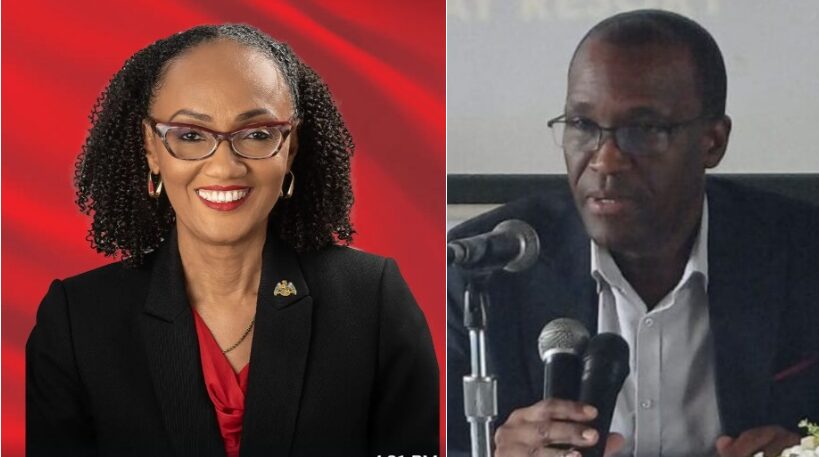
A major shift has emerged in Dominican politics this week, as veteran United Workers Party (UWP) legislator Miriam Blanchard has formally stepped down from her post as Parliamentary Representative for the Roseau North Constituency, citing ongoing health concerns that prompted her exit. Blanchard submitted her formal resignation letter to parliamentary authorities on June 9, 2026, and the UWP made her departure official in a public statement released on Friday, June 12.
In the wake of Blanchard’s announcement, UWP political leader Dr. Thomson Fontaine led the party in expressing sincere gratitude to the outgoing lawmaker for her nearly 10 years of public service to the nation of Dominica. Over her political career, Blanchard built a reputation as a dedicated public servant, holding multiple key Cabinet portfolios across her tenure. Her responsibilities spanned critical government areas, including infrastructure development, national planning, economic growth, labor affairs, public service sector reform, and small business advancement. One of her most notable contributions came during national recovery operations after the devastating impact of Tropical Storm Erika, where she played a central coordinating role in rebuilding communities and restoring critical services across the island. Countless ongoing national development initiatives also bear her mark from her time in office.
“On behalf of the entire United Workers Party, I want to thank Honorable Blanchard for her immeasurable contributions to our country, both in her role as a cabinet minister and as the elected representative for Roseau North,” Fontaine said in the official statement. “We all wish her a smooth, steady journey toward a full and speedy recovery.”
Beyond tributes to Blanchard’s legacy, Dr. Fontaine confirmed that her resignation creates an immediate vacancy that will require a by-election to fill the Roseau North parliamentary seat. Per Dominica’s electoral rules, the by-election must be held within a three-month window from the date the vacancy was officially declared. Fontaine characterized Roseau North as a historically strong electoral base for the UWP, with deep, sustained support from local constituents. He emphasized that the party has already begun preparations to contest the upcoming vote, and is ready to put forward a candidate that aligns with the party’s core mission.
Fontaine reaffirmed the UWP’s longstanding commitment to delivering inclusive economic progress that benefits all segments of Dominican society. He added that the party’s preparations extend far beyond the coming by-election: the UWP is also gearing up to contest a future general election, once the ongoing national electoral reform process is finalized, he confirmed.
-
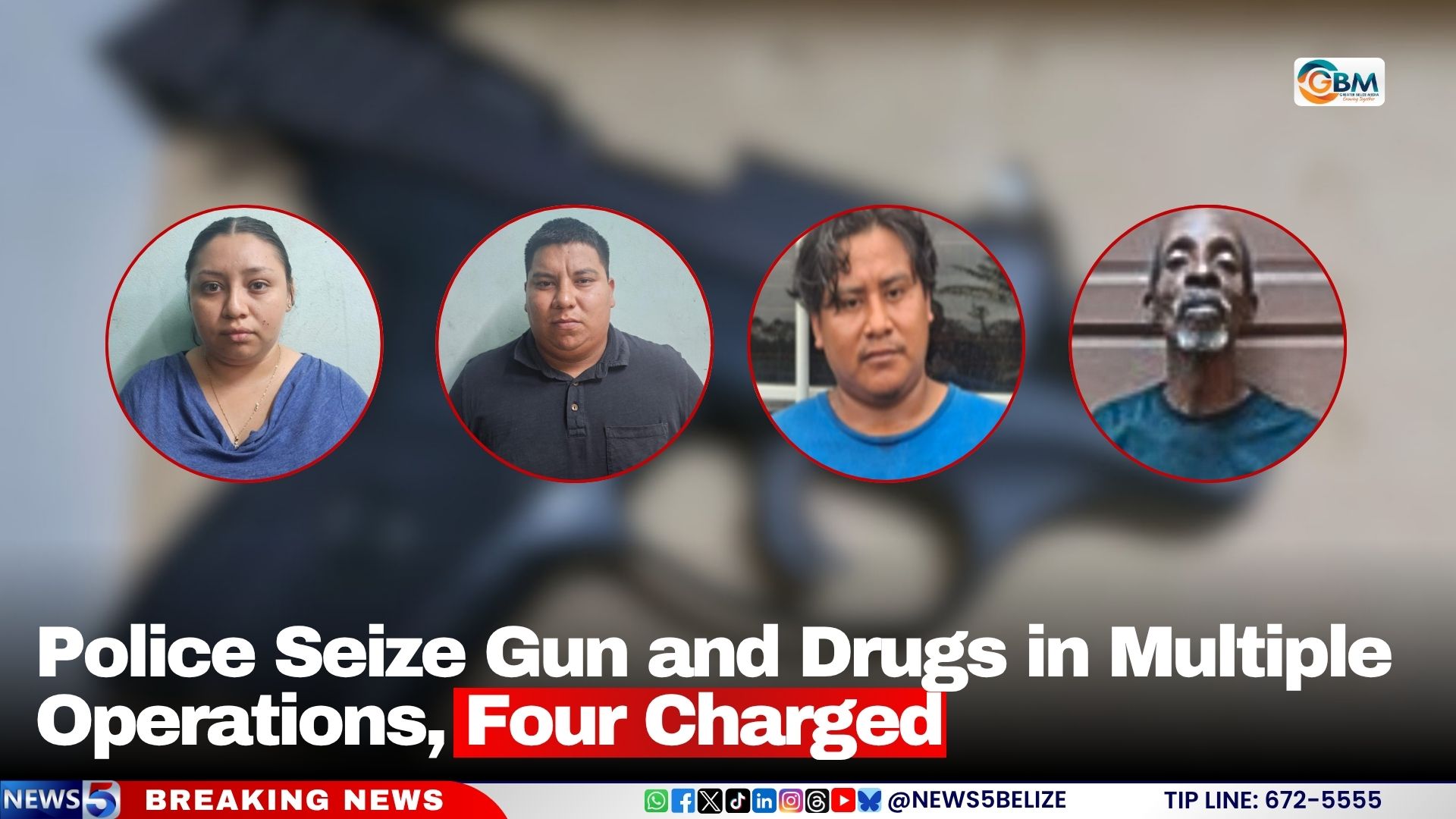
Police Seize Gun and Drugs in Multiple Operations, Four Charged
Law enforcement agencies have wrapped up a series of coordinated anti-crime operations across the nation, culminating in the seizure of an unlicensed 9mm firearm and more than 61 grams of suspected crack cocaine, with four people facing criminal charges in connection with the busts. The multi-location operation, carried out by specialist intelligence and operations units of the national police force, unfolded across three different communities in mid-June 2026.
The first of the three separate incidents took place on an unspecified Wednesday, when officers executed a search warrant at a residential property in San Pedro Town. Inside the home, law enforcement personnel located a Ruger 9mm pistol loaded with six live rounds of ammunition. Two residents of the home, Balbina Camara and Melissa Mendez, were taken into custody immediately following the search. Both women have been formally charged with two criminal offenses: possession of an unlicensed firearm and possession of unlicensed ammunition.
In a second, unrelated operation conducted in Bella Vista Village as part of the national GH3 anti-drug initiative, officers stopped and searched Nelson Carl, a local resident. During the search, investigators discovered 3.4 grams of suspected crack cocaine, split into 34 individual small foil packets, hidden in Carl’s pants pocket. The packaging of the drug, divided into small individual portions, is consistent with street-level distribution of controlled substances. Carl was arrested and charged with possession of a controlled drug with intent to supply, a charge that carries significantly harsher penalties than simple personal possession.
The third bust unfolded on Friday, June 12, in Punta Gorda, where police stopped John Gabourel as he exited a local transportation terminal. Gabourel was carrying a manila envelope, and a consented search of the package revealed two large plastic bags holding 57.79 grams of suspected crack cocaine. The 35-year-old resident of Jose Maria Nunez Street was taken into custody on site, and he has also been charged with possession of a controlled drug with intent to supply.
All four accused are scheduled to appear in local magistrates’ courts in the coming weeks to answer to the charges against them. Police have not released additional details about bail arrangements or any possible links between the three separate cases at this time. The coordinated operations are part of an ongoing national push by law enforcement to crack down on illegal possession of firearms and the street-level distribution of illicit drugs, which officials have identified as key drivers of violent crime in communities across the country.
-
Rider safety warning over unlicensed ‘pirate’ transport
On Monday, senior insurance and public transport industry officials issued a critical public warning to commuters across Barbados: any passenger paying for travel in an unlicensed “pirate” private vehicle will have no financial protection if a crash occurs, and they are urging both riders and unregulated operators to bring their operations into full compliance with national licensing and insurance rules.
Randy Graham, Chief Executive Officer of CG United Insurance and a former president of the General Insurance Association of Barbados, explained that the persistent practice of private vehicle owners operating as informal, fare-charging public transport remains a major red flag for the country’s insurance sector. Speaking exclusively to Barbados TODAY, Graham emphasized that private vehicle registration under the island’s Road Traffic Act explicitly prohibits operators from collecting fares from passengers.
Any driver who wants to carry paying passengers must first secure a formal commercial operating license from the national Licensing Authority, and purchase a specialized commercial insurance policy that matches the higher risk of public transit operation, Graham outlined. “A standard private vehicle insurance policy does not extend coverage to fare-paying passengers,” he stressed. “If you are operating illegally and are involved in an accident, there is no guarantee that either the vehicle or the injured passengers will receive compensation from the existing insurance plan.”
Graham went on to explain the core difference between private and commercial coverage: commercial vehicles like taxis and minibuses spend far more time on the road transporting groups of passengers, so their licensing and insurance frameworks are designed to account for this elevated risk. Private policies are priced and structured for personal use, not regular commercial passenger transport, and do not offer the same level of protection for injured passengers that regulated commercial policies provide.
To address this ongoing risk, Graham called on unlicensed operators to update their paperwork and secure proper coverage immediately, while urging riders to proactively choose only fully registered and licensed transit options when paying for travel. “We are asking passengers to only use properly registered and licensed vehicles when they pay for a ride, because if they don’t, there is a very high chance that any injury costs from an accident will not be covered by insurance,” he said.
Roy Raphael, Chairman of the Alliance Owners of Public Transport (AOPT), echoed Graham’s warning, and noted that the Barbados government has put new accessible pathways in place to help informal operators transition to legal operation. Raphael pointed to the recent approval of 150 new permits under the government’s Transport Augmentation Programme (TAP), administered by the national Transport Authority, as a clear opportunity for unlicensed operators to regularize their work.
“If you want to transport passengers and offer a legitimate service, go to the Transport Authority and apply for a legal permit to operate,” Raphael said. “That way, if an incident does occur, you and your passengers are fully covered.” He also warned commuters against turning to unlicensed pirate operators even when regular public transit services are delayed on under-served routes, noting that riders are knowingly putting their own safety and financial security at risk. “People don’t expect accidents to happen, but when they do, there is no safety net left,” he added.
Raphael highlighted that the TAP program includes flexible payment plans for permit fees, making it far easier for small operators to bring their services into compliance with national rules. “Get yourself legalized. Stop putting children, elderly people and other commuters in unnecessary danger,” he urged. He also added a urgent note tied to rising road safety concerns across the island: the country has seen a growing number of severe road crashes involving passenger vehicles, including multiple incidents of vehicle overturns and mass casualties. Unlicensed operators often flee the scene of crashes because they know they have violated the law, leaving injured passengers with no one to turn to for compensation. “Don’t put yourself in that position,” Raphael warned.
-

OP-ED: The personal responsibility trap
The escalating childhood overweight and obesity crisis across the Caribbean has ignited a urgent public debate over who bears ultimate responsibility for protecting young people’s health, with public health leaders pushing back against narratives that center individual choices over systemic policy failures. New data reveals that 42 percent of children in Barbados currently live with overweight or obesity, a sharp jump from just 33% a decade ago. This public health emergency is already leaving tangible damage: affected children face drastically elevated risks of developing type 2 diabetes, hypertension, heart disease, and other life-altering non-communicable diseases (NCDs), placing crippling financial and social strain on families, local communities, national healthcare systems, and the broader Barbadian economy.
The conversation reignited recently after the Heart and Stroke Foundation of Barbados launched its ENOUGH campaign, which calls for strict new regulations to ban the marketing of unhealthy foods and beverages within school settings. During public discussions surrounding the campaign, many speakers repeatedly circled back to the idea of personal parental and individual responsibility as the primary solution to the crisis. Public health advocates do not dispute the critical role that parents and personal choice play in shaping children’s dietary habits: caregivers play an irreplaceable role in encouraging nutritious food and drink selection, and youth education around healthy lifestyles delivers clear benefits. But these leaders argue that expecting families to push back against pervasive, predatory junk food marketing that saturates every corner of school environments without any systemic policy support is an unfair and unrealistic burden.
When nearly half of an entire nation’s children are affected by the same public health crisis, the problem cannot be blamed on individual failure, advocates argue. This is a predictable outcome created by broken systems, unregulated environments, and weak policy frameworks that prioritize corporate profit over children’s well-being. The core of the current debate centers on whether harmful food and beverage marketing should be allowed to operate unchecked in school spaces. Public health experts draw a clear parallel: no government would permit tobacco companies to sponsor school events, distribute branded promotional materials to students, and build lifelong brand loyalty among children, then turn around and blame kids for failing to exercise enough self-control. The same standard is applied to alcohol companies, which are barred from marketing their products to minors in school settings. Why, advocates ask, do we treat unhealthy processed food and drink marketing differently?
The global public health community has long agreed that schools should be protected spaces where children’s health and safety take priority over commercial interests. But when it comes to obesogenic foods linked to diet-related NCDs, the conversation almost always shifts back to what parents and children should do differently. Experts acknowledge that children are exposed to highly sophisticated, research-backed marketing tactics designed to exploit their developing brains. Children do not have the same cognitive capacity as adults to critically analyze persuasive advertising messages, and they are universally recognized as a group that deserves extra protection from harmful commercial practices. If children lack the ability to critically evaluate these marketing messages, it is unreasonable to expect them to consistently resist their influence, advocates say.
Over the past 15 years, Barbados has spent more than $6.1 billion on healthcare costs tied to NCDs and obesity. Today, taxpayers, working families, and the under-resourced public healthcare system continue to bear the enormous financial burden of the crisis, while the food and beverage companies whose products and predatory marketing practices drive the crisis keep all the profits. The evidence is unambiguous: ultra-processed foods and sugar-sweetened beverages are aggressively marketed to children, even within school grounds. Brand loyalty for unhealthy products is cultivated from early childhood through a range of tactics specifically designed to influence youth behavior, including school event sponsorships, in-school promotions, free branded giveaways, and targeted advertising that permeates school campuses.
Unfortunately, when public health regulations are proposed, governments too often repeat a narrative that has long been pushed by powerful commercial industry groups: the idea that the core problem is a lack of personal responsibility. This framing shifts blame away from corporate actors and government regulators, reassuring industry that its harmful practices will not face meaningful scrutiny while reducing political pressure on governments to enact tough new rules. History, public health leaders note, makes the outcome of this approach clear.
For decades, tobacco companies pushed the same framing, arguing that smoking was simply a matter of personal choice, even as they cultivated new young smokers to replace those who died from tobacco-related illness. Alcohol producers today continue to emphasize “personal responsibility” for drinkers while aggressively fighting any policy that would restrict marketing to minors or limit product access. The language of this corporate strategy is polished over time, but the core approach never changes. When the entire public debate centers on personal responsibility, blame is placed on the group with the least power to change the harmful environment around them, while accountability is removed from the powerful corporations and government bodies that have the ability to rewrite the rules.
Major public health progress has never been achieved through personal responsibility alone, advocates point out. Mandatory seatbelt laws did not reduce road fatalities because drivers suddenly became more responsible: they saved lives because governments created a safer environment that made the healthy choice the easy choice. Tobacco control did not succeed because smokers got better personal advice: cutting tobacco-related illness and death required governments to implement strict regulations on advertising, sales, and use that created environments where non-smoking was the default. The same core principle, leaders say, must apply to the childhood obesity crisis.
If governments and public health leaders are serious about reducing the growing burden of diet-related NCDs across the Caribbean, they must stop asking the group with the least power to solve a crisis created by those with the most power. The focus cannot remain on blaming parents and individual children while the corporations that profit from unhealthy diets escape meaningful scrutiny and accountability. After all, parents and children do not have the power to decide what products are marketed to them in schools. They cannot set national public health policy. They cannot negotiate with multi-million dollar corporations that design their business models around cultivating lifelong, loyal consumers from early childhood.
These arguments come from Maisha Hutton, Executive Director of the Healthy Caribbean Coalition (HCC), the Caribbean region’s leading civil society alliance focused on NCD prevention and control. The HCC grew out of the 2007 CARICOM Heads of Government Declaration on NCDs, and was first established informally in 2008 before being officially registered as a not-for-profit organization in 2012. Today, the HCC is the only regional NCD alliance, bringing together more than 80 health and non-health civil society organizations across the Caribbean. The group works closely with regional and international global health leaders to strengthen civil society capacity, supporting member organizations to implement programs that reduce NCD-related illness and death across the region.
-

BFA Champions Cup semifinal lineup completed
The final spots in the Barbados Football Association Champions Cup semifinal lineup have been locked in, after a weekend of high-stakes quarterfinal action that delivered dramatic late goals, extra time drama, and a tense penalty shootout. Both surviving winning coaches have echoed the same message: their squads still have room to grow ahead of the next round of the competition.
Sunday’s opening quarterfinal at the Wildey Technical Centre delivered a thrilling comeback, as Brittons Hill United overturned an early deficit to claim a 2-1 extra time win over UWI Blackbirds. Teon Codagan put UWI in front just before halftime in the 38th minute, holding the lead until Corey Hoyte found the equalizer for Brittons Hill in the 65th minute. With both sides unable to break the deadlock through regulation, the match stretched into extra time, where Hoyte clinched the victory for his side with a dramatic 117th-minute winner.
Brittons Hill notched a fourth-place finish in last season’s Champions Cup, and head coach Richard Forde made clear the squad’s target is to outperform that result this campaign. “It was a struggle with these boys today, but I keep telling them that we can’t improve and we can’t execute under pressure if we don’t put the work in at practice. We’re still pulling everything together, and this is something the whole group is working really hard on,” Forde said after the match.
In the late evening quarterfinal, defending champions Weymouth Wales delivered a dominant 3-0 shutout victory over Eyre’s Meat Shop Pride of Gall Hill, to book their own semifinal spot. Mario Williams got the defending champions on the board first, before Armando Lashey, the league’s all-time leading goal scorer, added two late goals to seal the win. Even with the comfortable three-goal margin, head coach Asquith Howell said his side has not hit its full stride yet, identifying finishing as a key area for improvement ahead of the next round.
“I think our attack looked sharper today than it has in previous outings, but we still need to convert more of the chances we create. That’s been our weak spot so far this tournament,” Howell explained. “We created plenty of clear opportunities today, and you can see we’re building solid attacking momentum, we just need to clean up our finishing in the final third.”
The first two quarterfinal matches kicked off on Saturday at the same Wildey venue, with Paradise edging Pro Shottas 1-0 thanks to a late 87th-minute match-winner from Sheran Hoyte. The day’s second quarterfinal was decided by penalties after a 1-1 draw through full time between Mavericks and Ivy Rovers. Deondre Brown put Mavericks ahead in the 23rd minute, before Jarad Maxius equalized from the penalty spot for Ivy Rovers just before halftime in the 43rd minute.
Neither side could find a winner in extra time, sending the clash to a penalty shootout, where Mavericks emerged with a 5-4 win on penalties. The hero of the shootout for Mavericks was Kaliq Lashley, the national Under-17 goalkeeper, who notched the only save from either side to send his team through to the final four.
-

LIU Director Says ‘We Never Paid People to Hold It Down’
A sudden suspension of a community-focused work programme run by Belize’s Leadership Intervention Unit (LIU) has pushed more than 500 participants into immediate financial uncertainty, with many facing severe daily hardship, acting LIU director Andrew Dawson has confirmed.
In an interview with local outlet News 5, Dawson acknowledged the acute stress the pause has inflicted on the programme’s enrollees, noting that widespread uncertainty over access to basic needs has created palpable tension among affected groups. “It does create some tension as it relates to these individuals, not knowing where the other meal comes from,” he told reporters.
The suspension has reignited long-running public debate over the LIU programme’s purpose and implementation, prompting Dawson to push back against two pervasive criticisms of the initiative. First, he rejected the widespread claim that the programme exclusively serves people affiliated with gangs, emphasizing that it was designed to support a broad cross-section of vulnerable Belizean residents. This population, he clarified, includes low-income university students and unpaid office interns seeking stable work experience alongside at-risk community members.
Dawson also addressed a decades-long critique that frames the programme as a scheme that simply pays participants to avoid criminal activity, a characterization he called categorically inaccurate. “Let me put that on record. Since I’ve been at LIU and even with the previous director, we have never had an intention to say that we’re paying people to hold it down. It was a social protection programme,” he stated.
While Dawson openly admitted that the programme has fallen short in key areas, including accountability protocols and consistent work output from some participants, he emphasized that the initiative has delivered meaningful, life-changing positive results for a large share of enrollees. He argued that discarding the entire programme over the actions of a small uncooperative minority would be unfair to the many participants who have made significant progress toward reintegrating into mainstream society.
“What do you do? You dash away everyone. How about those who have made changes or those who have made strides to becoming better persons within their society? We can’t just get rid of those persons because of a handful who do not want to cooperate,” he argued.
Looking ahead, Dawson confirmed that LIU leadership is currently exploring alternative income-generating models for the programme, moving beyond its existing focus on community beautification projects. However, he stressed that a final decision on whether to restart the programme rests with higher-level government authorities, not LIU management.
-
‘No control’: PM Pierre on Ireland’s abrupt visa demand
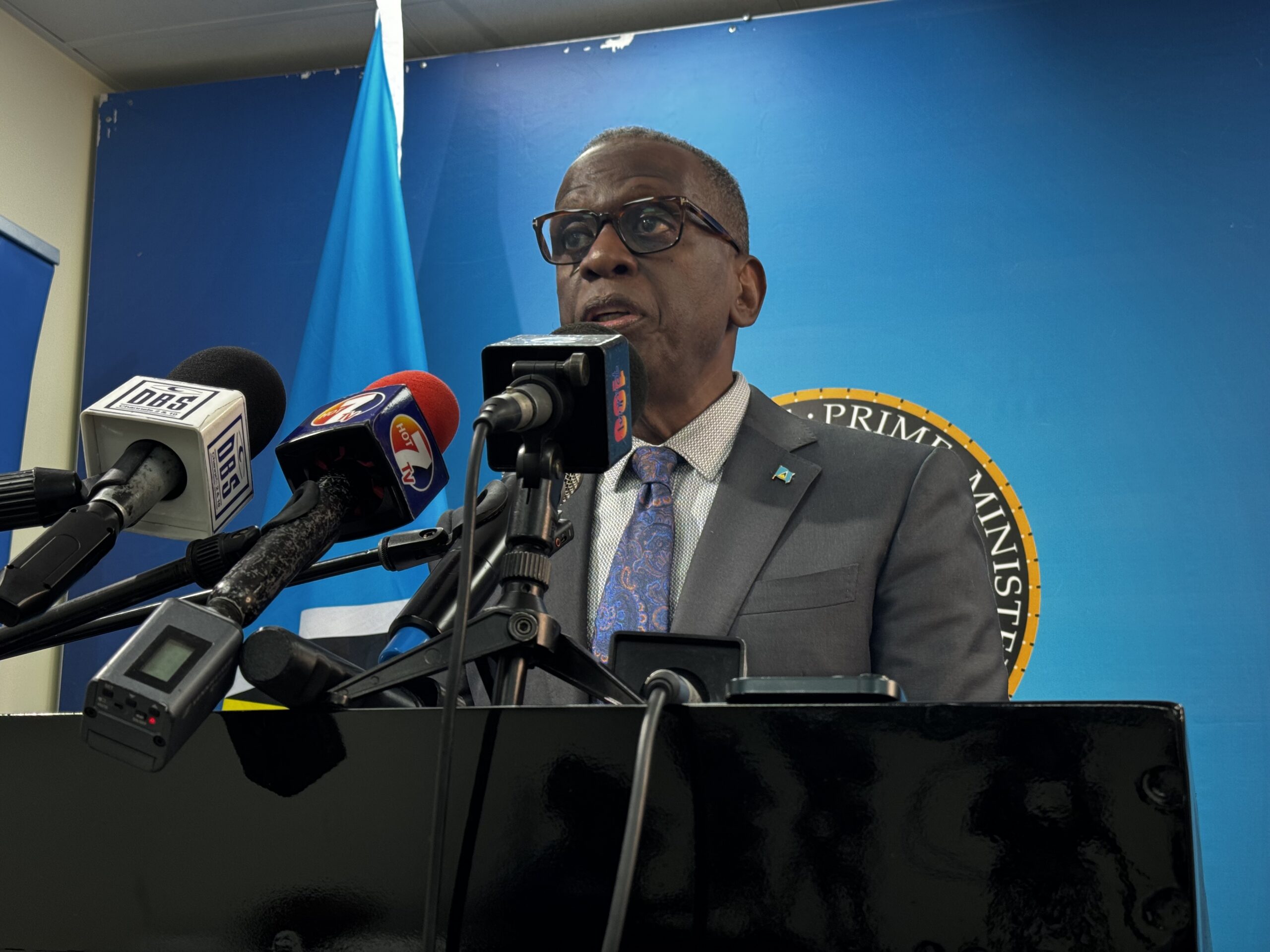
In an unexpected announcement that has upended decades of seamless cross-border travel, Ireland has imposed new mandatory visa requirements for all Saint Lucian passport holders, a policy that went into effect this Monday and caught the Saint Lucian government completely off guard. Prime Minister Philip J. Pierre told reporters at a pre-Cabinet press briefing on Monday that his administration only received formal notification of the policy change from Ireland’s embassy in Ottawa, Canada, this past Friday, with no advance bilateral discussions or consultations held between the two nations ahead of the rule being enacted.
The new visa mandate applies not only to ordinary Saint Lucian passports but also to diplomatic and service passports, and Saint Lucia is not the only nation targeted: Ireland added Saint Kitts and Nevis and Nicaragua to the list of visa-required countries alongside it. This move marks the end of a long-standing visa-free travel arrangement between Saint Lucia and Ireland, and comes just months after the United Kingdom implemented a nearly identical restriction on Saint Lucian travelers, a decision British officials justified by citing a uptick in asylum applications from Saint Lucian nationals and stated security concerns over the island nation’s Citizenship by Investment Programme.
In contrast to the UK’s explicit reasoning, Ireland’s official notice only framed the policy adjustment as a routine step to align the country’s immigration practices with those already in place in the UK, the Schengen Area, and Northern Ireland. No specific concerns related to Saint Lucia or its citizens were named in the official notice.
While Pierre acknowledged that Ireland holds full sovereign authority to craft its own immigration rules, noting that “I have no control over Irish internal policy… The Irish government decides what’s in the best interest of Ireland,” he argued that the abrupt change is far from an isolated policy tweak. Instead, he framed it as a clear symptom of a spreading anti-immigrant and increasingly insular trend taking hold across Europe and other developed nations.
“The situation is that these countries have decided that they are going to be anti-immigrant. That’s why it’s so important that our region… get together, because the whole world seems to be getting very insular,” Pierre said.
Pierre’s observation aligns with broader regional dynamics across Europe, where immigration has emerged as one of the most divisive and politically charged issues in recent years. In Ireland specifically, growing public discourse and even periodic public protests over migration policy have pushed the issue to the top of the domestic political agenda in recent months, creating pressure on Irish officials to adjust border rules.