
On a Monday evening in San Ignacio Town, an outburst of gang-involved gunfire left an innocent five-year-old boy hit by a stray bullet, drawing renewed attention to the persistent threat of violent crime in the area. According to local law enforcement officials, the shooting unfolded just after 7:40 p.m. along Collins Boulevard, turning a routine residential street into a scene of chaos. When first responders and police officers arrived at the incident location, they found 30-year-old Carlton McKoy lying on the pavement with multiple gunshot wounds to his body. Early investigative findings outline that McKoy was driving onto Collins Boulevard when a group of suspects seated in a parked vehicle opened fire, discharging multiple rounds directly at his car. As the gunfire spread across the area, one stray bullet traveled off the road and struck the young five-year-old student, who had been walking home on adjacent Bullet Tree Road alongside his mother. Both wounded victims were immediately rushed to a local medical facility for urgent care. The young child, whose identity has not been released to the public, was later transferred to Belize City’s Karl Heusner Memorial Hospital to receive more specialized ongoing treatment. As of Wednesday, authorities have confirmed that both McKoy and the child are in stable condition, with medical teams monitoring their progress closely. Law enforcement agencies have launched a full investigation into the shooting, working to identify the suspects responsible and determine the motive behind the attack. No arrests have been announced as of the latest update, and the investigation remains active and ongoing. This shooting marks another incident of gun violence impacting innocent bystanders in the region, leaving community members concerned about public safety, particularly for children and families moving through public spaces in the evening hours.
博客
-
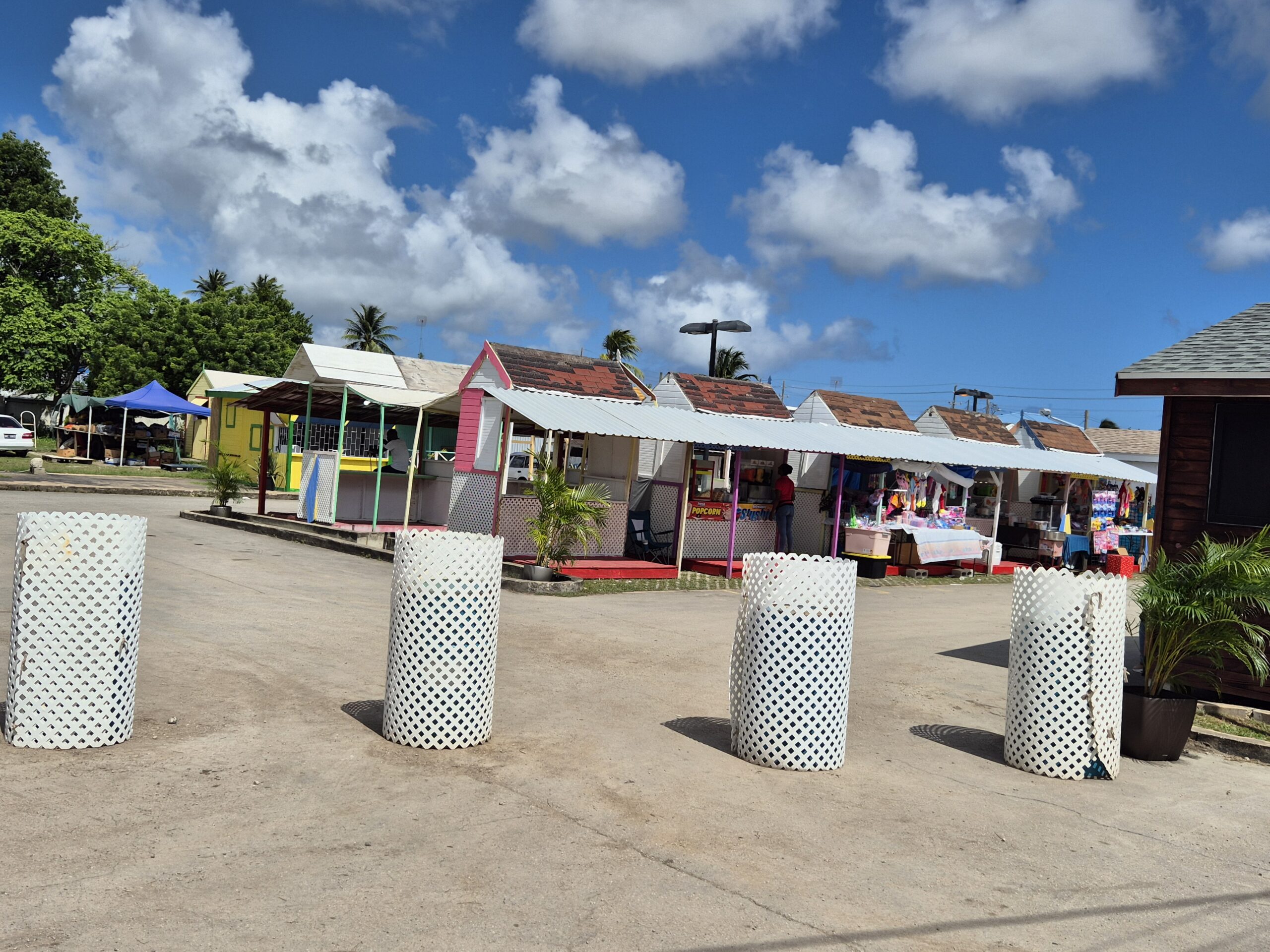
Vendors complex sees strong Crop Over weekend turnout, sales
Barbados’ annual Crop Over festival wrapped its iconic Bridgetown Market weekend at the BARVEN Complex on Mighty Grynner Highway this year, delivering record-breaking commercial results and drawing the largest family crowd in the venue’s history, event organizers have confirmed. The 2024 gathering has cemented the space as a fast-growing, inclusive entertainment hub catering to visitors of all ages, marking a major milestone for the relatively new event location.
Heading into the weekend, organizers noted low-level concerns that lower foot traffic along traditional post-Foreday Morning parade routes would cut into vendor sales. But those fears never materialized: targeted cross-platform marketing campaigns and a packed lineup of culturally rooted performances drove a steady stream of attendees to the complex, leaving most stallholders with their highest earnings ever recorded at the event. Glenroy Forde, marketing manager for the BARVEN Complex, shared that the overwhelming majority of vendors exceeded their revenue projections for the final stretch of the festival.
“Before I even had the chance to ask how their weekend went, vendors were already telling me this was the best turnout and the strongest sales they’ve ever had at Crop Over,” Forde said in an interview after the event. “Of course, not every vendor sells a product that every visitor is immediately familiar with, so a small number didn’t hit their goals. But the vast majority walked away happy with their profits, and attendees loved that we offered dedicated activities and spaces to keep children entertained throughout the day.”
A large part of this year’s success stemmed from a strategic collaboration with popular local musician King Shepherd, whose hit track *Wuk up on It* became the centerpiece of promotional efforts across both traditional broadcast and social media platforms. The core goal of the 2024 strategy was to build a family-focused event package that appealed to all demographic groups across Barbados, rather than targeting only young adult festival-goers. Shepherd explained that the BARVEN Complex fills a long-unmet need in the island’s cultural and nightlife landscape by offering a safe, welcoming space that works for multiple generations of a single family.
“Before this, there wasn’t a single spot in Barbados where grandma, grandpa, mom, dad and the kids could all go out together and feel comfortable,” Shepherd said. “There was no other venue with that intentional family-oriented atmosphere. This year, we had grandparents travel all the way from St Lucy to bring their grandchildren to the event. My whole goal was to build that intergenerational, family-focused weekend experience here at BARVEN.”
Attendees enjoyed a wide spread of Caribbean culinary offerings throughout the weekend, including authentic dishes from Bajan, Trinidadian, Guyanese and Jamaican traditions. The venue also hosted a dedicated fun park for young visitors and multi-genre musical sets curated to appeal to both local residents and international tourists. A new addition to this year’s Crop Over calendar was an independent private road parade held ahead of Kadooment Day, which ran along Spring Garden Highway before ending at the BARVEN Complex, directing thousands of revellers directly to the venue’s vendor stalls.
Forde emphasized that the inaugural parade ran without any major incidents or security issues. “The parade went off perfectly — no violence, no hiccups, and everyone had an incredible time,” he said. “Thousands of people walked over from Spring Garden Highway straight into BARVEN, grabbed snacks or ice cream, kicked off their costumes and slippers, and relaxed after the parade. This is hands-down the best Crop Over I’ve experienced during my time here at the complex.”
Despite the widespread commercial and attendance success, event organizers have already outlined clear areas for infrastructure and operational improvement to build on this year’s momentum moving forward. Top priorities for 2025 and beyond include upgrading on-site lighting, adding aesthetic improvements to the grounds, and expanding the venue’s security presence. Because the complex sits adjacent to a residential neighborhood, upgrading lighting is a critical step to ensure both attendees and nearby residents feel safe during evening events, Forde explained.
“Brighter, more widespread lighting across the complex is an absolute non-negotiable for future events,” Forde said. “We need everyone to feel secure here, especially since we’re surrounded by a residential community. Adding more greenery to beautify the space and upgrading the entire lighting system are our top priorities. You can’t invite families to bring their grandchildren to an event if you don’t have safe, adequate lighting.”
Looking beyond the annual Crop Over festival, BARVEN management is planning to launch ongoing marketing initiatives to support local vendors year-round, including a dedicated weekly radio segment that gives small business entrepreneurs ongoing exposure. If the venue is able to secure sustained promotional funding, implement the planned infrastructure upgrades, and expand security, Forde said BARVEN could become a regular weekly destination for both local commerce and community-focused entertainment across Barbados.
-
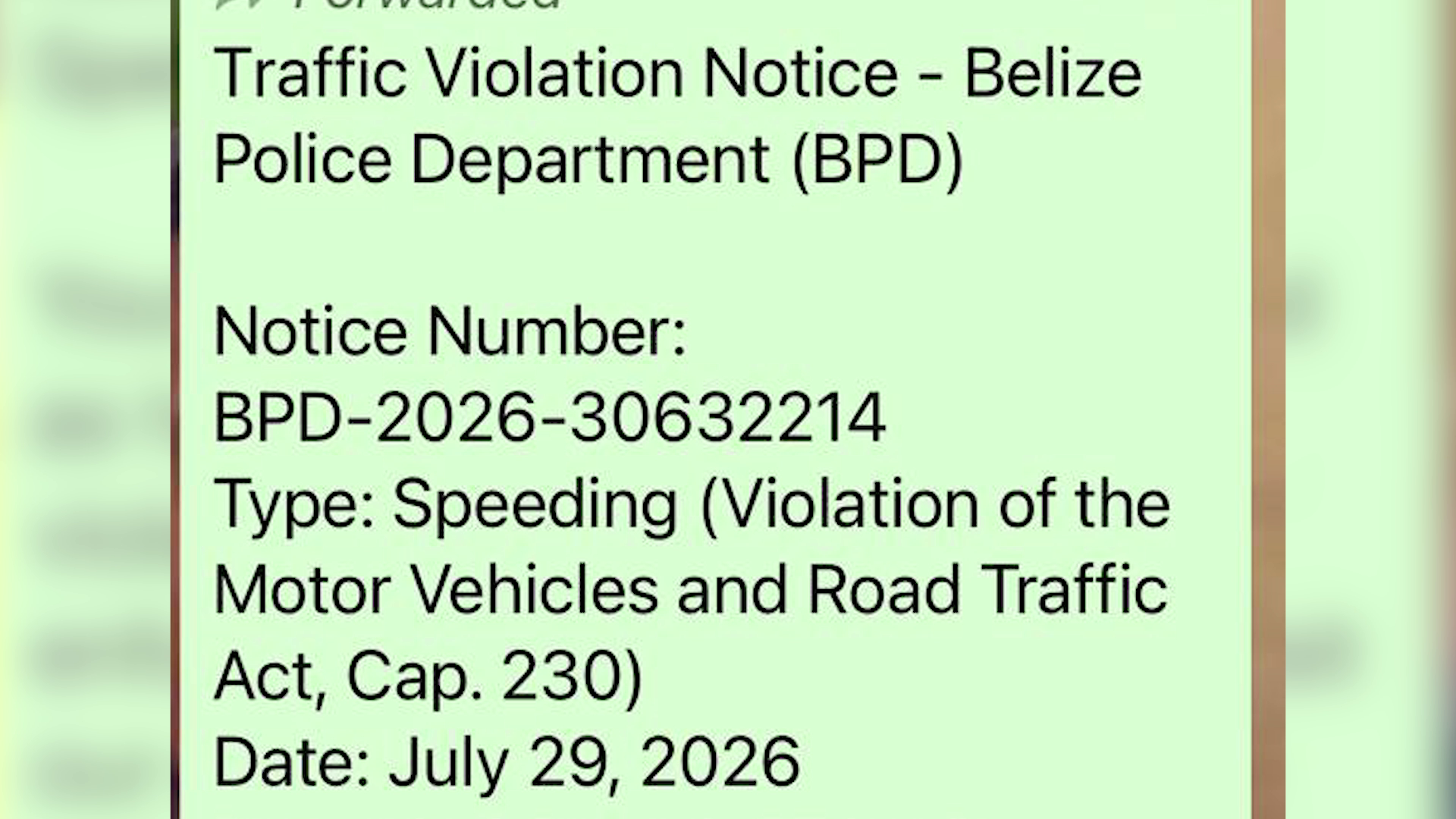
Scammers Pose as Police in Fake Traffic Fine Scheme
In a public safety advisory issued on August 4, 2026, the Belize Police Department has sounded the alarm over a growing fraudulent scheme that is currently circulating via text messages and online platforms, in which scammers impersonate law enforcement to steal money and personal data from unsuspecting residents.
The deceptive operation centers on fake traffic violation notifications, which claim the recipient has been cited for an unrecorded driving offense. The scam messages instruct targets to pay an outstanding fine immediately through an embedded third-party website, threatening harsh consequences including automatic driver’s license suspension and further legal action if payment is not processed quickly. According to official police confirmation, none of these messages are authorized or distributed by the Belize Police Department, marking the entire communication as a coordinated criminal scam.
Law enforcement has issued clear guidance for members of the public to protect themselves against this fraud. Authorities are urging all residents to avoid clicking any links included in these unsolicited messages, to never send payment to the accounts linked to the fraudulent site, and to refrain from sharing any sensitive personal or financial information that could be used for identity theft or further financial crimes. Any individual who receives a communication claiming to be an official traffic notice should verify its legitimacy exclusively through verified, official channels run by the Government of Belize, police added.
Currently, the Belize Police Department has launched an active investigation into the scam, and is coordinating with relevant digital platform and cybersecurity teams to take down the fraudulent website linked to the scheme and prevent more residents from falling victim. This advisory comes as text-based impersonation scams targeting public authorities have risen globally, with bad actors leveraging public trust in law enforcement to pressure targets into complying with their demands.
-

Crop Over ‘success’ prompts call for more venues, better planning
Barbados’ annual Crop Over festival closed out its 202X season on a high note, with a surge in tourist arrivals and zero violent incidents delivering a welcome boost to the island nation’s entertainment and tourism sectors, a top local entertainment industry leader confirmed Tuesday. But while industry leaders celebrated the season’s overall success, Rudy Maloney, president of the Entertainment Association of Barbados, has sounded an early alarm about growing operational bottlenecks that threaten to erode the festival’s long-term growth potential if left unaddressed.
In a post-festival reflection, Maloney emphasized that the 202X iteration of the iconic Caribbean cultural festival exceeded most performance expectations. “This year, we rolled out a full lineup of high-quality events spanning the entire festival season, and we saw a remarkable influx of international visitors traveling to the island specifically for Crop Over,” Maloney said. “From the festival’s flagship staple events to smaller independent showcases, attendance numbers were strong across the board, and the entire season unfolded without a single violent incident. There’s no question this year’s Crop Over delivered real, tangible benefits to Barbados’ broader economy.”
Despite these positive outcomes, the unprecedented volume of scheduled events exposed critical gaps in the island’s festival infrastructure and operational capacity. The most pressing challenge, Maloney noted, is a persistent shortage of suitable event venues. With only a limited number of premium locations available, popular sites were forced to host multiple back-to-back events throughout the festival, while overlapping event scheduling created frustration for attendees hoping to move between multiple functions on the same night.
“We definitely need to expand our pool of available event venues — this year, most top-tier spaces were booked for multiple events over the course of the season,” Maloney explained. “We often ended up with four or five major events ending at the same time, leaving attendees who wanted to attend multiple shows stuck. This isn’t about implementing strict restrictions on event numbers; it’s about taking a fresh look at the overall festival calendar to create a smoother, more accessible experience for everyone that sets the season up for even greater success.”
The dense concentration of events over a relatively short seasonal window has also placed extreme strain on the island’s event service providers and hospitality workforce. Local staff including bartenders, stage setup crews, and event managers were stretched thin, working back-to-back long shifts to keep up with demand. Maloney added that the seasonal nature of the festival industry makes it difficult for businesses to justify large permanent investments in additional equipment and full-time staff, as there is not enough consistent demand year-round to support those costs.
“Because so much of our event activity is clustered into the Crop Over season, businesses can’t afford to invest in full-time, year-round capacity just to cover a few weeks of intense demand,” Maloney said. “If we could spread major events more evenly across the calendar, that would create a more sustainable business model that makes it worthwhile for providers to scale up their capabilities.”
Looking ahead, Maloney voiced strong support for ongoing workforce training programs led by the National Cultural Foundation (NCF), which are designed to lift professional standards across the entire Crop Over festival economy. He noted that the initiative has already produced a growing pool of trained professionals equipped to handle a wide range of event responsibilities, and called for the program to continue expanding.
“The NCF has done solid work to bring together industry stakeholders and build up the professional capacity our sector needs to grow,” Maloney said. “We’re already seeing the benefits of that investment with more skilled workers in the pipeline, and we’re eager to see that progress continue.”
To tackle the logistical challenges head of the next festival season, Maloney said the Entertainment Association of Barbados plans to host structured collaborative discussions with safety regulators, law enforcement, and event service providers to refine event scheduling and resolve operational bottlenecks, setting the stage for more sustainable growth in coming years.
-

Placencia Race Makes Waves for Lagoon Protection
On a sunlit weekend in early August 2026, the glassy waters of Placencia Lagoon in Belize filled with the steady dip of paddles and the energy of hundreds of gathered participants, kicking off the second annual Battle of the Paddles — far more than a typical sporting competition. Billed as “A Race for the Environment,” this event brings athletes, local community members, and leading conservation organizations together around a shared mission: protecting one of Belize’s most ecologically critical coastal ecosystems, the Placencia Lagoon.
The idea for the race was first conceived by local tour guide Ian Yearwood, an avid outdoorsman who has spent years exploring Belize’s diverse natural landscapes. According to event organizer Megs Yearwood, Yearwood’s core motivation was to draw greater attention to the stunning natural beauty that exists within Belize itself, especially at a time when many local residents opt to travel abroad for summer getaways. For families that lack the resources for international travel or are eager to learn more about their own backyard, the race creates a joyful, accessible opportunity to connect with underappreciated local gems like the Placencia Lagoon.
The initiative operates under the umbrella of the Reef Guard Project, a regional program dedicated to improving management of Belize’s marine protected areas and advancing targeted conservation work for the lagoon. The World Wildlife Fund (WWF) has been a key partner in the event, with marine conservation officer Abigail Parham Garbutt explaining that the race fills a critical gap by turning community members into active stakeholders for lagoon protection. “Local people are stepping forward to say they understand how important this ecosystem is, and they want to take action so that future generations can experience the same natural beauty we have enjoyed,” Garbutt noted.
For competitors, the spirit of collaboration for conservation overshadows the drive for victory. Team Splash, the 2025 champions, returned this year to defend their title, but captain Javier Guardado emphasized that the day’s real win is advancing protection for the lagoon’s wildlife. “We’re here to do our best, but at the end of the day, this is about bringing the community together to stand up for our natural spaces,” Guardado said. In the family competition category, Team Fast Forward member Simon August echoed that sentiment, noting that events like this are a new and welcome addition to Placencia’s community calendar. “It’s so important to raise awareness for environmental protection, and we’re glad to be part of it, both competing and having fun while supporting the cause,” August said.
Beyond the on-the-water racing, the event served as a public showcase for ongoing conservation work across the region. Seven major environmental and research organizations, including WWF, Sea of Life, Strong Coast, the Southern Environmental Association, Blacks in Marine Science, and the Crocodile Research Coalition, set up displays to share their work on pressing issues ranging from plastic pollution mitigation and mangrove habitat restoration to innovative sustainable uses for sargassum seaweed.
Darcy Regalado of the Crocodile Research Coalition highlighted that the event’s greatest strength is its model of cross-organizational collaboration. Rather than conservation groups working in isolation, the race brings all stakeholders together to directly educate local residents and visitors about the work being done to protect the coast. “When we all come together, we create a far bigger impact than any one organization could alone,” Regalado explained. “By inviting the NGOs already working in these coastal communities to engage the public directly, we turn awareness into action.”
Moving forward, event organizers hope the race will continue to grow and inspire sustained local action to keep the Placencia Lagoon healthy for generations of Belizeans to come.
-

Teachers Trade Classrooms for Coastline in Mangrove Training
On August 4, 2026, a unique professional development program is taking 13 educators out of traditional school classrooms and into Belize’s coastal mangrove ecosystems to build climate resilience literacy across the country’s education system.
Hosted at Calabash Caye, the four-day Project Mangrove: Enhancing Resilience to Climate Change in Belize workshop is a collaborative initiative led by Belize WaterWays, Galen University, and the University of Belize’s Environmental Research Institute, with funding and support from the CEK Foundation’s Earth Focus Initiative and the World Wildlife Fund. The program is designed to turn local teachers into frontline environmental ambassadors, equipping them with hands-on experience and curriculum-ready knowledge to share climate and conservation lessons with their students.
For Belize, mangrove ecosystems are far more than just coastal vegetation – they serve as critical natural infrastructure that shields shorelines from destructive storm surges and erosion, provides critical habitat for commercially and ecologically important marine species, and filters pollutants before they can reach the country’s iconic Mesoamerican Barrier Reef. The workshop’s immersive model flips the script on traditional in-service teacher training, moving lectures out of closed rooms to give educators direct, experiential learning across interconnected Belizean ecosystems.
“Usually, teachers tend to do projects and workshops in their classrooms and everything else, but we wanted to do a flip side immersive fun project where teachers get to learn the ridge-to-reef perspective, pretty much to understand the watersheds in Belize,” explained Miracle Bood, Program Coordinator for Belize WaterWays. On the first day of the workshop, participants focused on freshwater ecosystem health at the Sibun River watershed, learning to distinguish biotic and abiotic components of watershed systems, conduct rapid ecological health assessments, and understand how watershed conditions cascade down to impact coastal mangrove and reef ecosystems.
Peri Edwards, WaterWays Education Coordinator, emphasized that the program works to demystify environmental science and make outdoor learning accessible for both educators and their future students. “It’s just a great opportunity to kinda teach them how to make the outdoors a little bit more approachable and make science fun, a little less scary, and just empower not only our teachers but our students and our community to really take ownership of our water and our environment,” Edwards said. “Belize is blessed to have so much forest cover and so many protected areas as well as mangrove coverage.”
After a day of freshwater field training at Monkey Bay Wildlife Sanctuary, participants traveled to Calabash Caye on Tuesday to begin hands-on training in mangrove restoration techniques. For Cyndi Vellos, a teacher at Corozal Junior College, the hands-on water quality testing activities at the Sibun River already delivered tangible, actionable learning. “People should know the importance of the river and why it cuts in the way that it does. From there then, we started to collect water samples because we wanted to look at the quality of the water,” Vellos explained. “We tested for dissolved oxygen, phosphates, nitrates, and we were given some charts in order for us to be able to look at the water quality. So I can safely say that the Sibun River has excellent dissolved oxygen, phosphates, and nitrates.”
This year’s workshop also leverages the experience of past participants, with returning educators stepping into leadership roles to mentor new attendees. Winston Elijio, a teacher at Pallotti High School who has participated in Project Mangrove for three years, noted that peer knowledge sharing amplifies the program’s impact across Belize’s education community. “It’s important to pass on the knowledge I’ve gained after being with Project Mangrove for three years, pass it on to other teachers, and this will allow them to, to better understand and to teach their students about seabeds, reef, mangroves, also teach them about conservation, preservation,” Elijio said.
Drawing participants from every region of Belize, from northern Orange Walk to southern Punta Gorda, the workshop awards participants with 20 continuing professional development credits, meeting the country’s requirements for teacher in-service training. Organizers say the model creates a multiplier effect: trained teachers will carry their firsthand conservation experience back to thousands of students across the country, building a culture of environmental stewardship from the classroom up.
-
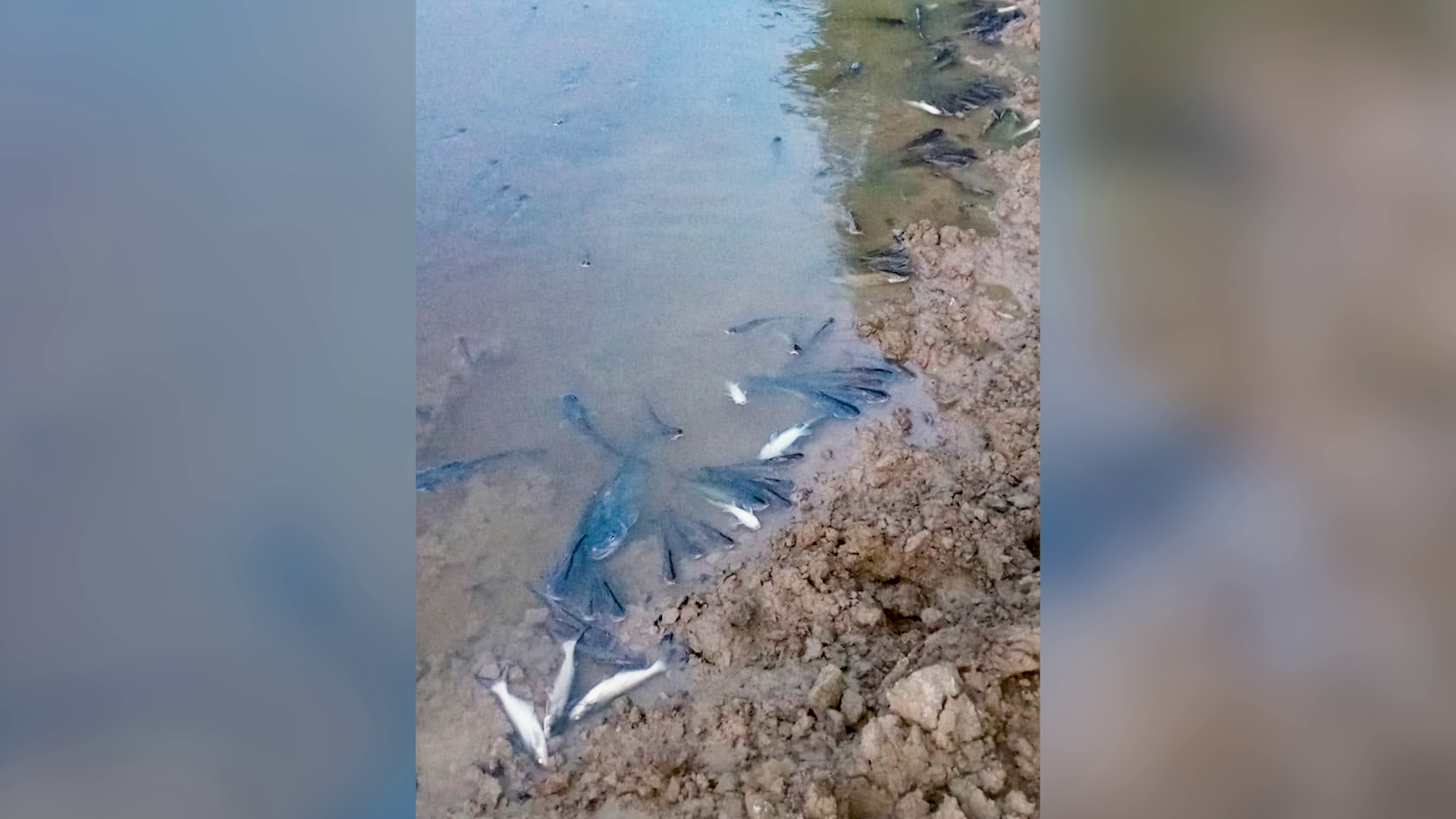
Dozens of Fish Mysteriously Die in Flowers Bank
On August 4, 2026, a sudden mass fish mortality event along the Belize River in the Flowers Bank community of Belize River Valley has left local residents alarmed and triggered a multi-agency probe into the cause of the die-off.
Local residents first noticed unusual behavior among fish earlier this week, with dozens of individuals spotted gasping for oxygen near the river surface before many turned up dead along the riverbank. Village chair Kisha Flowers explained that the community spotted the first signs of trouble on Tuesday, when a small number of fish began surfacing struggling to breathe. By the following morning, the scale of the event became clear, with multiple dead fish floating along the shoreline.
For the tight-knit Flowers Bank community, the Belize River serves as a core resource for daily life: residents rely on it for bathing, washing household items, recreational use, catching wild fish for food, and even accessing drinking water for some households. Immediately after identifying the threat, community leaders issued an urgent advisory warning all residents to suspend all uses of river water, including consuming any fish caught from the affected stretch, until the source of the mortality event is confirmed. As of this report, residents have complied fully with the precautionary measures, with no reported incidents of adverse health effects linked to the event.
After community leaders alerted national authorities, three key government agencies—the Department of the Environment, the National Emergency Management Organization (NEMO), and the Water and Sewerage Authority (WASA)—deployed teams to the site to launch a full investigation. Department of the Environment officials confirmed that investigators have already collected water quality samples from both the location of the fish kill and upstream sites to trace any potential contaminants or water chemistry changes.
While full laboratory analysis of the samples is still underway and results are not expected for several days, preliminary on-site observations point to low dissolved oxygen levels in the river water as an early leading factor for the fish kill. Low dissolved oxygen can be triggered by a range of causes including algal blooms, temperature fluctuations, nutrient runoff from agricultural or residential areas, or pollution, and further testing will help identify the root cause of the depleted oxygen levels.
Public health officials have reiterated the precautionary advisory, urging residents to continue avoiding all contact with and use of water from the affected river section until test results are released and the area is deemed safe.
-
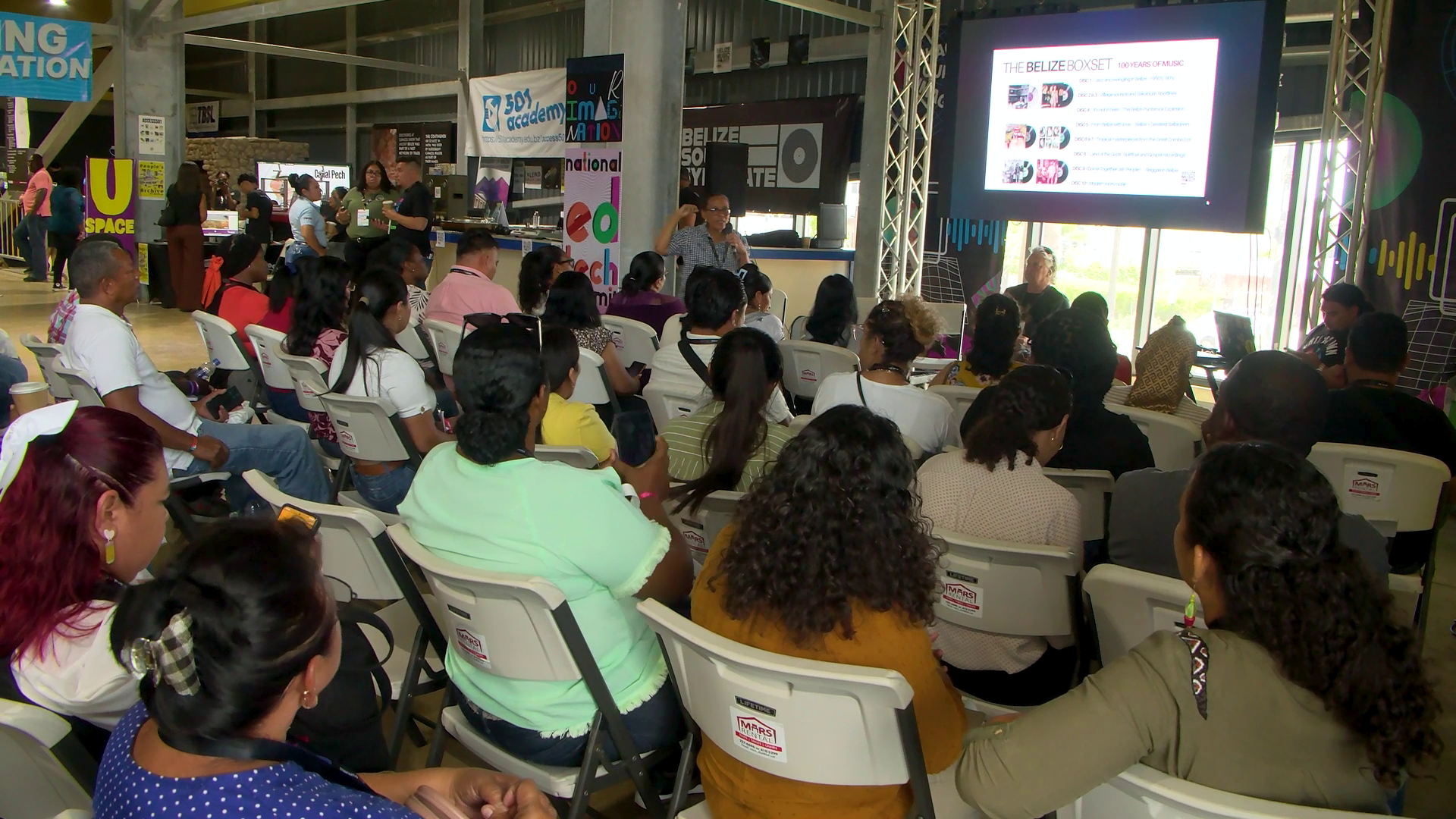
EdTech Summit Gives Teachers New Tools for the Classroom
On August 4, 2026, over 500 educators from every region of Belize convened at the Belize City Civic Center for the Ministry of Education’s second annual Education Technology (EdTech) Summit. Centered on the engaging theme “Teaching Hacks,” this two-day collaborative gathering brings together classroom teachers, school administrators, and private sector technology partners to co-explore how emerging digital tools and artificial intelligence can reimagine traditional teaching and learning frameworks, while exchanging actionable, innovative strategies to boost student lesson engagement and outcomes.
Dian Maheia, Chief Executive Officer of Belize’s Ministry of Education, spoke with reporters on-site about the core mission of this year’s event. She framed the summit as the largest collective brainstorming session for educators in the country, designed to expose teachers to new resources, spark inspiration for creative instruction, and facilitate peer-to-peer sharing of context-specific practical strategies that educators have developed to streamline their daily work.
This year’s programming is organized around four focused tracks: hacking time, hacking space, hacking the curriculum, and hacking the imagination. Each track addresses common pain points for Belizean educators: time-saving workflows to reduce administrative burden, creative solutions for limited classroom space, adaptable approaches to align tech tools with national curriculum standards, and activities that stretch student creative thinking. “This is really about bringing everybody together to talk about solutions that help us all do our jobs better,” Maheia explained.
The summit covers the full spectrum of technology and education intersections, from hands-on workshops demonstrating how to leverage popular generative AI tools for lesson planning and differentiated instruction to deep dives into accessible, low-cost digital resources already available to schools. While many attending educators already integrate basic technology into their teaching, the event creates space for both experienced tech-users to share their best practices and for all participants to discover entirely new tools and instructional approaches.
Unlike many one-off professional development events, the learning initiated at the summit is designed to continue long after the closing session. Maheia outlined that a custom dedicated mobile app will extend the impact of the gathering: participating educators will earn digital certificates for their attendance, receive recognized professional development credits that count toward career advancement, and gain ongoing access to future training opportunities and a shared community of practice for EdTech innovation.
-

Bridgetown Market, Grand Kadooment among areas to be assessed for future improvements
Barbados’ iconic annual cultural celebration, Crop Over, has drawn to a close after one of its most successful runs in recent memory, and the island’s new culture minister has announced a full top-to-bottom review of the festival will get underway in the coming weeks to build on this year’s momentum.
The 2026 edition held special national significance, unfolding against the dual milestones of Barbados’ 60th anniversary of independence and the fifth year of the nation’s status as a republic. For first-time culture lead Senator Shane Archer, Minister of State in the Prime Minister’s Office with responsibility for Youth and Culture, this year’s festival delivered a host of wins worth celebrating.
Grand Kadooment, the vibrant street parade that serves as the climax of Crop Over’s weeks of festivities, wrapped up on Monday with thousands of spectators lining the streets of Bridgetown to watch more than 20 performance bands make their way along the route. In a post-parade statement, Archer highlighted that marquee events sold out, traditional competitions drew record enthusiasm, attendance was strong across the board, and the celebration closed with no major disruptions to mar the occasion.
“This year’s Crop Over gives every one of us every reason to be proud,” Archer told reporters. “This festival was particularly special as we mark two landmark moments for our nation: 60 years of independence and five years as a republic.”
Organizers balanced innovation and tradition this year, reviving long-absent events while adding new programming to expand the festival’s reach. One of the most anticipated returns was the Party Monarch competition, brought back after a six-year break. Archer had previously defended the revival as a key step to reconnect with younger audiences and update the festival’s offerings, and the event delivered robust public support that backed that decision.
Another major competition, Pic-O-De-Crop, overcame early public debate after a last-minute venue change. The finals were originally moved from the iconic Kensington Oval to make space for a national thanksgiving service honoring National Hero Sir Garfield Sobers. After rounds of consultations between organizers, competing calypsonians, and event managers, the competition was relocated to the National Botanical Gardens. Despite the controversy around the change, the finals ultimately sold out, marking another success for the 2026 season.
The quality of this year’s musical offerings stood out as a defining highlight, Archer said, with artists across every genre — from traditional calypso to modern Bashment Soca — delivering standout work. He singled out breakout star LaStacia, the new household name in Bashment Soca, for particular praise, before highlighting the historic run of artist Mikey Mercer. Mercer’s patriotic anthem *Like Uh Bajan* “captured the imagination of the entire nation,” according to Archer, and capped one of the most successful individual Crop Over campaigns in recent history: Mercer took home titles for Party Monarch, Sweet Soca Monarch, and Road March. On Monday evening, the National Cultural Foundation confirmed the track had also secured the 2026 Tune of De Crop award, beating out Leadpipe’s *Dah Wuh She Get* for the top spot, with Shaquille’s *After All* placing third.
Private event promoters also reported strong turnout across the entire festival season, and law enforcement confirmed the Grand Kadooment parade concluded without any major security incidents. Commissioner of Police Sonia Boyce credited the smooth outcome to collaboration between event organizers, attendees, volunteers, and security teams, noting that the final event of the parade remained safe and orderly from start to finish.
Despite the string of successes this year, Archer emphasized that organizers have no plans to become complacent. To keep the festival relevant, accessible, and true to its Barbadian roots, a comprehensive review of every aspect of Crop Over — including Grand Kadooment and the iconic Bridgetown Market — will be launched in the coming weeks. The review will focus on identifying opportunities to boost participation among local Barbadians, modernize the attendee experience, and strengthen the festival’s long-term appeal.
“While overall attendance for Grand Kadooment remains strong, it has not yet reached the level we are aiming for, and we are committed to updating and improving every single part of this celebration,” Archer explained. The review comes as several elements of this year’s festival sparked public debate, most notably the introduction of Carnival Sunday at Bridgetown Market. The new addition split public opinion, with some arguing the traditionally family-focused event should not have adopted a carnival-style street experience. Other ongoing conversations centered on balancing new innovations with Crop Over’s deep cultural heritage and expanding access for local participants in Grand Kadooment.
Crop Over has gradually evolved in recent years, as organizers have worked to expand its global and generational appeal while preserving its unique Barbadian identity. The festival has added new events, refreshed long-running competitions, and placed a growing emphasis on attracting younger attendees and international cultural tourists.
Archer closed by thanking everyone who contributed to the 2026 festival’s success: “I want to say a special thank you to every artist, to every promoter, sponsor, volunteer, masquerader, patron and vendor for making this year’s festival such a success.” With the final event of the season, Cohobblopot, set to close out the celebrations on Tuesday evening, Archer confirmed that planning and review work for the next edition of Crop Over would begin immediately after the 2026 festival wraps.
-

Mikey Mercer’s rare soca treble with Tune of De Crop win
Barbadian soca artist Michael “Mikey” Mercer has cemented his status as the breakout star of this year’s Crop Over festival, pulling off a rare three-prize sweep that capped off the annual Caribbean celebration in dramatic fashion. His chart-topping hit *Like Uh Bajan* edged out competitors by the narrowest of margins to claim the festival’s most coveted award, the Tune of De Crop title, one single play ahead of the runner-up.
The milestone win follows Mercer’s earlier victories in the Sweet Soca and Power Soca Monarch competitions, making him only the latest elite artist to claim the highly sought-after hat trick of Crop Over’s top soca honors. Speaking to local media shortly after his win was announced on the final night of the festival, Grand Kadooment Day, Mercer described the unprecedented achievement as a humbling experience that rewarded months of creative work.
According to official competition results, *Like Uh Bajan* was selected for 14 rotations during the final judging round, beating second-place contender Leadpipe’s *Dah Wuh She Get* by just one play. Leadpipe took home a $7,500 cash prize for his second-place finish, while third-place winner Shaquille earned $5,000 for his track *After All*, which received 12 plays. Mercer claimed the top $10,000 prize for his Tune of De Crop win, adding to the earnings from his earlier two titles.
In an interview with Barbados TODAY, Mercer opened up about the inspiration behind his viral track, revealing that *Like Uh Bajan* was not originally written with competition success in mind. “When I wrote this song, there was no competition in sight,” he explained. His core goal was to foster genuine national pride among Bajans, pushing back against common stereotypes about Barbadian culture and centering positive representation of how Barbadians celebrate community and life.
“I was hoping that it was something that they would gravitate towards because people always have a lot of talk for Bajans in terms of how we party and so on and I wanted positivity to reign where we were concerned,” he said. Mercer added that he has been overwhelmed by the public reception of the track, noting that audience connection is an outcome artists cannot force or control. “It is a fantastic feeling as a lot of work went into this year and we are thankful that it paid off,” he shared. “The people holding onto the song at this level is something you cannot control. So I am humbled that the general public like it as they do.”
The breakout success of *Like Uh Bajan* has already opened new international doors for the artist, with Mercer confirming he has received multiple booking requests to perform at overseas events in the coming months. Looking ahead to next year’s Crop Over season, the artist is already ahead of the game: he revealed that he began working on new tracks in his recording studio before this year’s competition even kicked off, with several songs already fully completed. He added that he has not yet decided whether those early demos will be the tracks he releases for 2025’s contest, but emphasized his commitment to bringing the same high-energy, joyful spirit that defined his 2024 win to future work. “We are definitely going to look to bring some more energy and more fun within the soca,” he said, noting that he plans to continue creating as long as his health allows.