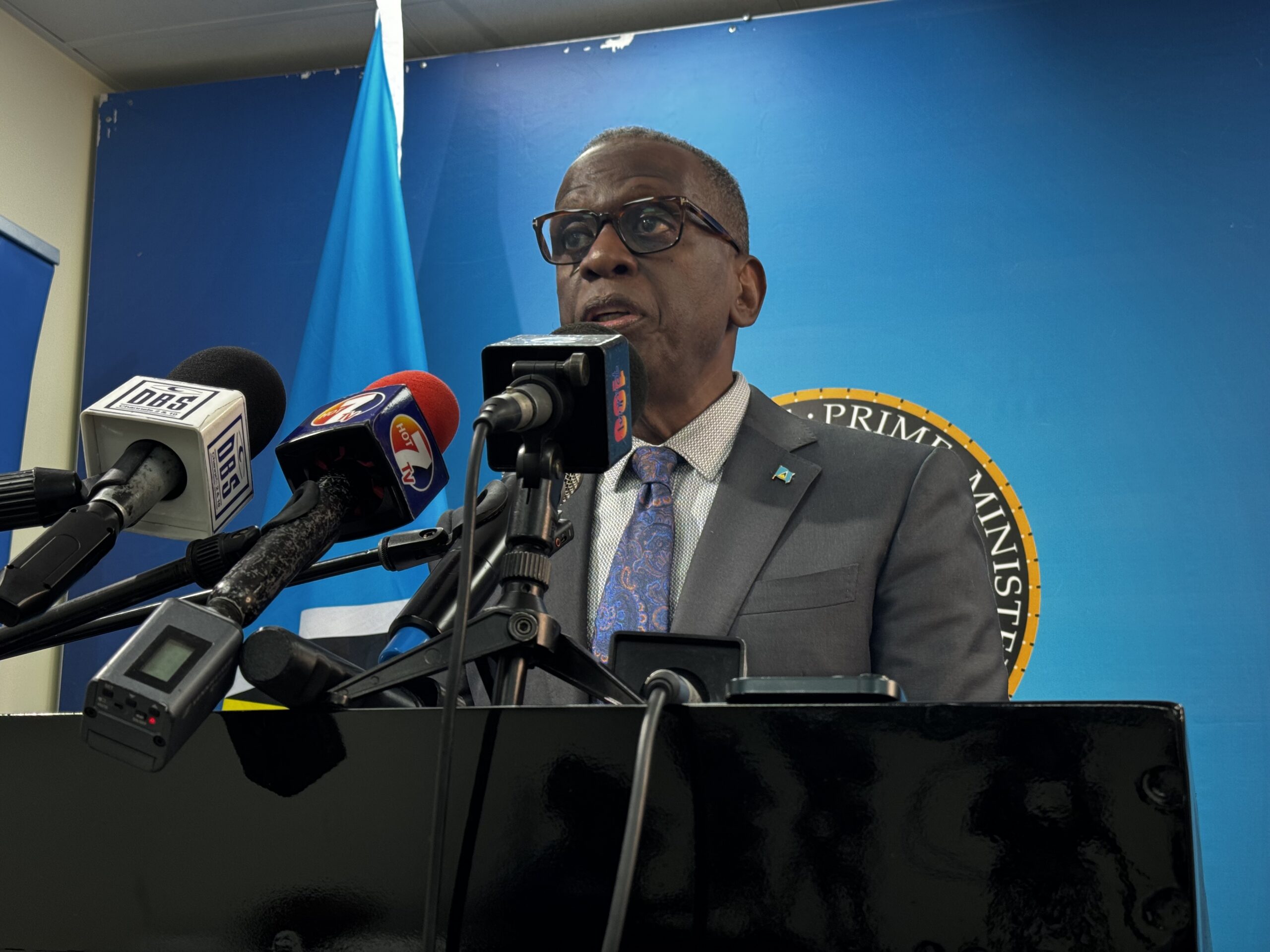
In an unexpected announcement that has upended decades of seamless cross-border travel, Ireland has imposed new mandatory visa requirements for all Saint Lucian passport holders, a policy that went into effect this Monday and caught the Saint Lucian government completely off guard. Prime Minister Philip J. Pierre told reporters at a pre-Cabinet press briefing on Monday that his administration only received formal notification of the policy change from Ireland’s embassy in Ottawa, Canada, this past Friday, with no advance bilateral discussions or consultations held between the two nations ahead of the rule being enacted.
The new visa mandate applies not only to ordinary Saint Lucian passports but also to diplomatic and service passports, and Saint Lucia is not the only nation targeted: Ireland added Saint Kitts and Nevis and Nicaragua to the list of visa-required countries alongside it. This move marks the end of a long-standing visa-free travel arrangement between Saint Lucia and Ireland, and comes just months after the United Kingdom implemented a nearly identical restriction on Saint Lucian travelers, a decision British officials justified by citing a uptick in asylum applications from Saint Lucian nationals and stated security concerns over the island nation’s Citizenship by Investment Programme.
In contrast to the UK’s explicit reasoning, Ireland’s official notice only framed the policy adjustment as a routine step to align the country’s immigration practices with those already in place in the UK, the Schengen Area, and Northern Ireland. No specific concerns related to Saint Lucia or its citizens were named in the official notice.
While Pierre acknowledged that Ireland holds full sovereign authority to craft its own immigration rules, noting that “I have no control over Irish internal policy… The Irish government decides what’s in the best interest of Ireland,” he argued that the abrupt change is far from an isolated policy tweak. Instead, he framed it as a clear symptom of a spreading anti-immigrant and increasingly insular trend taking hold across Europe and other developed nations.
“The situation is that these countries have decided that they are going to be anti-immigrant. That’s why it’s so important that our region… get together, because the whole world seems to be getting very insular,” Pierre said.
Pierre’s observation aligns with broader regional dynamics across Europe, where immigration has emerged as one of the most divisive and politically charged issues in recent years. In Ireland specifically, growing public discourse and even periodic public protests over migration policy have pushed the issue to the top of the domestic political agenda in recent months, creating pressure on Irish officials to adjust border rules.