博客

  • No Tsunami Threat to Antigua and Barbuda After 6.7 Magnitude Atlantic Earthquake

    No Tsunami Threat to Antigua and Barbuda After 6.7 Magnitude Atlantic Earthquake

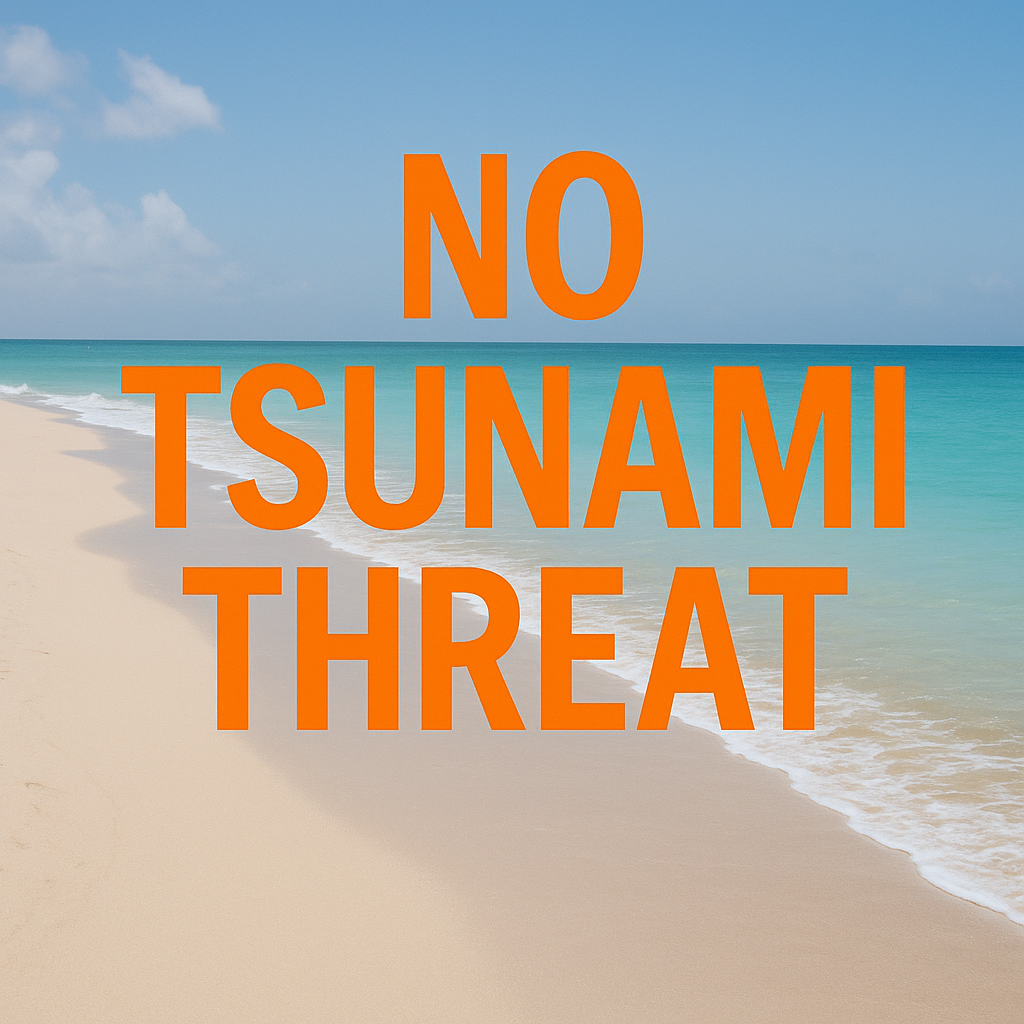
    A 6.7-magnitude earthquake struck the central Mid-Atlantic Ridge on Wednesday afternoon, triggering rapid official assessments of potential tsunami risks for nearby Caribbean island nations. According to preliminary data released by the Antigua and Barbuda Meteorological Service, the seismic event hit at 2:57 p.m. local Atlantic Standard Time, roughly 10 kilometers beneath the ocean surface. Its epicenter was pinned near geographic coordinates 0.4 degrees south latitude and 20 degrees west longitude.

    Within an hour of the quake, the national meteorological agency issued an official Tsunami Information Statement at 3:15 p.m. AST to calm public concern, confirming that the seismic activity does not generate any meaningful tsunami hazard for Antigua and Barbuda. While officials acknowledged a tiny chance that minor tsunami waves could impact Atlantic coastlines located closest to the epicenter, they emphasized that Antigua and Barbuda faces no imminent danger and no emergency response measures are needed for the country at this time.

    To boost community preparedness, the meteorological service has urged residents across the country, particularly those living in low-lying coastal districts, to stay tuned to future official updates. It also encouraged local communities to use this event as a timely opportunity to revisit their established tsunami evacuation protocols, re-familiarize themselves with pre-marked safe evacuation zones, and ensure all household members understand emergency protocols. The agency added that no additional public statements will be released going forward unless new seismic data emerges or the risk situation changes materially.

  • Antigua and Barbuda Invited to Shape Revised CARICOM Regional Quality Policy

    Antigua and Barbuda Invited to Shape Revised CARICOM Regional Quality Policy

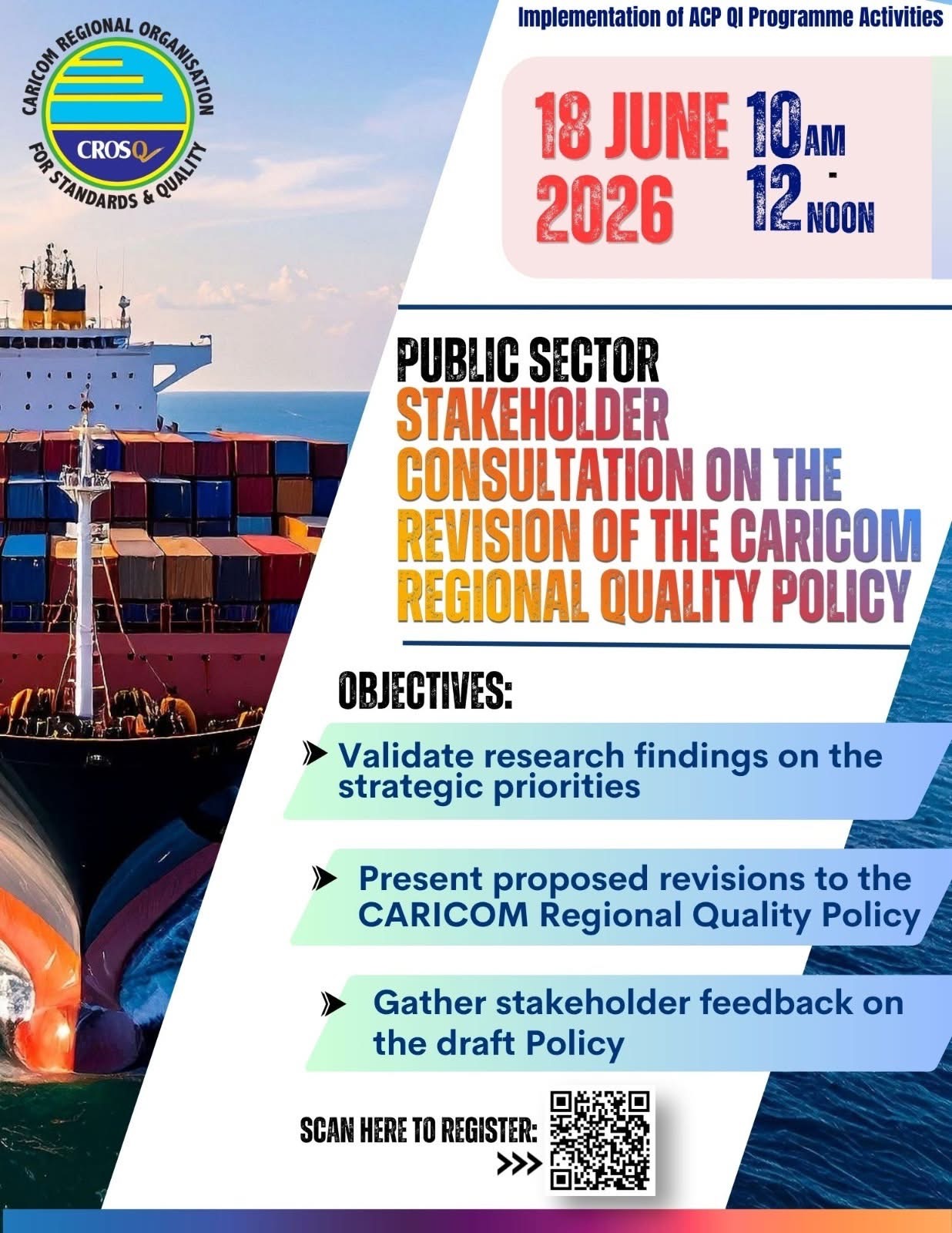
    As part of a regional effort to upgrade cross-border trade and industrial competitiveness, public sector representatives across Antigua and Barbuda have been formally invited to contribute to a key consultation focused on proposed updates to the CARICOM Regional Quality Policy (RQP).

    The process, organized by the Caribbean Regional Organisation for Standards and Quality (CROSQ), is being carried out under the framework of an ACP-region project led by the United Nations Industrial Development Organization (UNIDO), according to Antigua and Barbuda’s Ministry of Trade and Investment.

    Three core objectives drive this consultation initiative. First, organizers will outline all proposed adjustments to the existing regional policy, giving stakeholders a clear breakdown of where and how the framework would change. Second, the gathering will collect targeted input and feedback from local actors on the draft revised policy, ensuring on-the-ground perspectives are incorporated into the final document. Finally, the session will serve to validate the strategic priorities that have been identified through prior research into regional quality infrastructure needs.

    To accommodate different stakeholder groups, the consultation has been split into two dedicated sessions. Public sector participants will meet on June 18, running from 10 a.m. to 12 p.m. local time, while a separate discussion for private sector stakeholders will be held the following day, June 19.

    Once finalized, the updated policy is projected to deliver widespread benefits across the Caribbean bloc. Organizers note that the revisions will reinforce the overall regional quality infrastructure system, which will in turn drive improvements in three critical areas: formal product and service standards, reliable conformity assessment processes, and the long-term competitiveness of all CARICOM member states in regional and global markets.

  • Pharmacists ‘wait and see’ on Medical Products Act

    Pharmacists ‘wait and see’ on Medical Products Act

    Barbados’ private pharmacy community has launched a thorough review of the newly approved Medical Products Act this week, with stakeholders flagging potential risks to the country’s domestic pharmaceutical supply chain and long-standing regulatory framework. The comprehensive legislation, which cleared the Senate before securing final passage in the House of Assembly on Tuesday, was crafted to ramp up oversight of drug quality and distribution, crack down on counterfeit medications, and cut Barbados’ overreliance on foreign pharmaceutical suppliers.

    Marlon Ward Rogers, president of the Pharmaceutical Society of Barbados, confirmed to local outlet Barbados TODAY on Wednesday that his organization is conducting a line-by-line examination of the bill’s provisions to assess its full impact on the island’s pharmaceutical industry. “We are still discussing and analyzing every section to understand what changes are ahead. We are in the process of a full review, and we will need to hold a full meeting to map out implications. The legislation just completed its parliamentary process this week, so we are still waiting to see if any further adjustments are made and what the government’s next implementation steps will be,” Ward Rogers stated, declining to share further comment ahead of the organization’s full review.

    The bill marks a historic milestone for Barbados’ legislative process: Health Minister Lisa Cummins, a Senator, introduced the legislation to the House of Assembly under new constitutional rules adopted late last year that allow cross-chamber appearances. Speaking during the debate, Cummins emphasized that the new law is designed to build full medical products sovereignty for Barbados, with public safety at its core. The legislation’s central priority is shielding Barbadians from the life-threatening risks posed by counterfeit and substandard pharmaceuticals.

    Cummins highlighted Section 6 of the act, which overhauls the process for medical product registration and marketing authorization, as a critical cornerstone of the new regulatory regime. The updated rules are necessary, she explained, to protect the public from fraudulent medications and products marketed with false claims about their therapeutic effectiveness. “This legislation’s core mission is to protect the Barbadian community through strong regulation: it targets counterfeit drugs, and products that are advertised to deliver specific health benefits but do not live up to those claims,” the minister added.

    Another key provision of the law paves the way for the establishment of Barbados Pharmaceutical Inc., a state-owned domestic pharmaceutical production company. According to Cummins, the new entity will position Barbados to expand its role in the regional pharmaceutical ecosystem, evolving from its current status as a regional logistics hub into a full-spectrum center for pharmaceutical manufacturing, distribution, and regulatory oversight for the entire Caribbean region.

  • Department of Environment Reopens Thursday After Closure for Electrical Works

    Department of Environment Reopens Thursday After Closure for Electrical Works

    The Newfoundland and Labrador Department of Environment has announced a one-day full closure to the public at its Victoria Park headquarters in St. John’s, scheduled for June 17. The temporary shutdown was prompted by critical scheduled electrical work that will cut off power access to the entire building for a prolonged working window. Without full power access, the department cannot safely or effectively deliver in-person public services, leading leadership to make the decision to close all public-facing office operations for the entire day. In an official public notice released ahead of the closure, department officials confirmed that standard service delivery and office operations will return to their regular schedule starting June 18. The statement also included a note of appreciation to local residents and service users for their patience and understanding during the short-term disruption, which is necessary to complete critical infrastructure improvements at the facility.

  • Average US gas price drops below $4 – barely

    Average US gas price drops below $4 – barely

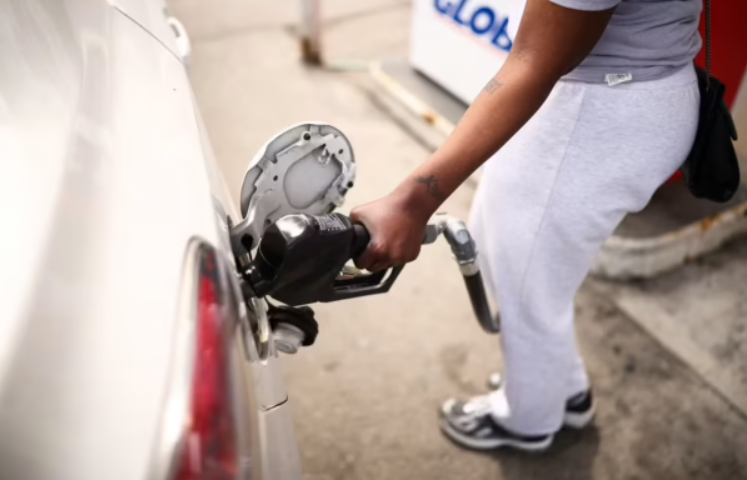
    For the first time in nearly four months, the average price of regular unleaded gasoline at American fueling stations has fallen below the key $4 per gallon threshold, a welcome shift for consumers across the United States after months of soaring energy costs.

    New data from automotive services group AAA confirms that the national average slid to $3.999 per gallon on Thursday, marking a nearly 3 cent drop from the previous day’s reading. As of this announcement, 28 US states already enjoy average pump prices below $4, with Indiana posting the nation’s lowest average at $3.40 per gallon. Separate tracking from fuel price analytics firm GasBuddy echoes the decline, placing the early Thursday national average at roughly $3.98, after the metric first crossed below $4 the prior Sunday.

    This long-awaited milestone aligns with the impending reopening of the Strait of Hormuz, a key global oil chokepoint, outlined in an official memorandum of understanding between Iran and the United States that brings an end to recent hostilities. The strait’s closure in late February cut off roughly 20% of the world’s total crude oil supply, triggering a dramatic spike in global oil and retail gasoline prices that pushed the US national average to a record peak of $4.56 per gallon on May 21.

    Since that peak, pump prices have declined on a daily basis, lifted by growing market optimism that diplomatic negotiations would successfully lead to the strait’s reopening. However, industry analysts warn consumers not to expect a return to the pre-conflict average of $3 per gallon any time in the near future, even if the downward price trend continues.

    One primary barrier to a rapid full recovery is the slow timeline to restore normal global oil flow. Matt Smith, lead oil analyst at commodity analytics firm Kpler, explained to CNN that it will likely take three to four months for full commercial tanker traffic to resume through the strait. Replenishing the global oil inventories depleted during the months of closure will take even longer, he added.

    Tankers stranded in the Persian Gulf are far from the only challenge. When the strait was closed, much of the region’s oil production and refining infrastructure effectively halted operations. According to experts, some facilities also sustained damage during the conflict, meaning additional time will be required to complete repairs and bring production back online.

    Crude oil operates as a fully global market, and even though the United States is the world’s largest oil producer and relies on relatively little Middle Eastern crude, shifts in regional supply still directly set the prices that American consumers and businesses pay at the pump. Most notably, long-term global crude prices — the single biggest driver of retail gasoline costs — show no indication of falling back to the pre-war benchmark of $70 per barrel before the next decade.

    Another factor slowing retail price declines is the behavior of independent gas station owners. Unlike the rapid pace at which owners raised prices when wholesale costs climbed, they are now cutting retail prices at a much slower rate. This is because many station operators absorbed reduced profit margins to stay competitive during the earlier price surge, and are now seeking to recoup those lost earnings.

    This uneven adjustment explains why the national average retail price has only fallen by an average of 2 cents per day since hitting its peak, a stark contrast to the more than $1 per gallon price increase recorded in the first month of the conflict — the largest one-month jump in retail gas prices so far this century.

    While coordinated releases of emergency oil reserves and drawdowns of excess global inventories prevented prices from climbing even higher during the closure, global stockpiles now sit at their lowest levels in decades. This has led some analysts to warn that pump prices could climb back above $4 per gallon later this summer, as peak driving season increases consumer fuel demand across the country. Even if another price surge does not materialize, experts broadly agree that a return to sub-$3 per gallon gasoline is extremely unlikely.

    “We’ll figure out what the new normal is,” said Dan Pickering, founder and chief investment officer of energy investment firm Pickering Energy Partners. “But it isn’t going to be $2.85 gasoline.”

    CNN business correspondent David Goldman contributed reporting to this article.
  • Americans view Obama far more positively than Trump or Biden

    Americans view Obama far more positively than Trump or Biden

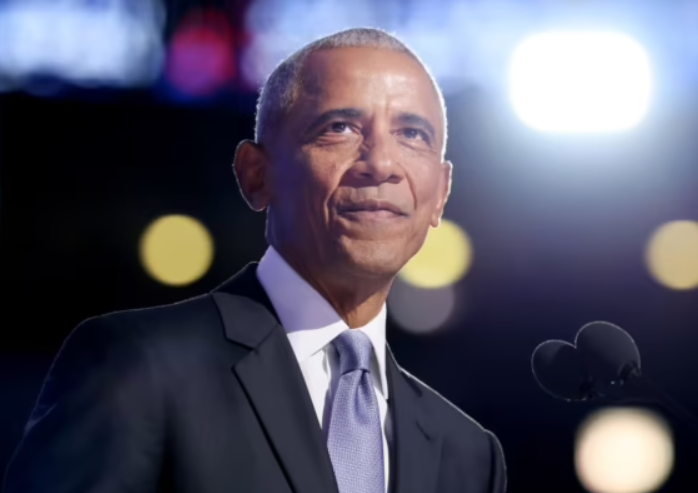
    As former President Barack Obama prepares to open his long-awaited presidential center, a new national survey has cemented his status as the most popular living U.S. commander-in-chief by a substantial gap. The latest CNN poll, fielded by research firm SSRS, finds 57% of U.S. adults hold a favorable view of Obama — a rating that dwarfs the favorability scores of the two presidents who succeeded him in the Oval Office. Only 34% of respondents view Donald Trump favorably, while current former President Joe Biden trails even further behind with a meager 30% favorable rating. Obama’s cross-group appeal sets him far apart from his successors, the data shows: his favorability among political independents is more than double that of either Biden or Trump. Unlike Biden and Trump, who struggle with polarization even within their own partisan bases, Obama retains near-universal support from members of the Democratic Party. Even across the aisle, where just one in five Republicans view Obama positively, that share of cross-party backing is still higher than what either Biden or Trump receives from opposing-party voters. The poll places other former presidents’ ratings between Obama’s leading score and the low marks held by Biden and Trump. Former President George W. Bush holds a narrow net-positive rating, with 42% of Americans viewing him favorably against 33% who hold an unfavorable opinion. Ratings for Bill Clinton are roughly evenly split between positive and negative assessments. Retrospective approval ratings for former U.S. presidents often shift over time, and frequently improve years after they leave office, a trend visible in the poll’s data. Bush, who left the White House in 2009 with some of the lowest approval ratings in modern history, has seen his public image improve dramatically over the past two decades. For Trump, polling history shows his favorability climbed to 46% shortly before his planned 2025 second inauguration, up from 33% at the end of his first term — only to begin falling again immediately after he took office. Obama, who saw divided public opinion through most of his second term in office, has retained broad, consistent popularity in the years since he left the White House in 2017. In contrast, Biden entered office in 2021 with a 59% favorability rating that fell to 33% by the end of his term. Today, his 30% favorability is the lowest it has been at any point during his presidency. Though his unfavorable share has ticked down from its peak, a growing number of Americans now hold no opinion of him at all. Clinton has also undergone a negative reassessment over the past 10 years, with his favorability declining steadily. Beyond partisan approval, the survey also highlights a clear generational shift in how younger Americans engage with presidential history. As the U.S. electorate has increasingly come of age politically during the post-Obama era of polarized national politics, a growing share of young adults have little to no memory of presidents who held office before Obama. More than four in 10 adults under the age of 30 report holding no opinion at all of either Bush or Clinton, a shift reflected in updated polling methodology that now explicitly offers respondents the option to note they know of a figure but have not formed an opinion of them. When asked an open-ended question about which president in U.S. history they admire most, Americans heavily favored modern leaders. Thirty percent of respondents named Obama as the president they admire most, followed by 19% who named Trump, 9% who chose Abraham Lincoln, 9% who picked Ronald Reagan, 6% who named John F. Kennedy, and 5% who selected George Washington. Other living presidents were named far less frequently: 2% chose Clinton, 1% named Biden, and 1% named George W. Bush, with an additional 1% selecting “Bush” without specifying which member of the family. Nearly 10% of respondents said they did not admire any president or declined to offer an opinion. Partisan alignment heavily shapes results for the most-admired question: 64% of Democrats name Obama as the president they admire most, with 6% picking Kennedy, 5% selecting Lincoln, and 5% choosing Franklin Delano Roosevelt. Among Republican respondents, Trump holds the most-admired title with a 53% majority, followed by Reagan at 18%, Lincoln at 8%, and both Kennedy and Washington at 5% each.

  • ‘5 by 35’ – Caribbean leaders pitch for billions to boost climate resilience

    ‘5 by 35’ – Caribbean leaders pitch for billions to boost climate resilience

    At the opening of the Climate Smart Summit held at Barbados’ Hilton Barbados Resort this Wednesday, regional leadership put forward an ambitious, coordinated investment initiative dubbed “5 by 35” that aims to reshape the Caribbean’s energy and agricultural sectors over the next decade. The plan calls for mobilizing $5 billion in targeted investment by 2035, with leaders framing unified action as the only path to boosting regional climate resilience, cutting costly food imports, and lowering living expenses for local communities across the bloc.

    Dr. Mohammad Nagdee, executive director of the Caribbean Centre for Renewable Energy and Energy Efficiency (CCREEE), formally introduced the “5 by 35” vision to summit attendees, emphasizing that the $5 billion target by 2035 is fully within reach, even as total regional investment needs for renewable and sustainable energy across CARICOM member states far outpace this figure. “Industry analysis shows meeting all of CARICOM’s renewable energy requirements would demand more than $12 to $15 billion in total investment,” Nagdee explained. “But the $5 billion by 2035 target is an achievable starting point that will drive meaningful transformation.”

    A core critique underpinning the new initiative is the Caribbean’s long history of fragmented climate and development action, where years of strategic planning have failed to translate into tangible on-the-ground progress. “It’s often said the Caribbean produces more development and climate reports than any other region in the world, but far too few of those plans have been turned into financing and real impact for people,” Nagdee said. “A fragmented approach will never get us where we need to go — we need coordinated, collective action to unlock the scale of investment required.”

    CCREEE has already made early progress toward the 5 by 35 goal: the organization has secured $15 million for active projects in the first half of 2026, and is currently negotiating another $350 million in potential investment, both directly and through partnerships with regional and global stakeholders. Proposed projects under the initiative include offshore wind energy pilot programs, green infrastructure for sustainable shipping, and large-scale energy resilience projects to strengthen utility systems against extreme weather.

    Nagdee stressed that concessional, low-interest financing from global development partners in the Global North will be critical over the next two years to de-risk investments for private capital and make the region attractive for large-scale funding. “Over the next two years, we need to leverage the support of our development partners to reduce investment and country risk, so we can unlock the much larger volume of private investment we need to hit our targets,” he said.

    Alongside the regional energy plan, Barbados’ Minister of Agriculture Dr. Shantal Munro-Knight outlined a $272 million national agricultural investment package at the summit, designed to strengthen the island’s food security and modernize its agricultural sector. The package targets five priority areas that will scale local production and attract private investment, with projected returns for both investors and the national economy.

    The largest allocations include $110 million to restructure Barbados’ legacy sugar industry into a fully circular economy, where every byproduct of sugar production will be utilized, including for renewable energy generation. Another $110 million will go toward building a modern export pack house and central food terminal hub, which will deliver more consistent supply for markets and greater income certainty for farmers and distributors. The plan also allocates $24 million for a new state-of-the-art abattoir and $8 million to revive and expand Barbados’ iconic Sea Island cotton industry.

    Cutting Barbados’ heavy reliance on food imports remains a top national priority, Munro-Knight noted. Currently, the island imports 8.6 million kilos of agricultural goods annually, totaling $325 million in import spending. “We’ve identified 16 key products that we currently import that we can produce locally at scale, and at a lower cost than bringing them in from overseas,” she said.

    To kickstart the transformation and signal government commitment to private investors, Barbados is already increasing public investment in enabling agricultural infrastructure, including a new tissue culture laboratory, upgraded veterinary and food testing facilities, support for household food production initiatives, and digital agricultural tools for smallholder farmers. “We are stepping out first to deliver food security, demonstrating our commitment by putting our own capital on the line,” Munro-Knight said. “This sends a clear signal to private investors: come partner with us, because we are invested in this transformation too.”

  • UN chief, Haitian prime minister discuss security, elections and international support during meeting

    UN chief, Haitian prime minister discuss security, elections and international support during meeting

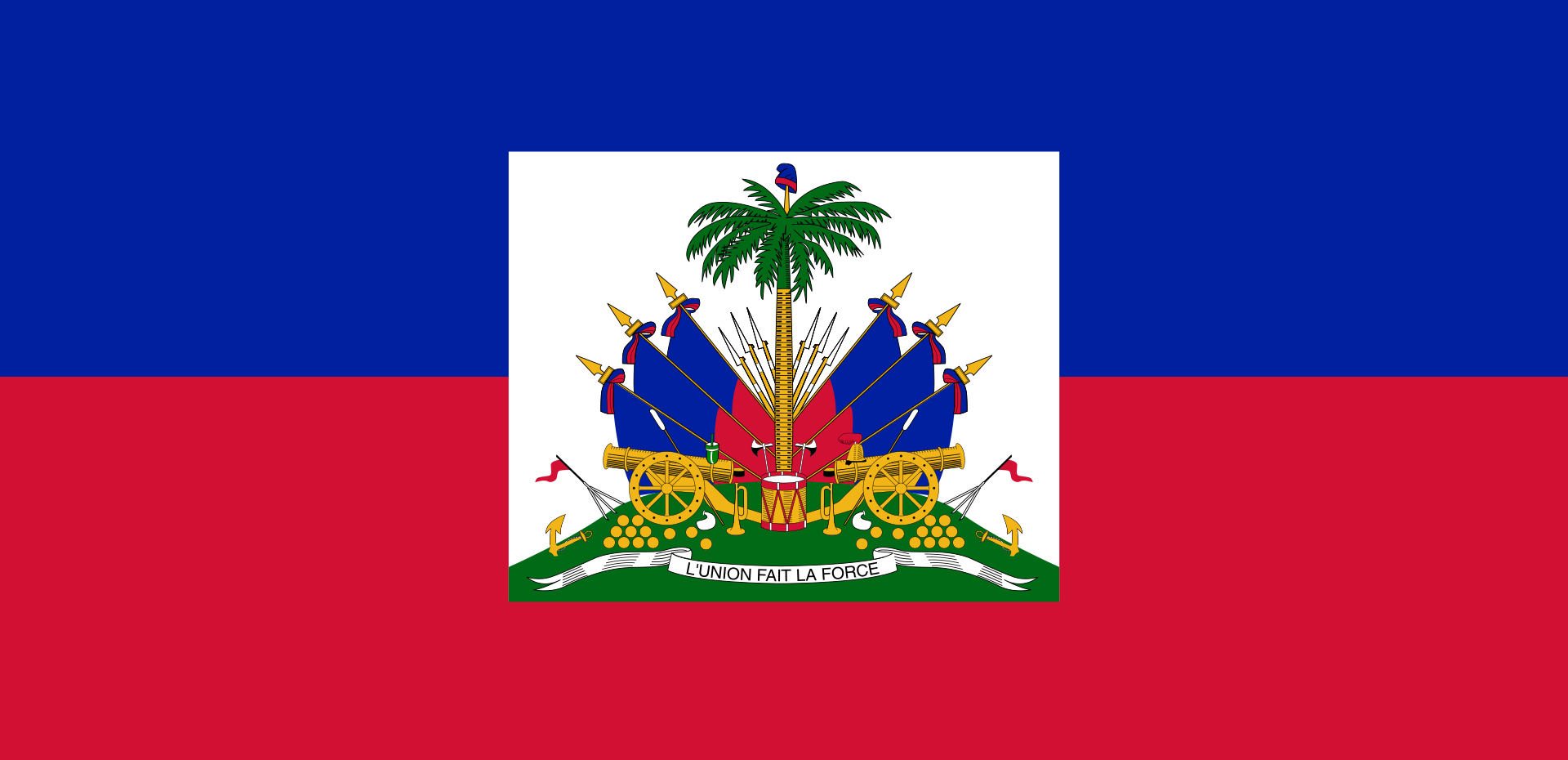
    On June 16, a high-stakes diplomatic meeting unfolded at Port-au-Prince’s National Palace, bringing together United Nations Secretary-General António Guterres and Haitian Prime Minister Alix Didier Fils-Aimé to address one of the Caribbean’s most pressing humanitarian and political crises. The discussion centered on two core pillars of Haiti’s current national trajectory: the fragile transitional governance process and the escalating security threats that have paralyzed much of the country.

    According to official reports from United Nations Caribbean News, Guterres opened the meeting by acknowledging the incremental progress made by Haitian transitional authorities in advancing their stated key priorities. These include expanding control over violence-plagued territories to shore up national security, enacting long-overdue reforms to rebuild the broken justice system, launching community-focused programs to reintegrate vulnerable populations displaced by conflict, and laying the administrative groundwork for upcoming democratic elections. The UN chief recognized the significant challenges Haitian leaders face in moving these priorities forward amid ongoing instability.

    Guterres used the meeting to reaffirm the world body’s unwavering commitment to standing with Haiti through its ongoing crisis. He made clear that UN agencies, on-the-ground representatives, and in particular his personal Special Representative will continue to maintain active, sustained engagement to support Haitian-led efforts to stabilize the country.

    Despite that nod to progress, the Secretary-General did not shy away from highlighting the gravity of the security situation. He voiced deep and urgent concern over the unrelenting spread of gang violence across Haiti, pointing out that marginalized groups — especially women and children — bear the brunt of the ongoing bloodshed and displacement. Humanitarian groups have repeatedly warned that gang activity has left hundreds of thousands of Haitians cut off from basic food, medical care, and safe shelter.

    Both Guterres and Fils-Aimé struck a collaborative tone on steps the international community has already taken to assist Haiti. The two leaders welcomed the recent launch of the United Nations Support Office in Haiti (UNSOH), a new entity tasked with delivering critical logistical and operational backing to local and international security efforts. They also noted tangible progress in the deployment of the multinational Gang Suppression Force (GSF), which was approved earlier this year to counter the power of armed criminal groups.

    By the end of the meeting, the two officials converged on one core conclusion: that Haiti’s crisis is complex and multifaceted, and no amount of domestic effort will succeed without consistent, long-term international backing. The meeting underscored the shared commitment between the UN and Haiti’s transitional government to working toward a peaceful, stable, and democratic future for the Haitian people, even as immediate security challenges remain far from resolved.

  • School Uniform Grant Programme Heads to Barbuda June 22–26

    School Uniform Grant Programme Heads to Barbuda June 22–26

    As the 2026 new academic year approaches, families across Barbuda are set to receive targeted financial support for school uniform costs through a government-backed initiative. The Ministry of Education of Antigua and Barbuda has officially confirmed that the 2026 School Uniform Grant Programme will operate from June 22 to June 26 at Holy Trinity Primary School, bringing much-needed relief to households struggling with back-to-school expenses.

    According to official updates shared via the Ministry’s Education Broadcasting Unit, the distribution of grants will run on a daily schedule throughout the five-day event, opening its doors to eligible applicants from 8:30 a.m. local time to 3:00 p.m. each day. To streamline the application and verification process, education officials have outlined clear documentation requirements for all parents and guardians seeking assistance.

    For citizen applicants, a valid government-issued photo ID is mandatory for the adult applying, while the child for whom the grant is requested must provide an original or certified copy of a birth certificate or a valid passport. A critical additional requirement is official documentation confirming that the child is currently enrolled at a school formally registered with the Ministry of Education, a measure put in place to ensure the grant reaches only eligible, enrolled students.

    Special provisions have been made for non-national parents or guardians who are legal residents of Antigua and Barbuda. This group must present valid passports alongside official documentation proving that both they and their children hold legal resident status in the country. Education authorities have emphasized that incomplete documentation will delay processing, so all applicants are strongly encouraged to compile all required paperwork before arriving at the distribution site.

    For any applicants with questions about the eligibility criteria, required documents, or event logistics, additional information can be obtained by calling the dedicated hotline at 727-2427 during official working hours. This long-running program has become a key annual support measure for families across the country, helping to reduce the financial burden of back-to-school preparations and ensure all children can start the new academic year with the necessary supplies without their families facing undue financial strain.

  • Parliament Ratifies ILO Constitutional Changes to Maintain Compliance with International Labour Body

    Parliament Ratifies ILO Constitutional Changes to Maintain Compliance with International Labour Body

    In a routine but significant legislative sitting Tuesday, Antigua and Barbuda’s House of Representatives has formally approved resolutions to ratify amendments to the Constitution of the International Labour Organization (ILO), cementing the small island nation’s longstanding dedication to the UN body’s global mission of advancing fair labor standards and fundamental workers’ rights across the world.

    The ILO constitutional amendments are not isolated changes: they form a years-long global effort to overhaul and modernize the organization’s internal governance framework. The updates are designed to ensure the ILO’s decision-making procedures accurately reflect two key shifts in the modern global landscape: the evolving needs of a rapidly changing global workforce and the organization’s expanded roster of member states.

    Unlike most other agencies within the United Nations system, the ILO operates on a distinctive tripartite governance model that requires equal input from three stakeholder groups: national governments, employer associations, and organized worker representatives when developing international labor standards and policy frameworks. For Antigua and Barbuda, continued full participation in this structure has remained a priority as the country works to strengthen its own domestic labor protections, update workplace safety guidelines, and refine national employment policies, government representatives told lawmakers during the sitting.

    Government officials emphasized that Antigua and Barbuda’s vote in favor of the amendments sends a clear message of the nation’s unwavering commitment to upholding international labor norms, advancing global social justice, and upholding collaborative action through multilateral institutions. The ratification also ensures the country remains aligned with the governance reforms adopted by the broader ILO membership and preserves its active standing within the global labor governance system.

    The ILO amendments were just one component of a broader package of international agreements brought before parliament for ratification during the session. Lawmakers also signed off on protocols tied to the International Civil Aviation Organization, a reciprocal visa exemption agreement with the United Arab Emirates, and new international agreements centered on cross-border financial information exchange. None of the resolutions, including the ILO amendments, required extended debate before being approved.

    Officials noted that continued active engagement in multilateral bodies like the ILO delivers dual benefits for Antigua and Barbuda: it gives the nation a voice in shaping global labor policy conversations, while also opening access to valuable technical assistance, evidence-based best practices, and collaborative problem-solving on pressing labor-related challenges facing the country. Following parliamentary approval, the amendments will now move through the final stages of the domestic ratification process, consistent with Antigua and Barbuda’s obligations under international treaty law.