博客

  • TDC Invests in Leadership Development Through Three-Day Management Training Programme

    TDC Invests in Leadership Development Through Three-Day Management Training Programme

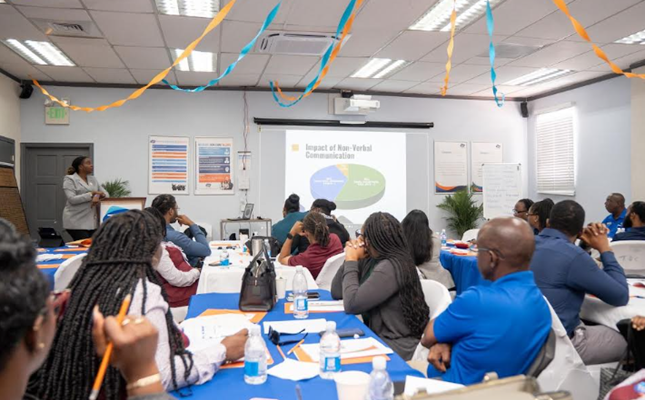
    In a strategic move to reinforce its long-term growth trajectory and cultivate high-capacity leadership across all operational levels, TDC Group recently concluded a three-day targeted management training program, held from June 15 to 17, 2026 at the company’s Fort Street training facility in Basseterre. Organized by TDC’s Human Resources Department, the initiative centers on the core theme “Leading Through People: Practical Leadership Skills for Management” and reflects the group’s sustained commitment to investing in professional talent development.

    Unlike one-size-fits-all corporate training programs, this initiative was structured to meet the unique demands of different leadership tiers within the organization. The curriculum was segmented by role: day one focused exclusively on upskilling frontline supervisors, day two catered to middle management, and the final day was designed for the company’s executive leadership team. This segmentation allowed participants to engage with content tailored directly to their day-to-day responsibilities and career growth objectives.

    Renowned regional business strategist and leadership consultant Dana Hayes-Burke led all training sessions. Throughout the program, participants took part in interactive discussions, hands-on practical exercises, and simulated real-world leadership challenges designed to build core competencies. Key skill areas covered included cross-team communication, employee engagement frameworks, data-informed decision-making, personal and team accountability, constructive conflict resolution, and people-centered leadership approaches that center employee well-being alongside performance goals.

    The program’s “Leading Through People” theme was intentionally chosen to highlight a shift away from traditional output-only management, emphasizing that sustainable organizational success grows from intentional relationship-building and empowered workforces. The curriculum underscores that effective leaders drive success by cultivating positive, inclusive workplace cultures that allow every team member to contribute their best work.

    Andrea James Wattley, Senior Human Resources Officer at TDC, emphasized that leadership development remains a top strategic priority for the group. “Strong leadership is the foundation of any growing, successful organization,” James Wattley explained. “By equipping our leaders at every level with practical, up-to-date management skills, we are not just improving individual performance—we are building an environment where all employees can thrive, and where our teams are inspired to deliver results that move our whole company forward.”

    For her part, facilitator Hayes-Burke challenged participants to reframe leadership as an ongoing journey of growth rather than a static role. She encouraged attendees to examine their existing leadership styles, embrace full accountability for team outcomes, and build adaptive approaches that work in today’s fast-changing, unpredictable business landscape. The training program forms one pillar of TDC’s broader enterprise-wide commitment to continuous employee development and organizational excellence, designed to ensure that all leaders have the tools they need to guide their teams effectively and advance the company’s long-term strategic goals.

  • Barbados now a fully aged society, minister declares

    Barbados now a fully aged society, minister declares

    A top opposition leader in Barbados has launched a sweeping condemnation of the Mia Mottley-led administration, accusing it of deliberately concealing critical public financial information and fostering a culture of institutional secrecy that erodes democratic accountability. Ryan Walters, opposition Democratic Labour Party (DLP) Senate leader and shadow finance minister, argues that the growing volume of unanswered questions surrounding major public spending and infrastructure projects can no longer be brushed aside as isolated oversights.

    The most recent flashpoint in this ongoing dispute centers on the BiMPay instant payment platform, where Central Bank Governor Dr. Kevin Greenidge has declined to release the project’s total development and implementation cost. Walters emphasizes that this controversy is not an isolated incident, but rather the clearest latest example of a years-long pattern of behavior among ruling party officials. He argues that senior government figures consistently dismiss legitimate scrutiny from journalists and opposition politicians as unnecessary annoyance, rather than a core requirement of democratic governance.

    “What we are seeing right now with BiMPay is not just a single disagreement over one piece of information, one reporter’s question or one public official’s decision,” Walters told the Senate. “It is a symptom of a culture that has become deeply embedded within this administration. A culture where legitimate questions are brushed off as irritants, independent scrutiny is labeled political opposition, and full transparency is increasingly treated as an optional extra, not a legal and ethical obligation.”

    Walters outlined a multi-year trend of the administration deflecting, delaying, ignoring, or directly attacking anyone who questions how public funds are managed. He reminded the chamber that public officials are only temporary stewards of the national treasury, not private owners of state assets. “The government does not own the public purse. Cabinet ministers are not custodians of private wealth. Every dollar that passes through the hands of government departments, statutory corporations, state-owned enterprises and public agencies ultimately belongs to the people of Barbados,” he said. “As the ultimate owners of these resources, citizens hold an unquestionable right to know how their money is spent, whether they are getting value for every dollar, and whether proper safeguards are in place to protect public funds from waste or misuse.”

    The shadow finance minister highlighted a long list of unresolved transparency failures across nearly every sector of government, stretching back to the administration’s 2018 election. Beyond the undisclosed cost of BiMPay, he raised questions about hidden fees for external consultants hired since 2018, undisclosed ministerial travel expenditures, limited public data linking fuel import costs to retail pump prices, and the complete absence of published cost-benefit analysis for the government’s high-profile We Gathering 2025 development initiative.

    Walters also pointed to the ongoing disposal process for the Holetown Civic Centre, noting that the project is moving forward without ever disclosing full cost details to Barbadian taxpayers. In the health and infrastructure sector, he called out the unexplained repurposing of a major pandemic-era health facility built in the northern parish of St. Lucy. The facility, constructed at a reported public cost of more than $125 million during the COVID-19 public health emergency, no longer provides healthcare services and has reportedly been converted to housing for migrant labor. “Barbadians deserve a full explanation of what happened to this massive public investment, which was originally meant to expand healthcare access for citizens in the north of the island,” Walters said.

    Additional concerns were raised about spending oversight at state-run entities and cultural initiatives, specifically naming the state development organization HOPE Inc. and the regional cultural festival CARIFESTA. Despite hundreds of thousands of public dollars flowing through HOPE Inc., and multiple red flags raised by the Auditor General in past reports, Walters said a newly appointed cabinet minister recently confirmed the organization continues to spend public funds without having released a single public annual financial report for independent scrutiny. For CARIFESTA, he called for a full independent audit after reported expenditures ballooned from an original projection of $8 million to more than $34 million. He added that hundreds of millions of dollars allocated to related infrastructure projects for the festival remain incomplete, with repeated shifted deadlines and steady cost increases that have never been justified to the public.

    “The public is entitled to concrete facts, not just vague assurances and generic political talking points,” Walters said, noting that the administration has consistently failed to produce comprehensive post-project evaluations that would allow independent assessment of public spending value.

    Turning to Barbados’ core social safety net, Walters focused his criticism on the National Insurance and Social Security Service (NISSS). While reaffirming the DLP’s longstanding support for progressive social protection programs, including the ruling administration’s Solidarity Allowance and Cost of Living Cash Credit initiatives, he stressed that a commitment to compassion cannot justify a lack of compliance with transparency rules. He questioned whether public funds transferred from NISSS to finance these temporary emergency programs have been fully repaid to the social security scheme.

    “NIS funds belong to the working people of Barbados who have contributed to the scheme over decades, and they must be protected accordingly,” Walters said. “This is about safeguarding workers’ contributions, guaranteeing pensioners’ future benefits, and protecting the long-term financial sustainability of the country’s most critical social protection institution. To date, the government has not provided clear answers to these questions.”

    He also raised alarm over the repeated delay of the mandatory independent actuarial review of NISSS, an assessment designed to identify early financial risks to the social security system. Taken as a whole, Walters argued that these overlapping transparency failures add up to a deeply troubling pattern that cannot be dismissed.

    “Viewed one by one, the government may try to explain away each of these concerns as a simple mistake or a minor delay,” he said. “But when you look at all of them together, they reveal a deeply disturbing pattern. Questions get asked, and most are ignored. Answers are promised, time passes, and reports never materialize. Audits get delayed, costs go up, deadlines get shifted, and accountability disappears. This pattern is now too consistent to be written off as a coincidence.”

    Walters clarified that the DLP does not oppose government spending on public projects and social programs, but objects to the complete lack of independent oversight and public reporting for that spending. He called on the Mottley administration to immediately publish all outstanding audits, project reports, full expenditure breakdowns, and the delayed NISSS actuarial review.

    “Accountability is not a favor that the government grants to citizens. Accountability is the basic price of holding public office in a democracy,” he said. “Transparency is not achieved through PR stunts, speeches, press conferences or empty political rhetoric. Transparency is only achieved through full disclosure. Until the required information is made available to the Barbadian public, legitimate questions will keep being asked, and the Democratic Labour Party will keep demanding answers on behalf of all the people of this country.”
  • Prime Minister Drew Calls for Climate Justice and Community-led Solutions at Climate Mobility Forum in Berlin, Germany

    Prime Minister Drew Calls for Climate Justice and Community-led Solutions at Climate Mobility Forum in Berlin, Germany

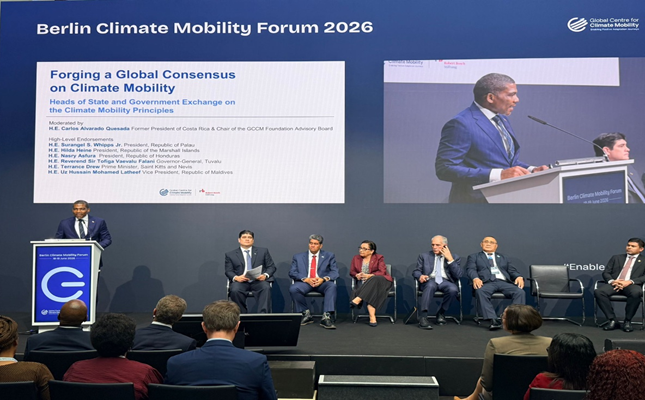
    In a high-profile gathering of global leaders in Berlin on June 18, 2026, Prime Minister Dr. Terrance Drew of St. Kitts and Nevis delivered a passionate, principled address at the opening of the Berlin Climate Mobility Forum, calling for systemic climate justice, equitable cross-border collaboration, and the centering of local community voices in crafting global climate solutions.

    Drew joined fellow heads of state and government from climate-vulnerable nations including Palau, the Marshall Islands, Honduras, Tuvalu, and the Maldives for the forum’s High-Level Exchange on Climate Mobility Principles. The session, organized by the Global Centre for Climate Mobility (GCCM) in partnership with the Robert Bosch Stiftung, aimed to build unified global consensus around climate displacement, adaptive migration, and resilience-building strategies.

    Speaking to an audience of international policymakers, development partners, climate researchers, and civil society delegates, Drew framed climate change as an inherently moral and justice issue, pointing to the extreme inequity faced by Small Island Developing States (SIDS). These low-emission nations contribute just a tiny fraction of global greenhouse gas output, yet face some of the most catastrophic and life-altering impacts of a warming planet. To illustrate this gap, Drew shared the example of a local Caribbean fisherman who watches his livelihood erode as sea levels rise, ocean temperatures warm, and native marine ecosystems shift beyond recognition.

    Crucially, Drew emphasized that vulnerable nations are not seeking handouts or sympathy from the global community. “We are not seeking charity, we are not seeking pity. We are seeking justice and partnership, which are fundamental to dealing with these issues,” he stated.

    Rewriting the dominant narrative around climate mobility, Drew argued that movement driven by climate change should not be framed as a failure of community resilience. Instead, it should be recognized as a legitimate adaptive strategy that allows people to preserve their dignity, livelihoods, and social bonds amid a growing global crisis. While international funding and technical expertise play an important supporting role, Drew stressed that lasting, effective solutions can only grow out of local knowledge and alignment with on-the-ground realities.

    He shared a cautionary example from the Caribbean, where a top-down climate recommendation developed without local input nearly missed critical cultural and economic context that would have made the policy unworkable. That experience, Drew said, reinforced a clear lesson: any climate initiative implemented at the local level must meaningfully include local community stakeholders. “It will be considered arrogant to say that local people, who have been living there for hundreds of years, who had developed solutions, and who had adapted to that climate and who had local solutions to any issue, that [they] would not be good enough to include them in your solution,” he argued.

    Drew further noted that robust climate mobility policies must prioritize the protection of indigenous and local cultural identity, traditional livelihoods, and fundamental human rights, while strengthening national resilience and security. He commended the GCCM for its ongoing collaborative work with vulnerable nations including St. Kitts and Nevis, highlighting the organization’s focus on supporting community-led adaptation and locally designed climate responses. The ongoing partnership between the GCCM and local stakeholders on the island of Nevis, he said, serves as a successful model for how global partnerships can empower, rather than override, local action.

    The prime minister also called for a fundamental shift in how climate financing is structured, urging global funders to align investments more closely with local needs and priorities. This alignment, he explained, ensures that vulnerable communities are empowered to address their own climate challenges, rather than being further displaced by misaligned external initiatives.

    Closing his address, Drew reaffirmed St. Kitts and Nevis’ unwavering commitment to international climate cooperation, calling for greater global solidarity to confront what he called one of the defining challenges of the 21st century. “It is partnerships like these that keep me optimistic, that keep me hopeful. Partnerships like these tell us what is possible. We just have to work together,” he said.

  • Health and wellness conference launched to address ageing, chronic illness

    Health and wellness conference launched to address ageing, chronic illness

    Barbados’ Technical and Vocational Education and Training (TVET) Council has launched its first-ever national health and wellness conference, launching a targeted effort to strengthen the country’s healthcare workforce to address two pressing public health challenges: a rapidly ageing population and a growing epidemic of non-communicable diseases (NCDs).

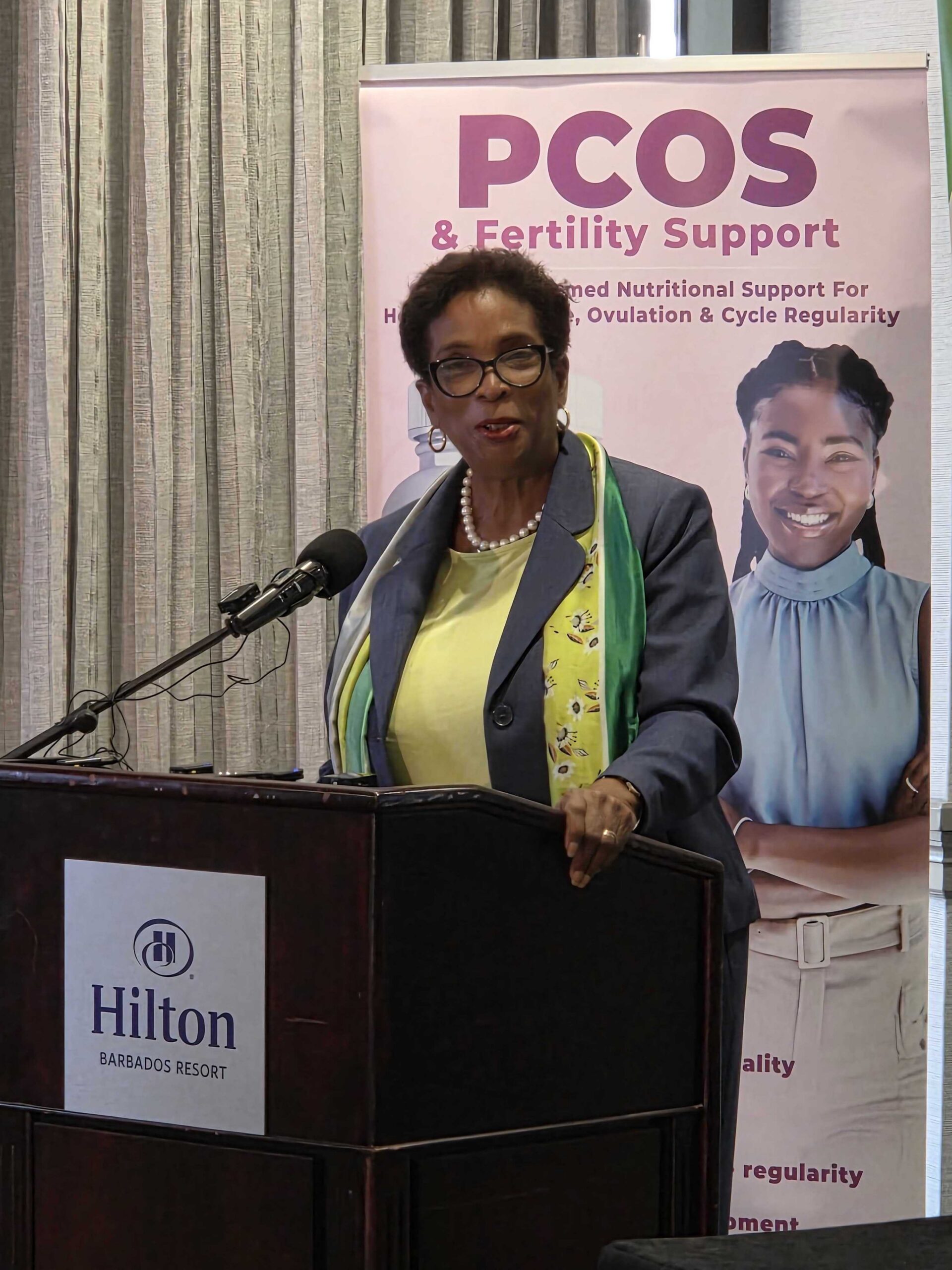
    The three-day high-level forum, which kicked off Wednesday at the Hilton Barbados under the theme “Health, Education, and Promotion: Developing a Workforce that Supports Society and Ageing”, has drawn cross-sector participation from top government policymakers, post-secondary education leaders, and healthcare industry stakeholders to collaborate on workforce upskilling solutions.

    At the core of the conference is an urgent goal: accelerating skills development for allied health practitioners and paraprofessional healthcare workers, who form a critical frontline in responding to the dual public health pressures currently facing Barbados. Official data highlighted at the event shows NCDs already account for approximately 80 percent of all deaths recorded on the island, making the need for workforce adaptation increasingly pressing.

    Opening the gathering, TVET Council Chairman Dr. Albert Best emphasized that the conference is far more than a conventional industry event—it represents a targeted policy intervention aligned with Barbados’ evolving social needs. He noted the initiative marks a key expansion of the council’s core mandate, bringing together aligned stakeholders who share the core understanding that population health and wellness are foundational to national economic growth, labor productivity, and overall quality of life for Barbadians.

    Dr. Best outlined the clear, urgent rationale for the gathering: Barbados’ demographic landscape is shifting rapidly, with residents enjoying longer life expectancies while simultaneously facing widespread, persistent lifestyle-related health risks. Currently, more than one-third of Barbadian adults live with hypertension, and nearly two-thirds of the adult population is classified as overweight or obese. These public health challenges cost the country hundreds of millions of dollars in lost economic productivity each year, placing direct strain on both public institutions and private businesses.

    In response to this gap, the TVET Council designed the conference to advance the development of a skilled, adaptive, and forward-looking health and wellness workforce, with a specific focus on paraprofessionals and allied health practitioners. These workers, Dr. Best explained, play an irreplaceable role in closing gaps in patient care, community health education, and public outreach that would otherwise go unfilled by the existing primary care system.

    “This conference is therefore not simply an event; it is an intervention. It reflects our commitment to ensuring that training remains relevant, practical and align with the realities of our society,” Dr. Best told attendees.

    TVET Council Executive Director Henderson Eastman expanded on the connection between workforce health and national economic performance during his address, noting that employee absenteeism stemming from unaddressed chronic illness has a severe, measurable impact on institutional output. On days when a large share of staff are out sick, production levels drop directly, hitting the bottom lines of both public sector agencies and private sector businesses.

    Eastman also noted that the rapid pace of technological and social change in recent decades has outmoded older approaches to vocational skills training and qualifications, requiring new, flexible approaches to workforce development. He echoed Dr. Best’s framing of the conference as a deliberate intervention, rather than a routine industry gathering, explaining that it aligns with the TVET Council’s core mission to oversee the development, coordination, and quality assurance of technical vocational training across Barbados, with a consistent focus on applied learning that equips people with practical skills for employment and entrepreneurship.

    The event also forms a key pillar of the council’s long-term strategy to expand continuous professional development (CPD) opportunities and modernize skills certification processes across all sectors of the Barbadian economy. Eastman emphasized that conferences are far more than platforms for information sharing—they are powerful tools for lifelong learning and continuous professional development, occupying a unique space where theoretical knowledge meets real-world practical application, policy design meets on-the-ground implementation, and reflective analysis meets actionable change.

    In today’s fast-evolving labor market, where new skills are required almost as quickly as new job roles are defined, the outdated model of “one and done” post-secondary education no longer meets the needs of workers or employers, Eastman argued. Instead, Barbados must fully embrace a culture of continuous, structured, measurable skills upgrading across all industries.

    Over the course of the three-day event, attendees will dive into a range of priority topics, including the full scale of the NCD crisis across the Caribbean region, expanding access to high-quality home-based care for ageing patients, addressing gender-specific gaps in men’s and women’s health, and integrating new digital technologies that allow families to remotely monitor the health and safety of elderly relatives.

    The event’s agenda will shift from closed-door policy and stakeholder discussions to public community outreach on Saturday, when it will host an interactive Open Day for Barbadian families to connect directly with local health practitioners and access free wellness resources. The conference will conclude on Sunday with an industry dinner and awards ceremony to recognize outstanding contributions and excellence across the Barbadian health and wellness sector.

  • Minister Michael Joseph Calls for Greater Support for Communities on the Frontlines of Climate Change at Berlin Climate Mobility Forum 2026

    Minister Michael Joseph Calls for Greater Support for Communities on the Frontlines of Climate Change at Berlin Climate Mobility Forum 2026

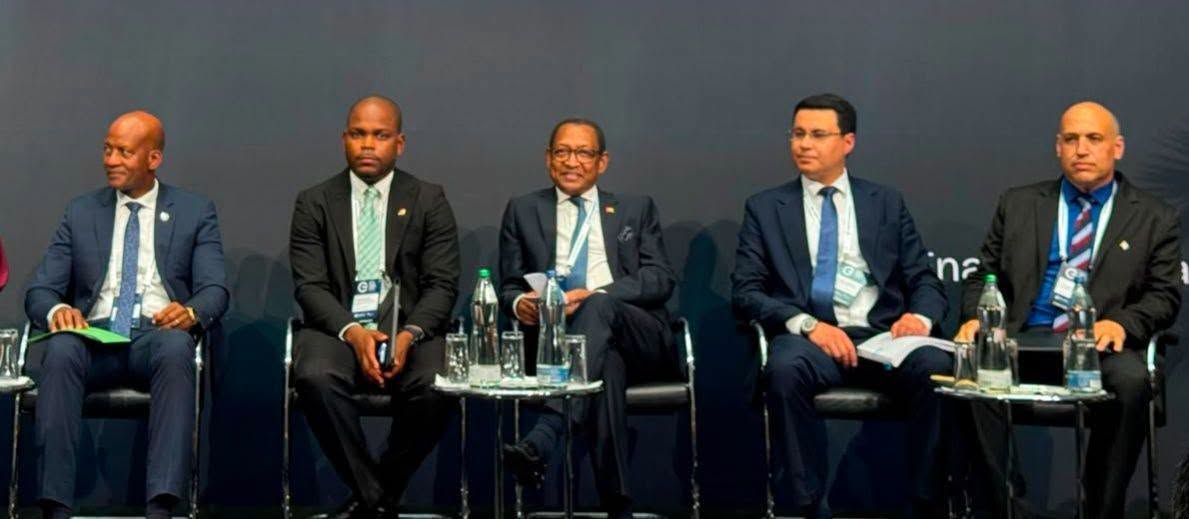
    Against the backdrop of escalating climate impacts that disproportionately threaten low-lying and small island nations, Michael Joseph, Antigua and Barbuda’s Minister of Health, Wellness, Environment, and Civil Service Affairs, delivered a urgent, community-centered call to action at the 2026 Berlin Climate Mobility Forum in Germany on Wednesday. Speaking to a cross-sector audience of government delegates, leaders of international organizations, development finance specialists, and leading climate researchers, Joseph centered his remarks on the need to redirect more climate investment directly to frontline communities already grappling with climate change’s worst effects.

    The forum’s ongoing discussions focus on advancing the Global Principles for Addressing Climate Mobility, a framework Joseph publicly endorsed, while stressing that successful climate adaptation cannot be designed from distant capital cities. “Local communities hold unique on-the-ground knowledge that no external stakeholder can replicate,” Joseph explained. “They know exactly which neighborhoods flood during storm surges, which coastal roads erode faster each year, which shorelines are retreating, which households need urgent support, and which natural ecosystems once buffered their communities from extreme weather. But local knowledge means nothing without the resources to turn that knowledge into action.”

    For Small Island Developing States (SIDS) like Antigua and Barbuda, Joseph noted, climate change has already stretched critical public systems to breaking point, putting housing, public healthcare, national food security, core infrastructure, and overall community well-being at growing risk. He argued that climate finance mechanisms must not only strengthen national governing institutions but also be structured to deliver tangible support directly to the vulnerable populations that need it most.

    To illustrate what effective local climate action looks like, Joseph highlighted his country’s ongoing Home Assistance Programme for the Indigenous (HAPI), a targeted initiative that supports low-income and at-risk groups including elderly residents, unemployed workers, people displaced by climate disasters, and storm survivors. The program provides funding for new housing construction and home rehabilitation, allowing vulnerable citizens to stay safe and rooted in their home communities rather than being forced to relocate prematurely.

    Beyond physical infrastructure and economic impacts, Joseph drew attention to a long-overlooked dimension of climate harm: the persistent mental health toll of repeated climate shocks. Repeated exposure to hurricanes, forced displacement, sudden loss of livelihoods, and ongoing uncertainty about the future, he explained, leaves lasting psychological damage on affected communities that is rarely accounted for in global climate planning.

    Joseph also emphasized the irreplaceable role of natural coastal ecosystems in building climate resilience, highlighting that beaches, wetlands, coral reefs, mangroves, and healthy fisheries deliver a suite of critical services that protect communities from extreme weather, sustain food supplies, support local livelihoods, and preserve centuries of cultural heritage for island nations.

    Reiterating Antigua and Barbuda’s unwavering commitment to global climate goals, Joseph warned that uncurbed global warming poses an existential threat to SIDS, reaffirming his country’s support for global efforts to cap long-term warming at 1.5 degrees Celsius above pre-industrial levels. “For Antigua and Barbuda, 1.5 degrees is not an arbitrary policy target – it is the line between manageable climate risk and permanent, irreversible damage to our homeland,” he stressed.

    The minister also drew global attention to the growing crisis of climate loss and damage, noting that even the most robust adaptation measures have limits when communities face repeated climate shocks, gradual land loss, destroyed public infrastructure, failing water systems, and permanent collapse of local livelihoods. Drawing on decades of collective experience across Caribbean nations, he noted that recent hurricane seasons have inflicted trillions in combined economic and social harm across the region, and called for a fundamental overhaul of the international financial architecture to make it more responsive and equitable to the needs of vulnerable climate frontline nations.

    Joseph reaffirmed Antigua and Barbuda’s support for two key policy frameworks designed to address this gap: the Multidimensional Vulnerability Index and the Antigua and Barbuda Agenda for Small Island Developing States. Both frameworks, he explained, are critical to expanding access to affordable climate finance and ensuring that the unique vulnerability of SIDS is properly recognized in global development and climate financing systems.

    Joseph’s participation in the 2026 Berlin Climate Mobility Forum is supported by Rulita Kamasho Thomas, Antigua and Barbuda’s Climate Ambassador. The annual forum brings together high-level stakeholders from across governments, multilateral bodies, development institutions, and civil society to advance practical, actionable solutions to the growing challenges of climate mobility, while accelerating global progress on climate resilience and adaptation.

  • No Tsunami Threat to Antigua and Barbuda After 6.7 Magnitude Atlantic Earthquake

    No Tsunami Threat to Antigua and Barbuda After 6.7 Magnitude Atlantic Earthquake

    A 6.7-magnitude earthquake struck the central Mid-Atlantic Ridge on Wednesday afternoon, triggering rapid official assessments of potential tsunami risks for nearby Caribbean island nations. According to preliminary data released by the Antigua and Barbuda Meteorological Service, the seismic event hit at 2:57 p.m. local Atlantic Standard Time, roughly 10 kilometers beneath the ocean surface. Its epicenter was pinned near geographic coordinates 0.4 degrees south latitude and 20 degrees west longitude.

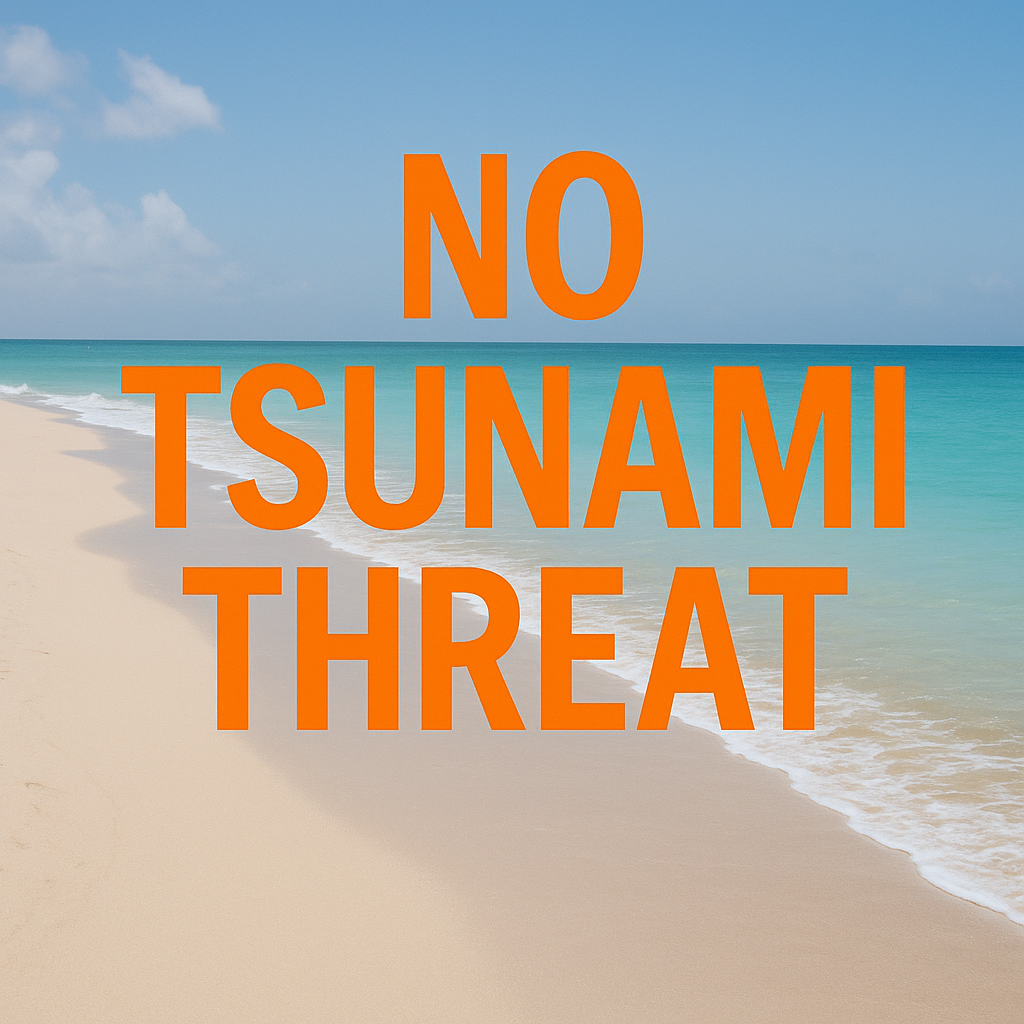
    Within an hour of the quake, the national meteorological agency issued an official Tsunami Information Statement at 3:15 p.m. AST to calm public concern, confirming that the seismic activity does not generate any meaningful tsunami hazard for Antigua and Barbuda. While officials acknowledged a tiny chance that minor tsunami waves could impact Atlantic coastlines located closest to the epicenter, they emphasized that Antigua and Barbuda faces no imminent danger and no emergency response measures are needed for the country at this time.

    To boost community preparedness, the meteorological service has urged residents across the country, particularly those living in low-lying coastal districts, to stay tuned to future official updates. It also encouraged local communities to use this event as a timely opportunity to revisit their established tsunami evacuation protocols, re-familiarize themselves with pre-marked safe evacuation zones, and ensure all household members understand emergency protocols. The agency added that no additional public statements will be released going forward unless new seismic data emerges or the risk situation changes materially.

  • Antigua and Barbuda Invited to Shape Revised CARICOM Regional Quality Policy

    Antigua and Barbuda Invited to Shape Revised CARICOM Regional Quality Policy

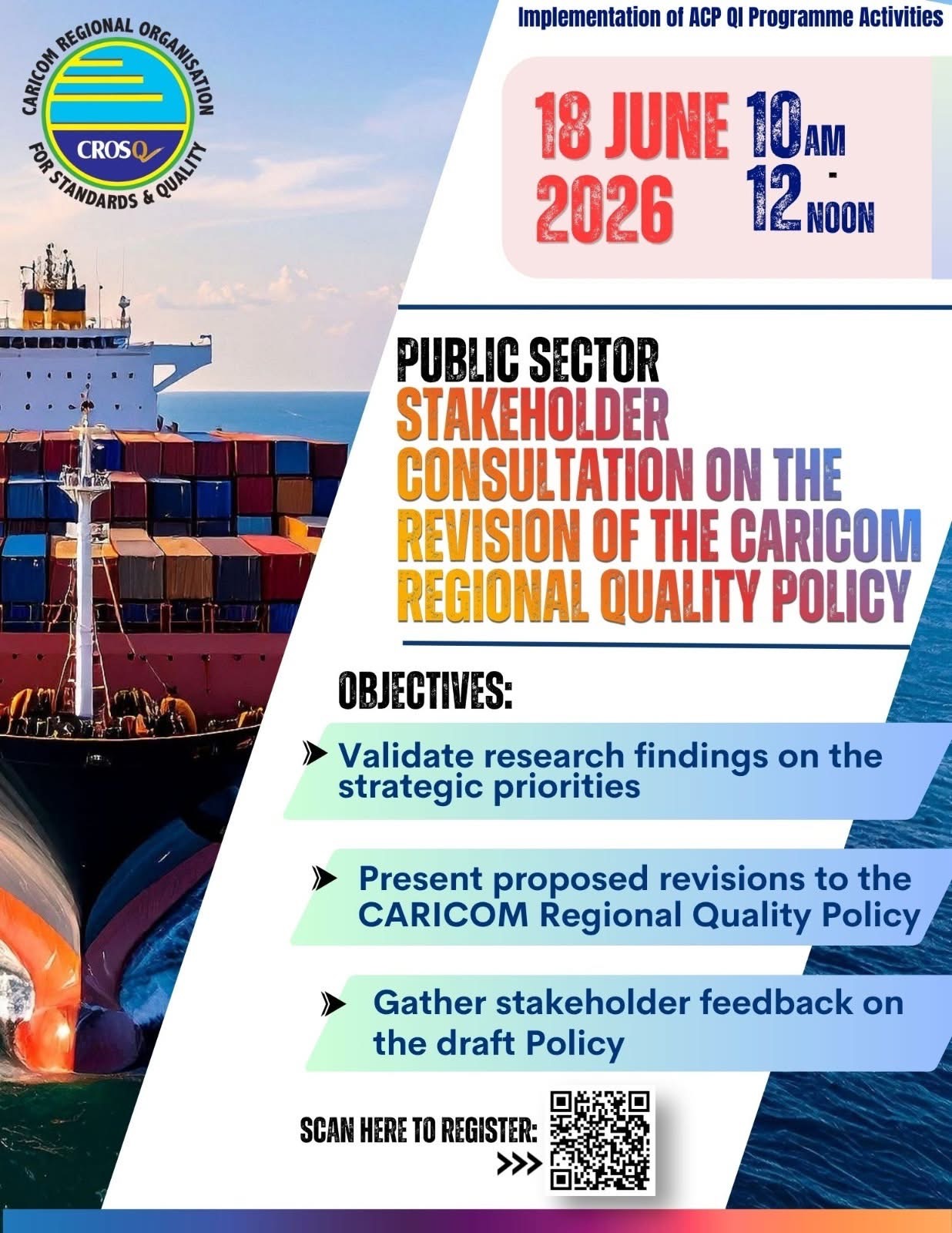
    As part of a regional effort to upgrade cross-border trade and industrial competitiveness, public sector representatives across Antigua and Barbuda have been formally invited to contribute to a key consultation focused on proposed updates to the CARICOM Regional Quality Policy (RQP).

    The process, organized by the Caribbean Regional Organisation for Standards and Quality (CROSQ), is being carried out under the framework of an ACP-region project led by the United Nations Industrial Development Organization (UNIDO), according to Antigua and Barbuda’s Ministry of Trade and Investment.

    Three core objectives drive this consultation initiative. First, organizers will outline all proposed adjustments to the existing regional policy, giving stakeholders a clear breakdown of where and how the framework would change. Second, the gathering will collect targeted input and feedback from local actors on the draft revised policy, ensuring on-the-ground perspectives are incorporated into the final document. Finally, the session will serve to validate the strategic priorities that have been identified through prior research into regional quality infrastructure needs.

    To accommodate different stakeholder groups, the consultation has been split into two dedicated sessions. Public sector participants will meet on June 18, running from 10 a.m. to 12 p.m. local time, while a separate discussion for private sector stakeholders will be held the following day, June 19.

    Once finalized, the updated policy is projected to deliver widespread benefits across the Caribbean bloc. Organizers note that the revisions will reinforce the overall regional quality infrastructure system, which will in turn drive improvements in three critical areas: formal product and service standards, reliable conformity assessment processes, and the long-term competitiveness of all CARICOM member states in regional and global markets.

  • Pharmacists ‘wait and see’ on Medical Products Act

    Pharmacists ‘wait and see’ on Medical Products Act

    Barbados’ private pharmacy community has launched a thorough review of the newly approved Medical Products Act this week, with stakeholders flagging potential risks to the country’s domestic pharmaceutical supply chain and long-standing regulatory framework. The comprehensive legislation, which cleared the Senate before securing final passage in the House of Assembly on Tuesday, was crafted to ramp up oversight of drug quality and distribution, crack down on counterfeit medications, and cut Barbados’ overreliance on foreign pharmaceutical suppliers.

    Marlon Ward Rogers, president of the Pharmaceutical Society of Barbados, confirmed to local outlet Barbados TODAY on Wednesday that his organization is conducting a line-by-line examination of the bill’s provisions to assess its full impact on the island’s pharmaceutical industry. “We are still discussing and analyzing every section to understand what changes are ahead. We are in the process of a full review, and we will need to hold a full meeting to map out implications. The legislation just completed its parliamentary process this week, so we are still waiting to see if any further adjustments are made and what the government’s next implementation steps will be,” Ward Rogers stated, declining to share further comment ahead of the organization’s full review.

    The bill marks a historic milestone for Barbados’ legislative process: Health Minister Lisa Cummins, a Senator, introduced the legislation to the House of Assembly under new constitutional rules adopted late last year that allow cross-chamber appearances. Speaking during the debate, Cummins emphasized that the new law is designed to build full medical products sovereignty for Barbados, with public safety at its core. The legislation’s central priority is shielding Barbadians from the life-threatening risks posed by counterfeit and substandard pharmaceuticals.

    Cummins highlighted Section 6 of the act, which overhauls the process for medical product registration and marketing authorization, as a critical cornerstone of the new regulatory regime. The updated rules are necessary, she explained, to protect the public from fraudulent medications and products marketed with false claims about their therapeutic effectiveness. “This legislation’s core mission is to protect the Barbadian community through strong regulation: it targets counterfeit drugs, and products that are advertised to deliver specific health benefits but do not live up to those claims,” the minister added.

    Another key provision of the law paves the way for the establishment of Barbados Pharmaceutical Inc., a state-owned domestic pharmaceutical production company. According to Cummins, the new entity will position Barbados to expand its role in the regional pharmaceutical ecosystem, evolving from its current status as a regional logistics hub into a full-spectrum center for pharmaceutical manufacturing, distribution, and regulatory oversight for the entire Caribbean region.

  • Department of Environment Reopens Thursday After Closure for Electrical Works

    Department of Environment Reopens Thursday After Closure for Electrical Works

    The Newfoundland and Labrador Department of Environment has announced a one-day full closure to the public at its Victoria Park headquarters in St. John’s, scheduled for June 17. The temporary shutdown was prompted by critical scheduled electrical work that will cut off power access to the entire building for a prolonged working window. Without full power access, the department cannot safely or effectively deliver in-person public services, leading leadership to make the decision to close all public-facing office operations for the entire day. In an official public notice released ahead of the closure, department officials confirmed that standard service delivery and office operations will return to their regular schedule starting June 18. The statement also included a note of appreciation to local residents and service users for their patience and understanding during the short-term disruption, which is necessary to complete critical infrastructure improvements at the facility.

  • Average US gas price drops below $4 – barely

    Average US gas price drops below $4 – barely

    For the first time in nearly four months, the average price of regular unleaded gasoline at American fueling stations has fallen below the key $4 per gallon threshold, a welcome shift for consumers across the United States after months of soaring energy costs.

    New data from automotive services group AAA confirms that the national average slid to $3.999 per gallon on Thursday, marking a nearly 3 cent drop from the previous day’s reading. As of this announcement, 28 US states already enjoy average pump prices below $4, with Indiana posting the nation’s lowest average at $3.40 per gallon. Separate tracking from fuel price analytics firm GasBuddy echoes the decline, placing the early Thursday national average at roughly $3.98, after the metric first crossed below $4 the prior Sunday.

    This long-awaited milestone aligns with the impending reopening of the Strait of Hormuz, a key global oil chokepoint, outlined in an official memorandum of understanding between Iran and the United States that brings an end to recent hostilities. The strait’s closure in late February cut off roughly 20% of the world’s total crude oil supply, triggering a dramatic spike in global oil and retail gasoline prices that pushed the US national average to a record peak of $4.56 per gallon on May 21.

    Since that peak, pump prices have declined on a daily basis, lifted by growing market optimism that diplomatic negotiations would successfully lead to the strait’s reopening. However, industry analysts warn consumers not to expect a return to the pre-conflict average of $3 per gallon any time in the near future, even if the downward price trend continues.

    One primary barrier to a rapid full recovery is the slow timeline to restore normal global oil flow. Matt Smith, lead oil analyst at commodity analytics firm Kpler, explained to CNN that it will likely take three to four months for full commercial tanker traffic to resume through the strait. Replenishing the global oil inventories depleted during the months of closure will take even longer, he added.

    Tankers stranded in the Persian Gulf are far from the only challenge. When the strait was closed, much of the region’s oil production and refining infrastructure effectively halted operations. According to experts, some facilities also sustained damage during the conflict, meaning additional time will be required to complete repairs and bring production back online.

    Crude oil operates as a fully global market, and even though the United States is the world’s largest oil producer and relies on relatively little Middle Eastern crude, shifts in regional supply still directly set the prices that American consumers and businesses pay at the pump. Most notably, long-term global crude prices — the single biggest driver of retail gasoline costs — show no indication of falling back to the pre-war benchmark of $70 per barrel before the next decade.

    Another factor slowing retail price declines is the behavior of independent gas station owners. Unlike the rapid pace at which owners raised prices when wholesale costs climbed, they are now cutting retail prices at a much slower rate. This is because many station operators absorbed reduced profit margins to stay competitive during the earlier price surge, and are now seeking to recoup those lost earnings.

    This uneven adjustment explains why the national average retail price has only fallen by an average of 2 cents per day since hitting its peak, a stark contrast to the more than $1 per gallon price increase recorded in the first month of the conflict — the largest one-month jump in retail gas prices so far this century.

    While coordinated releases of emergency oil reserves and drawdowns of excess global inventories prevented prices from climbing even higher during the closure, global stockpiles now sit at their lowest levels in decades. This has led some analysts to warn that pump prices could climb back above $4 per gallon later this summer, as peak driving season increases consumer fuel demand across the country. Even if another price surge does not materialize, experts broadly agree that a return to sub-$3 per gallon gasoline is extremely unlikely.

    “We’ll figure out what the new normal is,” said Dan Pickering, founder and chief investment officer of energy investment firm Pickering Energy Partners. “But it isn’t going to be $2.85 gasoline.”

    CNN business correspondent David Goldman contributed reporting to this article.