博客

  • Police Probe Theft of Construction and Agricultural Equipment in Bolans Area

    Police Probe Theft of Construction and Agricultural Equipment in Bolans Area

    Authorities in Antigua have launched a formal investigation into two separate theft incidents that targeted construction and agricultural work sites across the Bolans region over the recent weekend. The two cases, which occurred days apart but within the same weekend window, have left local work operations short of critical gear and prompted detectives to comb through evidence for leads.

    The first of the two thefts took place at the Chapa Housing Project construction site, where a high-powered Bosch jackhammer, valued at approximately $2,000, was stolen from an on-site storage container. Investigators have narrowed the window of the theft to between Friday afternoon and early Monday morning, when the missing tool was first discovered. A key detail that has drawn investigators’ attention is the total lack of forced entry evidence at the storage container, suggesting the perpetrator may have had access to keys or knew the site’s security layout.

    As part of ongoing inquiries, law enforcement officers have already conducted interviews with multiple witnesses and persons of interest connected to the housing project, and have collected statements and physical evidence to advance the case. As of the latest update, however, the stolen jackhammer has not been recovered, and the search continues.

    In a second, unrelated incident just days later, thieves targeted the Green Castle Agriculture Station, making off with multiple pieces of landscaping and agricultural equipment. In this case, the perpetrators used force to gain entry: investigators confirmed that the suspects forced open two separate padlocks to access the equipment storage area, and caused additional damage to a window before fleeing the property with their stolen goods. The items taken include four weed wackers and one commercial mist blower, a tool commonly used for pesticide and fertilizer application on agricultural sites. Authorities have not yet released a total estimated value for the stolen agricultural gear, as they continue to document the loss for the facility.

    The break-in at the agriculture station is believed to have occurred between Saturday evening and Monday morning, when staff arrived to start the work week and discovered the break-in. Antigua Police confirmed that active investigations into both of these theft cases are still ongoing, and have asked any members of the public who saw suspicious activity in the Bolans or Green Castle areas over the weekend to come forward with information that could help solve the cases.

  • Lashley insists gun courts will be fully staffed, ready despite concerns

    Lashley insists gun courts will be fully staffed, ready despite concerns

    Barbados’ Minister of Legal Affairs and Criminal Justice Michael Lashley has moved to ease mounting anxiety among local legal practitioners over the administration’s plan to launch two dedicated gun courts, confirming that all staffing and operational frameworks for the initiative have already been finalized.

    Speaking on the floor of the Senate Wednesday while introducing the Supreme Court of Judicature Amendment Bill, Lashley emphasized that the new specialized tribunals will be fully resourced from their opening day, with all personnel hired from outside the country’s existing overstretched criminal justice system. “I have heard concerns from some practitioners about how we will deliver fast-tracked rulings, but this is a specialized court built for speed,” Lashley stated. “We have already secured approval to appoint two external judges who have dedicated availability to handle these cases exclusively. Beyond the bench, we will also bring on two additional legal assistants, four court marshals, and four probation officers, all from outside the current system. Four prosecuting attorneys are already on standby and ready to begin work as soon as the courts launch.”

    Lashley explained that procedural adjustments have also been made to cut down on unnecessary delays, with pre-sentence reports prepared as soon as an accused person enters a guilty plea, eliminating the need for repeated case adjournments.

    A prominent criminal defence attorney before joining the government in February, Lashley also pushed back against criticism from fellow lawyers, arguing that many opponents of the plan have failed to put forward actionable solutions to the country’s decades-long problem of sprawling case backlogs. He challenged legal practitioners to propose concrete adjustments, such as shifting lower-level non-violent offences to magistrate courts to free up High Court capacity. For example, he noted, indecent assault cases that do not involve minor victims and common law escape from custody charges could easily be handled at the lower court level, while the most serious offences would remain in the High Court. He also pointed out that no practitioner had proposed the early guilty plea system that the new gun courts are set to implement.

    Lashley underscored the urgent need for the specialized courts by pointing to the country’s worsening firearm crime crisis. He revealed that 23 of the 27 murders recorded in Barbados so far this year have been linked to illegal guns, and police have already seized 51 unregistered firearms since January. Last year alone, law enforcement seized more than 80 illegal weapons and 3,309 rounds of ammunition, generating hundreds of new pending cases that will add to existing court loads. “This means that there are cases to be done, cases to be fast-tracked, cases to be tried,” Lashley said.

    Thanks to a recent collaborative effort between an independent consultant and the Barbados Police Service’s prosecution department, hundreds of backlogged case files from 2022 to 2024 have already been processed and prepared for trial: 672 files have been completed and submitted to prosecuting officers, Lashley confirmed. Ready cases are already lined up to fill the dockets of the new courts from launch: four cases from the start of the year are trial-ready, three more from March, and 11 from April, he said, dispelling claims the new courts would sit idle without a pipeline of cases.

    Drawing on successful regional precedent, Lashley noted that Jamaica’s specialized gun court achieved significant reductions in case backlogs, and Barbados will adapt that proven model to fit local needs. Under the Barbados plan, one of the two new courts will focus exclusively on clearing the existing backlog of gun crime cases, while the second will handle all new firearm offences filed from 2026 onward.

    The minister’s goal is to ensure all gun-related cases go to trial within six months of being filed, a timeline he argues will both cut gun crime in the country and protect the rights of defendants. “A man who is on bail for firearm possession or a related gun offence will not be able to reoffend freely if his case is heard within four or five months,” Lashley explained. “Speedy trials lead to reduced criminal activity because we get dangerous offenders off the streets faster. At the same time, this approach upholds a defendant’s right to a trial within a reasonable time without unnecessary delay, and it also protects the rights of victims who have been waiting for justice.”

    Lashley added that the Barbados Police Service will receive additional resources to strengthen evidence gathering and case management in the prosecution department. New criminal procedural rules will also be rolled out in the near future to require both prosecution and defence teams to be fully prepared before a trial begins, eliminating the last-minute delays that have bogged down existing court proceedings. “All the speculation from some lawyers about new delays and backlogs is unfounded, because the procedural rules that will prevent these issues are already coming,” he said.

    To address additional concerns about witness safety, Lashley confirmed that the Criminal Proceedings Act will soon be officially proclaimed, bringing into force new protections for witnesses that include the option to safeguard their identities during proceedings, a change that addresses longstanding concerns about intimidation in the High Court.

  • Cricket West Indies Welcomes BRONX COLORS as Official Cosmetics Partner of West Indies Women for the T20 World Cup

    Cricket West Indies Welcomes BRONX COLORS as Official Cosmetics Partner of West Indies Women for the T20 World Cup

    ST. JOHN’S, Antigua – June 18, 2026 – Cricket West Indies (CWI) has announced a landmark new sponsorship agreement that pairs the West Indies Senior Women’s National Cricket Team with global urban-inspired cosmetics label BRONX COLORS for the upcoming ICC Women’s T20 World Cup 2026, hosted across England and Wales. Under the deal, BRONX COLORS will serve as the team’s Official Cosmetics Partner for the full duration of the tournament.

    This collaboration brings together one of the Caribbean’s most beloved and iconic sporting franchises with a beauty brand celebrated industry-wide for its core commitments to inclusivity, authentic self-expression, and empowering confidence. Per the terms of the partnership, BRONX COLORS branding will be featured on the non-leading sleeve of the West Indies Women’s matchday playing shirts for every match the team contests throughout the World Cup.

    Nicknamed the “Maroon Warriors”, the West Indies side has already kicked off their tournament campaign in the group stage, off to a promising start after defeating defending champions New Zealand in their opening fixture. The team enters the global competition with clear ambitions: advancing past the group stage into the knockout rounds, and ultimately challenging for the sport’s most prestigious T20 world title.

    Dario Barthley, CWI Event Manager who spearheaded negotiations to bring the partnership to fruition, welcomed BRONX COLORS into the West Indies cricket community, emphasizing the collaboration’s role in driving the ongoing global expansion of women’s cricket. “Cricket West Indies is absolutely delighted to welcome BRONX COLORS as an official partner of our Senior Women’s Team for this ICC Women’s T20 World Cup,” Barthley shared in a statement following the announcement. “This partnership is clear proof of the growing commercial appeal of women’s cricket, and the incredible value our players continue to build both on the pitch and beyond it. BRONX COLORS stands for confidence, individuality, and inclusivity – all traits that our women’s team embodies every single day. We are excited to work together through the tournament and build a long-term relationship that highlights both the unique personalities of our players and the shared values of both our organizations.”

    Tanita Caroline Le Roux, Head of Sales, Development & Communications at BRONX COLORS, echoed the enthusiasm for the cross-industry partnership, noting the strong alignment between the brand’s mission and the team’s identity. “We are incredibly proud to partner with the West Indies Senior Women’s Team during this landmark global moment for women’s cricket,” Le Roux said. “At BRONX COLORS, we have always believed that makeup is not about achieving perfection – it is a tool for confidence, identity, and self-expression. Modern beauty shoppers want more than just coverage; they seek quality, performance, accessible value, and products that help them show the world who they truly are. As color cosmetics rebounds and bold makeup makes a comeback in a more intentional, wearable, social-first format, this partnership lets us celebrate women who live confidence, individuality, and fearless expression both on and off the field. The West Indies Women embody energy, pride, resilience, and cultural power – all values that sit at the very core of the BRONX COLORS brand.”

    The new partnership marks another milestone in CWI’s ongoing strategy to boost the commercial profile of women’s cricket, while creating targeted, meaningful opportunities for aligned brands to connect with the passionate, global fanbase that follows West Indies cricket around the world.

  • Government Weighs Wider Windfall Tax to Help Fund Education

    Government Weighs Wider Windfall Tax to Help Fund Education

    Top government officials in Antigua and Barbuda are actively evaluating a plan to expand the nation’s existing windfall profit tax to every profitable business sector, as policymakers work to secure new, reliable revenue streams for the country’s growing education and workforce development initiatives. The potential policy change was the focus of detailed discussions during this week’s regularly scheduled Cabinet meeting, where ministry leaders reviewed a range of funding options designed to support the long-term expansion of the national education system, which has outpaced current budget allocations in recent years. Currently, the country imposes a 10 percent windfall tax exclusively on large profit-making firms operating in four key sectors: telecommunications, banking, insurance, and energy. To qualify for the tax, businesses in these industries must already meet a threshold of at least 1 million Eastern Caribbean dollars (EC$) in annual profits. The proposed amendment would remove the sector restriction, bringing all profitable businesses that cross the EC$1 million annual profit mark under the tax policy. This policy conversation comes as the national government has ramped up public investments in post-secondary education across the country, including sustained institutional and financial support for the University of the West Indies Five Islands Campus and the multiple campuses that make up the Antigua and Barbuda College of Advanced Studies (ABCAS). Cabinet officials have emphasized that the tax expansion proposal is just one of multiple revenue-raising options on the table, all targeted at generating new funding for ongoing educational development projects. In the coming weeks, policymakers will continue deliberations, with planned deep dives into the potential legal, economic, and social ramifications of any adjustments to the current tax structure. Any formal modification to the nation’s existing tax framework will require a full review and approval by the country’s parliament before it can go into effect. Government representatives have reaffirmed their core commitment to ensuring broad-based benefits from national economic growth, and have consistently ranked investment in public education as one of the administration’s top national priorities.

  • Suite of Legislation passed in the National Assembly further strengthens the Federation’s financial sector

    Suite of Legislation passed in the National Assembly further strengthens the Federation’s financial sector

    BASSETERRE, Saint Kitts – On June 18, 2026, the Government of Saint Kitts and Nevis achieved a landmark legislative milestone, greenlighting a comprehensive package of five financial sector reform bills through the country’s National Assembly. The reforms are designed to reinforce the stability and integrity of the Federation’s financial system, and solidify its reputation as a trusted, compliant participant in the global financial ecosystem.

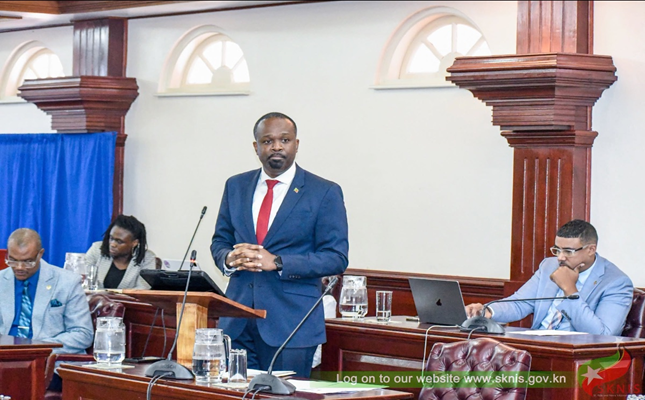
    The five amended pieces of legislation approved by lawmakers cover critical segments of financial regulation: the Financial Services Regulatory Commission (Amendment) Bill 2026, the Gaming (Control) (Amendment) Bill 2026, the Anti-Proliferation (Financing of Weapons of Mass Destruction) (Amendment) Bill 2026, the Virtual Asset (Amendment) Bill 2026, and the Anti-Terrorism (Amendment) Bill 2026. The legislative package was shepherded through the National Assembly by Honourable Konris Maynard, Minister of Public Infrastructure, Energy and Utilities, Domestic Transport, Information, Communication and Technology and Posts, with cross-support from fellow Members of Parliament.

    In his address introducing the bills to the chamber, Maynard emphasized the St. Kitts and Nevis government’s unshakable commitment to protecting the integrity, long-term stability, and international credibility of the country’s financial sector. “Today’s discussions reinforced a simple but important truth: protecting the integrity of our financial system is not merely a regulatory exercise, but rather a national responsibility,” Maynard told the assembly.

    The minister stressed that the updated regulatory framework approved by parliament is vital to protecting the nation’s global reputation, retaining the confidence of international partners and cross-border investors, and preserving unimpeded access to global financial markets. These reforms, he added, are also critical to upholding critical correspondent banking relationships that underpin the country’s economic activity, and maintaining the Federation’s status as an attractive, trusted jurisdiction for legitimate business and foreign direct investment.

    Crucially, the amendments update St. Kitts and Nevis’ existing regulatory rules to align with rapidly evolving international standards for financial regulation, anti-money laundering (AML), and counter-terrorism and proliferation financing (CTPF). The new rules also expand and strengthen oversight mechanisms across high-priority sectors of the national economy.

    Policy observers note that the passage of this legislative package underscores the government’s proactive stance on addressing emerging systemic risks that threaten small open financial jurisdictions, and highlights the administration’s ongoing commitment to transparency, accountability, and robust regulatory governance. The reforms also reaffirm the Federation’s strategic goal of remaining a competitive, secure, and well-governed international financial centre at a time when global regulators are tightening standards for virtual assets and non-bank financial services.

    St. Kitts and Nevis continues to collaborate closely with regional and international regulatory partners to keep its legislative and regulatory framework up to date, effective, and responsive to shifting conditions in the global financial landscape. Wednesday’s legislative action marks another significant step forward in the country’s long-term effort to safeguard its financial system from illicit activity, boost investor confidence, and lay the groundwork for sustained, inclusive economic growth that benefits current and future generations of the Federation.

  • Prime Minister Drew: Protecting People Must Remain Central to the Global Response to Sea-Level Rise

    Prime Minister Drew: Protecting People Must Remain Central to the Global Response to Sea-Level Rise

    On June 18, 2026, at the Berlin Climate Mobility Forum — a high-profile gathering co-hosted by the Global Centre for Climate Mobility (GCCM) and the Robert Bosch Stiftung focused on climate-driven displacement and adaptation — Prime Minister Dr. Terrance Drew of St. Kitts and Nevis delivered a urgent call to reorient global climate action around vulnerable communities, as Small Island Developing States (SIDS) already grapple with the irreversible, daily impacts of rising sea levels.

    Participating in a panel discussion centered on protecting human rights amid accelerating sea-level rise, Drew joined a cohort of global leaders, policy architects, climate researchers, and international development partners to share the on-the-ground reality of climate change for low-lying island nations. Unlike many regions still preparing for future sea-level rise impacts, Drew emphasized that his twin-island federation is already confronting the cascading harms of this climate crisis.

    “Our nation is not waiting for future consequences of sea-level rise — we are actively managing its harsh reality today,” Drew told the assembled audience. He detailed the overlapping threats already reshaping life across St. Kitts and Nevis: accelerating coastal erosion that eats away at populated shorelines, widespread degradation of protective coral reefs, more intense and destructive storm surges, and the permanent loss of culturally significant historic sites. These challenges, Drew argued, extend far beyond environmental harm — they directly erode fundamental human rights for local communities.

    “Sea-level rise is far more than a single-dimensional environmental issue,” Drew explained. “When we talk about protecting rights in this context, we are highlighting threats to every core pillar of human dignity: the right to life and safety, the right to housing and ancestral land, the right to food, clean water and basic necessities, the right to health, the right to stable livelihoods, and the right to preserve our culture, identity and shared heritage.”

    Drew stressed that any effective global response to sea-level rise must keep protecting vulnerable people at its core, rather than prioritizing abstract policy targets or economic interests. All resilience-building efforts, he added, should be designed to safeguard at-risk communities while preserving their inherent dignity, cultural heritage, and access to equitable opportunity.

    During the forum, Drew also showcased St. Kitts and Nevis’ forward-looking national development framework: the Sustainable Island State Agenda. This strategy anchors climate resilience, environmental stewardship, and community empowerment at the heart of all national policy, and the federation has already advanced targeted initiatives and global partnerships to strengthen coastal defense systems, support vulnerable coastal populations, and embed long-term sustainability across all sectors of the economy.

    The prime minister highlighted the impactful ongoing partnership between St. Kitts and Nevis and the GCCM as a model for effective global climate cooperation. He pointed to the joint Communities Climate Adaptation Facility as a successful example of how international collaboration can deliver practical, locally led solutions: the initiative provides critical financing and policy guidance to support community-driven adaptation projects that directly address the needs of at-risk groups.

    “Multilateralism — which I have long championed — and intentional global partnership are not just abstract ideals for us. They are our most valuable tools for recourse and our only clear pathway to survival,” Drew said.

    He further emphasized that climate adaptation strategies can only succeed if they are shaped by the people who bear the brunt of sea-level rise impacts. Long-term, effective solutions require coordinated collaboration between national governments, local communities, development partners, and civil society organizations to ensure interventions align with local realities, knowledge, and lived experiences, rather than being imposed from outside.

    As St. Kitts and Nevis continues to advocate for ambitious climate action on the global stage, Drew closed by reaffirming the federation’s unwavering commitment to working alongside international partners to protect the rights, livelihoods, and future prospects of all vulnerable populations disproportionately impacted by the climate crisis.

  • St. Peter’s to be restored to 24/7 water supply following key upgrades

    St. Peter’s to be restored to 24/7 water supply following key upgrades

    For decades, residents of St. Peter’s, a community on the Caribbean island of Saint Kitts, have navigated daily disruptions to their water access, a persistent consequence of underfunded and outdated infrastructure. That long-standing challenge is finally poised to be resolved, as the island’s Water Services Department (WSD) nears completion of key infrastructure upgrades that will bring round-the-clock running water to the area within days.

    The breakthrough comes on the heels of the launch of the new Basseterre Desalination Plant, which entered full operation in late February 2026. The plant has produced a consistent surplus of water that currently replenishes the Basseterre aquifer, creating extra capacity that can be redirected to underserved communities across the island. To unlock that surplus for St. Peter’s, however, WSD crews had to complete months of work to lay new distribution pipelines and source specialized pumping equipment.

    In a project update delivered to stakeholders on June 16, WSD Water Engineer Cromwell Williams shared that the new pump required for the expansion only arrived on Saint Kitts on June 12, with installation finalized three days later on June 15. Technical teams have already begun final performance testing of the new pipeline and pumping system to ensure it can deliver the full expected volume of additional water.

    Once testing wraps up, the system will add 150,000 gallons of water per day to St. Peter’s existing water network, a volume large enough to meet all residential demand around the clock. According to Williams, the upgrade will mark the first time the community has had uninterrupted 24/7 water access in more than 30 years, resolving a decades-long barrier to quality of life for local residents.

    This press update was originally issued by the St. Kitts-Nevis Information Service (SKNIS) and distributed via local media outlet SKNVibes.com on June 18, 2026.

  • ‘Mandatory minimums’ for gun crimes, says senator

    ‘Mandatory minimums’ for gun crimes, says senator

    As firearm-related violence continues to climb across Barbados, independent legislator and real estate executive Andrew Mallalieu is amplifying public calls for sweeping criminal justice reform centered on harsher penalties for gun-involved offenses. Mallalieu has thrown his support behind the Supreme Court of Judicature (Amendment) Bill, a piece of legislation that would establish dedicated firearms courts to streamline the processing of gun-related cases. But in a stark acknowledgment of the current public safety climate, he says even this structural reform is incomplete without a core policy shift: mandatory minimum prison sentences for anyone convicted of committing a crime with a firearm.

    In remarks delivered on the floor, Mallalieu reaffirmed his long-held stance that the island’s current sentencing framework fails to match the scale of public anxiety around rising gun crime. “If you asked Barbadians today, the vast majority would tell you that the sentences for crimes committed with firearms need to be much harsher than they are,” he argued. While Mallalieu acknowledged that existing rulings from the Caribbean Court of Justice and other judicial frameworks may present procedural hurdles to implementing mandatory minimum sentences, he said the overwhelming will of the public justifies moving the proposal forward. He added that he personally regrets the need for such harsh penalties under normal circumstances, but the current public safety crisis leaves no other viable option.

    Mallalieu also outlined two additional critical requirements to make the new judicial framework outlined in the amendment bill functional. The legislation includes a provision to expand the High Court by up to 15 new judge positions, but the independent senator emphasized that this change will only deliver practical improvements to court efficiency if the government actually follows through on appointing those new judges. Beyond judicial appointments, he noted, the reform will require a robust, transparent case routing system to direct firearms cases to the new dedicated courts without delays. Most importantly, Mallalieu stressed that passing the legislation itself will not improve public safety. “Passing this bill will do nothing if we don’t put the resources behind it to do it,” he said, warning that adequate funding and infrastructure support are non-negotiable for the reform to succeed.

    In a surprising addition to his remarks, Mallalieu also opened a new national debate on gun control by asking whether Barbados should hold a public referendum on a near-total national ban on civilian firearms. Under the proposal he floated, only three groups would be exempt from the ban: active police officers, members of the national army, and firearms stored legally at regulated gun-sporting facilities. The question has opened a new front in the ongoing national conversation about how to curb rising gun violence across the island.

  • Derde helft WK 2026:  Dag 8 – Mexico favoriet, Afrika viert historisch succes

    Derde helft WK 2026: Dag 8 – Mexico favoriet, Afrika viert historisch succes

    As the 2026 FIFA World Cup co-hosted across North America enters its eighth day, four high-stakes group stage fixtures are scheduled to take place on June 18, with teams fighting to secure their spots in the knockout round of the tournament. The day’s action kicks off at Atlanta Stadium in Atlanta, Georgia, where Czechia will square off against South Africa at 13:00 local time. Next, Switzerland will face Bosnia and Herzegovina at Los Angeles Stadium in California at 16:00, followed by a clash between co-host Canada and Qatar at Vancouver’s BC Place Stadium at 19:00. The headline matchup of the day will close out the schedule, as Mexico takes on South Korea at Guadalajara Stadium in front of a raucous home crowd at 22:00 local time. Ahead of kickoff, one Mexican supporter already captured global attention, posing in the stands with a replica of the FIFA World Cup trophy while wearing a traditional lucha libre wrestling mask.

    Looking ahead to the day’s marquee fixture, Mexico enters its Group A matchup against South Korea with historical momentum on its side. The two sides have met twice previously at World Cup tournaments, with Mexico claiming victory on both occasions — most recently a 2-1 win during the 2018 World Cup in Russia. Both nations got their 2026 campaigns off to a strong start with opening match wins, boosting their early knockout stage hopes, but oddsmakers and analysts still peg Mexico as the clear favorite to pick up three points on home soil.

    In the day’s opening fixture, Czechia and South Africa will meet for just the second time in senior international history. South Africa has a surprisingly strong track record against European opposition at the World Cup, including a famous 2-1 group stage win over eventual champions France during the 2010 tournament it hosted. The Bafana Bafana have dropped only one of their last four World Cup matches against European sides. For Czechia, this will only be its second World Cup match against an African opponent, and its first ended in a disappointing 2-0 loss to Ghana in 2006.

    Switzerland and Bosnia and Herzegovina will lock horns for the first time ever at a World Cup, with the only prior meeting between the two nations coming in a 2016 friendly match hosted in Zurich. On that occasion, Bosnia and Herzegovina claimed a 2-0 win behind goals from legendary duo Edin Dzeko and Miralem Pjanic. Despite that past result, Switzerland is favored to claim all three points in their 2026 group stage encounter.

    Closing out the day’s action before the Mexico-South Korea kickoff, co-host Canada will face Qatar, and historical trends heavily favor the North American side. In the three previous instances a World Cup host nation has faced an AFC (Asian Football Confederation) member at the tournament, the host has walked away with a win every time: Mexico beat Iraq in 1986, France defeated Saudi Arabia in 1998, and Russia also downed Saudi Arabia in the 2018 tournament opener.

    Beyond Matchday 8’s scheduled fixtures, the tournament has already delivered no shortage of historic moments, breakout performances and talking points through its first week of action. The race for the Golden Boot, awarded to the tournament’s top goalscorer, already has a clear early leader: Lionel Messi netted a hat-trick in his opening match, putting him three goals clear of seven chasing players who have each scored one goal so far, including global superstars Kylian Mbappe of France, Erling Haaland of Norway and England’s Harry Kane.

    One of the biggest historic milestones of the tournament so far came from the Democratic Republic of the Congo (DRC), which notched its first ever World Cup goal through Brentford forward Yoane Wissa in a stunning 1-1 draw with Portugal. The result marked DRC’s first World Cup appearance in 52 years, sparking jubilant celebrations among Congolese fans across the globe. Another standout early performance came from Colombia, which opened its Group K campaign with a confident 3-1 win over World Cup debutant Uzbekistan. Liverpool winger Luis Diaz was the star of the match, notching an assist for Daniel Munoz’s opening goal and scoring Colombia’s second after halftime. Uzbekistan briefly pulled level through winger Abbosbek Fayzullaev, but the South American side regained control to lock in three full points. The win gives Colombia a major early boost as it looks to reach the knockout stage after missing out on qualification for the 2022 World Cup in Qatar.

    The first week of the tournament has already delivered several stunning upsets that have shaken up group standings. Beyond DRC’s draw with Portugal, Cape Verde earned a historic point against defending champions Spain in a surprise draw, while Iran and New Zealand also played out an unexpected stalemate in their opening fixture.

    A widely noted positive theme of the 2026 tournament has been the growing diversity on display across competing squads. Top European sides including England, France, Spain and Sweden have fielded rosters made up of players from a wide range of religious, cultural and ethnic backgrounds, a trend that football experts have praised as a powerful positive example amid ongoing global societal debates around immigration and integration.

    One of the more surprising storylines of the tournament’s opening week has been the slow start for Cristiano Ronaldo, who is making his record sixth World Cup appearance but has yet to find the back of the net, while his fellow global superstars Messi, Mbappe, Haaland and Kane all opened their goal accounts in their first matches.

    Off the pitch, FIFA’s new heat protection policy, which adds formal drink breaks during matches to help players cope with high summer temperatures across North America, has sparked ongoing controversy. Critics argue that the breaks disrupt the natural flow of matches and give teams extra opportunities to make unplanned tactical adjustments, disrupting competitive balance. FIFA has defended the policy, emphasizing that player health and safety is its top priority.

    This year’s tournament has also made history for African football, with a record six African nations qualifying for the final group stage. Despite facing pre-tournament challenges including logistical hurdles and visa processing issues for teams and fans, African sides have enjoyed overwhelming support from their large diaspora communities across North America. While the vuvuzela horns that became a global icon during the 2010 South Africa World Cup are not a common sight this year, the passionate energy and atmosphere brought by African fans remains as vibrant as ever.

  • CDC moves to regulate AI use in Vincymas music (+video)

    CDC moves to regulate AI use in Vincymas music (+video)

    As artificial intelligence reshapes creative industries across the globe, one of the southern Caribbean’s most iconic cultural celebrations is moving to set clear boundaries for the emerging technology — to safeguard its centuries-old cultural roots without rejecting innovation entirely.

    The Carnival Development Corporation (CDC), the governing body of Vincymas, St. Vincent and the Grenadines’ premier annual carnival, is currently developing a formal policy that will limit and regulate the use of AI in festival music. The initiative comes amid growing concern that unregulated overreliance on generative AI could erode the unique cultural authenticity that defines the centuries-old regional celebration.

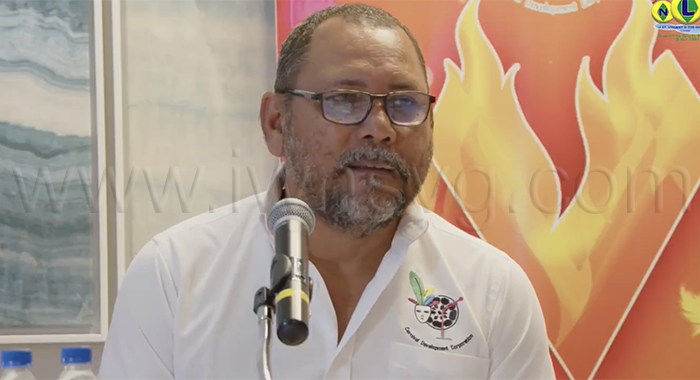
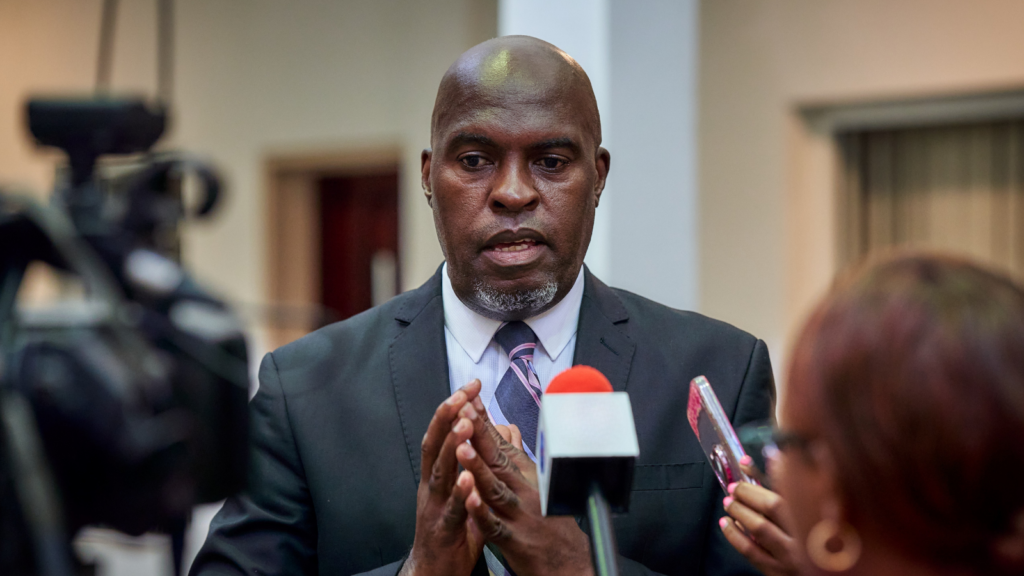
    CDC Chairman Ricardo Adams outlined the organization’s plan during a press conference focused on preparations for the 2026 iteration of Vincymas, confirming that event organisers have already identified AI-generated musical submissions among tracks released for this year’s festival. Rather than pushing for an all-out ban on the technology, Adams framed the new rules as a defensive measure to protect human creativity and local cultural ownership, core pillars of the southern Caribbean carnival tradition.

    “We’ve had a very robust discussion on the introduction of AI into our creative space, and we recognise that there is a place for AI,” Adams explained during the briefing in Kingstown. “I’m not going to say that we should ignore AI, or completely eliminate it. But AI cannot become your creative juice. AI can help you refine your creation, but it cannot become the core of your work.”

    Adams warned that without clear guardrails, Vincymas risks losing the raw passion and cultural specificity that makes it unique, eventually devolving into a series of events centered on generic, algorithm-generated content disconnected from local heritage. “Otherwise, we’ll all be jumping up to metadata-created music with no input of the passion and the energy and the culture of what is Vincy Mas,” he said.

    While Adams did not disclose specific regulatory thresholds or draft rules during the press conference, his comments confirm that formal guidelines will apply to all future competitions and official performances overseen by the CDC. The organization is currently collaborating directly with local artists to shape the policy, which aims to strike a deliberate balance between innovation and preservation: AI will be permitted as a supporting tool for editing, mixing and refining tracks, but all core creative work — including melody composition, lyric writing, and core performance — must be completed by human creators rooted in local cultural experience.

    Adams tied the AI regulation debate to a broader, longstanding concern about cultural sovereignty for Caribbean creators. He reminded stakeholders that foundational elements of modern carnival culture, including steelpan instrumentation, mas design, and soca music, originated in the southern Caribbean and remain driven by regional artists. Unchecked AI adoption, he argued, risks reducing local creators to passive consumers of generic content produced outside the region, stripping them of control over an art form they built.

    The policy push also comes as the CDC works to address a larger shift in global carnival culture: the gradual erosion of artistic and cultural identity driven by a turn toward commercialization. Adams noted that without intentional guardrails, Vincymas could drift from its cultural roots to become nothing more than a series of high-priced commercial parties, prioritizing convenience and volume over the artistic expression that has long defined the event. He framed unregulated AI as one more shortcut that could hollow out the festival’s core artistic identity if left unaddressed.

    The debate over AI regulation comes as the CDC enters a pivotal period for the festival: the organization is currently pushing for a formal economic impact analysis of Vincymas, recognizing it as both a core cultural expression and a major local creative industry, and preparations are underway for the 50th anniversary of Vincymas’ current June-July schedule, a milestone branded the “Road to 50”.

    Adams emphasized that protecting the festival’s cultural authenticity through responsible AI governance now is critical to building a credible, meaningful celebration for the golden anniversary and future iterations. “The best way to promote next year’s milestone is to ensure that when people come here this year, we give them a safe festival, we let them experience the warmth and the energy that is St. Vincent and the Grenadines, Vincymas,” he said.

    Vincymas’ move to regulate AI places the festival among a fast-growing group of global cultural institutions and creative industries grappling with the same question: what role should generative AI play in reshaping traditional art forms? For Adams and the CDC, the answer is not outright rejection of new technology, but a deliberate reaffirmation that human creators and local culture must remain at the center of the celebration.